From Surf Wiki (app.surf) — the open knowledge base
Cabinet of New Zealand
Central decision-making forum of the New Zealand Government

Central decision-making forum of the New Zealand Government
The Cabinet of New Zealand ()Translated as: "The Rūnanga (literally 'Council') of the Government of New Zealand" is the New Zealand Government's body of senior ministers, accountable to the New Zealand Parliament. Cabinet meetings, chaired by the prime minister, occur once a week; in them, vital issues are discussed and government policy is formulated. Cabinet is also composed of a number of committees focused on specific areas of governance and policy. Though not established by any statute, Cabinet wields significant power within the New Zealand political system, with nearly all government bills it introduces in Parliament being enacted.
The New Zealand Cabinet follows the traditions of the British cabinet system. Members of Cabinet are collectively responsible to Parliament for its actions and policies. Cabinet discussions are confidential and are not disclosed to the public apart from the announcement of decisions.
All ministers in Cabinet also serve as members of the Executive Council, the body tasked with advising the governor-general in the exercise of his or her formal constitutional functions. Outside Cabinet, there are a number of non-Cabinet ministers, responsible for a specific policy area and reporting directly to a senior Cabinet minister. Ministers outside Cabinet are also part of Cabinet committees and will regularly attend Cabinet meetings which concern their portfolios. Therefore, although operating outside of Cabinet directly, these ministers do not lack power and influence as they are still very much part of the decision making process.
Constitutional basis
Cabinet is not established by any statute or constitutional document but exists purely by long-established constitutional convention. This convention carries sufficient weight for many official declarations and regulations to refer to Cabinet; a government department—the Department of the Prime Minister and Cabinet—is responsible for supporting it. Although Cabinet lacks any direct legislative framework for its existence, the Cabinet Manual has become the official document which governs its functions, as well as on which its convention rests.
The structure of Cabinet has as its basis the formal institution known as the Executive Council, the body tasked with advising the governor-general in the exercise of their formal constitutional functions (the "Governor-General in Council"). Most ministers hold membership of both bodies, but some executive councillors, known as "ministers outside Cabinet", are not ranked as Cabinet members and do not normally attend. The convention of a cabinet meeting separately from the Executive Council began during Edward Stafford's first tenure as premier (1856–1861). Stafford, a long-time advocate of responsible government in New Zealand, believed the colonial government should have full control over all its affairs, without the intervention of the governor. Because the governor chaired the Executive Council, Stafford intentionally met with his ministers without the governor present, thus reducing the Council to its formal role.
Powers and functions
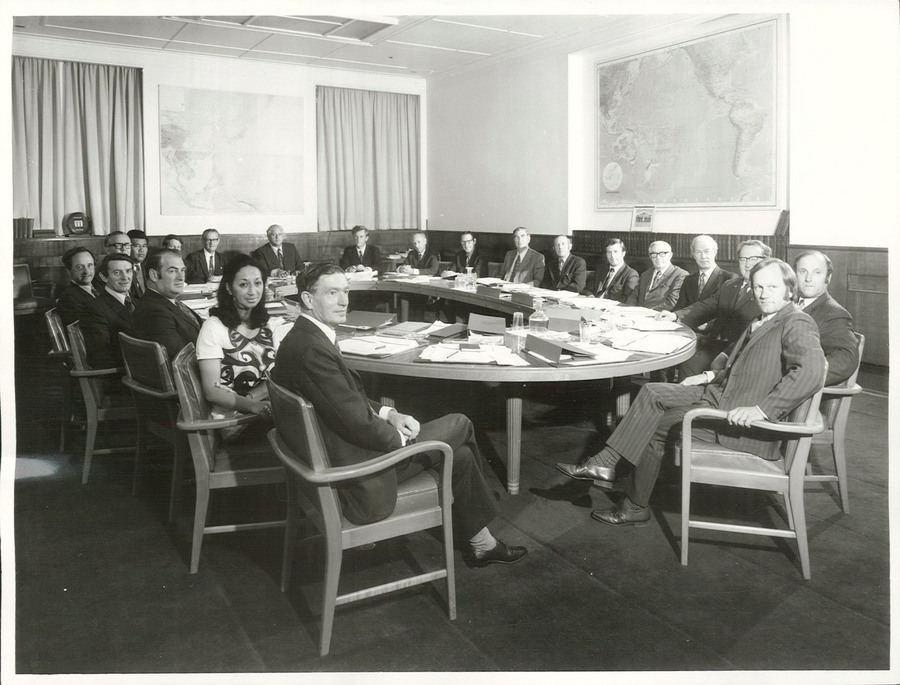
The lack of formal legislation establishing Cabinet leaves the powers of its members only loosely defined. Cabinet generally directs and controls policy (releasing government policy statements), and is responsible to the House of Representatives, the elected component of Parliament. It also has significant influence over law-making, and all draft government bills must be submitted to the Cabinet Legislation Committee before they can be introduced to the House. Convention regarding Cabinet's authority has considerable force, and generally proves strong enough to bind its participants. Theoretically, each minister operates independently, having received a ministerial warrant over a certain field from the Crown. But the governor-general can dismiss a minister at any time, conventionally on the advice of the prime minister, so ministers are largely obliged to work within a certain framework.
Collective responsibility
Cabinet itself acts as the accepted forum for establishing this framework. Ministers will jointly discuss the policy which the government as a whole will pursue, and ministers who do not exercise their respective powers in a manner compatible with Cabinet's decision risk losing those powers. This has become known as the doctrine of Cabinet collective responsibility. Collective responsibility is grounded in three key principles. The first principle is unanimity, where members of Cabinet must publicly support decisions and defend them in public, regardless of any personal views on the matter. Secondly, the confidentiality limb means that all Cabinet discussions are to be kept confidential. This allows for open and explicit conversation, discussion and debate on the issues Cabinet chooses to look at. The final principle is confidence, where Cabinet and executive government must have the confidence of the House of Representatives. If there is no government, the governor-general has the ability to intervene to find a government that does have confidence.
Formally all ministers are equals and may not command or be commanded by a fellow minister. Constitutional practice does, however, dictate that the prime minister is primus inter pares, meaning 'first among equals'.
Problems arise when the prime minister breaches collective responsibility. Since ministerial appointments and dismissals are in practice in the hands of the prime minister, Cabinet can not directly initiate any action against a prime minister who openly disagrees with their government's policy. On the other hand, a prime minister who tries to act against concerted opposition from their Cabinet risks losing the confidence of their party colleagues. An example is former Prime Minister David Lange, who publicly spoke against a tax reform package which was sponsored by then-Finance Minister Roger Douglas and supported by Cabinet. Douglas was forced to resign, but when the Cabinet supported Douglas against Lange, the Prime Minister interpreted this as a vote of no-confidence in his leadership and stepped down.
Collective responsibility after MMP
Some political commentators, such as Professor Philip Joseph, have argued that it is a misnomer to deem the unanimity principle of collective responsibility a constitutional convention as such. Joseph views unanimity as merely a "rule of pragmatic politics", lacking a sufficient constitutional nature to be deemed a constitutional convention. He states that, unlike a convention, governments may waive, suspend or abandon political rules, as has happened since the introduction of the mixed-member proportional system (MMP) in 1993 (*see *). One reform following the introduction of MMP allowed for junior parties in a coalition the ability to 'agree to disagree' with the majority in order to manage policy differences. Following the 2011 general election the National-led government released the following statement in regards to the role of minor parties in the context of collective responsibility:
Collective responsibility applies differently in the case of support party Ministers. Support party Ministers are only bound by collective responsibility in relation to their own respective portfolios (including any specific delegated responsibilities). When support party Ministers speak about the issues in their portfolios, they speak for the government and as part of the government. When the government takes decisions within their portfolios, they must support those decisions, regardless of their personal views and whether or not they were at the meeting concerned. When support party Ministers speak about matters outside their portfolios, they may speak as political party leaders or members of Parliament rather than as Ministers, and do not necessarily support the government position.
Ministers outside Cabinet retain individual ministerial responsibility for the actions of their department (in common with Cabinet ministers).
Electoral reform
Electoral reform and Cabinet structure
The 1993 electoral referendum in New Zealand resulted in a number of structural changes to Cabinet. The change to the MMP system ultimately led to a larger number of political parties in Parliament, as under the proportional representation system any political party can enter Parliament if they received five percent of the party vote or won one electorate seat. The increased representation resulted in the need to form coalitions between parties, as no single party received a majority of votes and seats under MMP until 2020. In order to govern in a coalition under MMP, it is likely that a major party will have to relinquish and offer Cabinet positions to members of a minority party.
The aftermath of the first MMP election in 1996 highlighted the changes resulting from the new proportional parliament. New Zealand First received 13.4% of the party vote, giving them 17 total seats in the House of Representatives (in contrast to 8.5% in the 1993 general election, conducted under the plurality voting system). This ultimately resulted in the as the National Party, who received 33.8% of the party vote, translating to 44 seats in the House, could not govern alone.
Negotiations forming the new government took nearly two months however the ultimate result being that New Zealand First were to have five ministers inside Cabinet and four outside. This translated to having 36.4% of representation in the new government. The Prime Minister following the 1996 election, Jim Bolger, was forced to tell his caucus during negotiations with New Zealand First, that he would not be able to satisfy all ambitions of the caucus, due to the forced inclusion of the minority party into the governmental framework, thus highlighting one of the challenges that came with MMP.
The result of MMP on Cabinet structure in New Zealand is also highlighted below under the heading. In the coalition deal following the election New Zealand First leader Winston Peters was given the position of deputy prime minister, and New Zealand First were given a number of ministerial portfolios including foreign affairs, infrastructure, regional economic development, and internal affairs.
Meetings

Members of Cabinet meet on a regular basis, usually weekly on a Monday, to discuss the most important issues of government policy. Matters that must be submitted to Cabinet include new legislation, involving draft government bills; financial proposals and budget decisions; constitutional arrangements; public service changes; government responses to select committee recommendations; portfolio interests of ministers; appointments to government bodies; and international treaties.
The meetings are chaired by the prime minister or, in the prime minister's absence, the next most senior minister in attendance, usually the deputy prime minister. Ministers outside Cabinet may occasionally be invited for the discussion of particular items with which they have been closely involved. All Cabinet meetings are held behind closed doors, and the minutes are taken by the Cabinet secretary and kept confidential. However, usually shortly after the weekly meeting the prime minister holds a press conference to discuss important national issues.
The Cabinet secretary and their deputy are the only non-ministers who attend Cabinet meetings. They are not political appointments and their role at Cabinet meetings is to formulate and record the Cabinet's decisions and advise on procedure, not to offer policy advice. The secretary has a dual role as the clerk of the Executive Council where they provide a channel of communication and liaison between the Cabinet and the governor-general.
The Cabinet room, where the weekly meetings are normally held, and related offices are located at the top of the Beehive (the Executive Wing of Parliament Buildings).
Members
The prime minister assigns roles to ministers and ranks them in order to determine seniority. A minister's rank depends on factors such as "their length of service, the importance of their portfolio and their personal standing with the prime minister". The deputy prime minister is the second-highest ranked, after the prime minister. Under MMP, there are typically three categories of minister: ministers within the 'core' Cabinet, ministers outside Cabinet, and ministers from support parties (i.e. minor parties which have agreed to support a government party during confidence and supply votes). The size of Cabinet has grown over time. In the 1890s, for example, there were seven Cabinet ministers. The number of ministers within Cabinet increased in the period up until the 1970s, but has plateaued at 20 since ; this despite increases in the number of members of parliament. By contrast, the numbers of ministers outside Cabinet has grown, especially since the introduction of MMP.
Ministers are formally styled "The Honourable" (abbreviated to "The Hon."), except for the prime minister who is accorded the style "The Right Honourable" ("The Rt. Hon."). Previously, several senior ministers used "The Right Honourable" by virtue of membership of the Privy Council before appointments were discontinued in 2000. Currently, Winston Peters retains this style due to his appointment as a member of the Privy Council in 1998.
Current ministers
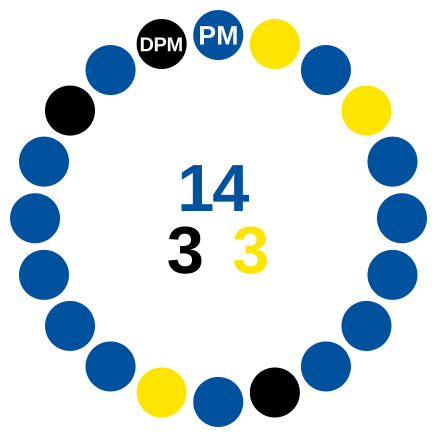
The current ministry has a Cabinet of 20 ministers: 14 from the National Party, three from ACT, and three from New Zealand First. There are eight ministers outside Cabinet: five from National, two from ACT, and one from New Zealand First. Additionally, two parliamentary under-secretaries assist ministers from a parliamentary standpoint. The table below lists all ministers, .
| Portfolios | Image | Incumbent | Additional responsibilities | Electorate | Only members regularly attend Cabinet meetings, although ministers outside Cabinet and support party ministers can be invited to attend if an area of their portfolio is on the agenda. Thus all ministers listed below have a role in Cabinet's decision-making. | |||
|---|---|---|---|---|---|---|---|---|
| National Party Ministers | ||||||||
| Prime Minister | ||||||||
| Minister for National Security and Intelligence | [[File:LUXON, Christopher - Botany (cropped).png | 100px]] | New Zealand National Party}} | Christopher Luxon | Minister Responsible for Ministerial Services | |||
| Minister of Finance | ||||||||
| Minister for Economic Growth | ||||||||
| Minister for Social Investment | [[File:WILLIS, Nicola - Ohariu (cropped).png | 100px]] | New Zealand National Party}} | Nicola Willis | List | |||
| Minister of Housing | ||||||||
| Minister for Infrastructure | ||||||||
| Minister Responsible for RMA Reform | ||||||||
| Minister of Transport | [[File:BISHOP, Chris - Hutt South (cropped).png | 100px]] | New Zealand National Party}} | Chris Bishop | Leader of the House | |||
| Associate Minister of Finance | ||||||||
| Associate Minister for Sport and Recreation | ||||||||
| Minister of Health | ||||||||
| Minister for State Owned Enterprises | [[File:BROWN, Simeon - Pakuranga (cropped).png | 100px]] | New Zealand National Party}}" | Simeon Brown | Minister for Auckland | |||
| Minister of Education | ||||||||
| Minister for Immigration | [[File:STANFORD, Erica - East Coast Bays (cropped).png | 100px]] | New Zealand National Party}}" | Erica Stanford | Lead Coordination Minister for the Government’s Response to the Royal Commission’s Report into Historical Abuse in State Care and in the Care of Faith-based Institutions | |||
| Minister for Arts, Culture and Heritage | ||||||||
| Minister of Justice | ||||||||
| Minister for Media and Communications | ||||||||
| Minister for Treaty of Waitangi Negotiations | [[File:GOLDSMITH, Paul - Epsom (cropped).png | 100px]] | New Zealand National Party}}" | Paul Goldsmith | List | |||
| Minister for the Community and Voluntary Sector | ||||||||
| Minister for Disability Issues | ||||||||
| Minister for Social Development and Employment | ||||||||
| Minister of Tourism and Hospitality | [[File:UPSTON, Louise - Taupo (cropped).png | 100px]] | New Zealand National Party}}" | Louise Upston | Minister for Child Poverty Reduction | |||
| Deputy Leader of the House | ||||||||
| Attorney-General | ||||||||
| Minister of Defence | ||||||||
| Minister for Digitising Government | ||||||||
| Minister for the Public Service | ||||||||
| Minister Responsible for the GCSB | ||||||||
| Minister Responsible for the NZSIS | ||||||||
| Minister for Space | [[File:COLLINS, Judith - Papakura (cropped).png | 100px]] | New Zealand National Party}}" | Judith Collins | ||||
| Minister for Pacific Peoples | ||||||||
| Minister of Science, Innovation and Technology | ||||||||
| Minister of Statistics | ||||||||
| Minister for Universities | [[File:RETI, Shane - Whangarei (cropped).png | 100px]] | New Zealand National Party}}" | Shane Reti | ||||
| Minister of Corrections | ||||||||
| Minister for Emergency Management and Recovery | ||||||||
| Minister for Ethnic Communities | ||||||||
| Minister of Police | ||||||||
| Minister for Sport and Recreation | [[File:MITCHELL, Mark - Whangaparaoa (cropped).png | 100px | Mark Mitchell]] | New Zealand National Party}}" | Mark Mitchell | |||
| Minister of Agriculture | ||||||||
| Minister of Forestry | ||||||||
| Minister for Trade | [[File:MCCLAY, Todd - Rotorua (cropped).png | 100px | Todd McClay]] | New Zealand National Party}}" | Todd McClay | Associate Minister of Foreign Affairs | ||
| Minister of Conservation | ||||||||
| Minister for Māori Crown Relations: Te Arawhiti | ||||||||
| Minister for Māori Development | ||||||||
| Minister for Whānau Ora | [[File:POTAKA, Tama - Hamilton West (cropped).png | 100px | Tama Potaka]] | New Zealand National Party}}" | Tama Potaka | Associate Minister of Housing (Social Housing) | ||
| Minister for Mental Health | [[File:DOOCEY, Matt - Waimakariri (cropped).png | 100px]] | New Zealand National Party}}" | Matt Doocey | Associate Minister of Health | |||
| Minister of Climate Change | ||||||||
| Minister for Energy | ||||||||
| Minister of Local Government | ||||||||
| Minister of Revenue | [[File:WATTS, Simon - North Shore (cropped).png | 100px]] | New Zealand National Party}} | Simon Watts | ||||
| ACT Ministers | ||||||||
| Deputy Prime Minister | ||||||||
| Minister for Regulation | [[File:David Seymour 2023 cropped headshot.jpg | 100px]] | ACT New Zealand}} | David Seymour | Associate Minister of Education (Partnership Schools) | |||
| Associate Minister of Finance | ||||||||
| Associate Minister of Health (Pharmac) | ||||||||
| Associate Minister of Justice (Treaty Principles Bill) | ||||||||
| Minister of Internal Affairs | ||||||||
| Minister for Workplace Relations and Safety | [[File:Brooke van Velden.jpg | 100px]] | ACT New Zealand}}" | Brooke van Velden | ||||
| Minister for Courts | [[File:Nicole McKee (crop).jpg | 100px]] | ACT New Zealand}}" | Nicole McKee | Associate Minister of Justice (Firearms) | List | ||
| New Zealand First Ministers | ||||||||
| {{nowrap | Minister of Foreign Affairs | |||||||
| Minister for Racing | ||||||||
| Minister for Rail | [[File:Winston Peters 2024 US Deputy Secretary visit (further crop).jpg | 100px]] | New Zealand First}} | Winston Peters | List | |||
| Minister for Oceans and Fisheries | ||||||||
| Minister for Regional Development | ||||||||
| Minister for Resources | [[File:Shane Jones 2018 5 (cropped).jpg | 100px]] | New Zealand First}}" | Shane Jones | Associate Minister of Finance | |||
| Associate Minister for Energy | List | |||||||
| Minister of Customs | ||||||||
| Minister for Seniors | [[File:Casey Costello (crop).jpg | 100px]] | New Zealand First}}" | Casey Costello | Associate Minister of Health | |||
| Associate Minister for Immigration | ||||||||
| Associate Minister for Police | List | |||||||
| Minister for Building and Construction | ||||||||
| Minister for Land Information | ||||||||
| Minister for Small Business and Manufacturing | ||||||||
| Minister for Veterans | [[File:PENK, Chris - Kaipara ki Mahurangi (cropped).png | 100px]] | New Zealand National Party}} | Chris Penk | Associate Minister of Defence | |||
| Associate Minister of Immigration | ||||||||
| Minister for the Environment | ||||||||
| Minister for Vocational Education | [[File:SIMMONDS, Penny - Invercargill (cropped).png | 100px]] | New Zealand National Party}} | Penny Simmonds | Associate Minister for Social Development and Employment | |||
| Minister of State for Trade | ||||||||
| Minister for Women | [[File:GRIGG, Nicola - Selwyn (cropped).png | 100px]] | New Zealand National Party}}" | Nicola Grigg | Associate Minister of Agriculture (Horticulture) | |||
| Associate Minister for ACC | ||||||||
| Minister for Hunting and Fishing | ||||||||
| Minister for Youth | [[File:MEAGER, James - Rangitata (cropped).png | 100px]] | New Zealand National Party}}" | James Meager | Minister for the South Island | |||
| Associate Minister of Transport | ||||||||
| Minister for ACC | ||||||||
| Minister of Commerce and Consumer Affairs | [[File:SIMPSON, Scott - Coromandel (cropped).png | 100px]] | New Zealand National Party}}" | Scott Simpson | ||||
| Minister for Biosecurity | ||||||||
| Minister for Food Safety | [[File:Andrew Hoggard 2024 (cropped) (edited).jpg | 100px]] | ACT New Zealand}}" | Andrew Hoggard | Associate Minister of Agriculture (Animal Welfare, Skills) | |||
| Associate Minister for the Environment | List | |||||||
| Minister for Children | ||||||||
| Minister for the Prevention of Family and Sexual Violence | [[File:Karen Chhour (crop).jpg | 100px]] | ACT New Zealand}}" | Karen Chhour | List | |||
| Minister for Rural Communities | [[File:Mark Patterson 2019 (cropped).jpg | 133x133px]] | New Zealand First}}" | Mark Patterson | Associate Minister of Agriculture | |||
| Associate Minister for Regional Development | List | |||||||
| Parliamentary Under-Secretary to the | ||||||||
| Minister for Infrastructure and Minister for RMA Reform | [[File:Simon Court 2025 (cropped).jpg | frameless | 133x133px]] | ACT New Zealand}} | Simon Court | List | ||
| Parliamentary Under-Secretary to the | ||||||||
| Minister for Media and Communications and Minister for Oceans and Fisheries | [[File:Jenny Marcroft (further cropped).jpg | frameless | 100px]] | New Zealand First}} | Jenny Marcroft | List |
Committees ==
A Cabinet committee comprises a subset of the larger Cabinet, consisting of a number of ministers who have responsibility in related areas of policy. Cabinet committees go into considerably more detail than can be achieved at regular Cabinet meetings, discussing issues which do not need the input of ministers holding unrelated portfolios. Committee terms of reference and membership are determined by the prime minister and the exact number and makeup of committees changes with the government. , there were 8 Cabinet committees:
- Cabinet Appointments and Honours Committee (APH)
- Cabinet Business Committee (CBC)
- Cabinet Economic Policy Committee (ECO)
- Cabinet Expenditure and Regulatory Review Committee (EXP)
- Cabinet Foreign Policy and National Security Committee (FPS)
- Cabinet Legislation Committee (LEG)
- Cabinet Social Outcomes Committee (SOU)
- Cabinet Strategy Committee (STR)
Cabinet committees will often discuss matters under delegated authority or directly referred to them by Cabinet, and then report back the results of their deliberation. This can sometimes become a powerful tool for advancing certain policies, as was demonstrated in the Lange government. Minister of Finance Roger Douglas and his allies succeeded in dominating the finance committee, enabling them to determine what it recommended to Cabinet. The official recommendation of the finance committee was much harder for his opponents to fight than his individual claims in Cabinet would be. Douglas was able to pass measures that, had Cabinet deliberated on them itself rather than pass them to committee, would have been defeated.
Notes
References
References
- (25 October 2017). "Clearing up some coalition confusion". Newsroom.
- "Cabinet government – Cabinet procedure".
- (October 2015). "New Zealand's Cabinet Manual: How Does It Shape Constitutional Conventions?". Parliamentary Affairs.
- "Cabinet Manual". Cabinet Office of New Zealand.
- "Executive Council – Cabinet Manual". Cabinet Office of New Zealand.
- Eichbaum, Chris. "Cabinet government – Ministers and prime ministers in cabinet".
- (1990). "Stafford, Edward William". [[Dictionary of New Zealand Biography]].
- (12 April 2023). "Are we there yet? Women in Parliament". Ministry for Culture and Heritage.
- "Cabinet government – What cabinet discusses".
- (2008). "Cabinet Manual: Cabinet". Department of Prime Minister and Cabinet.
- "Cabinet government – Collective responsibility".
- Palmer, Matthew. "What is New Zealand's constitution and who interprets it? Constitutional realism and the importance of public office-holders".
- Fairclough, Paul. (2002). "Advanced Government and Politics". Oxford University Press.
- (2013). "Reform: A Memoir". Victoria University Press.
- (2021). "Joseph on Constitutional and Administrative Law".
- (20 June 2012). "Helen Clark and Jim Anderton with their coalition agreement, 1999".
- "CO (12) 3: National-led Administration – Consultation and Operating Arrangements".
- "What is the MMP voting system?".
- (1 February 2015). "Parliament – Impact of MMP".
- "General elections 1996–2005". Electoral Commission.
- "General elections 1996–2005". Electoral Commission.
- Spanhake, Craig. (2005). "Cabinet Selection 1960–1997: An Overview of Political Process in New Zealand".
- Cheng, Derek. (24 October 2017). "Labour-NZ First coalition: At a glance". [[The New Zealand Herald]].
- (2004). "Politics in New Zealand". Auckland University Press.
- "Post Cabinet Press Conference". New Zealand Government.
- "Supporting the work of the Cabinet". Department of the Prime Minister and Cabinet.
- (2004). "Politics in New Zealand". Auckland University Press.
- Shroff, Marie. (July 2001). "The Role of the Secretary of the Cabinet – The View from the Beehive". New Zealand Centre for Public Law.
- . ["Clerk of the Executive Council"](https://dpmc.govt.nz/our-business-units/cabinet-office/supporting-work-cabinet/cabinet-manual/1-sovereign-governor-4). *Department of the Prime Minister and Cabinet*.
- {{NZHPT. 9629. Executive Wing (the Beehive). 19 July 2015
- (11 November 2023). "Ministerial List 24 July 2023". [[Department of the Prime Minister and Cabinet (New Zealand).
- (2014). "The Selection of Ministers around the World". Routledge.
- "Cabinet government".
- "The Honourable". Department of the Prime Minister and Cabinet.
- "The Right Honourable". Department of the Prime Minister and Cabinet.
- (28 May 1998). "Appointments to the Privy Council". [[New Zealand Gazette]].
- (24 November 2023). "Cabinet lineup for new government unveiled - who gets what?". [[RNZ]].
- (13 December 1986). "Constitution Act 1986".
- (31 May 2025). "Ministerial List". [[New Zealand Government]].
- (27 January 2025). "Circular. Cabinet Committees: Terms of Reference and Membership". Cabinet Office.
- (1 March 2005). "Roger's Revolution: Blitzkrieg in Kiwiland". The Journal of Legislative Studies.
This article was imported from Wikipedia and is available under the Creative Commons Attribution-ShareAlike 4.0 License. Content has been adapted to SurfDoc format. Original contributors can be found on the article history page.
Ask Mako anything about Cabinet of New Zealand — get instant answers, deeper analysis, and related topics.
Research with MakoFree with your Surf account
Create a free account to save articles, ask Mako questions, and organize your research.
Sign up freeThis content may have been generated or modified by AI. CloudSurf Software LLC is not responsible for the accuracy, completeness, or reliability of AI-generated content. Always verify important information from primary sources.
Report