From Surf Wiki (app.surf) — the open knowledge base
Cab (locomotive)
Compartment for the driver of a locomotive

Compartment for the driver of a locomotive
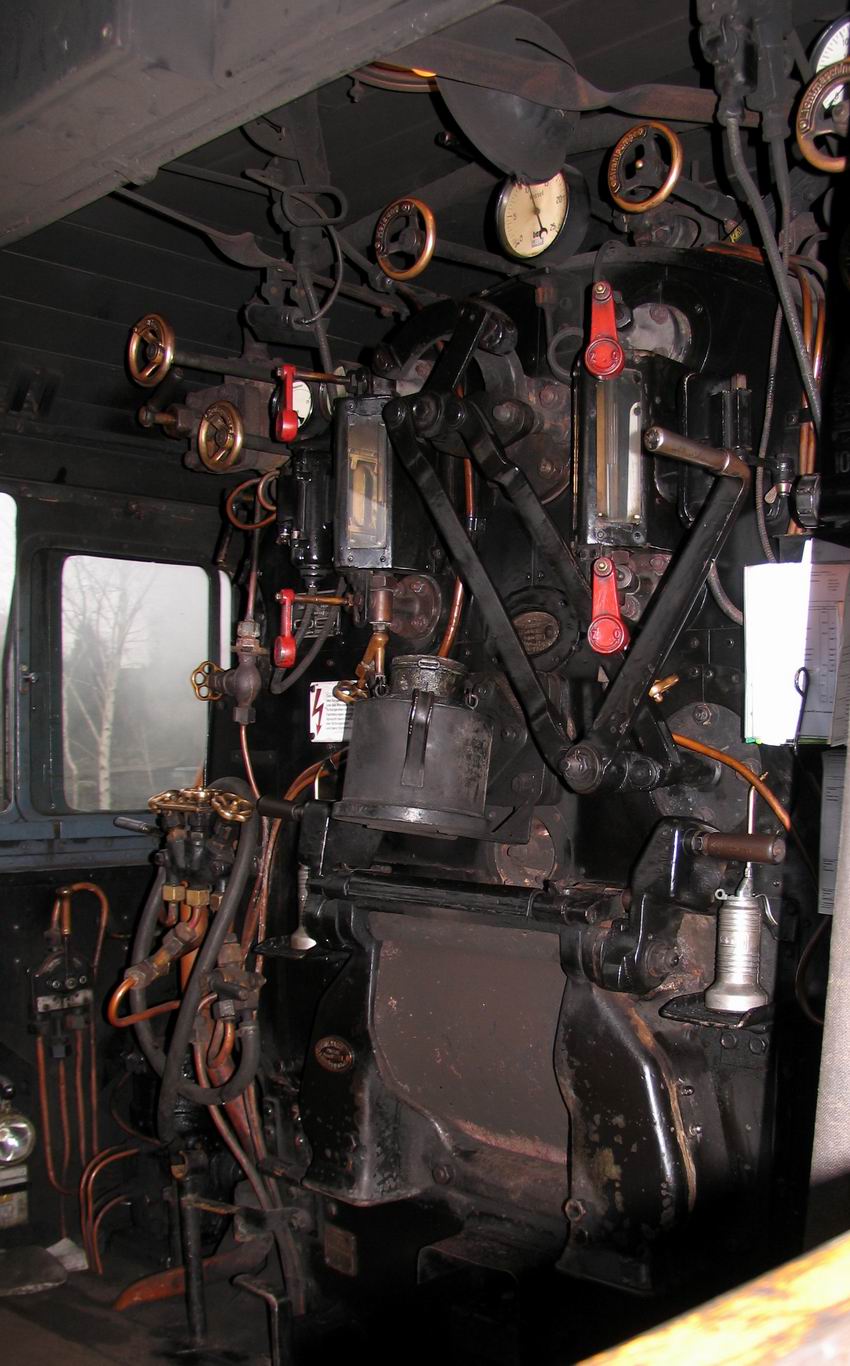


The cab, crew compartment or driver's compartment of a locomotive, or a self-propelled rail vehicle, is the part housing the train driver, fireman or secondman (if any), and the controls necessary for the locomotive or self-propelled rail vehicle's operation.
Cab locations
On steam locomotives, the cab is normally located to the rear of the firebox, although steam locomotives have sometimes been constructed in a cab forward configuration. camelback locomotives often had two cabs; one for the fireman at the rear of the boiler, and one for the engineer on the side of the boiler. Camelback locomotives were built with this configuration to accommodate wider fireboxes.
The cab, or crew or driver's compartment of a diesel or electric locomotive will usually be found either inside a cabin attached to a hood unit or cowl unit locomotive, or forming one of the structural elements of a cab unit locomotive.
On self-propelled rail vehicles, the cab may be at one or both ends.
Historical development
The earliest locomotives, such as Stephenson's Rocket, had no cab; the locomotive controls and a footplate for the crew were simply left open to the elements. However, to protect locomotive crews against adverse weather conditions, locomotives gradually came to be equipped with a roof and protective walls, and the expression "cab" refers to the cabin created by such an arrangement.
By about 1850, high speed Crampton locomotives operating in Europe already had a much needed windshield giving some protection to the footplate area. Some other early locomotives were even fitted with a cab as part of a rebuilding program, an example being the locomotive John Bull.
In Germany, the locomotive cab was introduced by the Saxon railway director and writer Max Maria von Weber. However, until 1950 the railway directorates of the German-speaking countries continued to believe that a standing posture was essential to maximise crew vigilance. Steam locomotive drivers, who had to lean out of their cabs for better visibility, therefore frequently developed occupational diseases, along with rheumatism, and electric locomotive drivers suffered from wear to the knees.
This unsatisfactory situation changed—with few exceptions—only with the construction of the German standard electric locomotives, which for the first time were equipped with crew seats. Meanwhile, the maintenance of crew vigilance became possible by technical means through the use of Sifa devices.
References
References
- Drury, George H.. (1993). "Guide to North American Steam Locomotives". Kalmbach Publishing Co..
This article was imported from Wikipedia and is available under the Creative Commons Attribution-ShareAlike 4.0 License. Content has been adapted to SurfDoc format. Original contributors can be found on the article history page.
Ask Mako anything about Cab (locomotive) — get instant answers, deeper analysis, and related topics.
Research with MakoFree with your Surf account
Create a free account to save articles, ask Mako questions, and organize your research.
Sign up freeThis content may have been generated or modified by AI. CloudSurf Software LLC is not responsible for the accuracy, completeness, or reliability of AI-generated content. Always verify important information from primary sources.
Report