From Surf Wiki (app.surf) — the open knowledge base
C.D. Guadalajara
Association football club in Mexico

Association football club in Mexico
| Field | Value |
|---|---|
| clubname | Guadalajara |
| image | Guadalajara CD.svg |
| image_size | 185px |
| fullname | Club Deportivo Guadalajara S.A. de C.V. |
| founded | |
| (as Unión Football Club) | |
| nickname | Chivas (Goats) |
| Chivas Rayadas (Striped Goats) | |
| Rebaño Sagrado (Sacred Herd) | |
| Rojiblancos (Red and Whites) | |
| Campeonísimo | |
| short name | GDL, CHI |
| ground | Estadio Akron |
| Zapopan, Jalisco | |
| capacity | 48,071 |
| owner | Grupo Omnilife |
| chrtitle | President |
| chairman | Amaury Vergara |
| mgrtitle | Head coach |
| manager | Gabriel Milito |
| league | Liga MX |
| season | Apertura 2025 |
| position | Regular phase: 6th |
| Final phase: Quarter-finals | |
| current | 2025–26 C.D. Guadalajara season |
| pattern_la1 | _chivas2526h |
| pattern_b1 | _chivas2526h |
| pattern_ra1 | _chivas2526h |
| leftarm1 | FF0000 |
| body1 | FF0000 |
| rightarm1 | FF0000 |
| shorts1 | 000040 |
| socks1 | FFFFFF |
| pattern_la2 | _stpauli2526a |
| pattern_b2 | _chivas2526a |
| pattern_ra2 | _stpauli2526a |
| pattern_so2 | _rojo |
| leftarm2 | FFFFFF |
| body2 | FFFFFF |
| rightarm2 | FFFFFF |
| shorts2 | FFFFFF |
| socks2 | FFFFFF |
| website |
the Mexican football club
(as Unión Football Club) Chivas Rayadas (Striped Goats) Rebaño Sagrado (Sacred Herd) Rojiblancos (Red and Whites) Campeonísimo Zapopan, Jalisco Final phase: Quarter-finals
Club Deportivo Guadalajara S.A de C.V. (;), simplified as CD Guadalajara, and also known as Chivas de Guadalajara, is a Mexican professional football club based in the Guadalajara metropolitan area, Jalisco. It competes in Liga MX, the top division of Mexican football, and plays its home matches at the Estadio Akron. Founded in 1906 as Unión Football Club, the club changed its name to Guadalajara Football Club in 1908, and then changed to its current name in 1923. Nicknamed Chivas, it was one of ten founding members in 1943 of the first professional and national league in Mexico, named Liga Mayor (current Liga MX). Guadalajara is one of seven Mexican clubs that have never been relegated.
Chivas is the only football club in Mexico that does not sign foreign players unless they are of Mexican descent. The team has historically relied on home-grown (cantera) players and has been the launching pad of many internationally successful players, including Javier Hernández, Carlos Vela and Carlos Salcido, among others.
Domestically, CD Guadalajara is one of the most successful Mexican clubs, winning 12 Liga MX titles, 4 Copa MX titles, 7 Campeón de Campeones and one Supercopa MX, and also holds the league record for the longest winning streak at the beginning of a season, with 8 consecutive wins in the Bicentenario 2010. Internationally, it has won two CONCACAF Champions Cup/Champions League titles, and also finished as runners-up in the 2010 Copa Libertadores.
According to a study of preferred football clubs in 2016, Guadalajara was the most popular Mexican club, with 44.2% of supporters in the country. In 2020, Forbes estimated that the club was the most valuable of the league, ranking sixth overall in the Americas, worth approximately $311.5 million.
History
Early history
The team was founded by Edgar Everaert, who arrived in Mexico in 1906. First named "Unión" because of the camaraderie between the players of different nationalities, most of whom were employees of the Fábricas de Francia store, with founder Everaert as coach. A few Spanish and English players also became members of the Unión Football Club. The club's first match was against Gimnasio Atlético Occidental. That match, Unión was coached by member Rafael Orozco, who alongside his brother, Gregorio, were the first Mexicans at Unión. The Orozco family were one of the club's earliest benefactors, with Orozco's grandmother, Nicolasa Sáinz, allowing her home to be used as Unión's first clubhouse. His uncle, Sabino Orozco, who reportedly came up with the name Unión, would also donate land to the club that would become its first ground.
On a tour of Europe, Everaert noticed that European teams named after their respective town or city seemed to generate more support from fans in their communities. Once he returned to Guadalajara, Jalisco, he told his observations to Rafael and Gregorio Orozco. So, in 1908, in a club meeting at Sáinz's house attended by the Orozco brothers, Sabino Orozco, and the remaining Mexican Unión members, Club de Fútbol Unión was renamed as Club Deportivo Guadalajara to engender a sense of loyalty within the city's population. Notably, this decision was made without Everaert or any European members present. Gregorio Orozco would take credit for the decision to rename the club. At the same meeting, Rafael Orozco would named the first club president. Following the aftermath of the Mexican Revolution, amateur football tournaments throughout the country flourished and Guadalajara was always involved. Also during this period, the oldest rivalry in Mexican football began to form, between Guadalajara and América. In 1943, it was decided that the team would only field Mexican-born players because of the growing sense of oppression Mexican nationals felt towards non-Mexican nationals.
Amateur Era (1908-1943)

In 1906, several competing clubs in the city of Guadalajara had been formed, including Atlético Occidental, Excelsior, Liceo de Varones, Cuauhtémoc, and Iturbide. A federation, Federación Deportiva de Occidente de Aficionados, led by Chivas president Rafael Orozco, had been formed between these clubs as a way to resolve issues plaguing Tapatio football, including the lack of a league uniting clubs in Guadalajara. In 1908, the federation announced the creation of the Liga Occidente de Jalisco.
Guadalajara won the inaugural tournament in the 1908/09 season and won three of the six first Liga Occidente tournaments. The other three tournaments were won by seminarians Liceo de Varones.
Newly founded Atlas would join the league, becoming a powerhouse in Tapatio football winning 4 tournaments from 1918 to 1921, with Guadalajara finishing runners up twice. Guadalajara would win the 1922 tournament as well as in 1923 and 1924, with Atlas finishing runners-up all thrice. The competitiveness and the socioeconomic differences of the clubs would create the Clásico Tapatío, one of the oldest and fiercest rivalries in Mexican football.
From 1924 to 1934, Chivas would win 5 Occidente titles, only losing the other championships to newly founded Nacional. During this period, the Selección Jalisco would be founded in 1926 by the members of the Liga Occidente. A regional team composed of the best players from Jalisco based in Club Guadalajara, Atlas, Nacional, and Oro, would play exhibitions against Primera Fuerza teams based in Mexico City, and by 1937, teams outside of Mexico. By 1940, the popularity of the exhibition side would result in many players being poached by Mexico City-based clubs, and later in an invitation to the Primera Fuerza. The 1941 Primera Fuerza tournament would end with the Selección Jalisco finishing second in their inaugural tournament. The exhibition team would participate in the following Primera Fuerza tournaments, before the foundation of the Liga Mayor.
Between 1906 and 1943, Guadalajara won 13 amateur titles.
Professional Era and "El Ya Merito" (1943–1955)
In 1943 the Liga Mayor was founded after the merging of several regional leagues and the era of professional football began. Guadalajara would make their professional debut on 6 July 1943 in the Copa MX, where they would play against local rivals Atlas. They would go on to lose the match 3-1, with Manuel "Cosas" López's 30-minute goal becoming the first of Guadalajara's professional era. Later that year, they would make their Liga Mayor debut on 21 October against Atlante, where they would go on to win 1–4 at Parque Asturias. Pablo "Pablotas" González scored the first league goal in Guadalajara's history.
Guadalajara struggled during the early years, with the exception of the 1948–49 season when they finished third. This same year Guadalajara was given the name "Chivas Locas" (Crazy Goats) during a game against Tampico. The name was initially considered an insult but later adopted as the team's nickname due to the overwhelming popularity of the club.
During the 1952 season, Guadalajara would challenge for their first league title, competing with León and city rivals Atlas and Oro. Guadalajara were league leaders by matchday 20, but a 0–1 loss at home to León on matchday 21 and a 1–0 loss away at Puebla on the final matchday would result in León winning the title by one point. Guadalajara would again challenge for the league title in the 1954–55 seasons, where the team finished as runner-up in the league to Zacatepec. This era of competing for the title would lead to the nickname "¡Ya Merito!" ("Almost There!").
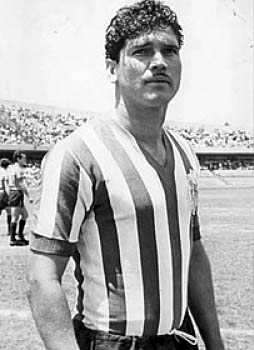
"El Campeonísimo" (1955–1970)
During the 1956 season, players such as Salvador "Chava" Reyes, Jaime "El Tubo" Gomez, Arturo "Curita" Chaires, Juan "Bigotón" Jasso, Isidoro "Chololo" Díaz, Guillermo "Tigre" Sepúlveda, and José "Jamaicón" Villegas were part of what is considered one of the finest teams in Mexican football history, El Campeonísimo. Guadalajara won its first championship during this season due to a last-minute header scored by Salvador Reyes. Led by coaches such as Donaldo "Pato" Ross and Javier "Chamaco" de la Torre in subsequent years, the team won seven league championships, two cups, three CONCACAF titles and seven Champion of Champions titles. It was the only team in Mexico's football history to win four league championships in a row, during the 1958–59, 1959–60, 1960–61, and 1961–62 seasons. El Campeonísimo became internationally recognized and, in 1964 played several matches in Europe against such teams as FC Barcelona, Werder Bremen, and Lille Olympique, resulting in two victories, four draws and four losses for the team.
"Las Chivas Flacas" (1971–1983)
During the 1970s and early 1980s, Guadalajara struggled a lot. In the 1970–71 season, the team finished very close to the relegation zone. The best they could manage to reach was the play-offs twice, with a fifth-place finish in 1971–72 and a sixth-place finish in 1976–77. They began to be nicknamed "Las Chivas Flacas" (The Lean Goats), due to their lean athletic performances. During the 1980–81 season, on February 14, 1981, the bus transporting the team to a match in the city of Puebla was hit by a trailer, taking the life of midfielder José "Pepe" Martínez. During 1980–81 season, the team reached a third-place ranking. Eleven years after their near-relegation in 1971, Guadalajara managed to escape it yet again in the 1981–82 season by just one point.
Recovery (1983–1991)
Improvement came soon after the hiring of coach Alberto Guerra, who had been a player for Guadalajara during the mid '60s. During the 1982–83 season, Guadalajara finished seventh in the league and qualified for the playoffs, going on to eliminate Atlante in quarter-finals and América in Semifinals. The team reached the finals for the first time since the playoff format was introduced in the '70s, where they would go on to lose to Puebla in a penalty shootout. Guadalajara would once again reach the Finals in 1983–84, only to lose to América by an aggregate score of 5–4. The club would continue being competitive the rest of the '80s and early '90s., with their very best performance in the 1986–87 season, where they would finish 1st in the regular season and win the Championship against Cruz Azul in the final. Their best players during this time were Benjamín "Maestro" Galindo, Eduardo "Yayo" de la Torre, José Manuel "Chepo" de la Torre, Fernando "Sheriff" Quirarte, and Javier "Vasco" Aguirre among others.
"La Promotora" Era (1992–2002)
By the end of the 1980s, Guadalajara began to experience several financial troubles. Team directors decided to create a special financial sector that would be known as La Promotora Deportiva. The team would be "sold" for 10 years starting in 1992 to a petroleum executive named Salvador Martínez Garza, who would be in charge of the Promotora and of team operations. Before Guadalajara began its new era under the Promotora, the team began the 1990s in average form, reaching the Semifinals in 90–91, reaching the Quarterfinals in 91–92, and finishing in thirteenth place in 92–93.
The new directors decided to bring back Guadalajara's champion coach of the 1986–87 season Alberto Guerra and purchase many players that would become icons for Guadalajara in the early '90s: Missael "Missa" Espinoza, Alberto "Guamerú" García, and Alberto Coyote. The team also relied on young talent from the youth academy. Such talent included Paulo Cesar "Tilón" Chávez and Joel "Tiburón" Sánchez. At the beginning of the 93–94 season, the press and fans dubbed the new and improved team Las Superchivas. However, despite expectations, the team was eliminated early on in the playoffs. The 94–95 season would bring about more change for the team. The club directors sold all television rights of the team to Mexican giant Televisa, a move that was heavily criticized by fans because of Televisa's ownership of América. Guadalajara would end the 1993–1994 regular season as the leader in the league table, but was narrowly defeated by Necaxa in the Semifinals. The 96–97 season saw the exit of coach Alberto Guerra, being replaced by the Dutchman Leo Beenhakker. The team failed to make the playoffs that season.
By 1996, the Primera División de México season format would be changed to two short seasons per year. The first of the seasons, Invierno 1996, saw Guadalajara bring in another coach, Brazilian Ricardo Ferretti. During Ferretti's first season, the team managed to reach third place in the league table, but would be eliminated by Club Necaxa in the Quarterfinals. Guadalajara won its 10th championship under Ferretti in the Verano 1997 season against Toros Neza with the aggregate score of 7–2. Guadalajara would once again reach the Finals in the Invierno 1998 season, only to once again lose to Necaxa.
New Ownership Era (2002–2011)
_(cropped).jpg)
After its tenth year in charge of Guadalajara, La Promotora was still in debt and finally put up for sale. On October 31, 2002, the team was acquired by a Guadalajara native and self-made entrepreneur, Jorge Vergara. Vergara was the founder of a multi level marketing named Grupo Omnilife. Vergara hired directors that would be in charge of handling business affairs. He also removed all sponsorship from Guadalajara's jersey; the jersey has since had limited sponsorship.
In order to establish funding for the team, Vergara sought to market the Las Chivas name and capitalize on it, placing the name on anything from its own magazine to toothbrushes and its own brand of cola.
For the Clausura 2003 season, Guadalajara hired Eduardo de la Torre, who had played for the team in the 1980s. The Apertura 2003 season would see poor results in the first half of the tournament, putting an end to de la Torre's tenure as coach. Coaching responsibilities would be temporarily assumed by Dutchman Hans Westerhof and the team would qualify for a wild card showdown against Club Deportivo Toluca, only to be subsequently eliminated.
In February 2004, it was announced that the club would construct a new stadium (Estadio Akron).
In the Apertura 2004, Guadalajara would display an offensive style of football and managed to place third in the league standings, qualifying for the playoffs. Players such as goalkeeper Oswaldo Sánchez, Ramon Morales, Omar Bravo, and newly acquired Adolfo "Bofo" Bautista, became instant fan favorites. They defeated Atlante in the quarterfinals and Toluca in the semifinals, but would lose in the Finals against Pumas UNAM in a penalty shootout. Nevertheless, the team had shown, since Vergara's arrival, that it was highly competitive, including in the 2005 Copa Libertadores, where it defeated favorites Boca Juniors 4–0 aggregate to reach the semifinals. In the semifinals, they lost to Athletico Paranaense 5–2. Under coach José Manuel de la Torre, who was a player for Guadalajara in the 1980s, the team won its 11th championship. In the Apertura 2006 season, Las Chivas placed eighth in the league table and qualified for the playoffs by defeating Veracruz 2–1 in the city of Veracruz and 4–0 in the Estadio Jalisco in a wild card series. Guadalajara advanced to the quarterfinals where they defeated Cruz Azul 2–0 in the first leg and tied 2–2 in the second leg (4–2 aggregate), moving on to the semi-finals against rivals América.
The club advanced to the final of the Primera División against Toluca. The first match was played at Estadio Jalisco, in which Toluca and Las Chivas tied 1–1 with goals from Omar Bravo for Las Chivas and Bruno Marioni for Toluca. On 10 December 2006, Las Chivas played at Toluca's home stadium Estadio Nemesio Díez and won 2–1 (3–2 aggregate), thus becoming the Mexican League champions by holding 11 titles, the most titles of any team in the league at the time. The first goal was scored by Francisco Javier Rodríguez, and the second was by Adolfo Bautista.
Bautista dedicated his goal and his team's victory to his mother, who had died shortly before. This championship was goalkeeper Oswaldo Sánchez's first in his career. After the Apertura 2006 championship the team had gone through a series of changes with the departures of Oswaldo Sánchez, Adolfo Bautista, and Omar Bravo who left to play in Spain. José Manuel de la Torre was fired in the Apertura 2007 tournament and replaced by Efraín Flores. After Flores's stint at the club Omar Arellano Nuño was appointed, but he only coached one league game and two Copa Libertadores matches. Arellano was replaced by Francisco Ramírez who had an unsuccessful period as coach by having the lowest percentage of effectiveness of all the coaches hired in the last seven years. Ramírez was fired and replaced by Raúl Arias, who also had a terrible run at the club. On November 4, 2009, Raúl Arias was fired and replaced by José Luis Real. Real lead the team to an explosive start of the 2010 Bicentenario tournament, winning the first 8 games in a row. Nevertheless, their winning streak was broken against the low table team, Chiapas F.C., losing by a score of 4–0. Under José Luis Real, Chivas saw many young and promising players blossoming even more rapidly than expected, including Javier Hernández, who was signed by English club Manchester United on 8 April; Hernandez additionally finished the tournament as joint-top scorer with 10 goals and named best forward. Chivas qualified to the championship stage after a second place general table finish but lost to Monarcas Morelia in the first round with an aggregate score of 5–2.
On July 30, Chivas played their inaugural match in the newly constructed Estadio Akron against Manchester United, as part of a deal where Javier Hernández was headed to the English club. Hernández played for Guadalajara in the first half, scoring within the first 8 minutes and switched sides in the second, unable to prevent a 3–2 defeat for Manchester United.
In August, Chivas played that year's Copa Libertadores finals against Brazilian club Sport Club Internacional but lost following an aggregate score of 5–3, becoming the second Mexican club to reach the tournament's final.
The New Dark Era (2011–2015)
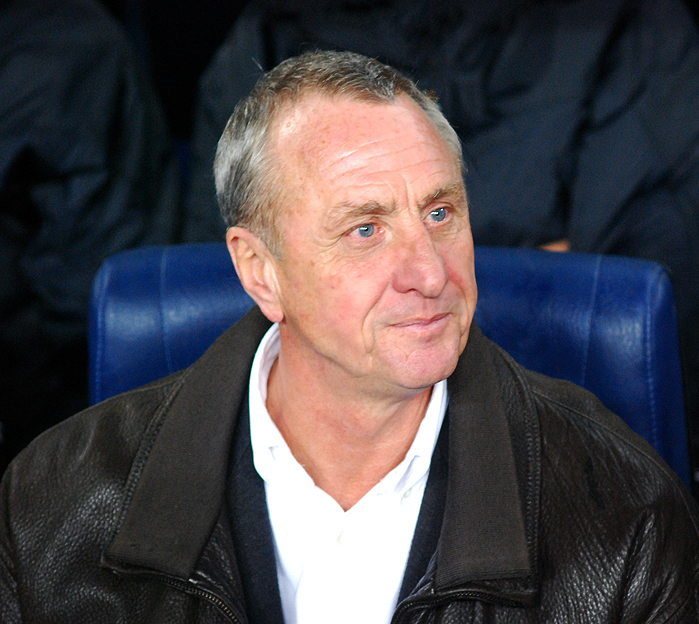
Starting with the release of José Luis Real as coach in October 2011, Chivas struggled to maintain form finding themselves with 9 coaches being hired and released in the past 3 years. The club was in danger of being relegated to the second division for the first time in their history.
In February 2012, Johan Cruyff was hired as the team's advisor. He would seldom visit Guadalajara, delegating many sporting responsibilities to his son-in-law and international director of the Cruyff Institute, Todd Beane. During his tenure, he recommended fellow countryman John van 't Schip for head coach and oversaw the club turf switch from synthetic to natural grass. Although the Apretura 2012 would include wins against rivals América and Atlas, the club would finish the regular season in eighth place and failed to move past the quarterfinals of the liguilla. In December 2012, the club sacked Cruyff and Beane, mainly due to the fact that the team was not improving. On 3 January 2012, van't Schip would be sacked, three days before the start of the Clausura 2013. Benjamin Galindo would be re-appointed as head coach on the same day. A season where the club struggled to win matches and gain momentum, Guadalajara would lose their six final league matches, resulting in a 17th-place finish. After matchday six of the Apretura 2013, a 4–2 home loss to Puebla, Galindo would be sacked. His tenure would end with 4 wins, 8 draws, and 10 losses in 22 league matches.
On November 22, 2013, Guadalajara placed multiple important players on the transfer list: Marco Fabián, Miguel Ponce, and veterans Luis Michel and Héctor Reynoso. On November 25, 2013, it was confirmed that José Luis Real would return to C.D. Guadalajara as head coach. Real showed improvement in the squad but was soon released after the team lost 4–0 at home to rivals América. On April 2, 2014, veteran manager Ricardo La Volpe was appointed as head coach. He was immediately released on April 30, 2014 supposedly due to having inappropriate conduct with a female staff member who later took legal action against him. On May 12, 2014, Carlos Bustos was appointed as head coach. On October 2, 2014, Bustos resigned after a 3–1 loss to Toluca. He left the team with two wins, four draws, and four losses. On October 7, 2014, former Mexico national team manager José Manuel de la Torre was appointed as head coach. The club started the 2015 season with a 2–1 loss against Chiapas F.C., and this result caused them to become tied in the last position of the Liga MX relegation table with Puebla. The very next week the club showed better character after a 2–1 win at home against Pumas UNAM in front of a very supportive, and completely sold-out crowd of fans. By game 12 of the 2015 Clausura season, Guadalajara managed to earn 21 points after winning crucial matches against teams such as Monterrey and relegation rivals Puebla. José Manuel de la Torre's strategic 4–2–3–1 formation proved effect during matches despite the fans' constant requests to use two strikers in the starting line-up. In game 13 of the season, Guadalajara defeated León in the Estadio Akron's 100th official match and went up to 1st place with 24 points. José Manuel de la Torre's effectiveness rose to 62.1%, the highest rate in the Clausura 2015 season. The club finished the 2015 Clausura in fifth place with the third best defense of the season, thus, qualifying to the playoffs for the first time since 2012. The team started the 2015 Apertura season with 4 points in 6 games and a squad plagued with injuries. On September 14, 2015, the club announced they had released De la Torre.
The Second Resurrection (2015–2018)

On September 18, 2015, the club officially presented Matías Almeyda as new manager, proclaiming he wanted to "awaken the giant." Almeyda immediately made his style of attacking football known by consecutively winning his first four matches, including the match against rivals América on September 26, 2015 by a score of 2–1 at the Estadio Azteca. On November 4, Guadalajara won its third Copa MX after defeating León by a score of 1–0 via a 75th-minute header scored by defender Oswaldo Alanís. On May 5, the club qualified for the Clausura 2016 Liguilla, earning 28 points and finishing in 5th place. After seasons of struggles and disappointing results, the club earned ninth place in the official relegation table for the 2016–2017 season due to their good performances throughout the 2015–2016 season, thus, starting their end of relegation troubles and surpassing clubs such as Cruz Azul and Club Tijuana.
On May 21, 2016, club owner Jorge Vergara announced in an official press conference that the club was not renewing contract with Mexican television giants Televisa, thus, ending a 22-year run with the broadcasting company. Vergara then announced the establishment of Chivas TV, the club's own channel for live games, interviews, and more. Chivas TV would have a rough start with many complaints from customers about a difficulty watching the live games, but the service would get better as the season progressed and allies such as Cinepolis Klic, Claro Video, and TDN joined the project and also broadcast the live games.
On July 10, 2016, Chivas played their first ever Supercopa MX and won the title by defeating Veracruz 2–0, with goals from Orbelin Pineda and Omar Bravo, and qualifying to the Copa Libertadores for the first time since 2012, however, they would ultimately not participate due to the Copa Libertadores had a new format which Mexican teams could not adapt to, thus withdrawing from the competition.
On April 19, 2017, Chivas won their fourth Copa MX title, defeating Monarcas Morelia in a penalty shoot-out by a score of 3–1 after a goalless draw, with Guadalajara goalkeeper Miguel Jiménez stopping three consecutive penalties during the series. The following month, they played Atlas, Toluca and in the Clausura championship final was played against Tigres UANL, with Guadalajara winning their twelfth league title following an aggregate victory of 4–3 after two legs. With the capture of the Liga MX title, Chivas became the first team in Mexican history to win a Double in a single season on two different occasions and their first since the 1969–70 season.
On April 25, 2018, Guadalajara won the CONCACAF Champions League final against Major League Soccer side Toronto FC, defeating them 4–2 via penalty shoot-out, with all four players scoring, after a 3–3 aggregate draw. As a result of winning the title, Guadalajara qualified for the 2018 FIFA Club World Cup. On June 11, 2018, however, he left, citing differences with an executive. The following day, José Cardozo was appointed manager.
Downfall And Mediocrity (2018–2022)
In December, at the FIFA Club World Cup, they concluded their first participation in the tournament with a sixth-place finish after losing in a penalty shoot-out against Tunisian club Esperance Sportive de Tunis. In March 2019, Cardozo was let go following a losing streak of 4 matches and on April 10, Tomás Boy was named as his successor.
On November 15, 2019, Grupo Omnilife and club owner Jorge Vergara died at the age of 64 of cardiac arrest. His son, Amaury Vergara, inherited the presidency of the club.
On November 26, Amaury Vergara officially presented Ricardo Peláez as the club's new sporting director and Luis Fernando Tena as the new manager.
Tena was let go on August 9 after going the first three matches of the Guardianes 2020 tournament scoreless, losing twice. Four days later, Víctor Manuel Vucetich was appointed as the new manager. Following a seventh place general table finish, they made it to the Guardianes 2020 semi-finals, losing 2–1 to eventual league winners León. In the Guardianes 2021, Chivas would end up getting knocked out in the reclassification round 4–2 to Pachuca.
In the Torneo Apertura 2021, Chivas had their lowest finish in the league since the reclassification phase was re-added, placing 10th in the general standings. This led to the sacking of Victor Manuel Vucetich and the appointment of caretaker manager Marcelo Michel Leaño. The club would end up getting knocked out to Puebla 6–5 on penalties in the reclassification phase.
Leaño was appointed as the permanent manager for the Clausura 2022 tournament. After only getting 11 points from a possible 39, Leaño was sacked. With 4 games left to go in the tournament, Ricardo Pelaez announced the arrival of Ricardo Cadena to be caretaker manager for the rest of the tournament. Cadena would go on to end the regular season with a 4-game winning streak putting Chivas in 6th place. Chivas would end up beating rivals Pumas UNAM 4–1 in the reclassification phase but then fall in the quarter finals to local rivals and eventual champions Atlas 2–1 (3–2 on aggregate)
For the Apertura 2022, Cadena was appointed as permanent manager. Guadalajara would struggle, as they only got their first win in the 10th matchday. It would be later revealed that Sporting Director Ricardo Peláez had consistently been trying to leave the club but president Amaury Vergara declined his resignation. Chivas would end up getting knocked by Puebla on penalties 5–4, yet again in the reclassification phase.
Spanish Project (2022–2025)

On October 21, 2022, Fernando Hierro was announced as the sporting director for the team. 10 days later, he announced the appointment of former Chicago Fire coach Veljko Paunović. This announcement was heavily criticized as he had little to no knowledge of Mexican football and had left his previous team (Reading) fighting in a relegation battle.
Despite this, he led Chivas to a top 3 finish in the Clausura 2023, qualifying them for the Liguilla directly for the first time since the Clausura 2017. In the quarter-finals, they would face and tie with city rivals Atlas 1–1 on aggregate, with Chivas advancing due to having the better position on the regular season table. Chivas would be matched against historical rivals América in the semi-finals, where despite losing 1–0 at home, Chivas would win 3–1 at the Estadio Azteca to advance to their first league final since the Clausura 2017. On May 28, 2023, despite leading 2–0 after the first half, Chivas lost the final of the Clausura 2023 2–3 after Extra Time to Tigres UANL, the same team they had beat in the Clausura 2017 final.
After a disappointing quarter-final exit in the Apertura 2023, Veljko Paunović officially left the club on December 15, 2023. Fernando Gago would soon be announced as his replacement 5 days later. Gago would lead Chivas to the qualification zone in the Clausura 2024 as the 6th seed with 31 points and bring them back to the semifinals where they would soon be eliminated by rivals Club América.
On May 29, 2024, Fernando Hierro announced his departure as the sporting director of the team, after accepting an offer to become director of football at Al-Nassr.
On October 10, 2024, Chivas announced the departure of Fernando Gago, after his termination clause was activated, allowing him to join Boca Juniors. This was after weeks of speculation, especially during and after their derby loss to Atlas 2–3 on October 5, 2024.
On December 2, 2024, Óscar García Junyent was appointed as the head coach for the Clausura 2025 season. In the pre-season, the squad was reinforced by the likes of Mexican international Luis Romo, as well as the return of Alan Pulido. During the beginning of Clausura 2025, Chivas struggled to win games, only winning 11 points from their first 9 games, including a 3–1 loss to 17th placed San Luis on February 26. On January 30, García Junyent received a 3-match ban after kicking James Rodríguez in a match against León. On February 28, Chivas announced the departure of the remaining Spanish sporting directors from Fernando Hierro's tenure. They were succeeded by Javier Mier. The following day, the new sporting directive announced the imminent departure of García Junyent. They appointed Gerardo Espinoza on March 3 for the remainder of the season. After a promising start against Club América winning 1–0 in the first leg of the Concacaf Champions Cup and drawing 0–0 in the Liga MX, they went on to lose 4–1 on aggregate in the second leg. They then would go on to have even poorer results which led to Guadalajara failing to qualify for the playoffs and finishing in 11th place. This led to the departure of Gerardo Espinoza
Present (2025-)
After weeks of rumors regarding whom would be Guadalajara's next manager, Chivas seemingly agreed personal terms with Domenec Torrent. Just days before the contract was officially signed and announced, the deal fell through further fueling speculation regarding the next manager.
Finally, on May 26, 2025, Guadalajara announced Argentine manager Gabriel Milito. With him came new signings: Richard Ledezma, Diego Campillo, Efraín Álvarez, and Bryan González.
Chivas qualified for the playoffs of the Apertura 2025 (Opening) tournament, finishing in sixth place with 29 points, the result of nine wins, two draws, and six losses. Despite a rocky start to the season, the team recovered form and climbed steadily in the standings to secure their playoff position.
Their campaign concluded in the quarterfinals, where they faced Cruz Azul. The first leg, played at Estadio Akron, ended in a 0–0 draw. The second leg took place at Estadio Olímpico Universitario, where Cruz Azul secured the victory, eliminating Chivas from the Apertura 2025 and bringing their season to a close.
Colors and crest


Colors
The club sports three colors (red, white, and blue) on their kit. Originally sporting an entirely white kit, in 1908, their kit was redesigned and modeled on that of the founder's favorite team, the Belgian Club Brugge K.V., borrowing the vertical stripes and color scheme of the Brugge strip in that era. (Club Brugge has since changed their colors). Some historians assert that the colors came from the French Tricolor because some of the club's first players were French, and as an homage to the factory where most of the players worked, Fábricas de Francia. Although the club philosophy soon changed to a Mexican-centric one, including renaming the club and adopting a Mexican-nationals only policy, the club retained the Bruges colors and pattern, in honor of the European founders' legacy at Chivas.
Crest

Once the team was renamed in 1908 as Club Guadalajara, they used initials, C.G., in the centre of the jersey. After a few years of the team's existence, the first proper crest was designed, still using the team's initials. They were eventually placed around a circle.
After two years of using the original crest, in 1910, a second crest was created using the same C.G. club initials. The "C" was replaced with a silhouette of a snake, wrapped around a "G" shaped horseshoe. Similarly to the original crest, the initials were placed around a red circle. This design would be used in the team's limited edition Centennial jerseys in 2006.
Starting in 1917, the club used a crest which is more similar to its modern contemporary. The crest was composed of a vertical rectangle with a blue border, which inside included the five red and six white stripes of the club jersey. The center of the crest included a blue border of a diamond, alongside a "G" of the same color.
.svg)
Guadalajara's modern crest was designed in 1923 and uses as its base, the coat of arms of the city of Guadalajara, Jalisco. The crest was then complemented with a blue circle and the words Guadalajara, alongside the red stripes and white stripes from the 1917 crest. However, unlike the 1917 crest, there were only four red and five white stripes. In 1984, the crest would be changed to include the words Club Deportivo alongside Guadalajara, and one red and one white stripe were added to the crest, mirroring the 1917 crest. Over the years, stars representing each championship the team have won would be added to the crest, totaling twelve. The modern crest design is credited to brothers Everardo and Jose Espinosa, Angel Bolumar, and Antonio Villalvazo, all of whom were players or directors of the team during that time.
Nicknames
Chivas, Guadalajara's widely used nickname, claim to fame originates from a Liga Mayor match-up against Tampico on 30 September 1948, as Guadalajara would win 1–0 at Parque Oblatos. Despite the win, the team's performances were criticized by attending fans, claiming that Club Guadalajara played like "Chivas Locas" (Crazy Goats). The next day. the performance was chided on local newspaper El Informador, who published a sports column written by editor Martín del Campo titled "Jugaron a las carreras y ganaron las chivas uno a cero" (In a game of races, the goats win one to zero). The nickname would be used by rival fans in a mocking manner, especially fans of Atlas. Months after the column was published, Guadalajara and Atlas would face each other in the final match day of the 1949 Liga Mayor. The match was noted as the first time Guadalajara debuted their mascot, having their starting eleven bring out a goat sporting Guadalajara's red and white striped jersey to the pitch (Chiva Rayada). The match would end with Guadalajara winning the match 1-3, preventing Atlas from winning the league, losing out by two points to León.
The origin of the nickname Rebaño Sagrado (Sacred Flock) can be traced to their first championship title in the 1956-57 Season. While at the parade in Zona Central, the team would go to visit Archbishop Garibi at the Guadalajara Cathedral. A fan of the club, the archbishop reportedly lifted his cassock to reveal that he had been wearing a Chivas jersey underneath it. The archbishop would later telegram Pope Pius XXI, informing him that a squad composed exclusively of Mexican players had won the league. The pope, in a telegram dated 16 January 1957, replied to the archbishop, blessing the players of the football club:
- Current kit provider: Puma (Apertura 2016–).
- Current sponsors: Caliente.mx, Tecate, Omnilife, Volaris, Lubricantes Akron, Coca-Cola, eFootball, MG Motor, Mercado Pago, Powerade, Carl's Jr., Perdura, Casther, Megacable, Mercedes-Benz, GNP Seguros, Axen Capital, Chilchota Alimentos, Amazon Prime, Samsung and Autobuses Futura. Source:
Past kits
| {{Football kit | pattern_la = _chivas1920h | pattern_b = _chivas1920h | pattern_ra = _chivas1920h | pattern_sh = _chivas1920h | pattern_so = _classicfootball | leftarm = 0E235C | body = CA222F | rightarm = 0E235C | shorts = 0E235C | socks = ff0000 | title = 2019–20 kit | {{Football kit | pattern_la = _chivas2021h | pattern_b = _chivas2021h | pattern_ra = _chivas2021h | pattern_sh = _chivas2021h | pattern_so = _classicfootball | leftarm = FFFFFF | body = FFFFFF | rightarm = FFFFFF | shorts = FFFFFF | socks = FFFFFF | title = 2020–21 kit | {{Football kit | pattern_la = _chivas2122h | pattern_b = _chivas2122h | pattern_ra = _chivas2122h | pattern_sh = _chivas2122h | pattern_so = _classicfootball | leftarm = FFFFFF | body = FFFFFF | rightarm = FFFFFF | shorts = 000040 | socks = FFFFFF | title = 2021–22 kit | {{Football kit | pattern_la = _chivas2223h | pattern_b = _chivas2223h | pattern_ra = _chivas2223h | pattern_sh = _chivas2223h | pattern_so = _chivas2223h | leftarm = FFFFFF | body = FFFFFF | rightarm = FFFFFF | shorts = FFFFFF | socks = FFFFFF | title = 2022–23 kit | {{Football kit | pattern_la = _chivas2324h | pattern_b = _chivas2324h | pattern_ra = _chivas2324h | pattern_sh = _chivas2324h | pattern_so = _classicfootball | leftarm = FFFFFF | body = FFFFFF | rightarm = FFFFFF | shorts = FFFFFF | socks = FFFFFF | title = 2023–24 kit | {{Football kit | pattern_la = _chivas2425H | pattern_b = _chivas2425H | pattern_ra = _chivas2425H | pattern_sh = _chivas2324h | pattern_so = _classicfootball | leftarm = FF0000 | body = FFFFFF | rightarm = FF0000 | shorts = 000040 | socks = 000040 | title = 2024–25 kit |
|---|
| Period | Kit supplier | Main shirt sponsor(s) | |
|---|---|---|---|
| 1986–1987 | FRA Le Coq Sportif | None | |
| 1987–1988 | JAP Nissan | ||
| 1988–1989 | BRA Eder do Brasil | ||
| 1989–1991 | GER Adidas | ||
| 1991–1992 | MEX Lotería Nacional de México | ||
| 1992–1993 | ENG Umbro | USA Texaco | |
| 1993–1997 | MEX Aba Sport | MEX MEXLUB | |
| 1997 | USA Nike | ||
| 1997–1998 | MEX Atletica | MEX Mexicana | |
| 1998–1999 | USA Coca-Cola | ||
| 1999–2003 | MEX Cemento Tolteca | ||
| 2003–2004 | MEX JVC* | None | |
| 2004–2006 | USA Reebok | ||
| 2006–2011 | MEX Bimbo | ||
| 2011–2016 | GER Adidas | ||
| 2016–2019 | GER Puma | None | |
| 2019–2024 | MEX Caliente.mx | ||
| 2025– | UK MG Motor | ||
| USA Amazon Prime | |||
| MEX Caliente.mx | |||
| ARG Mercado Pago |
- JVC is a brand of property of the team's president, Jorge Vergara (JVC are the initials of his father's name, Jorge Vergara Cabrera), although these are manufactured by Grendene de México, S.A. de C.V.
Transfer policy
The decision to sign and field only Mexican-born players was made official in 1943, just before the start of the inaugural Liga Mayor season. Many Primera Fuerza clubs (namely Asturias and Real España) had been reliant on foreign talent to be competitive, so much so that the Mexican Football Federation implemented a policy limiting the signing of foreign talent. The policy excluded naturalized players, allowing clubs to field their established foreign players without restriction. Nevertheless, Guadalajara, in an effort to distinguish themselves from their rival, included the total restriction of foreign and naturalized talent in their own transfer policy.
Club president Ignacio López is claimed to have been responsible for the decision, later stating "Este Club vencerá o morirá, hasta el final, a base del talento y el esfuerzo de once jugadores mexicanos" (This club will win or die, until the end, based on the talent and effort of eleven Mexican players). However, Guadalajara had been fielding Mexican-only squads several years before the transfer policy was implemented. The last foreign player to have played for Guadalajara is claimed to have been the French Enrique Pellat in the 1926–27 season.
The club ideology is connected to Mexican nationalism and has been praised for promoting both local (Tapatío) and national (Mexican) talent. However, it has also been criticized as being discriminary, especially in regard to their former subsidiary Chivas USA.
Dual nationals
Historically, the policy would only allow players born in Mexico and who were declared for the Mexican national team to be eligible to play for Guadalajara. Over time, Guadalajara had slowly softened their transfer restrictions, signing Mexican Americans such as Miguel Ángel Ponce, Isaác Brizuela, and Salvador Reyes Jr. (son of club legend Salvador "Chava" Reyes).
Mexican American players signed or linked to the club have been noted to declare for the Mexican national team shortly before signing for Guadalajara. Alejandro Zendejas, a former U-17 USMNT captain, alleges he was pressured into rejecting future USMNT call-ups and to play for El Tri before signing for Guadalajara. Brian Gutiérrez, who played two matches for the USMNT, declared his interest to make a one-time switch to towards El Tri on 6 November 2025*,* less than a month before Guadalajara finalized a deal to sign him from Chicago Fire.
Controversy would arise with the signing of Santiago Ormeño in 2022. A grandson of former Peruvian international goalkeeper and Guadalajara head coach Walter Ormeño, Santiago Ormeño was born in Mexico City but had represented Peru since 2021.
Stadium
Main article: Estadio Felipe Martínez Sandoval, Estadio Jalisco, Estadio Akron
Parque Oblatos
From the 1930s to 1960, Guadalajara played in a small, stadium known as "Parque Oblatos". Originally built for Oro, the inaugural match was a friendly match between Oro and Chivas. Soon after the friendly match, Chivas would move into the stadium, as would Atlas. In the 1950-51 season, Atlas won the Primera División title by one point, often accredited to their 1–0 win over Chivas at Parque Oblatos in the final match day. In the 1954-55 season, Chivas would draw 3–3 against Zacatepec at Parque Oblatos in the fourth match day. Chivas would finish runner-up that season, losing the title to Zacatepec by two points. In the 1956-57 season, Chivas would win their ever first title after defeating Irapuato 1–0 at Parque Oblatos, with a stoppage time winner from Salvador Reyes. In both the 1958-59 and 1959-60 seasons, Chivas would win consecutive division titles in the final match day at Parque Oblatos. As a result, the stadium held significant importance to both Chivas and Jaliscan football heritage. However, by the 1950s, the stadium's official seating capacity of 10,000 failed to meet demand for match day tickets, with derby matches often having total actual attendances of over 15,000. By 1954, this had motivated Chivas, Atlas, and Oro to form Clubes Unidos de Jalisco, with the goal of building and maintaining a new state-of-the-art stadium that would more adequately meet the demand for Tapatío football.

Estadio Jalisco
Guadalajara next shared the Estadio Jalisco with their biggest town rivals Atlas. Estadio Jalisco was inaugurated on January 31, 1960. It was host for eight games in the 1970 FIFA World Cup, six group-stage matches, and one each in the quarterfinals and semifinals. The stadium was host for nine games in the 1986 FIFA World Cup, six group-stage matches, one round-of-16 match, one quarterfinal, and one semifinal. Chivas played in the Estadio Jalisco from 1960 to 2010. Due to the aging structure of the stadium and the desire of Chivas to have their own stadium to call home, owner Jorge Vergara decided to construct a stadium (Estadio Jalisco was always shared with various teams from the city such as Atlas, Club Universidad de Guadalajara, and Club Oro, among others). Chivas administration used an investment of 130 million dollars to build a new home.[[File:Omnilife Stadium.png|thumb|280x280px|Inside view of [[Estadio Akron]].]]

Estadio Akron
In 2010, Chivas's new home field was completed. Estadio Omnilife (then named after the nutrition company owned by Vergara) was designed to look like a volcano with a cloud on top. The idea of the design is to integrate the stadium with nature because of its proximity to La Primavera Biosphere Reserve. It is also used for conventions and as a Business JVC Center. Construction of the stadium began in May 2007 and concluded in July 2010. The stadium seats are red, except for the loge seats that are white. It has a large main entrance and 18 exits. Total seating capacity is 49,850, which includes 330 suites with capacities of nine to 13 guests. An underground parking lot is available for suite renters, which holds up to 850 cars, and parking outside the stadium has capacity for 8,000 cars. The new stadium also has a store, a museum, and various food and beverage concessions. The stadium's opening date was July 30, 2010. The inaugural match was a friendly between Chivas and Manchester United that Chivas won 3–2, with the first goal scored by Javier "Chicharito" Hernández, who had just been transferred from the former to the latter. In March 2016, the stadium was renamed Estadio Chivas. On November 10, 2017, it was announced that Mexican automotive oil firm Grupo Akron would buy the naming rights of Estadio Chivas. On December 15, 2017, the stadium was officially renamed Estadio Akron.
Rivalries

''El Súper Clásico ''
Main article: El Súper Clásico (Mexico)
Chivas has developed two important rivalries over the years. Perhaps its most intense rivalry is with Mexico City-based Club América. Their meetings, which have become known as El Súper Clásico, are played at least twice a year and signal a national derby. Both are the most successful and most popular teams in Mexico. The first confrontation between them ended with a victory for Guadalajara with a score of 3–0.The rivalry began to flourish after the second match when Club América defeated Guadalajara with a score of 7–2. Although the huge defeat sparked embarrassment within Chivas, it was almost two decades before the rivalry became The Clásico. One of the very reasons why these two teams are archrivals is because in 1983 and 1986 they brawled with each other, raising excitement among the fans. Thus, every time they play it is considered a match that everyone will remember. To this day, El Clásico de Clásicos continues to raise huge excitement in the whole country as well as in other parts of the world where there are fans of either team. The intensity of the game is lived so passionately that every time these two teams play a game, regardless of what position they are in on the charts or what level they show throughout the league, it is always considered the most important game of the season. El Súper Clásico was ranked 12th on FourFourTwo's 50 biggest derbies list.
''El Clásico Tapatío''
Main article: Clásico Tapatío
The Clásico Tapatío, as it is known, is the oldest derby in Mexican football since its inception in 1916, being a game that is lived with great passion on the part of supporters of both Chivas and Club Atlas. In the early stages of the rivalry Guadalajara supporters started to dub players of Atlas by calling them "Margaritas". In reaction to the name, a group of Atlas supporters reacted by claiming that their rivals ran like "Chivas Locas" (Crazy Goats) and to the Chivas players it was considered an insult. Over time the meaning of "Chivas" changed due to the popularity of the club and it became a term of endearment upon the Chivas fans. They used to share Estadio Jalisco, which caused controversies with the fans until, in 2010 Chivas moved to the Estadio Akron.
Support

The fans of what some surveys say is the most popular football team in the country remain loyal to a club that has only won four championship titles (in a period of more than 50 years) since its heyday in 1970.
In addition to the general enthusiasm that still lingers over the era of the Campeonísimo – the most successful club team in the history of Mexican professional football – the affection also stems from the fact that Chivas is the only first division club in Mexico to only sign local players. Chivas also rarely bought Mexican players from other major clubs and did not import its players equally from all parts of Mexico. The focus of its personnel policy is mainly in its own region in western Mexico, and mainly in the state of Jalisco, and traditionally even most in the utilization of its own young talent.
Barra Brava
Chivas Guadalajara has 3 supporters' group (barra bravas), La Irreverente, Barra Insurgencia and Legión 1908.
Players
First-team squad
Out on loan
Reserve teams
;Tapatío :Reserve team that plays in the Liga de Expansión MX in the second level of the Mexican league system.
;Álamos F.C. :Reserve team that plays in the Liga TDP, the fourth level of the Mexican league system.
Player records
All players are Mexican unless otherwise noted.
Top scorers
;Primera División
| Rank | Name | Season | Goals |
|---|---|---|---|
| 1 | Adalberto López | 1953–54 | 21 |
| 2 | Salvador Reyes | 1970–71 | 21 |
| 3 | Crescencio Gutiérrez | 1956–57 | 19 |
| 4 | Alan Pulido | Apertura 2019 | 12 |
| 5 | Armando González | Apertura 2025 | 12 |
| 6 | Omar Bravo | Clausura 2007 | 11 |
| 7 | Javier Hernández | Bicentenario 2010 | 10 |
All-time records
Players in bold are still active with the team.
| Rank | Name | Nationality | Goals |
|---|---|---|---|
| 1 | Omar Bravo | MEX | 132 |
| 2 | Salvador Reyes | MEX | 122 |
| 3 | Eduardo de la Torre | MEX | 90 |
| 4 | Benjamín Galindo | MEX | 78 |
| 5 | Crescencio Gutiérrez & Maximiano Prieto | MEX | 72 |
| 6 | Javier de la Torre | MEX | 70 |
| 7 | Javier Valdivia | MEX | 69 |
| 8 | Francisco Jara | MEX | 68 |
| 9 | Ramón Morales | MEX | 66 |
| 10 | Isidoro Díaz | MEX | 58 |
| Rank | Name | Nationality | Apps |
|---|---|---|---|
| 1 | Juan Jasso | MEX | 433 |
| 2 | José Villegas | MEX | 428 |
| 3 | Javier Ledesma | MEX | 419 |
| 4 | Demetrio Madero | MEX | 413 |
| 5 | Omar Bravo & Ramón Morales | MEX | 382 |
| 6 | Héctor Reynoso | MEX | 368 |
| 7 | Sergio Lugo | MEX | 328 |
| 8 | Alberto Medina | MEX | 323 |
| 9 | Sabás Ponce | MEX | 307 |
| 10 | Jaime Gómez | MEX | 301 |
Retired numbers
Main article: List of retired numbers in association football
- 8 – MEX Salvador Reyes (forward, 1953–1967, 2008) – retired in January 2013.
- 12 – MEX Dedicated to fans as the 12th player
- 22 – MEX José Martínez González (midfielder, 1970–81) (posthumous)
Personnel
Coaching Staff
| Position | Staff |
|---|---|
| Manager | ARG Gabriel Milito |
| Assistant manager | ARG Leandro Ávila |
| Goalkeeper coach | MEX Víctor Hugo Hernández |
| Fitness coaches | ARG Sergio Di Bartolo |
| MEX Adrián Cruz | |
| Physiotherapist | MEX Mario Durán |
| Team doctors | MEX Luis Gallardo |
| MEX Victor Camacho |
Sources:
Management
Managerial History
| Date | Name |
|---|---|
| 1943–44 | MEX Fausto Prieto |
| 1943–45 | CHI Nemesio Tamayo |
| 1946 | MEX José Fernández Troncoso |
| 1946–49 | HUN Gyorgy Orth |
| 1949 | MEX José Antonio Guerrero Barreiro |
| 1949–50 | MEX Fausto Prieto |
| 1950–51 | SCO William Reaside |
| 1951–56 | ARG José María Casullo |
| 1956 | MEX Javier de la Torre |
| 1956–57 | URU Donaldo Ross |
| 1957–59 | HUN Árpád Fekete |
| 1959 | MEX Javier de la Torre |
| 1959–60 | HUN Árpád Fekete |
| 1960–70 | MEX Javier de la Torre |
| 1970 | MEX Jesús Ponce |
| 1970–73 | MEX Javier de la Torre |
| 1973 | MEX Héctor Hernández |
| 1973–74 | PER Walter Ormeño |
| 1974 | MEX Héctor Hernández |
| 1974–75 | MEX Jesús Ponce |
| 1975 | SPA Héctor Rial |
| 1975–76 | URU Horacio Troche |
| 1976–78 | MEX Jesús Ponce |
| 1978–79 | MEX Diego Mercado |
| 1979–80 | URU Carlos Miloc |
| 1980–82 | MEX Diego Mercado |
| 1982–89 | MEX Alberto Guerra |
| 1 July 1989 – 30 June 1991 | ARG Ricardo La Volpe |
| 1990 | HUN Árpád Fekete |
| 1990 | MEX Jesús Bracamontes |
| 1990–91 | ARG Miguel Ángel López |
| 1991–93 | MEX Jesús Bracamontes |
| 1993 | MEX Demetrio Madero |
| 1993–95 | MEX Alberto Guerra |
| 1 July 1995 – 30 Oct 1995 | ARG Osvaldo Ardiles |
| 4 Nov 1995 – 30 June 1996 | NLD Leo Beenhakker |
| 1 July 1996 – 30 June 2000 | BRA Ricardo Ferretti |
| 1 July 2000 – 22 Aug 2000 | MEX Hugo Hernández |
| 2000–01 | MEX Jesús Bracamontes |
| 2001 | MEX Jorge Dávalos |
| 2001–02 | ARG Oscar Ruggeri |
| 1 July 2002 – 31 Dec 2002 | MEX Daniel Guzmán |
| 1 Jan 2003 – 29 Sept 2003 | MEX Eduardo de la Torre |
| 1 Oct 2003 – 30 April 2004 | NLD Hans Westerhof |
| 1 July 2004 – 14 Aug 2005 | MEX Benjamín Galindo |
| 2005 | MEX Juan Carlos Ortega |
| 2005 | SPA Xabier Azkargorta |
| 1 Jan 2006 – 16 March 2006 | NLD Hans Westerhof |
| 17 March 2006 – 24 Sept 2007 | MEX José Manuel de la Torre |
| 28 Sept 2007 – 23 March 2009 | MEX Efraín Flores |
| 30 March 2009 – 16 April 2009 | MEX Omar Arellano Nuño |
| 16 April 2009 – 12 Sept 2009 | MEX Paco Ramírez |
| 16 Sept 2009 – 3 Nov 2009 | MEX Raúl Arias |
| 3 Nov 2009 – 4 Oct 2011 | MEX José Luis Real |
| 4 Oct 2011 – 22 Jan 2012 | MEX Fernando Quirarte |
| 25 Jan 2012 – 19 April 2012 | MEX Ignacio Ambríz |
| 19 April 2012 – 30 June 2012 | MEX Alberto Coyote (Int.) |
| 1 July 2012 – 3 Jan 2013 | NLD John van 't Schip |
| 3 Jan 2013 – 18 Aug 2013 | MEX Benjamín Galindo |
| 19 Aug 2013 – 24 Nov 2013 | MEX Juan Carlos Ortega |
| 25 Nov 2013 – 2 April 2014 | MEX José Luis Real |
| 2 April 2014 – 30 April 2014 | ARG Ricardo La Volpe |
| 12 May 2014 – 2 Oct 2014 | ARG Carlos Bustos |
| 3 Oct 2014 – 6 Oct 2014 | MEX Ramón Morales (Int.) |
| 7 Oct 2014 – 14 Sept 2015 | MEX José Manuel de la Torre |
| 15 Sept 2015 | MEX Ramón Morales (Int.) |
| 15 Sept 2015 – 11 June 2018 | ARG Matías Almeyda |
| 12 June 2018 – 31 March 2019 | PAR José Cardozo |
| 6 Oct 2018 – April 2019 | MEX Alberto Coyote (Int.) |
| 10 April 2019 – 26 September 2019 | MEX Tomás Boy |
| 26 September 2019 – 9 August 2020 | MEX Luis Fernando Tena |
| 9 August 2020 – 13 August 2020 | MEX Marcelo Michel Leaño (Int.) |
| 13 August 2020 – 19 September 2021 | MEX Víctor Manuel Vucetich |
| 19 September 2021 – 14 April 2022 | MEX Marcelo Michel Leaño |
| 14 April 2022 – 9 October 2022 | MEX Ricardo Cadena (Int.) |
| 31 October 2022 – 15 December 2023 | SRB Veljko Paunović |
| 20 December 2023 – 10 October 2024 | ARG Fernando Gago |
| 10 October 2024 – 21 November 2024 | MEX Arturo Ortega (Int.) |
| 2 December 2024 - 3 March 2025 | SPA Óscar García Junyent |
| 3 March 2025 - 21 April 2025 | MEX Gerardo Espinoza |
| 26 May 2025 - Present | ARG Gabriel Milito |
Presidential History
| Years | Name | Years | Name |
|---|---|---|---|
| 1908 - 1911 | MEX Rafael Higinio Orozco | 1954 - 1956 | MEX Antonio Levy Villegas |
| 1911 - 1914 | MEX Georgio Orozco | 1956 - 1958 | MEX Evaristo Cárdenas |
| 1915 - 1918 | MEX Ramón J. Fregoso | 1959 - 1961 | MEX Federico González Obregón |
| 1919 - 1922 | MEX José Fernando Espinosa | 1961 - 1963 | MEX Alberto Esponda Macías |
| 1923 - 1925 | MEX Salvador Mejía | 1963 - 1967 | MEX Jorge Agnesi Deassle |
| 1926 - 1927 | MEX Ramón J. Fregoso | 1967 - 1973 | MEX Enrique Ladrón de Guevara |
| 1928 | MEX Juan Billón | 1973 - 1975 | MEX Jaime Ruiz Llaguno |
| 1929 - 1930 | MEX Everardo S. Espinosa | 1975 - 1977 | MEX Evaristo Cárdenas |
| 1931 - 1932 | MEX Salvador Mejía | 1977 - 1983 | MEX Alfonso Cuevas Calvillo |
| 1933 - 1934 | MEX José Proto García | 1983 - 1985 | MEX Carlos González Lozano |
| 1935 - 1936 | MEX José Fernando Espinosa | 1985 - 1988 | MEX Marcelino García Paniagua |
| 1936 - 1937 | MEX Ramiro Álvarez Tostado | 1988 - 1990 | MEX Sergio Ruiz Lacroix |
| 1937 - 1938 | MEX J. Armando Suárez | 1990 - 1991 | MEX Francisco González Paul |
| 1939 - 1940 | MEX J. Antonio Villalvazo | 1991 - 1993 | MEX Aurelio Martínez Flores |
| 1941 | MEX Pedro Ramírez | 1993 - 1995 | MEX Jorge Alarcón Collignon |
| 1941 - 1943 | MEX J. Jesús Mendoza Gámez | 1996 - 1999 | MEX Rafael Jazo Ceballos |
| 1943 | MEX Donato Soltero Leal | 1999 - 2002 | MEX Ángel Francisco Cárdenas Moreno |
| 1944 - 1948 | MEX Ignacio López Hernández | 2002 - 2019 | MEX Jorge Carlos Vergara Madrigal |
| 1949 - 1953 | MEX Federico González Obregón | 2019 - | MEX Amaury Vergara Zatarain |
Honours
Domestic
| Type | Competition | Titles | Winning years | Runners-up | Primera División/Liga MX | Copa México/Copa Presidente/Copa MX | Campeón de Campeones | Supercopa MX | |
|---|---|---|---|---|---|---|---|---|---|
| [[File:Flag of Mexico.svg | 20px]] | ||||||||
| Top division | 12 | 1956–57, 1958–59, 1959–60, 1960–61, 1961–62, 1963–64, 1964–65, 1969–70, 1986–87, Verano 1997, Apertura 2006, Clausura 2017 | 1951–52, 1954–55, 1962–63, 1968–69, México 1970, 1982–83, 1983–84, Invierno 1998, Clausura 2004, Clausura 2023 | ||||||
| 4 | 1962–63, 1969–70, Apertura 2015, Clausura 2017 | 1947–48, 1950–51, 1951–52, 1953–54, 1954–55, 1966–67, Clausura 2015, Apertura 2016 | |||||||
| 7 | 1957, 1959, 1960, 1961, 1964, 1965, 1970 | 1962, 1963, 2017 | |||||||
| 1 | 2016 | — |
International
| Type | Competition | Titles | Winning years | Runners-up | CONCACAF Champions Cup/Champions League | CONMEBOL Libertadores |
|---|---|---|---|---|---|---|
| [[File:Concacaf logo.svg | 20px]] | |||||
| Continental CONCACAF | 2 | 1962, 2018 | 1963, 2007 | |||
| Continental CONMEBOL | 0 | — | 2010 |
Subregional
| Type | Competition | Titles | Winning years | Runners-up | Campeonato Centroamericano |
|---|---|---|---|---|---|
| Central America CCCF | 0 | — | 1959 |
;Notes
- shared record
Amateur
- Liga Occidental De Jalisco: 1908–09, 1909–10, 1911–12, 1921–22, 1922–23, 1923–24, 1924–25, 1927–28, 1928–29, 1929–30, 1932–33, 1934–35, 1937–38
- Campeón de Campeones de la Liga Occidental: 1932–33
- Torneo de una Tarde: 1929–30
- Torneo de Primavera: 1917
Friendly
- Copa Reforma: 1911
- Copa Militarización: 1918
- Copa Deportivo Nacional de Torreón: 1919
- Copa Eugenio Pinzón: 1921
- Copa Francia: 1921–22
- Copa Fábricas de Francia: 1924
- Copa Presidencial: 1953
- Copa de Oro de Occidente: 1954, 1955, 1956, 1960
- Torneo Pentagonal Internacional de la Ciudad de México: 1958, 1961
- Trofeo Don Adolfo López Mateos: 1959, 1960, 1961, 1963
- Torneo de la Ciudad de Guadalajara: 1961
- Torneo Pentagonal Internacional de Jalisco: 1962
- California Cup: 1977
- Torneo Cuadrangular Fiestas de Octubre de Guadalajara: 1982
- Los Angeles International Quadrangular: 1982
- Copa Europa: 1985
- Torneo Cuadrangular Internacional Jalisciense: 1994
- Copa Tecate: 1994, 2001
- Copa Coliseo:1998
- Copa Estrella del Milenio: 1999
- Copa Informador de Fútbol: 1999
- Copa Pachuca: 1999
- Copa León: 2003
- Copa Marval: 2009
- Copa Gol Marketing: 2011
- Copa Jalisco: 2013
- Copa Duelo de Gigantes: 2017
- Supercopa Tecate: 2017
- Copa Árbol de Gernika: 2023
- Copa Morelos: 2025
International records
| Season | Competition | Round | Club | Home | Away | Agg. / Pos. |
|---|---|---|---|---|---|---|
| 1959 | Campeonato Centroamericano | Round-Robin | SLV FAS | 1–1 | ||
| HON Olimpia | 3–2 | |||||
| CRC Alajuelense | 1–1 | |||||
| 1962 | CONCACAF Champions' Cup | First round | CRC Herediano | 2–0 | 3–0 | 5–0 |
| Final | GUA Comunicaciones | 5–0 | 1–0 | 6–0 | ||
| 1963 | CONCACAF Champions' Cup | Second round | USA New York Hungaria | 2–0 | 0–0 | 2–0 |
| Semi-finals | CRC Saprissa | 2–0 | 1–0 | 3–0 | ||
| Final | HAI Racing Haïtien | Cancelled1 | ||||
| 1984 | CONCACAF Champions' Cup | First round | SLV C.D. Águila | 3–0 | 4–2 | 7–2 |
| Second round | USA Jacksonville Tea Men | Walkover2 | ||||
| Third round | GUA Comunicaciones | 4–1 | 0–0 | 4–1 | ||
| Fourth round | USA New York Pancyprian-Freedoms | Cancelled3 | ||||
| 1985 | CONCACAF Champions' Cup | First round | MEX América | 1–1 | 1–3 | 2–4 |
| 1997 | CONCACAF Champions' Cup | Quarter-final | CRC C.S. Cartaginés | 1–0 | ||
| Semi-final | MEX Cruz Azul | 2–3 | ||||
| Third place | USA D.C. United | 2–2 | ||||
| 1998 | Copa Libertadores | Pre-Libertadores | VEN Atlético Zulia | 4–1 | 3–2 | 1st |
| VEN Caracas | 4–1 | 1–1 | ||||
| Group 2 | MEX América | 0–1 | 0–2 | 4th | ||
| BRA Grêmio | 1–0 | 0–2 | ||||
| BRA Vasco da Gama | 1–0 | 0–2 | ||||
| 2000 | Copa Merconorte | Group A | COL América de Cali | 1–1 | 0–1 | 1st |
| VEN Estudiantes de Mérida | 4–0 | 3–2 | ||||
| ECU El Nacional | 1–0 | 3–3 | ||||
| Semi-finals | COL Atlético Nacional | 1–1 | 3–3 | 4–4 (2–4 p) | ||
| 2001 | CONCACAF Giants Cup | Quarter-finals | GUA Comunicaciones | 1–1 | 1–3 | 2–4 |
| Copa Merconorte | Group B | COL Millonarios | 3–0 | 0–2 | 4th | |
| VEN Deportivo Italchacao | 0–2 | 0–2 | ||||
| USA MetroStars | 0–2 | 0–2 | ||||
| 2005 | Copa Libertadores | Preliminary round | PER Cienciano | 3–1 | 5–1 | 8–2 |
| Group 7 | CHI Cobreloa | 3–1 | 3–1 | 1st | ||
| COL Once Caldas | 0–0 | 2–4 | ||||
| ARG San Lorenzo | 2–1 | 0–0 | ||||
| Round of 16 | MEX Pachuca | 3–1 | 1–1 | 4–2 | ||
| Quarter-finals | ARG Boca Juniors | 4–0 | 0–0 | 4–0 | ||
| Semi-finals | BRA Atlético Paranaense | 2–2 | 0–3 | 2–5 | ||
| 2006 | Copa Libertadores | First stage | CHI Colo-Colo | 5–3 | 3–1 | 8–4 |
| Group 1 | PER Cienciano | 0–0 | 1–0 | 2nd | ||
| VEN Caracas | 1–1 | 0–0 | ||||
| BRA São Paulo | 2–1 | 2–1 | ||||
| Round of 16 | COL Santa Fe | 3–0 | 1–3 | 4–3 | ||
| Quarter-finals | ARG Vélez Sarsfield | 0–0 | 2–1 | 2–1 | ||
| Semi-finals | BRA São Paulo | 0–1 | 0–3 | 0–4 | ||
| 2007 | CONCACAF Champions' Cup | Quarter-finals | TRI W Connection | 3–0 | 1–2 | 4–2 |
| Semi-finals | USA D.C. United | 2–1 | 1–1 | 3–2 | ||
| Final | MEX Pachuca | 2–2 | 0–0 | 2–2 (6–7 p) | ||
| Copa Sudamericana | Round of 16 | USA D.C. United | 1–0 | 2–1 | 2–2 (a) | |
| Quarter-finals | ARG Arsenal | 1–3 | 0–0 | 1–3 | ||
| 2008 | Copa Libertadores | Group 6 | BOL San José | 2–0 | 3–0 | 3rd |
| BRA Santos | 3–2 | 0–1 | ||||
| COL Cúcuta Deportivo | 0–1 | 0–1 | ||||
| Copa Sudamericana | First Stage | VEN Aragua | 1–1 | 2–1 | 3–2 | |
| Round of 16 | BRA Atlético Paranaense | 2–2 | 4–3 | 6–5 | ||
| Quarter-finals | ARG River Plate | 2–2 | 2–1 | 4–3 | ||
| Semi-finals | BRA Internacional | 0–2 | 0–4 | 0–6 | ||
| 2009 | Copa Libertadores | Group 6 | ARG Lanús | 0–0 | 1–1 | 2nd |
| CHI Everton | 6–2 | 1–1 | ||||
| VEN Caracas | 1–0 | 0–2 | ||||
| Round of 16 | BRA São Paulo | Walkover6 | ||||
| 2010 | Copa Libertadores | Round of 16 | ARG Vélez Sarsfield | 3–0 | 0–2 | 3–2 |
| Quarter-finals | PAR Libertad | 3–0 | 0–2 | 3–2 | ||
| Semi-finals | CHI Universidad de Chile | 1–1 | 2–0 | 3–1 | ||
| Final | BRA Internacional | 1–2 | 2–3 | 3–5 | ||
| 2012 | Copa Libertadores | Group 7 | ECU Deportivo Quito | 1–1 | 0–5 | 4th |
| ARG Vélez Sarsfield | 0–2 | 0–3 | ||||
| URU Defensor Sporting | 1–0 | 0–1 | ||||
| CONCACAF Champions League | Group 8 | GUA Xelajú | 2–1 | 0–1 | 2nd | |
| TRI W Connection | 4–0 | 1–1 | ||||
| 2018 | CONCACAF Champions League | Round of 16 | DOM Cibao | 5–0 | 2–0 | 7–0 |
| Quarter-finals | USA Seattle Sounders FC | 3–0 | 0–1 | 3–1 | ||
| Semi-finals | USA New York Red Bulls | 1–0 | 0–0 | 1–0 | ||
| Final | CAN Toronto FC | 1–2 | 2–1 | 3–3 (4–2 p) | ||
| FIFA Club World Cup | Second round | JPN Kashima Antlers | 2–3 | |||
| Fifth place | TUN Espérance de Tunis | 1–1 (5–6 p) | ||||
| 2023 | Leagues Cup | Central 3 | USA FC Cincinnati | 1–3 | 3rd | |
| USA Sporting Kansas City | 0–1 | |||||
| 2024 | CONCACAF Champions Cup | Round One | Forge FC | 2–1 | 3–1 | 5–2 |
| Round of 16 | MEX América | 0–3 | 3–2 | 3–5 | ||
| Leagues Cup | West 2 | USA San Jose Earthquakes | 1–1 (3–4 p) | 3rd | ||
| USA LA Galaxy | 2–2 (4–5 p) | |||||
| 2025 | CONCACAF Champions Cup | Round One | Cibao | 3–0 | 1–1 | 4–1 |
| Round of 16 | MEX América | 1–0 | 0–4 | 1–4 | ||
| Leagues Cup | Eastern 3 | USA New York Red Bulls | 0–1 | 6th | ||
| USA Charlotte FC | 2–2 (4–2 p) | |||||
| USA FC Cincinnati | 1–2 |
Guadalajara were forced to withdraw as they were on a tour in Europe during the finals' schedule.
Jacksonville withdrew, Guadalajara advances.
Both clubs were disqualified after failing to agree on match dates.
Third place was shared.
After refusing to play their match against the MetroStars in New York, Guadalajara was expelled from the competition by CONMEBOL. They lost their 4 remaining matches with a score of 0–2.
As São Paulo refused to travel following concerns over the H1N1 flu outbreak in Mexico, Guadalajara withdrew from the tournament. CONMEBOL later secured Guadalajara a place in the round of 16 of the 2010 edition instead.
Notes
References
References
- "2026 FIFA World Cup Bid Book".
- "Gabriel Milito is new Chivas coach".
- (2014-10-06). "Classic club: Mexico beats to Chivas' drum – FIFA.com".
- "Chivas Guadalajara". FIFA.
- (2 March 2013). "The case for permitting foreign internationals at Chivas". [[ESPN]] FC.
- (8 December 2016). "Matias Almeyda enjoying the challenge of managing Chivas' all-Mexican squad". [[ESPN]] FC.
- (14 January 2017). "Chivas, un equipo de mexicanos en una liga que prefiere a extranjeros". Vanguaria MX.
- Gonzalez, Raymundo. "Cantera de Chivas evita pérdida millonaria". mediotiempo.com.
- (27 February 2010). "Chivas 2–0 San Luis... Sin mucho brillo, Chivas consolidó el octavo triunfo". mediotiempo.es.
- (11 August 2010). "Final Libertadores: Chivas cayó en la ida ante Inter en Guadalajara". copalibertadores.com.
- (6 April 2016). "Chivas the most popular team in Mexico". milenio.com.
- (12 November 2020). "Chivas, el club más rico de México". El Universal.
- "Orígenes". chivasdecorazon.com.mx.
- "Historia en Imágene". chivasdecorazon.com.mx.
- (2024-05-08). "Chivas, 118 años de ideología, tradición y resiliencia".
- "Cuando las Chivas jugaron con extranjeros".
- (2023-05-28). "Guadalajara, un equipo con más de 100 años de historia: Este es el origen de las Chivas".
- "Futbol En Jalisco - Ensayos de Calidad - yairdlc".
- (2025-03-05). "107 años de historia y grandeza rojiblanca".
- FC, Atlas. "Atlas FC {{!}} Biografía y Wiki {{!}} VAVEL México".
- (2025-02-07). "Cuando Chivas y Atlas se batían en la época amateur".
- (2024-12-20). "Selección Jalisco, la representación del futbol de occidente.".
- "Primera Fuerza 1940-41".
- "Etapa Amateur". chivasdecorazon.com.mx.
- (2025-01-17). "Copa México 1942-43: El Primer partido de las Chivas en la era profesional".
- "Chivas : Temporada 1943-44 – Todos los Resultados. Archivosfutmex.com".
- (2024-10-11). "Pablo "Pablotas" González, un delantero de fuerza".
- Moreno, Antonio. (8 May 2014). "Las 'Chivas' locas".
- "Mexico 1951/52".
- "Mexico 1954/55".
- "CAMPEONÍSIMO". chivasdecorazon.com.mx.
- (30 July 2014). "La historia de Chivas contra equipos europeos". chivasdecorazon.com.mx.
- (15 February 2011). "Especial: El recuerdo de Pepe Martínez". televisadeportes.esmas.com.
- Castro, Fernando. "Mexico 1980/81".
- "México – List of Final Tables". [[Rec.Sport.Soccer Statistics Foundation]].
- Mora, Lugo, José, Erik Francisco. "Mexico 1982/83".
- Mora, Lugo, José, Erik Francisco. "Mexico 1983/84".
- Mora, Lugo, José, Erik Francisco. "Mexico 1986/87".
- Witker, Jorge Ernesto. "Chivas, 10 años después de la Promotora".
- "La formación de unas 'Súper Chivas'". informador.com.mx.
- "Campeonato #10". chivasdecorazon.com.mx.
- "Chivas – Necaxa". mediotiempo.com.
- (3 October 2006). "El lucrativo negocio de Chivas". ESPN Deportes.
- "Vergara Bio". Economia.com.mx.
- Torres, José Antonio. (6 February 2004). "Las Chivas tendrán nuevo estadio". La Nación.
- (2004). "Pumas se corona campeón tras vencer en los penales". terra.com.
- (9 August 2010). "México en la Copa Libertadores, hoy más cerca que nunca de la gloria". mexico.cnn.com.
- "Campeonato #11". chivasdecorazon.com.mx.
- (6 March 2010). "Jaguares 4–0 Chivas... Jaguares cortó racha de Chivas y la propia". mediotiempo.com.
- (26 July 2010). "5 questions to Jose Luis Real". Champs.ws.
- (8 April 2020). "How Chicharito's Manchester United move shocked Mexican soccer". ESPN.
- "'Chicharito' se lleva dos premios Balón de Oro". El Informador.
- Marshall, Tom. (8 April 2010). "Manchester United to play Chivas at new stadium".
- Thompson, Gemma. (30 July 2010). "Chivas 3 United 2". Manchester United F.C..
- Edwards, Daniel. (11 August 2010). "Copa Libertadores Preview: Chivas De Guadalajara – Internacional". Goal.
- (24 February 2012). "Chivas contrata para su cuerpo técnico al holandés Johan Cruyff". excelsior.com.mx.
- Heydari, Kevyan Antonio. (2012-02-28). "Chivas Goes Dutch With Cruyff".
- (2020-03-24). "¿Qué dejó el legendario Johan Cruyff en Chivas? {{!}} TUDN Liga MX {{!}} TUDN".
- (2 December 2012). "Chivas fires Johan Cruyff as adviser". ESPN FC.
- "Chivas sacking comes at no surprise".
- (2013-08-19). "¿Por qué Chivas de Guadalajara despidió a Benjamín Galindo?".
- (27 November 2013). "Chivas pone transferibles a Marco Fabián, Casillas, Ponce y hasta Luis Michel". lajornadajalisco.com.mx.
- (26 November 2013). "Chivas presenta a José Luis Real como su nuevo técnico". excelsior.com.mx.
- (1 April 2014). "Chivas de Guadalajara cesó a su técnico José Luis Real". nacion.com.
- (2 April 2014). "Ricardo La Volpe, nuevo Director Técnico de Chivas". mediotiempo.com.
- (6 May 2014). "Me sentí agredida, atacada y lastimada: Podóloga de Chivas". mediotiempo.com.
- (12 May 2014). "Presentan a Carlos Bustos como nuevo técnico de Chivas". excelsior.com.mx.
- (2 October 2014). "Toluca 3 vs. Chivas 1: El 'Rebaño' y Bustos se hundieron en el infierno". futbol.univision.com.
- (2 October 2014). "Carlos Bustos resigns as head coach of struggling Chivas Guadalajara". ESPN FC.
- (7 October 2014). "Chepo named new Chivas coach". Goal.
- (10 January 2015). "Chivas compromete su situación tras derrota 2–1 en Chiapas". ESPN Deportes.
- (18 January 2015). "Vibrante primer triunfo de Chivas en el Clausura 2015". chivasdecorazon.com.mx.
- (12 April 2015). "Triunfo y liderato en el centenario del Omnilife". chivasdecorazon.com.mx.
- (13 April 2015). "'Chepo' presume ser el DT mexicano en activo con mejor efectividad". espn.com.mx.
- "Tabla General – Liga Bancomer MX". mediotiempo.com.
- (14 September 2015). "Comunicado do Prensa (José Manuel de la Torre)". chivasdecorazon.com.mx.
- (18 September 2015). "Comunicado de Prensa (Presentación Matías Almeyda)". chivasdecorazon.com.mx.
- (15 September 2015). "Matías Almeyda es el nuevo pastor del Rebaño Sagrado". [[Diario AS]].
- (18 September 2015). "Chivas presenta oficialmente a Matías Almeyda como nuevo entrenador". [[ESPN Deportes]].
- "Calendario (Apertura 2015)". chivasdecorazon.com.mx.
- (4 November 2015). "¡Chivas Campeón de la Copa MX Apertura 2015!". chivasdecorazon.com.mx.
- (8 May 2016). "Chivas sube hasta el noveno lugar de la porcentual 2016–17; Cruz Azul 13". espn.com.mx.
- Sennikoff, Kyle. (10 July 2016). "Chivas wins Super Copa MX 2–0, gets Copa Libertadores birth". Vavel.
- (15 November 2016). "América, Chivas y Xolos no disputarán la Copa Libertadores". Esto.
- Diaz, Rafael. (19 April 2017). "Chivas beat Monarcas Morelia on penalties to win Copa MX". FMFStateOfMind.com.
- (29 May 2019). "¡Doblete Sagrado! Chivas conquista Copa y Liga después de 37 años". MedioTiempo.com.
- (11 April 2018). "2018 Scotiabank Concacaf Champions League Final Set". CONCACAF.
- (6 January 2020). "Almeyda alude por primera vez a Higuera como culpable de su salida de Chivas". Medio Tiempo.
- Arnold, Jon. (12 June 2018). "Cardozo replaces Almeyda as Chivas manager". Goal.
- Diaz, Rafael. (18 December 2018). "Chivas lose on penalties to finish 6th in Club World Cup". FMF State of Mind.
- (18 December 2018). "Chivas Guadalajara lose to Esperance on penalties at Club World Cup". ESPN.
- (31 March 2019). "Chivas hace oficial la destitución de José Cardozo como entrenador". AS.
- (10 April 2019). "Tomás Boy es el nuevo técnico de Chivas". Goal.
- (26 November 2019). "Presentan oficialmente a Peláez como Director Deportivo de Chivas; ratifica a Luis Fernando Tena como DT". MedioTiempo.com.
- (26 November 2019). "Luis Fernando Tena, nuevo técnico de las Chivas". Marca Claro.
- Marshall, Tom. (9 August 2020). "Liga MX giant Chivas part ways with head coach Luis Fernando Tena". ESPN.
- "Liga MX: Vucetich afirma que Chivas es el reto más grande de su carrera". Soy Fútbol.
- Marshall, Tom. (6 December 2020). "Liga MX semifinals: Cruz Azul (again) define futility while Leon subdue Chivas". ESPN.
- (2025-03-01). "Comunicado oficial de Chivas".
- (2024-10-05). "Afición de Chivas estalló en las redes y marcó a los culpables de la derrota contra Atlas por el Clásico Tapatío".
- (2025-02-27). "¡Chivas perdió con el sotanero San Luis! Desastre del Guadalajara ante un Atleti que llevaba 6 derrotas al hilo".
- (2025-01-30). "Chivas coach García apologizes for kicking James".
- (2025-03-01). "Comunicado oficial de Chivas".
- Beltrán, Por Jesús F.. (2025-03-01). "Chivas despediría a Óscar García Junyent; juego contra Pumas sería su último partido".
- (2025-07-14). "Gerardo Espinoza es nuevo entrenador de Chivas".
- (2025-03-13). "América golea a Chivas para enfrentar otro Clásico en Champions Cup".
- (2025-04-21). "Chivas anuncian la salida del entrenador Gerardo Espinoza".
- Figueroa, Juan Manuel. (2025-07-14). "Oficial: Domènec Torrent es el nuevo DT de Chivas para próximo torneo".
- (14 May 2025). "Chivas termina las negociaciones con Domènec Torrent al romperse acuerdo {{!}} TUDN Liga MX {{!}} TUDN".
- (2025-07-14). "Gabriel Milito is new Chivas coach".
- (2025-07-15). "Liga MX: Futbol de Estufa rumbo al Apertura 2025".
- [[Apertura 2025 Liga MX final phase. Apertura 2025]]
- [[Estadio Akron]]
- [[Estadio Olímpico Universitario]]
- (2016-03-25). "Orígenes: Sitio Oficial".
- (2021-04-21). "¿Por qué Chivas usa los colores azul, blanco y rojo de la bandera de Francia? {{!}} Goal.com México".
- (2012-03-12). "- Chivas: Sitio Oficial".
- "Chivas de Guadalajara Logo History".
- "Escudo". chivasdecorazon.com.mx.
- (2023-12-19). "¿De donde surge el apodo de Chivas al Guadalajara que tanto le gusta a la afición?".
- (2018-02-02). "¿Por qué a las chivas se les dice "rebaño sagrado"?".
- "Mexico 1948/49".
- Hernández, Kevin. (2025-10-25). "Apodo de Chivas: por qué le dicen el rebaño sagrado {{!}} origen".
- Reyes, Jorge. (2023-05-26). "Chivas, único equipo mexicano que tiene la bendición de un Papa".
- "Patrocinadores". chivasdecorazon.com.mx – Sitio Oficial.
- (2014-09-25). "The Origin of Foreign Players in Mexican Soccer".
- (2024-08-21). "Chivas filosofía ¿Por qué el Rebaño solo juega con mexicanos?".
- (2021-02-06). "Chivas tiene estatutos que le impiden jugar con extranjeros".
- Carrillo, Veremundo. (2016). Football, Nationalism and Xenophobia in Mexico: Debates in the Press about Foreign and Naturalized Players, 1943-1945. 50-69.
- read, Kevin Baxter·6 min. (2021-10-06). "Chivas' Mexican pride is more valuable than Liga MX titles — for now".
- (2014-05-30). "Chivas clings to a nationalistic identity".
- (2013-05-29). "And so it begins: Discrimination lawsuit filed against Chivas USA".
- "Coaches Sue Professional Soccer Organization, Allege Discrimination against Non-Latinos {{!}} Sports Litigation Alert".
- (2024-01-16). "Cade Cowell y los mexicoamericanos que han jugado en Chivas".
- (2025-02-05). "Álex Zendejas se burla de Chivas por 'obligarlo' a rechazar a Estados Unidos {{!}} TUDN Liga MX {{!}} TUDN".
- Bogert, Tom. (2025-12-06). "Chivas finalizing $5 million deal for Fire midfielder Brian Gutiérrez: Sources". The New York Times.
- (2024-12-29). "Chivas anuncia salida de Santiago Ormeño y se convierte en agente libre {{!}} TUDN Liga MX {{!}} TUDN".
- "Liga MX: Por primera vez Chivas tendrá un seleccionado que enfrentará a México". EL DEBATE.
- (30 July 2010). "Por segunda ocasión Chivas cambia sede". mediotiempo.com.
- (2022-10-08). "Parque Oblatos: Entre títulos, descensos, anécdotas y fierros viejos".
- Juárez, Javier. (2021-12-13). "Atlas es campeón, ¿Cómo fue el título de la temporada 1950-1951?".
- "Mexico 1954/55".
- (2025-03-05). "January 3 is a Memorable day in the history of Chivas.".
- "Mexico 1959/60".
- (2021-12-08). "Parque Oblatos: Testigo del primer campeonato del Atlas en 1951".
- "its beginnings". estadiojalisco.net.
- "events". estadiojalisco.net.
- "Estadio Omnilife Official Site". estadioomnilife.com.mx.
- (31 July 2010). "Las Chivas estrenan estadio con un triunfo sobre el Manchester". elmundo.es.
- (2017-11-30). "Chivas Guadalajara On Verge Of Stadium Naming Rights Deal With Akron".
- "FourFourTwo's 50 Biggest Derbies in the World: 20–11".
- [https://www.radioformula.com.mx/deportes/2022/3/10/futbol-mexicano-cuales-son-los-equipos-mas-populares-encuesta-lo-revela-505380.html Futbol mexicano: ¿Cuáles son los equipos más populares? Encuesta lo revela] (in Spanish).
- (6 October 2021). "Chivas' Mexican pride is more valuable than Liga MX titles — for now".
- "Barras Bravas y Hinchadas del Chivas Guadalajara de México".
- "Squad profiles". C.D. Guadalajara.
- "Guadalajara". LIGA MX.
- "Goleadores Históricos". chivasdecorazon.com.mx.
- "Juan Jasso, eterno rojiblanco.". chivasdecorazon.com.mx.
- de Contenido, Alan Caña Gestor. (2022-04-23). "Estos son algunos de los números que se han retirado en la Liga MX".
- (2013-01-07). "Chivas retira el número 8 de sus playeras en honor a 'Chava' Reyes".
- (2013-01-07). "Chivas retira el número 8 en honor a Chava Reyes".
- (2025-04-29). "Chivas revela los dorsales de sus refuerzos".
- (2020-04-25). "¿Qué números están retirados para siempre en los equipos de la Liga MX?".
- Jiménez, Daniel. (2021-11-09). "Era ídolo en Chivas, opacó a Maradona, pero una tragedia mató a Pepe Martínez".
- "Directiva". chivasdecorazon.com.mx.
- "Cuerpo Técnico". chivasdecorazon.com.mx.
- "C.D. Guadalajara". Liga MX.
- "CD Guadalajara History". [[Rec.Sport.Soccer Statistics Foundation]].
- "TÉCNICOS". chivasdecorazon.com.mx.
- "CD Guadalajara".
This article was imported from Wikipedia and is available under the Creative Commons Attribution-ShareAlike 4.0 License. Content has been adapted to SurfDoc format. Original contributors can be found on the article history page.
Ask Mako anything about C.D. Guadalajara — get instant answers, deeper analysis, and related topics.
Research with MakoFree with your Surf account
Create a free account to save articles, ask Mako questions, and organize your research.
Sign up freeThis content may have been generated or modified by AI. CloudSurf Software LLC is not responsible for the accuracy, completeness, or reliability of AI-generated content. Always verify important information from primary sources.
Report