From Surf Wiki (app.surf) — the open knowledge base
Butte
Isolated hill with steep, often vertical sides and a small, relatively flat top
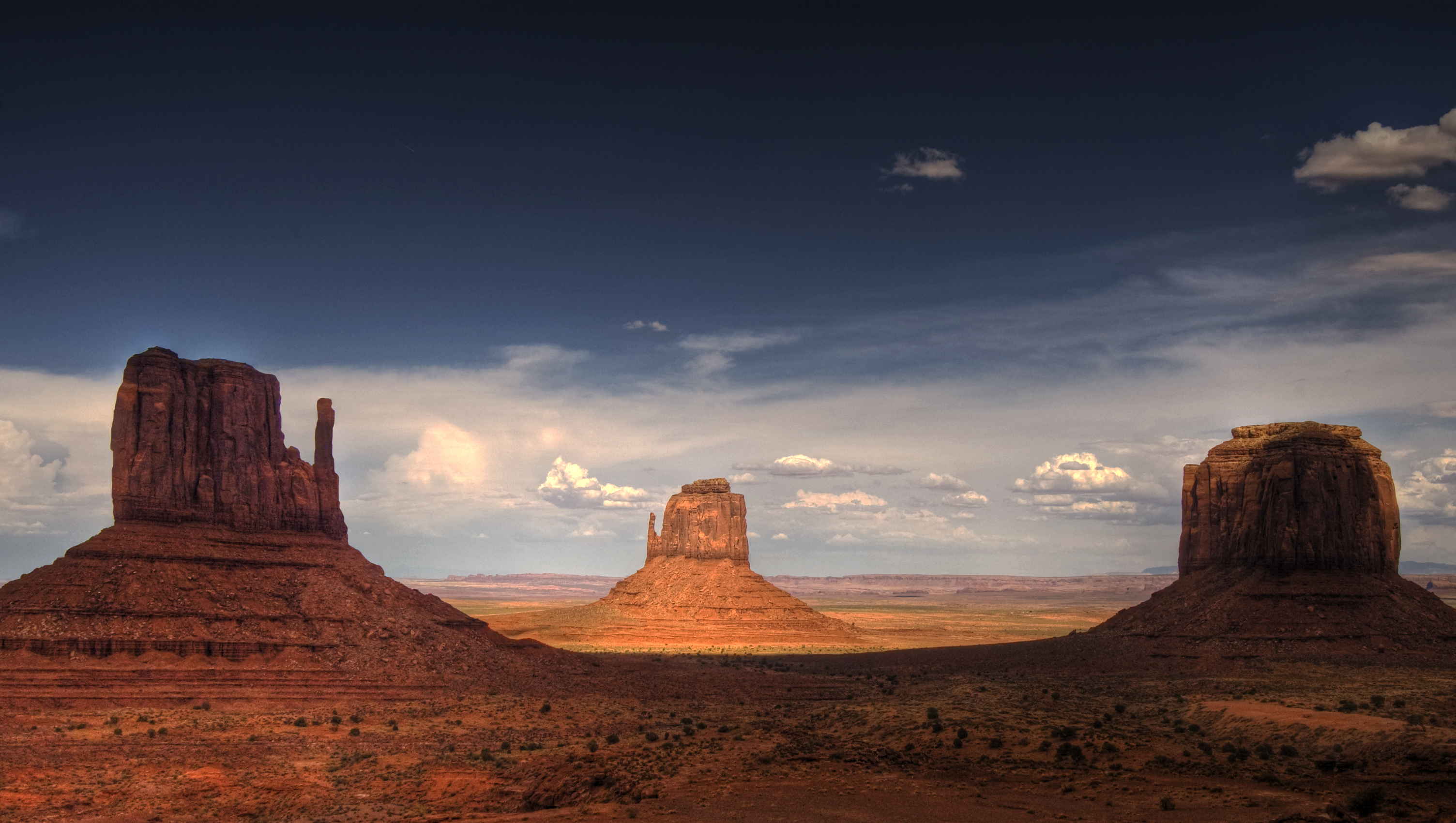
Isolated hill with steep, often vertical sides and a small, relatively flat top
In geomorphology, a butte ( ) is an isolated hill with steep, often vertical sides and a small, relatively flat top; buttes are smaller landforms than mesas, plateaus, and tablelands. The word butte comes from the French word (), meaning 'knoll' (of any size); its use is prevalent in the Western United States, including the Southwest, where is used for the larger landform.
Due to their distinctive shapes, buttes are frequently landmarks in plains and mountainous areas. To differentiate the two landforms, geographers use the rule of thumb that a mesa has a top that is wider than its height, while a butte has a top that is narrower than its height.
Formation
Buttes form by weathering and erosion when hard caprock overlies a layer of less resistant rock that is eventually worn away. The harder rock on top of the butte resists erosion. The caprock provides protection for the less resistant rock below from wind abrasion which leaves it standing isolated. As the top is further eroded by abrasion and weathering, the excess material that falls off adds to the scree or talus slope around the base. On a much smaller scale, the same process forms hoodoos.
Notable buttes
The Mitten Buttes of Monument Valley in the Utah–Arizona state line are two of the most distinctive and widely recognized buttes. Monument Valley and the Mittens provided backgrounds in the scenes of many western-themed films, including seven movies directed by John Ford. Another very well-known and frequently photographed butte in northern Arizona is Thumb Butte, which overlooks the city of Prescott and is the most prominent and distinctive geologic landmark in the vicinity. The Devils Tower in northeastern Wyoming is a laccolithic butte composed of igneous rock rather than sandstone, limestone or other sedimentary rocks.
_1.1_(by).jpg)
The term butte is sometimes applied more broadly to isolated, steep-sided hills with pointed or craggy, rather than flat, tops. Three notable formations that are either named butte or may be considered buttes even though they do not conform to the formal geographer's rule are Scotts Bluff in Nebraska which is a collection of five bluffs, Crested Butte, which is a 12168 ft mountain in Colorado, and Elephant Butte, which is now an island in Elephant Butte Reservoir in New Mexico.
Among the well-known non-flat-topped buttes in the United States are Bear Butte, South Dakota, Black Butte, Oregon, and the Sutter Buttes in California. In many cases, buttes have been given other names that do not use the word butte, for example, Courthouse Rock, Nebraska. Also, some large hills that are technically not buttes have names using the word, examples of which are Kamiak Butte, Chelan Butte and Steptoe Butte in Washington state.
Gallery
File:Butte pdphoto roadtrip 24 bg 021604.jpg|Courthouse Butte near Sedona, Arizona File:Вид на крепость Качахакаберд4.JPG|Qaxaç Qalası or Kachaghakaberd fortress, Khojali District, Azerbaijan File:Pawnee Buttes2010.jpg|Pawnee Buttes, Pawnee National Grassland, Colorado File:Algérie 2009.jpg|Tamanrasset Province, Algeria File:Tacco di Perda 'e Liana.jpg|Monte Perda Liana in Sardinia, Italy.
Footnotes
References
References
- (1997). "Glossary of Geology". [[American Geosciences Institute.
- (2013). "A dictionary of geology and earth sciences". Oxford University Press.
- (2008). "Mesa and Butte". Science Clarified.
- (1969). "Principles of geomorphology". Wiley.
- Davis, George Herbert. (1999). "Structural Geology of the Colorado Plateau Region of Southern Utah, with Special Emphasis on Deformation Bands". Geological Society of America.
- (10 Mar 2014). "Devils Tower National Monument – Geologic Formations". National Park Service.
This article was imported from Wikipedia and is available under the Creative Commons Attribution-ShareAlike 4.0 License. Content has been adapted to SurfDoc format. Original contributors can be found on the article history page.
Ask Mako anything about Butte — get instant answers, deeper analysis, and related topics.
Research with MakoFree with your Surf account
Create a free account to save articles, ask Mako questions, and organize your research.
Sign up freeThis content may have been generated or modified by AI. CloudSurf Software LLC is not responsible for the accuracy, completeness, or reliability of AI-generated content. Always verify important information from primary sources.
Report