From Surf Wiki (app.surf) — the open knowledge base
Buleleng Regency
Regency in Bali, Indonesia

Regency in Bali, Indonesia
| Field | Value | |
|---|---|---|
| official_name | Buleleng Regency | |
| native_name | Kabupaten Buleleng | |
| image_skyline | {{multiple image | |
| border | infobox | |
| total_width | 300 | |
| perrow | 1/2/2/2/1 | |
| image1 | Pura Beji Sangsit - panoramio.jpg | |
| caption1 | Beji Sangsit Temple | |
| image2 | Danau_Buyan.jpg | |
| caption2 | ||
| image3 | Taman_Nasional_Bali_Barat%2C_2019.jpg | |
| caption3 | West Bali National Park | |
| image4 | Dolphins and Sunrise in Lovina, Indonesia Bali - panoramio.jpg | |
| caption4 | Lovina Beach | |
| image5 | Banyumala Waterfall.jpg | |
| caption5 | ||
| image6 | Lake_Tamblingan.jpg | |
| caption6 | Lake Tamblingan | |
| image7 | Singaraja bali festivities.jpg | |
| caption7 | Singaraja Festival | |
| translit_lang1 | Native | |
| translit_lang1_type1 | Balinese | |
| translit_lang1_info1 | ** | |
| settlement_type | Regency | |
| nickname | Gumi Panji Sakti ('Land of Panji Sakti') | |
| motto | Singa Ambara Raja | |
| ᬲᬶᬗᬅᬫ᭄ᬩᬭᬭᬚ | ||
| image_map | Location Buleleng Regency.png | |
| map_caption | Location within Bali | |
| pushpin_map | Indonesia_Bali#Indonesia_Lesser Sunda Islands#Indonesia#Southeast Asia#Asia | |
| pushpin_label_position | right | |
| pushpin_map_caption | Location in Bali##Location in Lesser Sunda Islands##Location in Indonesia##Location in Southeast Asia##Location in Asia | |
| coordinates | ||
| subdivision_type | Country | |
| subdivision_name | Indonesia | |
| subdivision_type1 | Region | |
| subdivision_name1 | Lesser Sunda Islands | |
| subdivision_type2 | Province | |
| subdivision_name2 | Official_flag_of_the_Province_of_Bali.jpg Bali | |
| subdivision_type3 | Dstricts | |
| subdivision_name3 | {{Collapsible list | |
| title | List | |
| frame_style | border:yes; padding:0 | |
| list_style | text-align:left; display:yes | |
| 1 | Gerokgak | |
| 2 | Seririt | |
| 3 | Busungbiu | |
| 4 | Banjar | |
| 5 | Sukasada | |
| 6 | Buleleng | |
| 7 | Sawan | |
| 8 | Kubutambahan | |
| 9 | Tejakula | |
| established_date | 14 August 1958 | |
| seat_type | Capital | |
| seat | Singaraja | |
| governing_body | Buleleng Regency Government | |
| leader_title | Regent | |
| leader_name | I Nyoman Sutjidra (PDI-P) | |
| leader_title1 | Vice Regent | |
| leader_name1 | Gede Supriatna | |
| leader_title2 | Legislature | |
| leader_name2 | Buleleng Regency Regional House of Representatives (DPRD) | |
| unit_pref | metric | |
| area_total_km2 | 1322.68 | |
| population_total | 828156 | |
| population_as_of | mid 2024 estimate | |
| population_footnotes | ||
| population_density_km2 | auto | |
| area_code_type | Area code | |
| area_code | (+62) 362 | |
| website | ||
| timezone | Indonesia Central Time | |
| utc_offset | +08:00 | |
| image_shield | Lambang Resmi Kabupaten Buleleng.png | |
| blank1_name | HDI (2023) | |
| blank1_info | 0.740 | |
| demographics1_footnotes | ||
| demographics_type1 | Demographics | |
| demographics1_title1 | Ethnic groups (2010) | |
| demographics1_info1 | 92.27% Balinese2.41% Javanese | |
| 1.83% Bali Aga | ||
| 1.72% Madurese | ||
| 0.03% Madurese | ||
| 0.33% Bugis | ||
| 0.22% Chinese | ||
| 0.22% Sasak | ||
| 0.14% Sundanese | ||
| 0.07% Malays | ||
| 0.76% other | ||
| demographics1_title2 | Religion (2024) | |
| demographics1_info2 | {{ublist | item_style=white-space; |
| demographics1_title3 | Languages and dialects | |
| demographics1_info3 | Indonesian (official) | |
| Balinese (native); Lowland Balinese; Buleleng Balinese | ||
| Highland Balinese | ||
| other | ||
| iso_code | ID-BA (Bali) | |
| registration_plate | DK |
ᬲᬶᬗᬅᬫ᭄ᬩᬭᬭᬚ 1.83% Bali Aga 1.72% Madurese 0.03% Madurese 0.33% Bugis 0.22% Chinese 0.22% Sasak 0.14% Sundanese 0.07% Malays 0.76% other |89.26% Hinduism |9.34% Islam |
- 0.88% Christianity
- 0.67% Protestanism
- 0.21% Catholicism |0.51% Buddhism |0.01% Confucianism}} Balinese (native); Lowland Balinese; Buleleng Balinese Highland Balinese other Buleleng Regency (; , Kabupatén Buléléng), is a regency (kabupaten) of the province of Bali, Indonesia. It stretches along the north side of the island of Bali from the Bali Strait in the west (separating Bali from East Java) almost to the eastern end of the island. It has a land area of 1,322.68 km2 and a population of 828,156 in 2024. It is bordered by almost all other regencies in Bali except Klungkung, Gianyar and Denpasar City, and bordered by the Bali Sea and the Java Sea to its north. Its regency seat is in the town of Singaraja, whose urban area extends to the whole of Buleleng District.
At the official census of the 2024 Buleleng Regency's population was 828,156 (comprising 417,978 males and 410,178 females).
Buleleng was founded as a kingdom by Gusti Panji Sakti, who ruled c. 1660-c. 1700. He is commemorated as a heroic ancestor figure who expanded the power of Buleleng to Blambangan on East Java. The kingdom was weakened during its successors and fell under the suzerainty of the neighbouring Karangasem kingdom in the second half of the 18th century. It was headed by an autonomous branch of the Karangasem Dynasty in 1806–1849.
The Dutch attacked Buleleng in 1846, 1848, and 1849, and defeated it on the last occasion. Buleleng was incorporated into the Dutch colonial system and lost its autonomy in 1882. In 1929 a descendant of Gusti Panji Sakti, the renowned scholar Gusti Putu Jelantik, was appointed regent by the Dutch. He died in 1944, during the Japanese occupation of the Dutch East Indies. His son was a well-known novelist, Anak Agung Nyoman Panji Tisna. In 1947, Anak Agung Pandji Tisna surrendered the throne to his younger brother, Anak Agung Ngurah Ketut Djelantik, known as Meester Djelantik, until 1950. In 1949–50 Buleleng, like the rest of Bali, was incorporated into the unitary republic of Indonesia.
History
Protohistory
The territory of Pedawa, one of the 62 Bali Aga villages in the island, is the depository of several sarcophagi present at Ingsakan, Banjar Asah, Lebahlinggah, and Tampug. There are also three types of megaliths used in religious rituals and known as taulan (small stones used as symbols of Ida (God) – equivalent to Arca -, found in all main temples of Pedawa village); gainan (a stacked stone located at the Munduk Madeg Temple in Pedawa village), and umah taksu (a stacked stone similar to punden terraces in some areas of Pedawa village). Each of these items is witness to the ancient creation of the village, taking it into prehistoric times They come in par with the megaliths collected in various parts of Bali and gathered at Sanur stone park.
Buleleng Kingdom
Previously, the area in North Bali or Den Bukit was never united, they fought and attacked each other, until finally this area was united by a man named I Gusti Anglurah Panji Sakti from Dalem Sagening Dynasty by uniting all the areas in North Bali that were in conflict.
Then I Gusti Anglurah Panji Sakti controlled the entire area of North Bali/Den Bukit and began to expand his territory to Jembrana, Karangasem, Bangli, Tabanan and even Banyuwangi. After the death of I Gusti Ngurah Panji Sakti in 1704, the Buleleng Kingdom began to falter due to the struggle for power, plus the colonial areas began to rebel and put up resistance such as the Jembrana rebellion in West Bali and the Karangasem resistance in East Bali.
Controlled by Mengwi and Karangasem
In 1732, Buleleng was controlled by the Mengwi Kingdom, but they regained their independence in 1752. Furthermore, the Buleleng Kingdom fell into the power of the king of Karangasem in 1780. The King of Karangasem, I Gusti Gede Karang built a palace called "Puri Singaraja". The next king to rule was his son named I Gusti Pahang Canang who ruled until 1821. Karangasem's power then weakened, there were several changes of king. In 1825, I Gusti Made Karangasem ruled with his patih, I Gusti Ketut Jelantik until it was conquered by the Dutch in 1849.
Resistance against Dutch colonialism
Main article: Dutch intervention in northern Bali (1848), Dutch intervention in Bali (1849)
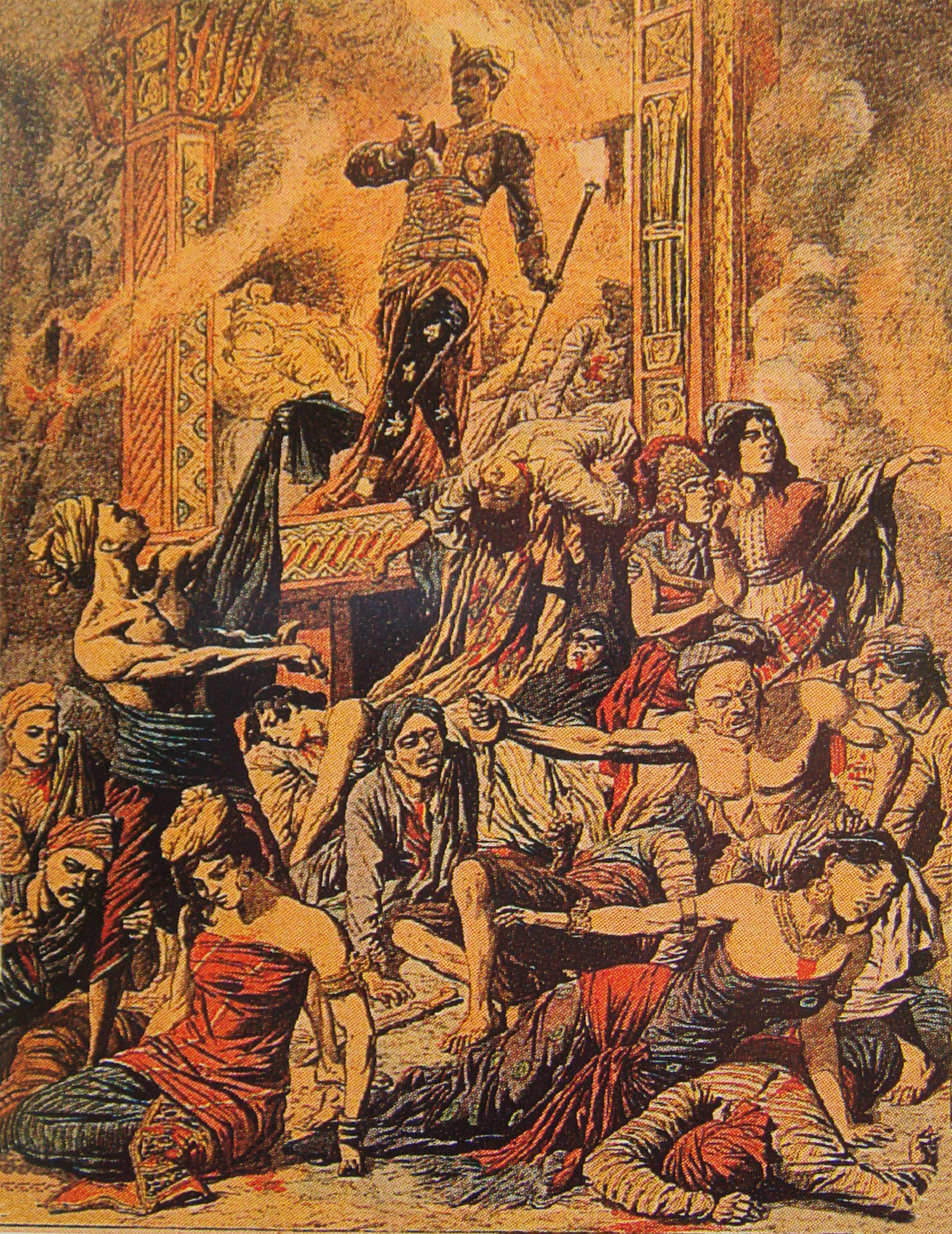
In 1846, Buleleng was attacked by Dutch troops, but it met with fierce resistance from the Buleleng community led by the warlord (patih) I Gusti Ketut Jelantik. In 1848, Buleleng was again attacked by Dutch navy troops at Fort Jagaraga. In the third attack, in 1849, the Dutch were finally able to destroy Fort Jagaraga so that Buleleng could be defeated by the Dutch . Since then, Buleleng was controlled by the Dutch East Indies colonial government, the Buleleng region was made a "Swapraja" with the Dutch king as its ruler, the king of Buleleng from the Panji Sakti dynasty was then appointed as regent under colonial supervision.
Independence era
After the independence of the Republic of Indonesia, the Buleleng Kingdom had the status of the Buleleng Level II Region and abolished the Monarchy system of the Kingdom to become the Regent of the Regency.
Geography


Geographically, Buleleng Regency is located between 8°3'40"–8°23'00" South Latitude and 114°25'55"–115°27'28" East Longitude, which is located in the northern part of Bali Island. The area of Buleleng Regency is 1,365.88 km2 (24.25% of the area of Bali Island). Buleleng Regency consists of 9 sub-districts with 129 villages, 19 sub-districts, 551 hamlets/banjars and 58 neighborhoods.
Borders
The borders of Buleleng Regency are as follows:
Northern
- Bali Sea and northern Java Sea
Southern
- Kintamani District, Bangli Regency
- Petang District, Bangli Regency Badung
- Tabanan Regency and Jembrana Regency
Western
- Jembrana Regency and Bali Strait
Eastern
- Kubu District, Karangasem Regency
Topography
Buleleng Regency, located in the north of Bali Island, has a very diverse topography, consisting of lowlands, hills, and mountains. Most of the Buleleng Regency area is a hilly and mountainous area stretching in the south, while in the north, namely along the coast, is a lowland. These unique conditions make the topography of Buleleng Regency often called Nyegara Gunung.
The topographic conditions of Buleleng Regency based on the slope, the difference in height from sea level and its landscape can be grouped into 4 (four) topographic units, namely:
- Flat areas with a slope of 0 – 1.9% covering an area of 12,264.75 Ha or 8.98%;
- Sloping areas with a slope of 2 – 24.9% covering an area of 70,226 Ha or 51.41%;
- Sloping areas with a slope of 25 – 39.9% covering an area of 21,462.75 Ha or 15.71%;
- Steep areas with a slope of above 40% covering an area of 32,634.5 Ha or 23.89%.
Based on the altitude, it is grouped into 4 (four) altitudes, namely:
- Lowlands (0 – 24.9 m above sea level and 25 – 99.9 m above sea level)
- Medium Plains (100 – 499.9 m above sea level)
- Highlands (500 – 999.9 m above sea level)
- Mountain Plains ( 1000 m above sea level)
Geology
Stratigraphically, the rock layers found in Buleleng Regency generally consist of bereksi rocks, lava, tuff and lahar, which are spread in almost all areas of Buleleng Regency. There is a fault which is estimated to be in the Gerokgak District area, namely two large arcs that are parallel extending to the west and east which are located in the Pulaki Volcanic Rock Formation which consists of bereksi and lava. Two horizontal faults estimated in the West End of Bali Island (among them the Prapat Agung Formation which is predominantly covered by limestone with the Palasari Formation consisting of sandstone, conglomerate and reef limestone). Two more faults estimated to be in the Tejakula District area are located between the tuff rock formation and the Buyan, Bratan and Batur lava deposits with the Buyan Bratan and Batur Purba formations. In addition to these structures, layering structures are also found on the tuff rock, lava from the Buyan Bratan Purba Group of volcanic rocks.
Climate
Based on the Köppen climate classification, most of the Buleleng Regency area has a tropical wet and dry climate (Aw) with air temperatures varying based on altitude, namely between 19°–33 °C. The relative humidity level in this area ranges from 82%–75%. Due to its tropical wet and dry climate, the Buleleng region has two seasons, namely the dry season and the rainy season. The dry season in the Buleleng region lasts from May–October with the driest month being August. Meanwhile, the rainy season lasts from December–March with a monthly rainfall of more than 200 mm per month. Between the dry and rainy seasons there is a transitional season which usually occurs in April and November. The annual rainfall in the Buleleng area ranges from 1,000 to 2,300 mm per year with the number of rainy days ranging from 80 to 120 rainy days per year.
| Jan record high C = 33.0 | Jan high C = 29.0 | Jan mean C = 27.0 | Jan low C = 25.0 | Jan record low C = 22.0 | Jan precipitation mm = 342 | Feb record high C = 33.0 | Feb high C = 29.0 | Feb mean C = 27.0 | Feb low C = 25.0 | Feb record low C = 22.0 | Feb precipitation mm = 320 | Mar record high C = 33.0 | Mar high C = 30.0 | Mar mean C = 27.0 | Mar low C = 25.0 | Mar record low C = 22.0 | Mar precipitation mm = 332 | Apr record high C = 33.0 | Apr high C = 30.0 | Apr mean C = 27.0 | Apr low C = 25.0 | Apr record low C = 22.0 | Apr precipitation mm = 327 | May record high C = 33.0 | May high C = 31.0 | May mean C = 27.5 | May low C = 24.5 | May record low C = 21.5 | May precipitation mm = 200 | Jun record high C = 32.0 | Jun high C = 30.0 | Jun mean C = 27.0 | Jun low C = 24.0 | Jun record low C = 21.0 | Jun precipitation mm = 28 | Jul record high C = 31.0 | Jul high C = 29.0 | Jul mean C = 26.5 | Jul low C = 24.0 | Jul record low C = 21.0 | Jul precipitation mm = 22 | Aug record high C = 31.0 | Aug high C = 29.0 | Aug mean C = 26.0 | Aug low C = 23.5 | Aug record low C = 20.5 | Aug precipitation mm = 21 | Sep record high C = 32.0 | Sep high C = 30.0 | Sep mean C = 26.5 | Sep low C = 24.0 | Sep record low C = 21.0 | Sep precipitation mm = 30 | Oct record high C = 33.0 | Oct high C = 31.0 | Oct mean C = 27.0 | Oct low C = 24.0 | Oct record low C = 21.0 | Oct precipitation mm = 90 | Nov record high C = 33.0 | Nov high C = 31.0 | Nov mean C = 27.5 | Nov low C = 25.0 | Nov record low C = 22.0 | Nov precipitation mm = 150 | Dec record high C = 33.0 | Dec high C = 30.5 | Dec mean C = 27.0 | Dec low C = 25.0 | Dec record low C = 22.0 | Dec precipitation mm = 360
| year record high C = 33.0 | year record low C = 20.5
Government and politics
| No. | Regent | Start of office | End of office | Vice regent | 12 | |
|---|---|---|---|---|---|---|
| [[File:I Nyoman Sutjidra.jpg | 125px]] I Nyoman Sutjidra | 26 February 2021 | Incumbent | [[File:GEDE SUPRIATNA - Cawabup Buleleng 2024.webp]] Gede Supriatna |
The regent of Buleleng is the highest officeholder in the Buleleng Regency government. The Buleleng regent is responsible to the governor of Bali. Currently, the regent or regional head serving in Buleleng Regency is I Nyoman Sutjidra, accompanied by the vice regent Gede Supriatna. The position of regent and vice regent from the pair I Nyoman Sutjidra and Gede Supriatna is for the second term since 2024. For the second term, they won in the 2024 Buleleng regency election, and were inaugurated on 20 February 2025.
Parliament

Administrative districts
Main article: List of districts and sub-districts in Buleleng Regency
The regency is divided into nine districts (kecamatan), tabulated below with their areas and population totals from the 2010 census and the 2020 census, together with the official estimates as of mid-2024. The table also includes the number of administrative villages in each district (totaling 129 rural desa and 19 urban kelurahan), and its postal codes.
The administrative centres of each district have the same name as the district itself, except for the Buleleng District (of which the centre is Singaraja, which also serves as the administrative capital of the whole Regency) and Sawan District (of which the centre is Sangsit).
For convenience the table is divided into two geographical groups, a western group of four districts covering 61% of the land area but with just 41% of the population, and an eastern group of five districts with 39% of the land area and a faster-growing 59% of the population.
| District code | Name of | |
|---|---|---|
| district | ||
| (kecamatan) | Area | |
| in | ||
| km2 | Pop'n | |
| census | ||
| 2010 | Pop'n | |
| census | ||
| 2020 | Pop'n | |
| estimate | ||
| mid 2024 | No. | |
| of | ||
| villages | Post | |
| codes | ||
| 51.08.01 | ||
| 51.08.02 | ||
| 51.08.03 | ||
| 51.08.04 | ||
| *sub-totals* | ||
| 51.08.05 | ||
| 51.08.06 | ||
| 51.08.07 | ||
| 51.08.08 | ||
| 51.08.09 | ||
| *sub-totals* | ||
Note: (a) Gerokgak District includes the offshore island of Pulau Menjangan Kecil. (b) includes the kelurahan of Seririt, plus 20 desa. (c) includes the kelurahan of Sukasada, plus 14 desa. (d) comprises 17 kelurahan and 12 desa.
File:Indonesia_Buleleng_Gerokgak_district_location_map.svg|Gerokgak district File:Indonesia Buleleng Seririt district location map.svg|Seririt district File:Indonesia Buleleng Busung Biu district location map.svg|Busung Biu district File:Indonesia Buleleng Banjar district location map.svg|Banjar district File:Indonesia Buleleng Sukasada district location map.svg|Sukasada district File:Indonesia Buleleng Buleleng district location map.svg|Buleleng district File:Indonesia Buleleng Sawan district location map.svg|Sawan district File:Indonesia Buleleng Kubutambahan district location map.svg|Kubutambahan district File:Indonesia Buleleng Tejakula district location map.svg|Tejakula district
Demographics
Ethnicities

Most of the ethnic groups in Buleleng are Balinese. Based on data from the Central Bureau of Statistics in the Indonesian Population Census 2010, as many as 575,905 people or 92.27% of the 624,125 people of Buleleng Regency are of the Balinese ethnic group. Then the Javanese ethnic as much as 2.41%, and several others such as the Bali Aga, Madurese, Bugis, and several others ethnic groups. In Singaraja, there is a Bugis village, where the majority of the residents are Bugis and majority are Hindus.
The following is the population of Buleleng Regency based on ethnicity in 2010:
| No. | Ethnic groups | Pop. | ||||||
|---|---|---|---|---|---|---|---|---|
| (2010) | Pct .(%) | 575,905 | 92.27% | Buleleng Regency | 624.125 | 100% | ||
| 1 | Balinese | |||||||
| 2 | Javanese | 15,072 | 2.41% | |||||
| 3 | Bali Aga | 11,438 | 1.83% | |||||
| 4 | Madurese | 10,722 | 1.72% | |||||
| 5 | Bugis | 2,075 | 0.33% | |||||
| 6 | Chinese | 1,374 | 0.22% | |||||
| 7 | Sasak | 1,353 | 0.22% | |||||
| 8 | Sundanese | 880 | 0.14% | |||||
| 9 | Malays | 417 | 0.07% | |||||
| 10 | Flores | 142 | 0.02% | |||||
| 11 | Others | 4,747 | 0.76% |
Religion


| Religion | Population | Percent | Number of places of worship (2023) |
|---|---|---|---|
| Islam | 77,142 | 9.3% | 73 mosques and 134 prayer rooms |
| Hinduism | 737,503 | 89.3% | 9 Dang Kahyangan temples and 507 Kahyangan Tiga temples |
| Christianity (Protestant) | 5,522 | 0.7% | 66 churches |
| Christianity (Catholic) | 1,705 | 0.2% | 1 parish church and 2 chapels |
| Buddhist | 4,216 | 0.5% | 13 temples and 2 cetya |
| Confucian | 79 | 0.009% | – |
| Others | 26 | 0.003% | – |
| Total | 826,193 | 100% |
Airports
Lt.Col. Wisnu Airfield is located in the Sumberkima village.
Research on a new airport was completed in 2017, due to the congestion of Ngurah Rai International Airport. The new two-runway airport will be built in the east part of Buleleng Regency and will be connected by railway to the existing airport. Kubutambahan, 15 kilometers east of Singaraja, was decided to be the new airport site over two other candidates, Sangsit and Gerokgak, after taking into account geographical conditions, wind speed, wind direction, and other factors.
Pearl producers
Many big pearl producers have developed 130.9 hectares in Gerokgak village as an area for pearl breeding and world-class pearl production. It will enlarge to 250 hectares swath of water stretching from Gerokgak to Kubutambahan.
Education
Buleleng is famous for its nickname: "the City of Education." At the beginning of the 1980s, the Faculty of Teacher Training (FKG) was established which is one of the faculties of Udayana University. In 1985, it changed to STKIP Singaraja and separated from Udayana University. This caused the dim development of Singaraja as a city of education. After a long journey, STKIP changed to IKIP Singaraja and until now it is known as Ganesha University of Education which is in Singaraja City.
Tourism


Tourism is the main economic support for Buleleng Regency.
Some of the tourist attractions in Buleleng Regency include:
- Sanih Water
- Gitgit Waterfall
- Sing Sing Waterfall
- Lekr Buyan
- Lake Tamblingan
- Gedong Kirtya (palm leaf library)
- Lovina Beach
- Jagaraga
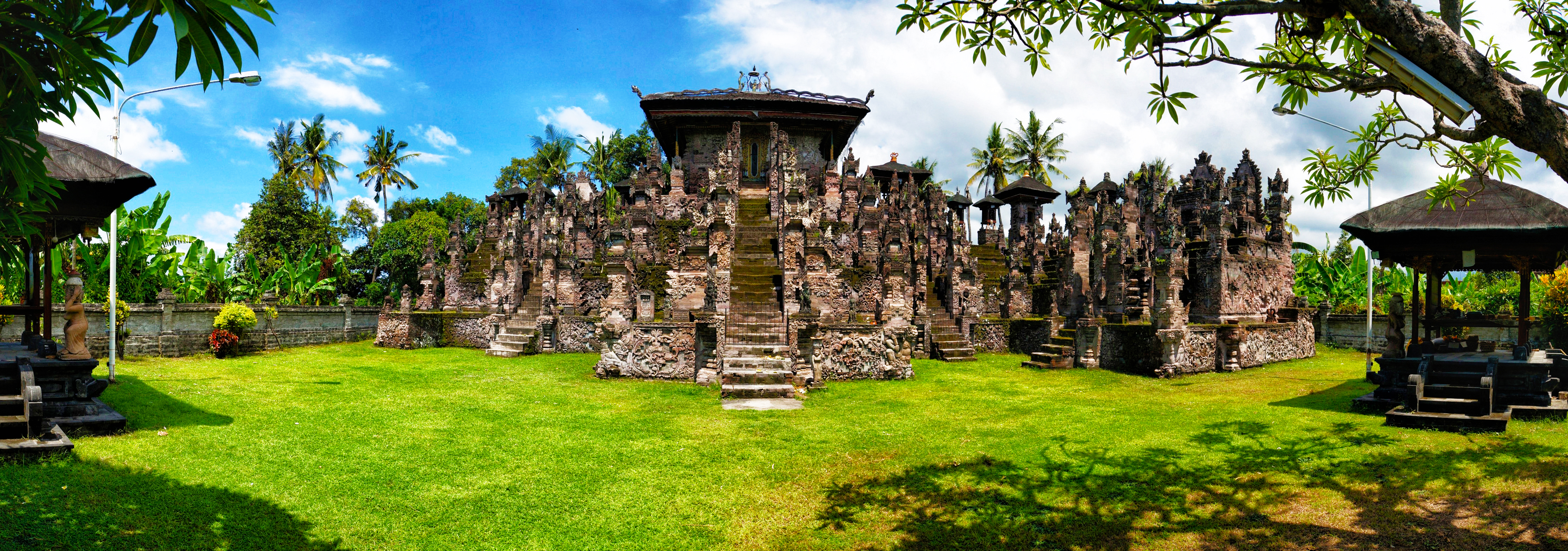
- Beji Sangsit Temple
- Dalem Sangsit Temple
- Spiritual tourism at Tirta Sudhamala Temple, Taman Alit Temple and Patirtaan Lingga Pawitra Temple in Banyuasri Traditional Village
- Desa Sawan (where Gamelan musical instruments are made).
- Batu Bolong Temple
- Meduwe Karang Temple
- Ponjok Batu
- Sembiran
- Buyan Lake and Tamblingan Lake
- Beratan Village (where gold and silver jewelry is produced).
- Banyuning Village (famous for its clay craft)
- Dutch Cemetery
- The largest Ganesha statue in Southeast Asia
- Banjar hot springs and temples in Banjar Village
- Pulaki Temple
- Melanting Temple
- Gitgit Twin Waterfalls
- Jayaprana Cemetery
- Celukterima Temple
- Menjangan Island
- Mayong Village
- Bulian Village File:Ile de Menjangan.jpg|Tourists in Menjangan Island File:Pura Taman Kelenting Sari - Menjangan Island.jpg| Pura Taman Kelenting Sari. File:Temple hindouiste sur l'île de Menjangan.JPG| A temple where the Patih is honored. File:Temple hindouiste sur l'île de Menjangan2.JPG| Temple where Goddess is worshiped. File:Menjangan-deer-b12-121101.jpg| Deer in Menjangan Island. File:Upclose with Menjangan.jpg| A deer in Menjangan Island. File:Sekumpulan diver dan pecinta alam yang sedang menikmati alam dan laut indonesia.jpg | Diving activities in Menjangan Island.
Gallery
File:Dolphin Statue Lovina2.jpg|Dolphin Statue, Kalibukbuk File:Sri Maha Ganesha statue Lovina.jpg|Sri Maha Ganesha Statue, Kalibukbuk File:Candi Stupa Kalibukbuk.jpg|Candi Stupa Kalibukbuk File:Puri Kaliasem Lovina-08.jpg|Kaliasem Palace File:Krisna statue Lovina.jpg|Krisna Statue, Temukus File:Krisna Lila statue Bali.jpg|Krisna Lila Statue, Temukus File:Dolphin Tour statue Lovina Bali.jpg|Dolphin Tour Statue, Temukus File:Vrikshasana-Dr-Igor-Popov.jpg|Sing Sing Waterfall, Temukus KITLV 4388 - Isidore van Kinsbergen - Two warriors, Boeleleng - 1865.tif|Two warriors in Buleleng, 1865 KITLV 4393 - Isidore van Kinsbergen - Balinese and a Papuan slave Rajah of Boeleleng - 1865.tif|Balinese and Papuan slaves of the Rajah of Buleleng, 1865
References
References
- "Indeks Pembangunan Manusia Provinsi Bali Menurut Kabupaten/Kota 2021–2023".
- "Peta Sebaran Penduduk Menurut Suku Bangsa Provinsi Bali : Hasil Sensus Penduduk 2000 Dan 2010".
- "Penduduk Provinsi Bali Menurut Agama yang Dianut Hasil Sensus Penduduk 1971, 2000, 2010, dan 2024 – Tabel Statistik".
- Badan Pusat Statistik, Jakarta, 28 February 2025, ''Kabupaten Buleleng Dalam Angka 2025'' (Katalog-BPS 1102001.5108)
- H.J. de Graaf, 'Goesti Pandji Sakti, vorst van Boeleleng', ''Tijdschrift voor Indische Taal-, Land- en Volkenkunde'' 83:1 1949.
- Pringle, pp. 96–100
- (2020). "Bali Aga Villages in Kintamani, Inventory of Tangible and Intangible Aspects". Advances in Engineering Research.
- (2022). "The Influence of Megalithic Tradition on the Religious System in the Bali Aga Community, Pedawa Village, Buleleng". Proceedings of the 4th International Conference on Law, Social Sciences, and Education, 28 October 2022, Singaraja, Bali.
- (January 2019). "Indications of megalithic culture on the island of Bali in Indonesia". Proceedings of the 18th International Conference on Earth & Geosciences, Extended Session SGEM Vienna Green 2018.
- "Profile of Buleleng Regency Buleleng".
- Sukerta, Pande Made. (1998). "Bali Karawitan Map in Buleleng Regency". Cultural Media Development Project, Directorate General of Culture, Ministry of Education and Culture Culture.
- Yakub, Edy M. (22 August 2017). "Bupati-Wabup Buleleng Terpilih Dilantik 22 Agustus 2017". [[Antara National News Agency]].
- Biro Pusat Statistik, Jakarta, 2011.
- Badan Pusat Statistik, Jakarta, 2021.
- (15 January 2015). "Population Distribution Map According to Ethnic Groups in Bali Province".
- link. (July 2025)
- "Expanded Bali airport to be at full capacity by 2017".
- (31 July 2012). "Kubutambahan to become airport site".
- "North Bali coast boasts major pearl producers".
- Bali, Nusa. "Dynamic Thanks to Student City Status".
This article was imported from Wikipedia and is available under the Creative Commons Attribution-ShareAlike 4.0 License. Content has been adapted to SurfDoc format. Original contributors can be found on the article history page.
Ask Mako anything about Buleleng Regency — get instant answers, deeper analysis, and related topics.
Research with MakoFree with your Surf account
Create a free account to save articles, ask Mako questions, and organize your research.
Sign up freeThis content may have been generated or modified by AI. CloudSurf Software LLC is not responsible for the accuracy, completeness, or reliability of AI-generated content. Always verify important information from primary sources.
Report