From Surf Wiki (app.surf) — the open knowledge base
Bubo
Inflammation of the lymph nodes
Inflammation of the lymph nodes
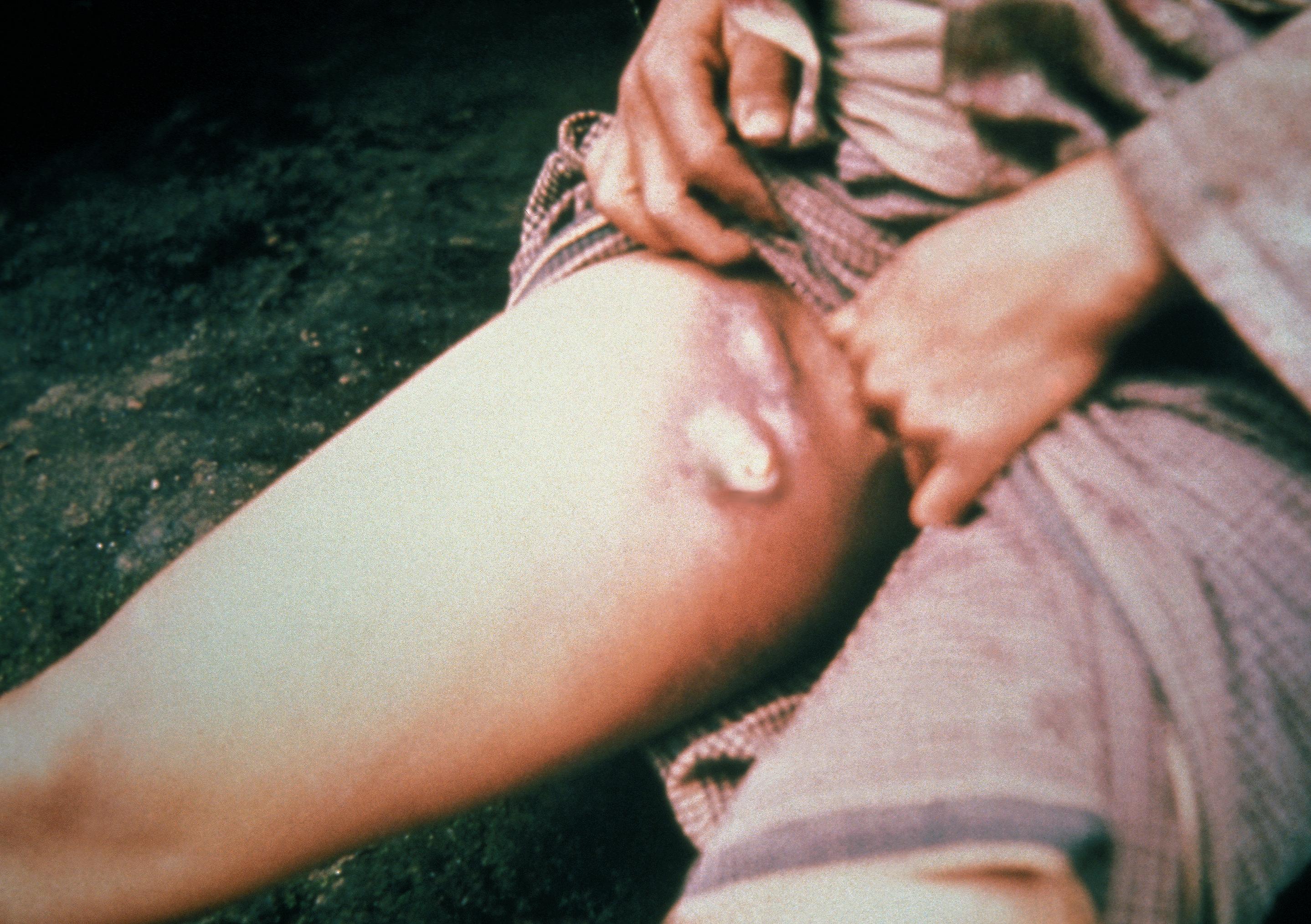
A bubo (Greek βουβών, boubṓn, 'groin') is adenitis or inflammation of the lymph nodes and is an example of reactive infectious lymphadenopathy.
Classification
Buboes are a symptom of bubonic plague and occur as painful swellings in the thighs, neck, groin or armpits. They are caused by Yersinia pestis bacteria spreading from flea bites through the bloodstream to the lymph nodes, where the bacteria replicate, causing the nodes to swell. Plague buboes may turn black and necrotic, rotting away the surrounding tissue, or they may rupture, discharging large amounts of pus. Infection can spread from buboes around the body, resulting in other forms of the disease such as pneumonic plague.
Management
Plague patients whose buboes swell to such a size that they burst, tend to survive the disease. Before the discovery of antibiotics, doctors often drained buboes with leeches or heated rods to save patients.
Buboes are also symptoms of other diseases, such as chancroid and lymphogranuloma venereum. In these conditions, a two-week course of antibiotics is the recommended treatment, and incision and drainage or excision of the swollen lymph nodes is best avoided. However, aspiration may sometimes be performed to prevent buboes from rupturing. Although incision and drainage yields better results in such cases—since usually no further intervention is necessary, whereas repeat aspirations may be required—incision and drainage wounds may heal more slowly, increasing the risk of secondary infection.
References
References
- Drancourt, Michel. (2013-01-01). "Plague: History and contemporary analysis". Journal of Infection.
- Paul, Slack. (2012). "Plague: a very short introduction". Oxford University Press.
- Orent, Wendy. (2004). "Plague : the mysterious past and terrifying future of the world's most dangerous disease". Free Press.
- Isberg, Ralph R.. (2014-09-18). "Plague's Partners in Crime". Immunity.
- Nesfield, V.B.. (1911). "The treatment of bubonic plague by the immediate incision of the glands". The Lancet.
- Lewis, D. A.. (2003-02-01). "Chancroid: clinical manifestations, diagnosis, and management". Sexually Transmitted Infections.
- Morse, Stephen A.. (2011). "Atlas of sexually transmitted diseases and AIDS". Saunders/Elsevier.
- "Guidelines for the Management of Sexually Transmitted Infections. February 2004: 2. TREATMENT OF STI-ASSOCIATED SYNDROMES: 2.2. Genital ulcer: Inguinal bubo".
- Lewis, David A. (2014). "Epidemiology, clinical features, diagnosis and treatment of Haemophilus ducreyi – a disappearing pathogen?". Expert Review of Anti-infective Therapy.
This article was imported from Wikipedia and is available under the Creative Commons Attribution-ShareAlike 4.0 License. Content has been adapted to SurfDoc format. Original contributors can be found on the article history page.
Ask Mako anything about Bubo — get instant answers, deeper analysis, and related topics.
Research with MakoFree with your Surf account
Create a free account to save articles, ask Mako questions, and organize your research.
Sign up freeThis content may have been generated or modified by AI. CloudSurf Software LLC is not responsible for the accuracy, completeness, or reliability of AI-generated content. Always verify important information from primary sources.
Report