From Surf Wiki (app.surf) — the open knowledge base
Brown sugar
Sucrose sugar product with a distinctive brown color
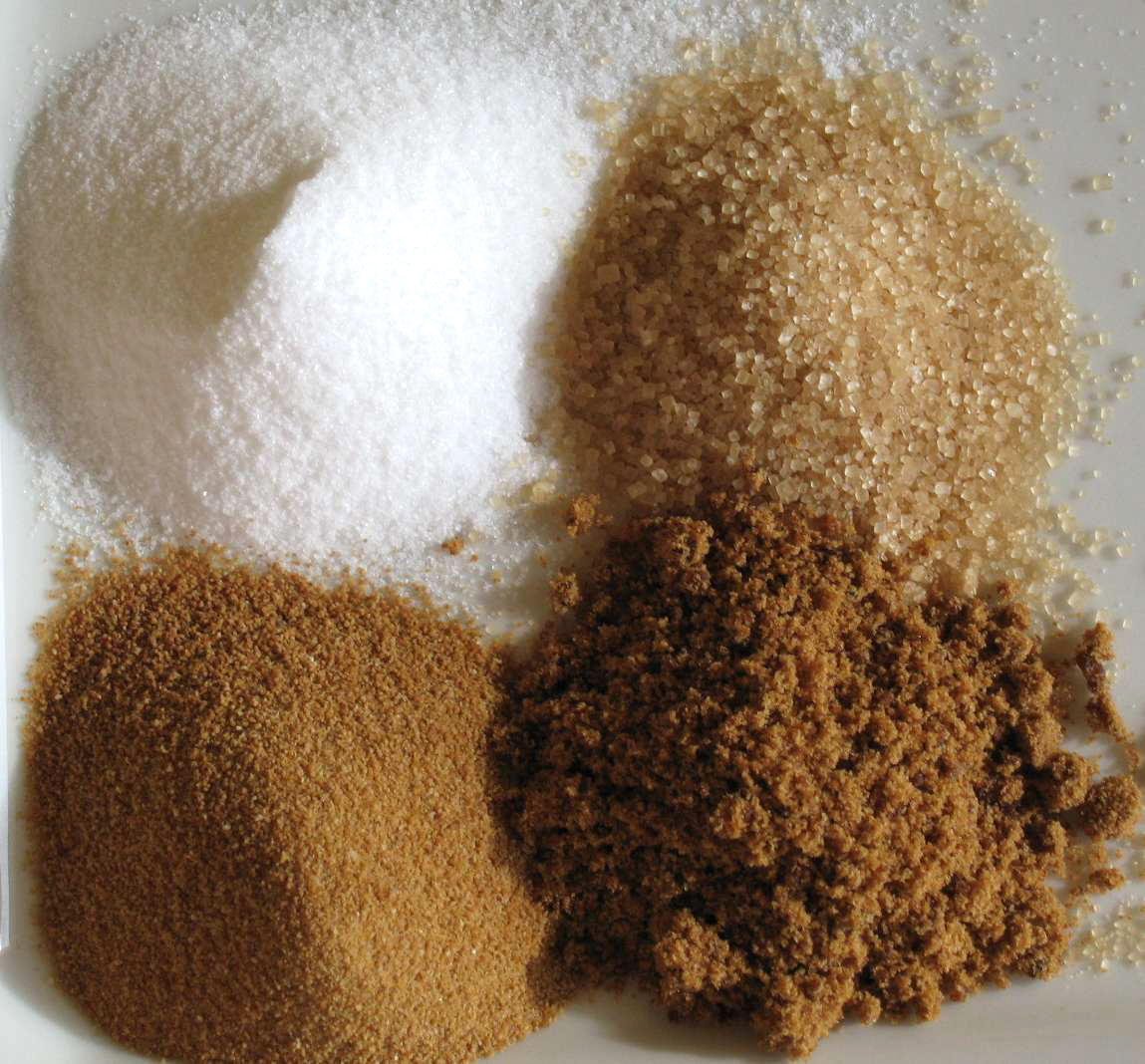
Sucrose sugar product with a distinctive brown color
the sugar product
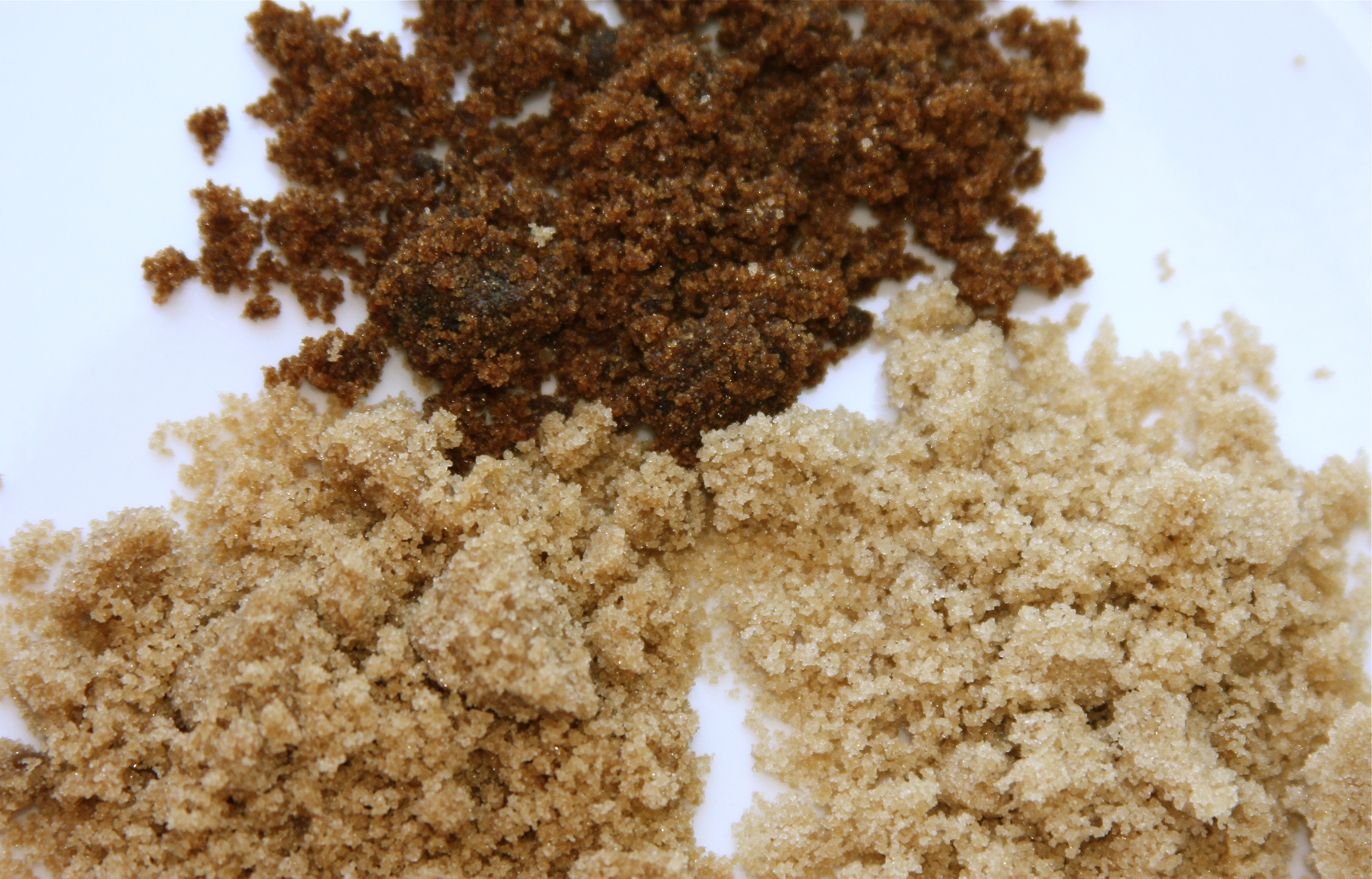
Brown sugar is a sucrose sugar product with a distinctive brown color due to the presence of molasses. It is either an unrefined or partially refined soft sugar consisting of sugar crystals with some residual molasses content, or produced by the addition of molasses to refined white sugar. Brown sugar is 98% carbohydrates (95% as sucrose), containing no dietary fiber or fat, and negligible protein and micronutrient content.
Characteristics
The Codex Alimentarius requires brown sugar to contain at least 88% sucrose plus invert sugar. Commercial brown sugar contains from 3.5% molasses (light brown sugar) to 6.5% molasses (dark brown sugar) based on its total volume. " Based on total weight, regular commercial brown sugar contains up to 10% molasses. Brown sugars are graded numerically according to how dark they are, with higher numbers correlating with darker sugars. The most common gradings are 6, 8, 10 and 13. The product is naturally moist from the hygroscopic nature of the molasses and is often labeled "soft." The product may undergo processing to make it flow better for industrial handling.
Particle size is variable but generally smaller than that of granulated white sugar. Products for industrial use (e.g., the industrial production of cakes) may be based on caster sugar, which has crystals of approximately 0.35 mm.
History
.jpg)
Consumer product
The meaning of the term 'brown sugar' has changed over time. Americans also referred to the 'brown sugar of commerce', which could be refined with a yield of 70% of white sugar. In the United Kingdom it was the same. There were two kinds of raw sugar. The most common kind was muscovado, a.k.a. "brown sugar", and was processed by British sugar refineries. The other kind of raw sugar was brown sugar which had been clayed and was known as clayed sugar. It was used for domestic purposes, but this usage was diminishing. In the 19th century United States the same meaning of the words raw sugar, brown sugar and muscovado was also noted: "Raw sugar, commonly called muscovado or brown sugar, not advanced beyond its raw state by claying, boiling, clarifying or other process".
In the mid 20th century, 'brown sugar' could refer to two products. It could be a raw sugar which had been centrifuged to a purity of about 97% pure sugar, and that was offered as brown sugar in health food shops. However, in most cases it was white sugar to which molasses had been added. For the latter, a consumer magazine said, "contrary to opinion, this brown sugar is a product of the refinery." The most important consideration is that the term 'brown sugar' now came to refer to a product for consumers, instead of referring to a type of sugar that was processed by sugar refineries.
Smear campaign
In the late 19th century, the newly consolidated refined white sugar industry, which did not have full control over brown sugar production, mounted a smear campaign against brown sugar, reproducing microscopic photographs of harmless but repulsive-looking microbes living in brown sugar. The effort was so successful that by 1900, a best-selling cookbook warned that brown sugar was of inferior quality and was susceptible to infestation by "a minute insect". This campaign of disinformation was also felt in other sectors using raw or brown sugar such as brewing;
Production
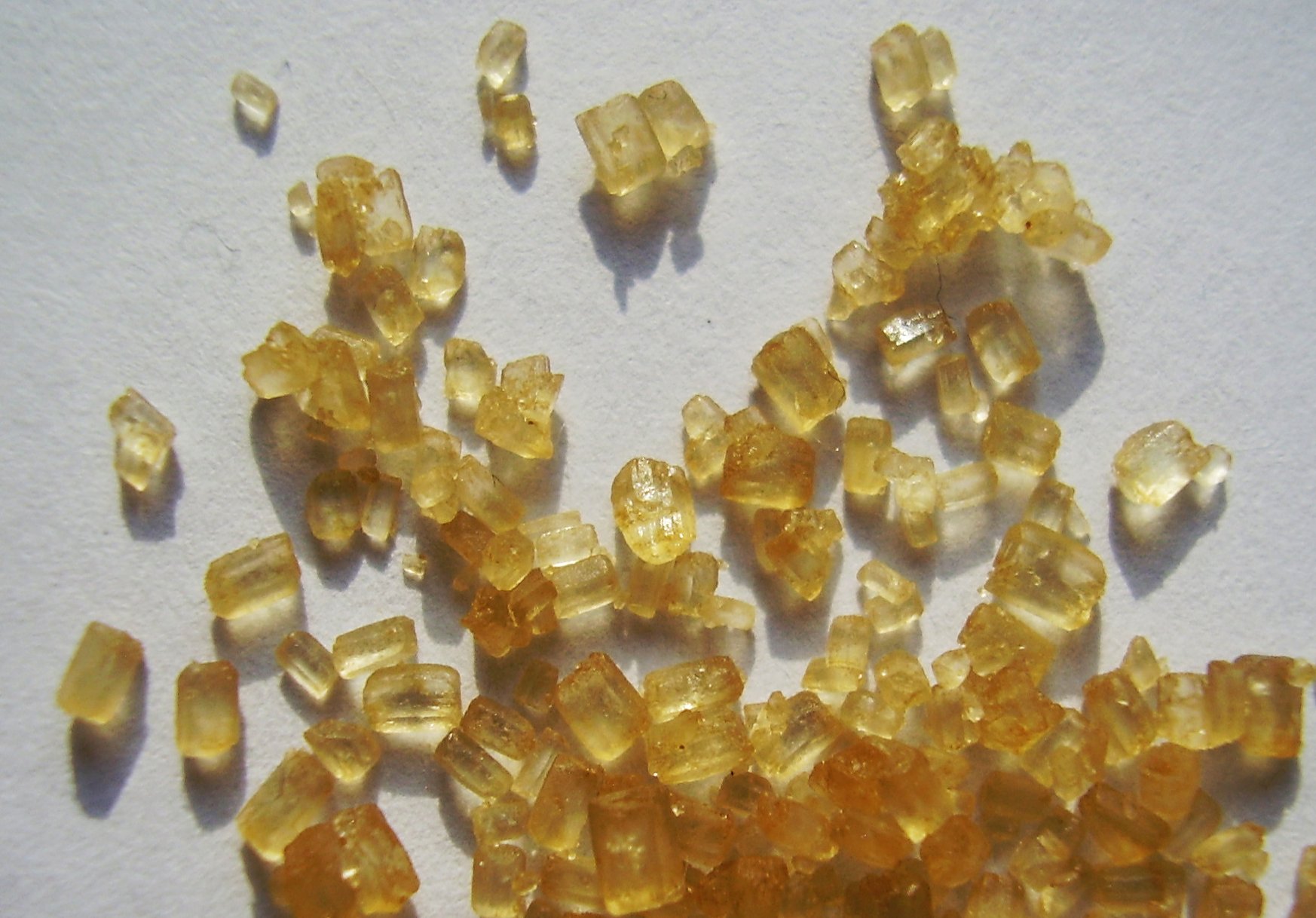
Brown sugar is typically produced by adding sugarcane molasses to completely refined white sugar crystals, with color varying by the amount of molasses used. Brown sugar prepared in this manner is often much coarser than its unrefined equivalent and its molasses may be easily separated from the crystals by simply washing to reveal the underlying white sugar crystals; in contrast, with unrefined brown sugar, washing will reveal underlying crystals which are off-white due to the inclusion of molasses. The addition of molasses, beyond changing the flavor, changes the sugar's characteristics during cooking, increasing the tendency for browning and making the sugar more hygroscopic.
The molasses usually used for food is obtained from sugar cane because the flavor is generally preferred over beet sugar molasses, although in some areas, especially in Belgium and the Netherlands, sugar beet molasses is used. The white sugar used can be from either beet or cane, as the chemical composition, nutritional value, color, and taste of fully refined white sugar is for practical purposes the same, no matter from what plant it originates. Even with less-than-perfect refining, the small differences in color, odor, and taste of the white sugar will be masked by the molasses.
Natural brown sugar


Definition
Natural brown sugar, raw sugar or whole cane sugar is sugar that retains some amount of the molasses from the mother liquor (the partially evaporated sugarcane juice). Natural brown sugar was "the raw sugar, not the brown sugar most easily obtained, which usually is white sugar artificially colored." The term was devised to distinguish brown sugar that still contained part of its molasses from brown sugar made by adding molasses to white sugar.
Modern types of brown sugar
Brown sugar types include turbinado, muscovado, and demerara and despite some claims, their production does include a certain extent of refining and or processing (such as partial caramelization via slow cooking of raw cane juice amongst others).
Muscovado is the darkest of the modern types of natural brown sugar, sometimes almost black in color.
Traditional types of brown sugar
Traditional brown sugars are called by various names, such as panela, rapadura, jaggery, piloncillo, and others used regionally.
Muscovado from the Portuguese açúcar mascavado, was the most common type of raw sugar and was also called brown sugar.
Muscovado, panela, piloncillo, chancaca, jaggery and other dark brown sugars have been minimally centrifuged or not at all. These types are made in smaller factories or "cottage industries" in developing nations, where they are produced with traditional practices that do not make use of industrialized vacuum evaporators or centrifuges.
They are commonly boiled in open pans upon wood-fired stoves until the sugar cane juice reaches approximately 30% of the former volume and sucrose crystallization begins. They are then poured into molds to solidify or onto cooling pans where they are beaten or worked vigorously to produce a granulated brown sugar. In some countries, such as Mauritius or the Philippines, muscovado is produced by partially centrifuging the evaporated and crystallizing cane juice to create a sugar-crystal rich mush, which is allowed to drain under gravity to produce varying degrees of molasses content in the final product. This process approximates a slightly modernized practice introduced in the 19th century to generate a better quality of brown sugar.
Kokuto
A similar Japanese version of uncentrifuged natural cane sugar is called kokuto () or kurozato (). This is a regional specialty of Okinawa and is often sold in the form of large lumps. It is sometimes used to make shochu. Okinawan brown sugar is sometimes referred to as "black sugar" for its darker color compared to other types of unrefined sugar, although when broken up into smaller pieces its color becomes lighter. Kokuto is commonly used as a flavoring for drinks and desserts, but can also be eaten raw as it has a taste similar to caramel. Kokuto is also an important local industry on Amami Ōshima, Kagoshima Prefecture; sugarcane cultivation and the production of brown sugar in Japan was first recorded on the island around 400 years ago, using techniques that had been developed in Fujian Province, China, and spread across the Japanese archipelago after that point. It is also the preferred type of brown sugar in Taiwan where its production formed a crucial part of the island's economy in the 19th and early 20th century under Japanese colonial rule. It is highly appreciated for its flavor in various beverages like milk tea and bubble tea.
Culinary use
Brown sugar adds flavor to desserts and baked goods. Due to its high molasses content, muscovado brown sugar contains more moisture and stronger flavor than other brown sugar types, affecting the moisture and taste of some recipes, especially in baked products.
For domestic purposes one can create the equivalent of brown sugar by mixing white sugar with molasses. Suitable proportions are about one tablespoon of molasses to each cup of sugar (one-sixteenth of the total volume). Molasses comprises about 3-7% of brown sugar's total weight. Due to varying qualities and colors of molasses products, for lighter or darker sugar, reduce or increase its proportion according to taste.
In following a modern recipe that specifies "brown sugar", one usually may assume that the intended meaning is light brown sugar, but how dark or light desired in the recipe is largely a matter of taste. Even in recipes such as cakes, where the overall moisture content might be critical, the amount of water contained in brown sugar is too small to matter. Much more significant than its water content is the fact that darker brown sugar or more molasses will impart a stronger flavor, with more of a suggestion of caramel.
Brown sugar that has hardened can be made soft again by adding a new source of moisture for the molasses, or by heating and remelting the molasses. Storing brown sugar in a freezer will prevent moisture from escaping and molasses from crystallizing, allowing for a much longer shelf life. Mildly hardened brown sugar can be broken up with utensils or placed into a closed container and shaken. (the recommended maximum daily amount of added sugar based on a caloric intake of 2000 kcal is 50 g)
Nutrition
Brown sugar is 98% carbohydrates (95% as sucrose), 1% water, and contains no dietary fiber or fat, with negligible protein and micronutrient content (table). In a reference amount of 100 g, brown sugar supplies 380 calories (table).
References
References
- Webb, Densie. (2022). "Natural Brown Sugars & Syrup Sweeteners". Today's Dietitian.
- Sollid, Kris. (10 March 2021). "What is brown sugar?". Food Insight.
- The Codex Alimentarius Commission. (2009; 2010). Codex Alimentarius – 212.1 Scope and Description. Food and Agriculture Organization of the United Nations.
- (April 2000). "Rose's Sugar Bible".
- Paula I. Figoni. (2010). "How Baking Works: Exploring the Fundamentals of Baking Science". Wiley.
- Niccol, Robert. (1864). "Essay on Sugar". A. Mackenzie & Co. Greenock.
- (1861). "Journal of the Senate of the United States". Geoge W. Bowman, Senate printer, Washington.
- (1938). "Picking a winner". Consumers' Council Division, Agricultural Adjustment Administration, Washington.
- link. (27 January 2023 ). Berkeley, Calif.: University of California Press, 2003. pp. 32–33.)
- Southby, E. R. (1885) A Systematic Handbook of Practical Brewing. pp. 223–224
- Greweling, Peter P. (2013). "Chocolates & Confections: Formula, Theory, and Technique for the Artisan Confectioner". [[John Wiley & Sons]].
- (1947). "Food and Fun for Daughter and Son". Illinois Children's Home and Aid Society.
- G. B. Wood. (1849). "The dispensatory of the United States of America". Grigg, Eliot, and Co..
- L. E. Sayre. (1880). "Conspectus of organic materia medica and pharmacal botany". G. S. Davis, Medical Book Publisher.
- "Sugar and the Origins of Modern Philippine Society".
- Orr, W. (1844) The Magazine of Domestic Economy, Volume 5. pp 107
- "Non centrifugal cane sugar (NCS) (panela, jaggery, gur, muscovado) process technology and the need of its innovation".
- "The Black Sugar That Tops Mochi, Sweetens Soups, and Relieves Nausea".
- "A sweet precious stone that crumbles and melts in your mouth Rare, pure brown sugar that you can only savor on Amami {{!}} Oishii Island Kyushu".
This article was imported from Wikipedia and is available under the Creative Commons Attribution-ShareAlike 4.0 License. Content has been adapted to SurfDoc format. Original contributors can be found on the article history page.
Ask Mako anything about Brown sugar — get instant answers, deeper analysis, and related topics.
Research with MakoFree with your Surf account
Create a free account to save articles, ask Mako questions, and organize your research.
Sign up freeThis content may have been generated or modified by AI. CloudSurf Software LLC is not responsible for the accuracy, completeness, or reliability of AI-generated content. Always verify important information from primary sources.
Report