From Surf Wiki (app.surf) — the open knowledge base
Broccolini
Vegetable

Vegetable
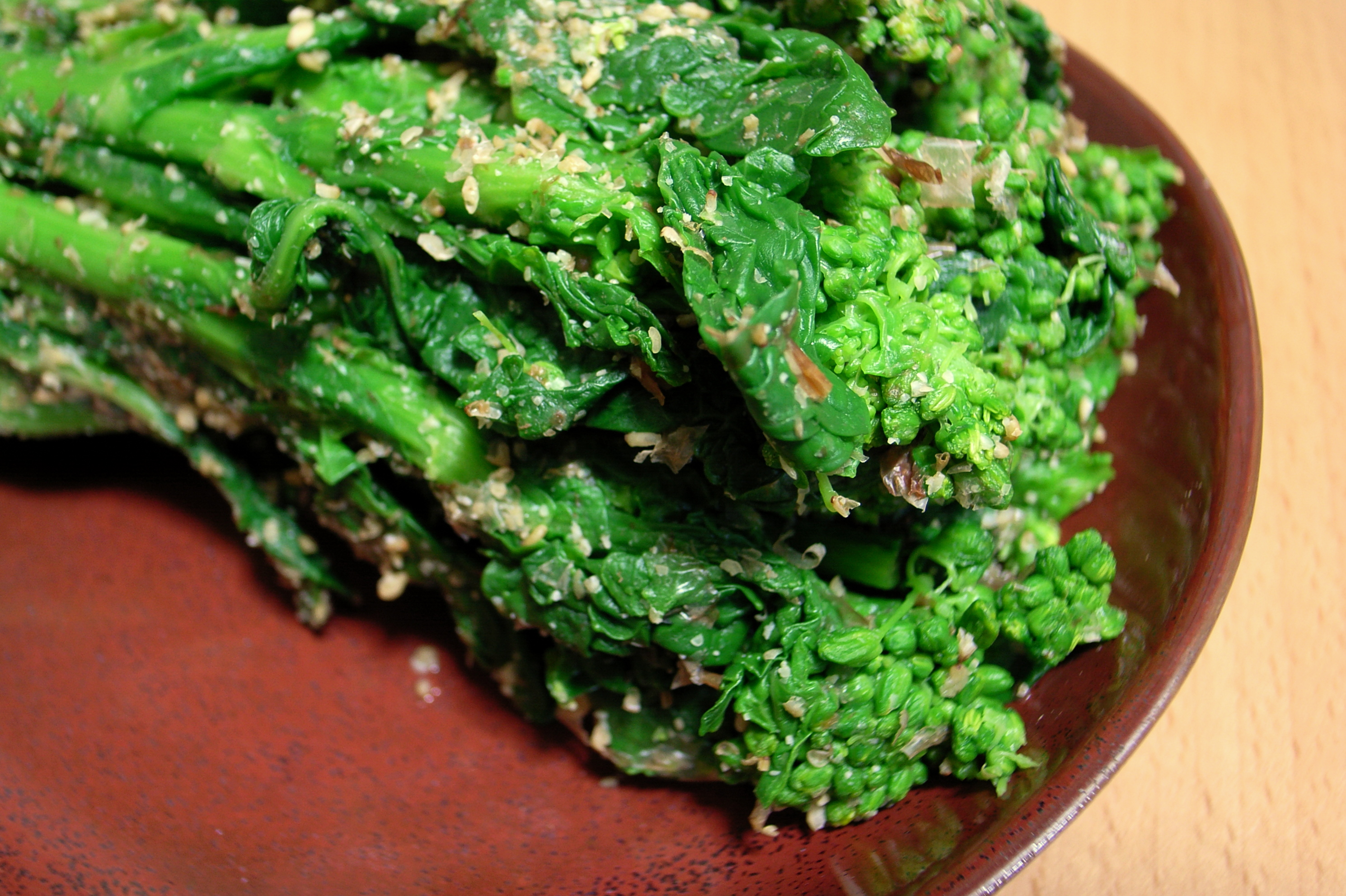
Broccolini, Aspabroc, Bimi, baby broccoli or tenderstem broccoli, is a green vegetable similar to broccoli but with smaller florets and longer, thin stalks. It is a hybrid of broccoli and gai lan (which is sometimes referred to as "Chinese kale" or "Chinese broccoli"), both cultivar groups of Brassica oleracea. In the United States, the name Broccolini is a registered trademark of Mann Packing.
History
Broccolini was originally developed over eight years by the Sakata Seed Company of Yokohama, Japan, as a hybrid of broccoli and gai lan, rather than as the product of genetic modification. It was developed to create a milder-tasting vegetable which could grow in hotter climates than broccoli, to expand Sakata's broccoli market.
Sakata partnered with Sanbon Incorporated in 1994 to begin growing the product commercially in Mexico under the name Asparation, implying a similarity to asparagus due to its slim, edible stem. After first becoming available in US markets in 1996, in 1998, Sakata began a partnership with Mann Packing Company in Salinas, California, and marketed the product as Broccolini. New forms of Broccolini continue to be developed, including purple broccolini.
Description
Broccolini has a similar structure to sprouting-type broccoli. It grows to 80 cm, with a slender elongated stem that is 15 – long. It is annual or biennial, herbaceous, and glabrous.
Culinary use
The entire vegetable (leaves, young stems, unopened flower shoots, and flowers) is edible. Its flavor is sweet, with notes of both broccoli and asparagus, although it is not closely related to the latter.
Common cooking methods include sautéing, steaming, boiling, and stir frying. According to a 2005 study assessing how Australians cooked broccolini, the majority used steaming, with fewer choosing stir-frying, and a small minority ate it raw or in a salad.
Nutrition
Broccolini is a source of vitamin A, vitamin C and vitamin K, folate and glucosinolates.
Broccolini contains a similar profile of phenolic acids to other vegetables in the Brassica family, most notably containing flavonoids. Research into flavonoids in broccolini leaves has suggested they can inhibit the growth of some cancers. Such research has found that common cooking methods reduce broccolini's phenolic acid content, particularly boiling.
Production
Climate
Broccolini grows in cool climates and is intolerant of extreme climates. It is more sensitive to cold temperatures than broccoli but less sensitive to hot temperatures.
Growth and distribution
Broccolini takes 50–60 days to grow after being transplanted. It is harvested when the heads are fully developed but are not flowering. By cutting off the head, the harvest time is extended as new side shoots of smaller heads will grow. Unlike other cruciferous vegetables, which are harvested once per growth cycle, broccolini is harvested 3 to 5 times in a growth cycle, depending on growing conditions. Further unlike broccoli, the stalk is inedible; rather, the side shoots are harvested and consumed.
After being harvested, the produce is cooled to 0 C, preventing the flower heads developing to maintain quality. Shelf life can be further extended with the use of modified atmosphere packaging.
In the US, broccolini is grown in California during the summer and in Arizona during the winter.
Produce reference
The International Federation for Produce Standards assigns it the price look-up code 3277, "baby broccoli". It is also known as asparation, asparations, "sweet baby broccoli", broccoletti, and broccolette "Italian Sprouting broccoli". It is sold under the registered trademarks Bimi and Tenderstem.
References
References
- "Broccolini (Reg. No. 2365625)". [[United States Patent and Trademark Office]].
- Petusevsky, Steve. (12 August 1999). "Broccolini An Exciting New Hybrid". [[Sun-Sentinel]].
- (1 January 2013). "Sakata Home Grown Presents: Broccolini Ideas".
- Livingston, Thomas. (Summer 2010). "Broccolini®: What's in a Name?". Gastronomica.
- (January 2015). "Nutritional quality changes throughout shelf-life of fresh-cut kailan-hybrid and 'Parthenon' broccoli as affected by temperature and atmosphere composition". [[Food Science and Technology International]].
- "Vegetable Research and Extension: Broccolini".
- Yagoshi, Tsunehiro. (2017). "Purple baby broccoli".
- (12 November 2008). "ブロッコリー物語". [[The Asahi Shimbun]].
- O'Neill, Molly. (10 June 1998). "Broccoli's Short, Sweet Cousin". [[The New York Times]].
- (August 2005). "Understanding the retail performance of broccolini using a tool for determining in-store performance and customer demand.". Horticulture Australia Ltd.
- (27 June 2011). "Broccolini vs. Broccoli".
- (3 March 2015). "Purification, characterization, and biological activities of broccolini lectin". Biotechnology Progress.
- (March 2020). "Comparative study of the phytochemical and mineral composition of fresh and cooked broccolini". Food Research International.
- (Jan–Feb 2012). "Inhibitory effects of Broccolini leaf flavonoids on human cancer cells". Scanning.
- Lim, T. K.. (2014). "Edible Medicinal And Non-Medicinal Plants: Volume 7, Flowers". [[Springer Science+Business Media.
- "Aspabroc (Hybrid)".
- (2020). "Soil and foliar zinc biofortification of broccolini: effects on plant growth and mineral accumulation". Crop and Pasture Science.
- "Baby Broccoli (Broccolini)".
- (January 2013). "Comparative behaviour between kailan-hybrid and conventional fresh-cut broccoli throughout shelf-life". [[LWT (journal).
- (31 December 1999). "Broccoli (3277)".
- "About Bimi® Broccoli".
- "About Tenderstem® broccoli".
This article was imported from Wikipedia and is available under the Creative Commons Attribution-ShareAlike 4.0 License. Content has been adapted to SurfDoc format. Original contributors can be found on the article history page.
Ask Mako anything about Broccolini — get instant answers, deeper analysis, and related topics.
Research with MakoFree with your Surf account
Create a free account to save articles, ask Mako questions, and organize your research.
Sign up freeThis content may have been generated or modified by AI. CloudSurf Software LLC is not responsible for the accuracy, completeness, or reliability of AI-generated content. Always verify important information from primary sources.
Report