From Surf Wiki (app.surf) — the open knowledge base
British West Africa
1821–1888 colonial entity of Britain in West Africa
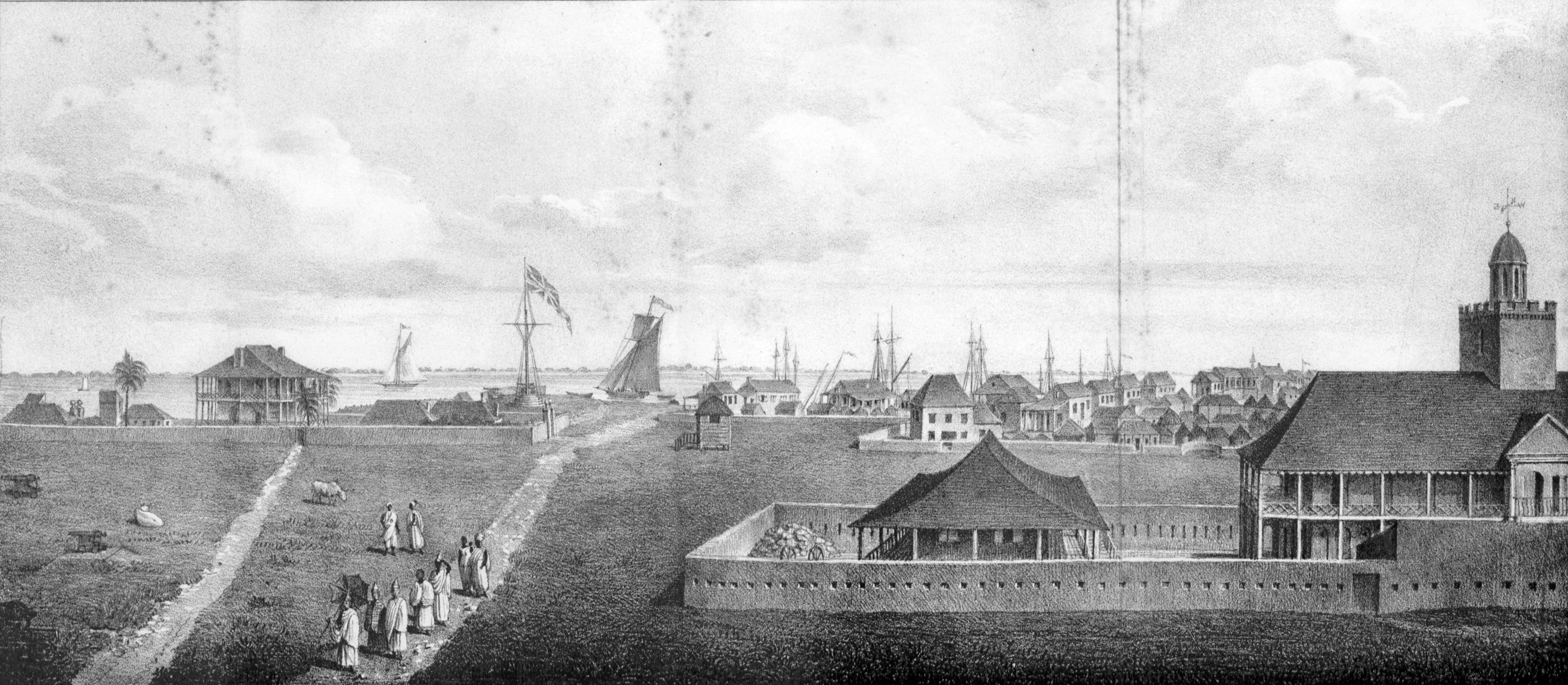
1821–1888 colonial entity of Britain in West Africa
| Field | Value |
|---|---|
| native_name | |
| conventional_long_name | British West African Settlements |
| common_name | |
| life_span | 1821–1850 |
| 1866–1888 | |
| era | Abolitionism |
| New Imperialism | |
| status | Crown colony |
| status_text | |
| empire | |
| event_start | Established |
| date_start | 17 October |
| year_start | 1821 |
| event_end | Final disestablishment |
| date_end | 28 November |
| year_end | 1888 |
| year_exile_start | |
| year_exile_end | |
| event1 | Disestablishment |
| date_event1 | 13 January 1850 |
| event2 | Second establishment |
| date_event2 | 19 February 1866 |
| event_pre | |
| event_post | |
| p1 | |
| flag_p1 | |
| image_p1 | |
| s1 | Gambia Colony and Protectorate |
| flag_s1 | Flag of The Gambia (1889–1965).svg |
| image_s1 | |
| s2 | Gold Coast (British colony) |
| flag_s2 | Flag of the Gold Coast (1877–1957).svg |
| s3 | Oil Rivers Protectorate |
| flag_s3 | Flag of the Niger Coast Protectorate (1893–1899).svg |
| s4 | Sierra Leone Colony and Protectorate |
| flag_s4 | Flag of Sierra Leone (1889–1914).svg |
| image_flag | Flag of the British West Africa Settlements (1870–1888).svg |
| flag_alt | |
| image_flag2 | |
| flag_alt2 | |
| flag | |
| flag2 | |
| flag_type | |
| flag2_type | |
| image_coat | Badge of the British West Africa Settlements (1870-1888).svg |
| coat_alt | |
| symbol_type | Badge |
| symbol_type_article | |
| image_map | British West Africa.PNG |
| image_map_caption | Location of British West Africa. From left to right: The Gambia, Sierra Leone, Gold Coast and Nigeria. |
| image_map2 | |
| capital | Freetown |
| capital_exile | |
| national_anthem | God Save the King (1821–1837) |
| God Save the Queen (1837–1850; 1866–1888) | |
| common_languages | English (official) |
| currency | Pound sterling |
| British West African pound | |
| leader1 | George IV (first) |
| leader2 | Victoria (last) |
| year_leader1 | 1821–1830 |
| year_leader2 | 1837–1850; 1866–1888 |
| title_leader | Monarch |
| representative1 | |
| year_representative1 | |
| title_representative | |
| deputy1 | |
| year_deputy1 | |
| title_deputy | |
| legislature | |
| house1 | |
| type_house1 | |
| house2 | |
| type_house2 | |
| stat_year1 | |
| stat_area1 | |
| stat_pop1 | |
| today | The Gambia |
| Ghana | |
| Nigeria | |
| Sierra Leone | |
| Cameroon | |
| footnote_a | |
| footnote_b | |
| footnote_h | |
| footnotes |
Separate with line breaks or use Template:Plainlist. If language uses Latin characters, place name(s) in italics. -- 1866–1888 New Imperialism God Save the Queen (1837–1850; 1866–1888) British West African pound Ghana Nigeria Sierra Leone Cameroon British West Africa was the collective name for British settlements in West Africa during the colonial period, either in the general geographical sense or the formal colonial administrative entity. British West Africa as a colonial entity was originally officially known as Colony of Sierra Leone and its Dependencies, then British West African Territories and finally British West African Settlements.
The United Kingdom held varying parts of these territories or the whole throughout the 19th century. From west to east, the colonies became the independent countries of The Gambia, Sierra Leone, Ghana and Nigeria. Until independence, Ghana was referred to as the Gold Coast.
Historical jurisdiction

British West Africa constituted during two periods (17 October 1821, until its first dissolution on 13 January 1850, and again 19 February 1866, until its final demise on 28 November 1888) as an administrative entity under a governor-in-chief (comparable in rank to a governor-general), an office vested in the governor of Sierra Leone (at Freetown).
The other colonies originally included in the jurisdiction were the Gambia and the British Gold Coast (modern Ghana). Also western Nigeria, eastern Nigeria and northern Nigeria were included.
Africa's present makeup includes Ghana, Sierra Leone, Gambia, Western Nigeria, Eastern Nigeria and Northern Nigeria. These countries and areas are artifacts of the post-colonial period, or what the Ghanaian writer Kwame Appiah dubs neo-colonialism.
British West Africa was originally founded at the urging of the prominent abolitionist Fowell Buxton, who felt that ending the Atlantic slave trade required some level of British control of the coastline. Development was solely based on modernization, and autonomous educational systems were the first step to modernising indigenous culture. Cultures and interests of indigenous peoples were ignored. A new social order, as well as European influences within schools and libraries and local traditions, helped mould British West Africa's culture. The British West African colonial school curriculum helped play a role in this. Local elites developed, with new values and philosophies, who changed the overall cultural development.
Aftermath
Even after its final dissolution, a single currency, the British West African pound, was in effect throughout the region—including Nigeria—from 1907 to 1962.
Nigeria gained independence in 1960. Sierra Leone was self-governing by 1958 and gained independence in 1961. Gambia gained independence in 1965. In 1954, the British Gold Coast was allowed by Britain to self-govern and in 1957, the Gold Coast was given independence from Britain, under the name Ghana.
References
References
- "Sierra Leone".
- Lange, Matthew. (2006). "Colonialism and Development: a comparative analysis of Spanish and British colonies.". American Journal of Sociology.
- {{Internet Archive. africanslavetrad00buxt. ''The African Slave Trade and its Remedy'' (1839)
- Olden, Anthony. “Alan Burns, the Lagos Library, and the Commencement of Carnegie Support for Library Development in British West Africa.” ''The Journal of Library History.'' 22, no. 4 (1987): 397–408.
- (2007-08-17). "Local Elites, Political Capital and Democratic Development: Governing Leaders in Seven European Countries". Springer Science & Business Media.
- "Central Bank of Nigeria:: History of The Currency".
- "Britannica Academic".
This article was imported from Wikipedia and is available under the Creative Commons Attribution-ShareAlike 4.0 License. Content has been adapted to SurfDoc format. Original contributors can be found on the article history page.
Ask Mako anything about British West Africa — get instant answers, deeper analysis, and related topics.
Research with MakoFree with your Surf account
Create a free account to save articles, ask Mako questions, and organize your research.
Sign up freeThis content may have been generated or modified by AI. CloudSurf Software LLC is not responsible for the accuracy, completeness, or reliability of AI-generated content. Always verify important information from primary sources.
Report