From Surf Wiki (app.surf) — the open knowledge base
Brigadier (United Kingdom)
Military rank of the United Kingdom
_OF-6.svg)
Military rank of the United Kingdom
| Field | Value |
|---|---|
| name | Brigadier |
| image | |
| caption | Brigadier rank insignia |
| country | United Kingdom |
| service branch | |
| abbreviation | Brig |
| rank group | Field officer |
| rank | One-star |
| NATO rank | OF-6 |
| formation | |
| higher rank | Major-general |
| lower rank | Colonel |
| equivalents |
| Non-NATO rank = Brigadier (Brig) is a senior rank in the British Army and the Royal Marines. Brigadier is the superior rank to colonel and subordinate to major-general. It corresponds to the rank of brigadier general in many other nations, although it is not considered to be a general officer rank in the United Kingdom.
The rank has a NATO rank code of OF-6, placing it equivalent to the Royal Navy commodore and the Royal Air Force air commodore ranks and the brigadier general (1-star general) rank of the United States military and numerous other NATO nations.
Insignia
The rank insignia for a brigadier is a Tudor Crown over three "pips" ("Bath" stars).
Usage
Brigadier was originally an appointment conferred on colonels (as commodore was an appointment conferred on naval captains) rather than a substantive rank. However, from 1 November 1947 it became a substantive rank in the British Army. The Royal Marines, however, retained it as an acting rank until 1997, when both commodore and brigadier became substantive ranks.
Historical rank of brigadier-general
Brigadier-general was formerly a rank or appointment in the British Army and Royal Marines, and briefly in the Royal Air Force. It first appeared in the army in the reign of James II, but did not exist in the Royal Marines until 1913. In the 1740s, the substantive rank of brigadier-general was suppressed, and thereafter brigadier-general was a temporary appointment only, bestowed on a colonel or lieutenant-colonel (or on a colonel commandant in the Royal Marines) for the duration of a specific command (similar to a commodore).
The appointment was abolished in both the Army and the Marines in 1921, being replaced in the Army by the appointments of colonel-commandant (which already existed as a rank in the Marines) and colonel on the staff. These appointments, although reflecting its modern role in the British Army as a senior colonel rather than a junior general, were not well received and were both replaced with brigadier in both the Army and the Marines (although not replacing the substantive rank of colonel commandant in the latter) in 1928. From the formation of the Royal Air Force on 1 April 1918 until 31 July 1919, it used the appointment of brigadier-general. This was superseded by the rank of air commodore on the following day.
The rank insignia for appointment of the brigadier-general was a crossed sword and baton. The rank insignia for colonel-commandant and colonel on the staff was that later adopted for brigadiers.
Brigadier is the highest field officer rank (hence the absence of the word "general"), whereas brigadier-general was the lowest general officer "rank". However, the two ranks are considered equal.
Junior officer rank
Historically, brigadier and sub-brigadier were the junior officer ranks in the Troops of Horse Guards. This corresponded to French practice, where a brigadier was the cavalry equivalent of a corporal. To reflect the status of the Horse Guards as Household Troops, brigadiers ranked with lieutenants and sub-brigadiers with cornets in other cavalry regiments. When the Horse Guards were disbanded in 1788, the brigadiers and sub-brigadiers of the 1st and 2nd Troops became lieutenants and cornets in the 1st and 2nd Regiments of Life Guards, respectively.
Brigadier remains the lowest officer rank in the Royal Company of Archers, the King's Bodyguard for Scotland. There are twelve brigadiers on the establishment, ranking after ensigns.
References
References
- "Rank of Brigadier", ''[[The Times]]'', 24 March 1948
- [https://archive.today/20120723162226/http://www.debretts.co.uk/forms-of-address/professions/armed-forces/royal-navy/royal-marines.aspx Debrett's]
- John J. McGrath. (2009). "The Brigade: A History, Its Organization and Employment in the US Army". DIANE Publishing.
- [http://www.pbenyon.plus.com/LondonGazette/RM_Officers_Promotion.html Senior RM Officers - Promotion] {{Webarchive. link. (10 August 2017 , London Gazette)
- Beatson, Robert. (1788). "A Political Index to the Histories of Great Britain and Ireland: Or, A Complete Register of the Hereditary Honours, Public Offices, and Persons in Office, from the Earliest Periods to the Present Time". G. G. J. & J. Robinson.
- "New Army Rank of Brigadier", ''[[The Times]]'', 23 December 1927
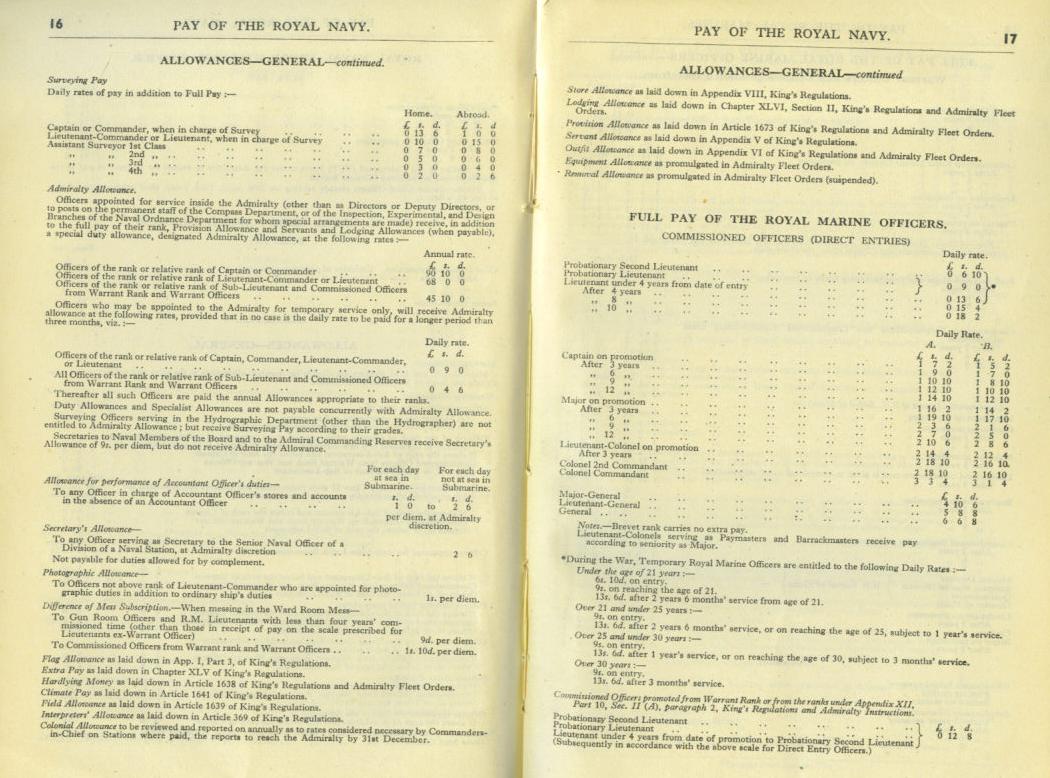
- "World War II RN Pay Tables".
- Scribbles. (April 1956). "Pay and Allowances of Officers - RN, RM, WRNS, QARNNS and VAD". Pbenyon.plus.com.
- {{London Gazette. (5–8 July 1788)
- [http://www.royal.gov.uk/RoyalEventsandCeremonies/Ceremonialbodies/RoyalCompanyofArchers.aspx Royal Company of Archers], royal.gov.uk. Accessed 1 July 2012 {{webarchive. link. (16 June 2012)
This article was imported from Wikipedia and is available under the Creative Commons Attribution-ShareAlike 4.0 License. Content has been adapted to SurfDoc format. Original contributors can be found on the article history page.
Ask Mako anything about Brigadier (United Kingdom) — get instant answers, deeper analysis, and related topics.
Research with MakoFree with your Surf account
Create a free account to save articles, ask Mako questions, and organize your research.
Sign up freeThis content may have been generated or modified by AI. CloudSurf Software LLC is not responsible for the accuracy, completeness, or reliability of AI-generated content. Always verify important information from primary sources.
Report