From Surf Wiki (app.surf) — the open knowledge base
Branchio-oto-renal syndrome
| Field | Value | |
|---|---|---|
| name | Branchio-oto-renal syndrome | |
| synonyms | BOR syndrome, Branchiootorenal syndrome | |
| image | Image: Autosomal dominant - en.svg | |
| caption | Branchio-oto-renal syndrome has an autosomal dominant pattern of inheritance. | |
| symptoms | Ear abnormalities | |
| causes | Mutations in genes, EYA1, SIX1, and SIX5 | |
| diagnosis | Laboratory test results, Physical exam | |
| treatment | Branchial fistula may need surgery |
Branchio-oto-renal syndrome (BOR) is an autosomal dominant genetic disorder involving the kidneys, ears, and neck. It is also known as Melnick-Fraser syndrome.
Signs and symptoms
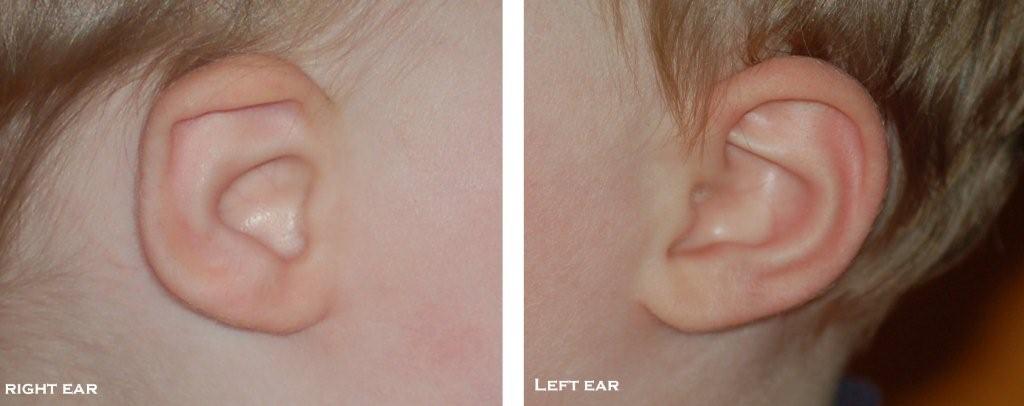
The signs and symptoms of branchio-oto-renal syndrome are consistent with underdeveloped (hypoplastic) or absent kidneys with resultant chronic kidney disease or kidney failure. Ear anomalies include extra openings in front of the ears, extra pieces of skin in front of the ears (preauricular tags), or further malformation or absence of the outer ear (pinna). Malformation or absence of the middle ear is also possible, individuals can have mild to profound hearing loss. People with BOR may also have cysts or fistulae along the sides of their neck. In some individuals and families, renal features are completely absent. The disease may then be termed "branchio-oto syndrome" (BO syndrome).
Cause
The cause of branchio-oto-renal syndrome is mutations in genes, EYA1, SIX1, and SIX5 (approximately 40 percent of those born with this condition have a mutation in the EYA1 gene). Many different abnormalities in these genes have been identified.
Mechanism
The genetics of branchio-oto-renal syndrome indicate it is inherited in an autosomal dominant manner with variable clinical manifestations affecting branchial, renal, and auditory development. Autosomal dominant inheritance indicates that the defective gene responsible for a disorder is located on an autosome, and only one copy of the gene is sufficient to cause the disorder, when inherited from a parent who has the disorder. The varying clinical expression of the disease between different families suggests that multiple loci may be involved. In 1992, using genetic linkage studies, the BOR gene was identified on chromosome 8, Subsequently, another locus on human chromosome 14 was identified, and several mutations were reported in genes EYA1, SIX1, and SIX5. SINX1 is involved in many facets of embryonic development and is important in the normal formation of many organs and tissues, including the ears, and kidneys before birth.
Diagnosis
Diagnosis of BO syndrome or BOR syndrome is clinical, i.e. based on observing an appropriate combination of symptoms. Only about half of patients have a detectable genetic abnormality, mostly in the EYA1 gene, SIX1 gene or the SIX5 gene.
Treatment

The treatment of branchio-oto-renal syndrome is done per each affected area (or organ). For example, a person with hearing problems should have appropriate supports and prompt attention for any inflammation of the ear.
A specialist should observe any kidney problems. Surgical repair may be needed depending on the degree of a defect or problem, whether a transplant or dialysis is needed.
Epidemiology
The epidemiology of branchio-oto-renal syndrome has it with a prevalence of 1/40,000 in Western countries. A 2014 review found 250 such cases in the country of Japan.
References
References
- (2004). "Genetic Hearing Loss". Marcel Dekker Inc.
- (1997). "Branchio-oto-renal syndrome: identification of novel mutations, molecular characterization, mutation distribution, and prospects for genetic testing". Genetic Testing.
- (2015-11-23). "Branchiootorenal syndrome". U.S. National Library of Medicine.
- "Branchiootorenal syndrome {{!}} Disease {{!}} Overview". Genetic and Rare Diseases Information Center (GARD) – an NCATS Program.
- "Branchio Oto Renal Syndrome". NORD (National Organization for Rare Disorders).
- (1993-01-01). "Branchiootorenal Spectrum Disorders". University of Washington, Seattle.
- (April 1998). "Autosomal-dominant branchio-otic (BO) syndrome is not allelic to the branchio-oto-renal (BOR) gene at 8q13". American Journal of Medical Genetics.
- (2015-08-06). "Kidney Development, Disease, Repair and Regeneration". Academic Press.
- Smith RJ (1993). Adam MP, Everman DB, Mirzaa GM, Pagon RA (eds.). Branchiootorenal Spectrum Disorder. Seattle (WA): University of Washington, Seattle. PMID 20301554
- (October 1992). "Autosomal dominant branchio-oto-renal syndrome--localization of a disease gene to chromosome 8q by linkage in a Dutch family". Human Molecular Genetics.
- (May 2004). "SIX1 mutations cause branchio-oto-renal syndrome by disruption of EYA1-SIX1-DNA complexes". Proceedings of the National Academy of Sciences of the United States of America.
- (February 2011). "Mutation screening of the EYA1, SIX1, and SIX5 genes in a large cohort of patients harboring branchio-oto-renal syndrome calls into question the pathogenic role of SIX5 mutations". Human Mutation.
- {{OMIM. 113650. Branchiootorenal Syndrome 1; BOR1
- (June 2021). "Mutations in SIX1 Associated with Branchio-oto-Renal Syndrome (BOR) Differentially Affect Otic Expression of Putative Target Genes". Journal of Developmental Biology.
- (2009-01-01). "Cochlear Implants: Principles & Practices". Lippincott Williams & Wilkins.
- (February 2004). "Ear and kidney syndromes: molecular versus clinical approach". Kidney International.
- (June 2014). "Branchio-oto-renal syndrome: comprehensive review based on nationwide surveillance in Japan". Pediatrics International.
This article was imported from Wikipedia and is available under the Creative Commons Attribution-ShareAlike 4.0 License. Content has been adapted to SurfDoc format. Original contributors can be found on the article history page.
Ask Mako anything about Branchio-oto-renal syndrome — get instant answers, deeper analysis, and related topics.
Research with MakoFree with your Surf account
Create a free account to save articles, ask Mako questions, and organize your research.
Sign up freeThis content may have been generated or modified by AI. CloudSurf Software LLC is not responsible for the accuracy, completeness, or reliability of AI-generated content. Always verify important information from primary sources.
Report