From Surf Wiki (app.surf) — the open knowledge base
Brahmi numerals
Numeral system predating modern Hindu-Arabic numerals

Numeral system predating modern Hindu-Arabic numerals
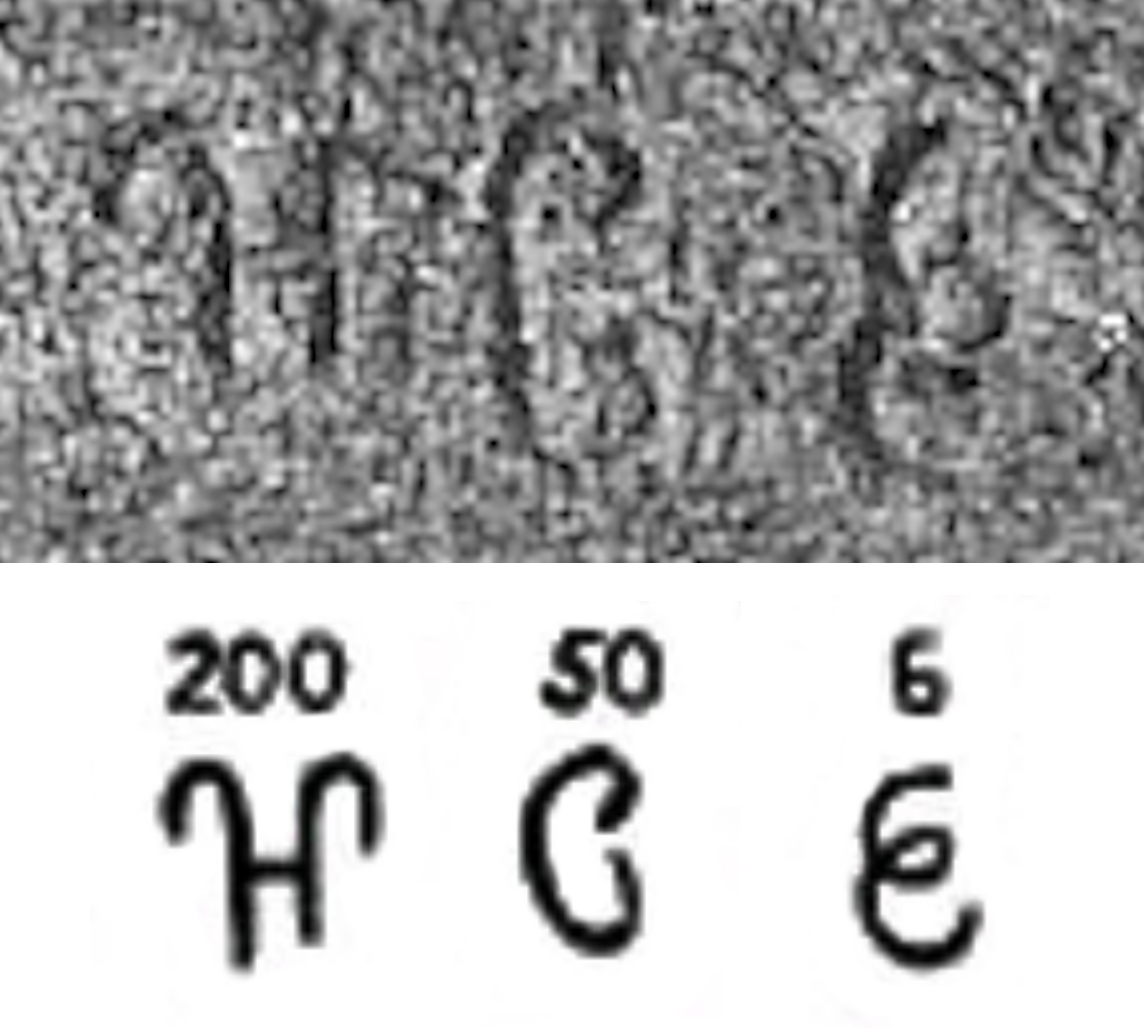

Brahmi numerals are a numeral system attested in the Indian subcontinent from the 3rd century BCE. It is the direct graphic ancestor of the modern Hindu–Arabic numeral system. However, the Brahmi numeral system was conceptually distinct from these later systems, as it was a non-positional decimal system, and did not include zero. Later additions to the system included separate symbols for each multiple of 10 (e.g. 20, 30, and 40). There were also symbols for 100 and 1000, which were combined in ligatures with the units to signify 200, 300, 2000, 3000, etc. In computers, these ligatures are written with the Brahmi Number Joiner at U+1107F.
Origins
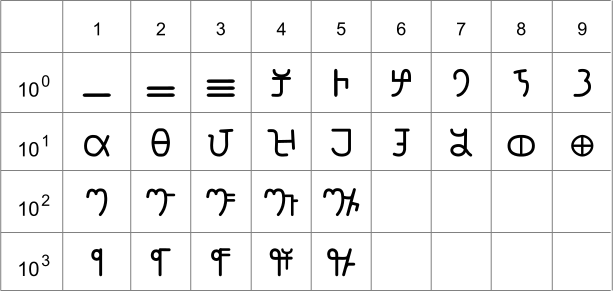
The source of the first three numerals seems clear: they are collections of 1, 2, and 3 strokes, in Ashoka's era vertical I, II, III like Roman numerals, but soon becoming horizontal like the Han Chinese numerals. In the oldest inscriptions, 4 looks like a +, reminiscent of the X of neighboring , and perhaps a representation of 4 lines or 4 directions. However, the other unit numerals appear to be arbitrary symbols in even the oldest inscriptions. It is sometimes supposed that they may also have come from collections of strokes, run together in cursive writing in a way similar to that attested in the development of Egyptian hieratic and demotic numerals, but this is not supported by any direct evidence. Likewise, the units for the tens are not obviously related to each other or to the units, although 10, 20, 80, 90 might be based on a circle.
The sometimes rather striking graphic similarity they have with the hieratic and demotic Egyptian numerals, while suggestive, is not prima facie evidence of an historical connection, as many cultures have independently recorded numbers as collections of strokes. With a similar writing instrument, the cursive forms of such groups of strokes could easily be broadly similar as well, and this is one of the primary hypotheses for the origin of Brahmi numerals.
Another possibility is that the numerals were acrophonic, like the Attic numerals, and based on the alphabet. For instance, 4 "chatur" early on took a shape much like the Kharosthi letter 𐨖 "ch", while 5 "pancha" looks remarkably like Kharosthi 𐨤 "p"; and so on through 6 "ssat" and 𐨮, then 7 "sapta" and 𐨯, and finally 9 nava and 𐨣. However, there are problems of timing and lack of records. The full set of numerals is not attested until the 1st-2nd century CE, 400 years after Ashoka. Assertions that either the numerals derive from tallies or that they are alphabetic are, at best, educated guesses.
Numerals
| Hindu–Arabic numerals | Brahmi numerals |
|---|---|
| 1 | 2 |
| 𑁒 | 𑁓 |
| Hindu–Arabic numerals | Sanskrit numerals (देवनागरी) |
|---|---|
| 0 | 1 |
| ० | १ |
References
- Georges Ifrah, The Universal History of Numbers: From Prehistory to the Invention of the Computer. Translated by David Bellos, Sophie Wood, pub. J. Wiley, 2000.
- Karl Menninger (mathematics), Number Words and Number Symbols - A Cultural History of Numbers https://books.google.com/books?id=BFJHzSIj2u0C&dq=Wagner+%22Bamberg+Arithmetic%22&pg=PA393
- David Eugene Smith and Louis Charles Karpinski, The Hindu–Arabic Numerals (1911) https://books.google.com/books?id=eQoCAAAAYAAJ
This article was imported from Wikipedia and is available under the Creative Commons Attribution-ShareAlike 4.0 License. Content has been adapted to SurfDoc format. Original contributors can be found on the article history page.
Ask Mako anything about Brahmi numerals — get instant answers, deeper analysis, and related topics.
Research with MakoFree with your Surf account
Create a free account to save articles, ask Mako questions, and organize your research.
Sign up freeThis content may have been generated or modified by AI. CloudSurf Software LLC is not responsible for the accuracy, completeness, or reliability of AI-generated content. Always verify important information from primary sources.
Report