From Surf Wiki (app.surf) — the open knowledge base
Box-sealing tape
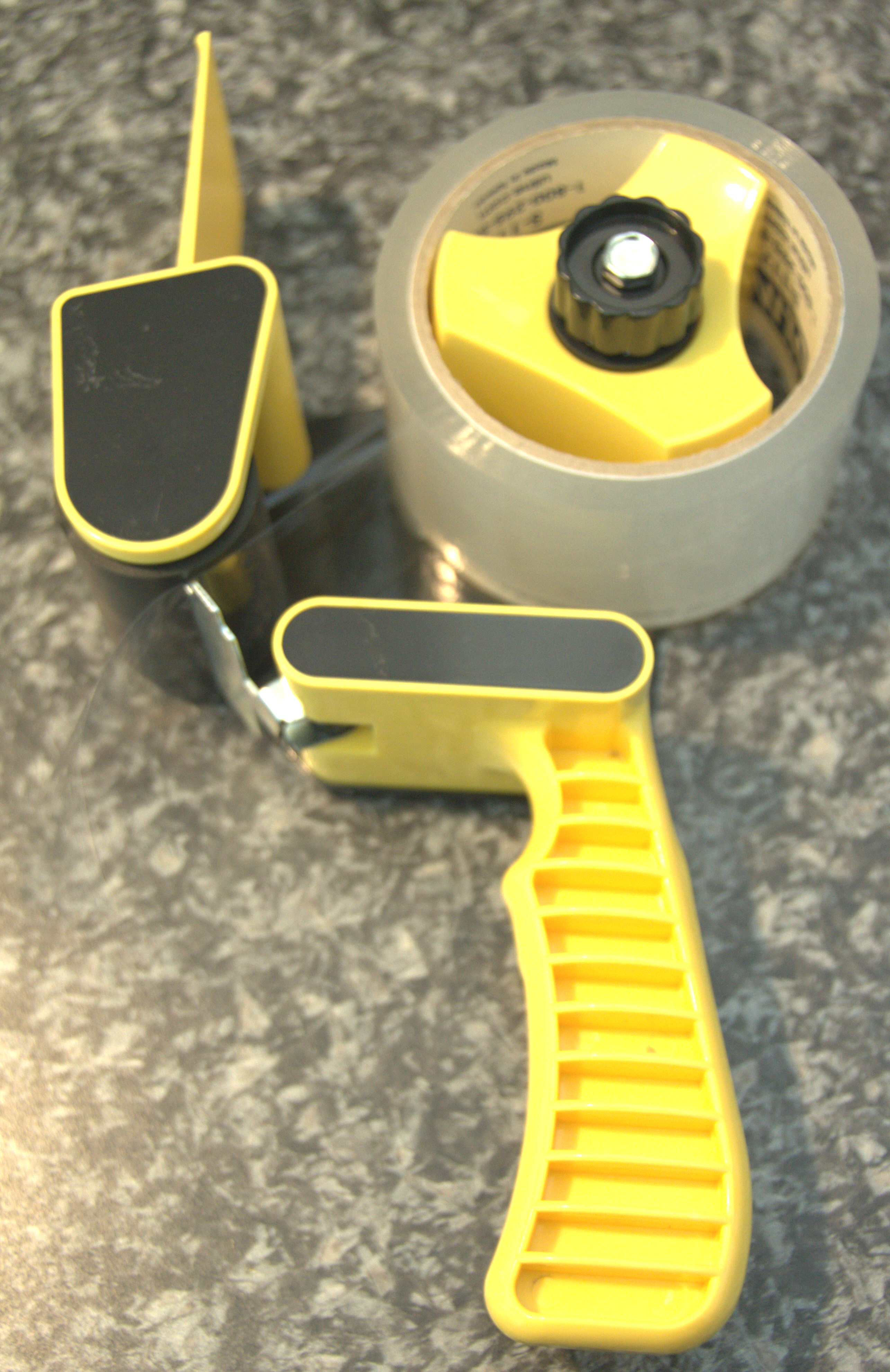

Box-sealing tape, parcel tape, packing tape, or shipping tape is a pressure-sensitive tape used for closing or sealing corrugated fiberboard boxes. It consists of a pressure-sensitive adhesive coated onto a backing material which is usually a polypropylene or polyester film which is oriented to have strength in both the long (machine) direction and the cross direction.
Common packing tape is 50 mm wide, but narrower and wider variants are also common, like for example 36 mm, 48 mm and 72 mm (approx 1.5 in, 2 in and 3 in). A variety of backing strengths and calipers as well as adhesive formulations are available. The thickness of the tape may be in the order of 40 μm for low strength, 45 μm for normal strength, or 50 μm and up for extra strength.
It is often transparent or tan (beige, buff, brown), but can be had in any color with or without prints and logos. The length of a roll varies, but can be around 50-70 meters.
Uses
The tape is most often used as a closure for regular slotted containers (RSCs). A "single strip" or "center seam" closure is applied over the center seams of a box extending 50 to onto the end panels.
The tape can be used as a "six-strip" closure or "H-seal" by applying cross strips on the ends of the box. This is used when a relatively weak tape is used or when extra box reinforcement is needed. This method also seals the box to help keep contaminants out.
This tape has also been used by artists (e.g., Mark Jenkins) as a way to create molds of objects, as the strength of the tape allows for a strong shell for the mold when completed.
Application

The tape can be applied manually with a stationary dispenser but is more often applied with a hand-held tape dispenser: this allows the user to more efficiently place the tape on the box, cut it off, and rub it down.
Automated machinery for application of tape to high-speed lines is also common.
Environmental considerations
Based on the solid waste hierarchy, the quantity and size of a tape should be minimized without reducing necessary functionality. Material content of a tape should comply with applicable regulations. Life cycle assessments of the tape and the item being taped are useful to identify and improve possible environmental effects. For example, there may be instances where the use of a PSA tape, compared to an alternative solution, improves the overall environmental impact: or vice versa.
If a tape remains on corrugated box during recycling, a tape should be chosen which does not hinder box recyclability. For example, when taped corrugated boxes are recycled, film backed box sealing tapes do not hinder box recycling: the PSA adhesive stays with the backing and is easily removed.
References
- ASTM D5486 Standard Specification for Pressure Sensitive Tape for Packaging, Box Closure, and Sealing
- ASTM D1974 Standard Practice for Methods of Closing, Sealing and Reinforcing Fiberboard Boxes.
- Yam, K.L., "Encyclopedia of Packaging Technology", John Wiley & Sons, 2009,
References
- (2021-07-06). "What is Carton Sealing Tape & Mil Thickness? - Chu's Packaging Supplies". chuspkg.com.
- (2023-07-10). "A Comprehensive Guide to Packaging Tapes - Hub Packaging". www.hub-packaging.com.
- "Packing Tape: Everything You Need to Know {{!}} Blog". Gertex Solutions.
- Jensen, Timothy. (September 1992). "PSA Tapes Offer Environmental Advantages in Packaging". Adhesives Age.
- ASTM D1974
- Jensen, Timothy. (April 1999). "Packaging Tapes:To Recycle of Not". Adhesives and Sealants Council.
- Gruenewald, L. E.. (1997). "Consider box closures when considering recycling". St Thomas Technology Press.
This article was imported from Wikipedia and is available under the Creative Commons Attribution-ShareAlike 4.0 License. Content has been adapted to SurfDoc format. Original contributors can be found on the article history page.
Ask Mako anything about Box-sealing tape — get instant answers, deeper analysis, and related topics.
Research with MakoFree with your Surf account
Create a free account to save articles, ask Mako questions, and organize your research.
Sign up freeThis content may have been generated or modified by AI. CloudSurf Software LLC is not responsible for the accuracy, completeness, or reliability of AI-generated content. Always verify important information from primary sources.
Report