From Surf Wiki (app.surf) — the open knowledge base
Bothrops
Genus of snakes

Genus of snakes
- Rhinocerophis Garman, 1881
Bothrops is a genus of highly venomous pit vipers endemic to the Neotropics. The generic name, Bothrops, is derived from the Greek words βόθρος, , meaning , and ὄψ, , meaning or , together an allusion to the heat-sensitive loreal pit organs. Members of this genus are responsible for more human deaths in the Americas than any other group of venomous snakes. Currently, 48 species are recognized.
Description
Species in the genus Bothrops range in size from small, never growing to more than 50 –, to large at over 200 cm in total length (tail included). Most are characterized by having a sharp canthus rostralis and an unelevated snout.
The arrangement of the scales on top of the head is extremely variable; the number of interorbital scales may be 3–14. Usually there are 7–9 supralabials and 9–11 sublabials. There are 21–29 rows of dorsal scales at midbody, 139–240 ventral scales, and 30–86 subcaudals, which are generally divided.
Common names
Lacépède originally applied the common name "lanceheads" to all snakes in the genus Bothrops, which he considered conspecific. Thus, older writings, as well as popular and sometimes scientific writings (including the American Heritage, Merriam-Webster, and New Shorter Oxford dictionaries), still often call them fer-de-lance (French, "spearhead"). However, many scientists and hobbyists now restrict this name to the Martinican species, B. lanceolatus. Other common names include American lanceheads and American lance-headed vipers.
Geographic range
Bothrops species are found in northeastern Mexico (Tamaulipas) southward through Central and South America to Argentina. They also occur on the islands of Saint Lucia and Martinique in the Lesser Antilles, as well as on Ilha da Queimada Grande off the coast of Brazil. B. atrox is also found on the island of Trinidad in the Caribbean off the eastern coast of Venezuela.
Behavior
Most species of Bothrops are nocturnal, although a few found at higher altitudes are active during the day. Otherwise, they may be seen on cloudy days or during periods of rain. Most are terrestrial, though all are capable of climbing. One species, B. insularis, which is endemic to Ilha da Queimada Grande, is considered to be semi arboreal. This species, unlike most Bothrops, preys primarily on birds, due to the absence of native mammal species on Queimada Grande. This feeding habit probably accounts for their more arboreal lifestyle compared with their mainland cousins. Many species of Bothrops exhibit tail vibration behavior when disturbed.
Venom
Members of the genus Bothrops are responsible for more fatalities in the Americas than any other group of venomous snakes. In this regard, the most important species are B. asper, B. atrox, and B. jararaca. Without treatment, the fatality rate is estimated to be about 7%, but with treatment this is reduced to 0.5–3%.
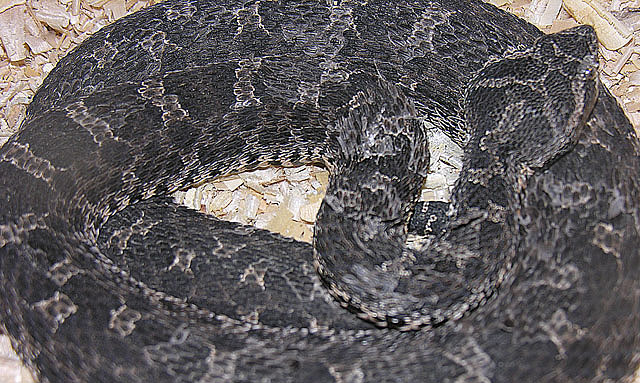
Typical symptoms of bothropic envenomation include immediate burning pain, dizziness, nausea, vomiting, sweating, headache, massive swelling of the bitten extremity, hemorrhagic blebs, local necrosis, bleeding from the nose and gums, ecchymosis, erythemia, hypotension, tachycardia, coagulopathy with hypofibrinogenemia and thrombocytopenia, hematemesis, melena, epistaxis, hematuria, intracerebral hemorrhage, and kidney failure, secondary to hypotension and bilateral cortical necrosis. There is usually some discoloration around the bite site, and rashes may develop on the torso or the extremities.
In general, death results from hypotension secondary to blood loss, kidney failure, and intracranial hemorrhage. Common complications include necrosis and kidney failure secondary to shock and the toxic effects of the venom.
Species
| Image | Species | Subsp.* | Common name | Geographic range | |
|---|---|---|---|---|---|
| [[File:Bothrops alcatraz.jpg | 120px]] | B. alcatraz Marques, Martins & Sazima, 2002 | 0 | Alcatrazes lancehead | Alcatrazes Island, São Paulo state, Southeastern Brazil. |
| [[File:Bothrops alternatus Instituto Butantã (3).jpg | 120px]] | B. alternatus A.M.C. Duméril, Bibron & A.H.A. Duméril, 1854 | 0 | Urutu, yarará, víbora de la cruz | Southeastern Brazil, Paraguay, Uruguay and northern Argentina (in the provinces of Buenos Aires, Catamarca, Córdoba, Corrientes, Chaco, Entre Ríos, Formosa, La Pampa, Misiones, San Luis, Santa Fe, Santiago del Estero and Tucumán. |
| [[File:Bothrops ammodytoides, the Patagonian Pit Viper (9070511689).jpg | 120px]] | B. ammodytoides Leybold, 1873 | 0 | Patagonian lancehead | Argentina in the provinces of Buenos Aires, Catamarca, Córdoba, Chubut, La Pampa, La Rioja, Mendoza, Neuquén, Río Negro, San Juan, San Luis, Santa Cruz and Tucumán |
| [[File:Bothrops asper (Panama) coiled.jpg | 120px]] | B. asper (Garman, 1884) | 0 | terciopelo (preferred), Fer-de-lance (commonly used, but incorrect) | Atlantic lowlands of eastern Mexico and Central America, including Guatemala, Belize, Honduras, Nicaragua, Costa Rica and Panama, a disjunct population occurs in southeastern Chiapas (Mexico) and southwestern Guatemala, northern South America in Colombia and Ecuador West of the Andes, westernmost Venezuela, and Tumbes, Peru. |
| [[File:Fer-de-Lance (Bothrops atrox) (39388290454).jpg | 120px]] | B. atrox (Linnaeus, 1758) | 0 | Common lancehead | Tropical lowlands of South America east of the Andes, including southeastern Colombia, southern and eastern Venezuela, Trinidad, Guyana, Suriname, French Guiana, eastern Ecuador, eastern Peru, northern Bolivia and the northern half of Brazil |
| B. ayerbei Folleco-Fernández, 2010 | 0 | Patian lancehead, Ayerbe's lancehead | Cauca, Colombia | ||
| [[File:DSCN2208mod.jpg | 119x119px]] | B. barnetti Parker, 1938 | 0 | Barnett's lancehead | Along the Pacific coast of northern Peru at low elevations in arid, tropical scrub |
| [[File:Cobra-papagaio - Bothrops bilineatus - Ilhéus - Bahia.jpg | 119x119px]] | B. bilineatus (Wied-Neuwied, 1825) | 1 | Two-striped forest-pitviper | Amazon region of South America: Colombia, Venezuela, Guyana, Suriname, French Guiana, Brazil, Ecuador, Peru and Bolivia. An isolated population is known from the Atlantic versant of southeastern Brazil. |
| [[File:Bothrops brazili.jpg | 120px]] | B. brazili Hoge, 1954 | 0 | Brazil's lancehead | Equatorial forests of eastern Peru, eastern Ecuador, Brazil and northern Bolivia |
| [[File:Bothrops caribbaeus.jpg | 120px]] | B. caribbaeus (Garman, 1887) | 0 | Saint Lucia lancehead | St. Lucia, Lesser Antilles, apparently restricted to the low elevation periphery of all but the southern third and extreme northern tip of the island |
| [[File:Bothrops chloromelas.jpg | 120px]] | B. chloromelas (Boulenger, 1912) | 0 | Inca forest-pitviper | central Andes of Peru |
| [[File:Bothrops cotiara 339888586.jpg | 119x119px]] | B. cotiara (Gomes, 1913) | 0 | Cotiara | Araucaria forests of southern Brazil in the states of São Paulo, Paraná, Santa Catarina and Rio Grande do Sul, northeastern Argentina in Misiones Province |
| [[File:Bothrops neuwiedi diporus fer de lance 91.jpg | 120px]] | B. diporus Cope, 1862 | 0 | Painted Lancehead | Argentina, Brazil, Paraguay, Bolivia |
| [[File:Gfp-caatinga-lance-headed-pitviper.jpg | 120px]] | B. erythromelas Amaral, 1923 | 0 | Caatinga lancehead | Northeastern Brazil in the states of Alagoas, Bahia, Ceará, extreme eastern Maranhão, Minas Gerais, Paraíba, Pernambuco, Piauí, Rio Grande do Norte and Sergipe |
| [[File:Descanso ao sol.jpg | 120px]] | B. fonsecai Hoge & Belluomini, 1959 | 0 | Fonseca's lancehead | Southeastern Brazil in the states of northeastern São Paulo, southern Rio de Jeneiro and extreme southern Minas Gerais |
| B. germanoi Barbo, Booker, Duarte, Chaluppe, Portes, Franco & Grazziotin, 2022 | 0 | Moela's lancehead | Ilha da Moela, Brazil | ||
| [[File:Golden lancehead viper.jpg | 120px]] | B. insularis (Amaral, 1922) | 0 | Golden lancehead | Queimada Grande Island, São Paulo State, Brazil |
| [[File:Bothrops itapetiningaea.jpg | 120px]] | B. itapetiningae (Boulenger, 1907) | 0 | São Paulo lancehead | Southeastern Brazil in the states of Minas Gerais, Mato Grosso, São Paulo, and on the Paraná Plateau |
| B. jabrensis Barbo, Grazziotin, Pereira-Filho, Freitas, Abrantes & Kokubum, 2022 | 0 | Jabre's lancehead | Paraíba, Brazil | ||
| [[File:Bothrops jararaca 02.jpg | 120px]] | B. jararaca (Wied-Neuwied, 1824) | 0 | Jararaca | Southern Brazil, northeastern Paraguay and northern Argentina (Misiones) |
| [[File:Jararacuçu (Bothrops jararacussu) por Rodrigo Tetsuo Argenton (2).jpg | 120px]] | B. jararacussu Lacerda, 1884 | 0 | Jararacussu | Eastern Brazil (from Bahia to Santa Catarina), Paraguay, southeastern Bolivia and northeastern Argentina (Misiones Province) |
| [[File:Bothrops Jonathani.JPG | 159x159px]] | B. jonathani (Harvey, 1994) | 0 | Jonathan's lancehead, Cochabamba lancehead | The Altiplano of central Bolivia in the departments of Cochabamba, Santa Cruz and Tarija, and in northwestern Argentina in the departments of Jujuy and Salta, occurring at elevations of 2000–3500 m in dry, rocky grassland |
| [[File:Martinique lancehead.jpg | 120px]] | B. lanceolatusT (Bonnaterre, 1790) | 0 | Fer-de-lance, Martinique lancehead | Martinique, Lesser Antilles |
| [[File:Whitetail Lancehead 01.jpg | 120px]] | B. leucurus Wagler, 1824 | 0 | Whitetail lancehead, Bahia lancehead | Eastern Brazil along the Atlantic coast from northern Espírito Santo north to Alagoas and Ceará, occurs more inland in several parts of Bahia, uncertain identity of disjunct populations west of the Rio São Francisco |
| B. lutzi (Miranda-Ribeiro, 1915) | 0 | Cerrado lancehead | Northeastern Brazil in northern Piaui state | ||
| B. marajoensis Hoge, 1966 | 0 | Marajó lancehead | Northern Brazil in the coastal lowlands of the Amazon Delta | ||
| [[File:Bothrops marmoratus Instituto Butantã.jpg | 120px]] | B. marmoratus Silva & Rodrigues, 2008 | 0 | Marbled lancehead | Goiás, Brazil |
| [[File:Mato Grosso Lancehead (Bothrops matogrossensis) (30701582853).jpg | 120px]] | B. mattogrossensis Amaral, 1925 | 0 | Mato Grosso lancehead | Brazil, Bolivia, Argentina, Peru |
| B. medusa (Sternfeld, 1920) | 0 | Venezuelan forest-pitviper | Venezuela, including the Cordillera de la Costa (coastal range), the Federal District and the states of Aragua, Bolívar and Carabobo. | ||
| B. monsignifer Timms, Chaparro, Venegas, Salazar-Valenzuela, Scrocchi, Cuevas, Leynaud & Carrasco, 2019 | 0 | Eastern slopes of the Andes of Bolivia and southern Peru | |||
| [[File:Bothrops moojeni - Jardim Zoológico de Brasília - DSC09978.JPG | 120px]] | B. moojeni Hoge, 1966 | 0 | Brazilian lancehead | Central and southeastern Brazil, eastern Paraguay, northeastern Argentina (Misiones) and likely eastern Bolivia |
| [[File:Bothrops muriciensis 246127606.jpg | 120x120px]] | B. muriciensis Ferrarezzi & Freire, 2001 | 0 | Mata de Murici, Alagoas state, Northeastern Brazil | |
| [[File:Bothrops neuwiedi.jpg | 120px]] | B. neuwiedi Wagler, 1824 | 6 | Neuwied's lancehead | South America east of the Andes and south of 5°S, including Brazil (southern Maranhão, Piauí, Ceará, Bahia, Goiás, Mato Grosso, an isolated population in Amazonas, Rondônia and all southern states), Bolivia, Paraguay, Argentina (Catamarca, Córdoba, Corrientes, Chaco, Entre Ríos, Formosa, Jujuy, La Pampa, La Rioja, Mendoza, Misiones, Salta, San Juan, San Luis, Santa Fe, Santiago del Estero and Tucumán) and Uruguay |
| [[File:Bothrops oligobalius.jpg | 120x120px]] | B. oligobalius Dal Vechio, Prates, Grazziotin, Graboski & Rodrigues, 2021 | 0 | Amazonian forests of southern Colombia, southern Venezuela, Guyana, Suriname, French Guiana and Brazil north of the Amazon/Solimões | |
| B. oligolepis (F. Werner, 1901) | 0 | Peruvian forest-pitviper | Eastern slopes of the Andes in Peru and Bolivia. | ||
| B. osbornei Freire-Lascano, 1991 | 0 | Western Ecuador, Northwestern Peru | |||
| B. otavioi Barbo, Grazziotin, Sazima, Martins & Sawaya, 2012 | 0 | Vitória Island, São Paulo, Brazil | |||
| [[File:Jararaca (Bothrops pauloensis - Jovem).jpg | 120px]] | B. pauloensis Amaral, 1925 | 0 | Brazil, Paraguay, Bolivia | |
| [[File:Bothrops pictus.JPG | 119x119px]] | B. pictus (Tschudi, 1845) | 0 | Desert lancehead | Peru on the hills of the Pacific coastal region and versant up to about 1800 m elevation |
| B. pirajai Amaral, 1923 | 0 | Piraja's lancehead | Brazil in central and southern Bahia state and possibly also Minas Gerais | ||
| [[File:Ejemplar de Yarara (Bothrops pubescens), Uruguay, 2021.jpg | 119x119px]] | B. pubescens (Cope, 1870) | 0 | Brazil, Uruguay | |
| B. pulcher (W. Peters, 1862) | 0 | Andean forest-pitviper | Eastern slopes of the Andes from south-central Colombia to southern Ecuador. | ||
| [[File:Vibora Chocoana.jpg | 120x120px]] | B. punctatus (García, 1896) | 0 | Chocoan lancehead | From the Darién of Panama along the Pacific slope of Colombia and Ecuador. |
| [[File:Bothrops sanctaecrucis 112338712.jpg | 209x209px]] | B. sanctaecrucis Hoge, 1966 | 0 | Bolivian lancehead | Bolivia in the Amazonian lowlands from the departments of El Beni to Santa Cruz |
| B. sazimai Barbo, Gasparini, Almeida, Zaher, Grazziotin, Gusmão, Ferrarini & Sawaya, 2016 | 0 | Franceses Island lancehead | Ilha dos Franceses, Espírito Santo, Brazil | ||
| B. sonene Carrasco, Grazziotin, Santa Cruz-Farfán, Koch, Ochoa, Scrocchi, Leynaud & Chaparro, 2019 | 0 | Madre de Dios, Peru | |||
| [[File:Bothriopsis taeniata (3).jpg | 119x119px]] | B. taeniatus (Wagler, 1824) | 1 | Speckled forest-pitviper | Widespread in the equatorial forests of Ecuador, Colombia, Venezuela, Guyana, Suriname, French Guiana, Brazil, Peru and Bolivia. |
| [[File:Bothrops venezuelensis by Danny Siwek.JPG | 120px]] | B. venezuelensis Sandner-Montilla, 1952 | 0 | Venezuelan lancehead | Northern and central Venezuela, including the Cordillera de la Costa (coast range) and the states of Aragua, Carabobo, the Federal District, Miranda, Mérida, Trujillo, Lara, Falcón, Yaracuy and Sucre, and Colombia (Norte de Santander and Boyacá departments |

- Not including the nominate subspecies.
T Type species
References

References
- [[Roy Wallace McDiarmid. McDiarmid RW]], [[Jonathan A. Campbell. Campbell JA]], [[T'Shaka A. Touré. Touré TA]] (1999). ''Snake Species of the World: A Taxonomic and Geographic Reference, vol. 1''. Washington, District of Columbia: Herpetologists' League. 511 pp. {{ISBN. 1-893777-00-6 (series). {{ISBN. 1-893777-01-4 (volume).
- Campbell JA, [[William W. Lamar. Lamar WW]] (2004). ''The Venomous Reptiles of the Western Hemisphere''. Ithaca and London: Comstock Publishing Associates. 870 pp., 1,500 plates. {{ISBN. 0-8014-4141-2.
- {{ITIS
- United States Navy (1991). ''Poisonous Snakes of the World''. New York: U.S. Government / Dover Publications Inc. 203 pp. {{ISBN. 0-486-26629-X.
- Allf, Bradley C.; Durst, Paul A.P.; Pfennig, David W. (2016). "Behavioral Plasticity and the Origins of Novelty: The Evolution of the Rattlesnake Rattle". ''American Naturalist'' '''188''' (4): 475–483.
This article was imported from Wikipedia and is available under the Creative Commons Attribution-ShareAlike 4.0 License. Content has been adapted to SurfDoc format. Original contributors can be found on the article history page.
Ask Mako anything about Bothrops — get instant answers, deeper analysis, and related topics.
Research with MakoFree with your Surf account
Create a free account to save articles, ask Mako questions, and organize your research.
Sign up freeThis content may have been generated or modified by AI. CloudSurf Software LLC is not responsible for the accuracy, completeness, or reliability of AI-generated content. Always verify important information from primary sources.
Report