From Surf Wiki (app.surf) — the open knowledge base
Borogovia
Extinct genus of dinosaurs
Extinct genus of dinosaurs
Borogovia is a troodontid theropod dinosaur genus which lived during the Late Cretaceous Period, in what is now Mongolia. It contains one species, Borogovia gracilicrus.
Discovery and naming
In 1971, a Polish-Mongolian expedition discovered the remains of a small theropod at the Altan Uul IV site, in the Nemegt Basin of Ömnögovĭ province. In 1982, upon describing Hulsanpes perlei, the find was reported by Halszka Osmólska and considered by her to be a possible specimen of Saurornithoides. Later she concluded that it represented a species new to science.
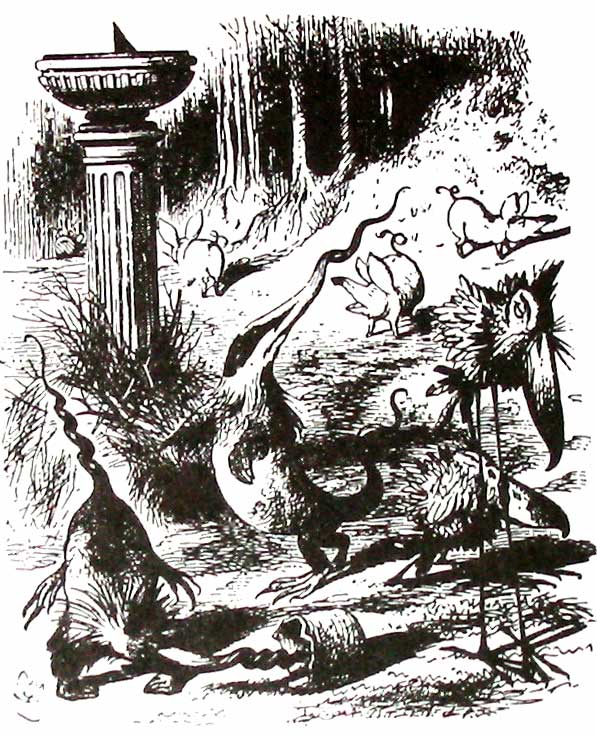
In 1987, Osmólska named and described the type species Borogovia gracilicrus. The generic name is derived from the fantasy creatures known as 'borogoves' in the Lewis Carroll poem "Jabberwocky" in Through the Looking-Glass. The specific name is a combination of Latin gracilis, "lightly built", and crus, "shin", in reference to the elegant build of the lower leg.
Description
The holotype specimen, ZPAL MgD-I/174, was found in the Nemegt Formation, dating from the early Maastrichtian. It consists of two lower legs of a single individual, including fragments of both tibiotarsi, the undersides of both metatarsi, and the second, third, and fourth toes of each foot.
The tibiotarsi have an estimated length of twenty-eight centimetres. Borogovia is about two meters (6 feet) long, weighing some twenty kilograms (forty-five pounds). The tibiotarsus is very elongated. The third toe is narrow. The second phalanx of the second toe is short. The claw of the second toe is short and relatively flat. Osmólska claimed that the second toe could not be hyperextended and suggested that it had regained a weight-bearing function, compensating for the weakness of the third toe. In 2021, Andrea Cau and Daniel Madzia have called the "sickle-clawed" second toe found in other troodontids, and also found in dromaeosaurids, but is absent in Borogovia the "falciphoran condition".
Classification
Osmólska (1987) assigned Borogovia to the Troodontidae in 1987, noting that it may be a junior synonym of Saurornithoides. In the 2021 description of Tamarro, Sellés et al. recovered Borogovia as a member of the Troodontinae, closely related to Saurornithoides. Later in 2021, Cau and Madzia revised material of Borogovia and recovered it as a sister taxon to Troodontinae.
Sellés et al., 2021 Cau & Madzia, 2021
References
References
- Osmólska, H., (1982), "''Hulsanpes perlei'' n.g.n.sp. (Deinonychosauria, Saurisichia, Dinosauria) from the Upper Cretaceous Barun Goyot Formation of Mongolia", ''Neues Jahrbuch für Geologie und Paläontologie, Monatshefte'' '''1982'''(7): 440-448
- Osmólska, H., (1987), "[https://www.app.pan.pl/archive/published/app32/app32-133.pdf ''Borogovia gracilicrus'' gen. et sp. n., a new troodontid dinosaur from the Late Cretaceous of Mongolia]", ''Acta Palaeontologica Polonica'' '''32''': 133-150
- (2021). "The phylogenetic affinities and morphological peculiarities of the bird-like dinosaur ''Borogovia gracilicrus'' from the Upper Cretaceous of Mongolia". PeerJ.
- (2021). "A fast-growing basal troodontid (Dinosauria: Theropoda) from the latest Cretaceous of Europe". Scientific Reports.
This article was imported from Wikipedia and is available under the Creative Commons Attribution-ShareAlike 4.0 License. Content has been adapted to SurfDoc format. Original contributors can be found on the article history page.
Ask Mako anything about Borogovia — get instant answers, deeper analysis, and related topics.
Research with MakoFree with your Surf account
Create a free account to save articles, ask Mako questions, and organize your research.
Sign up freeThis content may have been generated or modified by AI. CloudSurf Software LLC is not responsible for the accuracy, completeness, or reliability of AI-generated content. Always verify important information from primary sources.
Report