From Surf Wiki (app.surf) — the open knowledge base
Boogie (genre)
Music genre

Music genre
| Field | Value | |||||
|---|---|---|---|---|---|---|
| name | Boogie | |||||
| stylistic_origins | ||||||
| cultural_origins | Late 1970s, US | |||||
| instruments | ||||||
| derivatives | {{hlist | Electro | house | nu-disco | city pop |
pop kreatif}}
Boogie (sometimes called post-disco and electro-funk){{cite press release | access-date = 2008-08-08 | archive-url = https://web.archive.org/web/20080807115809/http://www.beatportal.com/feed/item/beatport-launches-nu-disco-indie-dance-genre-page/ | archive-date = 2008-08-07 | url-status = dead
Characteristics
Boogie, following the example of post-disco, generally lacks the four-on-the-floor beat, the "traditional" rhythm of disco music; instead, the genre has a strong accent on the second and fourth beats, and tempo generally in the 110 to 116 beats-per-minute range. and predominantly draws from funk music. Other influences from a completely different music landscape include jazz.
The term, coined by British DJs Norman Jay and Dez Parkes, had been used on eBay to refer a specific form of early-1980s dance music of African-American origin.
History
1920s–1930s: etymology
The first documented use of the word boogie is dated back to 1929.Oxford English Dictionary states that the term was used as early as 1913. Boogie, as defined by Merriam-Webster Dictionary, is an occasion for dancing to the strongly rhythmic rock music that encourages people to dance. Earliest association of the word boogie was with blues and later rock and roll and rockabilly genres.
1970s–1980s: current meaning
In the 1970s, the term was revitalized for disco and later post-disco subcultures. The term "boogie" was used in London to describe a form of African-American dance/funk music from the 1980s. The name boogie tended to be used as, although essentially used to describe disco records, the word disco had gained bad connotations by the early 1980s. Originally the word boogie could be found in 1970s funk, soul, R&B and disco records, most notably:
- "Boogie Down" (1974) by Eddie Kendricks
- "Jungle Boogie" (1974) and "Spirit of the Boogie" (1975) by Kool and the Gang
- "The Burtha Butt Boogie" (1975) by The Jimmy Castor Bunch
- "Boogie Fever" (1976) by The Silvers
- "Boogie Nights" (1977) by Heatwave
- "Yes Sir, I Can Boogie" (1977) by Baccara
- "I'm Your Boogie Man" (1977) and "Boogie Shoes" (1978) by KC and the Sunshine Band
- "Boogie Oogie Oogie" (1978) by A Taste of Honey
- "Aqua Boogie" (1978) by Parliament
- "Blame It on the Boogie" (1978) by The Jacksons
- "Boogie Wonderland" (1979) by Earth, Wind & Fire
Kashif called to be one of the pioneers of the genre. His single "I Just Gotta Have You (Lover Turn Me On)" from the 1983 debut album Kashif helped to define the early 1980s boogie sound. Also such 1980s tracks like "Wake Up" (Bohannon), "Act Like You Know"(Fat Larry's Band), "Give Me the Night" (George Benson, 1980), "Boogie's Gonna Get Ya" (Rafael Cameron, 1981), "I'm in Love" (Evelyn King, 1981), "You're the One for Me" (D. Train, 1981), "Don't Make Me Wait" (Peech Boys, 1982) or "Break Dance – Electric Boogie" (West Street Mob, 1983) helped define the musical style of boogie.
Throughout the 1980s, various boogie artists began experimenting with the heavy bass which anticipated the roots of house. They include Hamilton Bohannon, D. Train, and Sharon Redd. While some record producers, such as François Kevorkian and Larry Levan, were polishing and extending the limits of urban-oriented boogie, others like Arthur Baker and John "Jellybean" Benitez drew their influences from European and Japanese technopop music. The latter approach paved the way for electro, and subsequently, freestyle music.
Boogie had a popular following within London's underground scene, often based around nightclubs and club DJs due to a lack of mainstream radio support. Boogie records were mostly imported from the U.S. and were sometimes labeled as "electro-funk" or "disco-funk."
2010s: revitalization
Main article: Nu-disco, future funk
Much later in the 2000s and early 2010s, indietronica groups and artists such as James Pants, Juice Aleem, Sa-Ra Creative Partners had been influenced by the sounds of boogie and 1980s electronic music in general. Chromeo, a Canadian duo, published a boogie-oriented album called She's in Control in 2004. Dâm-Funk, another boogie-influenced artist hailing from Los Angeles, California, published an album Toeachizown in 2009.
During the mid to late 2010s, boogie was part of the nu-disco and future funk renaissance, the former a primarily European artists-led EDM phenomenon, fusing French house with American 1970s disco and 1980s boogie, and 1980s European electronic dance music styles, the latter connected to the vaporwave scene. Bruno Mars ("Uptown Funk") was one of the more mainstream 2010s artists influenced by boogie.
Electro
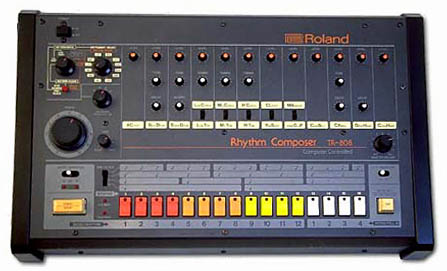
Main article: Electro (music)
Among electro-boogie (later shortened to electro) pioneers include Zapp, D. Train, Sinnamon and other post-disco/boogie musicians; especially those influenced by new wave and synthpop acts like Human League or Gary Numan, combined with the R&B sound of Herbie Hancock and George Clinton.
About electro origins, Greg Wilson argues:
Notes
References
References
- "DJ Spinna: The Boogie Back: Post Disco Club Jams (by Andrew Martin)". Popmatters.
- Reynolds, Simon. (2011-05-03). "Name it on the 'boogie' – the genre tag that won't sit still (2011)". [[The Guardian]].
- "Electro Funk Roots: The Building Blocks of Boogie (history)". electrofunkroots.co.uk.
- is a [[rhythm and blues]] [[music genre. genre]] of [[electronic music. electronic]] [[electronic dance music. dance music]] with close ties to the [[post-disco]] style, that first emerged in the United States during the late 1970s to mid-1980s. The sound of boogie is defined by bridging acoustic and electronic musical instruments with emphasis on vocals and miscellaneous [[Sound effect. effects]]. It later evolved into [[Electro (music)
- "Explore music...Genre: Post-disco". Allmusic.
- Depuydt, Francis. "Boogie, Funk & Modern Soul from the 80s". Danceclassics.net.
- "Rap meets Techno, with a short history of Electro".
- [[Peter Shapiro (journalist). Shapiro, Peter]]. (2000) ''[[Modulations: A History of Electronic Music. Modulations: a History of Electronic Music: Throbbing Words on Sound]]'', London: [[Distributed Art Publishers]], {{ISBN. 1-891024-06-X, p. 40
- "Various Artists—Disco Discharge: Disco Boogie". Rovi Corp..
- ""Back to the Future: Dam-Funk in Wax Poetics" by Danny Holloway". [[Stones Throw]].
- Cateforis, Theo. (2011). "Are We Not New Wave?: Modern Pop at the Turn of the 1980s". The University of Michigan Press.
- "Term "Boogie" on Merriam-Webster". Merriam-Webster.
- (7 October 1992). "Kendricks' tenor made it impossible to resist Temptations APPRECIATION".
- [https://www.allmusic.com/album/wild-and-peaceful-mw0000181827 Wild and peaceful album] All music. Retrieved 28 March 2023
- [https://www.allmusic.com/artist/the-jimmy-castor-bunch-mn0000351117/songs The Jimmy Castor Bunch] All music. Retrieved 29 March 2023
- [https://www.allmusic.com/artist/kc-the-sunshine-band-mn0000299668 KC and the Sunshine Band] All music. Retrieved 28 March 2023
- Kalia, Ammar. (2016-10-04). "Cult heroes: Kashif – inspirational pioneer of boogie and R&B".
- [https://www.allmusic.com/artist/hamilton-bohannon-mn0000664093/biography Bohannon Biography] AllMusic. Retrieved 28 March 2023
- Reynolds, Simon. (July 16, 1999). "Generation ecstasy: into the world of techno and rave culture". Taylor & Francis.
- [http://www.basic-soul.co.uk/features/James-Pants-30-page.htm BasicSoul.co.uk] - Features - James Pants. Retrieved 2011-08-17.
- [http://www.stonesthrow.com/jamespants Stone Throw Records - Website] - James Pants. Retrieved 2011-08-17.
- David, Drake. (January 6, 2011). "Tensnake - In The House". Pitchfork.
- Juzwiak, Rich. (2004). "Reviews >>> Chromeo - She's In Control". [[CMJ New Music Monthly]].
- MacPherson, Alex. (2009-11-26). "Dam Funk - Toeachizown (review)". [[The Guardian]].
- Ross, Sean. (24 November 2014). "From Sugarhill Gang to Trinidad James, a Look at the Influences of Mark Ronson & Bruno Mars' 'Uptown Funk'".
- (August 1999). "Zapp". [[Vibe (magazine).
- "Electro-Funk > WHAT DID IT ALL MEAN ?". Greg Wilson on electrofunkroots.co.uk.
- (November 28, 2008). "Slaves to the rhythm". CBC News.
This article was imported from Wikipedia and is available under the Creative Commons Attribution-ShareAlike 4.0 License. Content has been adapted to SurfDoc format. Original contributors can be found on the article history page.
Ask Mako anything about Boogie (genre) — get instant answers, deeper analysis, and related topics.
Research with MakoFree with your Surf account
Create a free account to save articles, ask Mako questions, and organize your research.
Sign up freeThis content may have been generated or modified by AI. CloudSurf Software LLC is not responsible for the accuracy, completeness, or reliability of AI-generated content. Always verify important information from primary sources.
Report