From Surf Wiki (app.surf) — the open knowledge base
Bokeh
Aesthetic quality of blur in the out-of-focus parts of an image

Aesthetic quality of blur in the out-of-focus parts of an image

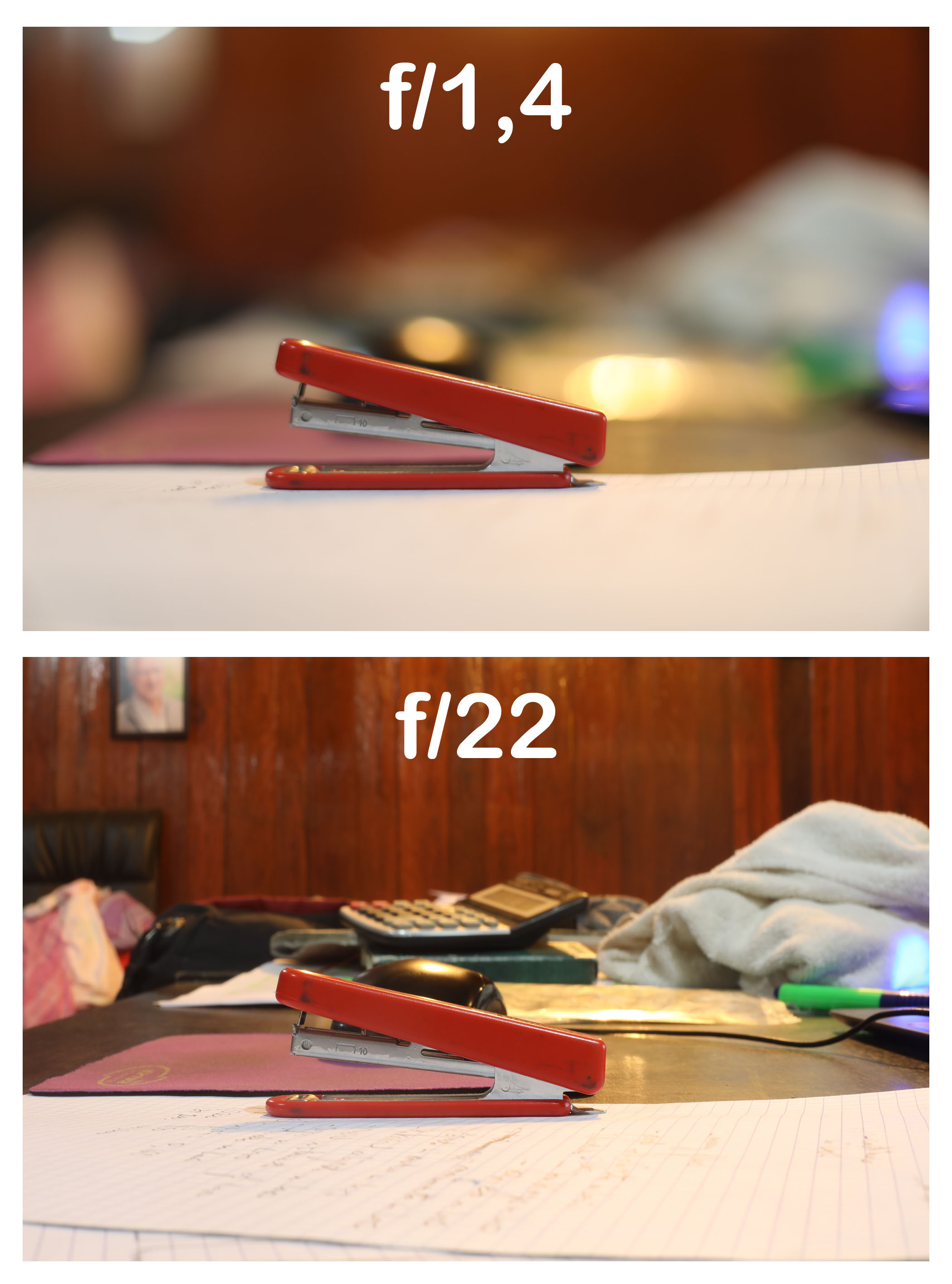
In photography, bokeh ( or ; ) is the aesthetic quality of the blur produced in out-of-focus parts of an image, whether foreground or background or both. It is created by using a wide aperture lens.
Some photographers incorrectly restrict use of the term bokeh to the appearance of bright spots in the out-of-focus area caused by circles of confusion.{{cite book | url-access = registration | access-date = 2009-10-30 | archive-date = 2018-12-26 | archive-url = https://web.archive.org/web/20181226094251/http://photojpn.org/words/len.html | url-status = live
Bokeh is often most visible around small background highlights, such as specular reflections and light sources, which is why it is often associated with such areas. However, bokeh is not limited to highlights; blur occurs in all regions of an image which are outside the depth of field.
The opposite of bokeh—an image in which multiple distances are visible and all are in focus—is deep focus.
Etymology
The term comes from the Japanese word , which means "blur" or "haze", resulting in , the "blur quality". This is derived as a noun form of the verb ja, which is written in several ways, with additional meanings and nuances: refers to being blurry, hazy or out-of-focus, whereas the and spellings refer to being mentally hazy, befuddled, childish, senile, or playing stupid. (literally, "time difference fog") is the term for jet lag. is a verb denoting the actions or condition of someone who is half-asleep, or nodding off. ja means playing dumb, and ja refers to a poker face. The related term means intentional blurring or gradation; that is a noun form of the transitive verb , which means to make something blurry, rather than to be blurry.
Use abroad
The English spelling bokeh was popularized in 1997 in Photo Techniques magazine, when Mike Johnston, the editor at the time, commissioned three papers on the topic for the May/June 1997 issue; he altered the spelling to suggest the correct pronunciation to English speakers, saying "it is properly pronounced with bo as in bone and ke as in Kenneth, with equal stress on either syllable".{{cite web | access-date = July 3, 2009 | archive-url = https://web.archive.org/web/20150103180320/http://www.luminous-landscape.com/columns/sm-04-04-04.shtml | archive-date = 3 January 2015 | url-status = dead
The spellings bokeh and boke have both been in use since at least 1996, when Merklinger had suggested "or Bokeh if you prefer."{{cite web | access-date = July 3, 2009 | archive-url = https://web.archive.org/web/20130409135024/http://www.luminous-landscape.com/essays/bokeh.shtml | archive-date = 9 April 2013 | url-status = dead It is sometimes pronounced .
Bokeh and lens design

Though difficult to quantify, some lenses have subjectively more pleasing out-of-focus areas. "Good" bokeh is especially important for macro lenses and long telephoto lenses, because they are typically used in situations that produce shallow depth of field. Good bokeh is also important for medium telephoto lenses (typically 85–150 mm on 35 mm format). When used in portrait photography (for their "natural" perspective), the photographer usually wants a shallow depth of field, so that the subject stands out sharply against a blurred background.
Bokeh characteristics may be quantified by examining the image's circle of confusion. In out-of-focus areas, each point of light becomes an image of the aperture, generally a more or less round disc. Depending on how a lens is corrected for spherical aberration, the disc may be uniformly illuminated, brighter near the edge, or brighter near the center. A well-known lens that exhibited the latter "soap-bubble" characteristic was that produced by Hugo Meyer & Co., more recently revived by Meyer Optik Görlitz.
Lenses that are poorly corrected for spherical aberration will show one kind of disc for out-of-focus points in front of the plane of focus, and a different kind for points behind. This may actually be desirable, as blur circles that are dimmer near the edges produce less-defined shapes which blend smoothly with the surrounding image. The shape of the aperture has an influence on the subjective quality of bokeh as well. For conventional lens designs (with bladed apertures), when a lens is stopped down smaller than its maximum aperture size (minimum f-number), out-of-focus points are blurred into the polygonal shape formed by the aperture blades. This is most apparent when a lens produces hard-edged bokeh. For this reason, some lenses have many aperture blades and/or blades with curved edges to make the aperture more closely approximate a circle rather than a polygon. Minolta has been on the forefront of promoting and introducing lenses with near-ideal circular apertures since 1987, but most other manufacturers now offer lenses with shape-optimized diaphragms, at least for the domain of portraiture photography. In contrast, a catadioptric telephoto lens renders bokehs resembling doughnuts, because its secondary mirror blocks the central part of the aperture opening. Recently, photographers have exploited the shape of the bokeh by creating a simple mask out of card with shapes such as hearts or stars, that the photographer wishes the bokeh to be, and placing it over the lens.
Lenses with 11, 12, or 15 blade iris diaphragms are often claimed to excel in bokeh quality. Because of this, the lenses do not need to reach wide apertures to get better circles (instead of polygons). In the past, wide aperture lenses (f/2, f/2.8) were very expensive, due to the complex mathematical design and manufacturing know-how required, at a time when all computations and glass making were done by hand. Leica could reach a good bokeh at f/4.5. Today it is much easier to make an f/1.8 lens, and a 9-bladed lens at f/1.8 is enough for an 85 mm lens to achieve great bokeh.
Some lens manufacturers including Nikon, Minolta, and Sony make lenses designed with specific controls to change the rendering of the out-of-focus areas.
The Nikon 105 mm DC-Nikkor and 135 mm DC-Nikkor lenses (DC stands for "Defocus Control") have a control ring that permits the overcorrection or undercorrection of spherical aberration to change the bokeh in front of and behind the focal plane.
The Minolta/Sony STF 135 mm f/2.8 [T4.5] (with STF standing for smooth trans focus) is a lens specifically designed to produce pleasing bokeh. It is possible to choose between two diaphragms: one with 9 and another with 10 blades. An apodization filter is used to soften the aperture edges which results in a smooth defocused area with gradually fading circles. Those qualities made it the only lens of this kind on the market from its introduction in 1999 to 2014. In 2014 Fujifilm announced a lens utilizing a similar apodization filter in the Fujinon XF 56mm F1.2 R APD lens. Sony added the Sony FE 100 mm F2.8 STF GM OSS in 2017.
The 'Sigma YS System Focusing' 135 mm f/2.8 also has an extra manually-moved component, intended to compensate for aberration at close-focus distances. It can be re-purposed for defocus control.
In 2015, Meyer Optik USA Inc. launched a Kickstarter campaign to produce the Trioplan f2.9/50, a new lens based on one originally produced by Hugo Meyer & Co.; both lenses exhibit a characteristic "soap-bubble" bokeh.
The use of anamorphic lenses will cause bokeh to appear differently along the horizontal and vertical axes of the lens, becoming ellipsoidal compared to those in a spherical lens.
In 2016, Apple Inc. released the iPhone 7 Plus which can take pictures with "Portrait Mode" (a bokeh like effect). Samsung's Galaxy Note 8 has a similar effect available. Both of these phones use dual cameras to detect edges and create a "depth map" of the image, which the phone uses to blur the out-of-focus portions of the photo. Other phones, like the Google Pixel, only use a single camera and machine learning to create the depth map.
In 2017, Vivo released a smartphone with dual front lenses for selfies with bokeh. The first, a 20 MP lens, uses a 1/2.78" sensor with f/2.0 aperture, while the second, an 8 MP f/2.0 lens, captures depth information. Bokeh can be made with a combination of both lenses, and shots can be refocused even after they are captured, adding bokeh effects with different depths.
In early 2018, the Honor 9 Lite smartphone was released with quad cameras (two dual-lens). Both the front and back cameras have a 13 MP main lens and a 2 MP lens for capturing bokeh depth information.
File:DOF-ShallowDepthofField.jpg|An extremely shallow depth of field, a common effect in macrophotography, emphasizes bokeh. File:Thumbs up for bokeh.JPG|200 mm lens at f/2. File:Catadioptric lens bokeh etc - 2018 12 08.webm|Catadioptric lens bokeh in motion. File:Bahnhof Dortmund Brackel Spiegeltele DSC02359 smial wp.jpg|The bokeh produced by a catadioptric lens (also called a mirror lens). File:Bokeh Example.jpg|An example of the bokeh produced by the Canon 85 mm prime f/1.8 lens. The polygonal shapes are due to the 8-bladed aperture diaphragm being slightly closed. At its full aperture (f/1.8) these shapes would be smooth and not polygonal. File:Donut bokeh.jpg|Catadioptric lens bokeh seen in more detail. File:Christmas Tree Lights Bokeh.jpg|An example of the creative application of bokeh. File:Bokeh.JPG|An example of the bokeh produced by the Canon 18–55 mm f/3.5–5.6 IS II lens. File:Bokeh1 DSC 0959.jpg|A bokeh created with Nikon D3300 Camera 18–55 mm f/3.5–5.6 G VR II Lens. File:Photography by Victor Albert Grigas (1919-2017) 000172050002 (37159721864).jpg|Subtle swirly bokeh in the background File:Christmas Tree out of focus copy.jpg|Swirly bokeh File:Bad Bokeh Background.jpg|Picture of Forsythia with doughnut-shaped background bokeh, due to the use of a catadioptric system. Focus on foreground. File:Bad Bokeh 02.jpg|Picture of Forsythia with doughnut-shaped foreground bokeh, due to the use of a catadioptric system. Focus on background File:Silicon Valley background Samsung Galaxy S22 Ultra.jpg|Silicon Valley background/bokeh shot with Samsung Galaxy S22 Ultra smartphone File:Out of focus.png|alt=Bokeh on a cherry tree's leaves created by the Samsung Galaxy A54's main camera|Bokeh created by the Samsung Galaxy A54's main camera
Emulation

Bokeh can be simulated by convolving the image with a kernel that corresponds to the image of an out-of-focus point source taken with a real camera. Unlike conventional convolution, this convolution has a kernel that depends on the distance of each image point and – at least in principle – has to include image points that are occluded by objects in the foreground. | doi-access = free Also, bokeh is not just any blur. To a first approximation, defocus blur is convolution by a uniform disk, a more computationally intensive operation than the "standard" Gaussian blur; the former produces sharp circles around highlights whereas the latter is a much softer effect. Diffraction may alter the effective shape of the blur. Some graphics editors have a filter to do this, usually called "Lens Blur". Accurate bokeh simulation requires running the blur in linear, HDR space. For low dynamic range images, an artificial neural network may be used to reconstruct the HDR light.
An alternative mechanical mechanism has been proposed for generating bokeh in small aperture cameras such as compacts or cellphone cameras, called image destabilisation, in which both the lens and sensor are moved in order to maintain focus at one focal plane, while defocusing nearby ones. This effect currently generates blur in only one axis.
Some advanced digital cameras have bokeh features which take several images with different apertures and focuses and then manually compose them afterward to one image. More advanced systems of bokeh use a hardware system of 2 sensors, one sensor to take photo as usual while other ones record depth information. Bokeh effect and refocusing can then be applied to an image after the photo is taken.
Other applications
In 2009, a research group at MIT Media Lab showed that the bokeh effect can be used to make imperceptibly small barcodes, or bokodes. By using barcodes as small as 3 mm with a small lens over them, if the barcode is viewed out of focus through an ordinary camera focused at infinity, the resulting image is large enough to scan the information in the barcode.
References
References
- Nikon. (2017-03-30). "Bokeh for Beginners".
- "wwwjdic: bokeru entry".
- "wwwjdic: jisaboke entry".
- "wwwjdic: nebokeru entry".
- "wwwjdic: tobokeru entry".
- Wes McDermott. (2009). "Real World Modo: The Authorized Guide: In the Trenches with Modo". Focal Press.
- Blog. "How to Create Soap Bubble Bokeh".
- Todd Vorenkamp. "Understanding Bokeh".
- Karsten Stroemvig. (25 April 2007). "DIY — Create your own Bokeh".
- "AF DC-Nikkor 135mm f/2D Single Focal Length FX Auto Focus Lenses NIKKOR Lenses". europe-nikon.com.
- "AF DC-NIKKOR 105mm f/2D from Nikon".
- "AF DC-NIKKOR 135 mm f/2D from Nikon".
- "Fujifilm introduces XF 56mm F1.2 R APD with apodization filter".
- (2017-02-07). "Neu von Sony: E-Mount-Objektive 100 mm F2.8 STF GM, FE 85 mm F1.8; Blitz HVL-F45RM". Photoscala.
- Markus Keinath. "Cheap DC Nikkor Substitute".
- Meyer-Optik-Görlitz / net SE. "Meyer Optik brings back legendary Trioplan f2.8/100 'soap bubble' bokeh lens with Kickstarter campaign".
- (2016-10-24). "Apple Just Released Their Fake Bokeh Portrait Mode to Everyone". PetaPixel.
- (11 December 2017). "How Portrait Mode Works and How It Compares to an $8,000 Camera".
- (January 18, 2017). "vivo V5 Plus becomes official with dual front camera, Snapdragon 625".
- ABHISHEK BAXI. (February 8, 2018). "Honor 9 Lite review: four lenses on a budget".
- Adobe Photoshop CS3 Livedocs. "Add lens blur".
- (21 May 2019). "Synthetic Defocus and Look-Ahead Autofocus for Casual Videography".
- Giles, Jim. "Next-generation cameras bring photography tricks to the masses". New Scientist (Subscription required).
- Ankit Mohan and Douglas Lanman and Shinsaku Hiura and Ramesh Raskar. "Image Destabilization: Programmable Defocus using Lens and Sensor Motion".
- Lars Rehm. (March 25, 2014). "HTC launches One M8 with new 'Duo Camera'". Dpreview.
- Fildes, Jonathan. (2009-07-27). "Barcode replacement shown off". BBC News.
- Mohan, A., Woo, G, Hiura, S, Smithwick, Q, Raskar, R. [http://web.media.mit.edu/~ankit/bokode/ Bokode: Imperceptible Visual Tags for Camera Based Interaction from a Distance] {{webarchive. link. (July 30, 2009 . ACM SIGGRAPH 2009.)
This article was imported from Wikipedia and is available under the Creative Commons Attribution-ShareAlike 4.0 License. Content has been adapted to SurfDoc format. Original contributors can be found on the article history page.
Ask Mako anything about Bokeh — get instant answers, deeper analysis, and related topics.
Research with MakoFree with your Surf account
Create a free account to save articles, ask Mako questions, and organize your research.
Sign up freeThis content may have been generated or modified by AI. CloudSurf Software LLC is not responsible for the accuracy, completeness, or reliability of AI-generated content. Always verify important information from primary sources.
Report