From Surf Wiki (app.surf) — the open knowledge base
Boeing AH-64 Apache
U.S. attack helicopter (1975–present)
U.S. attack helicopter (1975–present)
| Field | Value | |
|---|---|---|
| name | AH-64 Apache | |
| image | File:AH-64D Apache Longbow.jpg | |
| image_caption | An AH-64 Apache from the U.S. Army's 101st Aviation Regiment in Iraq | |
| alt | Photo of tilted horizon showing helicopter flying above barren land with rectangular patches of green grass. | |
| aircraft_type | Attack helicopter | |
| national_origin | United States | |
| manufacturer | {{plainlist | |
| first_flight | 30 September 1975 | |
| introduction | April 1986 | |
| status | In service | |
| primary_user | United States Army | |
| more_users | {{plainlist | |
| produced | 1975–present | |
| number_built | 2,700+ | |
| variants | AgustaWestland Apache |
- Hughes Helicopters (1975–1984)
- McDonnell Douglas (1984–1997)
- Boeing Defense, Space & Security (1997–present)}}
- Israeli Air Force
- Royal Saudi Land Forces
- British Army Air Corps}}
The Hughes/McDonnell Douglas/Boeing AH-64 Apache ( ) is an American twin-turboshaft attack helicopter with a tailwheel-type landing gear and a tandem cockpit for a crew of two. Nose-mounted sensors help acquire targets and provide night vision. It carries a 30 mm M230 chain gun under its forward fuselage and four hardpoints on stub-wing pylons for armament and stores, typically AGM-114 Hellfire missiles and Hydra 70 rocket pods. Redundant systems help it survive combat damage.
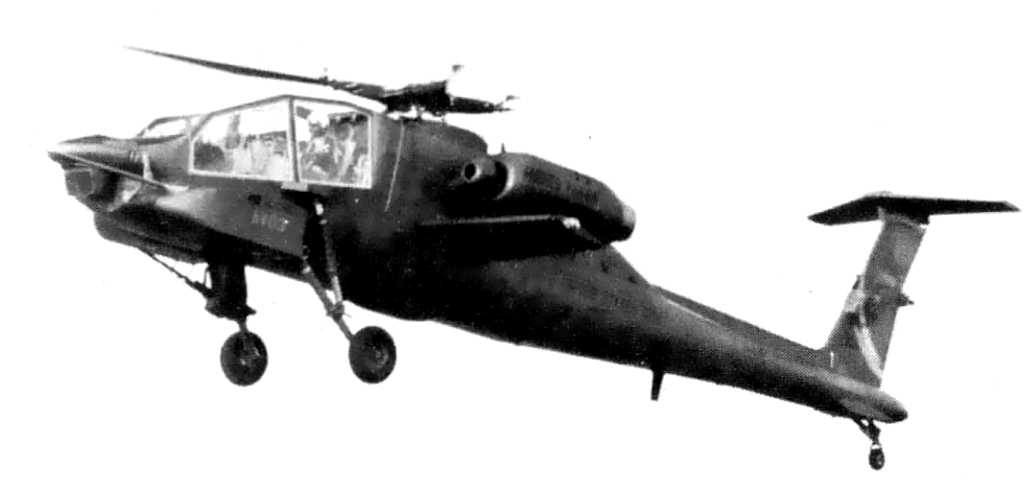
The Apache began as the Model 77 developed by Hughes Helicopters for the United States Army's Advanced Attack Helicopter program to replace the AH-1 Cobra. The prototype YAH-64 first flew on 30 September 1975. The U.S. Army selected the YAH-64 over the Bell YAH-63 in 1976, and later approved full production in 1982. After acquiring Hughes Helicopters in 1984, McDonnell Douglas continued AH-64 production and development. The helicopter was introduced to U.S. Army service in April 1986. The advanced AH-64D Apache Longbow was delivered to the Army in March 1997. Production has been continued by Boeing Defense, Space & Security. As of March 2024, over 2,700 Apaches have been delivered to the U.S. Army and 18 international partners and allies.
Primarily operated by the U.S. Army, the AH-64 has also become the primary attack helicopter of multiple nations, including Greece, Japan, Israel, the Netherlands, Singapore, and the United Arab Emirates. It has been built under license in the United Kingdom as the AgustaWestland Apache. American AH-64s have served in conflicts in Panama, the Persian Gulf, Kosovo, Afghanistan, and Iraq. Israel has used the Apache to fight in Lebanon and the Gaza Strip. British and Dutch Apaches were deployed to wars in Afghanistan and Iraq beginning in 2001 and 2003.
Development
Advanced Attack Helicopter
Main article: Advanced Attack Helicopter
After the AH-56 Cheyenne was cancelled in 1972 in favor of projects like the U.S. Air Force A-10 Thunderbolt II and the Marine Corps AV-8A Harrier, the United States Army sought an aircraft to fill an anti-armor attack role that would still be under Army command. The 1948 Key West Agreement forbade the Army from owning combat fixed-wing aircraft. The Army wanted an aircraft better than the AH-1 Cobra in firepower, performance, and range. It would have the maneuverability for terrain following nap-of-the-earth (NoE) flying. To this end, the U.S. Army issued a Request For Proposals (RFP) for the Advanced Attack Helicopter (AAH) program on 15 November 1972. As a sign of the importance of this project, in September 1973 the Army designated its five most important projects as the "Big Five", with the AAH included.
Proposals were submitted by Bell, Boeing Vertol/Grumman team, Hughes, Lockheed, and Sikorsky. In July 1973, the U.S. Department of Defense selected finalists Bell and Hughes Aircraft's Toolco Aircraft Division (later Hughes Helicopters). This began the phase 1 of the competition. Each company built prototype helicopters and went through a flight test program. Hughes' Model 77/YAH-64A prototype first flew on 30 September 1975, while Bell's Model 409/YAH-63A prototype first flew on 1 October 1975. After evaluating the test results, the Army selected Hughes' YAH-64A over Bell's YAH-63A in 1976. Reasons for selecting the YAH-64A included its more damage tolerant four-blade main rotor and the instability of the YAH-63's tricycle landing gear arrangement.
The AH-64A then entered phase 2 of the AAH program under which three pre-production AH-64s would be built, additionally, the two YAH-64A flight prototypes and the ground test unit were upgraded to the same standard. Development of the Hellfire missile had begun in 1974, originally known by the name of Helicopter Launched, Fire and Forget Missile ('Hellfire' being a shortened acronym), for the purpose of arming helicopter platforms with an effective anti-tank missile.
Into production

In 1981, three pre-production AH-64As were handed over to the U.S. Army for Operational Test II. The Army testing was successful, but afterward it was decided to upgrade to the more powerful T700-GE-701 version of engine, rated at 1690 shp. The AH-64 was named the Apache in late 1981, after the Apache tribe, following the tradition of naming Army helicopters after Native American tribes. It was approved for full-scale production in 1982. In 1983, the first production helicopter was rolled out at Hughes Helicopter's facility at Mesa, Arizona. Hughes Helicopters was purchased by McDonnell Douglas for $470 million in 1984 (). The helicopter unit later became part of The Boeing Company with the merger of Boeing and McDonnell Douglas in August 1997. In 1986, the incremental or flyaway cost for the AH-64A was $7M and the average unit cost was approximately $13.9M based on total costs.
A 1985 Department of Defense engineering analysis by the inspector general's office reported that significant design deficiencies still needed to be addressed by the contractor. The Army project manager Col. William H. Forster published a list of 101 action items. In 1986, the four 22-foot-long main rotor blades, each made from steel and composite material glued together to maximize strength and minimize weight by the Composite Structures Division of Alcoa Composites, were added to the list. The steel-composite rotors could not meet the Army specification for a life of 1500 flight hours, and needed replacement after just 146 hours. After six changes to the design, the rotor blade life was extended to 1400 hours by early 1991.
As of 2024, the AH-64E is being produced at an economical rate of 82 aircraft a year. Boeing states that the minimum sustainment rate for the aircraft is 48 per year while current tooling and space allows for up to 98 aircraft to be manufactured per year. The U.S. Army states that with additional investment and labor, production could be raised to 144 aircraft per year.
Further development
During the 1980s, McDonnell Douglas studied an AH-64B, featuring an updated cockpit, new fire control system and other upgrades. In 1988, funding was approved for a multi-stage upgrade program to improve sensor and weapon systems. Technological advance led to the program's cancellation in favor of more ambitious changes. In August 1990, development of the AH-64D Apache Longbow was approved by the Defense Acquisition Board. The first AH-64D prototype flew on 15 April 1992. Prototype testing ended in April 1995. During testing, six AH-64D helicopters were pitted against a bigger group of AH-64As. The results demonstrated the AH-64D to have a sevenfold increase in survivability and fourfold increase in lethality compared to the AH-64A. On 13 October 1995, full-scale production was approved; a $1.9-billion five-year contract was signed in August 1996 to upgrade 232 AH-64As into AH-64Ds. On 17 March 1997, the first production AH-64D flew. It was delivered on 31 March.
.jpg)
Portions of the Apache are produced by other aerospace firms. AgustaWestland has produced a number of components for the Apache both for the international market and for the British Army's AgustaWestland Apache. Since 2004, Korea Aerospace Industries has been the sole manufacturer of the Apache's fuselage. Fuselage production had previously been performed by Teledyne Ryan Aeronautical. The transfer of fuselage production led to a prolonged legal dispute between Teledyne Ryan and Boeing.
The AH-64D program cost a total of $11 billion ($ in ) through 2007. In April 2006, Boeing was awarded a $67.6 million ($ in ) fixed-price contract for the remanufacture of several existing U.S. AH-64As to the AH-64D configuration. Between May 2009 and July 2011, a further five contracts were issued to remanufacture batches of AH-64As into AH-64Ds. Since 2008, nations operating the older Apaches have been urged to undertake modernization programs as support for the AH-64A is withdrawn.
By May 2019, Boeing tested in a wind tunnel a compound Apache scale model with a pusher propeller, a small wing to increase range and speed, and a counter-torque tail rotor like the cancelled Lockheed AH-56 Cheyenne of the 1960s.
Indian fuselage manufacturing facility
On 9 November 2015, Boeing and Tata Advanced Systems (TASL) announced a joint venture to co-produce the fuselage of AH-64 in India for the global market. This was after the Indian Air Force ordered the helicopters. On 18 June 2016, the companies laid the foundation of the facility in the outskirts of Hyderabad. The joint venture was named Tata–Boeing Aerospace (TBAL). In March 2018, the facility was inaugurated by Nirmala Sitharaman, the then Indian Defence Minister. On 1 June 2018, TBAL delivered the first Made-in-India fuselage to Boeing ahead of schedule. The fuselage would be then transported Boeing's AH-64 Apache manufacturing facility in Mesa, Arizona for final assembly. The facility will also deliver secondary structure and vertical spar boxes for the combat helicopter. On 23 July 2021, TBAL delivered the 100th Indian-made fuselage. By then, the facility also started delivering secondary structure and vertical spar boxes to Boeing. On 19 January 2023, TBAL delivered the first fuselage for the Indian Army's 6-chopper contract. Overall, over 190 fuselages were supplied by TBAL. The facility also became the sole manufacturer of Apache fuselage globally, in addition to supplying parts for Boeing 737, 777 and 787 aircraft. On 10 February 2025, TBAL delivered the 300th fuselage.
As of 2018, the facility spans over an area of 14000 m2 and is staffed by 350 workers at full production. The workforce, by 2023, grew to 900. As for the fuselages delivered, 90% of the components are being manufactured in India through more than 100 MSME suppliers.
Design
Overview
| Apache | ||
|---|---|---|
| version | Engine version | Engine power |
| AH-64A+/D | General Electric T700-701 | 1696 shp |
| AH-64A+/D | General Electric T700-701C | 1890 shp |
| AH-64E | General Electric T700-701D | 1994 shp |
| WAH-64D | Rolls-Royce Turbomeca RTM322 | 2100 shp |
The AH-64 Apache has a four-blade main rotor and a four-blade tail rotor. The crew sits in tandem, with the pilot sitting behind and above the co-pilot/gunner. Both crew members are capable of flying the aircraft and performing methods of weapon engagements independently. The AH-64 is powered by two General Electric T700 turboshaft engines with high-mounted exhausts on either side of the fuselage. Various models of engines have been used on the Apache; those in British service use engines from Rolls-Royce. In 2004, General Electric Aviation began producing more powerful T700-GE-701D engines, rated at 2000 shp for AH-64Ds.
The crew compartment and rotor blades are designed to sustain a hit from 23 mm rounds. The airframe includes some 2500 lb of protection and has a self-sealing fuel system to protect against ballistic projectiles. The crew compartment also incorporates a transparent blast shield between the pilot and gunner seats so that at least one crew member can survive in the event of a direct hit, but the canopy and windows are otherwise unrated against ballistic threats.
The aircraft was designed to meet the crashworthiness requirements of MIL-STD-1290, which specifies minimum requirement for crash impact energy attenuation to minimize crew injuries and fatalities. This was achieved through incorporation of increased structural strength, crashworthy landing gear, seats and fuel system.
On a standard day, when temperatures are 59 °F (15 °C), the AH-64 has a vertical rate of climb of 1,775 feet per minute (541 m/min), and a service ceiling of 21,000 feet (6,400 m).
Avionics and targeting
.jpg)
One of the revolutionary features of the Apache was its helmet mounted display, the Integrated Helmet and Display Sighting System (IHADSS); among its capabilities, either the pilot or gunner can slave the helicopter's 30 mm automatic M230 Chain Gun to their helmet, making the gun track head movements to point where they look. The M230E1 can be alternatively fixed to a locked forward firing position, or controlled via the Target Acquisition and Designation System (TADS). On more modern AH-64s, the TADS/PNVS has been replaced by Lockheed Martin's Arrowhead (MTADS) targeting system.
U.S. Army engagement training is performed under the Aerial Weapons Scoring System Integration with Longbow Apache Tactical Engagement Simulation System (AWSS-LBA TESS), using live 30 mm and rocket ammunition as well as simulated Hellfire missiles. The Smart Onboard Data Interface Module (SMODIM) transmits Apache data to an AWSS ground station for gunnery evaluation. The AH-64's standard of performance for aerial gunnery is to achieve at least 1 hit for every 30 shots fired at a wheeled vehicle at a range of 800 –.
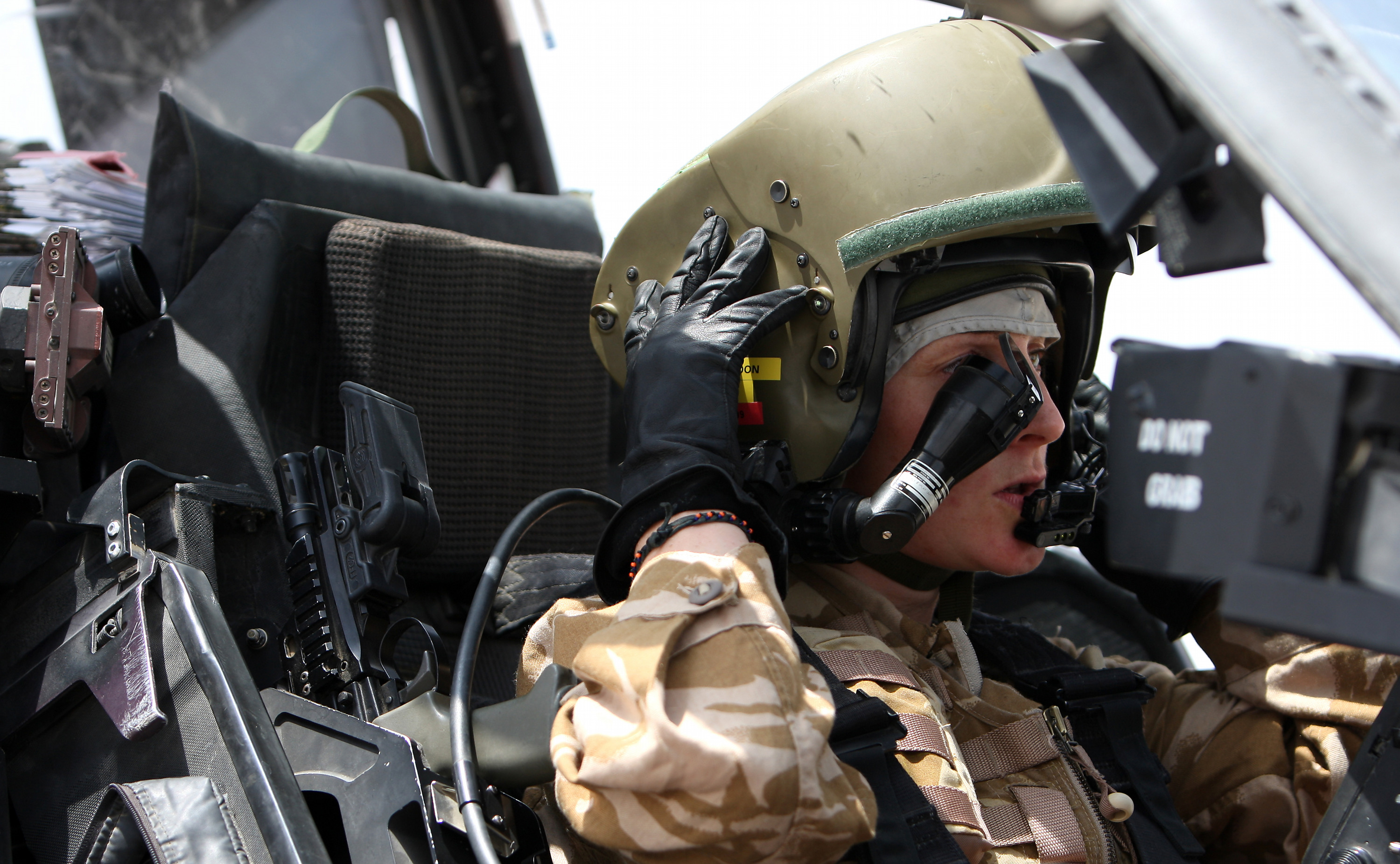
The AH-64 was designed to perform in front-line environments, and to operate at night or day and during adverse weather conditions, thanks to systems including the Target Acquisition and Designation System, Pilot Night Vision System (TADS/PNVS), passive infrared countermeasures, GPS, and the IHADSS. In August 2012, 24 U.S. Army AH-64Ds were equipped with the Ground Fire Acquisition System (GFAS), which detects and targets ground-based weapons fire sources in all-light conditions and with a 120° visual field. The GFAS consists of two sensor pods working with the AH-64's other sensors, and a thermographic camera that precisely locates muzzle flashes.
In 2014, it was announced that new targeting and surveillance sensors were under development to provide high-resolution color imagery to crews, replacing older low definition black-and-white imaging systems. Lockheed received the first contract in January 2016, upgrading the Arrowhead turret to provide higher-resolution color imaging with longer ranges and a wider field of view. In 2014, the U.S. Army was adapting its Apaches for increased maritime performance as part of the Pentagon's rebalance to the Pacific. Additional avionics and sensor improvements includes an extended-range radar capable of detecting small ships in littoral environments, software adaptions to handle maritime targets, and adding Link 16 data-links for better communications with friendly assets.
Armament and configurations
| Mission | Hellfire | 30 mm | ||||
|---|---|---|---|---|---|---|
| rounds | Hydra 70 | Maximum | ||||
| speed | ||||||
| (knots) | Rate of | |||||
| climb | ||||||
| (ft/min) | Endurance | |||||
| (hours) | ||||||
| Anti-armor | 16 | 1,200 | 0 | 148 | 990 | 2.5 |
| Covering Force | 8 | 1,200 | 38 | 150 | 860 | 2.5 |
| Escort | 0 | 1,200 | 76 | 153 | 800 | 2.5 |
The AH-64 is adaptable to numerous different roles within its context as Close Combat Attack (CCA). The Hellfire is designed to defeat stationary or moving tanks as far away as 6,500 meters.
.jpg)
Since 2005, the Hellfire missile outfitted with a thermobaric warhead is designated AGM-114N; this missile version is intended for use against ground forces and urban warfare operations. In October 2015, the U.S. Army ordered its first batch of Advanced Precision Kill Weapon System (APKWS) guided 70 mm rockets for the Apache.
Starting in the 1980s, the Stinger and AIM-9 Sidewinder air-to-air missiles and the AGM-122 Sidearm anti-radiation missile were evaluated for use upon the AH-64. The Stinger was initially selected; the U.S. Army was also considering the Starstreak air-to-air missile. External fuel tanks can also be carried on the stub wings to increase range and mission time. Stinger missiles are often used on non-U.S. Apaches, as foreign forces do not have as many air superiority aircraft to control the skies. The AH-64E initially lacked the ability to use the Stinger to make room for self-defense equipment, but the capability was added back following a South Korean demand.
The AH-64E is able to control unmanned aerial vehicles (UAVs), used by the U.S. Army to perform aerial scouting missions previously performed by the OH-58 Kiowa. Apaches can request to take control of an RQ-7 Shadow or MQ-1C Grey Eagle from ground control stations to safely scout via datalink communications. There are four levels of UAV interoperability (LOI): LOI 1 indirectly receives payload data; LOI 2 receives payload data through direct communication; LOI 3 deploys the UAV's armaments; and LOI 4 takes over flight control. UAVs can search for enemies and, if equipped with a laser designator, target them for the Apache or other friendly aircraft.
Boeing has suggested that the AH-64 could be fitted with a directed energy weapon. The company has developed a small laser weapon, initially designed to engage small UAVs, that uses a high-resolution telescope to direct a 2–10 kW beam with the diameter of a penny out to a range of 5.4 nmi. On the Apache, the laser could be used to destroy enemy communications or radio equipment.
On 14 July 2016, it was reported that the AH-64 had successfully completed testing of the MBDA Brimstone anti-armor missile. In January 2020, the U.S. Army announced it was fielding the Spike NLOS missile on AH-64E Apaches as an interim solution to acquire new munitions that provide greater stand-off capabilities.
Operational history
United States
Twentieth century
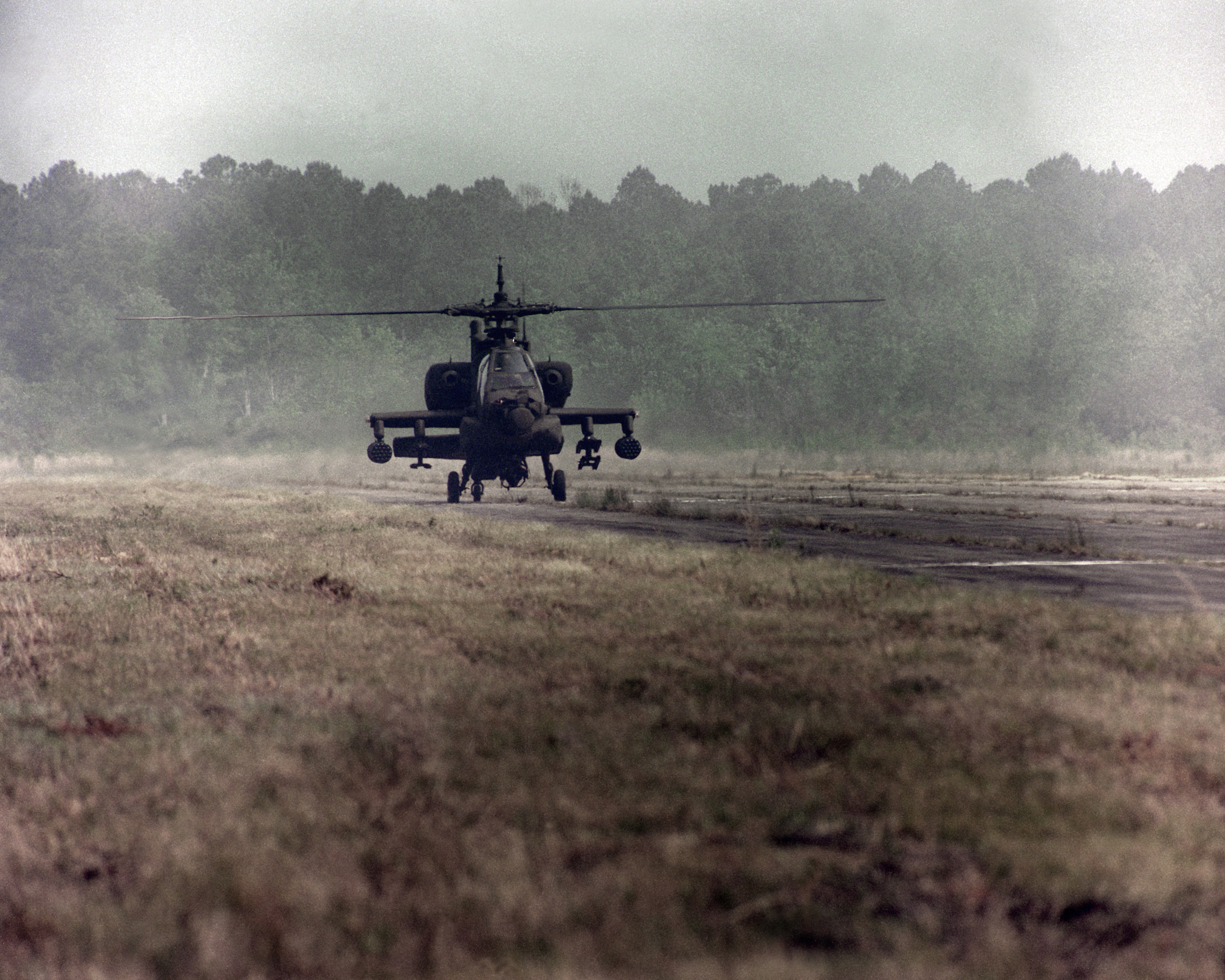
In January 1984, the U.S. Army formally accepted its first production AH-64A and training of the first pilots began later that year. The first operational Apache unit, 7th Battalion, 17th Cavalry Brigade, began training on the AH-64A in April 1986 at Fort Hood, Texas. Two operational units with 68 AH-64s first deployed to Europe in September 1987 and took part in large military exercises there.
Upon fielding the Apache, capabilities such as the FLIR's use in extensive night operations made it clear that it was capable of operating beyond the forward line of own troops (FLOT) to which previous attack helicopters were normally restricted. It was discovered that the Apache was coincidentally fitted with the Have Quick UHF radio system used by the U.S. Air Force, allowing inter-service coordination and joint operations such as the joint air attack teams (JAAT). The Apache has operated extensively with close air support (CAS) aircraft, such as the USAF's Fairchild Republic A-10 Thunderbolt II and the USMC's McDonnell Douglas AV-8B Harrier II, often acting as a target designator to conserve the Apache's own munitions. The Apache was first used in combat in 1989, during Operation Just Cause, the invasion of Panama. It participated in over 240 combat hours, attacking various targets, mostly at night. General Carl Stiner, the commander of the operation, stated: "You could fire that Hellfire missile through a window from four miles away at night."

Nearly half of all U.S. Apaches were deployed to Saudi Arabia following Iraq's invasion of Kuwait in 1990. During Operation Desert Storm on 17 January 1991, eight AH-64As guided by four MH-53 Pave Low IIIs destroyed part of Iraq's radar network in the operation's first attack, allowing the attack aircraft to evade detection. Each Apache carried an asymmetric load of Hydra 70 rockets, Hellfires, and one auxiliary fuel tank. During the 100-hour ground war, a total of 277 AH-64s took part, destroying 278 tanks, numerous armored personnel carriers and other Iraqi vehicles, for a total of over 500 kills. One AH-64 was lost in the war, crashing after a close range rocket-propelled grenade (RPG) hit; the crew survived. While effective in combat, the AH-64 presented serious logistical difficulties. Findings reported in 1990 stated "maintenance units could not keep up with the Apache's unexpectedly high work load..." To provide spare parts for combat operations, the U.S. Army unofficially grounded all other AH-64s worldwide; Apaches in the theater flew only one-fifth of planned flight-hours. Such problems were evident before the Gulf War.

The AH-64 played roles in the Balkans during separate conflicts in Bosnia and Kosovo in the 1990s. During Task Force Hawk, 24 Apaches were deployed to a land base in Albania in 1999 for combat in Kosovo. These required 26,000 tons of equipment to be transported over 550 C-17 flights, at a cost of . During these deployments, the AH-64 encountered problems, such as deficiencies in training, night vision equipment, fuel tanks, and survivability.
In 2000, Major General Dick Cody, 101st Airborne's commanding officer, wrote a strongly worded memo to the Chief of Staff about training and equipment failures. Almost no pilots were qualified to fly with night vision goggles, preventing nighttime operations. The Washington Post printed a front-page article on the failures, commenting: "The vaunted helicopters came to symbolise everything wrong with the Army as it enters the 21st century: Its inability to move quickly, its resistance to change, its obsession with casualties, its post-Cold War identity crisis". Although no Apache combat missions took place, two were lost in training exercises. An effective network of Yugoslav air defenses stopped Apaches from being deployed on combat missions in Kosovo.
21st century
.jpg)


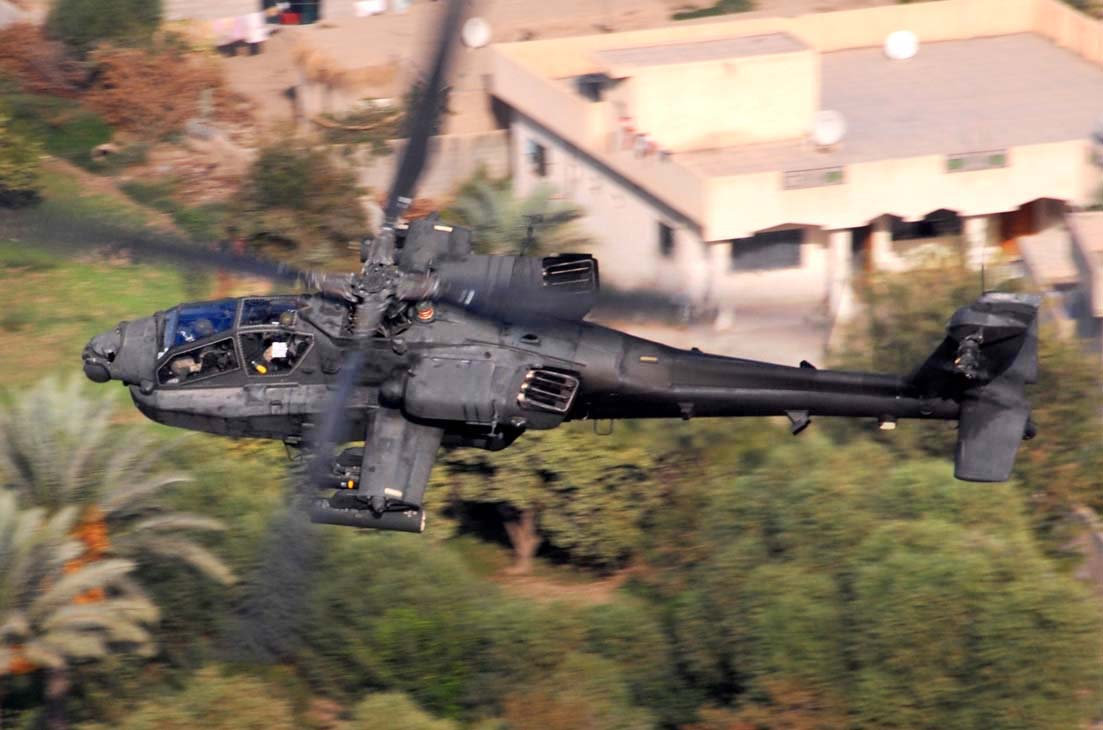
U.S. Apaches served in Operation Enduring Freedom in Afghanistan during the War in Afghanistan (2001–2021) from 2001. It was the only Army platform capable of providing accurate CAS duties for Operation Anaconda, often taking fire and quickly repaired during the intense early fighting. Apaches often flew in small teams with little autonomy to react to threats and opportunities, requiring lengthy dialogue with centrally micromanaged command structures. U.S. AH-64Ds typically flew in Afghanistan and Iraq without the Longbow Radar in the absence of armored threats. On 21 December 2009, a pair of U.S. Apaches attacked a British-held base in a friendly fire incident, killing one British soldier.
In 2003, the AH-64 participated in the invasion of Iraq during Operation Iraqi Freedom. On 24 March 2003, 31 Apaches were damaged; one was shot down in an unsuccessful attack on an Iraqi Republican Guard armored brigade near Karbala. Iraqi tank crews had set up a "flak trap" among terrain and effectively employed their guns. Iraqi officials claimed a farmer with a Brno rifle shot down the Apache, but the farmer denied involvement. The AH-64 came down intact and the crew were captured; This incident had significant consequences for the AH-64 helicopter because it revealed an important vulnerability. Despite being considered by army aviators as flying tanks at the time, it became clear that the AH-64 was actually highly susceptible to rifle fire. As a result, the army quietly disclosed in early 2006 that AH-64s would no longer have a major role in carrying out attacks deep inside enemy lines.
By the end of U.S. military operations in Iraq in December 2011, several Apaches had been shot down by enemy fire and lost in accidents. In 2006, an Apache was downed by a Soviet-made Strela 2 (SA-7) in Iraq, despite it being typically able to avoid such missiles. In 2007, four Apaches were destroyed on the ground by insurgent mortar fire using web-published geotagged photographs taken by soldiers. Several AH-64s were lost to accidents in Afghanistan. Most Apaches that took heavy damage were able to continue their missions and return safely. A DOD audit released in May 2011 found that Boeing had frequently overcharged the U.S. Army for routine spare parts in helicopters like the Apache, ranging from 33.3 percent to 177,475 percent.
On 21 February 2013, the 1st Battalion (Attack), 229th Aviation Regiment at Joint Base Lewis–McChord became the first U.S. Army unit to field the AH-64E Apache Guardian; a total of 24 AH-64E were received by mid-2013. On 27 November 2013, the AH-64E achieved initial operating capability (IOC). In March 2014, the 1st–229th Attack Reconnaissance Battalion deployed 24 AH-64Es to Afghanistan in the type's first combat deployment. From April through September 2014, AH-64Es in combat maintained an 88 percent readiness rate. The unit's deployment ended in November 2014, with the AH-64E accumulating 11,000 flight hours, each helicopter averaging 66 hours per month. The AH-64E flies 20 mph faster than the AH-64D, cutting response time by 57 percent, and has better fuel efficiency, increasing time on station from 2.5–3 hours to 3–3.5 hours; Taliban forces were reportedly surprised by the AH-64E attacking sooner and for longer periods. AH-64Es also worked with medium and large unmanned aerial vehicles (UAVs) to find targets and maintain positive ID, conducting 60 percent of the unit's direct-fire engagements in conjunction with UAVs; Guardian pilots often controlled UAVs and accessed their video feeds to use their greater altitudes and endurance to see the battlespace from standoff ranges.
In 2014, the Army began implementing a plan to move all Apaches from the Army Reserve and National Guard to the active Army to serve as scout helicopters to replace the OH-58 Kiowa. Using the AH-64 to scout would be less expensive than Kiowa upgrades or purchasing a new scout helicopter. AH-64Es can control UAVs like the MQ-1C Grey Eagle to perform aerial scouting missions; a 2010 study found the teaming of Apaches and UAVs was the most cost-effective alternative to a new helicopter and would meet 80 percent of reconnaissance requirements, compared to 20 percent with existing OH-58s and 50 percent with upgraded OH-58s. National Guard units, who would lose their attack helicopters, criticized the proposal. In March 2015, the first heavy attack reconnaissance unit was formed with 24 Apaches and 12 Shadow UAVs.
In July 2014, the Pentagon announced that Apaches had been dispatched to Baghdad to protect embassy personnel from Islamic State militant attacks. On 4 October 2014, Apaches began performing missions in Operation Inherent Resolve against Islamic State ground forces. In October 2014, U.S. Army AH-64s and Air Force fighters participated in four air strikes on Islamic State units northeast of Fallujah. In June 2016, Apaches were used in support of the Iraqi Army's Mosul offensive and provided support during the Battle of Mosul, sometimes flying night missions supporting Iraqi operations. In December 2019, two Apaches provided overwatch for U.S. Marines to secure the U.S. embassy in Baghdad, Iraq after armed militants, supported by Iran, attempted to storm the facility.
In March 2024, two Apache crashes within two days increased scrutiny.
On 30 April 2025, US Secretary of Defense Pete Hegseth ordered the Secretary of the Army to "end procurement of obsolete systems, and cancel or scale back ineffective or redundant programs, including manned aircraft, excess ground vehicles (e.g., HMMWV), and outdated UAVs." The Army said it would stop procuring AH-64s.
Israel

The Israeli Air Force (IAF) first received AH-64As in 1990, for a fleet of 42 by 2000. The IAF's choice to buy Apaches over upgrading its AH-1 Cobra attack helicopters was controversial. In 2000, Israel was interested in acquiring up to 48 AH-64Ds, but U.S. reluctance to share the source code complicated the prospect. In April 2005, Boeing delivered the IAF's first AH-64D. In 2001, the U.S. government was allegedly investigating misuse of the Apache and other U.S.-supplied military equipment against Palestinians. In 2009, the sale of six AH-64Ds was reportedly blocked by the Obama Administration, pending interagency review, over concerns they may pose a threat to civilian Palestinians in Gaza. In IAF service, the AH-64A was named Peten (, for Cobra), while the AH-64D was named Saraph (, for venomous/fiery winged serpent).
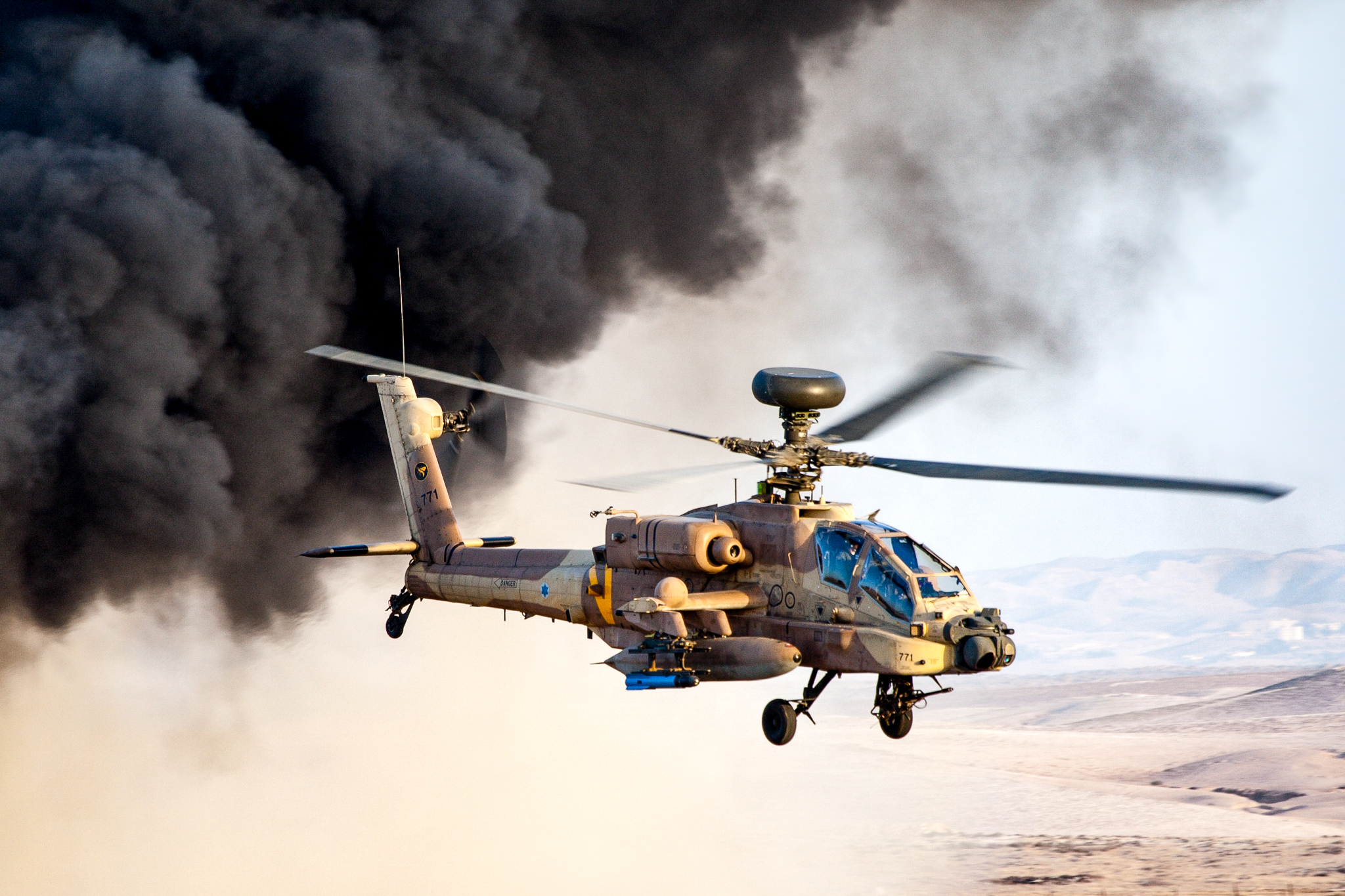
During the 1990s, Israeli AH-64As frequently attacked Hezbollah outposts in Lebanon. On 13 April 1996, during Operation Grapes of Wrath, an Apache fired two Hellfire missiles at an ambulance in Lebanon, killing six civilians. During the al-Aqsa Intifada in the 2000s, AH-64s were used to kill senior Hamas figures, such as Ahmed Yassin, Abdel Aziz al-Rantisi, and Adnan al-Ghoul. Human Rights Watch documented instances of IAF Apaches attacking civilian homes during the 2002 Jenin operation, killing one civilian. Consequently, HRW urged the US government to seek written assurances from Israel that Apaches would not be used to violate humanitarian law in the future.
In 2004, Israeli AH-64s Ahmed Yassin was the spiritual leader of Hamas; given that he was also blind, paraplegic and in a wheelchair, Palestinians saw the killing as "a cowardly execution of a frail old man in a wheelchair who did not attempt to hide". The attack also killed 7 bystanders, and was internationally condemned.
IAF Apaches played a prominent role in the 2006 Lebanon War, launching strikes into Lebanon targeting Hezbollah forces. IAF Apaches also attacked civilian targets, killing many, including women and children. During this war, two AH-64As collided, killing one pilot and critically wounding three. In another incident in the conflict, an IAF AH-64D crashed due to a main rotor malfunction, killing the two crew. In late 2007, the IAF put further purchases and deliveries of AH-64Ds on hold while its performance envelope was investigated. Israeli officials praised the Apache for its role in Operation Cast Lead in 2008, against Hamas in Gaza. IAF Apaches have often patrolled the skies over Gaza; strikes against insurgents by these helicopters has become a frequent occurrence.
In the 2010s, the IAF pursued upgrades to its AH-64A fleet as new AH-64D orders had been blocked. In June 2010, Israel decided not to upgrade all AH-64As to AH-64Ds due to funding constraints and lack of U.S. cooperation. In December 2010, the IAF was examining the adoption of a new missile system as a cheaper and lightweight complement to the Hellfire missile, either the American Hydra 70 or the Canadian CRV7. By 2013, IAF AH-64As were receiving a comprehensive upgrade of their avionics and electrical systems. The AH-64As are being upgraded to the AH-64Ai configuration, which is near the AH-64D standard. IAF Apaches can carry Spike anti-tank missiles instead of the Hellfire. The latest AH-64D-I integrates Israeli systems such as Elta communications suite, Elbit mission management system, Rafael Combat Net system and Elisra self-protection suite.
IAF AH-64s occasionally saw use in the air-to-air role. The first operational air-to-air kill took place on 24 May 2001, when an IAF shot down a Lebanese civilian Cessna 152 aircraft. Israeli and Lebanese officials presented differing versions: Lebanon said Israel first intercepted the aircraft over Lebanese airspace and its pilot, flying without his instructor, mistakenly entered Israeli airspace, while Israel says the aircraft was already in Israeli airspace when it was intercepted and repeatedly refused to answer or comply with air traffic control (ATC) warnings. The second air-to-air kill occurred on 10 February 2018, after an Iranian UAV entered Israeli airspace from Syria, an AH-64 destroyed it with a missile.
United Kingdom
Main article: AgustaWestland Apache

The UK previously operated a modified version of the AH-64D Block I Apache Longbow; initially called the Westland WAH-64 Apache, it is designated the Apache AH1 by the British Army. Westland built 67 WAH-64 Apaches under license from Boeing, following a competition between the Eurocopter Tiger and the Apache for the British Army's new Attack Helicopter in 1995. Important deviations made by AgustaWestland from the U.S. Apache variants include changing to more powerful Rolls-Royce engines, and the addition of a folding blade assembly for use on naval ships.
On 11 July 2016, the Ministry of Defence confirmed a U.S. Foreign Military Sale (FMS) worth $2.3 billion (~$ in ) for 50 AH-64Es to be built in Mesa, Arizona. Leonardo Helicopters in the UK will maintain the current fleet of Apaches until 2023–2024, with a long-term plan for Leonardo and other UK companies to "do most of the work" on the new fleet. The deal included an initial support contract for maintenance, spare parts, and training simulators; components from the older WAH-64s "will be reused and incorporated into the new helicopters where possible." The type entered service with the British Army in 2022. Approval for the re-manufacture of fifty of the UK's WAH-64 Mk 1 fleet to AH-64E Apache Guardian standard was given by the Defense Security Cooperation Agency in August 2015. They utilize the General Electric T700 engine rather than the Turbomeca RTM322 of the WAH-64; the first off-the-shelf purchase of a GE engine by the Ministry of Defence. The first two AH-64Es were delivered to the British Army on 26 November 2020. The older AH1 (WAH-64) were retired by 2024 in favour of the AH-64E models.
Netherlands

The Dutch government initially showed an interest in acquiring Apache helicopters in the late 1980s, when it stated that it may purchase as many as 52. A competition held in 1994 against the Eurocopter Tiger and the Bell AH-1 SuperCobra led to the Royal Netherlands Air Force ordering 30 AH-64D Apaches in 1995. Deliveries began in 1998 and ended in 2002. The RNLAF Apaches are equipped with the Apache Modular Aircraft Survivability Equipment (AMASE) self-protection system to counter infrared (IR) missile threats.
The RNLAF Apaches' first deployment was in 2001 to Djibouti, Africa. They were also deployed alongside U.S. AH-64s in support of NATO peacekeeping forces in Bosnia and Herzegovina. In 2004, six Dutch AH-64s were deployed as part of the Netherlands contribution to the multinational force in Iraq to support the Dutch ground forces. The Apaches performed close combat support and display of force missions, along with providing reconnaissance information to ground forces. In February 2006, the Netherlands' contribution to NATO forces in Afghanistan was increased from 600 to 1,400 troops and six AH-64s were sent in support.
.jpg)
Shortly after Apaches were deployed to Hamid Karzai International Airport, as part of the Dutch contribution to ISAF, on 10 April 2004, a pair of Dutch Apaches came under light gunfire close to Kabul. On 17 December 2007, an RNLAF Apache flew into power lines during a night flying exercise in the Netherlands, forcing an emergency landing and causing a lengthy blackout in the region. On 17 March 2015, a RNLAF Apache crashed during a training mission in Mali. Both pilots died. The Ministry of Defence opened an investigation into the cause of the crash.
In February 2018, the Netherlands decided to upgrade all their AH-64Ds to the latest AH-64E standard via a FMS contract with the US, along with 17 APG-78 fire control radar units. In November 2021, the process to upgrade AH-64Ds began and RNLAF is to receive the upgraded AH-64Es between 2023 and 2025.
Saudi Arabia
Following the 1991 Gulf War, during which many U.S. Apaches operated from bases within Saudi territory, Saudi Arabia purchased twelve AH-64As for the Royal Saudi Land Force. It has been speculated that the Saudi purchase motivated Israel to also procure Apaches. In August 2006, Saudi Arabia began negotiations for Apache upgrades worth up to $400M (~$ in ), possibly remanufacturing their AH-64As to the AH-64D configuration. In September 2008, the U.S. Government approved a Saudi Arabian request to buy 12 AH-64Ds. In October 2010, Saudi Arabia requested a further 70 AH-64Ds as part of a possible massive arms deal.
.jpg)
In November 2009, the Royal Saudi Land Force, as part of a military effort against insurgent border intrusions, launched Operation Scorched Earth; this involved Apaches launching air strikes against Houthi rebels operating inside neighboring Yemen. In January 2010 the rebels claimed to have shot down an Apache; this was denied by the Saudi military. In late January 2010, the leader of the Shiite rebels announced their withdrawal from Saudi territory, this announcement followed a key battle on 12 January when Saudi forces reportedly took control of the border village of Al Jabiri.
As an escalation of the Yemeni Civil War, starting on 26 March 2015, Saudi Arabia, the United Arab Emirates, and several other regional allies started a military operation in Yemen. Both the Saudi Army Aviation and the United Arab Emirates Air Force used their AH-64s in combat against an alliance between elements of the Yemeni Army loyal to the former president Saleh and the Houthis. The Apaches were mostly involved in border patrol and strikes in Northwestern Yemen. Over the years, several Saudi and an Emirati Apaches were lost to incidents and enemy fire, although exact numbers have not been independently confirmed. On 17 March 2017, an Apache reportedly attacked a Somali refugee boat, killing 42 refugees. Saudi Arabia denied involvement, though it and the United Arab Emirates are the only militaries using Apaches during the conflict.
United Arab Emirates
_150216-N-DQ840-256_(15937885963).jpg)
The United Arab Emirates purchased 30 AH-64As between 1991 and 1994, and began upgrading to AH-64D specification in 2008. In December 2016, the U.S. State Department approved a proposed sale of another 37 AH-64Es and Congress was notified; this consisted of 28 re-manufactured and nine new-build helicopters.
A UAE AH-64 was reportedly lost on 17 October 2017; a replacement was approved by the US in 2019.
Egypt
In 1995, the Egyptian Air Force placed an order for 36 AH-64As. These Apaches were delivered with the same avionics as the U.S. fleet at that time, except for indigenous radio equipment. In 2000, Boeing announced an order to remanufacture Egypt's Apache fleet to the AH-64D configuration, except for Longbow radar, which had been excluded by the U.S. government. In 2009, Egypt requested a further 12 AH-64D Block IIs with Longbow radars through a FMS.
In August 2012, the Egyptian Armed Forces undertook a large-scale military operation to regain control of the Sinai Peninsula from armed militants. Air cover throughout the operation was provided by the Egyptian Air Force's Apaches, which reportedly destroyed three vehicles and killed at least 20 militants. Up to five Egyptian Apaches were temporarily stationed in the Sinai following an agreement between Egypt and Israel. In September 2015, an Egyptian Apache attacked a group of foreign tourists in the Western Desert, killing 12 people and injuring 10. The AH-64s fired at the civilians with rockets and 30mm machine guns for several hours, even though survivors said they waved the white flag. The Egyptian Interior Ministry stated that the group, who were mistaken for militants, was in a restricted area. The tourists were reportedly accompanied by Egyptian police, and their vehicles were marked with logos of the tourist company.
In November 2018, the U.S. Department of State approved the sale of ten AH-64Es and associated equipment to Egypt, valued at US$1 billion, pending the sale clearing Congress.
The Apache entered service with the Egyptian Armed Forces, and in the 2020s was being further upgraded.
India
Indian Air Force
.jpg)
In 2008, the Indian Air Force (IAF) released a tender for 22 attack helicopters; there were six contending submissions: Sikorsky's UH-60 Black Hawk, the AH-64D, Bell's AH-1 Super Cobra, Eurocopter's Tiger, Mil's Mi-28 and AgustaWestland's A129 Mangusta. In October 2008, Boeing and Bell withdrew. In 2009, the competition was restarted. In December 2010, India requested the sale of 22 Apaches and associated equipment. On 5 October 2012, IAF Chief NAK Browne confirmed the Apache's selection. The IAF sought control of the 22 Apaches for air combat missions, while the Army Aviation Corps argued that they would be better used in army operations. In April 2013, the Indian Ministry of Defence decided that the 22 AH-64s would go to the IAF. India ordered the 22 AH-64Es in 2015.
On 11 May 2019, the IAF received its first AH-64E in a ceremony at Boeing's Mesa, Arizona facility. On 3 September 2019, 8 AH-64Es were inducted into the IAF's 125 Helicopter Squadron at Pathankot Air Force Station (AFS), Punjab. The second squadron for Apache helicopters, the 137 Helicopter Squadron was raised at Jorhat Air Force Station on 21 October 2019. Following the second batch of 8 helicopters, the last batch of 5 choppers were delivered on 11 July 2020.
The Apaches were also deployed at Leh Air Force Station during the 2020–2021 China–India skirmishes.
On 3 April 2024, an Apache helicopter of the Indian Air Force made a precautionary landing in Ladakh region during an operational training sortie. The aircraft was damaged during the incident due to the rugged terrain and high altitude conditions. Both the pilots were safe. This marked the first such incident involving an Apache in India. By September, the assembly parts of the helicopter, based in Pathankot Air Force Station, was transported from the landing site North of Khardung La to Leh via road on a truck for further airlift. The aircraft would be repaired either in its home base or a Base Repair Depot in IAF.
On 6 June 2025, another Apache helicopter conducted a precautionary landing during a routine training sortie in Saharanpur after taking off from Sarsawa Air Force Station which was 12 km away. However, both the pilots were safe and the helicopter returned to the airbase after the problem was resolved. On 13 June, an Apache helicopter, referred to as M17, made an emergency landing in Pathankot district. However, the technical problem was resolved and the helicopter was safely flown back to Sarsawa AFS without any damage or injury.
Indian Army
On 12 June 2018, the U.S. Department of State approved a possible Foreign Military Sales (FMS) to India for six more AH-64Es and associated equipment in an estimated $930 million deal. The U.S. Defense Security Cooperation Agency notified Congress for approval. In February 2020, another six for the Indian Army were ordered, including weapons, equipment, and training; deliveries are planned to begin in 2023. These attack helicopters are often interlinked with squadrons of indigenous HAL Prachand attack helicopters.
On 1 January 2024, senior Army officials told India Today that the Indian Army Aviation Corps is expected to induct the first batch of Apache helicopters in the February–March timeframe. This is would enable the army to protect its tanks on the battlefield when the Air Force fleet is unavailable. They would be deployed to Jodhpur, near the India–Pakistan border, enhancing the security of the area against Pakistani tanks. On 15 March 2024, Army Aviation Corps raised the 451 Army Aviation squadron at Jodhpur which will operate Apaches. The induction of the first batch of three Apaches was scheduled in May 2024, with the rest by July 2024. However, until August 2024, no Apaches were delivered to the Army.
Citing delays due to supply chain issues, as of September 2024, the first batch of three Apache helicopters was to be delivered by the following December–January followed by the next 3 within another few months.
As of July 2025, the Defence Minister of India Rajnath Singh after communicating with U.S. Defense Secretary Pete Hegseth confirmed that the first batch of Apache helicopters from the US was to be delivered by July 15 followed by the next batch by November 2025. The helicopters are to be assigned for anti-armour and air assault roles. As of 17 July, the first batch of helicopters were to arrive in India on 21 July with the rest to be delivered by the end of the year. The first three helicopters, sporting the desert camouflage, arrived in India's Hindan Air Force Station on 22 July onboard a US cargo aircraft.
On 30 October, a commercial An-124 aircraft (tail number: UR-82008), with its operating base at Leipzig airport landed at Mesa Gateway Airport. The aircraft transported India's last batch of three helicopters to East Midlands Airport on 1 November. However, on 8 November, the aircraft was brought back to Mesa Airport after Turkey refused airspace permission for the An-124 citing complications with the plane owners. Later, all units were unloaded and towed away. Meanwhile, the first batch is in Nashik, Maharashtra which hosts the Indian Army Aviation Training School to train crews.
The helicopter entered service with the Army and saw its maiden deployment during Exercise Maru Jwala on 11 November 2025.
The final batch was received by India at Hindan Air Force Station on 17 December 2025 and is now expected to be inducted into service in the same month following final assembly, joint inspection and completion of formalities. They will be eventually stationed at Nagtalao Army Aviation Base, Jodhpur, after joining 451 Army Aviation Squadron.
Other users
.jpg)

Greece received 20 AH-64As by 1995; another 12 AH-64Ds were ordered in September 2003.
Singapore purchased 20 AH-64Ds in two batches between 1999 and 2001. In October 2010, training was suspended following the forced crash-landing of an Apache.
In 2005, Kuwait purchased 16 AH-64Ds.
On 26 August 2013, Indonesia and the U.S. finalized a contract for eight AH-64E Apaches worth $500 million (~$ in ). The first was displayed on 5 October 2017 as part of a military exercise in Indonesia, to mark the 72nd anniversary of its armed forces. The first batch of AH-64s for the Indonesian Army arrived in Indonesia on 18 December 2017.
Japan ordered 50 AH-64Ds, which were built under license by Fuji Heavy Industries, designated "AH-64DJP". The first helicopter was delivered to the JGSDF in early 2006. The order was halted after 13 aircraft were delivered due to cost. In 2017, it was announced that the targeting systems of the 13 aircraft would be upgraded. One was destroyed in a crash in February 2018 with the deaths of both crew.
In June 2011, Taiwan (Republic of China) agreed to the purchase of 30 AH-64Es with weapons and associated equipment. On 5 November 2013, Taiwan received the first six AH-64s. On 25 April 2014, a Taiwanese AH-64E crashed into a three-story building during a training flight in bad weather conditions, the first AH-64E airframe loss. An investigation ruled out mechanical failure and concluded that the pilots had rapidly descended through clouds at low altitude without checking flight instruments to maintain adequate height; the Army expanded simulator training in response.
In 2009, South Korea showed interest in the Apache, potentially related to plans to withdraw many U.S. Apaches from the country. On 21 September 2012, the U.S. Congress was notified of the possible purchase of 36 AH-64E, along with associated equipment and armament. It competed against the Bell AH-1Z Viper and the TAI/AgustaWestland T-129; in April 2013, South Korea announced plans to buy 36 AH-64Es.
In July 2012, Qatar requested the sale of 24 AH-64Es with associated equipment and support. The sale was approved on 27 March 2014. In March 2019, Qatar received the first of 24 AH-64Es ordered.
Future and possible users

Iraq requested the sale of 24 AH-64s in April 2013; In January 2014, a sale, including the helicopters, associated parts, maintenance, and training, was cleared by the U.S. Congress. However, the proposal was not accepted by the Iraqi government and expired in August 2014.
In July 2016, the UK placed an order for 50 AH-64Es through the U.S. FMS program instead of upgrading their Westland-built WAH-64s.
In July 2019, Australia issued a request for information for Project Land 4503 to replace the Army's Eurocopter Tiger ARH helicopters. On 15 January 2021, the Australian Minister for Defence Linda Reynolds announced that the AH-64E had been selected to replace the Tiger ARH. A fleet of 29 AH-64Es will be acquired with a planned initial operational capability of 12 helicopters in 2026 and full operational capability in 2028.
In October 2019, the Bangladesh Air Force (BAF) was offered two types of attack helicopters and selected the AH-64, pending government approval. However, due to the Apache's high costs, the BAF choose the competing Russian Mi-28NE Night Hunter.
In November 2019, the U.S. State Department approved a FMS to Morocco of 24 AH-64Es (with an option for a further 12), this allows Morocco to negotiate an order.
On 30 April 2020, the U.S. Defense Security Cooperation Agency announced it had received U.S. State Department approval and notified Congress of a possible sale to the Philippines of either six AH-1Z attack helicopters and related equipment for an estimated cost of $450 million or six AH-64Es and related equipment for an estimated cost of $1.5 billion.
On 21 April 2022, Polish Ministry of National Defence shortlisted two models in competition for the "Kruk" (Raven) Program aimed at modernizing the Polish Land Forces' fleet of attack helicopters, with the competitors being the AH-64E and Bell's AH-1Z Viper. On 8 September 2022, Polish Minister of Defence Mariusz Błaszczak announced that the AH-64E has won and set out to procure 96 helicopters to form six squadrons. The contract includes a logistics package and a training package along with a stock of ammunition and spare parts.
Variants
AH-64A

The AH-64A is the original production attack helicopter. The crew sit in tandem in an armored compartment. It is powered by two GE T700 turboshaft engines. The A-model was equipped with the −701 engine version until 1990 when the engines were switched to the more powerful −701C version.
U.S. Army AH-64As are being converted to AH-64Ds. The service's last AH-64A was taken out of service in July 2012 before conversion at Boeing's facility in Mesa, Arizona. On 25 September 2012, Boeing received a $136.8M contract to remanufacture the last 16 AH-64As into the AH-64D Block II version and this was planned to be completed by December 2013.
AH-64B
In 1991, after Operation Desert Storm, the AH-64B was a proposed upgrade to 254 AH-64As. The upgrade would have included new rotor blades, a Global Positioning System (GPS), improved navigation systems and new radios. U.S. Congress approved $82M to begin the Apache B upgrade. The B program was canceled in 1992. The radio, navigation, and GPS modifications were later installed on most AH-64As via other upgrades.
AH-64C
Additional funding from Congress in late 1991 resulted in a program to upgrade the AH-64As to an AH-64B+ version. More funding changed the plan to upgrade to AH-64C, which would include all of the changes to be included in the AH-64D except for mast-mounted radar and newer −700C engine versions. However, the C designation was dropped after 1993. With AH-64As receiving the newer engine from 1990, the only difference between the AH-64C and the AH-64D was the radar, which could be moved from one aircraft to another; thus, the decision was made to simply designate both versions as AH-64D.
AH-64D

The AH-64D Apache Longbow is equipped with a glass cockpit and advanced sensors, the most noticeable of which being the AN/APG-78 Longbow millimeter-wave fire-control radar (FCR) target acquisition system and the Radar Frequency Interferometer (RFI), housed in a dome located above the main rotor. The radome's raised position enables target detection while the helicopter is behind obstacles (e.g. terrain, trees or buildings). The AN/APG-78 is capable of simultaneously tracking up to 128 targets and engaging up to 16 at once; an attack can be initiated within 30 seconds. A radio modem integrated with the sensor suite allows data to be shared with ground units and other Apaches, allowing them to fire on targets detected by a single helicopter.
The aircraft is powered by a pair of uprated T700-GE-701C engines. The forward fuselage was expanded to accommodate new systems to improve survivability, navigation, and 'tactical internet' communications capabilities. In February 2003, the first Block II Apache was delivered to the U.S. Army, featuring digital communications upgrades. The Japanese Apache AH-64DJP variant is based on the AH-64D; it can be equipped with the AIM-92 Stinger air-to-air missiles for self-defense.
AH-64E

Formerly known as AH-64D Block III, in 2012, it was redesignated as AH-64E Guardian. It has improved digital connectivity, the Joint Tactical Information Distribution System, more powerful T700-GE-701D engines with upgraded face gear transmission to handle more power, capability to control unmanned aerial vehicles (UAVs), full IFR capability, and improved landing gear. New composite rotor blades, which completed testing in 2004, increase cruise speed, climb rate, and payload capacity. Deliveries began in November 2011. Full-rate production was approved on 24 October 2012. The total Army Acquisition Objective for both new build and remanufactured AH-64Es is 812.
Changes in production lots 4 through 6 include a cognitive decision aiding system and new self-diagnostic abilities. The updated Longbow radar has an oversea capacity, potentially enabling naval strikes; an AESA radar is under consideration. It will have a L-3 Communications MUMT-X datalink in place of two older counterparts, communicating on C, D, L, and Ku frequency bands to transmit and receive data and video with all Army UAVs. The AH-64E is to be fit for maritime use. The U.S. Army expressed interest in extended-range fuel tanks for greater endurance. , 500 AH-64Es have been delivered.
Work on a further upgraded AH-64E, version 6.5 was initiated by the U.S. Army in 2021, and first flew in 2023. The AH-64E is reported to have had problems with its electrical generation systems causing increased scrutiny.
AH-64F
In 2014, Boeing conceptualized an Apache upgrade prior to the introduction of the U.S. Army's anticipated attack version of the Future Vertical Lift (FVL) aircraft, forecast to replace the Apache by 2040. The conceptual AH-64F would have greater speed via a new 3,000 shp turboshaft engine from the Improved Turbine Engine Program, retractable landing gear, stub wings to offload lift from the main rotor during cruise, and a tail rotor that can articulate 90 degrees to provide forward thrust. In October 2016, the Army revealed they would not pursue another Apache upgrade to focus on funding FVL; the Army will continue buying the Apache through the 2020s until Boeing's production line ends in 2026, then FVL is slated to come online in 2030.
Piasecki Speed Apache
In the late 1990s, Piasecki conceived a proposal for an Apache with a tail–mounted ducted pusher rotor to enhance speed. However, the Speed Apache was not proceeded with. This appears to be similar to the Piasecki X-49 SpeedHawk.
Compound Apache
In October 2018, Boeing began testing the AH-64E Block 2 Compound, a compound helicopter design which added a larger fixed wing and a pusher propeller to the Apache airframe to provide additional lift and thrust, respectively. In addition, the engine exhaust was redirected downwards. Collectively, the modifications were anticipated to improve speed to 185 knot, range to 460 nmi, payload to 5900 lb, and fuel economy. A 30% scale model completed wind tunnel testing in January 2019. The Compound Apache has been pitched as an interim replacement for the Apache before its replacement under the Future Vertical Lift program.
Sea Apache

During the 1980s naval versions of the AH-64A for the United States Marine Corps and Navy were examined. Multiple concepts were studied with altered landing gear arrangements, improved avionics and weapons. The USMC conducted a two-week evaluation of the Apache in September 1981, including shipboard operation tests. Funding for a naval version was not provided; the USMC continued to use the AH-1.
The Canadian Forces Maritime Command also examined naval Apaches. In 2004, British Army AgustaWestland Apaches were deployed upon the Royal Navy's , a Landing Platform Helicopter, for suitability testing; there was U.S. interest in the trials. During the 2011 military intervention in Libya, the British Army extensively used Apaches from HMS Ocean. In 2013, US AH-64Ds were tested on several U.S. Navy ships.
Export Apaches
Several models have been derived from the AH-64A, AH-64D and AH-64E for export. The British-built AgustaWestland Apache (assembled from kits purchased from Boeing) is based on the AH-64D Block I with several different systems, including more powerful engines, folding rotor blades, and other modifications for operation from Royal Navy vessels.
Block modification
While a major change in design or role will cause the type designator suffix to change, for example from AH-64D to AH-64E, the helicopters are also subject to block modification. Block modification is the combining of equipment changes into blocks of modification work orders, the modifications in the block (sometimes called a block package) are all done to the helicopter at the same time.
Operators


.jpg)
_AH-64DJP_Apache_Longbow,_Japan_-_Army_AN2227712.jpg)

The AH-64 has had some modest success on the export market. It has been popular in the Middle East, where its role in the Gulf War established a bit of reputation. Its main user continues to be the U.S. Army, and the largest user in Europe will be Poland. ;
- Australian Army – 4 AH-64Es delivered of 29 on order. In September 2025, the first two were delivered. ;
- Egyptian Air Force – 46 AH-64Ds ;
- Hellenic Army – 28 AH-64A/Ds ;
- Indian Air Force – 22 AH-64Es in inventory as of July 2020
- Indian Army – 6 AH-64E in inventory as of December 2025 ;
- Indonesian Army – 8 AH-64Es ;
- Israeli Air Force – 48 AH-64A/Ds ;
- Japan Ground Self-Defense Force – 12 AH-64Ds ;
- Kuwait Air Force – 24 AH-64Ds ;
- Royal Moroccan Air Force – 36 AH-64Es on order, with 6 delivered as of March 2025 ;
- Royal Netherlands Air and Space Force – 28 AH-64Es ;
- Polish Land Forces – 96 AH-64Es on order, 8 AH-64Ds leased ;
- Qatar Emiri Air Force – 24 AH-64Es ;
- Royal Saudi Land Forces – 47 AH-64A/D/Es
- Saudi Arabia National Guard – 12 AH-64Es ;
- Republic of Singapore Air Force – 19 AH-64Ds ;
- Republic of Korea Army – 36 AH-64Es An additional 36 AH-64Es were approved in a $3.5 billion deal. ;
- Republic of China Army – 29 AH-64Es ;
- United Arab Emirates Air Force – 28 AH-64D/Es ;
- British Army – 50 AH-64Es ;
- United States Army – 750 total; estimated 160 AH-64Ds and 590 AH-64Es as of January 2025
Specifications (AH-64A/D)


|prime units?=kts
-
Fuselage length: 49 ft |max takeoff weight lb=23000 |max takeoff weight note= --
-
Blade section: root: HH-02; tip: NACA 64A006 -- |never exceed speed kts=197 |never exceed speed note= |disk loading lb/sqft=9.8 |fuel consumption lb/mi= |power/mass=0.18 hp/lb
--
Notable appearances in media
Please do not add the many minor appearances of the aircraft. This section is only for major cultural appearances in which the aircraft plays a MAJOR part in the story line, or has an "especially notable" role in what is listed. A verifiable source proving the appearance's notability may be required. Random cruft, including ALL Ace Combat, Battlefield, and Metal Gear Solid appearances, and ALL anime/fiction lookalike speculation, WILL BE removed.
If your item has been removed, please discuss it on the talk page FIRST. A verifiable source proving the appearance's notability may be required. If a consensus is reached to include your item, a regular editor of this page will add it back. Thank you for your cooperation.-- Main article: Aircraft in fiction#AH-64 Apache
References
Notes
Citations
Bibliography
- Bernstein, Jonathan. AH-64 Apache units of operations: Enduring Freedom and Iraqi Freedom. Oxford: Osprey Publishing, 2005. .
- Bishop, Chris. Apache AH-64 Boeing (McDonnell Douglas) 1976–2005. Osprey Publishing, 2005. .
- Donald, David. "AH-64A/D Apache and AH-64D Longbow Apache". Modern Battlefield Warplanes. AIRtime Publishing Inc, 2004. .
- Feldman, Shai. The Middle East Strategic Balance, 2003–2004. Sussex Academic Press, 2004. .
- Fisk, Robert. The Great War for Civilisation: The Conquest of the Middle East. Fourth Estate, 2005.
- Government Accounting Office. Staff Study: Advanced Attack Helicopter. Washington, D.C.: U.S. Government Accounting Office, 1974.
- Luttwak, Edward. Strategy: the Logic of War and Peace. Harvard University Press, 2001. .
- Office of the Assistant Vice Chief of Staff of the Army (OAVCSA). An Abridged History of the Army Attack Helicopter Program. Washington, D.C.: Department of the Army. 1973.
- Powers, Adam. United States Israeli Relations. Nova Publishers, 2002. .
- Richardson, Doug and Lindsay Peacock. Combat Aircraft: AH-64 Apache. London: Salamander Books, 1992. .
- Thomas, Adams K. The Army After Next: The First Postindustrial Army. Greenwood Publishing Group, 2006. .
- TM 1-1520-251-10 Technical Manual for Helicopter, Attack, AH-64D Longbow Apache, U.S. Army.
- Williams, James W. A History of Army Aviation: From Its Beginnings to the War on Terror. iUniverse, 2005. .
References
- (2 October 2000). "Boeing Marks 25th Anniversary of Apache First Flight Sept. 30". Boeing.
- Haynes, Mary L. and Cheryl Morai Young, ed. [http://www.history.army.mil/books/DAHSUM/1987/ch05.htm "Department of the Army Historical Summary, FY 1987, Chapter 5: Modernizing and Equipping the Army"] {{Webarchive. link. (20 July 2016 . Center of Military History, United States Army, 1995.)
- "AH-64 Apache".
- (10 August 1972). "Army Cancels Helicopter Contract". Victoria Advocate.
- (3 September 1972). "Army Decides To Scrap Cheyenne Helicopter Gunship". Boca Raton News.
- Bishop 2005, pp. 5–6.
- OAVCSA 1973, p. 10.
- (16 November 1972). "Army Seeking Bids on New Helicopter". [[The New York Times]].
- (11 September 1973). "New Army Tactic".
- Bishop 2005, p. 7.
- Richardson and Peacock 1992, p. 8.
- Donald 2004, p. 114.
- Weapons and sensor systems were integrated and tested during this time, including the laser-guided [[AGM-114 Hellfire]] missile.Bishop 2005, p. 8.
- "AGM-114 Hellfire missile". Boeing.
- Bishop 2005, pp. 8–9.
- Donald 2004, p. 119.
- Wilson, Cynthia. (13 January 2004}}{{dead link). "McDonnell-Boeing Merger".
- Babcock, Charles R.. (20 February 1991). "Temperamental Helicopter Joins Battle". The Washington Post.
- (17 August 1988). "Helicopter Contract Awarded". Prescott Courier.
- Donald 2004, pp. 150–153.
- [http://military.discovery.com/tv-shows/great-planes/videos/great-planes-the-deadly-apache.htm "Great Planes: Apache Helicopter"] {{webarchive. link. (17 January 2013. Military Channel)
- Foote, Sheila. (4 April 1995). "DOD Halts Apache Longbow Tests Early". Defense Daily.
- Donald 2004, pp. 156–158.
- Foote, Sheila. (16 October 1995). "DoD Approves Production of Longbow Apache Attack Helicopter". Defense Daily.
- Caires, Greg. (19 August 1996). "Army Inks $1.9 Billion AH-64D Apache Deal". Defense Daily.
- Eden, Paul, ed. "Boeing AH-64 Apache". ''Encyclopedia of Modern Military Aircraft''. Amber Books, 2004. {{ISBN. 1-904687-84-9.
- (30 March 2010). "Ensure Israel arms curbs, say MPs". BBC News.
- (20 February 2003). "KAI Signs Cooperation Agreement With Boeing, To Produce Apache Fuselages". Defense Daily.
- "F-15/Apache Fuselage Monopolization Program". Korea Aerospace Industries.
- Dunbar, Lisa. (2009). "Boeing celebrates milestone: 100th AH-64D Apache fuselage delivery". Boeing.
- (8 April 1998). "Arbitrator will rule on AH-64 fuselage production dispute".
- "AH-64D Apache Longbow". Deagel.com.
- (21 July 2011). "Boeing Remanufactures AH-64A Apaches to AH-64D Block II". defenseindustrydaily.com.
- Hoyle, Craig. (15 October 2008). "Greece urged to commit to Apache upgrade, as air force eyes new utility model".
- Garrett Reim. (17 May 2019). "Boeing suggests propulsor, winged AH-64 Apache variant for US Army".
- (2015-11-09). "Boeing and Tata announce aerospace joint venture in India". [[Tata Sons]].
- (2016-06-18). "Tata-Boeing joint venture establishes aerospace facility in Hyderabad". [[Tata Sons]].
- (2018-06-01). "Tata Boeing Aerospace delivers first AH-64 Apache combat helicopter fuselage". [[Tata Sons]].
- (2021-07-23). "Tata Boeing Aerospace Delivers 100th Fuselage for the AH-64 Apache Combat Helicopter". [[Boeing]].
- (2023-01-19). "Tata Boeing Aerospace delivers first fuselage for Indian Army AH-64 Apache". [[Boeing]].
- (2025-02-10). "Tata Boeing JV delivers 300th 'made in Telangana' AH-64 Apache fuselages". The Times of India.
- (2025-02-10). "Tata Boeing Aerospace delivers 300th fuselage for AH-64 Apache helicopter from Hyderabad facility". The Hindu.
- US Army TM 1-1520-251-10 Operator's Manual for Helicopter, Attack, AH-64D Longbow Apache, dated 29 March 2002 pp. 2-31 to 2-36.
- [http://www.geaviation.com/engines/military/t700/t700-701c.html "Model T700-701C"] {{webarchive. link. (17 December 2013. GE Aviation)
- [http://www.geaviation.com/engines/military/t700/t700-701d.html "Model T700-701D"] {{webarchive. link. (17 December 2013. GE Aviation)
- [http://www.safran-helicopter-engines.com/helicopter-engines/over-2000-shp/rtm322 "RTM 322"]. Turbomeca
- Hudson, Joel B.. (2 April 1997). "Attack Helicopter Operations". Department of the Army.
- Donald 2004, pp. 110–11.
- (2 April 2002). "How Apache Helicopters Work". HowStuffWorks.
- Donald 2004, pp. 111–112.
- (20 December 1990). "GE Says T700 Operating Well in Gulf". Defense Daily.
- (4 November 2004). "T700-GE-701D Engine Awarded U.S. Army Qualification". GE Aviation.
- Richardson and Peacock 1992, pp. 16–17.
- "Boeing AH-64 Apache windshields, windows, canopy and blast barrier". PPG Aerospace.
- "The History of Helicopter Safety".
- "AH-64 Apache – Military Aircraft".
- Rash, Clarence E.. (August 1988). "The Impact of the U.S. Army's AH-64 Helmet Mounted Display on Future Aviation Helmet Design". Army Aeromedical Research Lab Fort Rucker.
- Casey, Curtis J.. (5 August 2002). "Emergence of Solid State Helmet-Mounted Displays in Military Applications". SPIE.
- (13 October 2000). "Boeing AH-64 Apache". Jane's Information Group.
- (5 May 1999). "Boeing To Develop Electric Gun Turret for the AH-64D". Boeing.
- (2 May 2005). "$262.4M in Arrowheads For Apaches".
- "PEO STRI AWSS LBA TESS". PEO STRI.
- link. (8 July 2013. [[United States Department of Defense). Department of Defense]] [[Small Business Innovation Research]]. Retrieved June 2012.
- Harris, Tom. (2 April 2002). "How Apache Helicopters Work: Apache Sensors". howstuffworks.com.
- Richardson and Peacock 1992, pp. 26–31.
-
- km. mi. link. (4 March 2016 – Koreatimes.co.kr, 26 January 2016)
- [http://www.armedforces-int.com/news/afghan-debut-for-apache-ground-fire-system.html Ground Fire Acquisition System] {{Webarchive. link. (28 October 2012 – Armedforces-int.com, 26 October 2012.)
- (19 February 2014). "Lockheed tech lets U.S. Apache helicopter pilots aim in color". Reuters.
- Drew, James. (7 January 2016). "Lockheed secures first order for Apache day sensor kits".
- (13 October 2014). "Army Configures Apaches for Sea Duty".
- In addition to the 30 mm [[M230 chain gun. M230E1 Chain Gun]], the Apache carries a range of external stores and weapons on its stub-wing pylons, typically a mixture of [[AGM-114 Hellfire]] anti-tank missiles, and [[Hydra 70]] general-purpose unguided {{convert. 70. mm. in
- (1 March 1992). "Operation Desert Shield/Desert Storm: Observations on the Performance of the Army's Hellfire Missile". GENERAL ACCOUNTING OFFICE WASHINGTON DC NATIONAL SECURITY AND INTERNATIONAL AFFAIRS DIV.
- (25 August 2005). "US approves full new warhead production". New Zealand Herald.
- Smith, Michael. (22 June 2008). "Army 'vacuum' missile hits Taliban". The Times.
- [https://www.flightglobal.com/news/articles/bae-secures-us-army-apache-as-apkws-laser-guided-roc-417758/ "BAE secures US Army Apache as APKWS laser-guided rocket customer"] ''FlightGlobal'', 14 October 2015
- Donald 2004, pp. 134–135.
- Richardson and Peacock 1992, pp. 40–41, 60.
- (May 2016)
- [http://www.dodbuzz.com/2013/10/23/raytheon-sells-stingers-for-apaches-abroad/ Raytheon Sells Stingers for Apaches Abroad] {{Webarchive. link. (1 March 2014 – DoDBuzz.com, 23 October 2013)
- [http://www.flightglobal.com/news/articles/weapon-sensor-upgrades-coming-for-apache-fleet-410766/ Weapon, sensor upgrades coming for Apache fleet]. ''FlightGlobal'', 31 March 2015.
- [https://www.army.mil/article/125676/Apache_UAV_teaming_combines__best_capabilities_of_man__machine_/ "Apache-UAV teaming combines 'best capabilities of man, machine'"]. Army.mil, 8 May 2014
- [http://www.gizmag.com/boeing-apache-demonstrates-uav-control/5506/ "Boeing Apache demonstrates UAV Control"]. gizmag.com, 12 April 2006.
- [https://www.flightglobal.com/news/articles/boeing-lockheed-unveil-competing-uav-killing-concep-417714/ Boeing, Lockheed unveil competing UAV-killing concepts] ''FlightGlobal'', 14 October 2015
- (14 July 2016). "MBDA fires Brimstone missile from Apache helicopter". UPI.com.
- [https://www.defensenews.com/land/2020/01/09/army-to-field-israeli-made-long-range-missile-on-helicopters/ "US Army to field Israeli-made long-range missile on helicopters"]. ''Defense News''. 9 January 2020.
- Richardson and Peacock 1992, pp. 14–15.
- [http://www.boeing.com/rotorcraft/military/ah64d/pub/news_2004.pdf Apache news 2004], pp. 33–34. Boeing, 2004. {{webarchive. link. (30 June 2013)
- Bernsteein 2005, p. 6.
- Richardson and Peacock 1992, pp. 47–48.
- Donald 2004, p. 121.
- Williams 2005, pp. 212–213.
- Williams 2005, pp. 215–218.
- Richardson and Peacock 1992, pp. 51–52.
- Bishop 2005, pp. 16–17.
- Bernstein 2005, p. 7.
- Bishop 2005, pp. 17–18.
- Donald 2004, pp. 144–145.
- Taylor, Thomas. ''Lightning in the Storm''. Hippocrene Books, 2003. {{ISBN. 0-7818-1017-5.
- Ference, Edward W.. (December 2002). "Case Study of the Development of the Apache Attack Helicopter (AH-64)". Naval Postgraduate School.
- (February 2002). "Task Force Hawk". AIR FORCE Magazine.
- Donald 2004, p. 147.
- [http://www.gao.gov/assets/160/151734.pdf "OPERATION DESERT STORM: Apache Helicopter Was Considered Effective in Combat, but Reliability Problems Persist"] {{Webarchive. link. (13 December 2013. GAO)
- (1 July 1992). "High Tech Weapons in Desert Storm: Hype or Reality?". Project on Government Oversight.
- [http://gao.gov/assets/150/149732.pdf "APACHE HELICOPTER: Serious Logistical Support Problems Must Be Solved to Realize Combat Potential"] {{Webarchive. link. (23 January 2016. GAO)
- Bishop 2005, pp. 21–24, 33.
- (18 July 1995). "U.S. Mulls More Copters in Bosnia – The Aircraft Were Requested For U.N. Troop Reinforcement". Sarasota Herald-Tribune.
- Adams 2006, p. 60.
- Bowman, Tom. (16 July 1999). "Army Hunts For Answers As Apaches Fail in Kosovo; Readiness, Training Faulted As 21st-century Helicopter Stumbles". The Baltimore Sun.
- Thompson, Mark. (20 June 1990). "Army Defends Troubled Copter". Spokesman-Review.
- Anderson, Jon R.. (19 December 2000). "Apaches Are Ailing Warriors". European Stars and Stripes.
- Luttwak 2001, pp. 78–80.
- Adams 2006, p. 61.
- "Task Force Hawk". Air Force Magazine.
- Bishop 2005, pp. 33–35.
- Bernstein 2005, pp. 16–17.
- Adams 2006, pp. 223–224.
- (26 November 2007). "Afghan Field Report: British WAH-64Ds".
- (7 September 2012). "Christopher Roney inquest: 'Failures led to friendly fire death'". BBC News.
- Bishop 2005, pp. 35–37.
- Schechter, Erik. (13 June 2003). "Choppers on the Chopping Block?". The Jerusalem Post.
- (24 March 2003). "U.S. Apache Pilots Taken Prisoner". CNN.
- Fred Kaplan. (23 April 2003). "Chop The Chopper: The Army's Apache Attack-Helicopter Had A Bad War".
- (26 March 2003). "A City And Regime Steel For Reckoning To Come". Sydney Morning Herald.
- (23 April 2003). "The 'Apache' Farmer's Tale". BBC News.
- (25 March 2003). "Downed Apache Blown Up To Keep Secrets From Iraq". Evening Times.
- (26 March 2003). "Downed US Apache Blown Up With Missile".
- (2006). "Fiasco: The American Military Adventure in Iraq". Penguin.
- (17 January 2006). "Surface-to-Air Missile Downed U.S. Chopper in Iraq". ABC News.
- Cheryl Rodewig. (7 March 2012). "Geotagging poses security risks".
- (6 January 2012). "Helicopter crashes in eastern Afghanistan". ISAF – International Security Assistance Force.
- (28 May 2011). "Marlborough Soldier Dies in Helicopter Crash in Afghanistan". Wmur.com.
- "Army Chief Warrant Officer 3 William T. Flanigan".
- (26 May 2008). "Amputee Combat Vet Daniel McConnell's Inspiring Story".
- "AH-64D Apache – Overview". Boeing.
- (28 June 2011). "Leaked Audit: Boeing Overcharged Army Up to 177,000 Percent on Helicopter Spare Parts". Project on Government Oversight (POGO).
- Paulsboe, Jesse. (12 March 2013). "'Guardian' rises at Joint Base Lewis–McChord". US Army.
- [http://www.flightglobal.com/news/articles/us-armys-ah-64es-reach-initial-operating-capability-393581/ "US Army's AH-64Es reach initial operating capability"] ''FlightGlobal'', 27 November 2013
- [http://www.dodbuzz.com/2014/05/05/armys-first-ah-64e-unit-deploys-to-afghanistan/ Army's First AH-64E Unit Deploys to Afghanistan] {{Webarchive. link. (6 May 2014 – DoDBuzz.com, 5 May 2014)
- [http://www.flightglobal.com/news/articles/us-army-details-combat-experience-with-ah-64e-404735/ "US Army details combat experience with AH-64E"]. ''FlightGlobal'', 14 October 2014
- [http://www.military.com/daily-news/2015/01/28/commander-armys-new-ah64e-apache-surprised-enemy-in.html Commander: Army's New AH-64E Apache Surprised Enemy in Afghanistan] – Military.com, 28 January 2015
- [http://www.armytimes.com/story/military/tech/2015/02/01/new-apaches-confused-enemy-boeing-gamechanger-chinook/22493523/ New Apache confounded the enemy in combat, commander says] – Armytimes.com, 1 February 2015
- [http://www.strategypage.com/htmw/htairfo/articles/20150219.aspx Taliban Troubled By Timing] – Strategypage.com, 19 February 2015
- [http://breakingdefense.com/2014/01/budgets-betrayal-national-guard-fights-to-keep-apache-gunships/ Budgets & 'Betrayal': National Guard Fights To Keep Apache Gunships] – Breakingdefense.com, 23 January 2014
- Head, Elan. "[http://www.verticalmag.com/news/article/ArizonaGuardleaderblastsArmyplantoseizeApaches Arizona Guard leader blasts Army plan to 'seize' Apaches]" ''Vertical Magazine'', 28 April 2014.
- [http://www.armytimes.com/story/military/careers/army/2015/03/16/apache-battalion-conversion/70227902/ First of 10 Apache units converts, adds 12 Shadow UASs] – Armytimes.com, 16 March 2015
- [http://www.militarytimes.com/article/20141005/NEWS08/310050035/Army-Apache-helos-used-strikes-against-Islamic-State "Army Apache helos used in strikes against Islamic State"] {{Webarchive. link. (5 October 2014 . ''Military Times'', 5 October 2014)
- [http://www.military.com/daily-news/2016/06/15/in-iraq-apache-gunships-deploy-mosul-but-not-fallujah-pentagon.html In Iraq, Apache Gunships Deploy to Mosul, But Not Fallujah: Pentagon] – Military.com, 15 June 2016
- [http://www.dodbuzz.com/2016/10/19/apaches-go-action-mosul-offensive/ Apache Helicopters Go into Action in Mosul Offensive] {{Webarchive. link. (20 October 2016 – DoDBuzz.com, 19 October 2016)
- (31 December 2019). "100 U.S. Marines, two Apache helicopters reinforcing embassy in Baghdad after attack".
- "Iran launches missiles at US military facilities in Iraq".
- Falconer, Rebecca. (28 March 2024). "U.S. Army investigates 2 Apache helicopter crashes within 48 hours".
- United States Secretary of Defense Pete Hegseth. (30 April 2025). "MEMORANDUM FOR SENIOR PENTAGON LEADERSHIP".
- Matthew Beinart. (May 1, 2025). "Hegseth Directs Army Scrap 'Outdated' Systems, Cuts Include JLTVs, AH-64Ds, Gray Eagles". Defense Daily.
- Donald 2004, p. 157.
- Orme, William A.. (3 February 2000). "Israeli Says U.S. Fears Endanger Major Purchase of Apache Copters". [[The New York Times]].
- Pinkas, Alon. (23 March 1994). "IA Experts Criticize Air Force For Preferring Apache Over Upgraded Cobra". The Jerusalem Post.
- (11 April 2005). "Israel Accepts First AH-64D Apache Longbows". Boeing.
- Powers 2002, pp. 11, 49.
- Bryen, Shoshana. (23 January 2010). "QME, Part II: U.S. Arms Sales to the Arabs, And Will There Be Help For Israel". Right Side News.
- (27 May 2009). "Administration Blocks Helicopters for Israel due to Civilian Casualties in Gaza".
- Donald 2004, p. 191.
- Smolowe, Jill. (2 March 1992). "Vengeance Is Mine".
- Kampeas, Ron. (25 July 1993). "Thousands Flee Fleet, Fickle Missiles".
- (24 December 1994). "Three Killed in Hizbollah, Israeli Retaliatory Attacks".
- Fisk 2005, pp. 773–788.
- Urquhart, Conal. (18 April 2004). "Israeli Missile Attack Kills New Hamas Chief". The Guardian.
- Philps, Alan. (24 August 2001). "Second Israeli Rocket Attack Misses Target". The Telegraph.
- (May 2002). "Israel, The Occupied West Bank And Gaza Strip, And The Palestinian Authority Territories, Jenin: IDF Military Operations".
- "Hamas Leader Killed in Gaza".
- "Israel makes a martyr of Yassin". [[The Guardian]].
- (March 22, 2004). "Leaders condemn Yassin killing".
- Blanford, Nicholas. (8 August 2006). "Hezbollah's Hidden Stronghold Sends Death Across The Border". The Times.
- Ilsemann, Siegesmund von. (31 July 2006). "Israeli's Puzzling Military Strategy".
- Human Rights Watch (HRW), [https://www.hrw.org/sites/default/files/reports/lebanon0907.pdf ''"Why They Died"''], Civilian Casualties in Lebanon during the 2006 War, September 2007, pp. 91, 102–103, 106, 127 ff.
- (21 July 2006). "Hezbollah Defies Israeli Pressure". BBC News.
- Egozi, Arie. (1 August 2006). "Israeli Air Power Falls Short As Offensive in Southern Lebanon Fails To Halt Hezbollah Rocket Attacks".
- Alon, Ben-David. (18 October 2007). "Performance Dispute Puts Israeli Apache Buy on Hold". Jane's Information Group.
- Egozi, Arie. (27 February 2009). "Israel seeks more Apache attack helicopters".
- (3 December 2001). "Israeli choppers blast Gaza City". oil.co.za.
- (6 November 2011). "Israeli airstrike in Gaza kills one, wounds 2". english.eastday.com.
- (6 January 2009). "Israel expands Gaza offensive". euronews.com.
- (17 March 2014). "Israel's AH-64A Attack Helos Get Custom Upgrades – Despite the USA". Defense Industry Daily.
- (14 March 2014). "Israel Upgrades Apache Helicopters After US Blocked Their Modernization". World Tribune.
- Egozi, Arie. (30 June 2010). "Israel ditches Apache upgrade plan, commits to CH-53K".
- Katz, Yaajov. (31 December 2010). "Rapid-fire rocket system aims to reduce civilian casualties".
- Egozi, Arie [http://www.flightglobal.com/news/articles/israeli-apache-upgrade-adds-avionics-pod-391501/ "Israeli Apache upgrade adds avionics pod."] ''FlightGlobal'', 8 October 2013.
- (17 November 2016). "Israel Puts the Spike Missile on its Apache Helicopters". Jewish Policy Center.
- "Israel shows off Spike on Apache – Air Forces Monthly".
- "Israel shoots down Lebanese civilian plane". CNN.
- (24 May 2001). "Israel shoots down light aircraft".
- (10 February 2018). "Iranian UAV Intercepted by an Israeli Helicopter". Israel Defense Forces.
- (21 July 2004). "British Army receives 67th Apache in ceremony held at the Farnborough Airshow 2004". AgustaWestland.
- Cook, Nick. (1 May 1995). "High Noon For Tiger And Apache". Interavia Business & Technology.
- Flannery, William. (14 July 1995). "Mac Lands $3.5 Billion Copter Order – British Buying 67 Antitank Craft". St. Louis Post-Dispatch.
- "RTM 322". Turbomeca.
- (11 July 2016). "UK Announces P-8, Apache Buys". Defense News.
- (11 July 2016). "MOD orders new fleet of cutting-edge Apache helicopters for Army". UK Ministry of Defence.
- (27 August 2015). "United Kingdom – AH-64E Apache Guardian Attack Helicopters". DSCA.
- (15 July 2016). "Despite Brexit, UK Not Holding Back on New Aircraft".
- "Apache AH-64E heralds new era in modern British military aviation".
- (2024-03-26). "British Army retires Apache AH1 attack helicopters, declares AH-64Es 'operationally ready'".
- (13 April 1989). "McDonnell in Talks With Dutch on Apache Role". St. Louis Post-Dispatch.
- (14 December 1994 }}{{Dead link). "Dutch May Buy McDonnell Copter". St. Louis Post-Dispatch.
- Fitchett, Joseph. (13 April 1995). "Ignoring EU Solidarity, The Dutch Opt For U.S. Helicopters". [[The New York Times]].
- Flannery, William. (8 April 1995). "McDonnell Wins Big Helicopter Contract But Layoffs Are Looming at Commercial Air Arm". St. Louis Post-Dispatch.
- (29 March 1999). "First AH-64D Apache Pilots From The Netherlands Complete Training at Boeing". Boeing.
- (10 June 2002). "Boeing Delivers 30th AH-64D Apache to Royal Netherlands Air Force". Boeing.
- "News: Last Dutch Apache Delivered".
- (July 2004). "Aircraft Survivability Equipment". TERMA.
- (July 2006). "AMASE/DIRCM Pod During Flight Certification Testing in the Netherlands". Terma.
- Strass, Marc. (6 March 2002). "Army Conducts First Deployment of AH-64D Apache Longbows To Kuwait". Defense Daily.
- Atkinson, Rick. (4 December 1995). "U.S. Bound for Bosnia By Train, Truck, Air". [[The Washington Post]].
- (24 May 2004). "Six Apaches to Iraq to Boost Security". Government.nl.
- (3 February 2006). "More Dutch troops for Afghanistan". BBC News.
- (10 April 2004). "Two Peacekeeping Helicopters Fired on in Kabul". CTV News.
- Gravemaker, Anno. (18 December 2007). "Dutch Apache Accident Leaves 50,000 Homes Without Power".
- (17 March 2015). "2 Apache-vliegers omgekomen in Mali".
- (21 February 2018). "US clears RNLAF for $1.19b Apache deal".
- Jennings, Gareth. (2020-11-20). "Netherlands ships first Apaches to US for modernisation". Jane's.
- (25 August 1990). "Apache Copters All Set if Iraqis Make a Move".
- Jehl, Douglas. (22 January 1991). "Desert Air, Sands Alive With Modern Warriors". Los Angeles Times.
- Koenig, Robert L.. (3 June 1992). "Bush Endorses Sale of Arms to Saudis...McDonnell Douglas Could Benefit from Pact". St Louis Post-Dispatch.
- (3 June 1992). "U.S. Plans $1.8 Billion Saudi Military Sale". [[The Washington Post]].
- Friedman, Thomas L.. (15 September 1992). "U.S. and Israel Working Out Deal To Offset Warplane Sale to Saudis". [[The New York Times]].
- (1 August 2006). "The 2006 Saudi Shopping Spree: $400M to Upgrade AH-64A Apache Helicopters".
- Shalal-Esa, Andrea. (12 September 2008). "US OKs sale of Boeing helicopters to Saudi Arabia". Reuters.
- Lakshman, Narayan. (21 October 2010). "Huge U.S.-Saudi arms deal". The Hindu.
- (20 October 2010). "Saudi Arabia – AH-64D Apache, UH-60M Blackhawk, AH-6i Light Attack, and MD-530F Light Turbine Helicopters". US Defense Security Cooperation Agency.
- (20 November 2009). "Saudi troops combing Yemen border; security stepped up". BBC News.
- (6 December 2009). "Saudi Apache gunships prevent incursion by "infiltrators"". Saudi Gazette.
- (28 January 2010). "Saudi Military Operations along the Yemen Border Repel Houthist Incursion". The Jamestown Foundation.
- (26 January 2010). "Yemen rebels announce pullout from Saudi land".
- Cenciotti, David. (2 December 2019). "Houthi Rebels Claim To Have Shot Down Saudi Apache Gunship And Wing Loong UAV in Yemen".
- (17 March 2017). "Apache Helicopter Guns Down Boat Full of Somali Refugees Fleeing Yemen".
- (17 March 2017). "Yemen migrant boat attack kills at least 42". BBC News.
- "The Escalating Northern Front in Yemen". Washington Institute for Near East Policy.
- (4 June 1991). "US Copters Set For Middle East". Toledo Blade.
- (10 May 2009). "UAE's 30-Helicopter Apache Upgrade Program Underway".
- (8 December 2016). "United Arab Emirates – Apache AH-64E Helicopters and Services". Defense Security Cooperation Agency.
- (17 October 2017). "Two Emirati pilots die in Yemen crash".
- "UAE to replace lost Apache | Jane's 360".
- Bishop 2005, p. 42.
- [http://www.boeing.com/news/releases/2000/news_release_000925o.htm "Egypt to Upgrade 35 Apaches to AH-64D Configuration."] Boeing, 25 September 2000. {{webarchive. link. (10 September 2013)
- Feldman 2004, p. 106.
- (29 May 2009). "AH-64D Apache Longbow helicopters for Egypt". Defence Talk.
- (28 May 2009). "Egypt Aims to Add AH-64D Block II Attack Helicopters".
- [http://www.cnn.com/2012/08/08/world/africa/egypt-violence/index.html "Egypt launches airstrikes in Sinai after troop massacre."] CNN, 8 August 2012.
- Friedman, Ron. [http://www.timesofisrael.com/israel-allows-egypt-to-keep-attack-helicopters-in-sinai/ "Israel allows Egypt to keep attack helicopters in Sinai"]. ''Times of Israel'', 9 August 2012.
- Michaelson, Ruth. (2 April 2019). "Egypt killed tourists with US weapons. An American survivor wants justice". The Guardian.
- [https://www.bbc.co.uk/news/world-middle-east-34241680 "Mexican tourists killed by Egyptian security forces"]. ''BBC News'', 14 September 2015.
- (27 November 2018). "Egypt – AH-64E Apache Attack Helicopters and Related Equipment and Support". US Defense Security Cooperation Agency.
- (27 November 2018). "US clears Apache sales for Egypt, missiles for Qatar".
- Hoyle, Craig. (2022-01-19). "Lockheed gets sensor contract for Egyptian Apache upgrade".
- (22 July 2010). "IAF conducting trials for attack helicopters".
- Govindasamy, Siva. (10 October 2008). "Bell, Boeing Quit Indian Attack Helicopter Contest".
- (23 October 2009). "Boeing Submits Proposals To India For Apache And Chinook Helicopters". Boeing.
- (4 January 2011). "US government details AH-64D bid for Indian air force contract".
- (27 December 2010). "India – Support for Direct Commercial Sale of AH-64D Block III Apache Helicopters". US Defense Security Cooperation Agency.
- [http://www.indianexpress.com/news/iaf-getting-22-apache-helicopters-nak-browne/1012542/ "IAF getting 22 Apache helicopters: NAK Browne"]. ''Indian Express'', 5 October 2012.
- [http://strategypage.com/htmw/htlead/articles/20130103.aspx "Going To War Over Gunships"]. Strategypage.com, 3 January 2013.
- (2 April 2013). "IAF, not Army, will get Apache attack helicopters".
- (30 July 2018). "Indian air force Apache, Chinook make flight debuts".
- (2019-05-11). "In big boost, IAF gets first Apache Guardian attack helicopter". The Times of India.
- (2019-09-03). "IAF gets its first batch of 8 US-made Apache attack helicopters". Hindustan Times.
- Gurung, Shaurya Karanbir. (3 September 2019). "Eight US made Apache attack helicopters inducted into IAF". The Economic Times.
- "No.137 Helicopter Squadron, Indian Air Force - Database".
- "How Apache Chopper's Presence Near Pakistan Border Will Shift The Equation".
- (2020-07-10). "IAF gets last of 5 Apache attack helicopters from Boeing". The Hindu.
- (2024-04-04). "IAF Apache attack helicopter sustains damage during precautionary landing in Ladakh". The Hindu.
- (2024-04-04). "IAF's Apache attack helicopter makes emergency landing in Ladakh; both pilots safe". The Economic Times.
- "Fallen IAF copter retrieved from Ladakh on a truck".
- (2025-06-06). "IAF's Apache helicopter makes precautionary landing near Saharanpur during training sortie". The Economic Times.
- (2025-06-13). "Pathankot: IAF chopper makes emergency landing in Nangalpur area; second incident in a week". The Times of India.
- "Air Force Chopper Makes Emergency Landing In Pathankot, Second Case In 7 Days".
- (12 June 2018). "India – Support for Direct Commercial Sale of AH-64E Apache Helicopters". U.S. Defense Security Cooperation Agency.
- Sura, Ajay. (3 September 2019). "IAF inducts 8 Apache AH-64E attack helicopters". The Times of India.
- (2020-02-25). "India, US sign contract for additional Apache attack choppers". The Economic Times.
- (January 2024). "Army gears up to induct 1st batch of Apache attack helicopters in February–March".
- "Apache Helicopter: बॉर्डर पर बढ़ेगी भारत की ताकत, पाकिस्तानी सीमा पर तैनात होने जा रहे शक्तिशाली छह अपाचे हेलीकॉप्टर".
- "Indian Army Raises 1st Apache Attack Helicopter Squadron Near Pakistan Border".
- (15 March 2024). "Army raises first Apache attack helicopter squadron in Jodhpur near Pak border".
- Arora, Sumit. (2024-03-19). "Indian Army Inducts First Apache 451 Aviation Squadron".
- (2024-08-13). "Indian Army awaiting batch delivery of Apache attack helicopters from US".
- Peri, Dinakar. (2024-09-24). "Army to receive Apache attack helicopters in December". The Hindu.
- (2024-09-12). "Induction of Apache hits supply chain wall".
- Trivedi, Saurabh. (2025-07-03). "Apache helicopters set for delivery within two weeks after India-US defence talks". The Hindu.
- Singh, Mayank. (2025-07-15). "Army firepower to get a boost as US Apache attack helicopters to join next week".
- Ranjav, Rajeev. (2025-07-16). "India To Get 3 Apache Helicopters Next Week, To Be Deployed On Pak Border".
- (2025-07-17). "India likely to get 3 Apache attack choppers from US for its Army on July 21". The Times of India.
- (2025-07-22). "'Milestone moment': Army receives first batch of Apache helicopters from US; to be deployed in Jodhpur". The Times of India.
- (2025-07-22). "Why Apache attack helicopters' arrival is a 'milestone moment' for India's defence?". [[Hindustan Times]].
- (2025-11-08). "'Just take the metro': Bengaluru man's viral traffic rant backfires as netizens school him".
- Newdick, Thomas. (2025-11-10). "AH-64 Apaches Make Mysterious Return To U.S. On Their Delivery Flight To India".
- Mishra, Martand. (2025-11-12). "Logistical issues delay delivery of 3 Apache helicopters en route to India". [[Business Standard]] Blueprint.
- (2025-11-12). "Indian Army concludes 'Exercise Maru Jwala' in Jaisalmer as part of 'Trishul' drill". The Economic Times.
- Trivedi, Saurabh. (2025-12-16). "Indian Army inducts final three Apache helicopters". The Hindu.
- (2025-12-17). "Delivering on the @POTUS and @PMOIndia joint statement, the arrival of the latest @boeing_in AH-64E Apache helicopters...".
- Sharma, Shivani. (2025-12-15). "Army to induct final batch of 3 US-made Apache helicopters this month".
- (2025-12-17). "Army Receives Final Batch Of Apache AH-64E Attack Helicopters". NDTV.
- (2025-12-17). "Big boost: Army receives final batch of 3 Apache AH-64E attack helicopters - see pics". The Times of India.
- Fiszer, Michal. (1 October 2003). "Greece Buying New Helicopters (12 AH-64D Longbow helicopters)". Journal of Electronic Defense.
- (23 August 2001). "Singapore to Purchase 12 Additional Boeing AH-64D Apache Longbows". Boeing.
- (1 October 2010). "Apache training suspended".
- (26 August 2005). "Kuwait Runs Apache Longbow Contract To $262.2 M".
- [http://www.flightglobal.com/news/articles/usa-and-indonesia-formalise-ah-64e-apache-deal-389856/ "USA and Indonesia formalise AH-64E Apache deal"]. ''FlightGlobal'', 26 August 2013.
- "Indonesian military displays Kaplan MT prototype, Apache helicopter".
- Yeo, Mike. (18 December 2017). "First AH-64E Apache Guardian for Indonesia arrives from US".
- (19 December 2017). "Indonesia receives first AH-64E Apache Guardian attack helicopter".
- Bishop 2005, pp. 40–44.
- (15 March 2006). "Fuji Heavy Industries Delivers First Apache Longbow Helicopter to Japanese Government Under Boeing Licensing Agreement". Boeing.
- Hirokawa, Seiji. (10 September 2007). "Japan to halt AH-64D Apache orders after 13th airframe".
- Gady, Franz-Stefan. (4 May 2017). "US to Upgrade Japan's Attack Helicopter Fleet".
- (5 February 2018). "SDF helicopter crashes, goes up in flames in Saga residential area". [[Asahi Shimbun]].
- (5 February 2018). "Japanese Apache helicopter crashes in residential area of Saga Prefecture". [[Japan Times]].
- (5 February 2018). "GSDF helicopter had main rotor replaced before crash". [[Japan Times]].
- Trimble, Stepehen. (10 June 2011). "Taiwan buys 30 AH-64 Apaches".
- (3 October 2007). "Taipei Economic and Cultural Representative Office in the United States – AH-64D Apache Helicopters and Related Weapons". [[Defense Security Cooperation Agency]] (DSCA).
- [http://www.flightglobal.com/news/articles/taiwan-receives-first-batch-of-ah-64e-apaches-392591/ "Taiwan receives first batch of AH-64E Apaches"]. ''FlightGlobal'', 5 November 2013
- [http://www.armedforces-int.com/news/taiwans-ah-64es-grounded-after-apache-crash.html "Taiwan's AH-64Es Grounded After Apache Crash"] {{Webarchive. link. (27 April 2014. Armedforces-Int.com, 25 April 2014)
- [http://www.flightglobal.com/news/articles/crash-destroys-taiwanese-ah-64e-apache-398615/ "Crash destroys Taiwanese AH-64E Apache"]. ''FlightGlobal'', 26 April 2014
- [https://archive.today/20140725220929/http://www.defensenews.com/article/20140715/DEFREG03/307150026/Pilots-Blamed-Taiwan-Apache-Crash?odyssey=mod_sectionstories "Pilots Blamed for Taiwan Apache Crash"]. Defensenews.com, 15 July 2014
- Jung, Sung-ki. (14 January 2009). "Seoul Seeks To Deploy Apaches In 2012".
- (7 August 2009). "South Korea Dithers Over Apaches". United Press International.
- Sung-ki, Jung. (8 February 2009). "US May Withdraw More Apache Helos From Korea by 2012".
- [https://archive.today/20130629085436/http://www.public.dsca.mil/major-arms-sales/republic-korea-rok-%E2%80%93-ah-64d-apache-attack-helicopters "Republic of Korea (ROK) – AH-64D APACHE Attack Helicopters"]. DSCA.mil, 25 September 2012.
- [http://www.flightglobal.com/news/articles/usa-issues-fms-documents-for-south-korean-ah-1z-ah-64d-bids-376933/ "Korea helicopter bids"]. ''FlightGlobal'', 26 September 2012.
- Song, Sang-ho. (17 April 2013). "Seoul to Purchase 36 Apache Helicopters".
- (12 July 2012). "Qatar – AH-64D APACHE Block III LONGBOW Attack Helicopters". US Defense Security Cooperation Agency.
- [https://archive.today/20140328022943/http://www.defensenews.com/article/20140327/DEFREG04/303270033/-23-9B-Deals-Announced-Last-Day-Dimdex $23.9B in Deals Announced on Last Day of DIMDEX] – Defensenews.com, 27 March 2014
- . (2019-05-10). ["Qatar cleared for $3 billion purchase of 24 Boeing AH-64E Apache attack helicopters"](https://www.thedefensepost.com/2019/05/10/qatar-ah-64e-apache-helicopters-3-billion/).
- (30 April 2013). "Quarterly Report to the United States Congress". sigir.mil.
- [http://thecable.foreignpolicy.com/posts/2014/01/27/congress_clears_apache_sale_to_iraq "Congress Clears Apache Sale to Iraq"]. ''Foreign Policy'', 27 January 2014.
- [http://www.militarytimes.com/article/20140128/NEWS08/301280009/Agreement-reached-sell-billions-Apache-helicopters-Iraq "Agreement reached to sell billions in Apache helicopters to Iraq"] {{Webarchive. link. (30 January 2014 . Militarytimes.com, 28 January 2014)
- [http://www.janes.com/article/43680/iraq-passes-on-apache-buy "Iraq passes on Apache buy"]. ''Jane's'', 25 September 2014.
- (11 July 2016). "MOD orders new fleet of cutting-edge Apache helicopters for Army". UK Ministry of Defence.
- (10 July 2019). "Tiger ARH replacement RFI released". Australian Defence Business Review.
- Frawley, Gerard. (26 February 2016). ""Troubled" Tiger set for early retirement, new light helicopter for Special Forces on the way". Australian Aviation.
- Minister for Defence Senator Linda Reynolds. (15 January 2021). "Future ready – strengthening Army's armed reconnaissance capability".
- Pittaway, Nigel. (2021-01-19). "Australia selects Boeing Apache as next armed reconnaissance helicopter". Defense News.
- (4 February 2021). "Apaches for Army". Department of Defence.
- (9 May 2022). "Securing our national security and local defence jobs and skills".
- (17 October 2019). "Bangladesh wants to buy combat fighters, Apache helicopters, missile systems from US".
- Herk, Hans van. (2 January 2022). "Mi-28 attack helicopters for Bangladesh".
- "Morocco – AH-64E Helicopters". U.S. Defense Security Cooperation Agency.
- "Philippines – AH-1Z Attack Helicopters and Related Equipment and Support". U.S. Defense Security Cooperation Agency.
- "Philippines – Apache AH-64E Attack Helicopters and Related Equipment and Support". U.S. Defense Security Cooperation Agency.
- (21 April 2022). "Poland to choose between Apache and Viper for attack helo requirement".
- (8 September 2022). "Poland buying 96 AH-64E Apaches, as modernization spending spree continues".
- (21 August 2023). "Poland – AH-64E Apache Helicopters".
- "Umowa na 96 śmigłowców uderzeniowych AH-64E Apache podpisana".
- Bishop 2005, p. 12.
- Bledsoe, Sofia. "Army 'retires' last A model Apache helicopter". Defense Video & Imagery Distribution System.
- [http://www.defenseindustrydaily.com/115b-contract-to-remanufacture-129-apaches-to-ah64d-longbow-configuration-02972/ Boeing Remanufactures AH-64A Apaches to AH-64D Block II]. Defense industry daily.
- Bishop 2005, p. 10.
- Donald 2004, p. 153.
- (22 February 1990). "McDonnell-Bell plan Longbow-radar for LHX". Defense Daily.
- "AN/APR-48A Radar Frequency Interferometer". Lockheed Martin.
- "Defense & Security Intelligence & Analysis: IHS Jane's – IHS".
- "Defense & Security Intelligence & Analysis: IHS Jane's – IHS".
- "Helicopter profile: Boeing AH-64 Apache".
- (15 June 2000). "Apache Stinger Testing in Holding Pattern until Starstreak Integration Finished". Defense Daily.
- Taylor, Ed. (21 December 2005). "Japan to get first Boeing copter". East Valley Tribune.
- Bledsoe, Sophia. [https://www.army.mil/article/94163/Team_Apache_announces_nickname_for_the_Apache_Echo_Model "Team Apache announces nickname for the Apache Echo Model"]. U.S. Army, 14 January 2013.
- link. (9 November 2013 ''National Defense Magazine''.)
- "[http://helihub.com/2013/10/28/interlocking-gears-used-in-clocks-give-army-helicopters-more-power/ Interlocking gears used in clocks give Army helicopters more power] {{webarchive. link. (20 February 2014", HeliHub, 28 October 2013. [https://web.archive.org/web/20140220134816/http://helihub.com/2013/10/28/interlocking-gears-used-in-clocks-give-army-helicopters-more-power/ Archived] on 20 February 2014.)
- "Boeing, US Army Mark Delivery of 1st AH-64D Apache Block III Combat Helicopter".
- (26 February 2010). "Technology gives Apache block III more lift, capability, landing ability".
- [http://www.boeing.com/rotorcraft/military/ah64d/news/2004/q2/nr_040510m.html "Boeing-Developed Composite Rotor Blade Spins Forward"]. Boeing, 10 May 2004. {{webarchive. link. (29 June 2011)
- Trimble, Stephen. (3 November 2011). "From Albania to Afghanistan, US Army integrates lessons into latest Apache".
- (March 2024). "Justification Book Volume 1 of 1 Aircraft Procurement, Army".
- Majumdar, Dave. (9 January 2013). "US Army fields first AH-64E unit, but more improvements to come".
- Trimble, Stephen. (14 October 2015). "US Army replaces Lockheed data link on AH-64 Apache".
- Drwiega, Andrew. (10 November 2014). "U.S. Army's Apache Maritime Role". [[Aviation Today]].
- Verdict Media. (17 April 2020). "US Army takes delivery of 500th Boeing AH-64E Apache Helicopter". airforce-technology.com.
- Judson, Jen. (2023-10-11). "Boeing flies upgraded AH-64E Apache for first time".
- Saballa, Joe. (2024-03-27). "US Army Suffers Third Apache Helicopter Crash in Two Months".
- Trimble, Stephen. (26 June 2014). "Boeing proposes high-speed Apache, heavier Chinook".
- Giangreco, Leigh. (4 October 2016). "Army will not pursue AH-64F model Apache".
- [http://www.combatreform.org/TACTICALSTUDIESGROUP/piaseckivtdp.htm Piasecki Compound Helicopters]. combatreform.org {{verify source. (July 2024)
- Host, Pat. (26 October 2018). "Boeing testing high-speed Apache concept". Jane's International Defence Review.
- Wolfe, Frank. (26 April 2019). "Boeing Finished Six Wind Tunnel Tests on Compound Apache in January, Company Says". Rotor & Wing International.
- Richardson and Peacock 1992, pp. 60–61.
- Donald 2004, p. 150.
- Donald 2004, p. 170.
- Curran, Peggy. (6 August 1986). "Local firms hope for spin-offs from big naval aircraft project". Montreal Gazette.
- (11 May 2004). "Apache Moves Closer To Front Line".
- "HMS Ocean". Royal Navy/MOD.
- Myers, Meghann. (5 September 2013). "Army helicopters fly from Navy ships, test joint ops".
- "Army Regulation 750-10 Army Modification Program".
- (14 November 2025). "Second set of ADF Apache helicopters lands in Australia". Australian Aviation.
- (20 March 2023). "Australian Army Apache helicopters go on contract". Australian Defence Business Review.
- (2 October 2025). "New era of attack aviation arrives in Townsville". Australian Government.
- "VIDEO - Apaches arrive in Australia". Australian Government.
- (2022). "World Air Forces 2022".
- The International Institute for Strategic Studies. (2021). "The Military Balance 2021". Routledge.
- (10 July 2020). "US aerospace major Boeing completes delivery of 37 military helicopters to India".
- (20 November 2019). "Morocco cleared to buy 36 Apache helos".
- "First Apache batch for Morocco arrives in country".
- Defensie, Ministerie van. (26 October 2022). "Defensie neemt eerste vernieuwde Apache-gevechtshelikopter in ontvangst - Nieuwsbericht - Defensie.nl".
- Głowacki, Bartosz. (2023-05-16). "Poland gets US-made HIMARS, early Apaches in latest defense boost".
- (20 March 2019). "Qatar receives first Apache attack helicopter".
- (23 February 2017). "Saudi Arabian National Guard helicopter force takes shape".
- (2024-08-19). "US approves $3.5 billion sale of Apache helicopters to South Korea".
- (6 March 2025). "Your order is complete: British Army takes delivery of final AH-64E Apache". [[BFBS]].
- (2025). "The Military Balance". [[International Institute for Strategic Studies]].
- Jane's All the World's Aircraft 2010–2011, Apache AH-64 Boeing (McDonnell Douglas) 1976–2005Bishop 2005.
- Newkirk, Mark C.. (June 2007). "Process Improvements for the AH-64 Tail Rotor Vibration". Air Force Institute of Technology.
- "The Incomplete Guide to Airfoil Usage".
- (2001). "AGM-65 Maverick". Raytheon.
- [http://www.designation-systems.net/usmilav/jetds/an-apg.html "AN/APG – Equipment Listing"]. designation-systems.net
This article was imported from Wikipedia and is available under the Creative Commons Attribution-ShareAlike 4.0 License. Content has been adapted to SurfDoc format. Original contributors can be found on the article history page.
Ask Mako anything about Boeing AH-64 Apache — get instant answers, deeper analysis, and related topics.
Research with MakoFree with your Surf account
Create a free account to save articles, ask Mako questions, and organize your research.
Sign up freeThis content may have been generated or modified by AI. CloudSurf Software LLC is not responsible for the accuracy, completeness, or reliability of AI-generated content. Always verify important information from primary sources.
Report