From Surf Wiki (app.surf) — the open knowledge base
Boeing 737 Next Generation
Single-aisle airliner family
_(5289274531).jpg)
Single-aisle airliner family
| Field | Value |
|---|---|
| name | Boeing 737 Next Generation |
| 737-600/-700/-800/-900 | |
| image | File:Delta Boeing 737-800 N371DA departing Boston June 2025.jpg |
| caption | A 737-800, the best-selling 737NG variant, of Delta Air Lines in 2025 |
| type | Narrow-body jet airliner |
| national_origin | United States |
| manufacturer | Boeing Commercial Airplanes |
| first_flight | |
| introduction | December 17, 1997 with Southwest Airlines |
| status | In service, military variants in production |
| primary_user | Southwest Airlines |
| more_users | Ryanair |
| United Airlines | |
| American Airlines | |
| produced | 1996–2020 (civilian variants) |
| 1996–present (military variants) | |
| number_built | 7,120 |
| developed_from | Boeing 737 Classic |
| variants | Boeing Business Jet |
| Boeing C-40 Clipper | |
| Boeing E-7 Wedgetail | |
| Boeing P-8 Poseidon | |
| developed_into | Boeing 737 MAX |
737-600/-700/-800/-900 United Airlines American Airlines 1996–present (military variants) Boeing C-40 Clipper Boeing E-7 Wedgetail Boeing P-8 Poseidon
The Boeing 737 Next Generation, commonly abbreviated as 737NG, or 737 Next Gen, is a twin-engine narrow-body aircraft produced by Boeing Commercial Airplanes. Launched in 1993 as the third-generation derivative of the Boeing 737, it has been produced since 1997.
The 737NG is an upgrade of the 737 Classic (–300/–400/–500) series. Compared to the 737 Classic, it has a redesigned wing with a larger area, a wider wingspan, greater fuel capacity, higher maximum takeoff weight (MTOW) and longer range. It has CFM International CFM56-7 series engines, a glass cockpit, and upgraded and redesigned interior configurations. The series includes four variants, the –600/–700/–800/–900, seating between 108 and 215 passengers. The 737NG's primary competition is the Airbus A320 family.
, a total of 7,136 737NG aircraft had been ordered, of which 7,120 had been delivered, with remaining orders for two -800, and 14 -800A variants. The most-ordered variant is the 737-800, with 4,991 commercial, 191 military, and 23 corporate, or a total of 5,205 aircraft. Boeing stopped assembling commercial 737NGs in 2019 and made the final deliveries in January 2020. The 737NG is superseded by the fourth generation 737 MAX, introduced in 2017.
Development
Background
When regular Boeing customer United Airlines bought the more technologically advanced Airbus A320 with fly-by-wire controls, this prompted Boeing to update the slower, shorter-range 737 Classic variants into the more efficient, longer New Generation variants. In 1991, Boeing initiated development of an updated series of aircraft. After working with potential customers, the 737 Next Generation (NG) program was announced on November 17, 1993.
Testing
The first NG to roll out was a 737−700, on December 8, 1996. This aircraft, the 2,843rd 737 built, first flew on February 9, 1997, with pilots Mike Hewett and Ken Higgins. The prototype 737−800 rolled out on June 30, 1997, and first flew on July 31, 1997, piloted by Jim McRoberts and again by Hewett. The smallest of the new variants, the −600 series, is identical in size to the −500, launching in December 1997 with an initial flight occurring January 22, 1998; it was granted FAA certification on August 18, 1998. The flight test program used 10 aircraft: 3 -600s, 4 -700s, and 3 -800s.
Enhancements
In 2004, Boeing offered a Short Field Performance package in response to the needs of Gol Transportes Aéreos, which frequently operates from restricted airports. The enhancements improve takeoff and landing performance. The optional package is available for the 737NG models and standard equipment for the 737-900ER.
In July 2008, Boeing offered Messier-Bugatti-Dowty's new carbon brakes for the Next-Gen 737s, which are intended to replace steel brakes and will reduce the weight of the brake package by 550 - depending on whether standard or high-capacity steel brakes were fitted. A weight reduction of 700 lb on a 737-800 results in 0.5% reduction in fuel burn. Delta Air Lines received the first Next-Gen 737 model with this brake package, a 737-700, at the end of July 2008.
The CFM56-7BE (Enhanced) nacelle began testing in August 2009 to be used on the new 737 PIP (Performance Improvement Package) due to enter service mid-2011. This new improvement is said to shave at least 1% off the overall drag and have some weight benefits. Overall, it is claimed to have a 2% improvement on fuel burn on longer stages.
In 2015, Boeing offered a single wing-root mounted LED light package for all 737 NG airframes, replacing the old HID light sets which located in different places across the fuselage.
| l/n | Enhancement | Time | Launch customer | Remark |
|---|---|---|---|---|
| 1-1842 | — | — | Southwest Airlines | — |
| 1843-3569 | Short Runway Package | Mid-2006 | GOL Linhas Aéreas | Optional |
| 3570-3699 | PIP stage I | March 2011 | Ryanair | Standard |
| 3700-4301 | PIP stage II (engine enhancement) | July 2011 | China Southern Airlines | Standard |
| 4302-5554 | PIP stage III (ram air in-outlet mod) | December 2012 | United Airlines | Standard |
| 5555- | LED Light Package | Mid-2015 | Norwegian Air Shuttle | Standard |
Enhanced Short Runway Package
This short-field design package is an option on the 737-600, -700, and -800 and is standard equipment for the new 737-900ER. These enhanced short runway versions could increase pay or fuel loads when operating on runways under 5000 ft. Landing payloads were increased by up to 8,000 lb on the 737-800 and 737-900ER and up to 4,000 lb on the 737-600 and 737-700. Takeoff payloads were increased by up to 2,000 lb on the 737-800 and 737-900ER and up to 400 lb on the 737-600 and 737-700. The package includes:
- A winglet lift credit, achieved through additional winglet testing, that reduces the minimum landing-approach speeds.
- Takeoff performance improvements such as the use of sealed leading-edge slats on all takeoff flap positions, allowing the airplane to climb more rapidly on shorter runways.
- A reduced idle thrust transition delay between approach and ground-idle speeds, which improves stopping distances and increases field-length-limited landing weight
- Increased flight-spoiler deflection from 30 degrees to 60 degrees, improving aerodynamic braking on landing.
- A two-position tail skid at the rear of the aircraft to protect against inadvertent tailstrikes during landing, which allows higher aircraft approach attitudes and lower landing speeds
The first enhanced version, line number 1843, registered as PR-GTA, was delivered to Gol Transportes Aéreos (GOL) on July 28, 2006. At that time, twelve customers had ordered the package for more than 250 airframes. Customers include: GOL, Alaska Airlines, Air Europa, Air India, Egyptair, GE Commercial Aviation Services (GECAS), Hapagfly, Japan Airlines, Pegasus Airlines, Ryanair, Sky Airlines and Turkish Airlines.
Performance Improvement Package (PIP)
Stage II: Engine Enhancement Program
_Boeing_737-838_(WL)_at_the_Canberra_Airport_open_day.jpg)
The CFM56-7BE (Enhanced) engines were introduced in mid-2015 as part of the PIP (Performance improvement package) for the 737 Next Generation aircraft.
It provides:
- 2% improvement in fuel consumption.
- 2% reduction in carbon emission.
- 4% lower maintenance costs, depends on thrust rating bulletin.
by
- Improving airfoils in the HP and LP turbine.
- Reducing parts count.
- Improving engine cooling techniques.
The CFM56-7BE engine begun ground testing in September, 2009 and begun flight testing in early 2010 in Victorville, California. The first aircraft to receive the enhancement update is line number 3700, registered as B-5596, a 737-800 which later delivered to China Southern Airlines.
LED light package

The LED light package was introduced in 2015 as part of the development of the 737 MAX family, also applied to the 737 NG family line production shortly before the MAX’s production.
The package replaced the old:
- Runway turn-off light, which located on both side of the wing roots.
- Retractable take-off light, which located on the fuselage below the ram air intakes.
- Take-off light, which located on both side of the wing roots.
- Taxi light, which located on the nose gear.
With a single modular LED light package which can be found on the wing-root where the old take-off light and runway turn-off light were. The first airframe produced with the new LED light package was a 737-800 with line number 5555, registered as EI-FHK, later delivered to Norwegian Air Shuttle.
Structural problems
In 2005, three ex-Boeing employees filed a lawsuit on behalf of the U.S. government, claiming that dozens of 737NG contained defective structural elements supplied by airframe manufacturer Ducommun, allegations denied by Boeing. The federal judge presiding the case sided with Boeing, and a subsequent court of appeal also ruled in favor of the company. A 2010 documentary by Al Jazeera alleged that in three crashes involving 737NGs—Turkish Airlines Flight 1951, American Airlines Flight 331, and AIRES Flight 8250—the fuselage broke up following impact with the ground because of the defective structural components that were the subject of the 2005 lawsuit. However, the accident investigations in all three cases did not highlight any link between post-impact structural failures and manufacturing issues.
During an inspection of a 737NG in 2019 that had 35,000 flights, fatigue cracks were found on a fuselage-to-wing attachment known as a "pickle fork", designed to last a lifetime of 90,000 flights. Boeing reported the issue to the FAA at the end of September 2019, and more planes showed similar cracking after inspection. The cracks were found in an airliner with more than 33,500 flights, when it was stripped down for conversion to freighter. Aircraft with more than 30,000 flights (15 years at 2,000 flights per year) should be inspected within one week, while those with over 22,600 flights (11 years) should be inspected within one year. The FAA Airworthiness Directive (AD) was issued on October 3, 2019.
Of the 500 first inspected aircraft, 5% () had cracks and were grounded; Boeing expected to repair the first aircraft three weeks after the issuance of the directive, serving as the template for the resulting Service bulletin. Of the 810 examined aircraft over 30,000 cycles, 38 had structural cracks (%), leaving 1,911 737NGs over 22,600 cycles to be inspected within their next 1,000 cycles, i.e., nearly all of the US in-service fleet of 1,930. By early November, 1,200 aircraft were inspected, with cracks on about 60 (5%). Cracks were discovered near fasteners outside the original area in four airplanes. On November 5, Boeing recommended expanding the checks to include them, to be mandated in a November 13 FAA AD. Aircraft below 30,000 cycles were to be reinspected within 1,000 cycles, within 60 days above. About one-quarter of the global NG fleet of 6,300 aircraft were to be inspected.
Following the contained engine failure of the Southwest Airlines Flight 1380 on April 17, 2018, the National Transportation Safety Board (NTSB) recommended on November 19, 2019, to redesign and retrofit its nacelle for the 6,800 airplanes in service.
Production
.jpg)
Boeing was to increase 737 production from 31.5 units per month in September 2010 to 35 in January 2012 and to 38 units per month in 2013. Production rate was 42 units per month in 2014, and was planned to reach rates of 47 units per month in 2017 and 52 units per month in 2018.
In 2016, the monthly production rate was targeted to reach 57 units per month in 2019, even to the factory limit of 63 units later. A single airplane was then produced in the Boeing Renton Factory in 10 days, less than half what it was a few years before. The empty fuselage from Spirit AeroSystems in Wichita, Kansas, enters the plant on Day 1. Electrical wiring is installed on Day 2 and hydraulic machinery on Day 3. On Day 4 the fuselage is crane-lifted and rotated 90 degrees, wings are mated to the airplane in a six-hour process, along with landing gear, and the airplane is again rotated 90 degrees. The final assembly process begins on Day 6 with the installation of airline seats, galleys, lavatories, overhead bins, etc. Engines are attached on Day 8 and it rolls out of the factory for test flights on Day 10.
Boeing stopped assembling passenger 737NGs in 2019. The last aircraft assembled was a 737-800 registered PH-BCL delivered to KLM in December 2019; the last two deliveries were to China Eastern Airlines on January 5, 2020. Production of the P-8 Poseidon variant continues.
The FAA has proposed a fine of approximately $3.9 million for Boeing's alleged installation of the same faulty components of the 737 MAX on some 133 737 NGs.
Further developments
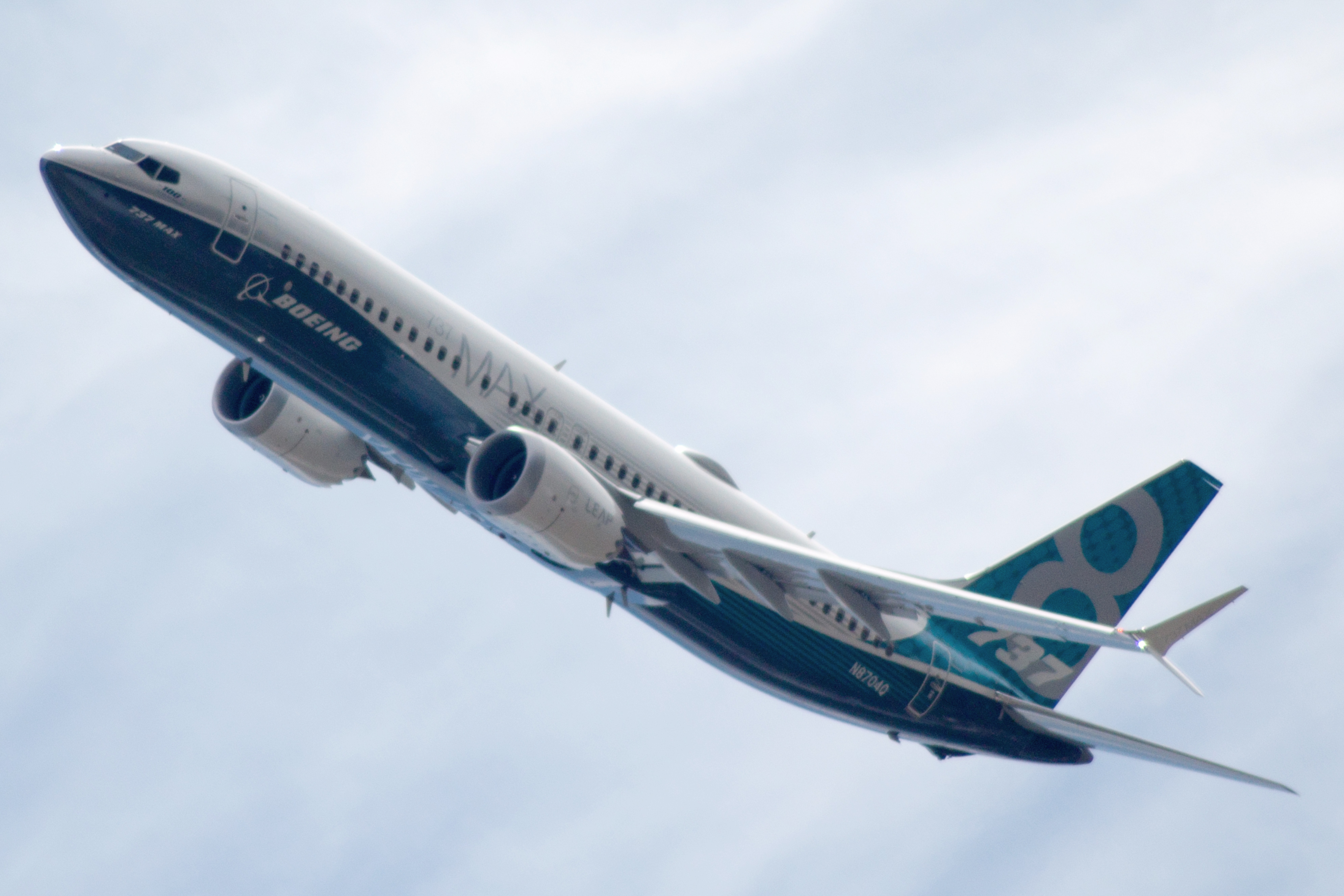
From 2006, Boeing discussed replacing the 737 with a "clean sheet" design (internally named "Boeing Y1") that could follow the Boeing 787 Dreamliner. A decision on this replacement was postponed, and delayed into 2011.
In 2011, Boeing launched the 737 MAX, an updated and re-engined version of the 737NG with more efficient CFM International LEAP-1B engines, and aerodynamic changes with distinctive split-tip winglets. The first 737 MAX performed its first flight in January 2016. The fourth generation 737 MAX supersedes the third generation 737NG.
Split Scimitar winglets became available in 2014 for the 737-800, 737-900ER, BBJ2 and BBJ3, and in 2015 for the 737-700, 737-900 and BBJ1. These resemble the 737 MAX's split winglet, though they are not identical. Split Scimitar winglets were developed by Aviation Partners, the same Seattle-based corporation that developed the blended winglets; the Split Scimitar winglets produce up to a 5.5% fuel savings per aircraft compared to 3.3% savings for the blended winglets. Southwest Airlines flew their first flight of a 737-800 with Split Scimitar winglets on April 14, 2014.
Design

.jpg)
The wing was redesigned with a new thinner airfoil section, and a greater chord and increased wing span (by 16 ft) increased the wing area by 25%, which also increased total fuel capacity by 30%. New quieter and more fuel-efficient CFM56-7B engines are used. Higher MTOWs are offered. The 737NG includes redesigned vertical stabilizers, and winglets are available on most models.
The 737NG encompasses the -600, -700, -800, and -900 with improved performance and commonality retained from previous 737 models. The wing, engine, and fuel capacity improvements combined increase the 737's range by 900 nmi to over 3000 nmi, permitting transcontinental service.
The Speed Trim System, introduced on the 737 Classic, has been updated for the 737NG to include a stall identification function. Originally inhibited in high alpha scenarios, STS operates at any speed on the 737NG. STS is triggered by airspeed sensor and commands Airplane Nose Down as the airplane slows down.
Interior
The flight deck was upgraded with modern avionics, and passenger cabin improvements similar to those on the Boeing 777, including more curved surfaces and larger overhead bins than previous-generation 737s. The Next Generation 737 interior was also adopted on the Boeing 757-300. This improved on the previous interior of the Boeing 757-200 and the Boeing 737 Classic variants, the new interior became optional on the 757-200.
In 2010, new interior options for the 737NG included the 787-style Boeing Sky Interior. Boeing also offered it as a retrofit for older 737NG aircraft.
Variants
737-600
737-600
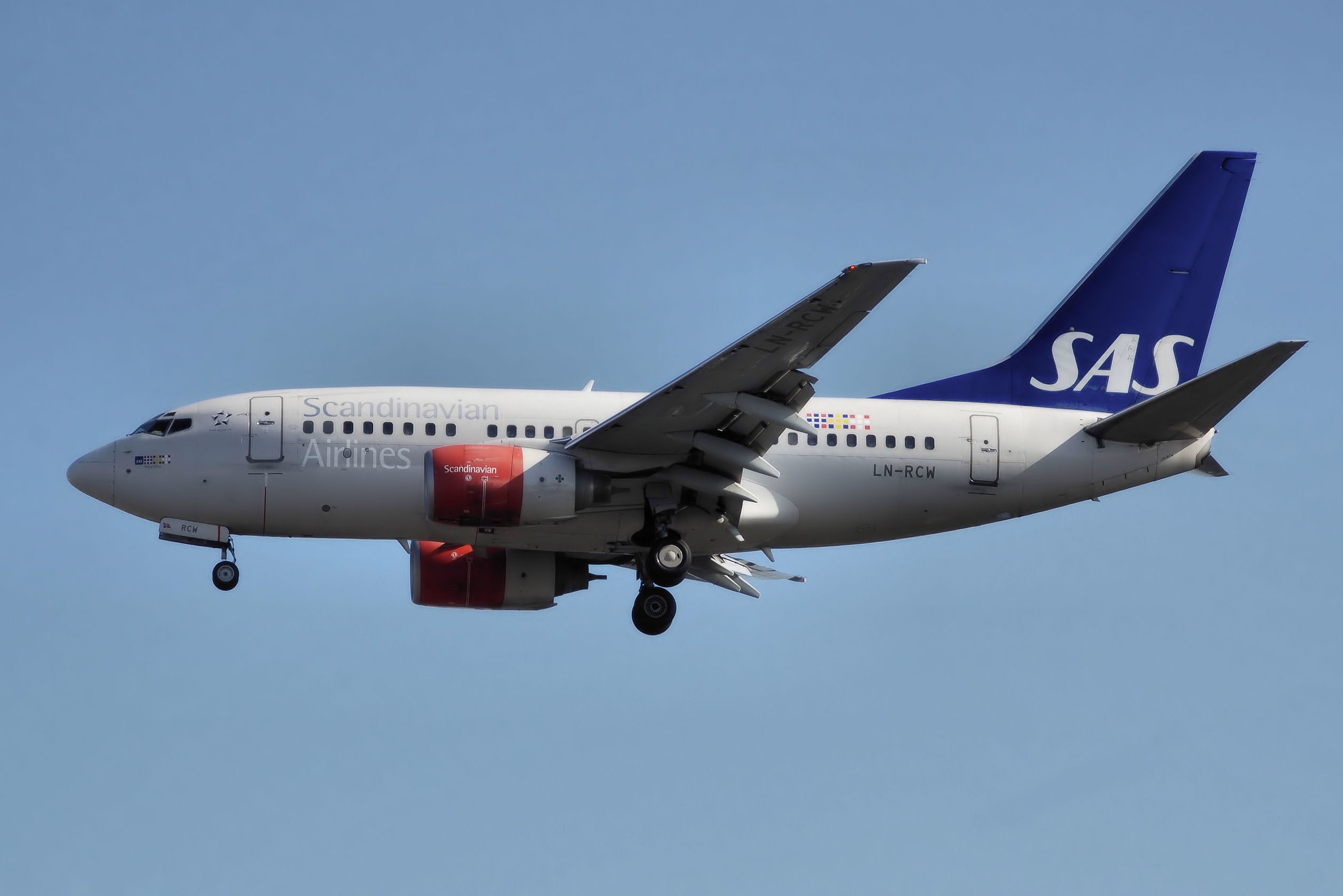
The 737-600 was launched by SAS in March 1995, with the first aircraft delivered in September 1998. A total of 69 have been produced, with the last aircraft delivered to WestJet in 2006. The 737-600 replaces the 737-500 and is similar to the Airbus A318. Winglets were not an option. WestJet was to launch the -600 with winglets, but dropped them in 2006.
737-700

In November 1993, Southwest Airlines launched the Next-Generation program with an order for 63 737-700s and took delivery of the first one in December 1997. It replaced the 737-300, typically seating 126 passengers in two classes to 149 in all-economy configuration, similar to the Airbus A319.
In long-range cruise, it burns 4440 lb per hour at 0.785 Mach and FL410, increasing to 4620-4752 lb at 0.80-0.82 Mach. As of July 2018, all -700 series on order, 1,128 -700, 120 -700 BBJ, 20 -700C, and 14 -700W aircraft, have been delivered.
The 737-700C is a convertible version where the seats can be removed to carry cargo instead. There is a large door on the left side of the aircraft. The United States Navy was the launch customer for the 737-700C under the military designation C-40 Clipper.
737-700ER
.jpg)
Boeing launched the 737-700ER (Extended Range) on January 31, 2006, with All Nippon Airways as the launch customer.
737-800
.jpg)
The Boeing 737-800 is a stretched version of the 737-700. It replaced the 737-400 and competes primarily with the Airbus A320. The 737-800 seats 162 passengers in a two-class layout or 189 passengers in a one-class layout. The 737-800 was launched on September 5, 1994.
Following Boeing's merger with McDonnell Douglas, the 737-800 also filled the gap left by Boeing's decision to discontinue the McDonnell Douglas MD-80 and MD-90 aircraft. For many airlines in the U.S., the 737-800 replaced aging Boeing 727-200 trijets.
The 737-800 burns 850 USgal of jet fuel per hour—about 80 percent of the fuel used by an MD-80 on a comparable flight, while carrying more passengers. The Airline Monitor, an industry publication, quotes a 737-800 fuel burn of 4.88 USgal per seat per hour, compared to 5.13 USgal for the A320. In 2011, United Airlines— flying a Boeing 737-800 from Houston to Chicago—operated the first U.S. commercial flight powered by a blend of algae-derived biofuel and traditional jet fuel to reduce its carbon footprint.
In early 2017, a new 737-800 was valued at $48.3 million, falling to below $47 million by mid-2018. By 2025, a 17-year-old 737-800W will be worth $9.5 million and leased for $140,000 per month.
As of May 2019, Boeing had delivered 4,979 737-800s, 116 737-800As, and 21 737-800 BBJ2s, and has 12 737-800 unfilled orders. Ryanair, an Irish low-cost airline, is among the largest operators of the Boeing 737-800, with a fleet of over 400 of the -800 variant serving routes across Europe, Middle East, and North Africa.
737-800BCF
_at_East_Midlands_Airport.jpg)
In February 2016, Boeing launched a passenger-to-freighter conversion program, with converted aircraft designated as 737-800BCF (for Boeing Converted Freighter). Boeing started the program with orders for 55 conversions, with the first converted aircraft due for late 2017 delivery. The first converted aircraft was delivered to West Atlantic in April 2018.
At the 2018 Farnborough Airshow, GECAS announced an agreement for 20 firm orders and 15 option orders for the 737-800BCF, raising the commitment to 50 aircraft. Total orders and commitments include 80 aircraft to over half a dozen customers. Since early 737NG aircraft become available on the market, they have been actively marketed to be converted to cargo planes via the Boeing Converted Freighter design because the operational economics are attractive due to the low operating costs and availability of certified pilots on a robust airframe.
Modifications to the 737-800 airframe include installing a large cargo door, a cargo handling system, and additional accommodations for non-flying crew or passengers. The aircraft is designed to fly up to 1995 nmi at a MTOW of 174100 lb.
737-800SF
In 2015, Boeing launched the 737-800SF passenger to freighter conversion program with Aeronautical Engineers Inc (AEI). The conversion can be completed by AEI or third parties such as HAECO. GECAS was the initial customer. It has a 52800 lb payload capacity, and a range of 2000 nmi. It received its supplemental type certificate from the FAA in early 2019. In March 2019, the first AEI converted aircraft was delivered to Ethiopian Airlines on lease from GECAS. The Civil Aviation Administration of China cleared it in January 2020. Aircraft lessor Macquarie AirFinance ordered four 737-800SFs in March 2021.
737-900
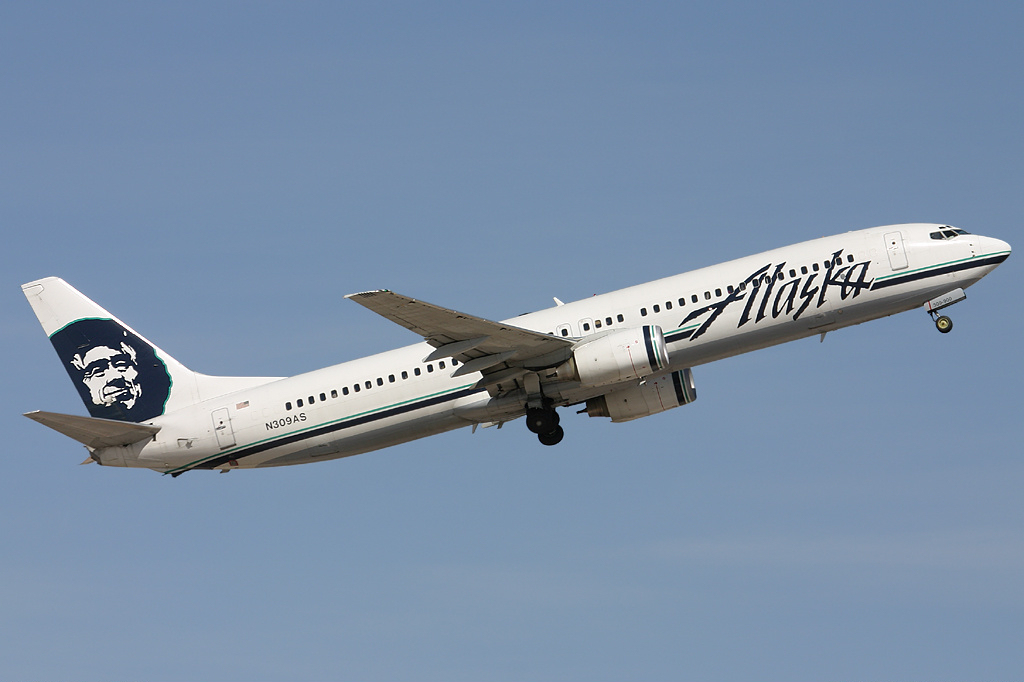
Boeing later introduced the 737-900, an even longer variant stretched to 138 ft. Because the −900 retains the same exit configuration of the -800, seating capacity is limited to 189, although aircraft equipped with a typical 2-class layout will seat approximately 177. The 737-900 also retains the MTOW and fuel capacity of the −800, trading range for payload. Alaska Airlines launched the 737-900 in November 1997, and the model first flew on August 3, 2000. Alaska Airlines accepted the first delivery on May 15, 2001. The type proved unpopular, with only 52 delivered, before being replaced by the improved 737-900ER.
737-900ER

The 737-900ER (Extended Range), which was called the 737-900X before launch, was the final and largest variant of the Boeing 737 NG line. It was introduced to fill the range and passenger capacity gap in Boeing's product offerings after the 757-200 was discontinued, address the shortcomings of the 737-900, and to directly compete with the Airbus A321.
Up to two auxiliary fuel tanks in the cargo hold and standard winglets improved the range of the stretched jet to that of other 737NG variants, while an additional pair of exit doors and a flat rear pressure bulkhead increased maximum seating capacity to 220 passengers. Airlines may deactivate (plug) the additional exit doors if the total configured capacity of the plane is 189 passengers or less.
The 737-900ER was launched in July 2005 and first flew in September 2006. The first plane was delivered to its launch customer, the Indonesian low-cost airline Lion Air, on April 27, 2007, and was painted in a special dual paint scheme combining Lion Air's logo on the vertical stabilizer and Boeing's livery colors on the fuselage. A total of 505 -900ERs were delivered.
Military models
.jpg)
- C-40 Clipper: The C-40A is a 737-700C used by the U.S. Navy as a replacement for the C-9B Skytrain II. The C-40B and C-40C are based on the BBJ (see below) and used by the U.S. Air Force for transport of generals and other senior leaders.
- E-7 Wedgetail: The E-7 is based on the 737-700ER. This is an airborne early warning and control (AEW&C) version of the 737NG. Australia was the first customer (as Project Wedgetail), followed by Turkey, South Korea, the United Kingdom, and the United States. The aircraft is also designated as the 737-700IGW and 737-700W by Boeing.
- P-8 Poseidon: The P-8 is based on the 737-800ER, but with the stronger wings from the -900 and raked wingtips instead of the blended winglets available on civilian 737NG variants. The P-8 is a maritime patrol aircraft. The aircraft was selected by the U.S. Navy on June 14, 2004, to replace the Lockheed P-3 Orion, with additional orders from Australia, Canada, Germany, India, New Zealand, Norway, South Korea, and the United Kingdom. The P-8 is designated as the 737-800ERX and 737-800A by Boeing.
Boeing Business Jet
Main article: Boeing Business Jet

In the late 1980s, Boeing marketed the Boeing 77-33 jet, a business jet version of the 737-300. The name was short-lived. After the introduction of the next generation series, Boeing introduced the Boeing Business Jet (BBJ). The BBJ (retroactively referred to as the BBJ1) was similar in dimensions to the 737-700 but had additional features, including stronger wings and landing gear from the 737-800, and has increased range (through the use of extra fuel tanks) over the other various 737 models. The first BBJ rolled out on August 11, 1998, and flew for the first time on September 4. A total of 113 BBJ1s were delivered to customers.
On October 11, 1999, Boeing launched the BBJ2. Based on the 737-800, it is 5.84 m longer than the BBJ1, with 25% more cabin space and twice the baggage space, but with slightly reduced range. It is also fitted with auxiliary fuel tanks in the cargo hold and winglets. The first BBJ2 was delivered on February 28, 2001. A total of 23 BBJ2s were delivered to customers.
The BBJ3 aircraft is based on the 737-900ER aircraft. The BBJ3 is approximately 16 ft longer than the BBJ2 and has a slightly shorter range. Seven BBJ3s were delivered to customers.
Comparison of variants
Below is a list of major differences between the 737 Next Generation variants.
| Variant | 737-600 | 737-700 | 737-800 | 737-900ER | Passenger capacity | Length | OEW | MTOW | Fuel capacity | Lower deck cargo | Takeoff run | Range | Engines (× 2) | Thrust (× 2) | ICAO Type Designator |
|---|---|---|---|---|---|---|---|---|---|---|---|---|---|---|---|
| 130 | 148 | 184 | 215 | ||||||||||||
| 102 ft 6 in / 31.24 m | 110 ft 4 in / 33.63 m | 129 ft 6 in / 39.47 m | 138 ft 2 in / 42.11 m | ||||||||||||
| 80,200 lb / 36,378 kg | 83,000 lb / 37,648 kg | 91,300 lb / 41,413 kg | 98,495 lb / 44,677 kg | ||||||||||||
| 144,500 lb / 65,544 kg | 154,500 lb / 70,080 kg | 174,200 lb / 79,016 kg | 187,700 lb / 85,139 kg | ||||||||||||
| 6,875 US gal / 26,022 L | 7,837 US gal / 29,666 L | ||||||||||||||
| 720 ft3 / 20.4 m3 | 966 ft3 / 27.4 m3 | 1,555 ft3 / 44.1 m3 | 1,826 ft3 / 51.7 m3 | ||||||||||||
| 1878 m | 2042 m | 2316 m | 3000 m | ||||||||||||
| 3,235 nmi | 3,010 nmi | 2,935 nmi | 2,950 nmi | ||||||||||||
| CFM56-7B18/20/22 | CFM56-7B20/22/24/26/27 | CFM56-7B24/26/27 | |||||||||||||
| 20,000 - | 20,000 - | 24,000 - | |||||||||||||
| B736 | B737 | B738 | B739 |
Operators
Main article: List of Boeing 737 operators
As of July 2018, 6,343 Boeing 737 Next Generation aircraft were in commercial service. This comprised 69 -600s, 1,027 -700s, 4,764 -800s and 513 -900s.
Orders and deliveries
| Aircraft | Orders | Deliveries | Model series | Total | Unfilled | Total | 2025 | 2024 | 2023 | 2022 | 2021 | 2020 | 2019 | 2018 | 2017 | 2016 | 737-600 | 737-700 | 737-700C | 737-800 | 737-900 | 737-900ER | (Commercial Jets) | 737-700W | 737-800A | C-40A | C-40B/C | (Military jets) | BBJ | BBJ2 | BBJ3 | (Business jets) | (737 NextGen) |
|---|---|---|---|---|---|---|---|---|---|---|---|---|---|---|---|---|---|---|---|---|---|---|---|---|---|---|---|---|---|---|---|---|---|
| 69 | — | 69 | — | — | — | — | — | — | — | — | — | — | |||||||||||||||||||||
| 1,130 | — | 1,130 | 2 | — | — | — | — | — | — | 2 | 4 | 6 | |||||||||||||||||||||
| 5 | — | 5 | — | — | — | — | — | — | — | — | — | 2 | |||||||||||||||||||||
| 4,991 | 2 | 4,989 | — | — | — | — | — | — | 28 | 269 | 397 | 411 | |||||||||||||||||||||
| 52 | — | 52 | — | — | — | — | — | — | — | — | — | — | |||||||||||||||||||||
| 505 | — | 505 | — | — | — | — | — | — | 22 | 34 | 37 | 52 | |||||||||||||||||||||
| 6,752 | 2 | 6,750 | 2 | — | — | — | — | — | 50 | 305 | 438 | 471 | |||||||||||||||||||||
| 14 | — | 14 | — | — | — | — | — | — | — | — | — | — | |||||||||||||||||||||
| 201 | 14 | 187 | 5 | 5 | 9 | 12 | 16 | 14 | 17 | 18 | 17 | 18 | |||||||||||||||||||||
| 17 | — | 17 | — | — | — | — | — | — | 2 | — | 1 | — | |||||||||||||||||||||
| 9 | — | 9 | — | — | — | — | — | — | — | — | — | — | |||||||||||||||||||||
| 241 | 14 | 227 | 5 | 5 | 9 | 12 | 16 | 14 | 19 | 18 | 17 | 19 | |||||||||||||||||||||
| 113 | — | 113 | — | — | — | 1 | — | — | 1 | 1 | — | — | |||||||||||||||||||||
| 23 | — | 23 | — | — | — | — | 2 | — | — | — | — | — | |||||||||||||||||||||
| 7 | — | 7 | — | — | — | — | — | — | — | — | — | — | |||||||||||||||||||||
| 143 | — | 143 | — | — | — | 1 | 2 | — | 1 | 1 | — | — | |||||||||||||||||||||
| 7,136 | 16 | 7,120 | 7 | 5 | 9 | 13 | 18 | 14 | 70 | 324 | 455 | 490 |
| Aircraft | Deliveries | Model series | 2015 | 2014 | 2013 | 2012 | 2011 | 2010 | 2009 | 2008 | 2007 | 2006 | 2005 | 2004 | 2003 | 2002 | 2001 | 2000 | 1999 | 1998 | 1997 | 737-600 | 737-700 | 737-700C | 737-800 | 737-900 | 737-900ER | (Commercial Jets) | 737-700W | 737-800A | C-40A | C-40B/C | (Military jets) | BBJ | BBJ2 | BBJ3 | (Business jets) | (737 NextGen) | ||
|---|---|---|---|---|---|---|---|---|---|---|---|---|---|---|---|---|---|---|---|---|---|---|---|---|---|---|---|---|---|---|---|---|---|---|---|---|---|---|---|---|
| — | — | — | — | — | — | — | — | 10 | 3 | 3 | 6 | 5 | 4 | 6 | 24 | 8 | — | — | ||||||||||||||||||||||
| 7 | 11 | 12 | 7 | 43 | 23 | 51 | 61 | 101 | 103 | 93 | 109 | 80 | 71 | 85 | 75 | 96 | 85 | 3 | ||||||||||||||||||||||
| — | — | — | — | — | — | — | 1 | — | — | — | — | — | — | 2 | — | — | — | — | ||||||||||||||||||||||
| 396 | 386 | 347 | 351 | 292 | 323 | 283 | 190 | 214 | 172 | 104 | 78 | 69 | 126 | 168 | 185 | 133 | 65 | — | ||||||||||||||||||||||
| — | — | — | — | — | — | — | — | — | — | 6 | 6 | 11 | 8 | 21 | — | — | — | — | ||||||||||||||||||||||
| 73 | 70 | 67 | 44 | 24 | 15 | 28 | 30 | 9 | — | — | — | — | — | — | — | — | — | — | ||||||||||||||||||||||
| 476 | 467 | 426 | 402 | 359 | 361 | 362 | 282 | 334 | 278 | 206 | 199 | 165 | 209 | 282 | 284 | 237 | 150 | 3 | ||||||||||||||||||||||
| — | — | — | — | — | 2 | 2 | — | — | 5 | 2 | 1 | 1 | 1 | — | — | — | — | — | ||||||||||||||||||||||
| 15 | 13 | 8 | 9 | 5 | 1 | 3 | 2 | — | — | — | — | — | — | — | — | — | — | — | ||||||||||||||||||||||
| — | 2 | — | — | 1 | 2 | — | — | — | 1 | — | 2 | — | 2 | 1 | 3 | — | — | — | ||||||||||||||||||||||
| — | — | — | — | 1 | — | — | — | 1 | 2 | — | — | 2 | 1 | 1 | 1 | — | — | — | ||||||||||||||||||||||
| 15 | 15 | 8 | 9 | 7 | 5 | 5 | 2 | 1 | 8 | 2 | 3 | 3 | 4 | 2 | 4 | — | — | — | ||||||||||||||||||||||
| 3 | 1 | 5 | 2 | 6 | 4 | 4 | 4 | 5 | 7 | 3 | 3 | 1 | 7 | 12 | 10 | 25 | 8 | — | ||||||||||||||||||||||
| — | 2 | 1 | 2 | — | 2 | — | 1 | — | 2 | 1 | — | 3 | 2 | 5 | — | — | — | — | ||||||||||||||||||||||
| 1 | — | — | — | — | 4 | 1 | 1 | — | — | — | — | — | — | — | — | — | — | — | ||||||||||||||||||||||
| 4 | 3 | 6 | 4 | 6 | 10 | 5 | 6 | 5 | 9 | 4 | 3 | 4 | 9 | 17 | 10 | 25 | 8 | — | ||||||||||||||||||||||
| 495 | 485 | 440 | 415 | 372 | 376 | 372 | 290 | 330 | 302 | 212 | 202 | 173 | 223 | 299 | 280 | 278 | 166 | 3 |
*Data *
Accidents and incidents
Main article: List of accidents and incidents involving the Boeing 737#737ng
The Boeing 737 Next Generation series has been involved in 22 hull-loss accidents and hijackings, for a total of fatalities, according to the Aviation Safety Network, . An analysis by Boeing of commercial airplane accidents in the period 1959–2017 showed that the Next Generation series had a hull loss rate of 0.17 per million departures compared to 0.71 for the classic series and 1.75 for the original series. The deadliest occurrence for a 737NG is Jeju Air Flight 2216, a 737-800, which overshot the runway while performing a belly landing at Muan International Airport in South Korea and crashed into an embankment on December 29, 2024, killing 179 of the 181 on board.
Specifications (Boeing 737-800 with CFM56-7B26)
|prime units?=imp General characteristics
|max takeoff weight kg=79016 |max takeoff weight lb=174200 |max takeoff weight note= Powerplant
Performance
|never exceed speed kmh= |never exceed speed mph= |never exceed speed kts=340 |never exceed speed note= |minimum control speed kmh= |minimum control speed mph= |minimum control speed kts= |minimum control speed note= |wing loading kg/m2= |wing loading lb/sqft= |fuel consumption kg/km= |fuel consumption lb/mi= |thrust/weight=
- Landing distance: 1600 m
References
Notes
Citations
Bibliography
References
- (December 31, 2025). "Boeing: Orders and Deliveries (updated monthly)". boeing.com.
- "Boeing: Historical Snapshot: 737". Boeing.
- (November 28, 2017). "Leahy reflects on 33 years at Airbus". Leeham.
- {{harvnb. Shaw. 1999
- Wilhelm, Steve. [http://www.bizjournals.com/seattle/stories/2008/08/11/story13.html "Mindful of rivals, Boeing keeps tinkering with its 737"] {{Webarchive. link. (October 26, 2012. ''Puget Sound Business Journal'', August 11, 2008. Retrieved September 11, 2013.)
- [http://boeing.mediaroom.com/2008-08-04-Boeing-Next-Generation-737-Carbon-Brakes-Earn-FAA-Certification "Boeing Next-Generation 737 Carbon Brakes Earn FAA Certification"] {{Webarchive. link. (January 24, 2016. ''Boeing Press Release'', August 4, 2008. Retrieved August 30, 2009.)
- Kingsley-Jones, Max. (October 27, 2009). "Narrow margins: Airbus and Boeing face pressure with the A-320 and 737". Flightglobal.
- Swatton, P. J.. (2000). "Aircraft Performance Theory for Pilots". Blackwell Science.
- (July 31, 2006). "Boeing Delivers First 737 with Enhanced Short Runway Package to GOL". Boeing.
- "CFM Launches CFM56-7BE Engine Program to Power Enhanced Boeing Next-Generation 737".
- Brady, Chris. "Aircraft General".
- (May 28, 2005). "Boeing lawsuit alleges "bogus" parts". [[The Seattle Times]].
- (August 21, 2006). "Report alleges faulty parts in jets". [[United Press International]].
- (June 13, 2016). "Appeals court sides with Boeing in whistleblower lawsuit". [[The Washington Times]].
- (December 15, 2010). "On a wing and a prayer". [[Al Jazeera English.
- Harger, Charlie. (September 28, 2019). "Unexpected cracking found on critical Boeing 737 Next Generation part". [[KNWN (AM).
- Fehrm, Bjorn. (October 1, 2019). "Boeing's 737 in another pickle". Leeham News.
- (October 3, 2019). "Airworthiness Directive No. 2019-20-02". FAA.
- Fehrm, Bjorn. (October 8, 2019). "Boeing's 737 in another pickle, Part 2". Leeham News.
- Risen, Tom. (October 10, 2019). "Boeing reports 38 cracks on global 737NG fleet". Flightglobal.
- Broderick, Sean. (November 12, 2019). "New Issue Prompts Expansion Of 737 Pickle Fork Checks". Aviation Week Network.
- Gates, Dominic. (November 19, 2019). "NTSB recommends Boeing redesign and retrofit engine casing on thousands of 737s". The Seattle Times.
- (September 17, 2010). "Boeing ups 737 production rate". Flightglobal.
- (October 2, 2014). "Boeing to Increase 737 Production Rate to 52 per Month in 2018". Boeing.
- (November 5, 2014). "737 derailment probe 'suggests' track alignment issue". Flightglobal.
- Anselmo, Joe. (March 2, 2015). "Analysts Flag Potential Airliner Glut". [[Aviation Week & Space Technology]].
- (October 11, 2016). "11th 737 MAX on the assembly line as Boeing gears up for delivery next year". Leeham News.
- (April 14, 2020). "Boeing delivered final commercial 737NG in January, ending 23 years of production". Flight Global.
- (January 11, 2020). "U.S. regulator seeks to fine Boeing $5.4 million for defective parts on 737 MAX planes". Reuters.
- [http://www.flightglobal.com/articles/2006/03/03/205223/boeing-firms-up-737-replacement-studies-by-appointing.html "Boeing firms up 737 replacement studies by appointing team"] {{webarchive. link. (October 22, 2007. ''[[Flight International]]'', March 3, 2006. Retrieved April 13, 2008.)
- Hamilton, Scott. [http://www.flightglobal.com/articles/2010/06/24/343568/737-decision-may-slip-to-2011-credit-suisse.html "737 decision may slip to 2011: Credit Suisse"] {{webarchive. link. (June 27, 2010. ''flightglobal'', 2010. Retrieved June 26, 2010.)
- (August 30, 2011). "Boeing Launches 737 New Engine Family with Commitments for 496 Airplanes from Five Airlines". Boeing.
- (January 29, 2016). "Boeing's 737 MAX takes wing with new engines, high hopes". [[The Seattle Times]].
- "Split Scimitar Schedules".
- "Southwest flies first 737 with new 'split scimitar' winglets".
- (2009). "Aero 17 - Blended Winglets". Boeing.
- "About the 737 Family". Boeing.
- Lemme, Peter. (October 28, 2019). "Flawed Assumptions Pave a Path to Disaster".
- {{harvnb. Norris. Wagner. 1999
- Perry, Dominic. (April 7, 2015). "Boeing thinks smarter to boost 777, 737 appeal". Reed Business Information.
- (December 30, 2013). "Boeing Sky Interior offered for 737NG retrofits - Runway Girl".
- (May 12, 1999). "Putting the family to work".
- "Jet Prices". Boeing.
- "Next-Generation 737 Production Winglets". Boeing.
- (December 17, 1997). "First Boeing 737-700 Goes to Southwest Airlines". Boeing.
- North, David M.. (August 25, 1997). "Boeing 737-700 pilot report".
- link. (May 27, 2008. ''DefenseLink (U.S. Department of Defense)''. Retrieved January 21, 2008.)
- "737-700ER Technical Characteristics". Boeing.
- (February 16, 2007). "Boeing Delivers First 737-700ER to Launch Customer ANA". Boeing.
- (April 23, 1998). "First Boeing Next-Generation 737-800 Goes To Hapag-Lloyd". Boeing.
- James. [http://www.seattlepi.com/business/368286_air25.html "Aerospace Notebook: MD-80 era winding down as fuel costs rise"]. ''[[Seattle Post-Intelligencer]]'', June 24, 2008. Retrieved August 30, 2009.
- link. (November 11, 2013. ''Orlando Business Journal'', August 11, 2008, Retrieved August 30, 2009.)
- [http://www.cnn.com/2015/06/04/politics/airline-carbon-emission-regulations-obama/ "Commercial airlines industry mixed on imminent emission regulations"] {{Webarchive. link. (June 5, 2015. [[CNN]], June 4, 2015.)
- (September 17, 2018). "End of Line B737-800 Values Show Fatigue". Aircraft Value News.
- (October 29, 2018). "Two Early Build B737-900ERs Sold Between Lessors". Aircraft Value News.
- (January 2, 2018). "Latest Register and Monthly Changes". Irish Aviation Authority.
- (February 24, 2016). "Boeing launches 737-800BCF programme". Flightglobal.
- (April 20, 2018). "Boeing delivers first 737-800BCF to West Atlantic". Flightglobal.
- (July 17, 2018). "GECAS, Boeing Announce Agreement for 35x 737-800 Boeing Converted Freighters". GE.
- (2016). "737-800BCF Boeing Converted Freighter". Boeing.
- "AEI's 12 pallet 737-800 Freighter Conversion". Aeronautical Engineers, Inc..
- (February 2019). "AEI receives FAA certification for B737-800SF". Airline Economics.
- (March 4, 2019). "GECAS Delivers AEI's First-Ever 737-800 Converted Freighter to Ethiopian". GE.
- (January 13, 2020). "AEI Receives CAAC B737-800SF Certification". Aeronautical Engineers, Inc..
- Hemmerdinger, Jon. (March 2, 2021). "Macquarie AirFinance orders four AEI 737-800 converted freighters".
- (November 10, 1997). "Alaska Airlines Order Launches Boeing 737-900 Program". Boeing.
- (August 3, 2000). "Boeing Next-Generation 737-900 Takes First Flight". Boeing.
- (May 16, 2001). "Alaska Airlines Receives First Boeing 737-90". Boeing.
- (July 18, 2005). "Boeing Launches New Higher Capacity, Longer Range 737". Boeing.
- "FAA Type Certificate Data Sheet".
- Norris, Guy. (February 6, 2006). "THE 737 STORY: The Long Stretch".
- Reals, Kerry. (September 5, 2006). "Boeing performs first flight of 737-900ER, extended range 737". FlightGlobal.
- (April 27, 2007). "Boeing Delivers First 737-900ER to Launch Customer Lion Air". Boeing.
- (April 26, 2022). "Air Force identifies Boeing E-7 as solution to replace the E-3 capability".
- link. (July 11, 2007. ''US Navy'', February 17, 2009.)
- [http://www.flightglobal.com/news/articles/farnborough-2008-boeing-737-embarks-on-its-poseidon-adventure-225584/ "FARNBOROUGH 2008: Boeing 737 embarks on its Poseidon adventure"] {{Webarchive. link. (January 24, 2016. Flight International, July 15, 2008.)
- link. (March 15, 2008. ''airliners.net'', February 3, 2008. Retrieved August 30, 2009.)
- "Boeing: Boeing Business Jets".
- (November 7, 2016). "Boeing BBJ 3".
- (2001). "Civil jet aircraft design". Elsevier.
- (August 3, 2015). "Boeing revises "obsolete" performance assumptions". Flight Global.
- (February 2015). "Next-Generation 737 Family Backgrounder". Boeing.
- "DOC 8643 – Aircraft Type Designators". ICAO.
- "World Airline Census 2018".
- (January 17, 2020). "Boeing 737-600". [[Aviation Safety Network]].
- (October 2018). "Statistical Summary of Commercial Jet Airplane Accidents – Accident Rates by Airplane Type". Boeing.
- (December 29, 2024). "Jeju Air crash: almost all presumed dead after South Korean aircraft veers off runway and hits wall". The Guardian.
- (September 2013). "Boeing 737 Airplane Characteristics for Airport Planning". Boeing Commercial Airplanes.
- (June 3, 2016). "Type Certificate Data Sheet". FAA.
- Butterworth-Heinemann. (2001). "Civil jet aircraft design". Elsevier.
This article was imported from Wikipedia and is available under the Creative Commons Attribution-ShareAlike 4.0 License. Content has been adapted to SurfDoc format. Original contributors can be found on the article history page.
Ask Mako anything about Boeing 737 Next Generation — get instant answers, deeper analysis, and related topics.
Research with MakoFree with your Surf account
Create a free account to save articles, ask Mako questions, and organize your research.
Sign up freeThis content may have been generated or modified by AI. CloudSurf Software LLC is not responsible for the accuracy, completeness, or reliability of AI-generated content. Always verify important information from primary sources.
Report