From Surf Wiki (app.surf) — the open knowledge base
Bobby Jones (golfer)
American amateur golfer (1902–1971)
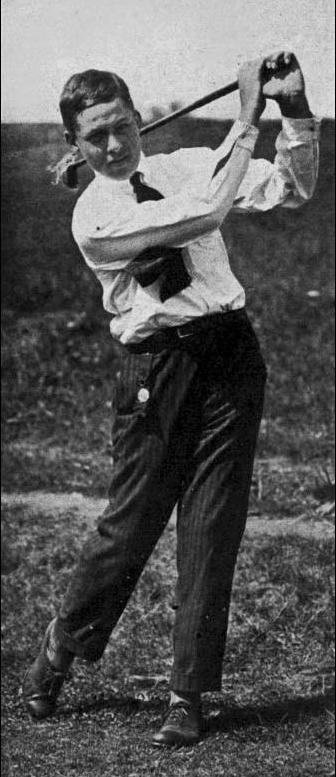
American amateur golfer (1902–1971)
| Field | Value |
|---|---|
| name | Bobby Jones |
| image | Bobby Jones c1921.jpg |
| caption | Jones, |
| fullname | Robert Tyre Jones Jr. |
| birth_date | |
| birth_place | Atlanta, Georgia, U.S. |
| death_date | |
| death_place | Atlanta, Georgia, U.S. |
| height | 5 ft 8 in |
| weight | 165 lb |
| nationality | |
| spouse | |
| children | 3 |
| college | Georgia Tech |
| Harvard University | |
| Emory University | |
| status | Amateur before 1930; turned pro in 1930 |
| extour | |
| prowins | 9 |
| pgawins | 9 |
| majorwins | 13 |
| masters | T13: 1934 |
| usopen | Won: 1923, 1926, 1929, 1930 |
| open | Won: 1926, 1927, 1930 |
| pga | DNP |
| usamateur | Won: 1924, 1925, 1927, 1928, 1930 |
| britamateur | Won: 1930 |
| wghofid | bobby-jones |
| wghofyear | 1974 |
| award1 | James E. Sullivan Award |
| year1 | 1930 |
| award2 | Georgia Tech Athletic |
| Hall of Fame | |
| year2 | 1958 |
| award3 | Georgia Tech Engineering |
| Hall of Fame | |
| year3 | 1997 |
| awardssection | |
| yearpro | 1930 |
Harvard University Emory University Hall of Fame](georgia-tech-hall-of-fame-golf) Hall of Fame
Robert Tyre Jones Jr. (March 17, 1902 – December 18, 1971) was an American amateur golfer who was one of the most influential figures in the history of the sport; he was also a lawyer by profession. Jones founded and helped design the Augusta National Golf Club, and co-founded the Masters Tournament. The innovations that he introduced at the Masters have been copied by virtually every professional golf tournament in the world.
Jones was the most successful amateur golfer ever to compete at a national and international level. During his peak from 1923 to 1930, he dominated top-level amateur competition, and competed very successfully against the world's best professional golfers. Jones often beat stars such as Walter Hagen and Gene Sarazen, the era's top pros. Jones earned his living mainly as a lawyer, and competed in golf only as an amateur, primarily on a part-time basis, and chose to retire from competition at age 28, though he earned significant money from golf after that, as an instructor and equipment designer.
Explaining his decision to retire, Jones said, "It [championship golf] is something like a cage. First you are expected to get into it and then you are expected to stay there. But of course, nobody can stay there." Jones is most famous for his unique "Grand Slam," consisting of his victory in all four major golf tournaments of his era (the open and amateur championships in both the U.S. and the U.K.) in a single calendar year (1930). In all Jones played in 31 majors, winning 13 and placing among the top ten finishers 27 times.
After retiring from competitive golf in 1930, Jones founded and helped design the Augusta National Golf Club soon afterwards in 1933. He also co-founded the Masters Tournament, which has been annually staged by the club since 1934 (except for 1943–45, when it was canceled due to World War II). The Masters evolved into one of golf's four major championships. Jones came out of retirement in 1934 to play in the Masters on an exhibition basis through 1948. Jones played his last round of golf at East Lake Golf Club, his home course in Atlanta, on August 18, 1948. A picture commemorating the event now sits in the clubhouse at East Lake. Citing health reasons, he quit golf permanently thereafter. Jones suffered from a rare neurological condition called syringomyelia, which eventually robbed him of the ability to walk. He died of cardiovascular disease in 1971.
Bobby Jones was often confused with the prolific golf course designer Robert Trent Jones, with whom he worked from time to time. "People always used to get them confused, so when they met, they decided each be called something different," Robert Trent Jones Jr. said. To help avoid confusion, the golfer was called "Bobby," and the golf course designer was called "Trent."
Early life

Jones was born on March 17, 1902, in Atlanta, Georgia. He battled health issues as a young boy, and golf was prescribed to strengthen him. Encouraged by his father, "Colonel" Robert Purmedus Jones, an Atlanta lawyer, Jones loved golf from the start. He developed quickly into a child prodigy who won his first children's tournament at the age of six at his home course at East Lake Golf Club. In 1916, Jones won his first major golf event when he claimed the inaugural Georgia Amateur Championship conducted by the Georgia State Golf Association at the Capital City Club, in Brookhaven, at age 14. His victory at this event put him in the national spotlight for the first time. The Georgia Amateur win caught the eye of the United States Golf Association which awarded Jones his first invitation to the U.S. Amateur at Merion near Philadelphia. Jones advanced to the quarterfinals in his first playing in the event.
He was influenced by club professional Stewart Maiden, a native of Carnoustie, Scotland. Maiden was the professional at the Atlanta Athletic Club's East Lake Golf Club, who also trained Alexa Stirling, the three-time winner of the U.S. Women's Amateur, who was five years older than Jones but also a prodigy at East Lake. Jones also received golf lessons from Willie Ogg when he was in his teenage years. Jones played frequently with his father, a skilled golfer himself. The younger Jones sometimes battled his own temper on the course, but later controlled his emotions as he became more experienced. Jones toured the U.S. during World War I from 1917 to 1918, playing exhibition matches before large crowds, often with Alexa Stirling and Perry Adair, to generate income for war relief. Playing in front of such crowds in these matches helped him, as he moved into national competition a bit later on.
Jones successfully represented the United States for the first time, in two winning international amateur team matches against Canada, in 1919 and 1920, earning three of a possible four points in foursomes and singles play. In 1919 he traveled to Hamilton Golf and Country Club, for his first serious competitive action outside the U.S., while in 1920, Engineers Country Club, in Roslyn, Long Island, hosted the matches. Still a teenager, he was by far the youngest player in the series. Jones also played in the 1919 Canadian Open while in Hamilton, Ontario, performing very well to place tied for second, but 16 shots behind winner J. Douglas Edgar. Edgar had immigrated from England in 1919 to take a club professional's job in Atlanta at Druid Hills Golf Club; Edgar mentored and played frequently with Jones from 1919 to 1921. Edgar was credited by Jones with helping develop his game significantly.
Jones qualified for his first U.S. Open at age 18 in 1920, and was paired with the legendary Harry Vardon for the first two rounds. He won the Southern Amateur three times: 1917, 1920, and 1922. Jones earned his B.S. in Mechanical Engineering from Georgia Tech in 1922 and played for the varsity golf team, lettering all four years. Jones was a member of the Sigma Alpha Epsilon fraternity, and the Georgia Phi chapter house at Georgia Tech is named in his honor. He then earned an A.B. in English Literature from Harvard College in 1924, where he was a member of the Owl Club. In 1926 he entered Emory University School of Law and became a member of Phi Delta Phi. After only three semesters he passed the Georgia bar exam and subsequently joined his father's law firm, Jones, Evins, Moore and Howell, (predecessor to Alston & Bird), in Atlanta, Georgia.
Golf
First majors


As an adult, he hit his stride and won his first U.S. Open in 1923. From that win at New York's Inwood Country Club, through his 1930 victory in the U.S. Amateur, he won 13 major championships (as they were counted at the time) in 21 attempts. Jones was the first player to win "The Double", both the Open Championship and the U.S. Open Championships in the same year (1926). He was the second (and last) to win the U.S. Open and U.S. Amateur in the same year (1930), first accomplished in 1916 by Chick Evans. Jones also won both the British Amateur and the Open Championships in 1930, and is the second golfer in history after John Ball to win those two tournaments in the same year.
1930: Grand Slam
Jones is the only player ever to have won the (pre-Masters) Grand Slam, or all four major championships, in the same calendar year (1930). Jones's path to the 1930 Grand Slam title was:
- The Amateur Championship, Old Course at St Andrews, Scotland (May 31, 1930)
- The Open Championship, Royal Liverpool Golf Club, Hoylake, England (June 20, 1930)
- U.S. Open, Interlachen Country Club, Minnesota (July 12, 1930)
- U.S. Amateur, Merion Golf Club, Pennsylvania (September 27, 1930)
Jones made a bet on himself achieving this feat with British bookmakers early in 1930, before the first tournament of the Slam, at odds of 50–1, and collected over $60,000 when he did it.
Walker Cup
Jones represented the United States in the Walker Cup five times, winning nine of his 10 matches, and the U.S. won the trophy all five times. He served as playing captain of the U.S. team in 1928 and 1930. He also won two other tournaments against professionals: the 1927 Southern Open and the 1930 Southeastern Open. Jones was a lifelong member of the Atlanta Athletic Club (at the club's original site, now the East Lake Golf Club), and the Capital City Club in Atlanta.
Sportsmanship
In the first round of the 1925 U.S. Open at the Worcester Country Club near Boston, his approach shot to the 11th hole's elevated green fell short into the deep rough of the embankment. As he took his stance to pitch onto the green, the head of his club brushed the grass and caused a slight movement of the ball. He took the shot, then informed his playing partner Walter Hagen and the USGA official covering their match that he was calling a penalty on himself. Hagen was unable to talk him out of it, and they continued play. After the round and before he signed his scorecard, officials argued with Jones but he insisted that he had violated Rule 18, moving a ball at rest after address, and took a 77 instead of the 76 he otherwise would have carded. Jones's self-imposed one-stroke penalty eventually cost him the win by a stroke in regulation, necessitating a playoff, which he then lost. Although praised by many sports writers for his gesture, Jones was reported to have said, "You might as well praise me for not robbing banks."
A similar event occurred in the next U.S. Open, played at the Scioto Country Club in Columbus, Ohio. In the second round, after his opening round put him in second place, Jones was putting on the 15th green in the face of a strong wind. After grounding his putter during address to square up the club face, the ball rolled a half turn in the wind when Jones lifted the club head to place it behind the ball. Although no one else observed this movement of the ball either, again Jones called a penalty on himself, but this time Jones went on to win the tournament, the second of his four U.S. Open victories.
St Andrews, Scotland
Jones had a unique relationship with the town of St Andrews. On his first appearance on the Old Course in The Open Championship of 1921, he withdrew after 11 holes in the third round, when he failed to complete the hole (in effect disqualifying himself), and tore up his scorecard, although he finished the round and indeed played the fourth round as well. He firmly stated his dislike for The Old Course and the town reciprocated, saying in the press, "Master Bobby is just a boy, and an ordinary boy at that." Later, he came to love the Old Course and the town like few others. When he won the Open at the Old Course in 1927, he wowed the crowd by asking that the trophy remain with his friends at the Royal and Ancient Golf Club rather than return with him to Atlanta. He won the British Amateur over The Old Course in 1930, and scored a double eagle 2 on the fourth hole (then a par-5, now a par-4), by holing a very long shot from a fairway bunker. Today, a scholarship exchange bearing the Jones name exists between the University of St Andrews and Emory University, Queen's University, The University of Western Ontario and the Georgia Institute of Technology in Atlanta. At Emory, four students are sent to St Andrews for an all-expenses-paid year of study and travel. In return, Emory accepts four students from St Andrews each year. The program, the Robert T. Jones Scholarship, is among the most unusual scholarships offered by any university.
Turned professional
In September 1930, a month and a half after his final U.S. Amateur victory, Jones turned professional. Though he did not intend to earn money from playing golf in pro tournaments, Jones intended to make money from instructional films and books. According to USGA rules, only professionals were allowed to make money from golf in any form. In addition, Jones worked with J Victor East, an Australian of A.G. Spalding & Co., to develop the first set of matched steel-shafted clubs; the clubs sold very well and into the 1970s were still considered among the best-designed sets ever made.
Masters Tournament
Jones played in the first dozen Masters, through 1948, but only in the first as a contender. By then, his health at age 46 had declined to the stage where this was no longer possible. With his health difficulties, being past his prime, and not competing elsewhere to stay in tournament form, he never truly contended at the Masters, although his scores were usually respectable. These were almost all ceremonial performances, since his main duty was as host of the event. His extraordinary popularity, efforts with the course design, and tournament organization boosted the profile of the Masters significantly. The tournament, jointly run by Jones and Clifford Roberts, made many important innovations that became the norm elsewhere, such as gallery ropes to control the flow of the large crowds, many scoreboards around the course, the use of red / green numbers on those scoreboards to denote under / over par scores, an international field of top players, high-caliber television coverage, and week-long admission passes for patrons, which became extremely hard to obtain. The tournament also sought and welcomed feedback from players, fans, and writers, leading to continual improvement over the years. The Masters gradually evolved to being one of the most respected tournaments in the world, one of the four major championships.
Augusta National Golf Club
Following his retirement from competitive golf in 1930, and even in the years leading up to that, Jones had become one of the most famous sports figures in the world and was recognized virtually everywhere he went. While certainly appreciative of the enormous adulation and media coverage, this massive attention caused Jones to lose his privacy in golf circles, and he wished to create a private golf club where he and his friends could play golf in peace and quiet. For several years, he searched for a property near Atlanta where he could develop his own golf club. His friend Clifford Roberts, a New York City investment dealer, knowing of Jones's desire, became aware of a promising property for sale in Augusta, Georgia, where Jones's mother-in-law had grown up, and informed Jones about it. Jones first visited Fruitlands, an Augusta arboretum and indigo plantation since the Civil War era, in the spring of 1930, and he purchased it for $70,000 in 1931, with the plan to design a golf course on the site.
Alister MacKenzie followed Jones at the 1927 Open Championship and presented him with an inscribed copy of his book Golf Architecture after his victory at the Old Course in St. Andrews. Two years later, Jones was in California for the 1929 U.S. Amateur at Pebble Beach, which provided an opportunity to experience two courses designed by MacKenzie. Jones played in an exhibition at Pasatiempo and practice round at Cypress Point Club. It is said that Jones was so impressed by Cypress Point that he asked MacKenzie about his interest in the Augusta project, which was originally envisioned as a "golfing hotel resort" before he won the Grand Slam. Jones co-designed the Augusta National course with MacKenzie. The new club opened in early 1933 with the purpose of hosting golf tournaments. Jones had hoped the U.S. Open could be played at Augusta, but the course conditions were not suitable in the summer when the Open was played. Grantland Rice, editor of American Golfer, made the suggestion to hold a tournament for sports writers who were returning home after attending spring training in Florida. The tournament was held in March 1934. The new tournament, originally known as the Augusta National Invitational, was an immediate success and attracted most of the world's top players right from its start. Jones came out of retirement to play, essentially on an exhibition basis, and his presence guaranteed enormous media attention, boosting the new tournament's fame. In 1939, the tournament was renamed The Masters. The Masters, one of the best-known golf tournaments, is part of the modern Grand Slam.
Later, in 1947, he founded Peachtree Golf Club in Atlanta and co-designed the course with Robert Trent Jones.
Amateur wins
- 1915 Invitation Tournament at Roebuck Springs
- 1916 Georgia Amateur, Birmingham Country Club Invitation, Cherokee Club Invitation, East Lake Invitational
- 1917 Southern Amateur
- 1919 Yates-Gode Tournament
- 1920 Southern Amateur, Morris County Invitational, Birmingham Country Club Invitation
- 1922 Southern Amateur
- 1924 U.S. Amateur
- 1925 U.S. Amateur
- 1927 U.S. Amateur
- 1928 Warren K. Wood Memorial, U.S. Amateur
- 1930 Golf Illustrated Gold Vase, The Amateur Championship, U.S. Amateur
Amateur majors shown in bold.
Source:
Professional wins (9)
PGA Tour wins (9)
- 1923 U.S. Open
- 1926 The Open Championship, U.S. Open
- 1927 Southern Open, The Open Championship
- 1929 U.S. Open
- 1930 Southeastern Open, The Open Championship, U.S. Open Professional majors shown in bold.
Note: all as an amateur
Source:
Major championships
Wins (13)
The Opens (7)
| Year | Championship | 54 holes | Winning score | Margin | Runner(s)-up | |
|---|---|---|---|---|---|---|
| 1923 | U.S. Open | 3 shot lead | +8 (71–73–76–76=296) | Playoff 1 | SCO Bobby Cruickshank | |
| 1926 | The Open Championship | 2 shot deficit | (72–72–73–74=291) | 2 strokes | USA Al Watrous | |
| 1926 | U.S. Open | 3 shot deficit | +5 (70–79–71–73=293) | 1 stroke | USA Joe Turnesa | |
| 1927 | The Open Championship | 4 shot lead | (68–72–73–72=285) | 6 strokes | Jersey Aubrey Boomer, ENG Fred Robson | |
| 1929 | U.S. Open (golf) | U.S. Open | 3 shot lead | +6 (69–75–71–79=294) | Playoff 2 | USA Al Espinosa |
| 1930 | The Open Championship | 1 shot deficit | (70–72–74–75=291) | 2 strokes | USA Leo Diegel, SCO Macdonald Smith | |
| 1930 | U.S. Open | 5 shot lead | −1 (71–73–68–75=287) | 2 strokes | SCO Macdonald Smith |
1 Defeated Bobby Cruickshank in an 18-hole playoff: Jones 76 (+4), Cruickshank 78 (+6).
2 Defeated Al Espinosa in a 36-hole playoff: Jones 72–69=141 (−3), Espinosa 84–80=164 (+20).
The Amateurs (6)
| Year | Championship | Winning score | Runner-up |
|---|---|---|---|
| 1924 | U.S. Amateur | 9 & 8 | USA George Von Elm |
| 1925 | U.S. Amateur | 8 & 7 | USA Watts Gunn |
| 1927 | U.S. Amateur | 8 & 7 | USA Chick Evans |
| 1928 | U.S. Amateur | 10 & 9 | ENG Philip Perkins |
| 1930 | The Amateur Championship | 7 & 6 | ENG Roger Wethered |
| 1930 | U.S. Amateur | 8 & 7 | USA Eugene V. Homans |
National Amateur championships were counted as majors at the time. Jones' actual major total using the standard in place in his lifetime was 13.
U.S. national team appearances: amateur
- Walker Cup: 1922 (winners), 1924 (winners), 1926 (winners), 1928 (winners, playing captain), 1930 (winners, playing captain)
Results timeline
The majors of Jones' time (those for which as an amateur he was eligible) were the U.S. and British Opens and Amateurs.
| Tournament | 1916 | 1917 | 1918 | 1919 | 1920 | 1921 | 1922 | 1923 | 1924 | 1925 | 1926 | 1927 | 1928 | 1929 | 1930 |
|---|---|---|---|---|---|---|---|---|---|---|---|---|---|---|---|
| U.S. Open | NT | NT | T8 | T5 | T2 LA | 1 LA | 2 LA | 2 LA | 1 LA | T11 LA | 2 LA | 1 LA | 1 LA | ||
| The Open Championship | NT | NT | NT | NT | WD | 1 LA | 1 LA | 1 LA | |||||||
| U.S. Amateur | QF | NT | NT | 2 M | SF | QF | SF | R16 M | 1 | 1 | 2 M | 1 M | 1 | R32 M | 1 M |
| The Amateur Championship | NT | NT | NT | NT | R32 | QF | 1 |
Jones retired after his Grand Slam in 1930, playing only his own tournament, The Masters. As an amateur golfer, he was not eligible to compete in the PGA Championship.
| Tournament | 1934 | 1935 | 1936 | 1937 | 1938 | 1939 | 1940 | 1941 | 1942 | 1943 | 1944 | 1945 | 1946 | 1947 | 1948 |
|---|---|---|---|---|---|---|---|---|---|---|---|---|---|---|---|
| Masters Tournament | T13 | T25 | 33 | T29 | T16 | T33 | WD | 40 | T28 | NT | NT | NT | T32 | T55 | 50 |
M = Medalist
LA = Low amateur
NT = No tournament
WD = Withdrew
R32, R16, QF, SF = Round in which Jones lost in amateur match play
"T" indicates a tie for a place
Sources for U.S. Open and U.S. Amateur, British Open, 1921 British Amateur, 1926 British Amateur, 1930 British Amateur, and The Masters.
Summary
| Tournament | Wins | 2nd | 3rd | Top-5 | Top-10 | Top-25 | Events | Cuts made | Totals | 13 | 6 | 2 | 25 | 27 | 33 | 43 | 27 |
|---|---|---|---|---|---|---|---|---|---|---|---|---|---|---|---|---|---|
| Masters Tournament | 0 | 0 | 0 | 0 | 0 | 3 | 12 | – | |||||||||
| U.S. Open | 4 | 4 | 0 | 9 | 10 | 11 | 11 | 11 | |||||||||
| The Open Championship | 3 | 0 | 0 | 3 | 3 | 3 | 4 | 3 | |||||||||
| U.S. Amateur | 5 | 2 | 2 | 11 | 12 | 13 | 13 | 13 | |||||||||
| The Amateur Championship | 1 | 0 | 0 | 2 | 2 | 3 | 3 | – |
- Most consecutive cuts made – 21 (1916 U.S. Amateur – 1930 U.S. Amateur)
- Longest streak of top-10s – 14 (1921 U.S. Open – 1926 U.S. Amateur)
Other records
Jones's four titles in the U.S. Open remain tied for the most ever in that championship, along with Willie Anderson, Ben Hogan, and Jack Nicklaus. His four-second-place finishes in the U.S. Open place him second all-time with Sam Snead and Nicklaus. Phil Mickelson holds the record with six (1999, 2002, 2004, 2006, 2009, 2013) second-place finishes. His five titles in the U.S. Amateur are a record. Jones was ranked as the fourth greatest golfer of all time by Golf Digest magazine in 2000. Nicklaus was first, Hogan second, and Snead third. Jones was ranked as the third greatest golfer of all time in a major survey published by Golf Magazine, September 2009. Nicklaus was ranked first, with Tiger Woods second, Hogan fourth, and Snead fifth.
Films

Jones appeared in a series of short instructional films produced by Warner Brothers in 1931 titled How I Play Golf, by Bobby Jones (12 films) and in 1933 titled How to Break 90 (six films). The shorts were designed to be shown in theaters alongside feature films, whereby "would-be golfers of the country can have the Jones' instruction for the price of a theater ticket." Jones indicated at the time of the making of the 1931 series that the films would be "designed as instructive" but not "so complicated that a non-golfer can't understand them."
The films were popular, and Jones gave up his amateur status while earning lucrative contract money for this venture. These films were put into storage and were unavailable for decades, but a surviving print was located sixty years later and put into video format for preservation by Ely Callaway, a distant cousin of Jones's. All 18 shorts were subsequently preserved and released in a DVD collection by Warner Archive on November 6, 2012. They also air occasionally on Turner Classic Movies, usually in the space between features.
Actors and actresses, mostly under contract with Warner Brothers, but also from other studios, volunteered to appear in these 18 episodes. Some of the more well-known actors to appear in the instructional plots included James Cagney, Joe E. Brown, Edward G. Robinson, W.C. Fields, Douglas Fairbanks, Jr., Richard Barthelmess, Richard Arlen, Guy Kibbee, Warner Oland and Loretta Young. Various scenarios involving the actors were used to provide an opportunity for Jones to convey a lesson about a particular part of the game. The shorts were directed by the prolific George Marshall.
Title list of the shorts
How I Play Golf
- The Putter (April 26, 1931, Film Daily review)
- Chip Shots (April 26)
- The Niblick (May 31)
- The Mashie Niblick (June 5)
- Medium Irons (July 5)
- The Big Irons (July 12)
- The Spoon (July 19)
- The Brassie (August 1)
- The Driver (August 30)
- Trouble Shots (September 13)
- Practice Shots (September 27)
- A Round of Golf (September 4)
How To Break 90
- The Grip (April 17, 1933)
- Position and Backswing (May 15)
- Hip Action (May 20)
- Down Swing (The Downswing) (May 29)
- Impact (July 15)
- Fine Points (August 5)
Jones was the subject of the quasi-biographical 2004 feature film Bobby Jones: A Stroke of Genius in which he was portrayed by Jim Caviezel. The Jones legend was also used to create a supporting character in The Legend of Bagger Vance in 2000, portrayed by Joel Gretsch, and the event where he called his own penalty is used for the fictional protagonist, Rannulph Junuh.
Bibliography

Jones authored several books on golf including Down the Fairway with Oscar Bane "O.B." Keeler (1927), The Rights and Wrongs of Golf (1933), Golf Is My Game (1959), Bobby Jones on Golf (1966), and Bobby Jones on the Basic Golf Swing (1968) with illustrator Anthony Ravielli. The 300-copy limited edition of Down the Fairway is considered one of the rarest and most sought-after golf books by collectors. To keep this book readily available to golfers, Herbert Warren Wind included a reproduction of Down the Fairway in his Classics of Golf Library.
Jones has been the subject of several books, most notably The Bobby Jones Story and A Boy's Life of Bobby Jones, both by O.B. Keeler. Other notable texts are The Life and Times of Bobby Jones: Portrait of a Gentleman by Sidney L. Matthew, The Greatest Player Who Never Lived by J. Michael Veron, and Triumphant Journey: The Saga of Bobby Jones and the Grand Slam of Golf by Richard Miller. Published in 2006, The Grand Slam by Mark Frost has received much note as being evocative of Jones's life and times.
In 1934 Agatha Christie wrote the detective novel Why Didn't They Ask Evans? The novel's hero was named Bobby Jones and the book starts with a scene in which he plays golf rather badly.

Awards and honors
- Jones was on the cover of Time magazine on August 31, 1925.
- In 1930, he received the first James E. Sullivan Award, awarded annually by the Amateur Athletic Union (AAU) to the most outstanding amateur athlete in the United States.
- In 1981, the U.S. Postal Service issued an 18-cent stamp commemorating Jones.
- Jones is considered one of the five giants of the 1920s American sports scene, along with baseball's Babe Ruth, boxing's Jack Dempsey, football's Red Grange, and tennis player Bill Tilden.
- He is the only sports figure to receive two ticker-tape parades in New York City, the first in 1926 and the second in 1930.
- Jones is memorialized with a statue in Augusta, Georgia, at the Golf Gardens
- The Bobby Jones Expressway, also known as Interstate 520, is named after him.
- The Georgia Phi chapter house at Georgia Tech is named in his honor.
- Jones was inducted into the World Golf Hall of Fame in 1974.
- A special room is dedicated to Jones's life and accomplishments at the United States Golf Association Museum and Arnold Palmer Center for Golf History in Far Hills, New Jersey.
- The USGA's sportsmanship award is named the Bob Jones Award in his honor.
- In 1966, the governing board and membership of Augusta National passed a resolution naming Jones President in Perpetuity.
- He was inducted into the Georgia Sports Hall of Fame in 1964.
Personal life

Jones married Mary Rice Malone in 1924, whom he met in 1919 while a freshman at Georgia Tech. They had three children: Clara Malone (1925–1994), Robert Tyre III (1926–1973), and Mary Ellen (1931–1977).
When he retired from golf at age 28, he concentrated on his Atlanta law practice.
During World War II, Jones served as an officer in the U.S. Army Air Corps. His superiors wanted him to play exhibition golf in the United States, but Jones was insistent on serving overseas. In 1943, he was promoted to major and trained as an intelligence officer, serving in England with the 84th Fighter Wing, which was part of the Ninth Air Force. While in England, he made the acquaintance of General Dwight D. Eisenhower. Landing in Normandy on June 7, 1944, Jones spent two months with a front line division as a prisoner of war interrogator, reaching the rank of lieutenant colonel. During the war, Jones permitted the U.S. Army to graze cattle on the grounds at Augusta National. He was awarded the American Campaign Medal, European-African-Middle Eastern Campaign Medal and World War II Victory Medal.
In 1948, Jones was diagnosed with syringomyelia, a fluid-filled cavity in the spinal cord that causes crippling pain, then paralysis; he was eventually restricted to a wheelchair. He died in Atlanta on December 18, 1971, three days after converting to Catholicism. Jones was baptized on his deathbed by Monsignor John D. Stapleton, rector of the Cathedral of Christ the King in Atlanta, and attended by the Jones family was buried in Atlanta's historic Oakland Cemetery.
His widow Mary died less than four years later in 1975 at age 72, following the death of their son, Robert T. Jones III, of a heart attack in 1973 at age 47.
Founded in 2013, Jones Global Sports designs, develops, and sells apparel, accessories, and golf equipment. The company has an exclusive, worldwide license agreement with the family of Bobby Jones (known as Jonesheirs, Inc.) for the use of the Bobby Jones name.
In 2019, the family of Bobby Jones partnered with the Chiari & Syringomyelia Foundation to form the Bobby Jones Chiari & Syringomyelia Foundation (Bobby Jones CSF), a nonprofit which works to raise awareness of Chiari malformation and syringomyelia and to search for a cure. The Bobby Jones Classic golf tournament is an annual fundraiser that supports research and education efforts.
References
References
- Jones was an amateur in his nine wins in professional tournaments.
- "Bobby Jones". Georgia Tech.
- "Georgia Tech Athletics Hall of Fame". ramblinwreck.com.
- Hardin, Robin. (2004). "Crowning the King: Grantland Rice and Bobby Jones". Georgia Historical Quarterly.
- (2007). "The Gigantic Book of Golf Quotations". Skyhorse Publishing.
- "About Bobby Jones".
- Price, Charles. (March 23, 2020). "The last days of Bobby Jones".
- Mayo, Michael. (June 16, 2000). "Course Designer Jones Dies". [[Sun-Sentinel]].
- "The Legend – Historical Timeline". bobbyjones.com.
- Barclay, James A.. (1992). "Golf in Canada: A History". [[McClelland & Stewart]].
- Biddiscombe, Ross. (2014). "Ryder Cup Revealed: Tales of the Unexpected". Constant Sports Publishing.
- Shwartz, Larry. "Bobby Jones was golf's fast study". [[ESPN]].
- Barclay, pp. 298–9, 329
- ''Gone with the Swing'', by Steve Eubanks, excerpted from ''To Win And Die in Dixie'', by Eubanks, ''Sports Illustrated Masters Preview 2010'', April 2010
- Barkow, Al. (1974). "Golf's Golden Grind: A History of the PGA Tour". Burford Books.
- "The Southern - A Tradition". Southern Golf Association.
- "Bobby Jones (1902–1971)".
- "Robert Tyre "Bobby" Jones, Jr., 1902 - 1971 The Greatest Amateur". Friends of Bobby Jones Golf Club Inc..
- "Bobby Jones "Getaway"". Historic Oakland Foundation.
- Fimrite, Ron. (April 11, 1994). "The Emperor Jones".
- "Chick Evans Biography". [[Western Golf Association]].
- "September 27, 1930: Bobby Jones Won First Grand Slam". [[University System of Georgia]].
- ''The Grand Slam'', television program produced by the [[Golf Channel]], part of "Classics" series
- "East Lake Golf Club History". East Lake Golf Club.
- "Bobby Jones recognized by the Governing Board with a life club membership". Capital City Club.
- "Infamous Rules Mishaps". [[Golf Magazine]].
- Lambert, Craig. (March–April 2002). ""Bobby" Jones". [[Harvard Magazine]].
- "1925 Men's US Open". Worcester Country Club.
- Trex, Ethan. (June 12, 2008). "Fun and sick facts about U.S. Open". [[CNN]].
- "U.S. Open History – 1926 – Bobby Jones". USGA.
- "U.S. Open Champions – 1926: Bobby Jones". NBC Sports.
- Wind, Herbert Warren. (October 27, 1958). "Will Ye No' Come Back Again?".
- "The Robert T. Jones Jr. Scholarship Program". Emory University.
- "Remember...Bobby Jones was a Professional".
- (November 18, 1930). "Golf King Abdicates To Play For Movies – Films May Net Jones $250,000". The Boston Globe.
- "The Augusta Chronicle: Local & World News, Sports & Entertainment in Augusta, GA".
- Owen, David. (April 2, 2003). "The Making of the Masters: Clifford Roberts, Augusta National, and Golf's Most Prestigious Tournament". Simon & Schuster.
- O'Connor, Ian. (2008). "Arnie & Jack: Palmer, Nicklaus, and Golf's Greatest Rivalry". Houghton Mifflin.
- "U.S. Amateur In 1929 At Pebble Beach Led Bob Jones To Mackenzie And Eventually To Design Of Augusta National Golf Club". USGA.
- "Masters 2021: An old letter from Bobby Jones reveals he might've had a different architect in mind for Augusta National".
- (October 29, 2023). "Crowning the King: Grantland Rice and Bobby Jones". Georgia Historical Society.
- "Peachtree Golf Club".
- https://www.alabamagolf.org/Images/alabamagolf/documents/AGA_Cent__Book_for_Web.pdf, pg.21
- "Bobby Jones – World Golf".
- "Bobby Jones". PGA Tour.
- (January 5, 2022). "USA Walker Cup Team All-Time Roster: 1922 to Present".
- [http://63.240.106.229/ USGA Championship Database] {{webarchive. link. (June 22, 2009)
- "Bobby Jones". theopen.com.
- Anderson, John G.. (June 4, 1921). "You Can Still Hear the Lion's Roar". The American Golfer.
- (July 1926). "Sweetser Smashes the Barrier". The American Golfer.
- (June 2, 1930). "Jones Wins: New British Amateur Golf Champion". The Glasgow Herald.
- "Past Winners & Results". masters.com.
- Yocom, Guy. (July 2000). "50 Greatest Golfers of All Time: And What They Taught Us". [[Golf Digest]].
- ''Golf Magazine'', September 2009.
- [https://www.newspapers.com/clip/4129799/bobby_jones_in_picture_land/ "Bobby Jones in Picture Land,"] ''Albany [OR] Democrat-Herald,'' March 2, 1931, pg. 6.
- (October 31, 2012). "Bobby Jones Golf DVD Series {{!}} How I Play Golf".
- [http://www.classicsofgolf.com/index.php?main_page=product_info&products_id=86 Classics of Golf Library].
- "AAU James E. Sullivan Award Winners". AAU.
- "American Sports Personalities". United States Postal Service.
- Povich, Shirley. (January 29, 1991). "Grange's Appellation Was No Exaggeration". The Washington Post.
- Sampson, Curt. (June 19, 2005). "The Slam: Bobby Jones and the Price of Glory". Rodale.
- Lowitt, Bruce. (December 21, 1999). "Bambino's curse begins as Red Sox trade Ruth". [[St. Petersberg Times]].
- Smith, Jason B.. (April 8, 2002). "Jones statue joins golf gardens". [[The Augusta Chronicle]].
- "Interstate 520 Georgia / South Carolina". Interstate-Guide.com.
- "Bobby Jones". [[World Golf Hall of Fame]].
- "About the Masters – The Founders". masters.com.
- "Class of 1964".
- (July 9, 1929). ["Bobby Jones is proud of these"](https://news.google.com/newspapers?id=ra1RAAAAIBAJ&pg=4224%2C3639951 }}{{Dead link). Milwaukee Journal.
- (January 15, 1931). "Bobby Jones' children thrilled as famous father makes debut as golf speaker on radio chain". Evening Independent.
- (December 19, 1971). ["Bobby Jones dies after long illness"](https://news.google.com/newspapers?nid=2506&dat=19711219&id=cdReAAAAIBAJ&pg=746,4364859 }}{{Dead link). News and Courier.
- (January 29, 1931). "Bobby Jones has a new daughter". Eugene Register-Guard.
- Litsky, Frank. (December 19, 1971). "Bobby Jones, Golf Master, Dies; Only Player to Win Grand Slam". [[The New York Times]].
- "Sports Heroes Who Served: Golfer Landed in Normandy During WWII".
- Frost, Mark. (2004). "The Grand Slam: Bobby Jones, America, and the Story of Golf". Hyperion Books.
- John Steinbreder. "When the Fairways Served As a War-Time Farm". Augusta National Inc.
- (December 19, 1971). "Golfing Great Bobby Jones Dies". [[Sarasota Herald-Tribune]].
- (December 22, 1973). "Son of famous golfer Jones dies". Spartanburg (SC) Herald-Journal.
- "Bobby Jones website".
- "About us-Bobby Jones CSF website".
- "Bobby Jones Classic website".
This article was imported from Wikipedia and is available under the Creative Commons Attribution-ShareAlike 4.0 License. Content has been adapted to SurfDoc format. Original contributors can be found on the article history page.
Ask Mako anything about Bobby Jones (golfer) — get instant answers, deeper analysis, and related topics.
Research with MakoFree with your Surf account
Create a free account to save articles, ask Mako questions, and organize your research.
Sign up freeThis content may have been generated or modified by AI. CloudSurf Software LLC is not responsible for the accuracy, completeness, or reliability of AI-generated content. Always verify important information from primary sources.
Report