From Surf Wiki (app.surf) — the open knowledge base
Boa constrictor
Species of snake
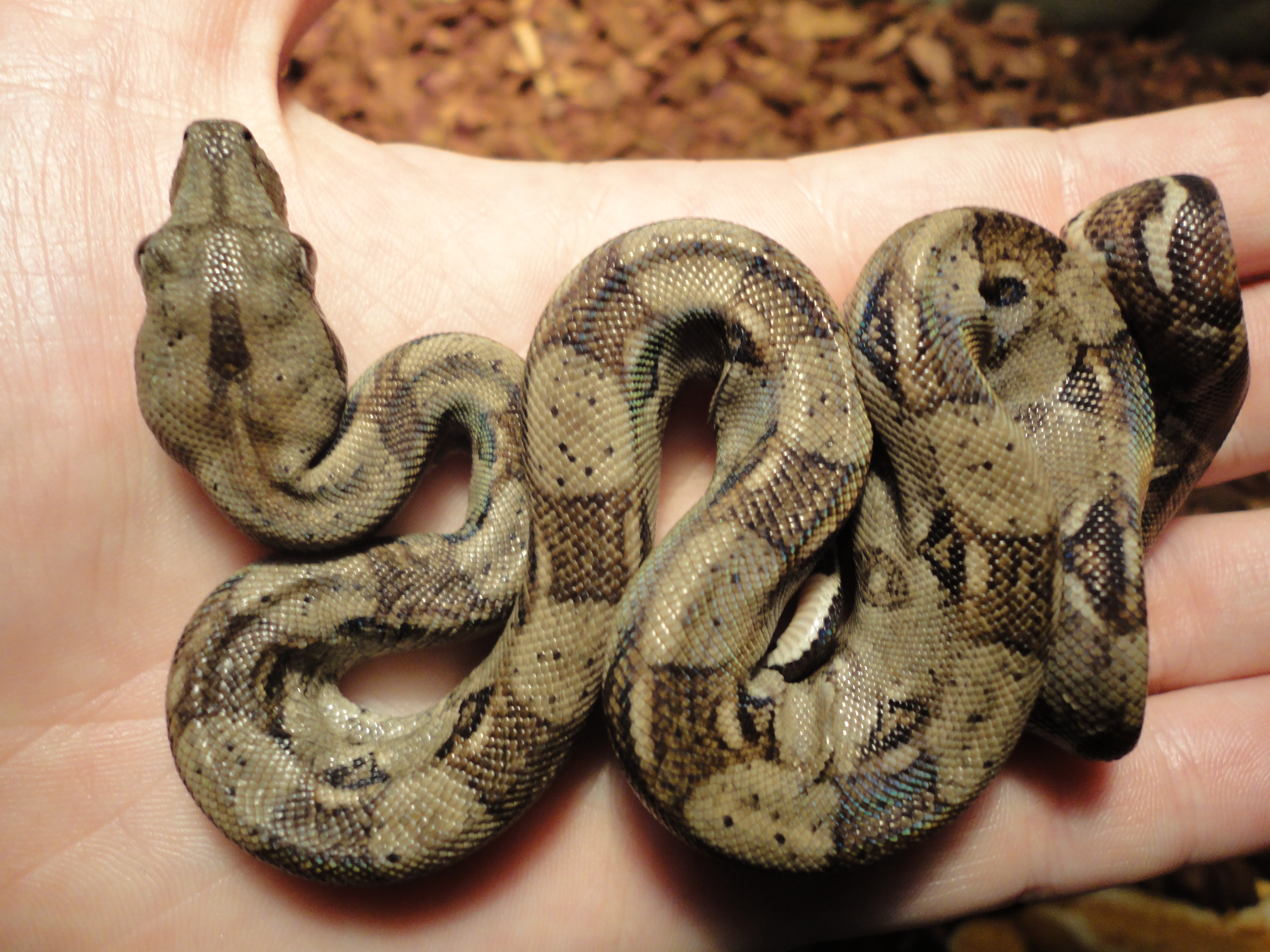
Species of snake
the species of snake
in Ecuador Linnaeus, 1758
- Constrictor formosissimus Laurenti, 1768
- Constrictor rex serpentum Laurenti, 1768
- Constrictor auspex Laurenti, 1768
- Constrictor diviniloquus Laurenti, 1768
- [Boa] constrictrix — Schneider, 1801
- Boa diviniloqua — A.M.C. Duméril & Bibron, 1844
- Boa constrictor — Boulenger, 1893
- Boa diviniloqua — Boulenger, 1893
- Constrictor constrictor — Griffin, 1916
- Constrictor constrictor constrictor — Stull, 1935
- Boa constrictor constrictor — Forcart, 1951
The boa constrictor (scientific name also Boa constrictor), also known as the common boa, is a species of large, non-venomous, heavy-bodied snake that is frequently kept and bred in captivity. The boa constrictor is a member of the family Boidae. The species is native to tropical South America. A staple of private collections and public displays, its color pattern is highly variable yet distinctive. Four subspecies are recognized.
Common names
Though all boids are indeed constrictors, only Boa constrictor (and its subspecies) is commonly referred to, in English, as a boa constrictor—an example of a species being referred to colloquially using its scientific binomial name.
The species and subspecies of B. constrictor are part of a variable, diverse group of New World boids referred to as "red-tailed" boas, comprising the species Boa constrictor and Boa imperator. Within the exotic pet trade, it is known as a "BCC"—an abbreviation of its scientific name—to distinguish it from other boa species, such as Boa imperator (known as "BCI" or "boa constrictor imperator").
Other regional names include the chij-chan (Mayan), jiboia (Portuguese), dagwe (Sranan Tongo), and macajuel (Trinidadian).
Subspecies
Several subspecies of Boa constrictor have been described in the past, but many of these are poorly differentiated, and further research may redefine many of them. Some appear to be based more on location rather than on biological differences. Boa imperator, Boa nebulosa, have all been elevated to full species status.
| editor-last=Uetz | editor-first=P. | editor-last2=Freed | editor-first2=P. | editor-last3=Aguilar | editor-first3=R. | editor-last4=Hošek | editor-first4=J. | year=2022 | title=Boa constrictor | url=https://reptile-database.reptarium.cz/species?genus=Boa&species=constrictor | access-date=2022-03-28 | website=The Reptile Database | archive-date=2021-10-09 | archive-url=https://web.archive.org/web/20211009094210/https://reptile-database.reptarium.cz/species?genus=Boa&species=constrictor | url-status=live }} | Taxon author | Common name | Geographic range | Etymology |
|---|---|---|---|---|---|---|---|---|---|---|---|---|---|---|---|---|---|---|---|
| B. c. constrictor | Linnaeus, 1758 | red-tailed boa constrictor or red-tailed boa | url=http://www.boa-constrictors.com/com/com.html | title=Boa constrictor Page | publisher=Boa-constrictors.com | access-date=2010-03-15 | archive-date=2010-03-25 | archive-url=https://web.archive.org/web/20100325185335/http://www.boa-constrictors.com/com/com.html | url-status=live }} | ||||||||||
| B. c. longicauda | Price & Russo, 1991 | long-tailed boa constrictor or long-tailed boa | northern Peru | ||||||||||||||||
| B. c. occidentalis | Philippi, 1873 | Argentine boa constrictor or Argentine boa | Argentina and Paraguay | ||||||||||||||||
| B. c. ortonii | Cope, 1878 | Beolens, Bo]]; Watkins, Michael; Grayson, Michael (2011). The Eponym Dictionary of Reptiles. Baltimore: Johns Hopkins University Press. xiii + 296 pp. . (Boa constrictor amarali, p. 7; B. c. ortonii, p. 196). | northwestern Peru | The subspecific name ortonii is in honor of American naturalist James Orton. |
Several other subspecies have been described at different times, but currently, these are no longer considered to be valid subspecies by many herpetologists and taxonomists. They include:
- B. c. amarali Stull, 1932
- B. c. melanogaster Langhammer, 1983: a nomen dubium
Description
Size and weight
The boa constrictor is a large snake, although it is only modestly sized in comparison to other large snakes, such as the reticulated python, Burmese python, or the occasionally sympatric green anaconda, and can reach lengths from 3 to depending on the locality and the availability of suitable prey. Clear sexual dimorphism is seen in the species, with females generally being larger in both length and girth than males. The usual size of mature female boas is between 7 and whereas males are between 6 and. Females commonly exceed 10 ft, particularly in captivity, where lengths up to 12 ft or even 14 ft can be seen. The largest documented non-stretched dry skin is deposited at Zoologische Staatssammlung München (ZSM 4961/2012) and measures 14.6 ft without head. A report of a boa constrictor growing up to 18.5 ft was later found to be a misidentified green anaconda.
The boa constrictor is a heavy-bodied snake, and large specimens can weigh up to 27 kg. Females, the larger sex, more commonly weigh 10 to. Some specimens of this species can reach or possibly exceed 45 kg, although this is not usual.
The size and weight of a boa constrictor depends on subspecies, locale, and the availability of suitable prey. B. c. constrictor reaches, and occasionally tops, the averages given above, as it is one of the relatively large subspecies of Boa constrictor.
Other examples of sexual dimorphism in the species include males generally having longer tails to contain the hemipenes and also longer pelvic spurs, which are used to grip and stimulate the female during copulation. Pelvic spurs are the only external sign of the rudimentary hind legs and pelvis and are seen in all boas and pythons.
Coloring
The coloring of boa constrictors can vary greatly depending on the locality. However, they are generally a brown, gray, or cream base color, patterned with brown or reddish-brown "saddles" that become more pronounced towards the tail. This coloring gives B. constrictor subspecies the common name of "red-tailed boas." The coloring works as a very effective camouflage in the jungles and forests of its natural range.
Some individuals exhibit pigmentary disorders, such as albinism. Although these individuals are rare in the wild, they are common in captivity, where they are often selectively bred to make a variety of different color "morphs". Boa constrictors have an arrow-shaped head with very distinctive stripes on it: One runs dorsally from the snout to the back of the head; the others run from the snout to the eyes and then from the eyes to the jaw.
Boa constrictors can sense heat via cells in their lips, though they lack the labial pits surrounding these receptors seen in many members of the family Boidae. Boa constrictors also have two lungs, a smaller (non-functional) left and an enlarged (functional) right lung to better fit their elongated shape, unlike many colubrid snakes, which have completely lost the left lung.
Distribution and habitat
Depending on the subspecies, Boa constrictor can be found through South America north of 35°S (Colombia, Ecuador, Peru, Venezuela, Trinidad and Tobago, Guyana, Suriname, French Guiana, Brazil, Bolivia, Uruguay, and Argentina), and many other islands along the coasts of South America. Introduced populations exist in Cozumel, extreme southern Florida, and St. Croix in the U.S. Virgin Islands. The type locality given is "Indiis"—a mistake, according to Peters and Orejas-Miranda (1970).
B. constrictor flourishes in a wide variety of environmental conditions, from tropical rainforests to arid semidesert country. However, it prefers to live in rainforest due to the humidity and temperature, natural cover from predators, and vast amount of potential prey. It is commonly found in or along rivers and streams, as it is a very capable swimmer. Boa constrictors also occupy the burrows of medium-sized mammals, where they can hide from potential predators.
Behavior
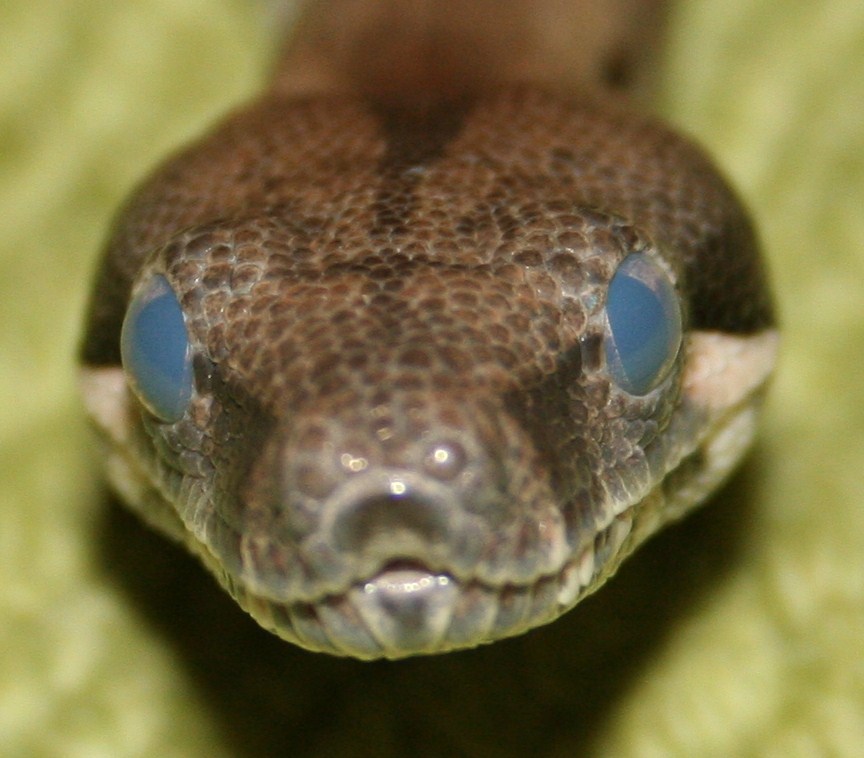
Boa constrictors generally live on their own and do not interact with any other snakes unless they want to mate. They are nocturnal, but they may bask during the day when night-time temperatures are too low. As semi-arboreal snakes, young boa constrictors may climb into trees and shrubs to forage; however, they become mostly terrestrial as they become older and heavier. Boa constrictors strike when they perceive a threat. Their bite can be painful, especially from large snakes, but is rarely dangerous to humans. Specimens from Central America are more irascible, hissing loudly and striking repeatedly when disturbed, while those from South America tame down more readily. Like all snakes, boa constrictors in a shed cycle are more unpredictable, because the substance that lubricates between the old skin and the new makes their eyes appear milky, blue, or opaque so that the snake cannot see very well, causing it to be more defensive than it might otherwise be.
Hunting and diet
Main article: Constriction
Their prey includes a wide variety of small to medium-sized mammals and birds. The bulk of their diet consists of rodents (such as squirrels, mice, rats and agoutis), but frogs, larger lizards (such as ameivas, iguanas and tegus) and mammals as big as monkeys, marsupials (opossums), armadillos, wild pigs, young brocket deer and ocelots are also reported to have been consumed. Domestic animals such as dogs, cats, rabbits, ducks and chickens are frequently consumed. Young boa constrictors eat small mice, birds, bats, lizards, and amphibians. The size of the prey item increases as they get older and larger. Once a boa constrictor has caught its prey, it will wrap its coils around the animal and constrict it until it dies by asphyxiation. The boa's powerful muscles allow it to exert a great deal of pressure, and the prey is typically killed within a few minutes.
Boa constrictors are ambush predators, so they often lie in wait for an appropriate prey to come along, then they attack a moment before the prey can escape. However, they have also been known to actively hunt, particularly in regions with a low concentration of suitable prey, and this behavior generally occurs at night. The boa first strikes at the prey, grabbing it with its teeth; it then proceeds to constrict the prey until death before consuming it whole. Unconsciousness and death likely result from shutting off vital blood flow to the heart and brain, causing asphyxiation, rather than suffocation as was previously believed; constriction can interfere with blood flow and overwhelm the prey's usual blood pressure and circulation. This would lead to unconsciousness and death very quickly. Their teeth also help force the animal down the throat while muscles then move it toward the stomach. It takes the snake about 4–6 days to fully digest the food, depending on the size of the prey and the local temperature. After this, the snake may not eat for a week to several months, due to its slow metabolism.
Reproduction and development

Boa constrictors are ovoviviparous, giving birth to live young. They generally breed in the dry season—between April and August—and are polygynous; thus, males may mate with multiple females. Half of all females breed in a given year, and a larger percentage of males actively attempt to locate a mate. Due to their polygynous nature, many of these males will be unsuccessful. As such, female boas in inadequate physical condition are unlikely to attempt to mate, or to produce viable young if they do mate. Reproduction in boas is almost exclusively sexual. In 2010, a boa constrictor was shown to have reproduced asexually via parthenogenesis. The Colombian rainbow boa (Epicrates maurus) was found to reproduce by facultative parthenogenesis resulting in production of WW female progeny. The WW females were likely produced by terminal automixis (see Figure), a type of parthenogenesis in which two terminal haploid products of meiosis fuse to form a zygote, which then develops into a daughter progeny. This is only the third genetically confirmed case of consecutive virgin births of viable offspring from a single female within any vertebrate lineage. In 2017, boa constrictors, along with Boa imperators and Burmese pythons, were found to contain a new set of sex determining chromosomes. Males were discovered to contain a pair of XY sex determining chromosomes, while females have a XX pair. This is the first time snakes were thought to contain male heterogamety; since then it has been found in ball pythons (Python regius) as well.
During the breeding season, the female boa constrictor emits pheromones from her cloaca to attract males, which may then wrestle to select one to breed with her. During breeding, the male curls his tail around the female's and the hemipenes (or male reproductive organs) are inserted. Copulation can last from a few minutes to several hours and may occur several times over a period of a few weeks. After this period, ovulation may not occur immediately, but the female can hold the sperm inside her for up to one year. When the female ovulates, a midbody swell can be noticed that appears similar to the snake having eaten a large meal. The female then sheds two to three weeks after ovulation, in what is known as a post-ovulation shed which lasts another 2–3 weeks, which is longer than a normal shed. The gestation period, which is counted from the postovulation shed, is around 100–120 days. The female then gives birth to young that average 15 – in length. The litter size varies between females but can be between 10 and 65 young, with an average of 25, although some of the young may be stillborn or unfertilized eggs known as "slugs". The young are independent at birth and grow rapidly for the first few years, shedding regularly (once every one to two months). At 3–4 years, boa constrictors become sexually mature and reach the adult size of 6 –, although they continue to grow at a slow rate for the rest of their lives. At this point, they shed less frequently, about every 2–4 months.
Captivity
Though still exported from South America in significant numbers, they are widely bred in captivity. Captive life expectancy is 20 to 30 years, with rare accounts of over 40 years. The greatest reliable age recorded for a boa constrictor in captivity is 40 years, 3 months, and 14 days. This boa constrictor was named Popeye and died in the Philadelphia Zoo, Pennsylvania, on April 15, 1977.
Inside the enclosure, a substrate, generally of newspaper or aspen shavings, must be provided. Untreated cedar or pine shavings are to be avoided, as they contain oils that are toxic to snakes. A water bowl, large enough to provide adequate humidity and that the snake can coil within, must be provided. Another basic essential is adequate hides, at least two (one in the cool end and one in the warm end). Hides can be anything from empty plastic or wooden boxes to specially made hides from a reptile equipment retailer. The hides ensure that the snake feels secure, as stress can result in snakes refusing to eat. Shelves or secure branches are often provided so that boas can climb, but this is not essential. Fake plants and other natural-looking decorations are also commonly provided, but again they are not essential.
.jpg)
A young boa's diet in captivity can be small to medium-sized mice and then on to increasing sizes of rats. Most boas will never need a prey item larger than a large rat; however, some big females (8 ft+) may require rabbits, guinea pigs and chickens. A suitable prey item for feeding to snakes should be no larger than the girth of the snake at its widest point, as with most snakes (including Boa constrictor) the left and right sides of the lower jaw are joined only by a flexible ligament at the anterior tips, allowing them to separate widely, while the posterior ends of the lower jawbones articulate with a quadrate bone, allowing further mobility, to allow the consumption of large prey. Young snakes can be fed once a week to promote healthy growth. Adults only need to be fed once every month. Overfeeding (or power feeding) the snake can lead to a host of health problems later and can shorten its lifespan. It is natural for snakes to lose their appetite when going into shed, as this is a stressful time for them, so food should not be offered at this time. Water should be changed daily or every other day.
Boas should be handled regularly to maintain their docility. Large boas are very powerful and should be handled by two people. Snakes should never be handled within 48 hours of feeding, due to a risk of regurgitation, or when in a shed cycle.--
Up to 41.5% of captive boas test positive for eosinophilic inclusion bodies.
Economic significance
Boa constrictors are very popular within the exotic pet trade and have been both captured in the wild and bred in captivity. Today, most captive boa constrictors are captive-bred, but between 1977 and 1983, 113,000 live boa constrictors were imported into the United States. These huge numbers of wild-caught snakes have put considerable pressure on some wild populations. Boa constrictors have also been hunted for their meat and skins, and are a common sight at markets within their geographic range. After the reticulated python, boa constrictors are the snake most commonly killed for snakeskin products, such as shoes, bags, and other items of clothing. In some areas, they have an important role in regulating the opossum populations, preventing the potential transmission of leishmaniasis to humans. In other areas, they are often let loose within the communities to control the rodent populations.
Conservation
All boa constrictors fall under CITES and are listed under CITES Appendix II, except B. c. occidentalis, which is listed in CITES Appendix I.
In some regions, boa constrictor numbers have been severely hit by predation from humans and other animals and over-collection for the exotic pet and snakeskin trades. Most populations, though, are not under threat of immediate extinction; thus, they are within Appendix II rather than Appendix I.
Boa constrictors may be an invasive species in Florida and Aruba.
Notes
References
References
- Arzamendia, V.. (2021). "''Boa constrictor ''".
- "Appendices {{!}} CITES".
- (September 2016). "Phylogeographic and population genetic analyses reveal multiple species of ''Boa'' and independent origins of insular dwarfism". Molecular Phylogenetics and Evolution.
- Kruzer, Adrienne. (May 15, 2018). "Snake Species Commonly Kept as Pets".
- Helmke, Christophe. (2013). "Mesoamerican Lexical Calques in Ancient Maya Writing and Imagery". The PARI Journal.
- Mendes, J. (1986). Cote ce Cote la: ''Trinidad & Tobago Dictionary''. Arima, Trinidad. p. 92.
- [https://www.cabi.org/isc/datasheet/112730#27d624be-93e6-4fa3-92e5-d37fbf3c56f6 CABI Boa Constrictor] {{Webarchive. link. (2018-10-06 "CABI", "10/5/2018")
- (2022). "''Boa sigma''".
- (2022). "''Boa constrictor''".
- "Boa constrictor Page". Boa-constrictors.com.
- [[species:Bo Beolens. Beolens, Bo]]; [[species:Michael Watkins. Watkins, Michael]]; Grayson, Michael (2011). ''The Eponym Dictionary of Reptiles''. Baltimore: Johns Hopkins University Press. xiii + 296 pp. {{ISBN. 978-1-4214-0135-5. (''Boa constrictor amarali'', p. 7; ''B. c. ortonii'', p. 196).
- "The Boa Constrictor Subspecies – Melanogaster". Boa-subspecies.com.
- Maurice, B. ''International Wildlife Encyclopedia'' Third Edition. {{ISBN. 0-7614-7266-5{{page needed. (April 2018)
- [[species:Chris Mattison. Mattison, C.]] (2007). ''The New Encyclopedia of Snakes''. Princeton University Press. {{ISBN. 0-691-13295-X.{{page needed. (April 2018)
- Wagner, D. "Boas". Barron's. {{ISBN. 0-8120-9626-6{{page needed. (April 2018)
- (2016). "On the maximum length of ''Boa constrictor'' (Serpentes, Boidae)". Spixiana.
- [[species:John C. Murphy. Murphy JC]], [[species:Robert W. Henderson. Henderson RW]] (1997). ''Tales of Giant Snakes: A Historical Natural History of Anacondas and Pythons''. Malabar, Florida: Krieger Publishing Co. {{ISBN. 0-89464-995-7.{{page needed. (April 2018)
- "ANIMAL BYTES – Boa Constrictor". Seaworld.org.
- link. (2011-11-13 . Zoo.org. Retrieved on 2012-08-22.)
- [[Mark O'Shea (herpetologist). O'Shea M]] (2007). ''Boas and Pythons of the World''. Princeton, New Jersey: Princeton University Press. {{ISBN. 1-84537-544-0.
- "Boa Constrictor Fact Sheet". Nationalzoo.si.edu.
- (July 1999). "Boa constrictor, an introduced predator threatening the endemic fauna on Cozumel Island, Mexico". Biodiversity and Conservation.
- "Nonnatives – Common Boa". Florida Fish and Wildlife Conservation Commission.
- (30 January 2019). "Exotic snakes are not native, but they are now on St. Croix". Virgin Islands Daily News.
- [[:fr:Roy Wallace McDiarmid. McDiarmid RW]], [[Jonathan A. Campbell. Campbell JA]], [[species:T'Shaka A. Touré. Touré TA]] (1999). ''Snake Species of the World: A Taxonomic and Geographic Reference Volume 1''. Washington, District of Columbia: Herpetologists' League. {{ISBN. 1-893777-00-6 (series). {{ISBN. 1-893777-01-4 (volume).{{page needed. (April 2018)
- Stidworthy J (1974). ''Snakes of the World''. New York: Grosset & Dunlap Inc. {{ISBN. 0-448-11856-4.
- [[species:John M. Mehrtens. Mehrtens JM]] (1987). ''Living Snakes of the World in Color.'' New York: Sterling Publishers. {{ISBN. 0-8069-6460-X.
- Ramnarine, Samanta Stephanie. (2011). "''Boa constrictor'' (Boa Constrictor or Macajuel)". [[University of the West Indies]].
- "The Herpetology of Trinidad and Tobago".
- "Red-tailed Boa (Boa constrictor)".
- (1998). "Amphibians and reptiles of Trinidad and Tobago". Copeia.
- Boa Constrictor. West Indian Boas. westindianboas.org/west-indian-boas/genus-boa/boa-constrictor. Accessed 20 Sept. 2025.
- Gill, Victoria. (July 23, 2015). "Boa constrictors' lethal secret revealed". BBC News.
- (1978). "Movements, Body Temperature and Hunting Strategy of a Boa constrictor". [[Copeia]].
- (2012). "Stable isotope tracer reveals that viviparous snakes transport amino acids to offspring during gestation". Journal of Experimental Biology.
- "ADW: Boa constrictor: Information". Animaldiversity.ummz.umich.edu.
- (2010-11-03). "Who's Your Daddy? Boa Constrictor Has Virgin Birth". LiveScience.
- (2011). "Consecutive virgin births in the new world boid snake, the Colombian rainbow Boa, ''Epicrates maurus''". Journal of Heredity.
- (2017-07-24). "The Discovery of XY Sex Chromosomes in a Boa and Python". Current Biology.
- (2018-07-04). "ZW, XY, and yet ZW: Sex chromosome evolution in snakes even more complicated". Evolution; International Journal of Organic Evolution.
- "Boa Constrictor Care". Ssscales.
- Smith, Charles R. (1999). [https://web.archive.org/web/20050224082535/http://home.att.net/~crinaustin/BoaInfo.pdf Boa constrictor (''Boa constrictor'')]. Siar Anthranir Reptiles
- [[species:Peter J. Stafford. Stafford, P.]] (1986). ''Pythons and Boas''. Neptune, New Jersey: T.F.H. Publications. {{ISBN. 0-86622-084-4.{{page needed. (April 2018)
- (November 2016)
- (2010). "Guinness World Records 2011". Guinness World Records.
- Hitch, Rachel. "Common Boa Constrictor (''Boa constrictor imperator'') Caresheet". Herp Center Network.
- (2006-04-29). "(BCI) Boa Constrictor Imperator Care Sheet Information. boa constrictors /u(BCI) Boa Constrictor Imperator Help and Care (BCI) Boa Constrictor Imperator, boa constrictors, care sheets, information on (BCI) Boa Constrictor Imperator Snakes info, (BCI) Boa Constrictor Imperator help". Repticzone.com.
- [http://www.boa-constrictors.co.uk/care care sheet] {{Webarchive. link. (2014-05-28 . boa-constrictors.co.uk. Retrieved on 2012-08-22.)
- Fluid Creativity, January 2006, www.fluidcreativity.co.uk. "Boa Constrictor". Reptiles.swelluk.com.
- (2010-06-14). "Cedar and Pine Wood Shavings – Problems and Toxicity". Exoticpets.about.com.
- (2009-12-14). "Boa Constrictors As Pets – Red-Tailed Boas". Exoticpets.about.com.
- (2016). "Detection and prevalence of boid inclusion body disease in collections of boas and pythons using immunological assays". The Veterinary Journal.
- Pough, F. Harvey (2004). ''Herpetology'' (third edition). {{ISBN. 0-13-100849-8.{{page needed. (April 2018)
- (2009-05-22). "Appendices I, II and III". Cites.org.
- (April 2018). "Giant Constrictor Snakes in Florida: A Sizeable Research Challenge".
- {{NRDB species. (7 November). (2020)
This article was imported from Wikipedia and is available under the Creative Commons Attribution-ShareAlike 4.0 License. Content has been adapted to SurfDoc format. Original contributors can be found on the article history page.
Ask Mako anything about Boa constrictor — get instant answers, deeper analysis, and related topics.
Research with MakoFree with your Surf account
Create a free account to save articles, ask Mako questions, and organize your research.
Sign up freeThis content may have been generated or modified by AI. CloudSurf Software LLC is not responsible for the accuracy, completeness, or reliability of AI-generated content. Always verify important information from primary sources.
Report