From Surf Wiki (app.surf) — the open knowledge base
BMW M20
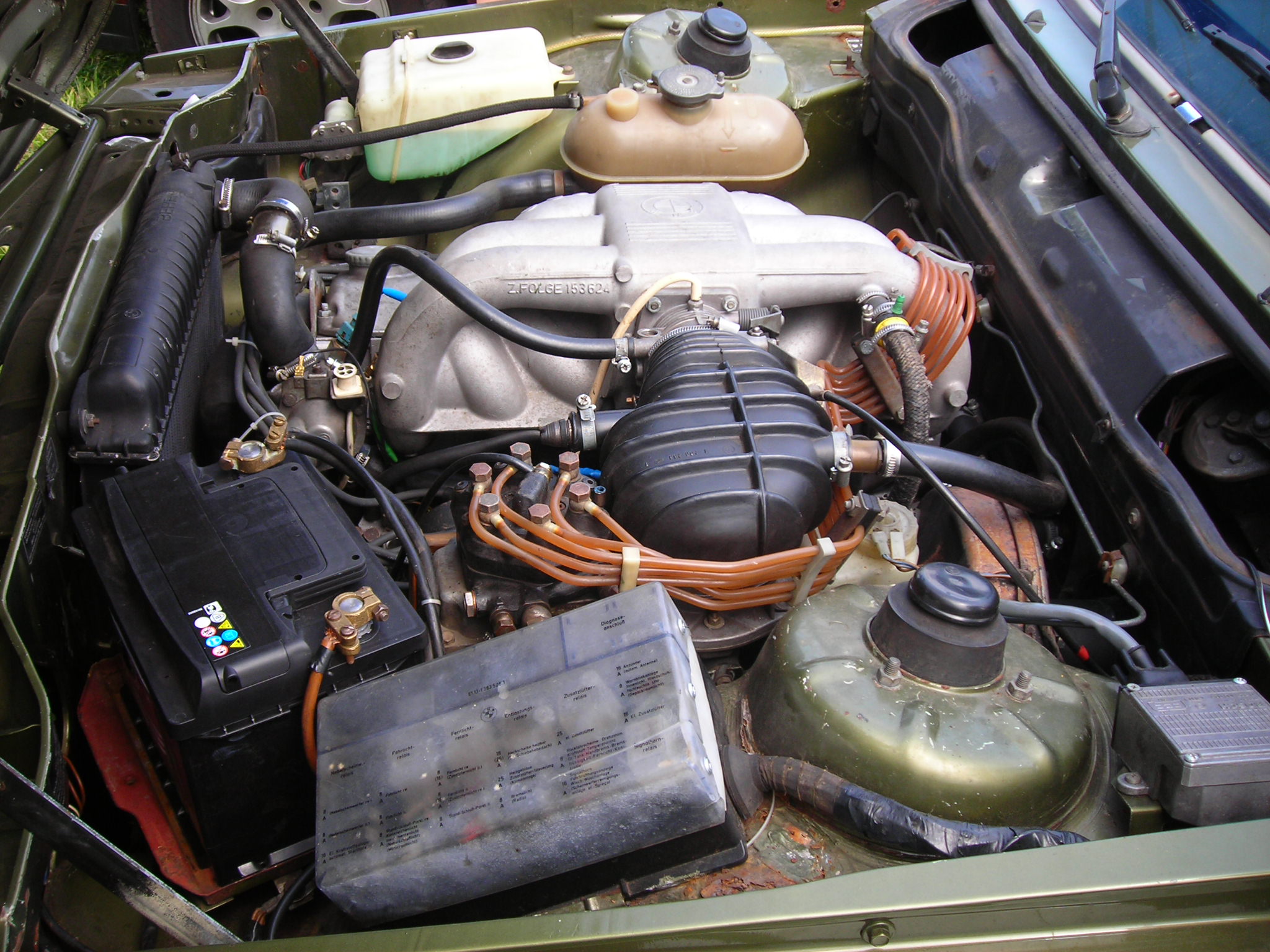
| Field | Value |
|---|---|
| image | M20B25.jpg |
| name | BMW M20 engine |
| production | 1977–1993 |
| configuration | Straight-6 |
| displacement | 1991 cc |
| 2316 cc | |
| 2494 cc | |
| 2693 cc | |
| bore | 80 mm |
| 84 mm | |
| stroke | 66 mm |
| 75 mm | |
| 76.8 mm | |
| 81 mm | |
| valvetrain | SOHC |
| fueltype | Petrol |
| block | Cast iron |
| head | Aluminium |
| predecessor | None |
| successor | BMW M50 |
2316 cc 2494 cc 2693 cc 84 mm 75 mm 76.8 mm 81 mm
The BMW M20 is a SOHC straight-six petrol engine which was produced from 1977 to 1993. It was introduced eight years after the larger BMW M30 straight-six engine, which remained in production alongside the M20.
The first cars to use the M20 were the E12 5 Series and the E21 3 Series. The initial M20 model had a displacement of 2.0 L, with later versions having displacements of up to 2.7 L.
The M20 began to be phased out following the introduction of the M50 engine in 1990. The final M20 engines were fitted to the E30 3 Series wagon (estate) and convertible model built in April 1993.
The M20 was the basis for the BMW M21 diesel engine. It is also loosely related to the BMW M70 V12 petrol engine.
History
By the 1970s, BMW felt the need for a six-cylinder engine smaller than the BMW M30, to use in the 3 Series and 5 Series. The resulting M20 had a displacement of 2.0 L, BMW's smallest straight-six engine of its day. BMW presented the M20 engine at the 1977 IAA as a 90 kW 2.0-litre Solex 4A1 carburetted version, and as a 105 kW 2.3-litre K-Jetronic multi-point injected version. Later versions had displacements up to 2.7 L. The M20 was used in the E12 5 Series, E21 3 Series, E28 5 Series, E30 3 Series and E34 5 Series.
Early versions of the M20 were sometimes referred to as the "M60", although the M60 designation has since been re-used for a V8 engine produced from 1992 to 1996.
Design
As per the M30, the M20 has an iron block, aluminium head and a SOHC valvetrain with 2 valves per cylinder. It has a traditional rocker arm design and no hydraulic tappets. The major differences to the M30 are:
- A timing belt rather than a timing chain
- Bore spacing of 91 mm, rather than 100 mm
- Slant angle of 20 degrees, compared with 30 degrees for the M30.
| File: BMW M20 Engine.JPG | M20 engine- exhaust side | File: BMW M20 engine in BMW-Museum in Munich, Bayern.JPG | M20 engine- intake side | File:M20B25 block.jpg |M20 engine- block
Models
| Version | Displacement | Power | Torque | Years | Notes | M20B20 | M20B23 | M20B25 | M20B27 |
|---|---|---|---|---|---|---|---|---|---|
| 1991 cc | 90 kW | ||||||||
| at 6,000 rpm | 163 Nm | ||||||||
| at 4,000 rpm | 1977-1982 | Austrian models rated at 88 kW | |||||||
| 92 kW | |||||||||
| at 5,800 rpm | 170 Nm | ||||||||
| at 4,000 rpm | 1982-1984 | ||||||||
| 174 Nm | |||||||||
| at 4,000 rpm | 1984-1987 | ||||||||
| 95 kW | |||||||||
| at 6,000 rpm | 164 Nm | ||||||||
| at 4,300 rpm | 1986-1992 | ||||||||
| 2316 cc | 105 kW | ||||||||
| at 5,300 rpm | 190 Nm | ||||||||
| at 4,500 rpm | 1977-1982 | ||||||||
| 102 kW | |||||||||
| at 5,300 rpm | 205 Nm | ||||||||
| at 4,000 rpm | 1982-1983 | ||||||||
| 110 kW | |||||||||
| at 6,000 rpm | 1983-1987 | ||||||||
| 2494 cc | 126 kW | ||||||||
| at 5,800 rpm | 226 Nm | ||||||||
| at 4,000 rpm | 1985-1990 | ||||||||
| 125 kW | |||||||||
| at 5,800 rpm | 226 Nm | ||||||||
| at 4,300 rpm | 1987-1992 | Catalyzed | |||||||
| 2693 cc | 92 kW | ||||||||
| at 4,250 rpm | 240 Nm | ||||||||
| at 3,250 rpm | 1982-1985 | US models rated at 121 hp | |||||||
| 90 kW | |||||||||
| at 4,250 rpm | 230 Nm | ||||||||
| at 3,250 rpm | 1985-1987 | Austrian models rated at 88 kW | |||||||
| 95 kW | |||||||||
| at 4,250 rpm | 240 Nm | ||||||||
| at 3,250 rpm | 1985-1988 |
M20B20
The first models to use the M20 were the E12 520/6 and the E21 320/6, which used a 1991 cc version known as the M20B20VE or M60/2. This engine uses a bore of 80 mm and a stroke of 66 mm. A Solex 4A1 four-barrel carburetor was used in the M20B20VE ("VE" is for vergaser- "carburettor" in German), and it has a compression ratio of 9.2:1 and a redline of 6,400 rpm.
The M20 first became fuel-injected in 1981, with Bosch K-Jetronic used in a 92 kW version called the M20B20KE. The compression ratio was raised to 9.9:1.
In September 1982 (coinciding with the release of the E30 3 Series), the fuel injection was updated to LE-Jetronic with a redline of 6,200 rpm. Other upgrades included a larger port (known as "731") cylinder head, a lighter block and new manifolds. The "M60" designation was dropped and this version was known as the M20B20LE.
In 1987, the M20B20 was again revised with the addition of Bosch Motronic engine management, a catalytic converter and a compression ratio of 8.8:1.
The M20B20 was not sold in the United States, but was available in the E30 (320i) in Canada.
Applications:
- 1977–1981 E12 5 Series 520/6 (carburettor)
- 1977–1982 E21 3 Series 320/6 (carburettor)
- 1981–1982 E28 5 Series 520i (K-Jetronic)
- 1982–1984 E28 5 Series 520i (L-Jetronic)
- 1982–1984 E30 3 Series 320i (L-Jetronic)
- 1984–1987 E28 5 Series 520i (LE-Jetronic)
- 1984–1987 E30 3 Series 320i (LE-Jetronic)
- 1986–1987 E28 5 Series 520i (Motronic)
- 1987–1992 E30 3 Series 320i (Motronic)
- 1988–1990 E34 5 Series 520i (Motronic)
- 1989–1992 Bertone Freeclimber (Freeclimber I)
M20B23
In March 1978 (six months after the M20 was launched), a fuel-injected and larger displacement version known as the M20B23KE (or M60/5) was introduced. This version uses the same head (known as "200") and block as the 2.0 litre version but a longer 76.8 mm stroke crank. The bore is 80 mm and it has a capacity of 2316 cc. Fuel injection was K-Jetronic, the compression ratio is 9.5:1, the power output is 105 kW and the redline is 6,400 rpm.
The 1982 version used LE-Jetronic, the 731 cylinder head, a compression ratio of 9.8:1 and the other upgrades as the per the 2.0 litre version. This version is called the M20B23LE and has a power output of 102 kW.
In September 1983, the M20B23LE's fuel-injection, exhaust and camshaft were upgraded and power increased to 110 kW with a redline of 6,500 rpm. The 102 kW version continued to be available in certain markets with strict emissions regulations (such as Switzerland) until replaced by the 325i.
The M20B23 versions were not sold in North America.
Applications:
- 1977–1982 E21 3 Series 323i (K-Jetronic)
- 1982–1984 E30 3 Series 323i (L-Jetronic)
- 1984–1987 E30 3 Series 323i (LE-Jetronic)
M20B25
In 1985, the M20B25 replaced the M20B23. The M20B25 has a capacity of 2494 cc and initially produced 171 PS (without a catalytic converter). It has an upgraded cylinder head (known as "885"), a bore of 84 mm, a stroke of 75 mm, a compression ratio of 9.4:1, a redline of 6,500 rpm and uses Bosch Motronic 1.1 engine management.
In 1987, a catalyzed model with Motronic 1.3 engine management was introduced. The compression ratio was reduced to 8.8:1 but thanks to the more sophisticated electronics power remained nearly as before, at 170 PS. The uncatalyzed engine was kept in production for Southern Europe and other markets where unleaded petrol was not regularly available.
Applications:
- 1985–1993 E30 3 Series 325i
- 1989–1990 E34 5 Series 525i
- 1988–1991 Z1
M20B27
The M20B27 was designed for efficiency (thus the e for the Greek letter eta in 325e) and low-rev torque. This is an unusual design strategy for a BMW straight-six engine, which are usually designed for power at high RPM. Compared with the M20B25, the stroke is increased from 75 to, resulting in a capacity of 2693 cc. Since many markets tax cars based on engine displacement, the eta's larger displacement meant that it was not suitable for all markets. It was expressly developed with the American market in mind. As per the M20B25, the bore is 84 mm. To reduce friction and improve efficiency, the M20B27 changes include using the '200' version of the head (which has smaller ports), a different camshaft, four camshaft journals and softer valve springs. Due to these changes the rev limit on the M20B27 was reduced to 4,800 rpm. The initial version, called the M20B27ME, produces 123 hp and 177 lb·ft at 3,250 rpm for models without a catalytic converter. Models with a catalytic converter produce 121 hp and 170 lb·ft.
In the United States, BMW's corporate average fuel economy was at risk of not meeting requirements by 1984, primarily due to higher sales of their bigger, more expensive cars in the early 1980s. The first car to use the M20B27 was the US market 528e in 1982. The compression ratio of the U.S. M20B27ME version was 9.0:1, compared with for cars sold elsewhere 11.0:1.
In 1985, the M20B27ME.E version was introduced, increasing power output to 95 kW despite a lower compression ratio of 10.3:1.
In late 1987, the fuel injection was upgraded to Motronic 1.3 on the US market plastic bumper 325e and 528e 'Super Eta', the cylinder head changed to the "885" version, the compression ratio was reduced to 8.5:1 and the redline increased to 5,200 rpm. Power output increased to 127 hp at 4,800 rpm.
In the early 1990s BMW South Africa used components from the Alpina C3 2.7 to produce an E30 specifically for Stannic Group N production car racing. The first iteration of this engine used in the E30 325iS produced 145 kW and the second revision, often referred to as "Evo2" or on the VIN plate as "HP2" produced 155 kW.
Applications:
- 1982–1987 E30 3 Series 325e, 325e
- 1982–1988 E28 5 Series 525e (called 528e in North America)
- 1989–1992 E30 3 Series 325iS (only available in South Africa)
- 1989–1992 Bertone Freeclimber (Freeclimber I)
References
References
- "BMW M30".
- (29 August 2009). "Engine Of The Day: BMW M20".
- "BMW 3 Series Touring (E30) (1988 - 1993)". autoevolution.
- "Archived copy".
- (2016). "The BMW Century". Motorbooks.
- BMW AG (ed.): ''[https://bmw-grouparchiv.de/research/media/b758ee3b-59b1-4046-8a97-8355940ade0d/web IAA Frankfurt/Main 15.9. bis 25.9.1977]'', p. 5, retrieved 17 September 2021
- "Useful info and resources". BMW Car Club of BC.
- John G.Burns. "The UnixNerd's Domain - BMW M20 Six Cylinder Engines".
- "BMW M20B20 Engine".
- Hans-Rüdiger Etzold: So wird’s gemacht (volume 68): BMW 5er Reihe 9/72 bis 7/81 (TYP E12), BMW 5er Reihe 7/81 bis 8/87 (TYP E28), Delius Klasing, Bielefeld, 1990, ISBN 978-3-7688-0666-4
- "M20 6-cylinder engine".
- "M50 Engine".
- "M50 Engine Technical Information (E36)".
- "BMW Presse: 47. IAA Frankfurt 1977".
- (August 1985). "Betriebsanleitung, Serviceheft 518, 520i, 525e, 525i, 528i, 535i, M535i, 524td".
- "Zusatzbetriebsanleitung 525e".
- "BETRIEBSANLEITUNG 316, 318i, 320i, 325e, 325i, 324d".
- "1977 BMW 520".
- "BMW E21 3-series Sedan specs | Specs4BMW.com".
- (1981). "World Cars 1981". The Automobile Club of Italy/Herald Books.
- (July 2025). "1982 BMW 520i 4-speed (for Europe) specs review". www.automobile-catalog.com}}{{Dead link.
- (1983). "Automobil Revue".
- (March 5, 1987). "Automobil Revue 1987". Hallwag AG.
- "BMW e30 - BMW e30 Club".
- "5' E28 520i FUEL INJECTION K-JETRONIC".
- "5' E28 520i Control unit L-jetronic".
- "5' E28 520i Control unit L-jetronic".
- "5' E28 520i Uncoded DME control unit".
- (March 1, 1984). "Automobil Revue '84". Hallwag, AG.
- Ilir Dibrani. "BMW Heaven Specification Database - Specifications for BMW 323i E21 (1977-1982)". www.bmwheaven.com.
- Dibrani, Ilir. "BMW Heaven Specification Database - Engine specifications for M20 engines". www.bmwheaven.com.
- "BMW E30 Specifications".
- "3' E30 325i Uncoded DME control unit".
- "BMW e30 1983-1991 differences between models". www.e30info.com.
- Heylen, Vic. (1983-04-28). "BMW: Met de ETA op de zuinige tor". Uitgeverij Auto-Magazine.
- "M20B27 Engine Specs".
- ''Automobil Revue '83'', p. 206
- (1985-08-01). "Auto Katalog 1986". [[:de:Motor Presse Stuttgart.
- "325e".
This article was imported from Wikipedia and is available under the Creative Commons Attribution-ShareAlike 4.0 License. Content has been adapted to SurfDoc format. Original contributors can be found on the article history page.
Ask Mako anything about BMW M20 — get instant answers, deeper analysis, and related topics.
Research with MakoFree with your Surf account
Create a free account to save articles, ask Mako questions, and organize your research.
Sign up freeThis content may have been generated or modified by AI. CloudSurf Software LLC is not responsible for the accuracy, completeness, or reliability of AI-generated content. Always verify important information from primary sources.
Report