From Surf Wiki (app.surf) — the open knowledge base
BMW M12
4-cylinder turbocharged Formula One engine, based on the standard BMW M10
4-cylinder turbocharged Formula One engine, based on the standard BMW M10
| Field | Value |
|---|---|
| name | BMW M12 |
| image | BMW F1 Engine M12 M13.JPG |
| caption | BMW M12/13 engine |
| configuration | 180° I-4 |
| manufacturer | BMW |
| production | 1982–1987 |
| fueltype | Gasoline |
| fuelsystem | Electronic fuel injection |
| coolingsystem | Water-cooled |
| turbocharger | KKK |
| compression | 7.5:1 |
| displacement | 1499.8 cc |
| bore | 89.2 mm |
| stroke | 60 mm |
| weight | 45-70 kg |
| power | 300-1681 bhp |
| torque | 175-1,130 lbft |
| successor | BMW E41 / P80 engine |
the race car engine
The BMW M12/13 turbo was a 1,499.8 cc four-cylinder turbocharged Formula One engine, based on the standard BMW M10 engine introduced in 1961, and powered the F1 cars of Brabham, Arrows and Benetton. Nelson Piquet won the FIA Formula One Drivers' Championship in 1983 driving a Brabham powered by the BMW M12/13 turbo. It was the first Drivers' Championship to be won using a turbocharged engine. The engine also powered the BMW GTP and in the 2.0-litre naturally-aspirated form, the successful March Engineering Formula Two cars. BMW engineers estimated the engine produced around 1,400 hp at maximum boost, however the BMW engine dynamometer could not go beyond 1,280 bhp.
History
Formula 2
As BMW M12/7, the engine design since the 1960s became one of the most successful in racing. Starting with the European Touring Car Championship, it was also used in Formula 2, expanded to two-litre and fitted with four-valve heads, producing over 300 hp. In the Deutsche Rennsport Meisterschaft, a 1,400 cc variant (with a 1.4 handicap factor equal to 2,000 cc) was turbocharged by Paul Rosche according to FIA Group 5 rules. At well over 350 hp from the beginning, it rendered the normally-aspirated engines in the two-litre category useless. After some development, power, driveability, and reliability improved, especially in the IMSA car, and BMW began to think about entering F1, where a handicap factor of 2.0 required 1,500 cc engines.
Formula One
During the season, the Brabham team, then owned by future F1 boss Bernie Ecclestone, used both the older Cosworth DFV V8 engine as well as the turbocharged BMW M12 in selected races in a development program. The BMW proved to be fast in its first year in Formula One, though its reliability, with turbocharging still in its infancy, was lacking. Reigning World Champion Nelson Piquet recorded the first win for the engine in F1 when he led home Brabham teammate Riccardo Patrese (in the Cosworth-powered car) at the 1982 Canadian Grand Prix.
In , Brazilian driver Piquet won his second Formula One World Championship driving a Brabham BT52 powered exclusively by the M12, which by that year was producing approximately 850 bhp in qualifying trim and 640 bhp for the races. Piquet, who won the Brazilian, Italian and European Grands Prix that year, won the championship by just two points, ahead of Renault's Alain Prost (Renault had pioneered turbocharging in F1 in , but would never win the World Championship in the original turbo era (1977-1988)). Piquet was the first driver to win a World Championship in a turbo-powered car.
The main advantage of the inline-four M12 over its V6 Ferrari and Renault opposition was that, with one fewer turbo, two fewer cylinders, and eight fewer valves, the BMW engine had lower frictional losses and, therefore, produced less waste heat. This allowed Brahbam's lead designer Gordon Murray the luxury of designing the BT52 with smaller radiators, which meant better aerodynamic efficiency and thus better straight-line speed. The BT52 was notable for its very skinny, short sidepods, especially compared to the Renault, giving it better penetration through the air on circuits with long straights.
and , by contrast, were lean years for the M12. The engine was generally regarded as the most powerful in F1 at the time, producing approximately 1100 hp in qualifying trim by 1985, and Piquet took nine pole positions in 1984 alone. However, the engine's mechanical reliability and durability under full workload suffered severely, with engine blow-ups and turbo failures becoming common occurrences. Furthermore, with FISA imposing a maximum fuel limit of 220 litres per race (refuelling was allowed in 1982 and 1983), the four-cylinder BMW suffered from high fuel consumption which often led to drivers running out of fuel, and continued to suffer from poor reliability. Consequently, Piquet scored only three wins - the 1984 Canadian and Detroit races, and the 1985 French Grand Prix. These proved to be Brabham's final wins in Formula 1.
For , the M12 was upgraded into the M12/13/1. (Bore 89.2 mm X Stroke 60 mm) 374.95 cc and 350 PS per cylinder 933.46 PS/litre. This version was claimed to have produced a maximum output of 1400 hp at 11,000 rpm, and about 850-930 lbft of torque in qualifying trim, which would make it the most powerful engine ever to race in Formula 1, turbocharged or otherwise. At the time, there was no way to accurately measure horsepower figures over 1,000, and so claimed output figures were generally accepted from the engineers' theoretical calculations; for example, 0.1 bar of turbo boost was rated to be worth approximately 20 hp). During the 1986 Italian Grand Prix at Monza, Gerhard Berger's BMW-powered Benetton B186 recorded the highest straight line speed by a turbocharged Formula One car when he was timed at 352.22 km/h. In fact, the top five cars through the speed trap at Monza (Berger and teammate Teo Fabi, Brabham's Derek Warwick and Riccardo Patrese, and the Arrows of Thierry Boutsen) were all powered by the BMW M12.
Brabham tilted the upgraded engine sideways by 72° for use in the extremely low BT55, but the concept proved unsuccessful, most likely due to cooling issues in the tight compartment. Instead, Benetton, with the more conventional B186, were the leading BMW users in 1986, with Berger scoring his and the team's first (and the BMW engine's last) win at the Mexican Grand Prix.
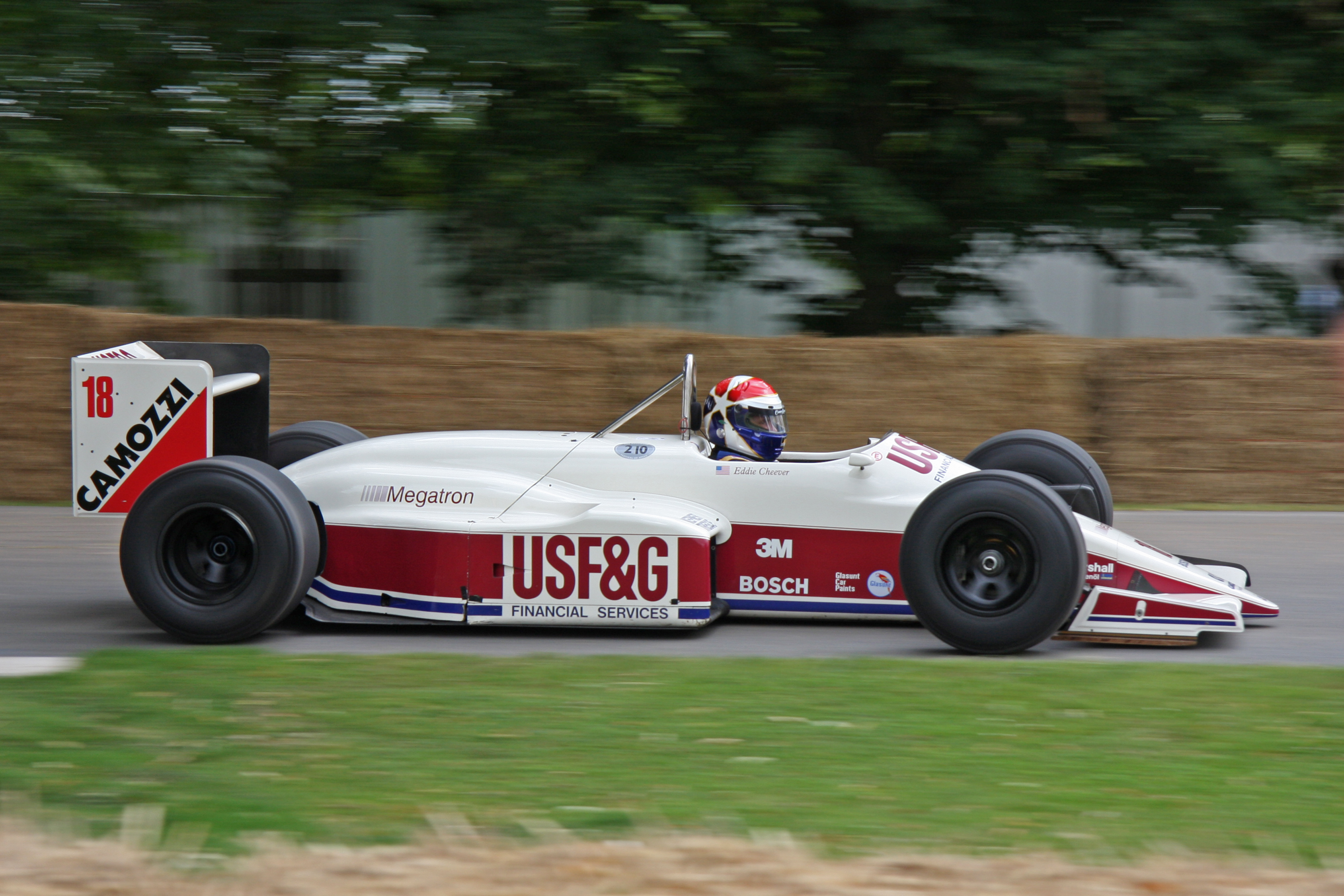
At the 1986 French Grand Prix at the Paul Ricard Circuit, BMW announced their withdrawal from F1 at the end of 1986, but that they would continue to honour their contract and supply, Brabham, with their tilted M12s for 1987. Arrows team boss Jackie Oliver, with support from the team's primary sponsor USF&G, brokered a deal to continue the use of the upright BMW engines under the name of its subsidiary Megatron, Inc., founded by long-time F1 aficionado John J. Schmidt. The engines were serviced from Switzerland by Arrows' long time engine guru Heini Mader, a former mechanic of Jo Siffert.
Megatron
Rebadged as Megatron, the BMW engines were used by the Arrows team for the and seasons, as well as Ligier in 1987. By 1988, Arrows were one of only six teams still running turbocharged engines, and the Megatron was the oldest turbo engine still in use in Formula One, Ferrari having introduced a brand-new turbo engine the previous year.
The Megatron programme ended after 1988 as a result of rule changes that banned turbocharged engines from 1989 onwards, with Eddie Cheever scoring the old BMW engine's last podium finish with third place in the 1988 Italian Grand Prix at Monza. This race was also significant as it marked the first time Heini Mader had solved the problems caused by the FIA's boost limit valve, which limited turbo boost pressure to 4.0 bar in 1987 and 2.5 bar in 1988. By moving the valve closer to the engine, the problem of the turbo not delivering enough boost had been solved, and the Arrows A10B was among the fastest cars on the long Monza straights, faster even than the all-conquering McLaren-Hondas into which designer Steve Nichols had effectively incorporated elements of Gordon Murray's low-line Brabham design as well as featuring a more powerful V6 engine.
With turbos banned from the season, the Arrows team reverted to using 3499 cc, naturally aspirated Ford DFR V8 power plants.
The M12's major shortcoming as a Formula One engine was its lack of throttle response due to turbo lag. Unlike the V6 and V8 turbocharged engines which ran with twin turbos (one for each bank of cylinders), the inline-4 BMW engine, like the other four-cylinder turbo engines used in F1 such as the Hart 415T and the Zakspeed 1500/4, only used a single turbocharger. The twin-turbo setups of the "V" engines eliminated much of the turbo lag. However, with only a single turbo, the BMW M12 suffered from approximately 2 seconds of turbo lag, meaning drivers often had to start accelerating through the apex of a corner. The power from the turbo was described by many (including Piquet and Berger) as coming on like a light switch which often induced sudden oversteer. Consequently, the BMW was usually seen at its most competitive at power circuits such as Kyalami, Imola, Paul Ricard, Silverstone, Hockenheim, the Österreichring and Monza. On tighter tracks such as street circuits like Monaco and Detroit which required greater acceleration and less top speed, the BMW-powered cars often lagged behind their major rivals.
Formula One record
World Championships: 1 (Nelson Piquet in a Brabham in )
Wins: 9 (Piquet 7, Riccardo Patrese 1, Gerhard Berger 1)
Pole positions: 15 (Piquet 12, Teo Fabi 2, Patrese 1)
Fastest laps: 14 (Piquet 9, Patrese 2, Berger 2, Fabi 1)
Complete Formula One Championship results
(key) (Results in bold indicate pole position; results in italics indicate fastest lap)
| Year | Entrant | Chassis | Engine | Tyres | Drivers | 1 | 2 | 3 | 4 | 5 | 6 | 7 | 8 | 9 | 10 | 11 | 12 | 13 | 14 | 15 | 16 | Points | WCC | 1968 | 1969 | –: Did not compete | 0 | NC | 22 | 7th | 0 | NC | 38 | 4th | 0 | NC | 3 | 9th | 26 | 5th | 14 | 8th | 2 | 9th | 1 | 10th | 19 | 6th | 10 | 8th | 11 | 7th | 1 | 11th | 23 | 5th |
|---|---|---|---|---|---|---|---|---|---|---|---|---|---|---|---|---|---|---|---|---|---|---|---|---|---|---|---|---|---|---|---|---|---|---|---|---|---|---|---|---|---|---|---|---|---|---|---|---|---|---|---|---|---|---|---|---|
| Bayerische Motoren Werke | Lola T102 | BMW M12/1 1.6 L4 | RSA | ESP | MON | BEL | NED | FRA | GBR | GER | ITA | CAN | USA | MEX | 0 | NC | ||||||||||||||||||||||||||||||||||||||||
| FRG Hubert Hahne | 10 | |||||||||||||||||||||||||||||||||||||||||||||||||||||||
| Bayerische Motoren Werke | BMW 269 (F2) | BMW M12/1 1.6 L4 | RSA | ESP | MON | NED | FRA | GBR | GER | ITA | CAN | USA | MEX | colspan="2" rowspan="4" * | ||||||||||||||||||||||||||||||||||||||||||
| FRG Hubert Hahne | DNS | |||||||||||||||||||||||||||||||||||||||||||||||||||||||
| FRG Gerhard Mitter | DNS | |||||||||||||||||||||||||||||||||||||||||||||||||||||||
| AUT Dieter Quester | DNS | |||||||||||||||||||||||||||||||||||||||||||||||||||||||
| Parmalat Racing Team | Brabham BT50 | BMW M12/13 1.5 L4 t | USW | BRA | ARG | SMR | BEL | MON | ESP | FRA | GBR | GER | AUT | NED | ITA | CAN | CPL | |||||||||||||||||||||||||||||||||||||||
| BRA Nelson Piquet | PO | |||||||||||||||||||||||||||||||||||||||||||||||||||||||
| Parmalat Racing Team | Brabham BT50 | BMW M12/13 1.5 L4 t | RSA | BRA | USW | SMR | BEL | MON | DET | CAN | NED | GBR | FRA | GER | AUT | SUI | ITA | CPL | ||||||||||||||||||||||||||||||||||||||
| BRA Nelson Piquet | Ret | 5 | Ret | DNQ | 1 | 2 | Ret | Ret | 4 | Ret | Ret | |||||||||||||||||||||||||||||||||||||||||||||
| ITA Riccardo Patrese | Ret | Ret | 15 | Ret | Ret | Ret | 5 | Ret | Ret | |||||||||||||||||||||||||||||||||||||||||||||||
| Fila Sport | Brabham BT52 | BMW M12/13 1.5 L4 t | BRA | USW | FRA | SMR | MON | BEL | DET | CAN | GBR | GER | AUT | NED | ITA | EUR | RSA | 72 | 3rd | |||||||||||||||||||||||||||||||||||||
| BRA Nelson Piquet | Ret | 2 | Ret | 4 | 4 | Ret | 2 | 13 | 3 | 1 | ||||||||||||||||||||||||||||||||||||||||||||||
| ITA Riccardo Patrese | Ret | 10 | Ret | Ret | Ret | Ret | Ret | Ret | 3 | Ret | 9 | 7 | 1 | |||||||||||||||||||||||||||||||||||||||||||
| Team ATS | ATS D6 | FRG Manfred Winkelhock | 16 | Ret | Ret | 11 | Ret | Ret | Ret | 9 | Ret | DNQ | Ret | DSQ | Ret | 8 | Ret | |||||||||||||||||||||||||||||||||||||||
| MRD International | Brabham BT53 | BMW M12/13 1.5 L4 t | BRA | RSA | BEL | SMR | FRA | MON | CAN | DET | DAL | GBR | GER | AUT | NED | ITA | EUR | POR | ||||||||||||||||||||||||||||||||||||||
| BRA Nelson Piquet | Ret | 9 | Ret | Ret | Ret | Ret | Ret | |||||||||||||||||||||||||||||||||||||||||||||||||
| ITA Teo Fabi | Ret | Ret | Ret | Ret | 9 | 3 | Ret | Ret | 4 | 5 | Ret | Ret | ||||||||||||||||||||||||||||||||||||||||||||
| ITA Corrado Fabi | Ret | Ret | 7 | |||||||||||||||||||||||||||||||||||||||||||||||||||||
| FRG Manfred Winkelhock | 10 | |||||||||||||||||||||||||||||||||||||||||||||||||||||||
| Team ATS | ATS D7 | FRG Manfred Winkelhock | EX | Ret | Ret | Ret | Ret | Ret | 8 | Ret | 8 | Ret | Ret | DNS | Ret | DNS | ||||||||||||||||||||||||||||||||||||||||
| AUT Gerhard Berger | 12 | 6* | Ret | 13 | ||||||||||||||||||||||||||||||||||||||||||||||||||||
| Barclay Nordica Arrows BMW | Arrows A7 | CHE Marc Surer | Ret | Ret | 11 | Ret | 6 | Ret | Ret | Ret | Ret | |||||||||||||||||||||||||||||||||||||||||||||
| BEL Thierry Boutsen | Ret | 11 | DNQ | Ret | Ret | Ret | Ret | Ret | 5 | Ret | 10 | 9 | Ret | |||||||||||||||||||||||||||||||||||||||||||
| Motor Racing Developments | Brabham BT54 | BMW M12/13 1.5 L4 t | BRA | POR | SMR | MON | CAN | DET | FRA | GBR | GER | AUT | NED | ITA | BEL | EUR | RSA | AUS | ||||||||||||||||||||||||||||||||||||||
| BRA Nelson Piquet | Ret | Ret | 8 | Ret | Ret | 6 | 1 | 4 | Ret | Ret | 2 | 5 | Ret | Ret | Ret | |||||||||||||||||||||||||||||||||||||||||
| FRA François Hesnault | Ret | Ret | Ret | DNQ | ||||||||||||||||||||||||||||||||||||||||||||||||||||
| CHE Marc Surer | 15 | 8 | 8 | 6 | Ret | 6 | 10 | 4 | 8 | Ret | Ret | Ret | ||||||||||||||||||||||||||||||||||||||||||||
| Barclay Arrows BMW | Arrows A8 | AUT Gerhard Berger | Ret | Ret | Ret | Ret | 13 | 11 | Ret | 8 | 7 | Ret | 9 | Ret | 7 | 10 | 5 | 6 | ||||||||||||||||||||||||||||||||||||||
| BEL Thierry Boutsen | 11 | Ret | 2 | 9 | 9 | 7 | 9 | Ret | 4 | 8 | Ret | 9 | 10 | 6 | 6 | Ret | ||||||||||||||||||||||||||||||||||||||||
| Motor Racing Developments | Brabham BT54 | |||||||||||||||||||||||||||||||||||||||||||||||||||||||
| Brabham BT55 | BMW M12/13/1 1.5 L4 t | BRA | ESP | SMR | MON | BEL | CAN | DET | FRA | GBR | GER | HUN | AUT | ITA | POR | MEX | AUS | |||||||||||||||||||||||||||||||||||||||
| ITA Riccardo Patrese | Ret | Ret | 6 | Ret | 8 | Ret | 6 | 7 | Ret | Ret | Ret | Ret | Ret | Ret | 13 | Ret | ||||||||||||||||||||||||||||||||||||||||
| ITA Elio de Angelis | 8 | Ret | Ret | Ret | ||||||||||||||||||||||||||||||||||||||||||||||||||||
| GBR Derek Warwick | Ret | 10 | 9 | 8 | 7 | Ret | DNS | Ret | Ret | Ret | Ret | |||||||||||||||||||||||||||||||||||||||||||||
| Barclay Arrows BMW | Arrows A8 | |||||||||||||||||||||||||||||||||||||||||||||||||||||||
| Arrows A9 | BMW M12/13 1.5 L4 t | CHE Marc Surer | Ret | Ret | 9 | 9 | 9 | |||||||||||||||||||||||||||||||||||||||||||||||||
| FRG Christian Danner | Ret | 11 | DNS | Ret | Ret | 6 | 8 | 11 | 9 | Ret | ||||||||||||||||||||||||||||||||||||||||||||||
| BEL Thierry Boutsen | Ret | 7 | 7 | 8 | Ret | Ret | Ret | NC | NC | Ret | Ret | Ret | 7 | 10 | 7 | Ret | ||||||||||||||||||||||||||||||||||||||||
| Benetton Formula Ltd | Benetton B186 | ITA Teo Fabi | 10 | 5 | Ret | Ret | 7 | Ret | Ret | Ret | Ret | Ret | Ret | 8 | Ret | 10 | ||||||||||||||||||||||||||||||||||||||||
| AUT Gerhard Berger | 6 | 6 | 3 | Ret | 10 | Ret | Ret | Ret | Ret | Ret | 5 | Ret | 1 | Ret | ||||||||||||||||||||||||||||||||||||||||||
| Motor Racing Developments | Brabham BT56 | BMW M12/13/1 1.5 L4 t | BRA | SMR | BEL | MON | DET | FRA | GBR | GER | HUN | AUT | ITA | POR | ESP | MEX | JPN | AUS | ||||||||||||||||||||||||||||||||||||||
| ITA Riccardo Patrese | Ret | 9 | Ret | Ret | 9 | Ret | Ret | Ret | 5 | Ret | Ret | Ret | 13 | 3 | 11 | |||||||||||||||||||||||||||||||||||||||||
| ITA Stefano Modena | Ret | |||||||||||||||||||||||||||||||||||||||||||||||||||||||
| ITA Andrea de Cesaris | Ret | Ret | 3 | Ret | Ret | Ret | Ret | Ret | Ret | Ret | Ret | Ret | Ret | Ret | Ret | 8 | ||||||||||||||||||||||||||||||||||||||||
| USF&G Arrows Megatron | Arrows A10 | Megatron M12/13 1.5 L4 t | GBR Derek Warwick | Ret | 11 | Ret | Ret | Ret | Ret | 5 | Ret | 6 | Ret | Ret | 13 | 10 | Ret | 10 | Ret | |||||||||||||||||||||||||||||||||||||
| USA Eddie Cheever | Ret | Ret | 4 | Ret | 6 | Ret | Ret | Ret | 8 | Ret | Ret | 6 | 8 | 4 | 9 | Ret | ||||||||||||||||||||||||||||||||||||||||
| Ligier Loto | Ligier JS29B | |||||||||||||||||||||||||||||||||||||||||||||||||||||||
| Ligier JS29C | FRA René Arnoux | DNS | 6 | 11 | 10 | Ret | Ret | Ret | Ret | 10 | 10 | Ret | Ret | Ret | Ret | Ret | ||||||||||||||||||||||||||||||||||||||||
| ITA Piercarlo Ghinzani | Ret | 7 | 12 | NC | Ret | EX | Ret | 12 | 8 | 8 | Ret | Ret | Ret | 13 | Ret | |||||||||||||||||||||||||||||||||||||||||
| USF&G Arrows Megatron | Arrows A10B | Megatron M12/13 1.5 L4 t | BRA | SMR | MON | MEX | CAN | DET | FRA | GBR | GER | HUN | BEL | ITA | POR | ESP | JPN | AUS | ||||||||||||||||||||||||||||||||||||||
| GBR Derek Warwick | 4 | 9 | 4 | 5 | 7 | Ret | Ret | 6 | 7 | Ret | 5 | 4 | 4 | Ret | Ret | Ret | ||||||||||||||||||||||||||||||||||||||||
| USA Eddie Cheever | 8 | 7 | Ret | 6 | Ret | Ret | 11 | 7 | 10 | Ret | 6 | 3 | Ret | Ret | Ret | Ret |
- Ineligible for points.
References
References
- "Engine BMW • STATS F1".
- "BMW M12 Engine History | Ridgeway Racing Engines".
- (22 April 2014). "#Tech – Raw Power : The BMW M12/13 F1 Engine".
- "BMW M12 Engine History | Ridgeway Racing Engines".
- (21 May 2015). "Blast from the Past: The Most Powerful Formula 1 Engine Ever".
- "BMW's most powerful engine, the 1986 BMW M12/13/1. A 1.5 litre, turbocharged inline 4 that was said to produce around 1400 HP in qualifying trim. The most powerful engine in F1 history".
- "BMW M12 Engine History | Ridgeway Racing Engines".
- (14 April 2017). "30 years go, BMW built a 1350 hp engine for Formula 1 cars".
- "1978 March 782 BMW Specifications".
- "1973 March 73S".
- "1973 March 73S technical and mechanical specifications".
- (22 April 2014). "#Tech – Raw Power : The BMW M12/13 F1 Engine".
- "BMW M12 Engine History | Ridgeway Racing Engines".
- "Spicer Horsepower and Torque Calculator".
- (22 April 2014). "#Tech – Raw Power : The BMW M12/13 F1 Engine".
- "Engine BMW • STATS F1".
- "BMW Turbo F1 Engine". Gurneyflap.com.
- [http://www.statsf1.com/en/moteur-bmw/victoire.aspx BMW M12 wins @ StatsF1]
- [http://www.statsf1.com/en/moteur-bmw/pole.aspx BMW M12 Pole Positions @ StatsF1]
- [http://www.statsf1.com/en/moteur-bmw/meilleur-tour.aspx BMW M12 Fastest Laps @ StatsF1]
This article was imported from Wikipedia and is available under the Creative Commons Attribution-ShareAlike 4.0 License. Content has been adapted to SurfDoc format. Original contributors can be found on the article history page.
Ask Mako anything about BMW M12 — get instant answers, deeper analysis, and related topics.
Research with MakoFree with your Surf account
Create a free account to save articles, ask Mako questions, and organize your research.
Sign up freeThis content may have been generated or modified by AI. CloudSurf Software LLC is not responsible for the accuracy, completeness, or reliability of AI-generated content. Always verify important information from primary sources.
Report