From Surf Wiki (app.surf) — the open knowledge base
BMW i3
Battery electric subcompact car

Battery electric subcompact car
| Field | Value | ||||
|---|---|---|---|---|---|
| name | BMW i3 | ||||
| image | 2018 BMW i3 facelift (1).jpg | ||||
| manufacturer | BMW | ||||
| model_code | I01 | ||||
| production | September 2013 – August 2022 (250,000 units) | ||||
| assembly | Germany: Leipzig (BMW Group Plant Leipzig) | ||||
| successor | BMW iX | ||||
| BMW iX1 | |||||
| BMW i4 | |||||
| class | Supermini/subcompact car (B) | ||||
| body_style | 5-door hatchback | ||||
| doors | Conventional doors (front) | ||||
| Suicide doors (rear) | |||||
| layout | Rear-motor, rear-wheel-drive | ||||
| chassis | Carbon-fiber Monocoque | ||||
| motor | BMW eDrive synchronous permanent magnet motor 125 kW | ||||
| battery | i3 60 Ah: 18.2 kWh (22 gross) lithium-ion | ||||
| i3 94 Ah: 27.2 kWh (33 gross) lithium-ion | |||||
| i3 120 Ah: 37.9 kWh (42.2 gross) lithium-ion | |||||
| electric_range | BEV 60 Ah | ||||
| 81 mi EPA | |||||
| 223 mi NEDC | |||||
| <br />REx 60 Ah (with range extender)<br />{{Convert | 72 | mi | abbr | on | order=flip}} (EPA) |
| Total: 150 mi (EPA) | |||||
| REx 94 Ah (with range extender) | |||||
| 97 mi | |||||
| Total: 180 mi | |||||
| REx 120 Ah (with range extender) | |||||
| 126 mi | |||||
| Total: 200 mi | |||||
| engine | 647 cc W20K06U0 25 kW I2 range extender | ||||
| 9 L in Europe and U.S (2017+) | |||||
| 7.2 L in the U.S. (2014–2016) | |||||
| transmission | Single speed with fixed ratio | ||||
| drivetrain | Series plug-in hybrid | ||||
| Range extender (i3 REx) | |||||
| charging | 7.4 kW on-board charger on IEC Combo AC, optional 50 kW Combo DC, DCFC standard on 2015+ models in the US market. | ||||
| wheelbase | 2570 mm | ||||
| length | 3999 mm | ||||
| width | 1775 mm | ||||
| height | 1578 mm | ||||
| weight | 60 Ah: 1195 kg | ||||
| sp | uk | ||||
| designer | Richard Kim | ||||
| model_years | 2014–2021 (North America) |
BMW iX1 BMW i4 Suicide doors (rear) 137 kW i3 94 Ah: 27.2 kWh (33 gross) lithium-ion i3 120 Ah: 37.9 kWh (42.2 gross) lithium-ion 81 mi EPA 223 mi NEDC
REx 60 Ah (with range extender) 72 mi (EPA) Total: 150 mi (EPA) REx 94 Ah (with range extender) 97 mi Total: 180 mi REx 120 Ah (with range extender) 126 mi Total: 200 mi 9 L in Europe and U.S (2017+) 7.2 L in the U.S. (2014–2016) Range extender (i3 REx)
The BMW i3 is an electric car that was manufactured by German marque BMW from 2013 to 2022. The i3 was BMW's first mass-produced zero emissions vehicle and was launched as part of BMW's electric vehicle BMW i sub-brand. It is a B-segment, high-roof hatchback with an electric powertrain. It uses rear-wheel drive via a single-speed transmission and an underfloor lithium-ion battery pack with an optional range-extending petrol engine.
Styled by Richard Kim, the i3 is a five-door with a passenger module of high strength, ultra-lightweight carbon fibre reinforced polymer adhered to an aluminium chassis, battery, drive system and powertrain. The body features two clamshell rear-hinged rear doors.
The i3 debuted as a concept at the 2011 International Motor Show Germany, and production began in September 2013 in Leipzig.
It ranked third amongst electric cars sold worldwide from 2014 to 2016. Its global sales totaled 250,000 units by the end of 2022. Germany was its biggest market with over 47,500 units delivered through December 2021, followed by the U.S. with over 45,000.
The i3 won two World Car of the Year Awards, selected as 2014 World Green Car of the Year and as 2014 World Car Design of the Year. The i3 received an iF Product Design Gold Award, and won UK Car of the Year 2014 and Best Supermini of 2014 in the first UK Car of the Year Awards.
History
In February 2011, BMW debuted its sub-brand, BMW i, to market vehicles produced under Project i. BMW i vehicles were to be sold separately from BMW or Mini. The first two production models are the BMW i3, formerly called the Mega City Vehicle (MCV), and the plug-in hybrid BMW i8, the production version of the Vision Efficient Dynamics concept unveiled at the 2009 International Motor Show Germany, which has an all-electric range of 50 km. Production of both cars was scheduled to start in Leipzig in 2013.
BMW incorporated lessons learned during the field testing of the Mini E (2009–2010) and the BMW ActiveE (2012) into the design of the i3, in particular the battery and powertrain, achievable range, and the use of one pedal driving in urban traffic areas.
Concept vehicles

The i3 concept car was unveiled at the 2011 International Motor Show. This prototype had a 22 kWh lithium-ion battery pack that delivered between 80 and. The battery fully charged in about four hours with the 240-volt charging unit. The i3 was expected to go from 0 to 100 km/h in less than 8 seconds.
BMW also showcased a BMW i3 prototype during the 2012 Summer Olympics in London.

Launch
The production i3 was announced in July 2013 as a 2014 model year vehicle. Automotive press were invited to test drive the production cars in Amsterdam.
The original battery capacity was 60 Ah or 22 kWh (gross), with a net capacity of 19 kWh.
In the United States, the i3 was available with one of three trim packages dictating the wheels and interior: Mega World (base, cloth seats and 19" Style 427 wheels), Giga World (+US$1,700, adds leather interior accents and 19" Giga-specific Style 429 wheels), and Tera World (+US$2,700, adds full leather interior and 19" Tera-specific Style 428 wheels). 20" Style 430 double-spoke wheels were optional for Giga and Tera trims. In addition, two option packages were available: Parking Assistant (+US$1,000, added backup camera and parking assistance) and Technology – Driving Assistant (+US$2,500, added wide-screen navigation, deceleration assistance, and adaptive cruise control). Wheel and tyre sizes varied by trim. The equivalent trim lines in the UK were named Standard/Atelier, Loft (+£1,000; both corresponding to Mega); Lodge (+£1,500, corresponding to Giga); and Suite (+£2,000, corresponding to Tera). Wheel options were not locked to trims in the UK, with 19" Style 427 wheels standard and the rest optionally available in combination with any interior trim.
| Mega | Giga | Tera | Std/Atelier | Loft | Lodge | Suite | Interior | Wheels & |
|---|---|---|---|---|---|---|---|---|
| Tyres | ||||||||
| Feature | US | |||||||
| UK | ||||||||
| Cloth (black) | Cloth (grey) | Leather & wool | Leather | |||||
| 19" | [[File:IAA 2013 BMW i3 (Mega Star Spoke style 427 wheel).jpg | frameless | 80px]] | |||||
| (Style 427) | [[File:BMW i3 (Giga Turbine style 429 wheel).jpg | frameless | 80px]] | |||||
| (Style 429) | [[File:2017 BMW i3 (Tera Turbine style 428 wheel).jpg | frameless | 80px]] | |||||
| (Style 428) | ||||||||
| F/R: 155/70R19 (BEV) | ||||||||
| F: 155/70R19 (REx) | ||||||||
| R: 175/60R19 (REx) | F: 155/70R19 | |||||||
| R: 175/60R19 | F: 155/70R19 | |||||||
| R: 175/60R19 | ||||||||
| 20" (optional) | — | [[File:BMW i3 (Double Spoke style 430 wheel).jpg | frameless | 80px]] | ||||
| (Style 430) | ||||||||
| F: 155/60R20 | ||||||||
| R: 175/55R20 |
2017 model
In May 2016, BMW announced the 2017 model year (MY) BMW i3 would have a 94 Ah / 33 kWh (27.2 kWh net usable) battery, allowing increased range, in both the all-electric and range-extended versions. BMW and Samsung SDI optimized the cell-internal packages with more electrolyte and adapted the active material, resulting in higher energy density of the lithium ion cells that increased battery capacity by more than 50% without changes in exterior dimensions of the car. With the larger battery, the unladen EU weight was 1320 kg, rising to 1440 kg with the range extender.
The range of the REx model was increased in the American market thanks to a fuel tank that is effectively 25% larger than the previous model.
The 2017 model year i3 was released in the United States and Europe in July 2016. According to BMW, as of 10 August 2016, orders for the larger battery i3 exceeded 7,000 units, with a total of 2,358 i3s delivered worldwide in July 2016, up 33.7% year-on-year. Sales also surged in the U.S. with 1,479 units sold in July 2016, up 58.2% from July 2015, and 143.3% from June 2016. However, BMW only managed to sell 6,276 i3s in 2017 in the U.S., a drop of 17 percent from 2016. Purchase incentive of up to $10,000 was available for 2017 or 2018 models.
Both variants with the improved battery were scheduled to be available in the UK, Germany, and France starting in July 2016. The battery retrofit option is not available in the U.S.
2018 model and i3s
The exterior was refreshed for the 2018 model year, with a new front bumper, horizontal turnsignal light openings, and standard LED headlights. The rear bumper was also revised and a horizontal silver bar was added to the rear hatch. On the side, a silver accent was added to the roofline on the i3 model, not on the i3s model; the visual stance of the i3s was widened with the addition of fender flares.
In 2017, BMW announced the addition of the i3s ("sport") to its lineup beginning with the 2018 model year. Visually, many of the chrome accents added to the regular 2018 model were blacked-out on the i3s. The i3s features increased power and torque output from 170 to and 184 to, a lowered sport suspension, wider model-exclusive Style 431 double-spoke wheels and tires (F: 175/55R20 and R: 195/50R20, each 20 mm wider than the standard tires fitted with Style 430 wheels), faster acceleration, and a SPORT drive mode. The i3s features a wider track width at 1592 /, compared to 1571 / (F/R) for the regular i3; overall width also increases from 1775 to. The i3s, like the i3, is offered with optional Range Extender. Also like the regular i3, the i3s is offered with a choice of interiors, from standard Mega / Atelier and Loft to Giga / Lodge and Tera / Suite. The unladen EU weight of the i3s was approximately 20 kg heavier than the regular i3, at 1340 kg without and 1460 kg with the range extender.
2019 model
In September 2018, BMW announced a larger 42.2 kWh (120 Ah) battery for the i3. Minor alterations to the i3 included new color options, adaptive headlights and 429 wheels as standard. With the introduction of the bigger battery, BMW decided to discontinue the REX version of the i3 in Europe. Unladen weight did not grow much with the larger battery; the unladen EU weight was 1345 kg for the regular i3 and 1365 kg for the i3s.
Discontinuation

, BMW planned to continue i3 production until 2024, and there were no specific plans for an i3 successor. However, BMW announced in June 2021 it would discontinue i3 sales in the US after the 2021 model year, replaced by the BMW iX and BMW i4 for that market in 2022. The end of production for US models occurred in July 2021; Australian models were discontinued at the end of 2021.
BMW confirmed in early 2022 that production of all i3 models is scheduled to end in July 2022, and will be succeeded in some markets by BMW iX1, which will enter mass production at the Regensburg factory in 2024 before shifting to Hungary. The Leipzig plant will be retooled to produce the updated Mini Countryman.
3G cellular technology discontinuation
In April 2021, BMW announced the 3G cellular technology services will be discontinued starting February 2022 for vehicles in the US market. This is due to the decline and decommissioning of the 3G service.
Design and technology

Body and chassis
The i3 was the first mass production car with most of its internal structure and body made of carbon-fiber reinforced plastic (CFRP). BMW took advantage of the absence of a forward internal combustion engine, giving the i3 a "clean sheet design" with a sports-like appearance.
.jpg)
The i3 includes four doors and seating for four occupants with rear clamshell doors. Finally, the finished pieces are assembled into the Life Module by 173 robots at BMW Leipzig, using adhesives only.
The door panels of the i3 are made of hemp, which mixed with plastic helps lower the weight of each panel by about 10%. Hemp fibers, left exposed, also form a design element of the car's interior and contribute to sustainability. Further environmental consciousness is reflected in the optional seat leather, which is tanned with olive-leaf extract and the dashboard trim, which is made from environmentally refined wood from certified cultivation in Europe. By November 2010, BMW had demonstrated the passenger compartment's light weight, and the automaker's chief executive said they had already decided on the basic design of the car and that road-testing prototypes began soon after.
The tires for the i3 were designed by Bridgestone to minimize rolling resistance and aerodynamic drag, featuring a narrower width, larger diameter, and higher inflation pressure (155/70R19 at 320 kPa) than typical passenger car tires (175/65R15 at 210 kPa for equivalent load capacity). Bridgestone call this combination of changes "ologic", supplying similar tires to World Solar Challenge teams.
At launch Bridgestone were the sole tyre supplier for the BMW i3, but since launch Nankang, Continental and recently Michelin have begun to supply 155 and 175 widths.
Weight
| Kerb weight based on model | BEV | REX | BEV S | REX S | 60Ah | 94Ah | 120Ah |
|---|---|---|---|---|---|---|---|
| 1195 kg | 1315 kg | ||||||
| 1245 kg | 1365 kg | 1265 kg | 1385 kg | ||||
| 1270 kg | 1390 kg | 1290 kg | 1410 kg |
Powertrain

The i3 uses a unique powertrain consisting of a 125kW (168hp) synchronous permanent magnet electric motor powered by lithium-ion batteries and driving the rear axle. A range-extender option is available, adding a small rear-mounted 647cc petrol engine from a BMW motorcycle to recharge the high voltage battery when it is low on power.
Battery, range, and economy
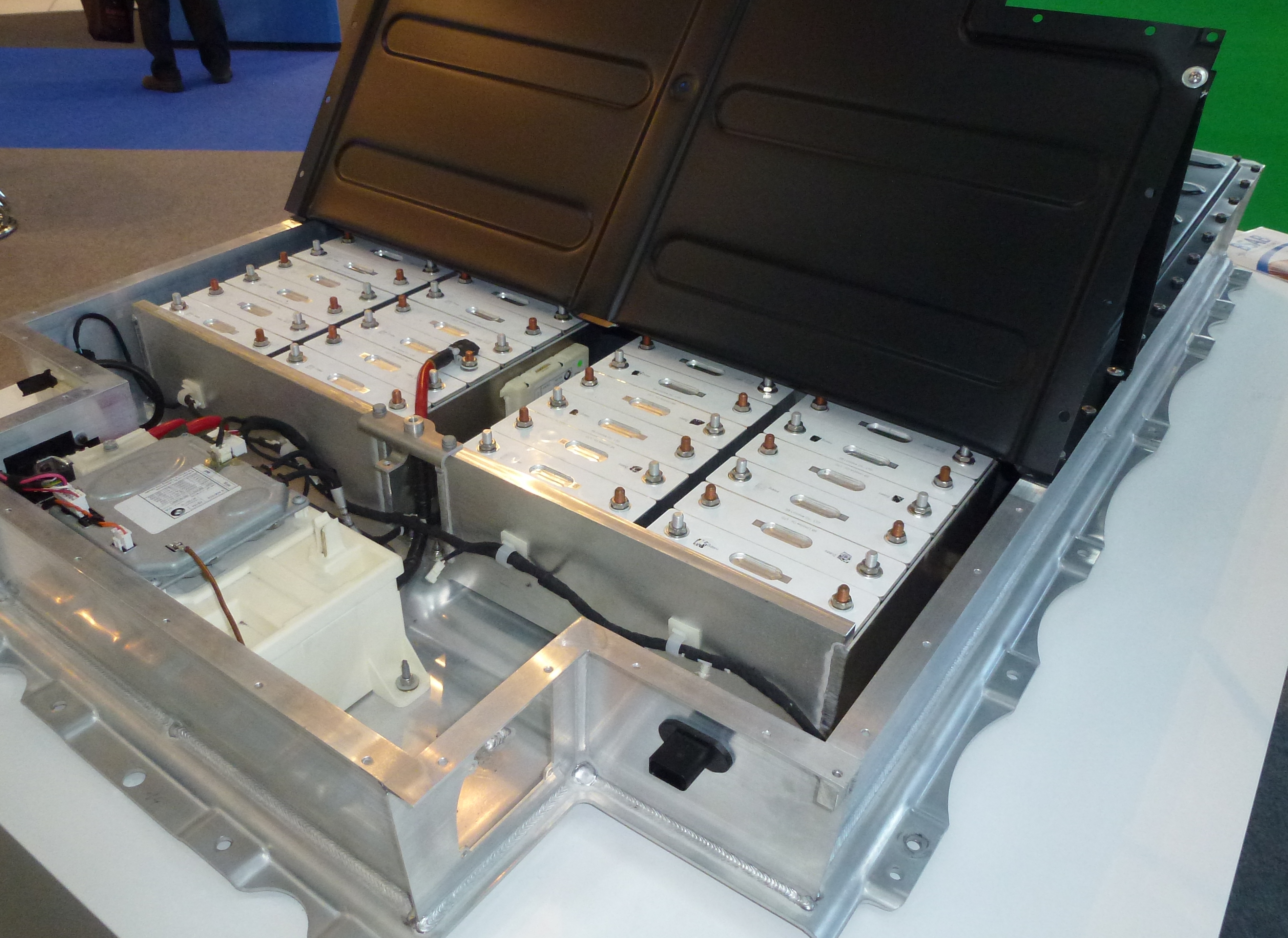
BMW aimed to achieve a range of 100 mi, the same range that was expected for the BMW ActiveE, but in order to reduce weight, battery capacity was cut to 16 kWh instead of the ActiveE's 30 kWh. As initially sold (2014–16 model years), the vehicle's official range is 80 to for the 60 Ah battery option under the New European Driving Cycle (NEDC), and up to 200 km in the most efficient driving mode. Under the United States Environmental Protection Agency (EPA) cycle, the official range of the 60 Ah model is 81 mi with combined fuel economy of 124 miles per gallon gasoline equivalent —MPGe— (1.90 L/100 km; 149 mpg imp).
The 2014–16 model years with the range extender option have an official NEDC total range of 160 to.
The battery is lithium ion using nickel manganese cobalt (NMC) chemistry with a peak output of 139kW (for 10 seconds), peak regen of 53kW (for 10 seconds) and nominal voltage of 355V.
BMW estimates the energy consumption is 0.21 kWh/mile in everyday driving.
Range and economy varies depending on the presence of the range extending internal combustion engine and larger batteries fitted to later models:
| Model year | Model | Battery | EV range | Economy / consumption | Notes | Combined | City | Highway | 2021 | 2020 | 2019 | 2018 | 2017 | 2016 | 2015 | 2014 | Model year | Model | Battery | Range | Economy / consumption | Notes | Combined | City | Highway | EV | with REx | EV | with REx | EV | with REx | EV | with REx | 2021 | 2020 | 2019 | 2018 | 2017 | 2016 | 2015 | 2014 | |
|---|---|---|---|---|---|---|---|---|---|---|---|---|---|---|---|---|---|---|---|---|---|---|---|---|---|---|---|---|---|---|---|---|---|---|---|---|---|---|---|---|---|---|
| i3 / i3s | 120 Ah | 153 mi | 113 mpge | 124 mpge | 102 mpge | |||||||||||||||||||||||||||||||||||||
| i3 | 94 Ah | 114 mi | 118 mpge | 129 mpge | 106 mpge | |||||||||||||||||||||||||||||||||||||
| i3s | 107 mi | 112 mpge | 126 mpge | 99 mpge | ||||||||||||||||||||||||||||||||||||||
| i3 | 114 mi | 118 mpge | 129 mpge | 106 mpge | ||||||||||||||||||||||||||||||||||||||
| 60 Ah | 81 mi | 124 mpge | 137 mpge | 111 mpge | ||||||||||||||||||||||||||||||||||||||
| Range-extended (REx) | ||||||||||||||||||||||||||||||||||||||||||
| i3 REx | 120 Ah | 126 mi | 200 mi | 100 mpge | 31 mpgUS | 107 mpge | 30 mpgUS | 93 mpge | 31 mpgUS | {{efn | The EPA classifies the i3 REx as a series plug-in hybrid or EREV | url=http://www.greencarreports.com/news/1091844_2014-bmw-i3-electric-car-rated-at-81-miles-124-mpge-breaking | title=2014 BMW i3 Electric Car Rated At 81 Miles, 124 MPGe: BREAKING | work=Green Car Reports | author=John Voelcker | date=1 May 2014 | access-date=1 May 2014 | |||||||||||||||||||||||||
| 94 Ah | 97 mi | 180 mi | 111 mpge | 35 mpgUS | 118 mpge | 36 mpgUS | 101 mpge | 33 mpgUS | ||||||||||||||||||||||||||||||||||
| 60 Ah | 72 mi | 150 mi | 117 mpge | 39 mpgUS | 127 mpge | 41 mpgUS | 107 mpge | 37 mpgUS | ||||||||||||||||||||||||||||||||||
| Source: EPA | ||||||||||||||||||||||||||||||||||||||||||
| Notes: |
With these ratings the all-electric BMW i3 was the most fuel efficient EPA-certified vehicle sold in the United States of all years regardless of fuel type until November 2016, when it was surpassed by the Hyundai Ioniq Electric, rated at 136 MPGe (25 kWh/100 mi). Similarly, the i3 REx in 2014 was the most efficient EPA-certified current year vehicle with a gasoline engine, replacing the Chevrolet Volt.

In July 2016, BMW released the 2017 model year (MY) BMW i3 with an improved 94 Ah (33 kWh) battery pack, 50% more capacity than the previous model, resulting in an increase of its range to 114 mi under the EPA cycle, an increase of 33 mi over the 60 Ah variant. The 94 Ah battery gave a range of 300 km under the NEDC test.
The 2017 BMW i3 REx with the larger 94 Ah battery has an EPA-rated range of 97 mi, and combined fuel economy rating is 111 MPG-e. The range using the gasoline-powered engine increased to 83 mi from 78 mi in the previous versions.
The battery rating was again increased in 2018 to 120 Ah, which results in a total capacity of 42.2 kWh. The 2019 BMW i3 REx with 120 Ah battery has an EPA-rated battery-only range of 126 mi, a combined gas and electric range of 200 mi miles, and a combined fuel economy rating of 100 MPG-e.
Charging
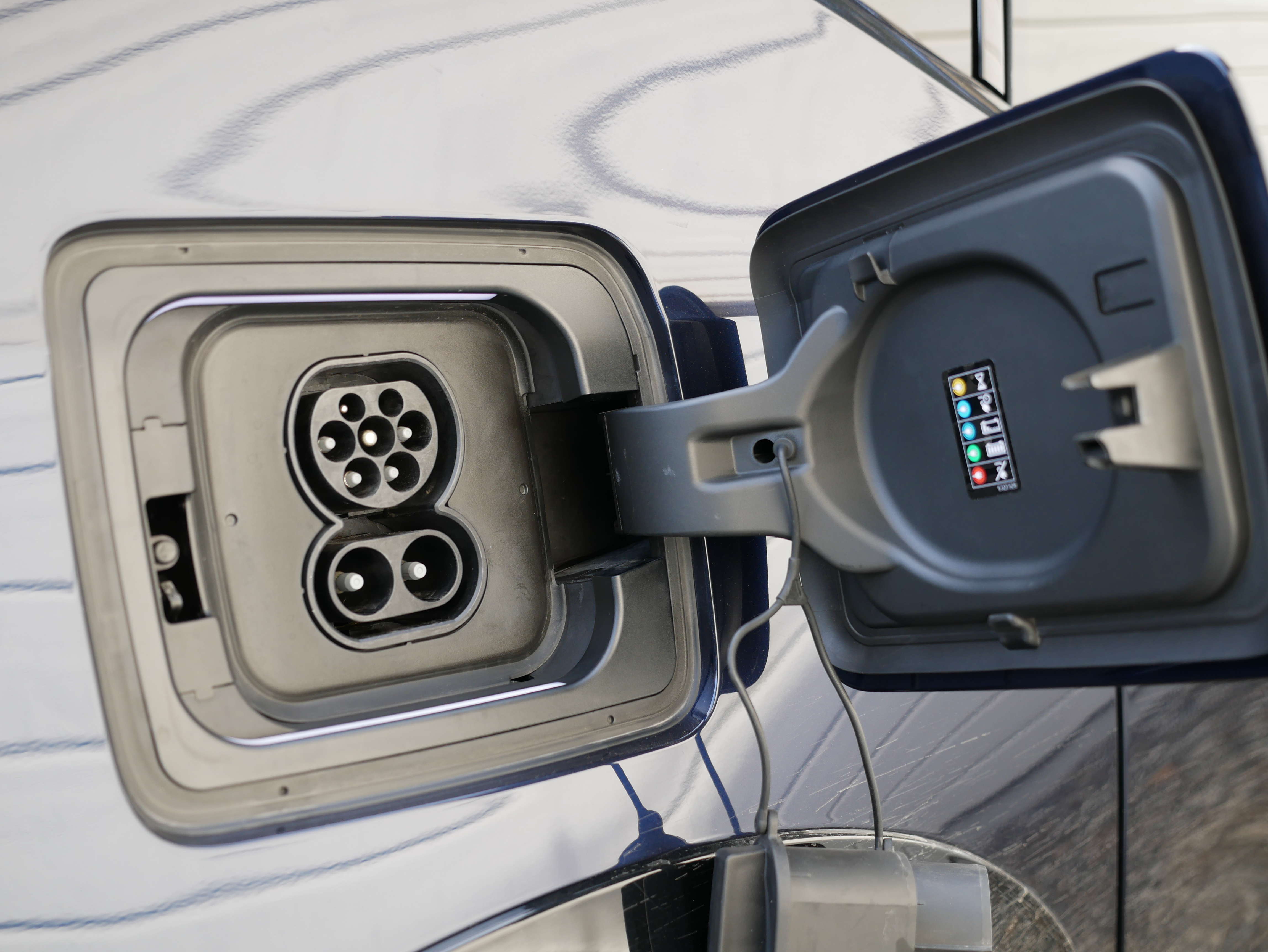

BMW designed the i3 eDrive powertrain based on the premise that the battery would need to be recharged only once every two to three days. The charging frequency was derived from field trial results taken from the BMW ActiveE and MINI E vehicles in Asia, Europe and the U.S., whereby the typical commuting use between the pilot users' homes and workplaces was calculated.
The i3 allows the owner to charge the battery from a conventional wall socket. In addition, the BMW i3 has multiple charging options. With the original 60Ah battery, AC fast charging can take less than 3 hours when charging from 0 to 80% while using the BMW i Wallbox Pure or any 3rd party charging equipment (EVSE) supporting 32A. Most European models supported three-phase AC charging up to 11 kW. The i3 also has a 50 kW DC fast charging option suitable for public DC charging stations, which can take less than 30 minutes to charge the 60Ah version from 0% to 80%. Later 94Ah and 120Ah models take proportionally longer.
In the US, the i3 can also be charged from any public charging station with an SAE J1772 connector. In 2016, BMW and the PG&E utility in California expanded an experiment of delaying charge-up during peak demand and compensating i3 owners for the delay.
BMW claims that the i3 is the first fully online all-electric vehicle, but the Tesla Model S has had full 3G Internet connectivity since 2012.
Additional mobility
BMW i introduced the BMW i Flexible Mobility Program for trips where the range of a BMW i3 would not be enough to allow customers to cover longer distances, such as providing a conventional BMW vehicle for a specified number of days per year. The program started in October 2014 in the US and individual dealers can choose whether to participate in this program. BMW is also offering a roadside assistance program in areas of high sales. The assistance vehicle will provide a charge so the i3 can travel to the next charging station. In addition, the i3 digital display panel shows the location of nearby recharging stations to alleviate range anxiety.
Range extender option (i3 REx)
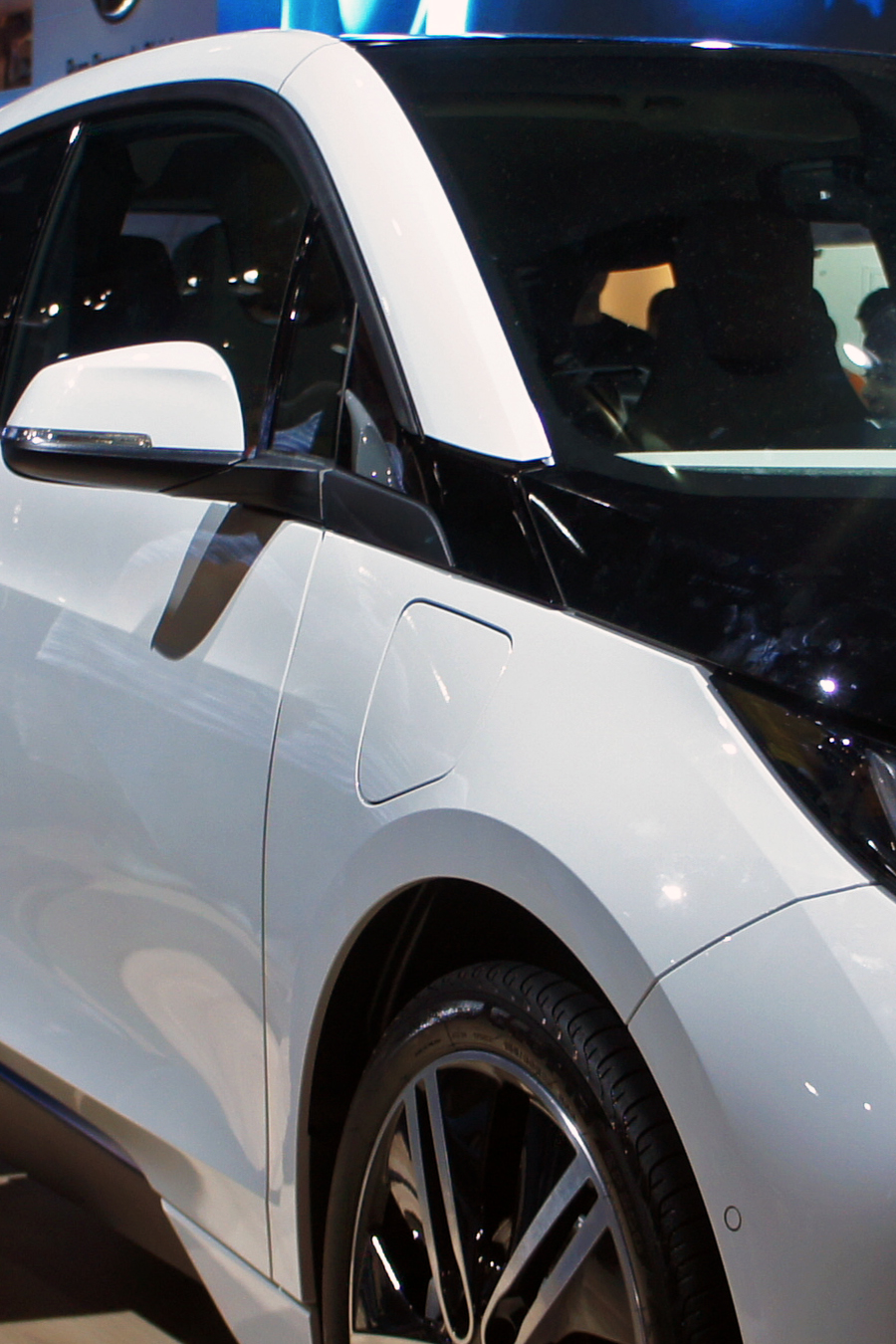
An optional petrol/gasoline range extender engine is marketed as REx The system is intended as an emergency backup to extend range to the next recharging location, and not for long-distance travel. The 647 cc engine as fitted in the i3 REx is derated compared to the engine of the same displacement in the C650 GT; the REx engine develops 25 kW and 55 Nm at 4,300 RPM, achieving compliance with Euro-6 emissions standards compared to the 44 kW (at 7,500 RPM) and 66 Nm (at 6,000 RPM) for the engine in the C650 GT, which complies with the less restrictive Euro-4 emissions.
The REx engine operates when battery capacity drops to a pre-specified level, generating electricity to extend the range. Vehicles equipped with the REx have an additional fuel filler door on the right front fender, allowing drivers to fill the 9 L tank. However, model year 2014–16 i3 REx vehicles in the U.S. are limited to a fuel capacity of 7.2 L electronically, in accordance with the car's classification as a range-extended battery-electric vehicle; with the full capacity, the gasoline-extended range would exceed the all-electric range, which would classify the car as a plug-in hybrid instead. The European model REx has an extended range of approximately 200 mi. In the United States with the limited tank, under EPA five-cycle testing, the i3 REx has a total range of 150 mi, of which approximately half [72 mi] is all-electric.
United States / California regulation
The range-extender option of the BMW i3 was designed to meet the California Air Resources Board (CARB) regulation for an auxiliary power unit (APU). According to rules adopted in March 2012 by CARB, the 2014 BMW i3 with a REx unit fitted is the first car ever to qualify as a range-extended battery-electric vehicle or "BEVx". CARB describes this type of electric vehicle as "a relatively high-electric range battery-electric vehicle (BEV) to which an APU is added." The unit, which maintains battery charge at about 30% after the pack has been depleted in normal use, is strictly limited in the additional range it can provide. As a BEVx, the car is required to deliver a minimum 75 mi electric range.
CARB classified the i3 with the REx option as a "Transitional Zero Emission Vehicle" (TZEV), the same classification as other plug-in hybrids such as the Chevrolet Volt and the Toyota Prius Plug-in Hybrid. This classification made the i3 REx eligible for California's green sticker that identifies the vehicles allowed to be operated by a single occupant in California's high-occupancy vehicle lanes (HOV), or carpool or diamond lanes, but not for the white sticker reserved for pure electric cars, such as the BMW i3 without REx. In addition, CARB certification of the i3 REx as BEVx allows the i3 with range extender to be eligible for a Clean Vehicle Rebate, the same amount eligible pure electric cars are entitled to. Other plug-in hybrids are eligible for only a purchase rebate.
Since the 2017 model years and newer i3 REx have the same battery as the all-electric models, newer i3 REx cars have an increased all-electric range due to the higher capacity 94 Ah battery (2017–18) and 120 Ah battery (2019–22) that now exceeds its gas-powered range. For example, the 2017 model year i3 REx equipped with the range extender has a total range of 180 mi, of which 97 mi is all-electric. With their larger batteries fitted to the 2017 model year and later, the all-electric range exceeds the total gasoline range for the 2017 model year and beyond, so the software restrictions were removed for these model years and BMW was able to unlock the full tank for later models of the i3 REx without affecting its ZEV status.
Interior and controls
In June 2012 an updated version of the BMW i3 concept car was unveiled at the opening of the first BMW i store, located on Park Lane in London, UK. The updated i3 concept consists of a new interior colour and materials concept. The seat covers combine responsibly sourced wool and leather naturally tanned with an olive oil leaf-based agent. The almost symmetrical curving dash is inlaid with treated eucalyptus wood that, according to BMW, is sourced from sustainably managed European forests.
Information is provided to the driver through a 16.5 cm freestanding instrument cluster and a 22.3 cm central information display. The bench-derived front seats replace the center tunnel that bisected the cabin and a floor-mounted transmission, brake levers or center console are also absent.
The BMW i3 has two pedals like all cars with automatic transmission. The accelerator pedal acts as both accelerator and engine brake. When the driver releases the pedal, the vehicle's kinetic energy is regenerated by the vehicle drivetrain to recharge the battery. This has the effect of slowing the car down. During the field testing of the Mini E, which has an accelerator that recharges the battery in this way, and consists of brakes that only apply to the rear wheels, BMW has learned that drivers tend to rely on the engine brake: around 75% of all deceleration maneuvers are initiated without the brake pedal in urban traffic areas.
Operating modes

The BMW i3 allows the driver to select the car energy consumption through three different driving modes: Comfort, Eco Pro or Eco Pro+ mode. In the standard Comfort mode the i3 delivers a range between 80 and in everyday driving conditions, while the i3 REx delivers between 160 and. The Eco Pro mode increases the driving range by around 12% through a different accelerator pedal mapping which uses less power. In Eco Pro+ mode, all settings are geared to achieving the maximum possible range, increasing the driving range by about 24% compared with Comfort mode. In this mode, the maximum speed of the BMW i3 is limited to 90 km/h and electrical devices such as the heating and air conditioning are switched to energy-saving mode. The i3s, introduced for the 2018 model year, adds a SPORT drive mode.
Safety
The European New Car Assessment Programme (Euro NCAP) awarded the i3 a four-star car safety rating, resulting in the following ratings for each criterion:
The BMW i3's overall ratings are lower than the other six best-selling plug-in electric vehicles, the Volvo V60 Plug-in Hybrid, Renault Zoe, Nissan Leaf, Mitsubishi Outlander P-HEV, Chevrolet Volt and Opel Ampera, all of which were rated five stars.
Production
BMW has implemented efficient manufacturing processes and is using recycled materials to lessen the i3's environmental impact.
BMW is manufacturing carbon strands that form the basis of the i3's carbon-fiber reinforced plastic bodywork at a new plant built in Moses Lake, Washington, using raw material shipped from Japan. This location was selected to take advantage of the abundant hydroelectric power available in this U.S. region because carbon-fiber production requires considerable energy and would otherwise emit much carbon dioxide. The carbon fiber is then shipped to Landshut, Germany, where the carbon-fiber reinforced plastic parts are fabricated, and the vehicle assembly line is located in Leipzig.

In November 2010, the Leipzig plant was retooled add electric vehicle assembly lines, with an investment totaling euros () through 2013. The plant is located at BMW's complex that already produces variants of the 1 Series model. Four 2.5 MW Nordex wind turbines at Leipzig came online in 2013, supplying approximately of the factory's electricity needs. The production vehicle was officially unveiled simultaneously in New York, London and Beijing on 29 July 2013. Series production for retail customers began on 18 September 2013, and the first vehicle off the production line was handed over to German marathon runner Jan Fitschen. The car was used as the lead vehicle at the 2013 Berlin Marathon on 29 September.
, BMW was producing an average of 70 cars a day, about half the planned production, with lower production due to a high defect rate in the carbon parts. A subsequent investment of about in the production of carbon parts was made to solve the supply problems. According to BMW, there were 11,000 orders at the time, including 1,200 from U.S. customers. As a result of the high demand and the slow production rate, delivery waiting time extended to September 2014.
, production of the BMW i3 was just over 120 cars per day. By late October 2017, the 100,000th BMW i3 had been built in the Leipzig plant. 700 storage batteries taken from used i3 vehicles were linked as the "Storage Farm" at Leipzig in 2017, allowing the automaker to offset the intermittent nature of wind power. The 200,000th i3 rolled off the production line in the Leipzig plant on 15 October 2020. Production ended in July 2022 with a total of 250,000 units. The last ten units manufactured were the special BMW i3s HomeRun Edition.
Marketing and sales
Production began on 18 September 2013. , the BMW i3 was available in 74 countries.
The first i3 deliveries to retail customers in Europe took place at an official market launch ceremony held in Munich on 15 November 2013. The first delivery to a retail customer in the U.S. took place in May 2014. At its market launch, pricing in the United States started at before any government incentives, and the range extender option an additional . Prices in Germany started from (). Pricing in the UK started at () before the applicable government grant.
After its release BMW, like many other plug-in electric carmakers at the time, faced weak reception of its electric car lineup. BMW expected to sell at least 30,000 units a year from 2014. Global sales passed the 10,000 unit mark in September 2014, 25,000 units in May 2015, and the 50,000 unit milestone was achieved in July 2016. Cumulative global sales attained the 150,000 unit mark by mid 2019.

The i3 was the world's third best all-time selling all-electric car in 2016, after the Nissan Leaf and the Tesla Model S, with more than 65,000 units sold worldwide since its inception. The i3 also ranked third by sales among all-electric cars sold worldwide for three years in a row, from 2014 to 2016.
By the end of 2021, i3 sales since inception totaled over 220,000 units delivered worldwide. , Germany listed as the i3 top selling country market with 47,536 units sold, The Norwegian market has the world's highest i3 penetration per capita. In November 2016, the BMW i3 topped new passenger car monthly sales in Norway. U.S. sales ended in July 2021. Global sales totaled 250,000 units by the end of 2022.
Global sales
The following table presents annual retail sales or registrations of the i3 top selling national markets through December 2021 for both variants of the BMW i3, except when noted. As of December 2021, only countries with cumulative sales of about or over 3,000 units will be included in the table. Thx. Mariordo
| BMW i3 sales/registrations in top selling countries | |||||||||||||||||||||||||||||
|---|---|---|---|---|---|---|---|---|---|---|---|---|---|---|---|---|---|---|---|---|---|---|---|---|---|---|---|---|---|
| 2013 – 2021 | Country | Cumulative | |||||||||||||||||||||||||||
| 2013–2021 | 2021 | 2020 | 2019 | 2018 | 2017 | 2016 | 2015 | 2014 | 2013 | 164,456 | Global sales | 227,678 | 28,216 | 26,770 | 39,501 | 34,623 | 31,482 | ~25,500 | 24,057 | 16,052 | 1,477 | ||||||||
| 47,536 | 12,181 | 8,633 | 9,382 | 5,095 | 4,319 | 2,863 | 2,271 | 2,233 | 559 | ||||||||||||||||||||
| 45,098 | 1,476 | 1,508 | 4,980 | 6,117 | 6,276 | 7,625 | 11,024 | 6,092 | |||||||||||||||||||||
| 28,605 | 2,714 | 4,851 | 5,687 | 5,036 | 3,953 | 2,403 | 2,040 | 51 | |||||||||||||||||||||
| +22,000 | +4,300 | ~3,400 | 3,458 | 2,631 | 2,145 | 1,220 | |||||||||||||||||||||||
| 13,574 | 1,678 | 1,727 | 2,956 | 2,415 | 1,954 | 1,347 | 822 | 607 | 68 | ||||||||||||||||||||
| 8,450 | 1,220 | 2,860 | 1,613 | 881 | 505 | 574 | 545 | 252 | |||||||||||||||||||||
| 6,543 | 749 | 806 | 1,082 | 1,063 | 912 | 547 | 888 | 390 | 106 | ||||||||||||||||||||
| 5,271 | 923 | 769 | 1,174 | 760 | 545 | 500 | 379 | 210 | 11 | ||||||||||||||||||||
| 3,344 | 976 | 1,041 | 789 | 228 | 296 | 14 | |||||||||||||||||||||||
| 3,101 | 403 | 916 | 682 | 683 | 338 | 251 | 204 | 27 | |||||||||||||||||||||
| 3,031 | 512 | 715 | 613 | 430 | 386 | 353 | 32 | ||||||||||||||||||||||
| {{cite web | url=https://www.greenstart.it/dati-vendita-auto-elettriche-ibride-italia-dicembre-2019-19698 | title=Dicembre 2019, i dati di vendita di auto elettriche e ibride in Italia | trans-title=December 2019, sales figures of electric and hybrid cars in Italy | author=Luca Moroni | publisher=Green Start | date=9 January 2020 | access-date=16 June 2020}} | 2,398 | 549 | 487 | 278 | 346 | 213 | 262 | 229 | 34 | |||||||||||||
| Europe | 25,029 | 23,361 | 32,451 | 24,432 | 20,855 | 15,060 | 12,047 | 9,744 | 1,477 |
Reception
The BMW i3 won the Geneva Auto Show Car Design of the Year award for 2013 in the production category; an iF Product Design Gold Award for "the incorporation of sustainability in all facets of the interieur and exterieur design"; the 2014 World Green Car of the Year; the 2014 World Car Design of the Year, UK Car of the Year 2014, UK Best Super-mini of 2014 and Green Car Journals 2015 Green Car of the Year Award.
In Australia, the BMW i3 received the 2014 Wheels Car of the Year by Wheels Magazine. In South Africa the i3 received "Design of the Year" and "Game Changer of the Year" in 2016 by the automotive website cars.co.za.
At the 2017 New York International Auto Show the 94 Ah i3 was named the inaugural winner of the "World Urban Car of the Year".
References
References
- "BMW i3 pioneers use of carbon fiber in mass-produced cars". AutoNews.
- BMW i. "BMW i3 Technical Data: BMW eDrive". BMW.
- "BMW i3 Technical Data".
- (29 November 2018). "BMW i3 2019 120Ah".
- (28 September 2018). "The all-electric BMW i3 120Ah". BMW Press Club UK.
- Nikki Gordon-Bloomfield. (23 April 2014). "U.S. Spec BMW i3 REX: Smaller Gas Tank, No Range Hold, Limited Speed?". Transport Evolved.
- Jay Cole. (29 July 2013). "BMW i3 Range Extender To Offer Up to 87 More Miles, Decreases Performance".
- "Richard Kim – Exterior Designer BMW i3 i8". [[YouTube]].
- [[Phil Patton]]. (10 November 2011). "At BMW's New Electric Subbrand, a Young Designer Makes His Mark". The New York Times.
- Jack Ewing. (29 July 2010). "Will Plug-In BMWs Turn Enthusiasts On?". The New York Times.
- Henry, Jim. "New York Auto Show: BMWi3 Is The 2014 World Green Car Of The Year". Forbes.
- (5 July 2022). "La BMW I3 Tire Sa Révérence Après 8 Ans de Carrière".
- (21 February 2011). "BMW introduces new i sub-brand, first two vehicles i3 and i8; premium mobility services and new venture capital company". Green Car Congress.
- (30 August 2009). "BMW's "{{CO2}} Champion" Performance Concept is a Plug-in Diesel Hybrid; 50 km/31-mile All-Electric Range; Thermo-electric Generator for Waste Heat Recovery". Green Car Congress.
- Shaun Bailey. (13 September 2011). "BMW i3 Concept – 2011 Frankfurt Auto Show". [[Road & Track]].
- Viknesh Vijayenthiran. (20 July 2010). "First Major Outing For BMW Megacity Vehicle At 2012 London Olympic Games". Motor Authority.
- BMW Group Press Club. (28 November 2012). "BMW presents i3 Concept Coupé battery-electric vehicle at the LA Auto Show; focus on connectivity for driver assistance and intermodal mobility". Green Car Congress.
- Chris Woodyard. (28 November 2012). "BMW builds buzz for electric i3 coupe concept". [[USA Today]].
- Voelcker, John. (July 29, 2013). "2014 BMW i3 Electric Car: Full Details And Images Released". Green Car Reports.
- Gall, Jared. (October 22, 2013). "2014 BMW i3". Car and Driver.
- (2013). "The New BMW i3: Electric and Electrifying". BMW Group.
- Braun, Peter. (April 25, 2014). "Megas, Giga, and Terra World aren't sci-fi planets; they're BMW i3 trim levels". digitaltrends.
- Stoklosa, Alexander. (October 11, 2013). "Wacky World: BMW Outlines i3's Bizarrely Named Trim Levels". Car and Driver.
- Moloughney, Tom. (February 18, 2014). "Guide: BMW i3 Wheels and Tires – All you need to know". BMWblog.
- "The BMW i3 (2015 brochure)". i3 Guide.
- "2014 BMW i3 range (brochure)". Niello BMW.
- (2018). "Der Neue BMW i3 und der Neue BMW i3s". BMW Group.
- (10 August 2016). "BMW Group sales grow steadily for best-ever July". [[BMW Group]].
- Cobb, Jeff. (3 August 2016). "July 2016 Dashboard". HybridCars.com and Baum & Associates.
- (14 May 2018). "How to lease a $50,000 BMW for less than a subway pass". Bloomberg.
- (11 March 2018). "Get $10,000 Off BMW i3 Purchase Or $500 Lease Incentive At Costco". InsideEVs.
- (11 March 2018). "More ways to get $10K off BMW i3 electric car: new utilities add discount". Green Car Reports.
- Lilly, Chris. (2 May 2016). "New BMW i3 gets 195-mile range". Next Green Car UK.
- Schwoerer, Philippe. (3 May 2016). "De 300 à 400 km avec la nouvelle BMW i3". Association pour l'Avenir du Véhicule Electrique Méditerranéen (AVEM).
- Loveday, Eric. (5 May 2016). "BMW 33 kWh Battery Retrofit For Older i3s Won't Be Offered in U.S.". InsideEVs.
- DeMattia, Nico. (August 28, 2017). "World Premiere: 2018 BMW i3 LCI Facelift". BMWblog.
- Warner, Robin. (December 22, 2017). "2018 BMW i3s first drive: Sport is used in the relative sense". Autoweek.
- (2020). "The new BMW i3 and i3s 120Ah". Stephen James Ruxley BMW.
- (September 2018). "Technical specifications: BMW i3 / i3s (120 Ah)". BMW Media Information.
- (28 September 2018). "BMW i3 updated with more range and new trim options".
- Krok, Andrew. (October 5, 2018). "2019 BMW i3 loses range extender in Europe thanks to bigger battery". CNet.
- (2021). "The i3 {{!}} The i3s". BMW Group.
- (2019-12-12). "BMW i3 wird noch bis 2024 weitergebaut". ecomento.de.
- Hawkins, Andrew J.. (June 28, 2021). "Say farewell to the BMW i3, the kooky electric hatchback that couldn't quite make it". The Verge.
- Boeriu, Horatiu. (2021-06-25). "BMW i3 era comes to an end in the U.S. this July".
- Dorian, Drew. (30 June 2021). "2021 BMW i3".
- Karr, Anthony. (29 January 2022). "BMW i3 production ending in July after about 250,000 units". Motor1.
- Kable, Greg. (2022-01-28). "Official: BMW i3 electric car production to end in July".
- [https://www.bmwusa.com/content/dam/bmwusa/common/connected-drive/pdf/3G_FAQ.pdf.asset.1659110969709.pdf Frequently Asked Questions] BMW USA. 22 April 2021. Retrieved 19 December 2022
- (22 April 2010). "BMW Group: Megacity Vehicle to launch in 2013". [[BMW]] (press release).
- [[Phil Patton]]. (3 July 2010). "Envisioning a Small Electric BMW for the World's Very Big Cities". The New York Times.
- Sloan, Jeff. (April 23, 2014). "The making of the BMW i3". Composites World.
- (12 November 2013). "The BMW i3 Is Officially Much Greener Than Almost Every Other Car". Jalopnik.
- Goodwin, Antuan. (April 20, 2015). "Tire Tech: How does the BMW i3 handle so well on such narrow tires?". CNet.
- "Next Generation Tire Technology for Fuel Efficiency 'ologic'".
- Nicolas, Romain. (8 January 2014). "Bridgestone ologic tyre fitted in the BMW i3".
- (3 July 2023). "Michelin e Primacy BMW i3 Review".
- (2016-05-30). "BMW {{!}} Auto Catalog Archive - Brochure pdf download".
- Tom Murphy. (19 May 2010). "Mini E Only Beginning of BMW EV Strategy". Wards Auto.
- (2 May 2016). "2017 BMW i3 range jumps to 114 miles thanks to 33 kWh battery".
- (29 July 2013). "The new BMW i3 – born to be electric". BMW Group.
- Antony Ingram. (21 May 2014). "2014 BMW i3 REx Window Sticker Revealed, 39 MPG On Gasoline: BREAKING". Green Car Reports.
- (3 May 2016). "Compare Side-by-Side: 2015/2016 BMW i3 BEV & 2015/2016 BMW i3 REx".
- {{Fuel Economy Guide. (2015)
- {{Fuel Economy Guide. (2015)
- [[United States Environmental Protection Agency]] and [[U.S. Department of Energy]]. (29 September 2016). "Compare Side-by-Side: 2015 BMW i3 REX, 2016 BMW i3 REX, 2017 BMW i3 REX (94 Amp-hour battery), and 2017 BMW i3 BEV (94 Amp-hour battery)".
- "2017 BMW i3, 2016 BMW i3 REX Compare Side-by-Side".
- "2018 BMW i3 Compare Side-by-Side".
- "2019 BMW i3 Compare Side-by-Side".
- (December 10, 2019). "Download Fuel Economy Data".
- (25 July 2014). "Most Efficient EPA Certified Vehicles".
- [[U. S. Environmental Protection Agency]] and [[U.S. Department of Energy]]. (16 November 2016). "Top Fuel Sippers (EPA Ratings, 2017 Model Year)". fueleconomy.gov.
- Edelstein, Stephen. (21 November 2016). "Hyundai Ioniq Electric beats Prius Prime, BMW i3 on energy efficiency". Green Car Reports.
- (16 November 2016). "Fueleconomy.gov's Top Fuel Sippers (EPA Ratings, 2017 Model Year)".
- Energy Efficiency & Renewable Energy, [[U.S. Department of Energy]] and [[U. S. Environmental Protection Agency]]. (24 March 2017). "Find a car – Years: 2016–2017 – Vehicle Type: Electric". fueleconomy.gov.
- Krok, Andrew. (29 July 2017). "By the numbers: Tesla Model 3 vs. Chevrolet Bolt EV". [[CNET]].
- (2 May 2016). "The new 2017 BMW i3 (94 Ah): More range paired to high-level dynamic performance". BMW Group PressClub USA.
- Staff. (2 May 2016). "Mehr Reichweite für den BMW i3". kfz-betrieb.
- Cobb, Jeff. (11 August 2016). "2017 BMW i3 EPA Rated For 114 Miles Range". HybridCars.com.
- Edelstein, Stephen. (12 September 2016). "2017 BMW i3 REx: 97-mile electric range, lower efficiency for range-extended model". Green Car Reports.
- "2019 BMW i3 with Range Extender".
- "Charging and Connectivity". BMW UK.
- "BMW i3 Charging: The Ultimate Guide".
- "BMW i3".
- "Press Release". BMW Group.
- (15 November 2016). "BMW is successfully using its electric vehicle fleet to offer grid services in California". Electrek.
- "Connectivity features". BMW.
- "CNET Tesla 2012 Model S review". CNET.
- Philippe Crowe. (5 March 2013). "BMW Reveals i3 Coming This Year". HybridCars.com.
- "BMW i Flexible Mobility Program Launches in the US".
- Jack Ewing. (15 July 2013). "With i3 Electric Car, BMW Tries to Ease Range Anxiety". [[The New York Times]].
- John Voelcker. (12 March 2013). "BMW i3 Electric Car: ReX Range Extender Not For Daily Use?". Green Car Reports.
- "2-cylinder gasoline range extender engine". BMW Powertrain.
- "2-cylinder inline engines 650cc/800cc". BMW Powertrain.
- (22 January 2015). "BMW i3 REx for U.S. has in fact a 2.4 gallons tank".
- O'Dell, John. (August 15, 2016). "BMW i3 Range Boost: Up 40% for 2017". The Green Car Guy.
- Greg Kable. (24 February 2013). "First rides in BMW i8 hybrid sportscar and all-electric i3". [[Autocar (magazine).
- "BMW i3 REx Lawsuit: How'd This Happen & Who's at Fault".
- John Voelcker. (23 October 2013). "2014 BMW i3 Electric Car: Why California Set Range Requirements, Engine Limits". Green Car Reports.
- Eric Loveday. (28 April 2014). "Breaking: BMW i3 REx Gets Green HOV Sticker, TZEV Rating". InsideEVs.
- Nikki Gordon-Bloomfield. (29 April 2014). "BMW i3 BEVx Approved for Coveted Californian Green HOV-Lane Sticker (Finally)". Transport Evolved.
- John Voelcker. (2 May 2014). "2014 BMW i3 Range-Extended Model Gets Full $2,500 CA Rebate For Electric Cars". Green Car Reports.
- (May 2014). "Eligible Vehicles".
- Nikki Gordon-Bloomfield. (13 June 2012). "First BMW i Store Opens in London, i3 Concept Gets New Interior". Green Car Reports.
- Levent Ozler. (13 June 2012). "First BMW i Store Opens in London: New BMW i3 Concept and BMW i Pedelec Concept". Dexigner.
- Joe Lorio. (May 2010). "Green: Rich Steinberg Interview: Electric Bimmer Man". [[Automobile Magazine]].
- "The BMW i3 with Range Extender – Features & Specs". BMW USA.
- "The BMW i3 – Features & Specs". BMW USA.
- Damon Lowney. (29 July 2013). "BMW i3 gets official worldwide [UPDATE]". Autoblog.com.
- BMW Group. (3 April 2013). "BMW i3 Concept Coupe: European premiere plus intelligent range-enhancing solutions". BMW Press Release.
- "The new BMW i3, the new BMW i3s.". BMW Group.
- Eric Loveday. (27 November 2013). "BMW i3 Scores Only 4 Stars in Euro NCAP Crash Tests (w/videos)". InsideEVs.
- Sloan, Jeff. (31 May 2014). "BMW Leipzig: The epicenter of i3 production". compositesworld.com.
- "How a BMW i is created". bmwgroup-plants.com.
- (14 March 2014). "Video: BMW i3 Factory Production Tour". european auto source.
- Jack Ewings. (5 November 2010). "BMW Inaugurates a Factory for Electric Cars". [[The New York Times]].
- (February 18, 2013). "BMW adds wind power to sidestep Merkel's power bill". Bloomberg.
- MototingPro. (4 March 2013). "BMW i3 concept coupe: European premiere". Automotive Industry Digest.
- Benjamin Preston. (29 July 2013). "BMW Unveils i3 Electric Car". [[The New York Times]].
- Eric Loveday. (18 September 2013). "German Marathon Runner Gets First Production BMW i3". InsideEVs.
- Michael Freitag. (19 February 2014). "Elektromobil – Produktionsprobleme beim BMW i3". Manager Magazine.
- Jason Siu. (31 January 2014). "2014 BMW i3 Orders already hit 11,000 Globally". Auto Guide.
- Kane, Mike. (28 October 2017). "Major Milestone: BMW i3 #100,000 Rolls Off Assembly Line".
- Behrmann, Elisabeth. (October 27, 2017). "BMW taps wind power, old batteries to make car production greener". Automotive News Europe.
- (2020-10-16). "First of its kind and innovation driver for sustainable mobility: 200 000 BMW i3 produced to date". BMW Group PressClub Global.
- Kane, Mark. (2022-07-10). "BMW i3 Production Comes To An End: 250,000 Were Made". InsideEVs.
- (2022-01-12). "Electro-offensive and number one in premium segment: BMW Group posts strong sales for 2021". BMW Group Press Club Global.
- Sebastian Blanco. (18 September 2013). "BMW i3 starts production in Germany using local wind power, US carbon fiber". Autoblog Green.
- BMW Group. (6 November 2013). "The new BMW i3 – Press pack". BMW Group Press Club UK.
- BMW Press Release. (15 November 2013). "BMW i3 market launch". BMW Group USA.
- Eric Loveday. (2 May 2014). "BMW Announces Delivery of First US i3". InsideEVs.
- (22 July 2013). "US MSRP for BMW i3 EV will be $41,350, before incentives". Green Car Congress.
- Jay Cole. (22 July 2013). "BMW Sets Lease Price on i3 At $565 in the UK (£369) – Priced from £25,680". InsideEVs.
- (19 April 2016). "BMW Loses Core Development Team of Its i3 and i8 Electric Vehicle Line". The Wall Street Journal via Yahoo.
- "BMW Sold 5,128 BMW i3/i8 In The First Quarter Of 2016".
- (26 February 2011). "BMW plans to sell at least 30,000 units a year of its i3". Autonews.
- Jeff Cobb. (3 October 2014). "BMW Increasing i3 and i8 Availability in US". HybridCars.com.
- Jeff Cobb. (11 June 2015). "How Nissan and Renault are Dominating the Electric Car Game". HybridCars.com.
- Cobb, Jeff. (1 August 2016). "Renault Zoe and BMW i3 Join The 50,000 Sales Club". HybridCars.com.
- Campbell, Peter. (2019-09-15). "BMW signals end of road for its i3 electric car". [[Financial Times]].
- Cobb, Jeff. (26 January 2017). "Tesla Model S Is World's Best-Selling Plug-in Car For Second Year in a Row". HybridCars.com.
- (18 March 2015). "Statement and presentation by Dr. Norbert Reithofer, Chairman of the Board of Management of BMW AG, Annual Accounts Press Conference in Munich on 18 March 2015". BMW Group.
- Cobb, Jeff. (12 January 2016). "Tesla Model S Was World's Best-Selling Plug-in Car in 2015". HybridCars.com.
- Jeff Cobb. (10 February 2015). "2014's Top-10 Global Best-Selling Plug-in Cars". HybridCars.com.
- Nedela, Andrei. (2022-01-28). "BMW i3 Production Reportedly Coming To An End In July". InsideEVs.
- (2022-01-28). "Cumulative EV registrations by Make and Model". Elbil Statistikk.
- Luca Ciferri. (6 June 2014). "BMW sales boss bullish on 'born electric' range". [[Automotive News]] Europe.
- Hegvold, Ola. (2 December 2016). "BMW med elbil-sjokk i november". [[Adressa]].
- Ewing, Jack. (2021-08-10). "BMW Has Fallen Behind in the Electric Vehicle Race. Can It Catch Up?". [[New York Times]].
- Kraftfahrt-Bundesamtes (KBA). (January 2014). "Neuzulassungen von Personenkraftwagen im Dezember 2013 nach Segmenten und Modellreihen". KBA.
- Kraftfahrt-Bundesamtes (KBA). (January 2015). "Neuzulassungen von Personenkraftwagen nach Segmenten und Modellreihen im Dezember 2014". KBA.
- Kraftfahrt-Bundesamt (KBA). (January 2016). "Neuzulassungen von Personenkraftwagen nach Segmenten und Modellreihen im Dezember 2015". KBA.
- Pontes, Jose. (16 January 2017). "Germany December 2016 (Updated)". EVSales.com.
- Kraftfahrt-Bundesamt (KBA). (January 2018). "Neuzulassungen von Personenkraftwagen nach Marken und Modellreihen im Dezember 2017 (FZ 10) (XLS, 153 KB, Datei ist nicht barrierefrei)". KBA.
- Kraftfahrt-Bundesamt (KBA). (January 2019). "Neuzulassungen von Personenkraftwagen nach Segmenten und Modellreihen im Dezember 2018 (FZ 11) (xlsx, 75 KB, Datei ist nicht barrierefrei)". KBA.
- Kraftfahrt-Bundesamtes (KBA). (January 2020). "Neuzulassungen von Personenkraftwagen nach Segmenten und Modellreihen im Dezember 2019 (FZ 11) (xlsx, 123 KB, Datei ist nicht barrierefrei)". KBA.
- Kraftfahrt-Bundesamt (KBA). (8 January 2021). "Monatliche Neuzulassungen Dezember 2020". KBA.
- Kraftfahrt-Bundesamt (KBA). (January 2022). "Monatliche Neuzulassungen Dezember 2021". KBA.
- Jeff Cobb. (6 January 2016). "December 2015 Dashboard". HybridCars.com and Baum & Associates.
- Jay Cole. (5 January 2015). "December 2014 Plug-In Electric Vehicle Sales Report Card". InsideEVs.
- Cobb, Jeff. (4 January 2018). "December 2017 Dashboard". HybridCars.com and Baum & Associates.
- Steven Loveday. (7 January 2019). "December 2018 U.S. EV Sales Recap: Over 360K Secured!". Inside EVs.
- Kane, Mark. (20 January 2021). "US: BMW i3 Sales Down 70% In 2020". InsideEVs.
- Kane, Mark. (7 January 2022). "US: BMW i Sales Almost Stalled In Q4 Ahead Of i4 And iX Launch". InsideEVs.
- Ståle Frydenlund. (2 January 2014). "7.882 nye elbiler registrert i 2013". Norsk Elbilforening (Norwegian Electric Vehicle Association).
- Norwegian Road Federation (OFV). (January 2015). "CO2-utslippet i desember 2014". OFV.
- Norwegian Road Federation (OFV). (January 2016). "Bilsalget i 2015". OFV.
- Opplysningsrådet for Veitrafikken AS (OFV). "Bilsalget i 2017". OFV.
- Norwegian Road Federation (OFV). (2 January 2019). "Bilsalget i 2018". OFV.
- Norwegian Road Federation (OFV). (January 2020). "OFV Registreringsstatistikk". OFV.
- (2018-03-27). "BMW celebrates 10,000 BMW i3 sales in the UK". BMW Group.
- (2020-01-06). "BMW Group UK reports 2019 sales". BMW Group.
- (30 March 2021). "Pioneering BMW i3 and BMW i3s pricing realigned in the UK". BMW Press Club United Kingdom.
- Automobile Propre. "Chiffres de vente & immatriculations de voitures électriques en France". Automobile Propre.
- AVERE-France. (5 January 2015). "Le marché du véhicule électrique maintient sa progression en 2014". AVERE France.
- Schwoerer, Philippe. (7 January 2016). "Immatriculations des voitures électriques: + 62,1% en 2015". Association pour l'Avenir du Véhicule Electrique Méditerranéen (AVEM).
- France Mobilité Électrique – AVERE France. (9 January 2017). "Plus de 27 000 véhicules électriques immatriculés en 2016, après un mois de décembre record". AVERE.
- France Mobilité Électrique – AVERE France. (9 January 2018). "Près de 31 000 véhicules électriques immatriculés en France en 2017 !". AVERE.
- France Mobilité Électrique – AVERE France. (9 January 2019). "Baromètre annuel: près de 40 000 véhicules électriques immatriculés en France en 2018 !". AVERE.
- (2020-01-09). "Nouveaux records de vente des modèles électrifiés du BMW Group en 2019. BMW Group France confirme sa position de leader du segment automobile Premium". BMW Group.
- Automobile Propre. "Chiffres de vente & immatriculations de voitures électriques en France". Automobile Propre.
- RAI. (24 January 2014). "Verkoopstatistieken – Meer marktinformatie". RAI Vereniging.
- RAI. (27 January 2015). "Verkoopstatistieken". RAI Vereniging.
- RAI. (January 2016). "Nieuwverkoop Personenautos Per Merk/Model". RAI Vereniging.
- RAI Vereniging. (22 January 2018). "Maandelijkse verkoopcijfers". RAI.
- RAI Vereniging. (7 January 2019). "Maandelijkse verkoopcijfers". RAI.
- RAI Vereniging. (3 February 2020). "Verkoopcijfers 2019". RAI.
- RAI Vereniging. "Verkoopcijfers 2020". RAI.
- Vereinigung Schweizer Automobil-Importeure. "Autoverkäufe nach Modellen – Modellstatistik". Auto Schweiz Suisse.
- Vereinigung Schweizer Automobil-Importeure. "Autoverkäufe nach Modellen – Modellstatistik". Auto Schweiz Suisse.
- Auto Schweiz Suisse. (10 January 2020). "Zulassungen neuer Personenwagen nach Modellen". Auto Schweiz Suisse.
- Auto Schweiz Suisse. (5 January 2021). "Statistiken: Zulassungen neuer Personenwagen nach Modellen". Auto Schweiz Suisse.
- Auto Schweiz Suisse. (2 January 2022). "Statistiken: Zulassungen neuer Personenwagen nach Modellen". Auto Schweiz Suisse.
- Bil Sweden. (2 January 2015). "Nyregistreringar december 2014 (prel)". Bil Sweden.
- Bil Sweden. (4 January 2016). "Nyregistreringar december 2015 def". Bil Sweden.
- Bil Sweden. (8 January 2018). "Definitiva nyregistreringar under 2017". Bil Sweden.
- Bil Sweden. (7 January 2019). "Nyregistreringar december 2018 (def)". Bil Sweden.
- Bil Sweden. (7 January 2020). "Nyregistreringar december 2019 (def)". Bil Sweden.
- Bil Sweden. (7 January 2022). "Definitiva nyregistreringar under 2021 – december 2021". Bil Sweden.
- (January 2016). "Bundesländer-Statistik – Dezember 2015". Myampera.wordpress.com.
- Jose Pontes. (24 January 2017). "Austria December 2016". EV Sales.
- Jose Pontes. (17 January 2018). "Austria December 2017". EV Sales.
- (3 January 2014). "Datos de Mercado: Diciembre 2013 – Matriculaciones de automóviles".
- (January 2015). "Datos de Mercado: Diciembre 2014 – Matriculaciones".
- (January 2016). "Datos de Mercado: Diciembre 2015 – Matriculaciones".
- (January 2017). "Datos de Mercado: Diciembre 2016 – Matriculaciones".
- (January 2018). "Datos de Mercado: Diciembre 2017 – Matriculaciones".
- (January 2019). "Datos de Mercado: Diciembre 2018 – Matriculaciones".
- (January 2020). "Datos de Mercado: Diciembre 2019 – Matriculaciones".
- Jose Pontes. (18 January 2014). "Belgium December 2013". EV Sales.
- Pontes, Jose. (24 January 2015). "Belgium December 2014". EV Sales.
- Pontes, Jose. (26 January 2016). "Belgium December 2015". EV Sales.
- Jose Pontes. (24 January 2017). "Belgium December 2016". EV Sales.
- Jose Pontes. (4 January 2018). "Belgium December 2017". EV Sales.
- Jose Pontes. (4 January 2019). "Belgium December 2018". EV Sales.
- Jose Pontes. (6 January 2020). "Belgium December 2019". EV Sales.
- Luca Moroni. (3 January 2014). "I dati di vendita di auto elettriche e ibride a dicembre 2013 in Italia". Green Start.
- Pontes, Jose. (12 January 2015). "Italy December 2014". EVSales.com.
- Luca Moroni. (6 January 2016). "Dicembre 2015, i dati di vendita di auto elettriche e ibride in Italia". Green Start.
- Pontes, Jose. (7 January 2017). "Italy December 2016". EV Sales.
- Pontes, Jose. (27 January 2017). "Italy December 2017". EV Sales.
- Einaudi, Filippo. (4 January 2022). "Le auto elettriche più vendute in Italia nel 2021: la top 50". Inside EVs Italy.
- Mat Gasnier. (19 July 2014). "World Full Year 2013: Discover the Top 1000 best-selling models!". Best Selling Cars Blog.
- (19 January 2015). "Nissan LEAF is the best-selling electric car in Europe for fourth year in a row". Nissan Europe.
- Gibbs, Nick. (15 March 2016). "Hybrid sales expected to triple in Europe as tougher {{CO2}} rules loom". [[Automotive News.
- Jose, Pontes. (30 January 2017). "Europe December 2016 (Updated)". EVSales.com.
- Jose, Pontes. (28 January 2018). "Europe December 2017". EVSales.com.
- Jose, Pontes. (28 January 2019). "Europe December 2018". EVSales.com.
- Gauthier, Michael. (2020-02-19). "European Car Sales Climbed To 15.7 Million Units Last Year, Tesla Model 3 Is The EV Champion". Carscoops.
- Demandt, Bart. (10 April 2014). "BMW i3 European Sales Figures". Carsalesbase.com.
- (9 January 2015). "BMW Group sells more than 2 million vehicles in 2014". BMW Group PressClub Global.
- (11 January 2016). "BMW Group achieves fifth consecutive record sales year". BMW Group.
- (25 January 2018). "Record sales for BMW Group worldwide during 2017 while it boosts the Premium car market in Mexico, Latin America and the Caribbean.". BMW Group.
- (2020-03-18). "BMW Group Geschäftsbericht 2019". BMW Group.
- (14 January 2019). "BMW Group remains world's leading premium automotive company in 2018". [[BMW Group]].
- Electric Cars TV. (15 March 2014). "Video: BMW i3 Wins Gold iF Award For Design". InsideEVs.
- Jim Henry. (17 April 2014). "New York Auto Show: BMWi3 Is The 2014 World Green Car Of The Year". [[Forbes]].
- Alisa Priddle. (20 November 2014). "BMW i3 named 2015 Green Car of the Year". [[Detroit Free Press]].
- (21 January 2015). "BMW i3 – Wheels Car of the Year 2014".
- (25 January 2016). "BMW i3 – Design of the Year". Cars.co.za.
- (22 January 2016). "BMW i3 – Game Changer of the Year". Cars.co.za.
- "The BMW i3 94Ah wins 2017 World Urban Car Award.".
This article was imported from Wikipedia and is available under the Creative Commons Attribution-ShareAlike 4.0 License. Content has been adapted to SurfDoc format. Original contributors can be found on the article history page.
Ask Mako anything about BMW i3 — get instant answers, deeper analysis, and related topics.
Research with MakoFree with your Surf account
Create a free account to save articles, ask Mako questions, and organize your research.
Sign up freeThis content may have been generated or modified by AI. CloudSurf Software LLC is not responsible for the accuracy, completeness, or reliability of AI-generated content. Always verify important information from primary sources.
Report