From Surf Wiki (app.surf) — the open knowledge base
BM-30 Smerch
Soviet/Russian multiple launch rocket system
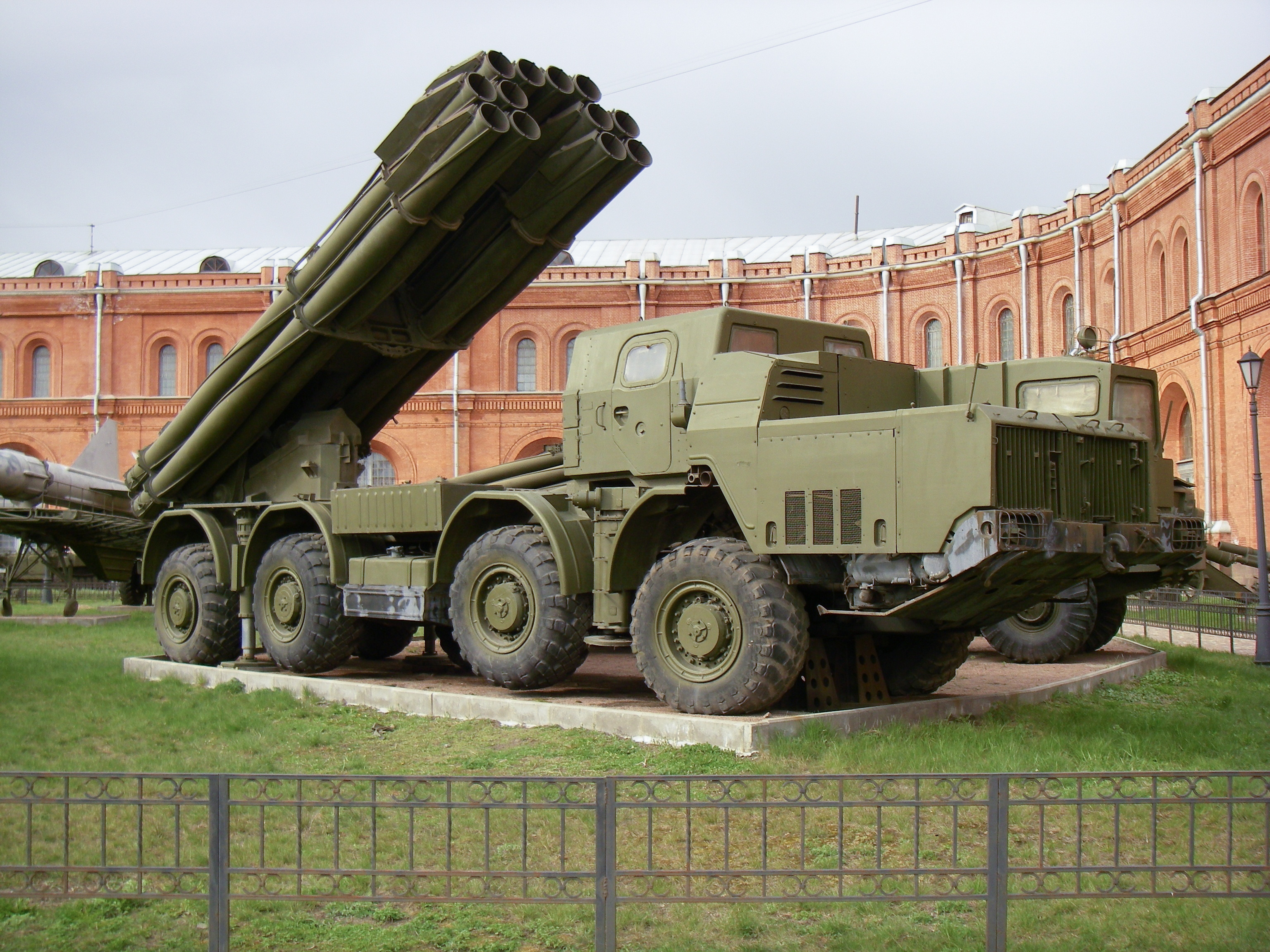
Soviet/Russian multiple launch rocket system
| Field | Value | |
|---|---|---|
| name | BM-30 Smerch | |
| image | [[File:RSZO Smertch.jpg | 300px]] |
| image_size | 300 | |
| caption | 9A52-2 "Smerch" launch vehicle | |
| origin | Soviet Union, Russia | |
| type | Multiple rocket launcher | |
| is_artillery | yes | |
| is_vehicle | yes | |
| is_UK | ||
| service | 1989–present | |
| used_by | See Operators | |
| wars | Second Chechen War | |
| War in Donbas | ||
| Syrian Civil War | ||
| Second Nagorno-Karabakh War | ||
| Russo-Ukrainian war | ||
| <!-- Production history --> | designer | Splav State Research and Production Enterprise |
| design_date | 1980s | |
| manufacturer | Splav State Research and Production Enterprise | |
| production_date | 1989–present | |
| variants | See Variants | |
| <!-- General specifications --> | weight | 43.7 t |
| length | 12 m | |
| width | 3.05 m | |
| height | 3.05 m | |
| crew | 3 | |
| caliber | 300 mm | |
| barrels | 12 | |
| max_range | 120 km (9M542 rocket) | |
| 200 km (9M544 rocket) | ||
| sights | ||
| traverse | ||
| haft_type | ||
| yield | ||
| primary_armament | 9M55 or 9M528 rockets | |
| engine | D12A-525A V12 diesel engine | |
| engine_power | 525 hp | |
| suspension | 8×8 wheeled | |
| vehicle_range | 850 km | |
| speed | 60 km/h |
War in Donbas Syrian Civil War Second Nagorno-Karabakh War Russo-Ukrainian war 200 km (9M544 rocket)
The **BM-30 ''Smerch''''' (, 'whirlwind'), 9K58 Smerch or 9A52-2 Smerch-M is a heavy self-propelled 300 mm multiple rocket launcher designed in the Soviet Union to fire a full load of 12 solid-fuelled projectiles. The system is intended to defeat personnel, armored, and soft targets in concentration areas, artillery batteries, command posts and ammunition depots. It was designed in the early 1980s and entered service in the Soviet Army in 1989. When first observed by the West in 1983, it received the code **MRL 280mm M1983'''. It continues in use by Russia; a program to replace it with the Tornado-S began in 2018.


Operational history
The first confirmed combat uses of the Smerch were in two war zones in 2014. Syrian military forces used the system against rebel forces during the Syrian civil war, including in fighting in Jobar. It was also used by Russia-backed militants to deliver explosive and cluster munitions to Ukrainian military positions and likewise by the Ukrainian Army. Several have been seen in use by pro-Russian rebels. The Russian Ground Forces used the BM-30 in Syria in October 2015 during the Russian intervention in Syria.
During the 2020 Nagorno-Karabakh conflict, Armenia and Azerbaijan both targeted each other's territory with Smerch rockets.
As of November 2025, there is visual evidence of three Russian Military BM-30s being destroyed in the Russian invasion of Ukraine. Smerch rockets were fired from Belgorod in the 2022 Russian Invasion of Ukraine. During the Battle of Kharkiv it is alleged that 11 Smerch rockets were fired on 27–28 February alone.
Components
The main components of the RSZO 9K58 "Smerch" system are the following:
- Rockets 9M55 or 9M528 (in containers);
- BM 9A52-2 launch vehicle;
- TZM 9T234-2 transloader with an 850 kg crane and 12 spare rockets;
- Automated fire control equipment in the command post 1K123 "Vivary";
- Maintenance vehicle PM-2-70 MTO-V;
- Set of arsenal equipment 9F819;
- Training facilities 9F827 and 9F840.
300mm rockets with a firing range of 70 and 90 km and various warheads have been developed for the Smerch MLRS.
The 9A52-2 vehicle with the automated system ensures:
- delivery of fire from an un-surveyed fire position;
- laying of the launch tube cluster with the crew staying in the cabin and without using aiming points;
- autonomous determination of an azimuth of the launch tube cluster's longitudinal axis;
- visual representation of graphical information for the launch tube cluster laying, the route of vehicle movement and location as well as a point of destination and direction of movement on the video terminal;
- increase in MLRS survivability owing to reduced time of staying at a fire position;
- increased comfort for the laying operator, especially in adverse weather conditions and at night;
- increased independent operation owing to the navigation and survey equipment, which allows the vehicle to rapidly change fire positions and move autonomously;
- reduction of the combat crew.
General characteristics
- Chassis: MAZ-543M or MAZ-79111
- Emplacement Time: 3 min
- Displacement Time: 2 min
- Launch Rate
- Salvo Time: 12 rounds in 38 seconds
- Reload Time: 20 min
Variants
.jpg)
- 9A52 – Standard variant on MAZ-79111 truck.
- 9A52-2 – Modified variant on MAZ-543M truck.
- 9A52-2T – Export version, based on the Tatra T816 10×10 truck.
- 9A52-4 – Lighter, airmobile version on KamAZ-6350 truck with modular 6-round rocket pack. Demonstrated in 2007.
- Arctic version with rockets mounted on DT-30PM tracked vehicle.
- 9A54 – Tornado-S, upgraded with a GLONASS receiver and automated digital FCS.
Rocket projectiles
| Variant | Rocket | Warhead | Guidance system | Range | Name | Type | Weight | Length | Weight | Submunition | Self-destruct time | Min. (km) | Max. (km) | 9M55K | 9M55K1 | 9M55K4 | 9M55K5 | 9M55F | 9M55C | 9M528 | 9M534 | 9М542 | R624 | R624M |
|---|---|---|---|---|---|---|---|---|---|---|---|---|---|---|---|---|---|---|---|---|---|---|---|---|
| Cluster munition, anti-personnel | 800 kg | 7.6 m | 243 kg | 72 × 1.75 kg, each with 96 fragments (4.5 g each) | 110 sec | |||||||||||||||||||
| Cluster munition, self-guided anti-tank | 243 kg | 5 × 15 kg | ||||||||||||||||||||||
| Cluster munition, AT minelets. | 243 kg | 25 × 5 kg mines | 24 hour | |||||||||||||||||||||
| HEAT/HE-Fragmentation. | 243 kg | 646 × 0.25 kg (up to 120 mm RHA armor-piercing) | 260 sec | |||||||||||||||||||||
| Separable HE-Fragmentation | 258 kg | |||||||||||||||||||||||
| Thermobaric | 243 kg | |||||||||||||||||||||||
| HE-Fragmentation | 815 kg | 243 kg | ||||||||||||||||||||||
| UAV delivery system | Drone | |||||||||||||||||||||||
| HE-Fragmentation, PGM | 150 kg | Inertial, GLONASS, 4 canards | ||||||||||||||||||||||
| 250 kg | Inertial, GPS, 90 pulse engines | |||||||||||||||||||||||
| 170 kg |
Operators

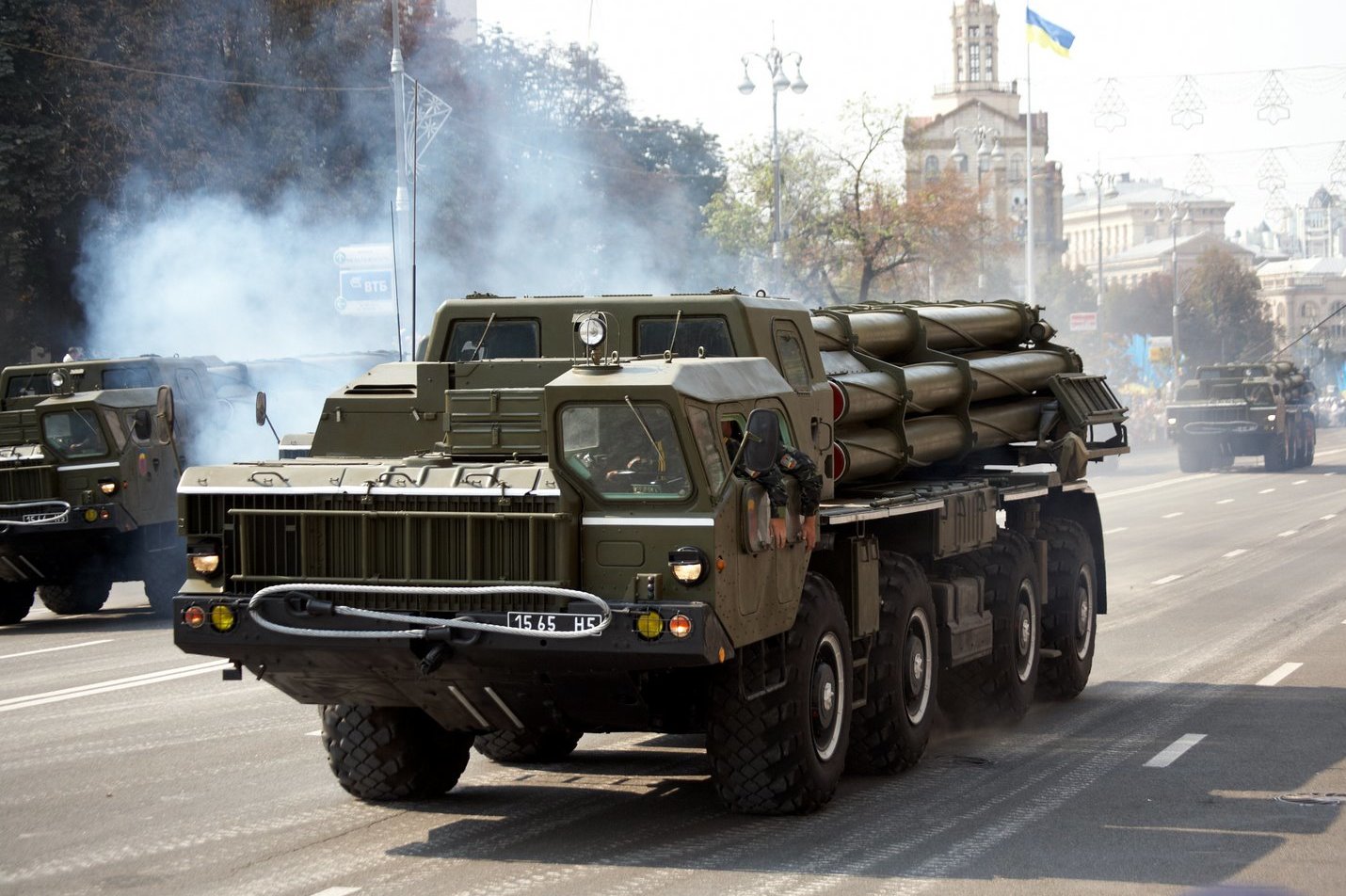

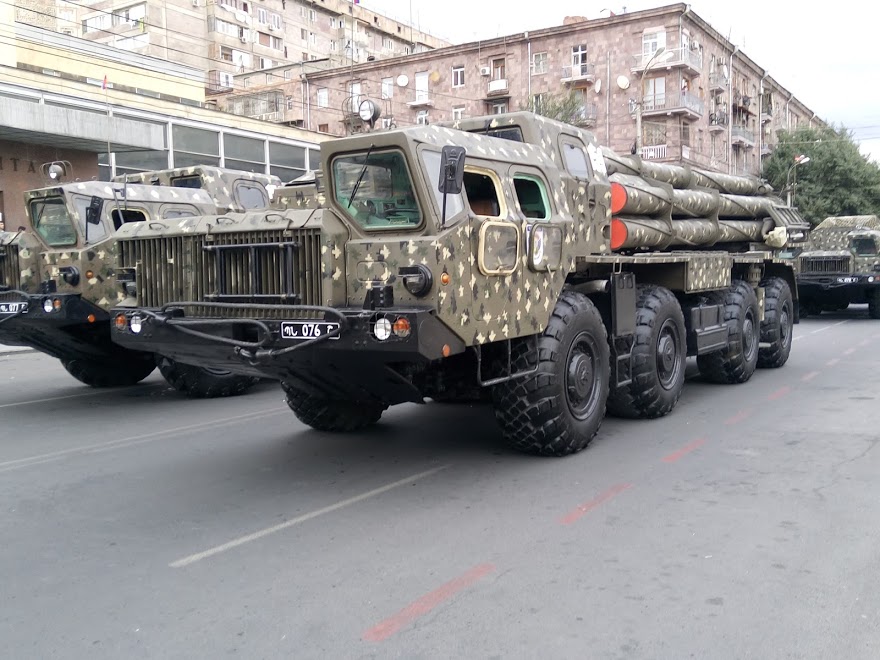
Current operators

- Algeria – 18 BM-30s received from Russia in 1999. All in service as of 2024.
- Armenia – 6 purchased from Russia and received in 2017-18. All in service as of 2024.
- Azerbaijan – 50 BM-30 Smerch and 10 Polonez in service as of 2024.
- – 36 BM-30 Smerch and 10 Polonez/Polonez-M in service as of 2024.
- India – Total 42 9A52-2T launchers in service as of 2024 (3 regiments). The first deal, worth $450 million, to equip 2 artillery regiments (28 launchers) was signed in December 2005. Deliveries were completed by March 2008.
- – 6 in service as of 2024.
- – 27 systems in service as of 2024.
- Libya - Several seen in a military parade in Benghazi in 2025 (in service of the Libyan National Army).
- – 104+ BM-30 Smerch and 20 Tornado-S in service as of 2024. At least 3 BM-30 have been lost in the Russian Invasion of Ukraine as of 20 December 2024.
- – Unknown number in service. Used in the Syrian civil war. 2 BM-30 Smerchs were captured by HTS rebel forces in the 2024 Syrian rebel offensive.
- – 6 systems in service as of 2024.
- – 40 BM-30 Smerch and some Vilkha as of 2024. Serviceability is doubtful.
- – 6 systems in service as of 2024.
- – 12 systems in service as of 2024.
Former operators
- : Passed on to successor states.
Similar systems
- **** – Visually similar missile based on the Wanshan WS-2400 8x8 cross country truck. However, the PHL-03 and BM-30 do not share interchangeable parts, so they are distinct missiles despite their similar appearance. The Chinese vehicle utilizes a German-designed diesel engine, transmission and hydraulics, manufactured by Wanshan in China, following a technology transfer from ZF Friedrichshafen. The program began in the late 1990s, with the '96' in the designation reportedly meaning 1996, the year that the Chinese military first issued the requirement for a new long-range SPMRLS. The program went through major redesign changes when the BM-30 Smerch was purchased. Although dubbed by many Chinese as a guided self-propelled multiple rocket launching system (SPMRLS), the PHL96 is not strictly speaking a guided SPMRLS because, technically, none of rockets are guided – the guidance is actually achieved via the sub-munitions, such as the 9M55K1 cluster munition. Only a very limited number of the PHL96 entered Chinese service because its successor, the PHL03, entered service shortly after.

- PHL03PHL-03 – Chinese development of the PHL96 with 150 km range. The PHL03 is a highly digitized PHL96 with a computerized fire control system (FCS) incorporating GPS/GLONASS, similar to that of the Type 90A SPMRL, with a four-man crew (compared with three for the BM-30/PHL96), which entered service around 2004–2005, only a year or two after its predecessor, the PHL96. As with the PHL96, the PHL03 is not exactly a guided SPMRL because it is the submunitions that are guided, not the rockets themselves.
- Vilkha - A Ukrainian development of the Smerch system that entered service in 2018 with the Ukrainian Rocket Forces.
References
0:48 – Cluster – fragmentation 1:30 – Separable HE-Frag warhead 2:00 – Cluster – self-guided EFP (AT) elements 3:00 – Cluster – anti-tank mines 3:30 – Cluster – shaped charge/frag elements 3:50 – Unmanned aerial vehicle 5:20 – Thermobaric warhead}}
- Russia's Arms Catalog 2004
Bibliography
- Jamie Prenatt and Adam Hook, Katyusha – Russian Multiple Rocket Launchers 1941–Present, New Vanguard 235, Osprey Publishing Ltd, Oxford 2016.
References
- "BM-30 Smerch and BM-27 Uragan of Syrian Army shooting at IS positions in Palmyra – Syria".
- Ripley, Tim. (8 October 2020). "Armenia and Azerbaijan trade heavy fire". [[Janes Information Services.
- (11 March 2022). "Ukraine conflict: Russian forces employ guided rockets".
- (2007-12-23). "Военная кафедра МЭСИ".
- Dmitry Fediushko. (20 November 2018). "Russia refits Missile Troops and Artillery".
- (2014-12-27). "Syria's BM-30 Smerchs, emerging from the shadows".
- (September 2014). "Ukraine: Rising Civilian Toll in Luhansk".
- (20 October 2014). "Ukraine: Widespread Use of Cluster Munitions".
- (22 January 2015). "[1152] Makeevka: Smerch". Bellingcat Vehicles.
- (22 January 2015). "[1154] Makeevka: Smerch". Bellingcat Vehicles.
- "Russian Troops Fire Artillery and Rockets in Syria". ABC News.
- [https://www.nytimes.com/2020/10/05/world/europe/armenia-azerbaijan-nagorno-karabakh.html 'Then I Heard a Boom': Heavy Weapons Take Toll on Civilians in Armenia-Azerbaijan Clash'] Kramer, Andrew E. ''The New York Times'', 5 October 2020. Retrieved 8 Oct 2020.
- "Attack on Europe: Documenting Russian Equipment Losses During the Russian Invasion of Ukraine".
- (2022-05-14). "Exclusive: Russian general who oversaw atrocities in Syria led cluster bomb attacks on civilians in Ukraine". CNN.
- "Объединяя лучшее. Боевая машина 9А52-2Т РЗСО «СМЕРЧ» на шасси автомобиля «Татра» на выставке вооружений в Нижнем Тагиле «REA-2008» в 2008 году".
- (2013-07-14). "Russian army Arctic brigade will be equipped with Grad & Smerch MLRS on DT-30PM".
- [https://www.armyrecognition.com/russia_russian_army_vehicles_system_artillery_uk/tornado-s_9k515_mlrs_300mm_multiple_launch_rocket_system_data_fact_sheet.html TORNADO-S 9K515 MLRS] {{Webarchive. link. (29 December 2022 . ''Army Recognition''.)
- SIPRI. "SIPRI Arms Transfer Database".
- "Armenia receives $200mln worth of weapons from Russia".
- Peri, Dinakar. (2022-09-27). "Army deploys medium, long-range weapons across northern border". The Hindu.
- "General Haftar scares Tripoli by revealing new advanced weapons to the world".
- Oryx. "Attack On Europe: Documenting Russian Equipment Losses During The Russian Invasion Of Ukraine".
- Eliot Higgins. (14 February 2014). "Evidence of the Syrian Military Deploying BM-30 Smerch Launched Cluster Munitions". Brown Moses Blog.
- "A 3-day SMO Done Right - 2024 Syrian Rebel Offensive and the Resulting Collapse of the Regime Military in Northern Syria".
- John Pike. "9A52-2 BM-30 300-mm Multiple Rocket Launcher".
- Blasko, Dennis J.. (2013-06-17). "The Chinese Army Today: Tradition and Transformation for the 21st Century". Routledge.
This article was imported from Wikipedia and is available under the Creative Commons Attribution-ShareAlike 4.0 License. Content has been adapted to SurfDoc format. Original contributors can be found on the article history page.
Ask Mako anything about BM-30 Smerch — get instant answers, deeper analysis, and related topics.
Research with MakoFree with your Surf account
Create a free account to save articles, ask Mako questions, and organize your research.
Sign up freeThis content may have been generated or modified by AI. CloudSurf Software LLC is not responsible for the accuracy, completeness, or reliability of AI-generated content. Always verify important information from primary sources.
Report