From Surf Wiki (app.surf) — the open knowledge base
Blurb
Short promotional written piece accompanying a creative work

Short promotional written piece accompanying a creative work
A blurb is a short promotional piece accompanying a piece of creative work. It may be written by the author or publisher or quote praise from others. Blurbs were originally printed on the back or rear dust jacket of a book. With the development of the mass-market paperback, they were placed on both covers by most publishers. Now they are also found on web portals and news websites. A blurb may introduce a newspaper or a book.
History
In the US, the history of the blurb is said to begin with Walt Whitman's collection, Leaves of Grass. In response to the publication of the first edition in 1855, Ralph Waldo Emerson sent Whitman a congratulatory letter, including the phrase "I greet you at the beginning of a great career": the following year, Whitman had these words stamped in gold leaf on the spine of the second edition.
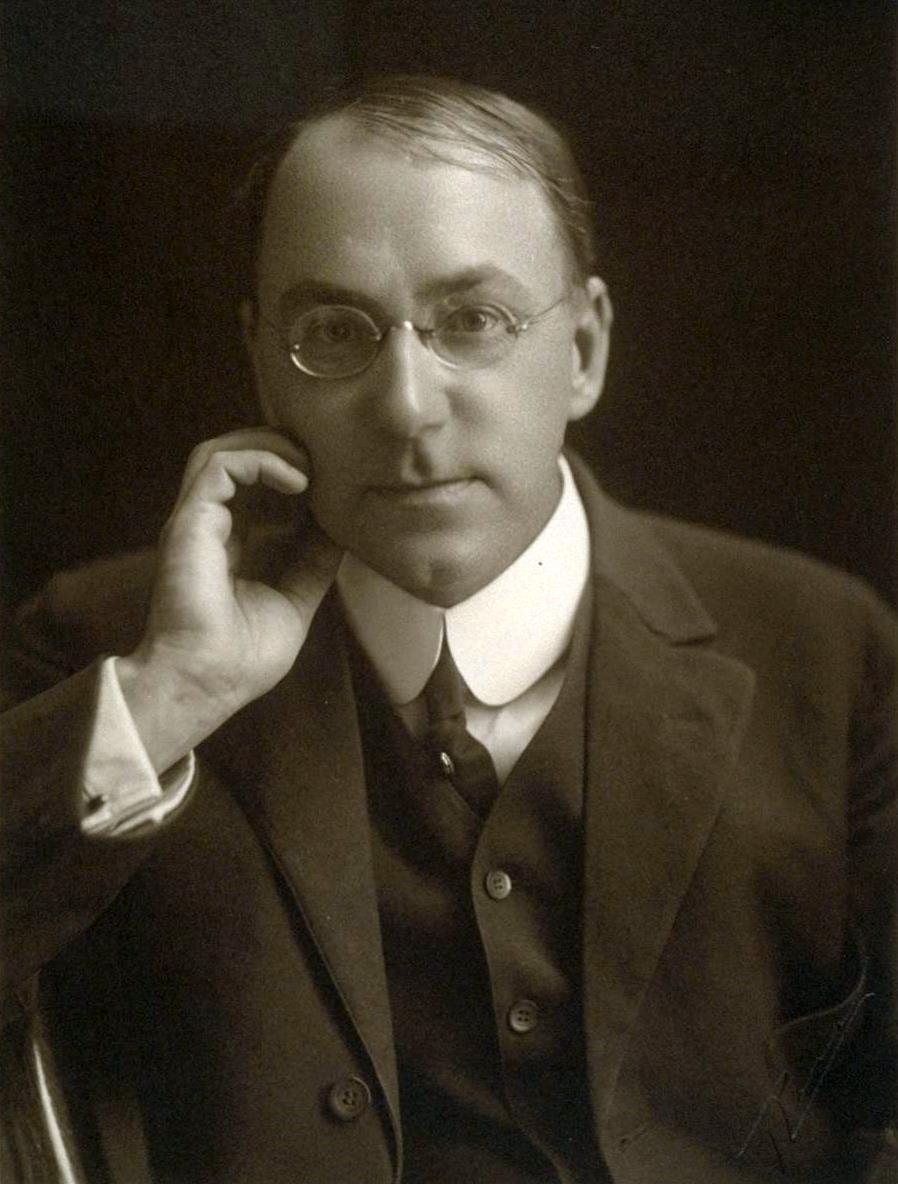
The word blurb was coined in 1906 by American humorist Gelett Burgess (1866–1951). The October 1906 first edition of his short book Are You a Bromide? was presented in a limited edition to an annual trade association dinner. The custom at such events was to have a dust jacket promoting the work and with, as Burgess' publisher B. W. Huebsch described it, "the picture of a damsel—languishing, heroic, or coquettish—anyhow, a damsel on the jacket of every novel".
In this case, the jacket proclaimed "YES, this is a 'BLURB'!" and the picture was of a (fictitious) young woman "Miss Belinda Blurb" shown calling out, described as "in the act of blurbing." The name and term stuck for any publisher's contents on a book's back cover, even after the picture was dropped and only the text remained.
Books
A blurb on a book can be any combination of quotes from the work, the author, the publisher, reviews or fans, a summary of the plot, a biography of the author or simply claims about the importance of the work.
In the 1980s, Spy ran a regular feature called "Logrolling in Our Time" which exposed writers who wrote blurbs for one another's books.
Blurb requests
Prominent writers can receive large volumes of blurb requests from aspiring authors. This has led some writers to turn down such requests as a matter of policy. For example, Gary Shteyngart announced in The New Yorker that he would no longer write blurbs, except for certain writers with whom he had a professional or personal connection. Neil Gaiman reports that "Every now and again, I stop doing blurbs.... The hiatus lasts for a year or two, and then I feel guilty or someone asks me at the right time, and I relent." Jacob M. Appel reports that he received fifteen to twenty blurb requests per week and tackles "as many as I can."
In acknowledgement of such concerns, Simon & Schuster announced in 2025 that it would not expect authors to solicit blurbs for their books. The publisher was quoted in The New York Times as saying that the requesting of blurbs "often rewards connections over talent” and that the practice exacts too much time from authors.
Film
Movie blurbs are part of the promotional campaign for films, and usually consist of positive, colorful extracts from published reviews.
Movie blurbs have often been faulted for taking words out of context. The New York Times reported:
Chris Beam from Slate wrote in an "Explainer" column:
Many examples exist of blurb used in marketing a film being traceable directly back to the film's marketing team.{{cite web
References and sources
;References ;Sources
- The story of Miss Belinda Blurb at wordorigins.org
- Original dust jacket at the Library of Congress
Bibliography
- {{cite book |author1=John Carter |author-link=John Carter (Author) |author2=Nicolas Barker |author2-link=Nicolas Barker |url= http://www.ilab.org/eng/documentation/30-john_carters_abc_for_book_collectors.html |title=ABC for Book Collectors |edition= 8th |isbn= 1584561122 |year= 2004
- {{cite journal |title= Patterns of puffery: an analysis of non-fiction blurbs |author= Blaise Cronin and Kathryn La Barre |journal= Journal of Librarianship and Information Science |volume= 37 |doi= 10.1177/0961000605052156 |year= 2005
- "'Riveting!': The Quandary of the Book Blurb", New York Times, March 6, 2012
References
- Dwyer, Colin. (27 September 2015). "The Curious Case Of The Book Blurb (And Why It Exists)". [[NPR]].
- '' The Cambridge Encyclopedia of The English Language''. Ed. [[David Crystal]]. Cambridge: [[Cambridge University Press]], 1995. p. 132. {{ISBN. 0521401798
- (10 December 2006). "Spy: The Funny Years". Variety.
- Shteyngart, Gary. "An Open Letter from Gary Shteyngart".
- "American Gods Blog, Post 36".
- Writers's Voice, Oct 2015
- Egan, Elisabeth. (2025-02-04). "What Are Book Blurbs, and How Much Do They Matter in Publishing?". The New York Times.
- Reiner, L. (1996). "Why Movie Blurbs Avoid Newspapers." ''Editor & Publisher: The Fourth Estate, 129,'' 123.
- Bialik, Carl. (January 6, 2008). "The Best Worst Blurbs of 2007: The 10 most egregious misquotes, blurb whores, and other movie-ad sins of 2007". Gelf Magazine.
- Sancton, Julian. (March 19, 2010). "Good Blurbs from Bad Reviews: ''Repo Men'', ''The Bounty Hunter'', ''Diary of a Wimpy Kid''".
- McGlone, Matthew S. (2005). "Contextomy: The Art of Quoting Out of Context." ''Media Culture, & Society,'' Vol. 27, No. 4, 511-522.
- Barnes, Brooks. (June 6, 2009). "Hollywood's Blurb Search Reaches the Blogosphere". [[The New York Times]].
- Beam, Chris. (Nov 25, 2009). "'(Best) Film Ever!!!' How Do Movie Blurbs Work?". Slate.
This article was imported from Wikipedia and is available under the Creative Commons Attribution-ShareAlike 4.0 License. Content has been adapted to SurfDoc format. Original contributors can be found on the article history page.
Ask Mako anything about Blurb — get instant answers, deeper analysis, and related topics.
Research with MakoFree with your Surf account
Create a free account to save articles, ask Mako questions, and organize your research.
Sign up freeThis content may have been generated or modified by AI. CloudSurf Software LLC is not responsible for the accuracy, completeness, or reliability of AI-generated content. Always verify important information from primary sources.
Report