From Surf Wiki (app.surf) — the open knowledge base
Blue corn
Variety of maize
Variety of maize
_and_roasted_and_ground_(R).jpg)
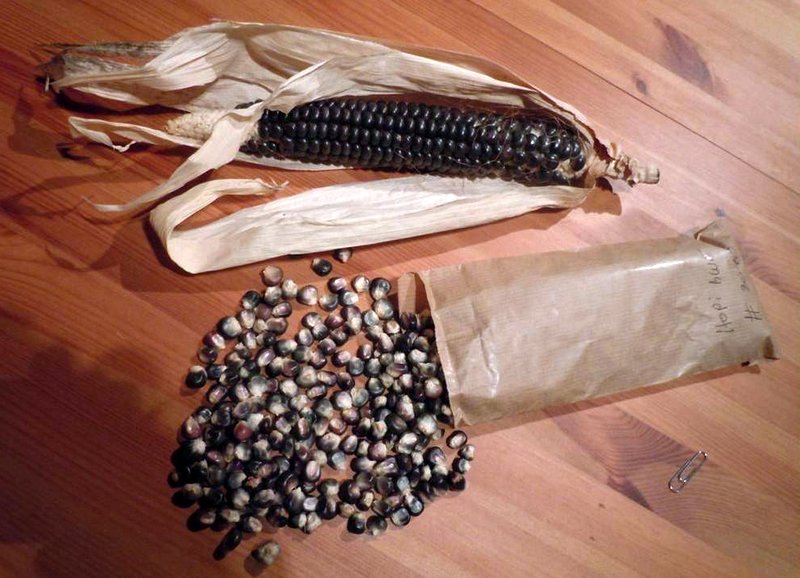
Blue corn (also known as Hopi maize, Yoeme Blue, Tarahumara Maiz Azul, and Rio Grande Blue) is a group of several closely related varieties of flint corn grown in Mexico, the Southwestern United States, and the Southeastern United States. It is one of the main types of corn used for the traditional Southern and Central Mexican food known as tlacoyo.
It was originally developed by the Hopi, the Pueblo Indians of the Rio Grande in Arizona, and several Southeastern tribes, including the Cherokee. It remains an essential part of Hopi dishes like piki bread. Blue corn meal is a corn meal that is ground from whole blue corn and has a sweet flavor. It is also a staple of New Mexican cuisine used commonly to make tortillas.
Blue corn contains anthocyanins, which give the corn its blue color.
Varieties
Five Hopi blue corn cultivars identified in the 1950s showed significant differences for several traits, such as plant height, kernel weight, width of kernel, and thickness of kernel.
The traditional Hopi blue corn varieties are extremely drought-tolerant, deep-rooted, and somewhat short plants, seldom exceeding 4-5 ft in height. The Rio Grande pueblo blue corn varieties are taller, reaching 5-7 ft, higher yielding, and not as drought-tolerant as the Hopi varieties. Both varieties of blue corn prefer deep, sandy soils.
Other native varieties of blue corn include Yoeme Blue, a small kernel, short (3-4 ft), bushy, and heat-tolerant low desert blue corn variety cultivated on the Salt River Pima Reservation in Arizona, and the Tarahumara northern Mexican variety Tarahumara Maiz Azul, cultivated in the high deserts bordering the Sierra Madre in Northern Mexico. Tarahumara Maiz Azul is widely used to make tortillas and tamales in Mexico, as well as tesgüino, a Tarahumaran corn beer.
A Cherokee heirloom variety of blue corn which originated from the Eastern Band of Cherokee Indians is called Cherokee White Eagle Corn and is distributed to Cherokee tribal members from the Cherokee Nation Seed Bank. It is a tall variety, reaching 5-7 ft, and is high yielding.
Tortilla protein content
.jpg)
In 100 grams of blue corn tortilla (Sakwavikaviki), the protein content is 7.8%, compared to 5.7% in yellow corn tortillas.
Anthocyanins
Varieties of blue corn cultivated in the Southwestern United States vary in their respective contents of anthocyanins, the polyphenol pigment giving the corn its unique color. Anthocyanins having the highest contents are cyanidin 3-glucoside (most abundant), pelargonidin and peonidin 3-glucoside.
Uses
Food
Aside from its use in traditional Southwestern dishes of tortillas and cereal, blue corn is used commercially in products such as blue corn chips and blue corn pancake mix.
Symbolic
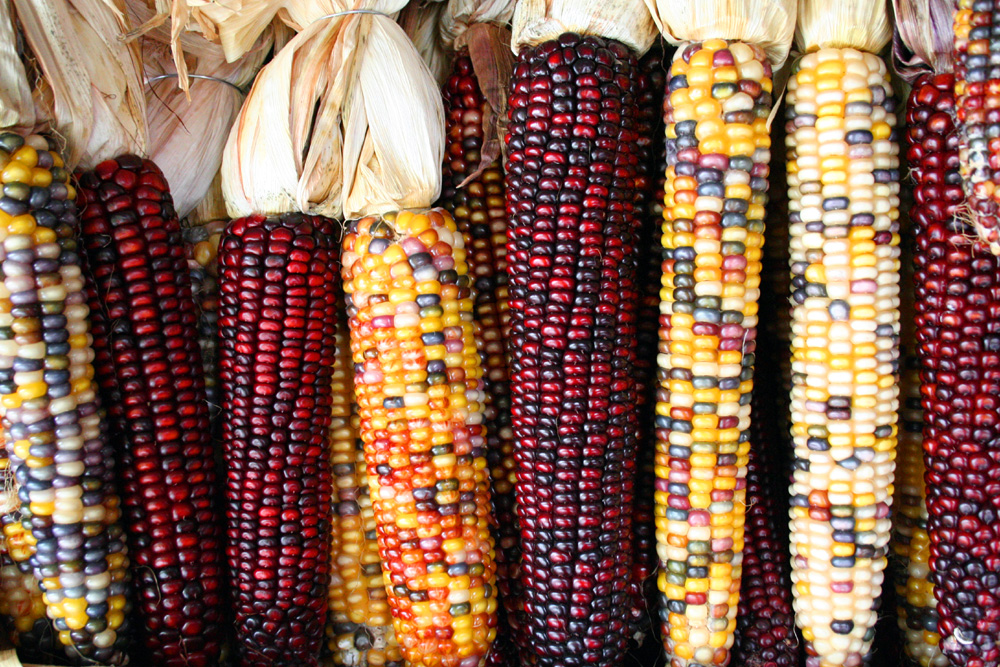
The Hopi use corn in religious rituals, placing it in a framework of directional associations in which yellow corn is associated with the Northwest, blue corn with the Southwest, red corn with the Southeast, white corn with the Northeast, black corn with the Above, and all-colored corn with the Below.
Gallery
File:Atole.jpg|blue corn atole porridge File:¡Viva México en Xochimilco! 112.JPG|Tlacoyo, Mexican appetizer made of blue corn File:01 Blue Corn Quesadillas.jpg|Blue corn quesadillas
References
References
- (1993). "Hopi Crop Diversity and Change". Society of Ethnobiology.
- "About Us".
- Johnson, Duane L.. (1993). "New Crops". John Wiley & Sons.
- McKee, Gwen. (1999). "Best of the Best from New Mexico Cookbook: Selected Recipes from New Mexico's Favorite Cookbooks". Quail Ridge Press.
- "Rio Grande Blue Corn New Mexico Farming Conference".
- "Tarahumara Maiz Azul - Native-Seeds-Search".
- "Yoeme Blue - Native-Seeds-Search".
- (21 September 2016). "Zea mays ( Yoeme Blue Corn ) - Backyard Gardener".
- (21 September 2016). "Zea mays ( Tarahumara Maiz Azul Corn ) - Backyard Gardener".
- "Seed Bank Plant Listing".
- (2016). "Basic nutrition report per 100 grams: 35239, Tortilla, blue corn, Sakwavikaviki (Hopi)". US Department of Agriculture, National Nutrient Database; Standard Reference 28.
- (2016). "Basic nutrition report per 100 grams: 18449, Tortillas, ready-to-bake or -fry, corn, without added salt". US Department of Agriculture, National Nutrient Database; Standard Reference 28.
- (2016). "Quantitative and qualitative evaluation of kernel anthocyanins from southwestern United States blue corn". Journal of the Science of Food and Agriculture.
- Stephen, Alexander M.. (1936). "Hopi Journal of Alexander M. Stephen". Columbia University Press.
- Hieb, Louis A.. (1979). "Handbook of North American Indians". Smithsonian Institution.
This article was imported from Wikipedia and is available under the Creative Commons Attribution-ShareAlike 4.0 License. Content has been adapted to SurfDoc format. Original contributors can be found on the article history page.
Ask Mako anything about Blue corn — get instant answers, deeper analysis, and related topics.
Research with MakoFree with your Surf account
Create a free account to save articles, ask Mako questions, and organize your research.
Sign up freeThis content may have been generated or modified by AI. CloudSurf Software LLC is not responsible for the accuracy, completeness, or reliability of AI-generated content. Always verify important information from primary sources.
Report