From Surf Wiki (app.surf) — the open knowledge base
Black vulture
New World vulture
New World vulture
Petén, Guatemala North American black vulture
- C. a. foetens Andean black vulture
- C. a. brasiliensis South American black vulture
The black vulture (Coragyps atratus), also known as the American black vulture, Mexican vulture, zopilote, urubu, or gallinazo, is a bird in the New World vulture family whose range extends from the southeastern United States to Peru, Central Chile and Uruguay in South America, and common throughout Brazil where it can be seen in large scavenging groups. Although a common and widespread species, it has a somewhat more restricted distribution than its compatriot, the turkey vulture, which breeds well into Canada and all the way south to Tierra del Fuego. It is the only extant member of the genus Coragyps, which is in the family Cathartidae. Despite the similar name and appearance, this species is not closely related to the Eurasian black vulture, an Old World vulture, of the family Accipitridae (which includes raptors like the eagles, hawks, kites, and harriers). For ease of locating animal corpses (their primary source of sustenance), black vultures tend to inhabit relatively open areas with scattered trees, such as chaparral, in addition to subtropical forested areas and parts of the Brazilian pantanal.
With a wingspan of 1.5 m, the black vulture is an imposing bird, though relatively small for a vulture, let alone a raptor. It has black plumage, a featherless, grayish-black head and neck, and a short, hooked beak. These features are all evolutionary adaptations to life as a scavenger; their black plumage stays visibly cleaner than that of a lighter-colored bird, the bare head is adapted for easily digging inside animal carcasses, and the hooked beak is built for stripping the bodies clean of meat. The absence of head feathers helps the birds stay clean and remain (more or less) free of animal blood and bodily fluids, which could become problematic for the vultures and attract parasites; most vultures are known to bathe after eating, provided there is a water source. This water source can be natural or man-made, such as a stream or a livestock water tank.
The black vulture is a scavenger and feeds on carrion, but will also eat eggs, small reptiles, or small newborn animals (livestock such as cattle, or deer, rodents, rabbits, etc.), albeit very rarely. They will also opportunistically prey on extremely weakened, sick, elderly, or otherwise vulnerable animals. In areas populated by humans, it also scavenges at waste disposal sites, such as garbage dumps. It finds its meals by using its keen eyesight or following other vultures, especially those of the Cathartes genus which possess a keen sense of smell. Lacking a syrinx—the vocal organ of birds—its only vocalizations are grunts or low hisses. It lays its eggs in caves, in cliffside rock crevasses, dead and hollow trees, or, in the absence of predators, on the bare ground, generally raising two chicks each year. The parents feed their young by regurgitation of crop milk. In the United States, the vulture receives legal protection under the Migratory Bird Treaty Act of 1918. This vulture also appeared in Mayan codices.
Taxonomy
The American naturalist William Bartram wrote of the black vulture in his 1791 book Bartram's Travels, calling it Vultur atratus "black vulture" or "carrion crow". Bartram's work has been rejected for nomenclatoríal purposes by the International Commission on Zoological Nomenclature as the author did not consistently use the system of binomial nomenclature. The German ornithologist Johann Matthäus Bechstein formally described the species using the same name in 1793 in his translation of John Latham's A General Synopsis of Birds. The common name "vulture" is derived from the Latin word vulturus, which means "tearer" and is a reference to its feeding habits. The species name, ātrātus, means "clothed in black", from the Latin āter 'dull black'.[[File:106 Black Vulture or Carrion Crow.jpg|thumb|Black vulture pair feeding on a [[mule deer]] head. Plate 106 from [[The Birds of America]] by [[John James Audubon|J. J. Audubon]].|left]]
Vieillot defined the genus Catharista in 1816, listing as its type C. urubu. French naturalist Emmanuel Le Maout placed in its current genus Coragyps (as C. urubu) in 1853. Isidore Geoffroy Saint-Hilaire has been listed as the author in the past, but he did not publish any official description. The genus name means "raven-vulture", from a contraction of the Greek corax/κόραξ and gyps/γὺψ for the respective birds.
The American Ornithologists' Union used the name Catharista atrata initially before adopting Vieillot's name (Catharista urubu) in their third edition. By their fourth edition, they had adopted the current name.
The black vulture is basal (the earliest offshoot) to a lineage that gave rise to the turkey vulture and greater and lesser yellow-headed vultures, diverging around 12 million years ago.
Martin Lichtenstein described C. a. foetens, the Andean black vulture, in 1817, and Charles Lucien Bonaparte described C. a. brasiliensis, from Central and South America, in 1850 on the basis of smaller size and minor plumage differences.{{cite book | url-access = registration
"Black vulture" has been designated the official name by the International Ornithologists' Union (IOC). "American black vulture" is also commonly used, and in 2007 the South American Classification Committee (SACC) of the American Ornithological Society unsuccessfully proposed it to be the official name of the species.
Evolutionary history of ''Coragyps''
| access-date =November 3, 2007 | archive-date =November 17, 2015 | archive-url =https://web.archive.org/web/20151117090754/http://sora.unm.edu/sites/default/files/journals/condor/v046n06/p0272-p0296.pdf | access-date =November 3, 2007 | hdl-access =free | archive-date =March 20, 2014 | archive-url =https://web.archive.org/web/20140320062336/http://sora.unm.edu/sites/default/files/journals/auk/v112n04/p0890-p0903.pdf | access-date = November 3, 2007 | jstor =1365205 |access-date = November 3, 2007 |archive-date = November 29, 2014 |archive-url = https://web.archive.org/web/20141129043951/http://sora.unm.edu/sites/default/files/journals/condor/v096n03/p0577-p0589.pdf | access-date = November 3, 2007
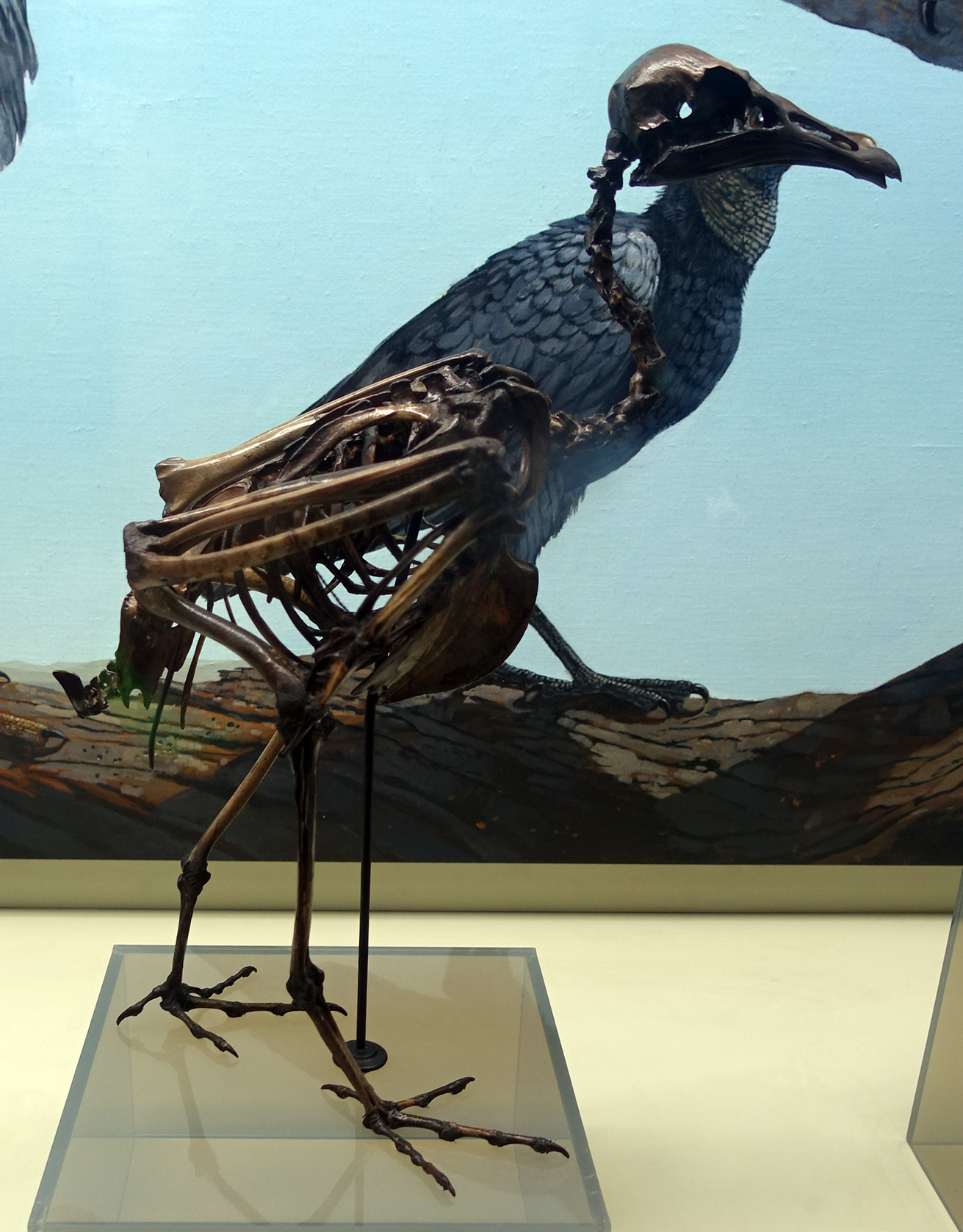
Fossil (or subfossil) black vultures cannot necessarily be attributed to the Pleistocene or the recent species without further information: the same size variation found in the living bird was also present in its larger prehistoric relative. Thus, in 1968, Hildegarde Howard separated the Mexican birds as C. occidentalis mexicanus as opposed to the birds from locations farther north (such as Rancho La Brea), which constituted the nominate subspecies C. o. occidentalis.{{cite journal | access-date =November 3, 2007 | archive-url =https://web.archive.org/web/20110717081100/http://satori.geociencias.unam.mx/20-1/(6)Arroyo.pdf | archive-date =July 17, 2011
An additional fossil species from the Late Pleistocene of Cuba, C. seductus, was described in 2020.
Distribution and habitat
The black vulture has a Nearctic and Neotropic distribution.{{cite book
It prefers open land interspersed with areas of woods or brush. It is also found in moist lowland forests, shrublands and grasslands, wetlands and swamps, pastures, and heavily degraded former forests. It is usually seen soaring or perched on fence posts or dead trees.{{cite book | author-link =Roger Tory Peterson
Description
_(21519728296).jpg)
The black vulture is a fairly large scavenger, measuring 56 - in length, with a 1.33 – wingspan. Weight for black vultures from North America and the Andes ranges from 1.6 to but in the smaller vultures of the tropical lowlands it is 1.18 –. Fifty vultures in Texas were found to average 2.15 kg while 119 birds in Venezuela were found to average 1.64 kg. The extended wing bone measures 38.6 -, the shortish tail measures 16 - and the relatively long tarsus measures 7 -.
Its plumage is mainly glossy black. The head and neck are featherless, and the skin is dark gray and wrinkled. The iris of the eye is brown and has a single incomplete row of eyelashes on the upper lid and two rows on the lower lid. The legs are grayish-white, while the two front toes of the foot are long and have small webs at their bases.
The nostrils are not divided by a septum, but rather are perforate; one can see through the beak from the side. The wings are broad but relatively short. The bases of the primary feathers are white, producing a white patch on the underside of the wing's edge, which is visible in flight. The tail is short and square, barely reaching past the edge of the folded wings.
A leucistic C. atratus brasiliensis was observed in Piñas, Ecuador in 2005. It had white plumage overall, with only the tarsus and tail and some black undertail feathers. It was not an albino as its skin seemed to have a normal, dark color, and it was part of a flock of some twenty normally plumaged individuals.{{cite journal | access-date = November 3, 2007 }}
Ecology and behavior
The black vulture soars high while searching for food, holding its wings horizontally when gliding. It flaps in short bursts, followed by short periods of gliding.{{cite book | url-access =registration | access-date = November 4, 2007 }}
Like the turkey vulture, this vulture is often seen standing in a spread-winged stance. This is believed to serve multiple functions: drying the wings, warming the body, and baking off bacteria. This same behavior is displayed by other New World vultures, Old World vultures, and storks.
File:Coragyps-atratus-002.jpg|C. a. brasiliensis, in Panama File:Black Vulture, W Church St, Morrilton, AR, US imported from iNaturalist photo 177661439.jpg|A flock in Arkansas File:Black Vulture, City of Knowledge, Panama City, Panama imported from iNaturalist photo 241683963.jpg|Sunbathing, in Panama File:Black Vulture, Pitangueiras, São Sebastião - SP, Brazil imported from iNaturalist photo 523512367.jpg|Black vulture (left) compared to a turkey vulture (right), in Brazil
.jpg)
There are several recorded instances of black vultures approaching and preening crested caracaras. In all cases, the unusual behaviour begins with the caracara bowing its head down, in an apparent invitation to preen.
Breeding
The timing of black vultures' breeding season varies with the latitude at which they live. In the United States, birds in Florida begin breeding as early as January, while those in Ohio generally do not start before March. In South America, Argentinian and Chilean birds begin egg-laying as early as September, while those further north on the continent typically wait until October. Some in South America breed even later than that—black vultures in Trinidad typically do not start until November, for example, and those in Ecuador may wait until February. Pairs are formed following a courtship ritual which is performed on the ground: several males circle a female with their wings partially open as they strut and bob their heads. They sometimes perform courtship flights, diving or chasing each other over their chosen nest site.
The black vulture lays its eggs on the ground in a wooded area, a hollow log, or some other cavity, seldom more than 3 m above the ground. While it generally does not use any nesting materials, it may decorate the area around the nest with bits of brightly colored plastic, shards of glass, or metal items such as bottle caps. Clutch size is generally two eggs, though this can vary from one to three. The egg is oval and, on average, measures 7.56 x. The smooth, gray-green, bluish, or white shell is variably blotched or spotted with lavender or pale brown around the larger end.{{cite book File:Coragyps atratus MWNH 0717.JPG|Egg, Collection Museum Wiesbaden File:Black Vulture, County Road 1150, Emory, TX, US imported from iNaturalist photo 180010105.jpg|Eggs, showing size File:Black Vulture hatchlings.jpg|Hatchlings File:Black Vulture, Poconé - State of Mato Grosso, 78175-000, Brazil imported from iNaturalist photo 579942906.jpg|Juvenile
Feeding


The black vulture eats mainly carrion in natural settings.{{cite book |name-list-style=amp | title =Raptors of North America: Natural History and Conservation |url-access=registration | isbn = 0-7603-2582-0}} The black vulture is aggressive when feeding and may chase the slightly larger turkey vulture from carcasses.
The black vulture also occasionally feeds on livestock or deer. It is the only species of New World vulture which preys on cattle. It occasionally harasses cows giving birth, but primarily preys on newborn calves, lambs, and piglets. In its first few weeks, a calf will allow vultures to approach it. The vultures swarm the calf in a group and then peck at the calf's eyes, nose, or tongue. The calf then goes into shock and is killed by the vultures.{{cite web |access-date = October 15, 2007 |archive-url = https://web.archive.org/web/20070808025752/http://lib.colostate.edu/research/agnic/birds/vultures/vulturesandlivestock.html |archive-date = August 8, 2007
Black vultures have sometimes been observed removing and eating ticks from resting capybaras and Baird's tapir (Tapirus bairdii). These vultures are known to kill hatchlings of herons and seabirds on nesting colonies, and feed on domestic ducks, small birds, skunks, opossums, other small mammals, lizards, small snakes, young turtles and insects.{{cite book |author-link1=James Ferguson-Lees}} Like other birds with scavenging habits, the black vulture presents resistance to pathogenic microorganisms and their toxins. Many mechanisms may explain this resistance. Anti-microbial agents may be secreted by the liver or stomach lining, or produced by microorganisms of the normal microbiota of the species.
Black vultures in Northern California have been observed snipping the umbilical cords of newborn sea lions and feeding on the placenta, an example of clever planning.
File:Black Vulture (Coragyps atratus) eating a dead Wood Stork (28624301103).jpg|Feeding on a wood stork File:BlackVulture2.JPG|A flock on a horse carcass File:Vultures with dead wild hog in Florida, US 01.jpg|Six vultures on a wild hog carcass in Florida
Legal protections
The black vulture receives special legal protections under the Migratory Bird Treaty Act of 1918 in the United States,{{cite web | access-date =October 14, 2007 | archive-url = https://web.archive.org/web/20071010020817/http://www.fws.gov/migratorybirds/intrnltr/mbta/mbtandx.html| archive-date = October 10, 2007}} by the Convention for the Protection of Migratory Birds in Canada,{{cite web | access-date =October 29, 2007 }} and by the Convention for the Protection of Migratory Birds and Game Mammals in Mexico. In the United States it is illegal to take, kill, or possess black vultures without a permit and violation of the law is punishable by a fine of up to US$15,000 and imprisonment of up to six months.{{cite web | access-date =October 14, 2007 }} It is listed as a species of Least Concern by the IUCN Red List. Populations appear to remain stable, and it has not reached the threshold of inclusion as a threatened species, which requires a decline of more than 30% in ten years or three generations.
Relationship with humans

The black vulture is considered a threat by cattle ranchers due to its predation on newborn cattle.{{cite web |access-date=December 9, 2007 |archive-url=https://web.archive.org/web/20151210212026/https://www.aphis.usda.gov/ws/nwrc/is/06pubs/shwiff061.pdf |archive-date=December 10, 2015 }} However, because predation events are rarely directly witnessed, and vultures quickly flock to animal carcasses, it is unclear whether the majority of reported livestock deaths are actually attributable to vultures. As a defense, the vultures also "regurgitate a reeking and corrosive vomit."
The bird can be a threat to the safety of aerial traffic, especially when it congregates in large numbers in the vicinity of garbage dumps—as is the case in the Rio de Janeiro Tom Jobim International Airport. Between 1990 - 2024, black vultures have been involved in 382 collisions with civil aircraft in the United States.
In popular culture
The black vulture appears in a variety of Maya hieroglyphics in Mayan codices. It is normally connected with either death or as a bird of prey. The vulture's glyph is often shown attacking humans. This species lacks the religious connections that the king vulture has. While some of the glyphs clearly show the black vulture's open nostril and hooked beak, some are assumed to be this species because they are vulture-like but lack the king vulture's knob and are painted black.
Black vultures are an important cultural symbol in Lima, Peru.
This vulture has appeared on two stamps: those of Suriname in 1990 and Nicaragua in 1994.
References
References
- [[BirdLife International]]. (2016). "''Coragyps atratus''".
- (August 4, 2022). "Turkey vulture". State of Indiana.
- Bartram, William. (1792). "Travels through North and South Carolina, Georgia, East and West Florida". printed by James and Johnson; Reprinted for J. Johnson.
- (1957). "Opinions and Declarations Rendered by the International Commission on Zoological Nomenclature". [[International Trust for Zoological Nomenclature]].
- (1793). "Johann Lathams allgemeine Uebersicht der Vögel". [[A.C. Schneider and Weigel]].
- (1979). "Check-List of Birds of the World". [[Museum of Comparative Zoology]].
- Holloway, Joel Ellis. (2003). "Dictionary of Birds of the United States: Scientific and Common Names". [[Timber Press]].
- Simpson, D.P.. (1979). "Cassell's Latin Dictionary". [[Cassell Ltd.]].
- Vieillot, Louis-Pierre. (1816). "Analyse d'une nouvelle ornithologie élémentaire". [[Deterville (publisher).
- Le Maout, Emmanuel. (1853). "Histoire naturelle des oiseaux: suivant la classification de M. Isidore Geoffroy-Saint-Hilaire; avec l'indication de leurs mœurs et de leurs rapports avec les arts, le commerce et l'agriculture". L. Curmer.
- Gregory, Steven M. S.. (1998). "The correct citation of ''Coragyps'' (Cathartinae) and ''Ardeotis'' (Otididae)". [[Bulletin of the British Ornithologists' Club]].
- Ietaka, Taro. "Moving Beyond Common Names".
- (1980). "Greek-English Lexicon, Abridged Edition". Oxford University Press.
- American Ornithologists' Union. (1910). "Check-list of North American birds". American Ornithologists' Union.
- American Ornithologists' Union. (1931). "Check-list of North American birds". American Ornithologists' Union.
- (2016). "Multi-locus phylogenetic inference among New World Vultures (Aves: Cathartidae)". [[Molecular Phylogenetics and Evolution]].
- Houston, D., Kirwan, G.M. & Boesman, P. (2017). American Black Vulture (''Coragyps atratus''). In: del Hoyo, J., Elliott, A., Sargatal, J., Christie, D.A. & de Juana, E. (eds.). ''Handbook of the Birds of the World Alive''. [[Lynx Edicions]], [[Barcelona]]. (retrieved from http://www.hbw.com/node/52943 on October 21, 2017).
- (2017). "New World vultures, Secretarybird, kites, hawks & eagles". International Ornithologists' Union.
- [[South American Classification Committee]]. (2007). "Proposal (259) to South American Classification Committee: Change English name of ''Coragyps atratus'' to "American Black Vulture"". [[American Ornithological Society]].
- (2022-08-23). "A 14,000-year-old genome sheds light on the evolution and extinction of a Pleistocene vulture". [[Communications Biology]].
- Suárez, William. (May 22, 2020). "The fossil avifauna of the tar seeps Las Breas de San Felipe, Matanzas, Cuba". [[Zootaxa]].
- "Black Vulture". [[University of Texas at El Paso]].
- (2020). "Black vulture conflict and management in the United States: damage trends, management overview, and research needs". Human-Wildlife Interactions.
- Buckley, N. J. (1999). Black Vulture (''Coragyps atratus''). In ''The Birds of North America'', No. '''411''' (A. Poole and F. Gill, eds.). The [[Birds of North America, Inc.]], [[Philadelphia]], PA.
- "Nature Guides". Enature.com.
- [http://www.allaboutbirds.org/guide/Black_Vulture/lifehistory Black Vulture, Life History, All About Birds – Cornell Lab of Ornithology]. allaboutbirds.org
- ''CRC Handbook of Avian Body Masses, 2nd Edition'' by John B. Dunning Jr. (Editor). CRC Press (2008), {{ISBN. 978-1-4200-6444-5.
- Fisher, Harvey L.. (February 1942). "The Pterylosis of the Andean Condor". [[Condor (journal).
- Allaby, Michael. (1992). "The Concise Oxford Dictionary of Zoology". Oxford University Press.
- Terres, J. K.. (1980). "The Audubon Society Encyclopedia of North American Birds". Knopf.
- Boies, Lori. (2026-01-12). "Urban Green Spaces Set the Stage for Rare Interspecific Allopreening Between Crested Caracara ( Caracara plancus ) and Black Vultures ( Coragyps atratus )". Ecology and Evolution.
- (1986). "Predation on black and turkey vultures". [[Wilson Bulletin]].
- (1996). "Black and turkey vulture interactions with bald eagles in Florida". [[Florida Field Naturalist]].
- "''Coragyps atratus'' (American Black Vulture or Corbeau)".
- (March 3, 2024). "Black Vulture (Coragyps atratus), version 2.0". Birds of the World.
- "Black Vulture | the Peregrine Fund".
- Sazima, Ivan. (2007). "Unexpected cleaners: black vultures (''Coragyps atratus'') remove debris, ticks, and peck at sores of capybaras (''Hydrochoerus hydrochaeris''), with an overview of tick-removing birds in Brazil". [[Rev. Bras. Ornitol.]].
- (March 2018). "Yellow-headed Caracara and Black Vulture Cleaning Baird's Tapir". [[Journal of Raptor Research]].
- Elliott, Glen. "''Coragyps atratus'' (black vulture)".
- Carvalho, L. R.. (2003). "Dominant culturable bacterial microbiota in the digestive tract of the American black vulture (''Coragyps atratus'' Bechstein 1793) and search for antagonistic substances". [[Brazilian Journal of Microbiology]].
- Angier, Natalie. (2023-11-12). "Why Vultures Might Just Be the Smartest Birds Above the Block".
- (2022). "Spatial risk modeling of cattle depredation by black vultures in the Midwestern United States". The Journal of Wildlife Management.
- McGlashen, Andy. (2023). "Black Vultures' Northward Expansion Creates New Conflicts with Farmers".
- Rohrlich, Justin. (January 10, 2020). "Feces from a giant kettle of vultures is disrupting CBP communications on the US-Mexico border".
- Pereira, José Felipe Monteiro (2008) ''Aves e Pássaros Comuns do Rio de Janeiro'', Rio de Janeiro, Technical Books, {{ISBN. 978-85-61368-00-5, p. 35
- Netzel, Christian and de Sá, Marcello Espinola Paraguassú (2004) [http://www.resol.com.br/textos/Urubus-Marcelo-Monografia%20MBA%20Gestao%20Ambiental.pdf Estudo preliminar sobre a problemática das aves para a segurança do aeroporto internacional Tom Jobim e o aterro sanitário de Gramacho] {{Webarchive. link. (June 8, 2021 (''Preliminary study on the threat posed by birds in the Gramacho landfill to the safety of the Tom Jobim International Airport''), FGV Environmental Management course monograph, (in Portuguese). resol.com.br)
- Dolbeer, Richard A.. (2025). "Wildlife Strikes to Civil Aircraft in the United States 1990 - 2024". Office of Airport Safety and Standards, Airport Safety & Certification.
- Tozzer, Alfred Marston. (1910). "Animal Figures in the Maya Codices". Harvard University.
- "Drowning in rubbish, Lima sends out the vultures with GoPros". The Guardian.
- "Black Vulture".
- "Black Vulture". Bird Stamps.
This article was imported from Wikipedia and is available under the Creative Commons Attribution-ShareAlike 4.0 License. Content has been adapted to SurfDoc format. Original contributors can be found on the article history page.
Ask Mako anything about Black vulture — get instant answers, deeper analysis, and related topics.
Research with MakoFree with your Surf account
Create a free account to save articles, ask Mako questions, and organize your research.
Sign up freeThis content may have been generated or modified by AI. CloudSurf Software LLC is not responsible for the accuracy, completeness, or reliability of AI-generated content. Always verify important information from primary sources.
Report