From Surf Wiki (app.surf) — the open knowledge base
Black garlic
Aged garlic
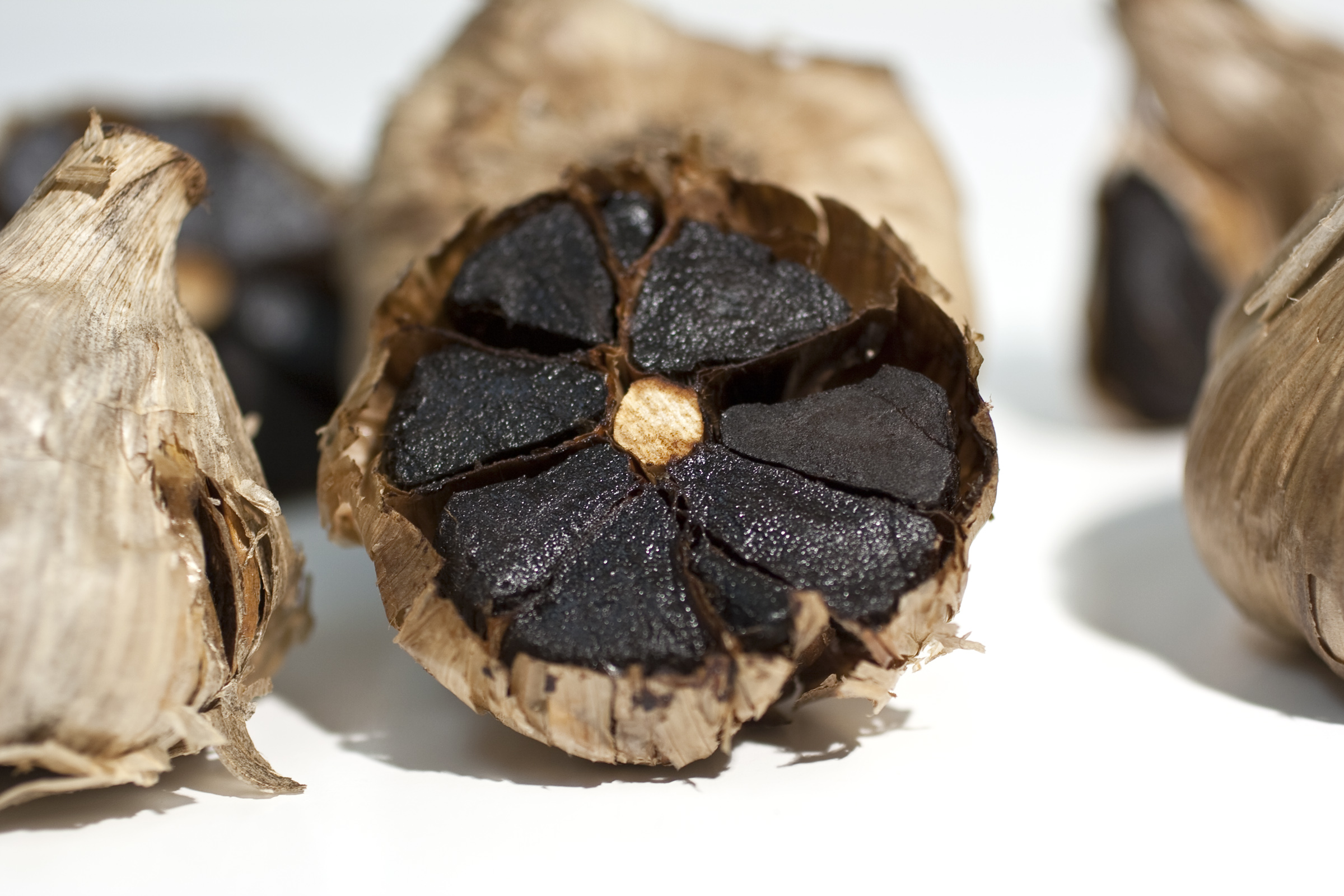
Aged garlic
Black garlic is a type of aged garlic that is colored deep brownish-black. The process is of East Asian origin. It is made by placing garlic (Allium sativum) in a warm, moist, controlled environment over the course of several weeks – a Maillard reaction process that produces black cloves having a savory flavor different from unfermented garlic. Black garlic is used in diverse culinary applications, such as sauces, salads, meats, chocolate, ice cream, and beer.
Production and characteristics
Black garlic is produced when heads of garlic or separated cloves are aged in an environment of controlled humidity (80 to 90%) at temperatures ranging from 60 to for 15 to 90 days (typically 85% humidity at 70 °C for 40 days). The cloves turn black and develop a sticky date-like texture. The sulfurous enzymes and amino acids in garlic cloves are converted to sugars during this Maillard process, reducing the typical garlic pungency in garlic aroma and flavor while creating new properties characteristic of black garlic.
Bacterial endophytes capable of fermentation and with strong heat resistance have been identified in common garlic and black garlic. These may have relevance in black garlic production.
Black garlic is different from black garlic oil (māyu) which is raw garlic cooked in oil on a stove.
Black garlic has a rich content of polyphenols, particularly hydroxycinnamic acid derivatives, which may contribute to its aroma and flavor.
Flavor profile
In black garlic, the distinct pungency of fresh garlic is softened, such that it almost or entirely disappears, and the garlic develops notes of licorice, Its flavor is dependent on that of the fresh garlic that was used to make it. Garlic with a higher sugar content produces a milder, more caramel-like flavor, whereas garlic with a low sugar content produces a sharper, somewhat more acidic flavor. Burnt flavors may also be present if the garlic was heated for too long at too high a temperature or not long enough: during heating, the garlic turns black in color well before the full extent of its sweetness is able to develop.
Culinary uses
The increased popularity of black garlic occurred in the early 21st century. Applications include savory sauces for fish, risotto or chicken. In the United Kingdom it made its TV debut on the BBC's Something for the Weekend cooking and lifestyle program in February 2009, where a garlic farmer claimed to have cured black garlic by exposing bulbs to heat and moisture for more than a month, borrowing the concept from a 4,000 year old Korean recipe.
Black garlic can be paired with sweet foods such as chocolate, or savory foods such as meat, fish, or cheese. Black garlic may also be included as an ingredient in sauces, dressings, and vegetable dishes. The cloves may also be mashed and spread on bread or crackers.
Black garlic can be made with a rice cooker, with the intent to maintain the high temperature and humidity over several days.
References
References
- Spence, Charles. (March 2024). "Garlic: Tracing its changing popularity in British cuisine". International Journal of Gastronomy and Food Science.
- (5 December 2016). "Black garlic: A critical review of its production, bioactivity, and application.". Journal of Food and Drug Analysis.
- (25 January 2016). "Chefs Are Going Crazy for Black Garlic (and You Will, Too)".
- (February 2018). "Characterization of garlic endophytes isolated from the black garlic processing". MicrobiologyOpen.
- (April 2018). "Characterization of microbial community structure and metabolic potential using Illumina MiSeq platform during the black garlic processing". Food Research International.
- (28 November 2022). "Mayu (Black Garlic Oil) for Ramen Recipe".
- (January 2013). "Comparison of phenolic acids and flavonoids in black garlic at different thermal processing steps". Journal of Functional Foods.
- (2014). "Bar Tartine: Techniques & Recipes". Chronicle Books.
- (7 May 2014). "Ancient "black garlic" recipe found by farmer". The Telegraph.
- Rampe, Amelia. (25 April 2025). "How to make black garlic". The Kitchn, AT Media, LLC.
- Fabricant, Florence. (2008-10-07). "Garlic, Either Sweet or Squashed". [[The New York Times]].
This article was imported from Wikipedia and is available under the Creative Commons Attribution-ShareAlike 4.0 License. Content has been adapted to SurfDoc format. Original contributors can be found on the article history page.
Ask Mako anything about Black garlic — get instant answers, deeper analysis, and related topics.
Research with MakoFree with your Surf account
Create a free account to save articles, ask Mako questions, and organize your research.
Sign up freeThis content may have been generated or modified by AI. CloudSurf Software LLC is not responsible for the accuracy, completeness, or reliability of AI-generated content. Always verify important information from primary sources.
Report