From Surf Wiki (app.surf) — the open knowledge base
Black-and-gray
Style of tattooing that uses only black ink in varying shades

Style of tattooing that uses only black ink in varying shades
Black-and-gray (also black-and-grey, black and grey/gray) is a style of tattooing that uses black tattoo ink mixed with distilled water to create various tones in the skin. This tattooing style originated from prisons in the 1970s and 1980s and was later popularized in tattoo parlors.
Origin
Black-and-gray is sometimes referred to as "jailhouse" or "joint style". It originated in prisons where inmates had limited access to materials: they resorted to using guitar strings for needles and cigarette ashes or pen ink to produce tattoos. Inmates constructed makeshift tattoo machines using small motors from tape players. Prisons prohibit inmates from tattooing, so these were done in secret. and cholo culture in Los Angeles.
During the late 1970s and early 1980s, this style became popularized in tattoo parlors outside of prison and was renamed "black and gray". Tattoo artists Ed Hardy, Jack Rudy, Charlie Cartwright, and Freddy Negrete contributed to popularizing the style for a wider audience, including in a shop called Good Time Charlie's in East Los Angeles.
Technique
Black-and-gray tattoo work is produced by diluting black ink with distilled water in varying proportions to create a "wash" that results in lighter shades. Gray shades can also be produced by mixing small amounts of black ink with white ink, which produces a thicker but brighter result and requires a slower application. Subtle shading in black-and-gray requires a high level of skill from a tattoo artist.
Common usage
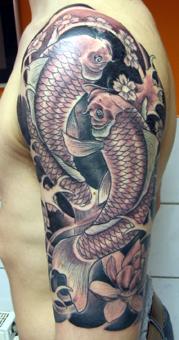
Black-and-gray techniques can be used for a variety of tattoo designs and styles. Japanese irezumi, such as the rising koi, are traditionally done using black-and-gray, although colored irezumi sometimes use black-and-gray backgrounds in a manner similar to sumi-e brushwork. Classic Chicano tattoos—which include a broad range of imagery such as icons in Catholicism or the Mexican flag and partially originated from prison life—are also normally done in black-and-gray. Photo-realistic portraits are also commonly done in black-and-gray, and typically resist deterioration better than color portraits.
In some color tattoos, artists can use black-and-gray to provide a foundation for the subsequent shading using colors. The colored ink can be added directly above the black-and-gray portions of the tattoo.
Examples
File:Mlght13.jpg File:A039-andreaafferni-seminars-seminar-tattoo-tattoos-tatuaggi-portrait-ritratto-realism (cropped).jpg File:Full Back tattoo by jairo ramirez.jpg File:Man with a full back tattoo. Black and White image.jpg
References
References
- (1999). "Coping with the dangers of tattooing, body piercing, and branding". Hazelden.
- (1997). "The Body Art Book: A Complete, Illustrated Guide to Tattoos, Piercings, and Other Body Modifications". Berkley Books.
- (2010). "Alphabets and scripts tattoo design directory : the essential reference for body art". Chartwell Books.
- (2009). "Tattoos in modern society". Rosen Pub..
- (2012). "Getting inked : what to expect when you get a tattoo". Rosen Pub..
- (11 January 2005). "Los Angeles is becoming the capital of tattoo artists". [[The Tuscaloosa News]].
- (31 January 2013). "Tattoos' Impressions in Print and in Film". [[The New York Times]].
- Chesler, Josh. (2016-12-07). "Once a Style Exclusive to Chicanos, Black-and-Gray Tattoos Are Now Taking Over the World".
- (2014). "Inked: Tattoos and Body Art around the World". ABC-CLIO.
- (2008). "The complete idiot's guide to getting a tattoo". Alpha Books.
- (2014). "Art of tattoo design : creating masterful tattoo art from start to finish.". F&W Media Inc..
- (2012). "The Tattoo Encyclopedia". Simon and Schuster.
- (2009). "Basic fundamentals of modern tattoo". Tattoo Books Online.
This article was imported from Wikipedia and is available under the Creative Commons Attribution-ShareAlike 4.0 License. Content has been adapted to SurfDoc format. Original contributors can be found on the article history page.
Ask Mako anything about Black-and-gray — get instant answers, deeper analysis, and related topics.
Research with MakoFree with your Surf account
Create a free account to save articles, ask Mako questions, and organize your research.
Sign up freeThis content may have been generated or modified by AI. CloudSurf Software LLC is not responsible for the accuracy, completeness, or reliability of AI-generated content. Always verify important information from primary sources.
Report