From Surf Wiki (app.surf) — the open knowledge base
Birth control
Prevention of human pregnancy

Prevention of human pregnancy
Methods
| Method | Typical use | Perfect use |
|---|---|---|
| No birth control | 85% | 85% |
| Combination pill | 9% | 0.3% |
| Progestogen-only pill | 13% | 1.1% |
| Sterilization (female) | 0.5% | 0.5% |
| Sterilization (male) | 0.15% | 0.1% |
| Condom (female) | 21% | 5% |
| Condom (male) | 18% | 2% |
| Copper IUD | 0.8% | 0.6% |
| Hormonal IUD | 0.2% | 0.2% |
| Patch | 9% | 0.3% |
| Vaginal ring | 9% | 0.3% |
| MPA shot | 6% | 0.2% |
| Implant | 0.05% | 0.05% |
| Diaphragm and spermicide | 12% | 6% |
| Fertility awareness | 24% | 0.4–5% |
| Withdrawal | 22% | 4% |
| Lactational amenorrhea method | ||
| (6 months failure rate) | 0–7.5% |
Birth control methods include barrier methods, hormonal birth control, intrauterine devices (IUDs), sterilization, and behavioral methods. They are used before or during sex, while emergency contraceptives are effective for up to five days after sex. Effectiveness is generally expressed as the percentage of women who become pregnant using a given method during the first year, and sometimes as a lifetime failure rate among methods with high effectiveness, such as tubal ligation.
Birth control methods fall into two main categories: male contraception and female contraception. Common male contraceptives are withdrawal, condoms, and vasectomy. Female contraception is more developed compared to male contraception, these include contraceptive pills (combination and progestin-only pill), hormonal or non-hormonal IUD, patch, vaginal ring, diaphragm, shot, implant, fertility awareness, and tubal ligation.
The most effective methods are long-acting and do not require ongoing health care visits.
While all methods of birth control have some potential adverse effects, the risk is less than that of pregnancy. After stopping or removing many methods of birth control, including oral contraceptives, IUDs, implants and injections, the rate of pregnancy during the subsequent year is the same as for those who used no birth control.
For individuals with specific health problems, certain forms of birth control may require further investigations. For example, a pelvic exam, breast exam, or blood test before starting birth control pills does not appear to affect outcomes. In 2009, the World Health Organization (WHO) published a detailed list of medical eligibility criteria for each type of birth control.
Hormonal
Hormonal contraception is available in several different forms, including oral pills, implants under the skin, injections, patches, IUDs and a vaginal ring. They are currently available only for women, although hormonal contraceptives for men have been and are being clinically tested. There are two types of oral birth control pills, the combined oral contraceptive pills (which contain both estrogen and a progestin) and the progestogen-only pills (sometimes called minipills). If either is taken during pregnancy, they do not increase the risk of miscarriage nor cause birth defects. They may also change the lining of the uterus and thus decrease implantation. Their effectiveness depends on the user's adherence to taking the pills.
Combined hormonal contraceptives are associated with a slightly increased risk of venous and arterial blood clots. which is still less than that associated with pregnancy. Due to this risk, they are not recommended in women over 35 years of age who continue to smoke. Due to the increased risk, they are included in decision tools such as the DASH score and PERC rule used to predict the risk of blood clots.
The effect on sexual drive is varied, with an increase or decrease in some but with no effect in most. Combined oral contraceptives reduce the risk of ovarian cancer and endometrial cancer and do not change the risk of breast cancer. They often reduce menstrual bleeding and painful menstruation cramps. The lower doses of estrogen released from the vaginal ring may reduce the risk of breast tenderness, nausea, and headache associated with higher dose estrogen products.
Progestin-only pills, injections, and intrauterine devices are not associated with an increased risk of blood clots and may be used by women with a history of blood clots in their veins. In those with a history of arterial blood clots, non-hormonal birth control or a progestin-only method other than the injectable version should be used. The progestins drospirenone and desogestrel minimize the androgenic side effects but increase the risks of blood clots and are thus not the first line. The perfect use first-year failure rate of injectable progestin is 0.2%; the typical use first failure rate is 6%.
File:Plaquettes de pilule.jpg|alt=birth control pill packages|Three varieties of birth control pills in calendar-oriented packaging File: Birth Control Pills.png|Birth control pills File:BirthControlPatch.JPG|alt=a contraceptive patch|A transdermal contraceptive patch File:NuvaRing in hand.jpg|alt=a vaginal ring|A NuvaRing vaginal ring
Barrier
Barrier contraceptives are devices that attempt to prevent pregnancy by physically preventing sperm from entering the uterus.
Globally, condoms are the most common method of birth control. Male condoms are put on a man's erect penis and physically block ejaculated sperm from entering the body of a sexual partner. Female condoms are also available, most often made of nitrile, latex or polyurethane. Male condoms have the advantage of being inexpensive, easy to use, and have few adverse effects. Making condoms available to teenagers does not appear to affect the age of onset of sexual activity or its frequency. In Japan, about 80% of couples who are using birth control use condoms, while in Germany this number is about 25%, and in the United States it is 18%.
Male condoms and the diaphragm with spermicide have typical use first-year failure rates of 18% and 12%, respectively.
Contraceptive sponges combine a barrier with a spermicide. and more severe adverse effects such as toxic shock syndrome have been reported.
File: Kondom.jpg|A rolled-up male condom. File:Condom unrolled durex.jpg|alt=an unrolled condom|An unrolled male latex condom File:Préservatif féminin.jpg|alt=a female condom|A polyurethane female condom File: Contraceptive diaphragm.jpg|alt=a diaphragm|A diaphragm vaginal-cervical barrier, in its case with a quarter U.S. coin. File:Éponge spermicide.jpg|alt=a contraceptive sponge|A contraceptive sponge set inside its open package.
Intrauterine devices
The current intrauterine devices (IUD) are small devices, often T-shaped, containing either copper or levonorgestrel, which are inserted into the uterus. They are one form of long-acting reversible contraception which is the most effective type of reversible birth control. Failure rates with the copper IUD is about 0.8% while the levonorgestrel IUD has a failure rates of 0.2% in the first year of use. Among types of birth control, they, along with birth control implants, result in the greatest satisfaction among users. , IUDs are the most widely used form of reversible contraception, with more than 180 million users worldwide.
Evidence supports effectiveness and safety in adolescents IUDs do not affect breastfeeding and can be inserted immediately after delivery. They may also be used immediately after an abortion. Once removed, even after long term use, fertility returns to normal immediately.
While copper IUDs may increase menstrual bleeding and result in more painful cramps, hormonal IUDs may reduce menstrual bleeding or stop menstruation altogether. A previous model of the intrauterine device (the Dalkon shield) was associated with an increased risk of pelvic inflammatory disease; however, the risk is not affected with current models in those without sexually transmitted infections around the time of insertion. IUDs appear to decrease the risk of ovarian cancer.
Sterilization
Two broad categories exist: surgical and non-surgical.
Surgical sterilization is available in the form of tubal ligation for women and vasectomy for men. After a vasectomy, there may be swelling and pain of the scrotum which usually resolves in one or two weeks. Chronic scrotal pain associated with negative impact on quality of life occurs after vasectomy in about 1–2% of men. With tubal ligation, complications occur in 1 to 2 percent of procedures with serious complications usually due to the anesthesia. Neither method offers protection from sexually transmitted infections.
Non-surgical sterilization methods have also been explored. Fahim et al. found that heat exposure, especially high-intensity ultrasound, was effective either for temporary or permanent contraception depending on the dose, e.g. selective destruction of germ cells and Sertoli cells without affecting Leydig cells or testosterone levels. Chemical, e.g. drug-based methods are also available, e.g. orally-administered LonidamineLonidamine analogues for fertility management, WO2011005759A3 WIPO (PCT), Ingrid Gunda GeorgeJoseph S. TashRamappa ChakrsaliSudhakar R. JakkarajJames P. Calvet for temporary, or permanent (depending on the dose) fertility management. Boris provides a method for chemically inducing either temporary or non-reversible sterility, depending on the dose, "Permanent sterility in human males can be obtained by a single oral dosage containing from about 18 mg/kg to about 25 mg/kg".
The permanence of this decision may cause regret in some men and women. Of women who have undergone tubal ligation after the age of 30, about 6% regret their decision, as compared with 20–24% of women who received sterilization within one year of delivery and before turning 30, and 6% in nulliparous women sterilized before the age of 30. By contrast, less than 5% of men are likely to regret sterilization. Men who are more likely to regret sterilization are younger, have young or no children, or have an unstable marriage. In a survey of biological parents, 9% stated they would not have had children if they were able to do it over again.
Although sterilization is considered a permanent procedure, The number of males who request reversal is between 2 and 6 percent. Rates of success in fathering another child after reversal are between 38 and 84 percent; with success being lower the longer the period between the vasectomy and the reversal.
Behavioral
Behavioral methods involve regulating the timing or method of intercourse to prevent the introduction of sperm into the female reproductive tract, either altogether or when an egg may be present.
Fertility awareness
.jpg)
Fertility awareness methods involve determining the most fertile days of the menstrual cycle and avoiding unprotected intercourse. They have typical first-year failure rates of 24%; perfect use first-year failure rates depend on which method is used and range from 0.4% to 5%.
Withdrawal
The withdrawal method (also known as coitus interruptus) is the practice of ending intercourse ("pulling out") before ejaculation. The main risk of the withdrawal method is that the man may not manoeuvre correctly or on time. First-year failure rates vary from 4% with perfect usage to 22% with typical usage. It is not considered birth control by some medical professionals.
There is little data regarding the sperm content of pre-ejaculatory fluid. While some tentative research did not find sperm, The withdrawal method is used as birth control by about 3% of couples.
Abstinence
Sexual abstinence may be used as a form of birth control, meaning either not engaging in any type of sexual activity, or specifically not engaging in vaginal intercourse, while engaging in other forms of non-vaginal sex. Complete sexual abstinence is 100% effective in preventing pregnancy. However, among those who take a pledge to abstain from premarital sex, as many as 88% who engage in sex, do so prior to marriage. The choice to abstain from sex cannot protect against pregnancy as a result of rape, and public health efforts emphasizing abstinence to reduce unwanted pregnancy may have limited effectiveness, especially in developing countries and among disadvantaged groups.
Deliberate non-penetrative sex without vaginal sex or deliberate oral sex without vaginal sex are also sometimes considered birth control.
Abstinence-only sex education does not reduce teenage pregnancy. Teen pregnancy rates and STI rates are generally the same or higher in states where students are given abstinence-only education, as compared with comprehensive sex education.
Lactation
The lactational amenorrhea method involves the use of a woman's natural postpartum infertility which occurs after delivery and may be extended by breastfeeding. For a postpartum woman to be infertile (protected from pregnancy), their periods have usually not yet returned (not menstruating), they are exclusively breastfeeding the infant, and the baby is younger than six months. If breastfeeding is the infant's only source of nutrition and the baby is less than 6 months old, 93–99% of women are estimated to have protection from becoming pregnant in the first six months (0.75–7.5% failure rate). The failure rate increases to 4–7% at one year and 13% at two years. Feeding formula, pumping instead of nursing, the use of a pacifier, and feeding solids all increase the chances of becoming pregnant while breastfeeding. In those who are exclusively breastfeeding, about 10% begin having periods before three months and 20% before six months. In those who are not breastfeeding, fertility may return as early as four weeks after delivery.
Emergency
.jpg)
Emergency contraceptive methods are medications (sometimes misleadingly referred to as "morning-after pills") or devices used after unprotected sexual intercourse with the hope of preventing pregnancy. Emergency contraceptives are often given to victims of rape. They are unlikely to affect implantation, but this has not been completely excluded. All methods have minimal side effects. In a UK study, when a three-month "bridge" supply of the progestogen-only pill was provided by a pharmacist along with emergency contraception after sexual activity, this intervention was shown to increase the likelihood that the person would begin to use an effective method of long-term contraception.
Levonorgestrel pills, when used within 3 days, decrease the chance of pregnancy after a single episode of unprotected sex or condom failure by 70% (resulting in a pregnancy rate of 2.2%). Mifepristone is also more effective than levonorgestrel, while copper IUDs are the most effective method. This makes them the most effective form of emergency contraceptive. In those who are overweight or obese, levonorgestrel is less effective and an IUD or ulipristal is recommended.
Dual protection
Dual protection is the use of methods that prevent both sexually transmitted infections and pregnancy. This can be with condoms either alone or along with another birth control method or by the avoidance of penetrative sex.
If pregnancy is a high concern, using two methods at the same time is reasonable. For example, two forms of birth control are recommended in those taking the anti-acne drug isotretinoin or anti-epileptic drugs like carbamazepine, due to the high risk of birth defects if taken during pregnancy.
Effects
Health


Contraceptive use in developing countries is estimated to have decreased the number of maternal deaths by 40% (about 270,000 deaths prevented in 2008) and could prevent 70% of deaths if the full demand for birth control were met. These benefits are achieved by reducing the number of unplanned pregnancies that subsequently result in unsafe abortions and by preventing pregnancies in those at high risk.
Birth control also improves child survival in the developing world by lengthening the time between pregnancies. In this population, outcomes are worse when a mother gets pregnant within eighteen months of a previous delivery. Delaying another pregnancy after a miscarriage, however, does not appear to alter risk and women are advised to attempt pregnancy in this situation whenever they are ready.
Teenage pregnancies, especially among younger teens, are at greater risk of adverse outcomes, including early birth, low birth weight, and death of the infant. In 2012, in the United States, 82% of pregnancies in those between the ages of 15 and 19 years old were unplanned.
Birth control methods, especially hormonal methods, can also have undesirable side effects. The intensity of side effects can range from minor to debilitating and varies with individual experiences. These most commonly include changes in menstruation regularity and flow, nausea, breast tenderness, headaches, weight gain, and mood changes (specifically an increase in depression and anxiety). Additionally, hormonal contraception can contribute to bone mineral density loss, impaired glucose metabolism, increased risk of venous thromboembolism. Comprehensive sex education and transparent discussion of birth control side effects and contraindications between healthcare provider and patient is imperative.
Finances
In the developing world, birth control increases economic growth due to there being fewer dependent children and thus more women participating in or making increased contributions to the workforce – as they are usually the primary caregiver for children. Women's earnings, assets, body mass index, and their children's schooling and body mass index all improve with greater access to birth control. Family planning, via the use of modern birth control, is one of the most cost-effective health interventions.
The total medical cost for a pregnancy, delivery, and care of a newborn in the United States is on average $21,000 for a vaginal delivery and $31,000 for a caesarean delivery as of 2012. In most other countries, the cost is less than half.
Prevalence
Main article: Prevalence of birth control

]]

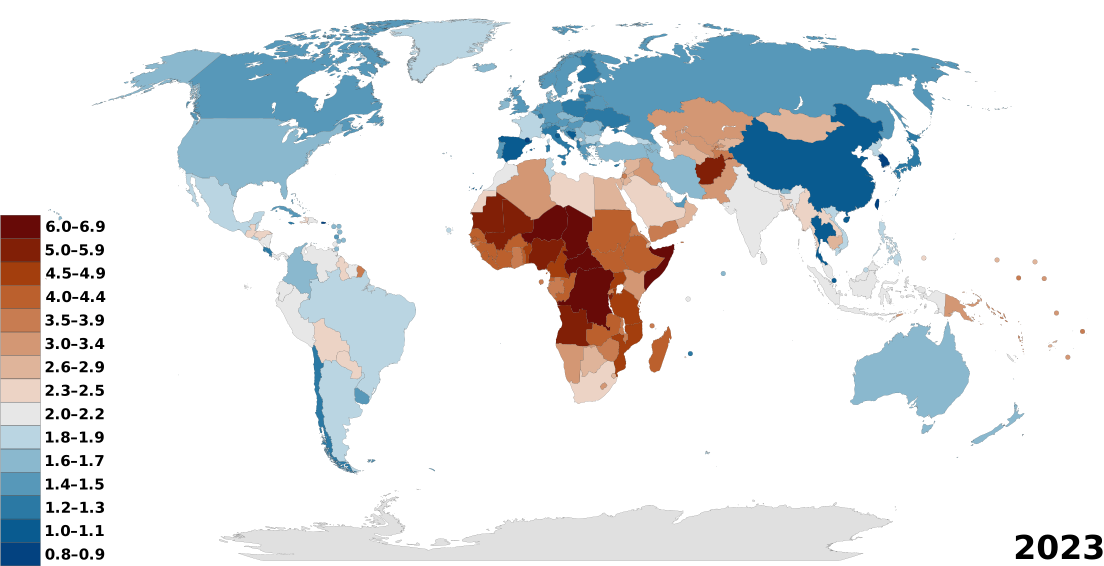
Globally, as of 2009, approximately 60% of those who are married and able to have children use birth control. In the developing world overall, 35% of birth control is via female sterilization, 30% is via IUDs, 12% is via oral contraceptives, 11% is via condoms, and 4% is via male sterilization.
While less used in the developed countries than in the developing world, the number of women using IUDs as of 2007 was more than 180 million. As of 2005, 12% of couples are using a male form of birth control (either condoms or a vasectomy) with higher rates in the developed world. Usage of male forms of birth control has decreased between 1985 and 2009.
As of 2012, 57% of women of childbearing age want to avoid pregnancy (867 of 1,520 million). This results in 54 million unplanned pregnancies and nearly 80,000 maternal deaths a year.
History
Main article: History of birth control
Early history

The Egyptian Ebers Papyrus from 1550 BC and the Kahun Papyrus from 1850 BC have within them some of the earliest documented descriptions of birth control: the use of honey, acacia leaves and lint to be placed in the vagina to block sperm. Silphium, a species of giant fennel native to north Africa, may have been used as birth control in ancient Greece and the ancient Near East. Due to its desirability, by the first century AD, it had become so rare that it was worth more than its weight in silver and, by late antiquity, it was fully extinct. Most methods of birth control used in antiquity were probably ineffective.
The ancient Greek philosopher Aristotle ( 384–322 BC) recommended applying cedar oil to the womb before intercourse, a method which was probably only effective on occasion. A Hippocratic text On the Nature of Women recommended that a woman drink a copper salt dissolved in water, which it claimed would prevent pregnancy for a year. This method was not only ineffective but also dangerous, as the later medical writer Soranus of Ephesus ( 98–138 AD) pointed out. Soranus attempted to list reliable methods of birth control based on rational principles. He rejected the use of superstition and amulets and instead prescribed mechanical methods such as vaginal plugs and pessaries using wool as a base covered in oils or other gummy substances. Many of Soranus's methods were probably also ineffective.
In medieval Europe, any effort to halt pregnancy was deemed immoral by the Catholic Church, Women in the Middle Ages were also encouraged to tie weasel testicles around their thighs during sex to prevent pregnancy. The oldest condoms discovered to date were recovered in the ruins of Dudley Castle in England, and are dated back to 1640. They were made of animal gut, and were most likely used to prevent the spread of sexually transmitted infections during the English Civil War. Casanova, living in 18th-century Italy, described the use of a lambskin covering to prevent pregnancy; however, condoms only became widely available in the 20th century.
Birth control movement

The birth control movement developed during the 19th and early 20th centuries. The Malthusian League, based on the ideas of Thomas Malthus, was established in 1877 in the United Kingdom to educate the public about the importance of family planning and to advocate for getting rid of penalties for promoting birth control. It was founded during the "Knowlton trial" of Annie Besant and Charles Bradlaugh, who were prosecuted for publishing on various methods of birth control.
In the United States, Margaret Sanger and Otto Bobsein popularised the phrase "birth control" in 1914. Sanger primarily advocated for birth control on the idea that it would prevent women from seeking unsafe abortions, but during her lifetime, she began to campaign for it on the grounds that it would reduce mental and physical defects. In the U.K., Sanger, influenced by Havelock Ellis, further developed her arguments for birth control. She believed women needed to enjoy sex without fearing pregnancy. During her time abroad, Sanger also saw a more flexible diaphragm in a Dutch clinic, which she thought was a better form of contraceptive. in 1916. It was shut down after eleven days and resulted in her arrest. The publicity surrounding the arrest, trial, and appeal sparked birth control activism across the United States. Besides her sister, Sanger was helped in the movement by her first husband, William Sanger, who distributed copies of "Family Limitation." Sanger's second husband, James Noah H. Slee, would later become involved in the movement, acting as its main funder. Sanger also contributed to the funding of research into hormonal contraceptives in the 1950s. She helped fund research by John Rock and biologist Gregory Pincus that resulted in the first hormonal contraceptive pill, later called Enovid. The first human trials of the pill were done on patients in the Worcester State Psychiatric Hospital, after which clinical testing was done in Puerto Rico before Enovid was approved for use in the U.S.. The people participating in these trials were not fully informed of the medical implications of the pill and often had minimal to no other family planning options. The newly approved birth control method was not made available to the participants after the trials, and contraceptives are still not widely accessible in Puerto Rico.
The increased use of birth control was seen by some as a form of social decay. A decrease of fertility was seen as a negative. Throughout the Progressive Era (1890–1920), there was an increase of voluntary associations aiding the contraceptive movement. These organizations failed to enlist more than 100,000 women because the use of birth control was often compared to eugenics; however, women were seeking a community with like-minded women. The ideology that surrounded birth control started to gain traction during the Progressive Era due to voluntary associations establishing a community. Birth control was unlike the Victorian Era because women wanted to manage their sexuality. The use of birth control was another form of self-interest women clung to. This was seen as women began to gravitate towards strong figures, like the Gibson Girl.
The first permanent birth-control clinic was established in Britain in 1921 by Marie Stopes working with the Malthusian League. The clinic, run by midwives and supported by visiting doctors, offered women's birth-control advice and taught them the use of a cervical cap. Her clinic made contraception acceptable during the 1920s by presenting it in scientific terms. In 1921, Sanger founded the American Birth Control League, which later became the Planned Parenthood Federation of America. In 1924 the Society for the Provision of Birth Control Clinics was founded to campaign for municipal clinics; this led to the opening of a second clinic in Greengate, Salford in 1926. Throughout the 1920s, Stopes and other feminist pioneers, including Dora Russell and Stella Browne, played a major role in breaking down taboos about sex. In April 1930 the Birth Control Conference assembled 700 delegates and was successful in bringing birth control and abortion into the political sphere – three months later, the Ministry of Health, in the United Kingdom, allowed local authorities to give birth-control advice in welfare centres.
The National Birth Control Association was founded in Britain in 1931 and became the Family Planning Association eight years later. The Association amalgamated several British birth control-focused groups into 'a central organisation' for administering and overseeing birth control in Britain. The group incorporated the Birth Control Investigation Committee, a collective of physicians and scientists that was founded to investigate scientific and medical aspects of contraception with 'neutrality and impartiality'. Subsequently, the Association effected a series of 'pure' and 'applied' product and safety standards that manufacturers must meet to ensure their contraceptives could be prescribed as part of the Association's standard two-part-technique combining 'a rubber appliance to protect the mouth of the womb' with a 'chemical preparation capable of destroying... sperm'. Between 1931 and 1959, the Association founded and funded a series of tests to assess chemical efficacy and safety and rubber quality. These tests became the basis for the Association's Approved List of contraceptives, which was launched in 1937, and went on to become an annual publication that the expanding network of FPA clinics relied upon as a means to 'establish facts [about contraceptives] and to publish these facts as a basis on which a sound public and scientific opinion can be built'.
In 1936, the United States Court of Appeals for the Second Circuit ruled in United States v. One Package of Japanese Pessaries that medically prescribing contraception to save a person's life or well-being was not illegal under the Comstock Laws. Following this decision, the American Medical Association Committee on Contraception revoked its 1936 statement condemning birth control. A national survey in 1937 showed 71 percent of the adult population supported the use of contraception. By 1938, 374 birth control clinics were running in the United States despite their advertisement still being illegal. First Lady Eleanor Roosevelt publicly supported birth control and family planning. The restrictions on birth control in the Comstock laws were effectively rendered null and void by Supreme Court decisions Griswold v. Connecticut (1965) and Eisenstadt v. Baird (1972). In 1966, President Lyndon B. Johnson started endorsing public funding for family planning services, and the Federal Government began subsidizing birth control services for low-income families. The Affordable Care Act, passed into law on March 23, 2010, under President Barack Obama, requires all plans in the Health Insurance Marketplace to cover contraceptive methods. These include barrier methods, hormonal methods, implanted devices, emergency contraceptives, and sterilization procedures.
Modern methods
In 1909, Richard Richter developed the first intrauterine device made from silkworm gut, which was further developed and marketed in Germany by Ernst Gräfenberg in the late 1920s. In 1951, an Austrian-born American chemist, named Carl Djerassi at Syntex in Mexico City made the hormones in progesterone pills using Mexican yams (Dioscorea mexicana). Djerassi had chemically created the pill but was not equipped to distribute it to patients. Meanwhile, Gregory Pincus and John Rock with help from the Planned Parenthood Federation of America developed the first birth control pills in the 1950s, such as mestranol/noretynodrel, which became publicly available in the 1960s through the Food and Drug Administration under the name Enovid. Medical abortion became an alternative to surgical abortion with the availability of prostaglandin analogs in the 1970s and mifepristone in the 1980s.
Society and culture
Legal positions
Human rights agreements require most governments to provide family planning and contraceptive information and services. These include the requirement to create a national plan for family planning services, remove laws that limit access to family planning, ensure that a wide variety of safe and effective birth control methods are available including emergency contraceptives, make sure there are appropriately trained healthcare providers and facilities at an affordable price, and create a process to review the programs implemented. If governments fail to do the above it may put them in breach of binding international treaty obligations.
In the United States, the 1965 Supreme Court decision Griswold v. Connecticut overturned a state law prohibiting the dissemination of contraception information based on a constitutional right to privacy for marital relationships. In 1972, Eisenstadt v. Baird extended this right to privacy to single people.
In 2010, the United Nations launched the Every Woman Every Child movement to assess the progress toward meeting women's contraceptive needs.
Since at least the 1870s, American religious, medical, legislative, and legal commentators have debated contraception laws. Ana Garner and Angela Michel have found that in these discussions men often attach reproductive rights to moral and political matters, as part of an ongoing attempt to regulate human bodies. In press coverage between 1873 and 2013 they found a divide between institutional ideology and real-life experiences of women.
Religious views
Main article: Religion and birth control}}{{See also, Jewish views on contraception
Religions vary widely in their views of the ethics of birth control. The Roman Catholic Church reaffirmed its teachings in 1968 that only natural family planning—methods that involve observing and interpreting signs of fertility to achieve or avoid pregnancy—is permissible.{{cite web |url=https://www.vatican.va/holy_father/paul_vi/encyclicals/documents/hf_p-vi_enc_25071968_humanae-vitae_en.html |access-date=October 1, 2006
World Contraception Day
September 26 is World Contraception Day, devoted to raising awareness and improving education about sexual and reproductive health, with a vision of a world where every pregnancy is wanted. It is supported by a group of governments and international NGOs, including the Office of Population Affairs, the Asian Pacific Council on Contraception, Centro Latinamericano Salud y Mujer, the European Society of Contraception and Reproductive Health, the German Foundation for World Population, the International Federation of Pediatric and Adolescent Gynecology, International Planned Parenthood Federation, the Marie Stopes International, Population Services International, the Population Council, the United States Agency for International Development (USAID), and Women Deliver.
Misconceptions
There are a number of common misconceptions regarding sex and pregnancy. Douching after sexual intercourse is not an effective form of birth control. Additionally, it is associated with a number of health problems and thus is not recommended. Women can become pregnant the first time they have sexual intercourse and in any sexual position. It is possible, although not very likely, to become pregnant during menstruation. Contraceptive use, regardless of its duration and type, does not have a negative effect on the ability of women to conceive following termination of use and does not significantly delay fertility. Women who use oral contraceptives for a longer duration may have a slightly lower rate of pregnancy than do women using oral contraceptives for a shorter period of time, possibly due to fertility decreasing with age.
Accessibility
Access to birth control may be affected by finances and the laws within a region or country. In the United States African American, Hispanic, and young women are disproportionately affected by limited access to birth control, as a result of financial disparity. For example, Hispanic and African American women often lack insurance coverage and are more often poor. New immigrants in the United States are not offered preventive care such as birth control.
In the United Kingdom contraception can be obtained free of charge via contraception clinics, sexual health or GUM (genitourinary medicine) clinics, via some GP surgeries, some young people's services and pharmacies.
In September 2021, France announced that women aged under 25 in France will be offered free contraception from 2022. It was elaborated that they "would not be charged for medical appointments, tests, or other medical procedures related to birth control" and that this would "cover hormonal contraception, biological tests that go with it, the prescription of contraception, and all care related to this contraception".
From August 2022 onwards contraception for women aged between 17 and 25 years will be free in the Republic of Ireland.
Public provisioning for contraception
In most parts of the world, the political attitude to contraception determines whether and how much state provisioning of contraceptive care occurs. In the United States, for example, the Republican party and the Democratic party have held opposite positions, contributing to continuous policy shifts over the years. In the 2010s, policies, and attitudes to contraceptive care shifted abruptly between Obama's and Trump's administrations. The Trump administration extensively overturned the efforts for contraceptive care, and reduced federal spending, compared to efforts and funding during the Obama administration.
Advocacy
Free the Pill, a collaboration between Advocates for Youth and Ibis Reproductive Health are working to bring birth control over-the-counter, covered by insurance with no age-restriction throughout the United States.
Approval
On July 13, 2023, the first US daily oral nonprescription over-the-counter birth control pill was approved for manufacturing by the FDA. The pill, Opill, is expected to be more effective in preventing unintended pregnancies than condoms are. Opill is expected to be available in 2024 but the price has yet to be set. Perrigo, a pharmaceutical company based in Dublin is the manufacturer.
Research directions
Females
Improvements in existing birth control methods are needed, as around half of those who get pregnant unintentionally are using birth control at the time. This vaginal ring appears to be effective for three or four months and is currently available in some areas of the world.
A number of methods to perform sterilization via the cervix are being studied.
Males
Main article: Male contraceptive
Despite high levels of interest in male contraception, progress has been stymied by a lack of industry involvement. Most funding for male contraceptive research is derived from government or philanthropic sources.
Several novel contraceptive methods based on hormonal and non-hormonal mechanisms of action are in various stages of research and development, up to and including clinical trials, including gels, pills, injectables, implants, wearables, and oral contraceptives.
Recent avenues of research include proteins and genes required for male fertility. For instance, the serine/threonine-protein kinase 33 (STK33) is a testis-enriched kinase that is indispensable for male fertility in humans and mice. An inhibitor of this kinase, CDD-2807, has recently been identified and induced reversible male infertility without measurable toxicity in mice. Such an inhibitor would be a potent male contraceptive if it passed safety and efficacy tests.
Animals
Neutering or spaying, which involves removing some of the reproductive organs, is often carried out as a method of birth control in household pets. Many animal shelters require these procedures as part of adoption agreements. In large animals the surgery is known as castration.
Birth control is also being considered as an alternative to hunting as a means of controlling overpopulation in wild animals. Contraceptive vaccines have been found to be effective in a number of different animal populations. Kenyan goat herders fix a skirt, called an olor, to male goats to prevent them from impregnating female goats.
References
References
- "Definition of Birth control". MedicineNet.
- (2014). "Yen & Jaffe's Reproductive Endocrinology". [[Saunders (imprint).
- (2010). "The Johns Hopkins manual of gynecology and obstetrics". Wolters Kluwer Health/Lippincott Williams & Wilkins.
- (2012). "Oxford English Dictionary". Oxford University Press.
- World Health Organization (WHO). "Family planning". World Health Organization (WHO).
- (2015). "Medical eligibility criteria for contraceptive use". World Health Organization.
- (July 2016). "U.S. Medical Eligibility Criteria for Contraceptive Use, 2016". MMWR. Recommendations and Reports.
- World Health Organization Department of Reproductive Health and Research. (2011). "Family planning: A global handbook for providers: Evidence-based guidance developed through worldwide collaboration". WHO and Center for Communication Programs.
- (December 2011). "We have the evidence to enhance adolescent sexual and reproductive health—do we have the will?". Adolescent Medicine.
- (March 2012). "The effectiveness of group-based comprehensive risk-reduction and abstinence education interventions to prevent or reduce the risk of adolescent pregnancy, human immunodeficiency virus, and sexually transmitted infections: two systematic reviews for the Guide to Community Preventive Services". American Journal of Preventive Medicine.
- (October 2012). "Nowadays which emergency contraception? Comparison between past and present: latest news in terms of clinical efficacy, side effects and contraindications". Gynecological Endocrinology.
- (2004). "Selected practice recommendations for contraceptive use". World Health Organization.
- (June 2002). "Interventions to reduce unintended pregnancies among adolescents: systematic review of randomised controlled trials". BMJ.
- (December 2008). "Government support for abstinence-only-until-marriage education". Clinical Pharmacology and Therapeutics.
- (April 2012). "Pregnancy in adolescents". Adolescent Medicine.
- (April 2012). "Contraception for primary care providers". Adolescent Medicine.
- World Health Organization Department of Reproductive Health and Research. (2011). "Family planning: A global handbook for providers: Evidence-based guidance developed through worldwide collaboration". WHO and Center for Communication Programs.
- (June 2012). "Costs and Benefits of Contraceptive Services: Estimates for 2012". United Nations Population Fund.
- (July 2012). "Giving women the power to plan their families". Lancet.
- (July 2012). "Contraception and health". Lancet.
- (July 2012). "Maternal deaths averted by contraceptive use: an analysis of 172 countries". Lancet.
- (July 2012). "The economic consequences of reproductive health and family planning". Lancet.
- (July 2012). "Slowing population growth for wellbeing and development". Lancet.
- (May 2011). "Contraceptive technology". Ardent Media.
- (June 2013). "U.S. Selected Practice Recommendations for Contraceptive Use, 2013: adapted from the World Health Organization selected practice recommendations for contraceptive use, 2nd edition". Division Of Reproductive Health, National Center for Chronic Disease Prevention Health Promotion, U.S. Centers for Disease Control and Prevention.
- (October 2015). "Lactational amenorrhoea method for family planning". The Cochrane Database of Systematic Reviews.
- (2000). "Essentials for health and wellness". Jones and Bartlett.
- (2012). "Dewhurst's textbook of obstetrics & gynaecology". Wiley-Blackwell.
- (October 2014). "Contraception for adolescents". Pediatrics.
- (2012). "Williams gynecology". McGraw-Hill Medical.
- (November 2011). "Fertility after discontinuation of contraception: a comprehensive review of the literature". Contraception.
- Department of Reproductive Health and Research, Family and Community. (2004). "Selected practice recommendations for contraceptive use.". World Health Organization.
- (May 2013). "Physical examination prior to initiating hormonal contraception: a systematic review". Contraception.
- (February 24, 2015). "American Academy of Family Physicians {{!}} Choosing Wisely".
- (2009). "Medical eligibility criteria for contraceptive use". Reproductive Health and Research, World Health Organization.
- (December 6, 2013). "The male pill? Bring it on". The Guardian.
- (2009). "The encyclopedia of women's health". Facts On File.
- (2011). "Williams gynecology". McGraw-Hill Medical.
- (September 2013). "Different combined oral contraceptives and the risk of venous thrombosis: systematic review and network meta-analysis". BMJ.
- (April 2011). "Hormonal contraception and cardiovascular system". Arquivos Brasileiros de Cardiologia.
- (November 2023). ["[Summary of the Dutch College of General Practitioners' practice guideline 'Contraception']"](http://www.ntvg.nl/publicatie/samenvatting-van-de-nhg-standaard-%27anticonceptie%27 }}{{Dead link). Nederlands Tijdschrift voor Geneeskunde.
- (June 2012). "Predicting disease recurrence in patients with previous unprovoked venous thromboembolism: a proposed prediction score (DASH)". Journal of Thrombosis and Haemostasis.
- (September 2012). "The effects of hormonal contraceptives on female sexuality: a review". The Journal of Sexual Medicine.
- (July 2013). "Oral contraceptive pills as primary prevention for ovarian cancer: a systematic review and meta-analysis". Obstetrics and Gynecology.
- World Health Organization Department of Reproductive Health and Research. (2011). "Family planning: A global handbook for providers: Evidence-based guidance developed through worldwide collaboration". WHO and Center for Communication Programs.
- (October 2011). "The state of hormonal contraception today: benefits and risks of hormonal contraceptives: combined estrogen and progestin contraceptives". American Journal of Obstetrics and Gynecology.
- (August 2012). "Thrombotic risks of oral contraceptives". Current Opinion in Obstetrics & Gynecology.
- (2008). "Adolescent health care: a practical guide". Lippincott Williams & Wilkins.
- (2007). "Practice Of Fertility Control: A Comprehensive Manual". Elsevier India.
- (2012). "Pharmacology for nursing care". Elsevier/Saunders.
- (2010). "Facts for life". United Nations Children's Fund.
- (2005). "Nonprescription product therapeutics". Lippincott Williams & Wilkins.
- (November 2013). "Condom Use by Adolescents". Pediatrics.
- (2010). "Andrology Male Reproductive Health and Dysfunction". Springer-Verlag Berlin Heidelberg.
- (2009). "Yen and Jaffe's reproductive endocrinology: physiology, pathophysiology, and clinical management". Saunders/Elsevier.
- (February 2017). "Preventing Sexually Transmitted Infections (STIs)".
- (2009). "Medical eligibility criteria for contraceptive use". Reproductive Health and Research, World Health Organization.
- (May 2012). "Effectiveness of long-acting reversible contraception". The New England Journal of Medicine.
- (March 28, 2012). "The Johns Hopkins manual of gynecology and obstetrics". Wolters Kluwer Health/Lippincott Williams & Wilkins.
- Committee on Adolescent Health Care Long-Acting Reversible Contraception Working Group, The American College of Obstetricians and Gynecologists. (October 2012). "Committee opinion no. 539: adolescents and long-acting reversible contraception: implants and Intrauterine devices". Obstetrics and Gynecology.
- (2010). "A clinical guide for contraception". Lippincott Williams & Wilkins.
- (October 2012). "A review of barriers and myths preventing the more widespread use of intrauterine contraception in nulliparous women". The European Journal of Contraception & Reproductive Health Care.
- (2012). "Obstetrics: Normal and Problem Pregnancies". Elsevier Health Sciences.
- (November 2011). "Intrauterine contraceptive insertion postabortion: a systematic review". Contraception.
- (January 2019). "Society of Family Planning clinical recommendations: contraception after surgical abortion". Contraception.
- (2007). "Clinical reproductive medicine and surgery". Mosby.
- (2007). "Contraceptive Technology".
- (March 2013). "Current issues in contraception". Mayo Clinic Proceedings.
- (2007). "Popularity Disparity: Attitudes About the IUD in Europe and the United States". Guttmacher Policy Review.
- (February 2012). "The epidemiology of endometrial and ovarian cancer". Hematology/Oncology Clinics of North America.
- (August 2009). "Risks and complications of vasectomy". The Urologic Clinics of North America.
- (2008). "The 5-minute obstetrics and gynecology consult". Lippincott Williams & Wilkins.
- "Vasectomy Guideline – American Urological Association".
- (2008). "The 5-minute obstetrics and gynecology consult". Lippincott Williams & Wilkins.
- Fahim, M. S., et al. "Heat in male contraception (hot water 60°C, infrared, microwave, and ultrasound)." Contraception 11.5 (1975): 549–562.
- Fahim, M. S., et al. "Ultrasound as a new method of male contraception." Fertility and sterility 28.8 (1977): 823–831.
- Fahim, M. S., Z. Fahim, and F. Azzazi. "Effect of ultrasound on testicular electrolytes (sodium and potassium)." Archives of andrology 1.2 (1978): 179–184.
- United States Patent US3934015A, Oral male antifertility method and compositions
- (June 1999). "Poststerilization regret: findings from the United States Collaborative Review of Sterilization". Obstetrics and Gynecology.
- (2008). "Contraceptive technology". Ardent Media.
- (2010). "The basic practice of statistics". Freeman.
- (May 2011). "Tubal anastomosis after tubal sterilization: a review". Archives of Gynecology and Obstetrics.
- (November 2010). "Vasectomy reversal versus IVF with sperm retrieval: which is better?". Current Opinion in Urology.
- (August 2009). "Factors predicting successful microsurgical vasectomy reversal". The Urologic Clinics of North America.
- (2010). "Breastfeeding: a guide for the medical professional". Saunders.
- (2009). "Medical eligibility criteria for contraceptive use". Reproductive Health and Research, World Health Organisation.
- (June 2009). "Better than nothing or savvy risk-reduction practice? The importance of withdrawal". Contraception.
- (March 2011). "Sperm content of pre-ejaculatory fluid". Human Fertility.
- (April 2010). "State-of-the-art of non-hormonal methods of contraception: IV. Natural family planning". The European Journal of Contraception & Reproductive Health Care.
- (2009). "Abstinence". Planned Parenthood.
- (2007). "Primary Care in Obstetrics and Gynecology". Springer.
- (Oct 5, 2009). "Essential Concepts for Healthy Living". Jones & Bartlett Publishers.
- (2016). "Exploring the Dimensions of Human Sexuality". Jones & Bartlett Publishers.
- (April 2005). "The limits of abstinence-only in preventing sexually transmitted infections". The Journal of Adolescent Health.
- (2005). "Nonconsensual Sex Undermines Sexual Health". Network.
- (2017). "The Oxford Handbook of Reproductive Ethics". [[Oxford University Press]].
- (2009). "Sex and the American teenager seeing through the myths and confronting the issues". Rowman & Littlefield Education.
- (2012). "Health & Wellness". Jones & Bartlett Learning.
- (September 2017). "Abstinence-Only-Until-Marriage: An Updated Review of U.S. Policies and Programs and Their Impact". The Journal of Adolescent Health.
- (2007). "Contraceptive Technology". Ardent Media.
- (2007). "Maternal, fetal, & neonatal physiology: a clinical perspective". Saunders Elsevier.
- (December 2005). "An approach to the postpartum office visit". American Family Physician.
- (April 2005). "WHO 10 facts on breastfeeding". World Health Organization.
- (October 2015). "Lactational amenorrhoea method for family planning". The Cochrane Database of Systematic Reviews.
- (2012). "Clinical Gynecologic Endocrinology and Infertility". Lippincott Williams & Wilkins.
- (2010-10-25). "Counseling the nursing mother a lactation consultant's guide". Jones & Bartlett Learning.
- (July 31, 2013). "What is the difference between emergency contraception, the 'morning after pill', and the 'day after pill'?". Princeton University.
- (February 2010). "Mechanisms of action of hormonal emergency contraceptives". Pharmacotherapy.
- (January 2019). "Interventions for emergency contraception". The Cochrane Database of Systematic Reviews.
- (September 2007). "Advance provision for emergency oral contraception". American Family Physician.
- (September 2011). "Updates in hormonal emergency contraception". Pharmacotherapy.
- Beeston, Amelia. (2022-01-27). "Pharmacists gave the POP with emergency contraception".
- (2021-05-05). "Provision of the progestogen-only pill by community pharmacies as bridging contraception for women receiving emergency contraception: the Bridge-it RCT". Health Technology Assessment.
- (July 2012). "The efficacy of intrauterine devices for emergency contraception: a systematic review of 35 years of experience". Human Reproduction.
- (October 2011). "Can we identify women at risk of pregnancy despite using emergency contraception? Data from randomized trials of ulipristal acetate and levonorgestrel". Contraception.
- (1998). "Dual protection against unwanted pregnancy and HIV / STDs". Sexual Health Exchange.
- (March 2002). "Dual protection against unintended pregnancy and sexually transmitted infections: what is the best contraceptive approach?". Sexually Transmitted Diseases.
- (May 2000). "Statement on Dual Protection against Unwanted Pregnancy and Sexually Transmitted Infections, including HIV". International Planned Parenthood Federation.
- (2011). "Reproductive and Developmental Toxicology". Academic Press.
- (November 2015). "Teratogenic medications and concurrent contraceptive use in women of childbearing ability with epilepsy". Epilepsy & Behavior.
- link. (November 8, 2012 in [[The World Factbook). The CIA World Factbook]]
- (February 2010). "Is there an ideal interpregnancy interval after a live birth, miscarriage or other adverse pregnancy outcomes?". Journal of Obstetrics and Gynaecology.
- (August 2012). "Teen pregnancy prevention: current perspectives". Current Opinion in Pediatrics.
- (October 2017). "Contraception options and provision to adolescents". Minerva Pediatrica.
- (February 2020). "CE: An Evidence-Based Update on Contraception". The American Journal of Nursing.
- (April 2010). "Family planning and the burden of unintended pregnancies". Epidemiologic Reviews.
- (June 30, 2013). "American Way of Birth, Costliest in the World". New York Times.
- "Expenditures on Children by Families, 2011". United States Department of Agriculture, Center for Nutrition Policy and Promotion.
- "Demand for family planning satisfied by modern methods".
- (March 2013). "Trends in contraceptive use". Contraception.
- (2010). "A clinical guide for contraception". Lippincott Williams & Wilkins.
- (June 2009). "Update on male contraception". Current Opinion in Obstetrics & Gynecology.
- (May 2013). "Trends in contraceptive need and use in developing countries in 2003, 2008, and 2012: an analysis of national surveys". Lancet.
- (2010). "Encyclopedia of motherhood". Sage Publications.
- (2005). "Economic Transformations: General Purpose Technologies and Long-Term Economic Growth". Oxford University Press.
- unspecified. (2001). "Encyclopedia of birth control". ABC-CLIO.
- (2009). "Hippocratic Recipes: Oral and Written Transmission of Pharmacological Knowledge in Fifth- and Fourth-Century Greece". Brill.
- (2001). "Medical Ethics in Ancient World". Georgetown University Press.
- (2007). "Encyclopedia of women in the Renaissance: Italy, France, and England". ABC-CLIO.
- (January 2012). "A History of Birth Control Methods". Planned Parenthood Report.
- (1997). "Population control I: Birth of an ideology". International Journal of Health Services.
- (January 27, 1977). "Review: A History of the Malthusian League 1877–1927". New Scientist.
- (November 1977). "The Malthusian League and the resistance to birth control propaganda in late Victorian Britain". Population Studies.
- (2004). "Any friend of the movement: networking for birth control, 1920–1940". Ohio State University Press.
- (1998). "Margaret Sanger's "Deeds of Terrible Virtue"". National Endowment for the Humanities.
- (1988). "The Feminist Papers". Northeastern University Press.
- (2013). "The Progressives: Activism and Reform in American Society, 1893–1917". John Wiley & Sons.
- (2012). "Margaret Sanger: a life of passion". Farrar, Straus and Giroux.
- (2010). "Gender and Women's Leadership: A Reference Handbook". Sage.
- "Biographical Sketch". New York University.
- (2010). "International Encyclopedia of Civil Society".
- "The Bitter Pill: Harvard and the Dark History of Birth Control {{!}} Magazine {{!}} The Harvard Crimson".
- (2003). "The greatest experiment ever performed on women: exploding the estrogen myth". Hyperion.
- (April 11, 2004). "Puerto Ricans recall being guinea pigs for 'magic pill'".
- (1988). "Historical dictionary of the Progressive Era, 1890–1920". Greenwood Press.
- (2014). "A fierce discontent: the rise and fall of the progressive movement in a". Free Press.
- (1977). "Passionate Crusader". Harcourt, Brace, Jovanovich.
- (1925). "The First Five Thousand". John Bale, Sons & Danielsson.
- (2015). "Family Planning Timeline". Congressional Digest.
- (September 5, 2012). "Salford's birth control pioneers". The Guardian.
- (2011). "The life and times of Stella Browne: feminist and free spirit". I.B. Tauris.
- BCIC Memorandum on Proposed Re-organisation [c. 1931]. Wellcome Library, Archives of the Eugenics Society (WL/SA/EUG/D/12/12.)
- (1935). "Birth Control: Advice on Family Spacing and Healthy Sex Life". Cassell's Health Handbooks.
- (September 2018). "Sex in the laboratory: the Family Planning Association and contraceptive science in Britain, 1929–1959". British Journal for the History of Science.
- Birth Control Investigation Committee Statement of Intent [c.1927], Wellcome Library, Archives of the Family Planning Association (WL/SA/FPA), WL/SA/FPA/A13/5.
- Bailey, Martha J.. (2013). "Fifty Years of Family Planning: New Evidence on the Long-Run Effects of Increasing Access to Contraception". Brookings Papers on Economic Activity.
- "Public Attitudes about Birth Control {{!}} Roper Center for Public Opinion Research".
- (1938-01-27). "BIRTH CONTROL AID AT PEAK IN NATION; 374 Clinics Now Operating, an Increase of 87 in a Year, League Reports". The New York Times.
- (2007). "Opposition and Intimidation: The Abortion Wars and Strategies of Political Harassment". University of Michigan Press.
- "Griswold v. Connecticut: Landmark Case Remembered", by Andi Reardon. NY Times, May 28, 1989
- "Catherine Roraback, 87, Influential Lawyer, Dies" by Dennis Hevesi Oct. 20, 2007.
- (2012). "History of Birth Control in the United States". Congressional Digest.
- "Birth control benefits and reproductive health care options in the Health Insurance Marketplace".
- (2011). "Clinical gynecologic endocrinology and infertility". Wolters Kluwer Health/Lippincott Williams & Wilkins.
- "American Experience {{!}} The Pill {{!}} Timeline".
- (2010). "Population and Society: An Introduction to Demography". Cambridge University Press.
- (May 2022). "Medical methods for first trimester abortion". The Cochrane Database of Systematic Reviews.
- (July 2012). "Use of human rights to meet the unmet need for family planning". Lancet.
- (2007). "Opposition and Intimidation: The Abortion Wars and Strategies of Political Harassment". University of Michigan Press.
- (June 2012). "Adding It Up: Costs and Benefits of Contraceptive Services Estimates for 2012". Guttmacher Institute and United Nations Population Fund (UNFPA), 201.
- (September 9, 2014). "ACOG Statement on OTC Access to Contraception".
- (4 November 2016). ""The Birth Control Divide": U.S. Press Coverage of Contraception, 1873–2013". Journalism & Communication Monographs.
- (February 2008). "Religious and cultural influences on contraception". Journal of Obstetrics and Gynaecology Canada.
- (2006). "Encyclopedia of women and religion in North America". Indiana Univ. Press.
- (2001). "Heinemann 16–19 Geography: Global Challenges Student Book". Heinemann.
- (2000). "Encyclopedia of birth control". Oryx Press.
- (12 August 1985). "The Stand of the Orthodox Church on Controversial Issues – Society Articles – Greek Orthodox Archdiocese of America". [[Greek Orthodox Archdiocese of America]].
- (2008). "Water is thicker than blood: an Augustinian theology of marriage and singleness". Oxford University Press.
- (1998). "Birth Control in Jewish Law". Jason Aronson.
- "Hindu Beliefs and Practices Affecting Health Care". University of Virginia Health System.
- "More Questions & Answers on Buddhism: Birth Control and Abortion". Alan Khoo.
- "Family Planning and Islam: A Review". Hamdard Islamicus.
- "World Contraception Day".
- (2002). "What your mother never told you about s.e.x". Perigee Book.
- (2000). "Encyclopedia of birth control". Oryx Press.
- (Mar–Apr 2010). "An updated review of evidence to discourage douching". MCN: The American Journal of Maternal/Child Nursing.
- (2013). "New Dimensions In Women's Health – Book Alone". Jones & Bartlett Publishers.
- (2013). "Need to Know Fertility and Conception and Pregnancy". HarperCollins.
- (2011). "Encyclopedia of women in today's world". Sage Reference.
- (December 2018). "Return of fertility after discontinuation of contraception: a systematic review and meta-analysis". Contraception and Reproductive Medicine.
- "Access to Contraception - ACOG".
- "Who's Impacted by Attacks on Birth Control".
- (1995). "Socioeconomic and Cultural Influences on Contraceptive Use". National Academies Press (US).
- "Just the Facts: Latinas & Contraception".
- (March 2010). "Disparities in family planning". American Journal of Obstetrics and Gynecology.
- (December 21, 2017). "Where can I get contraception?".
- (December 21, 2017). "Your contraception guide".
- (9 September 2021). "France to offer free contraception to women under 25". The Guardian.
- (12 October 2021). "Free contraception for women aged 17–25 from August".
- (22 October 2021). "Minister Donnelly secures free contraception for women aged between 17–25 years in Budget 2022". Department of Health.
- Swan, Laura E. T.. (December 2021). "The impact of US policy on contraceptive access: a policy analysis". Reproductive Health.
- (March 2004). "U.S. Insurance Coverage of Contraceptives and the Impact Of Contraceptive Coverage Mandates". Perspectives on Sexual and Reproductive Health.
- "#FreeThePill Youth Council".
- [https://apnews.com/article/abortion-science-health-birth-control-861d6d425e692ee1ead1d59926e5f3cd Over-the-counter birth control? Drugmaker seeks FDA approval], [[AP News]] July 11, 2022
- [https://www.ibisreproductivehealth.org/news/ibis-celebrates-first-ever-application-otc-birth-control-pill-united-states Ibis celebrates the first-ever application for an OTC birth control pill in the United States], [[Ibis Reproductive Health]] July 2022
- (2023-07-13). "F.D.A. Approves First U.S. Over-the-Counter Birth Control Pill". The New York Times.
- (September 2014). "Repeated use of pre- and postcoital hormonal contraception for prevention of pregnancy". The Cochrane Database of Systematic Reviews.
- (March 2010). "Transcervical sterilization". Seminars in Reproductive Medicine.
- Office of the Commissioner. (2020-03-24). "FDA takes additional action to better understand safety of Essure, inform patients of potential risks".
- (2018-07-20). "Bayer Will Stop Selling the Troubled Essure Birth Control Implants". The New York Times.
- (2019). "Interest Among U.S. Men for New Male Contraceptive Options".
- (November 2010). "Acceptability of contraception for men: a review". Contraception.
- (October 2014). "Acceptability of a transdermal gel-based male hormonal contraceptive in a randomized controlled trial". Contraception.
- "Male Birth Control Is in Development, but Barriers Still Stand in the Way".
- "Birth control for men".
- (2018-05-11). "Getting contraceptives for men to the market will take pharma's help".
- "G-FINDER data portal".
- (2022-02-16). "CDP Research: Developing Hormonal Contraception Methods for Men {{!}} NICHD – Eunice Kennedy Shriver National Institute of Child Health and Human Development".
- "The weird reasons there still isn't a male contraceptive pill". BBC Future.
- (2023-03-03). "Birth control options for men are advancing. Here's how they work.".
- (Dec 4, 2022). "In the hunt for a male contraceptive, scientists look to stop sperm in their tracks".
- (April 14, 2022). "Why there's still no new birth control for men". Washington Post.
- (2022-03-25). "Despite Encouraging Research, a Male Birth Control Pill Remains Elusive". The New York Times.
- "What Is In Development".
- (April 2023). "A brief history and future prospects of contraception". Science.
- (September 2020). "Male Contraception". The Yale Journal of Biology and Medicine.
- (2024-05-24). "An emerging target for male contraception". Science.
- (2011). "Infectious Disease Management in Animal Shelters". John Wiley & Sons.
- (2007). "Blackwell's five-minute veterinary practice management consult". Blackwell Pub..
- (March 3, 2009). "Birth control for animals: a scientific approach to limiting the wildlife population explosion". PopSci.com.
- (July 2011). "Contraceptive vaccines for wildlife: a review". American Journal of Reproductive Immunology.
- (July 2011). "Contraceptive vaccines for the humane control of community cat populations". American Journal of Reproductive Immunology.
- (2008-10-06). "Goat 'condoms' save Kenyan herds". BBC News.
This article was imported from Wikipedia and is available under the Creative Commons Attribution-ShareAlike 4.0 License. Content has been adapted to SurfDoc format. Original contributors can be found on the article history page.
Ask Mako anything about Birth control — get instant answers, deeper analysis, and related topics.
Research with MakoFree with your Surf account
Create a free account to save articles, ask Mako questions, and organize your research.
Sign up freeThis content may have been generated or modified by AI. CloudSurf Software LLC is not responsible for the accuracy, completeness, or reliability of AI-generated content. Always verify important information from primary sources.
Report