From Surf Wiki (app.surf) — the open knowledge base
Biribi
Game of chance
Game of chance

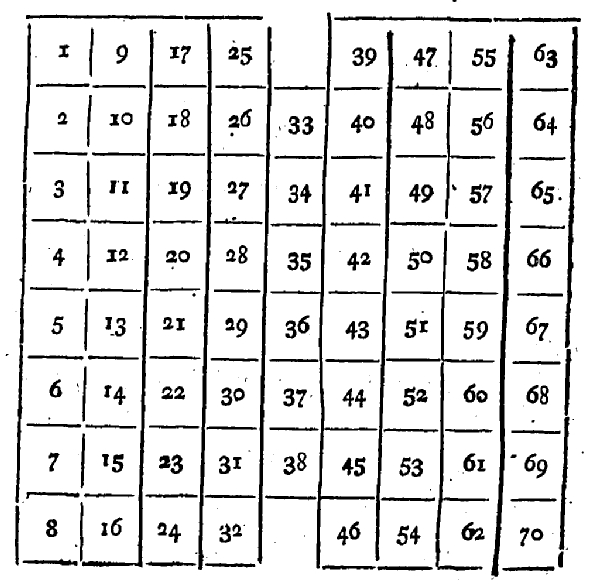
Biribi, biribissi (in Italian), or cavagnole (in French), is an Italian game of chance similar to keno, played for low stakes. It is played on a board on which the numbers 1 to 70 are marked. The game was banned in Italy in 1837.
The players put their stakes on the numbers they wish to back. The banker is provided with a bag from which he draws a case containing a ticket, the tickets corresponding with the numbers on the board. The banker calls out the number, and any players who backed it receive sixty-four times their stake; all other stakes go to the banker.
Casanova played it in Genoa (illegally, for it was already banned there) and the South of France in the 1760s, and describes it as "a regular cheats' game". He broke the bank (fairly, he claims) and was immediately rumored to have been in collusion with the bag-holder; such collusion, presumably, was common.
In the French army, "to be sent to Biribi" was a cant term for being sent to the disciplinary battalions in Algeria.
References
References
- Dumas, Alexandre. (1998). "Twenty Years After". Oxford University Press, UK.
- {{EB1911
- "Manuscript Biribi Game from the 18th century".
- ''The Memoirs of Jacques Casanova'' (Volume 5)
- Lathan, Sharon. (2016-07-11). "Cavagnole".
This article was imported from Wikipedia and is available under the Creative Commons Attribution-ShareAlike 4.0 License. Content has been adapted to SurfDoc format. Original contributors can be found on the article history page.
Ask Mako anything about Biribi — get instant answers, deeper analysis, and related topics.
Research with MakoFree with your Surf account
Create a free account to save articles, ask Mako questions, and organize your research.
Sign up freeThis content may have been generated or modified by AI. CloudSurf Software LLC is not responsible for the accuracy, completeness, or reliability of AI-generated content. Always verify important information from primary sources.
Report