From Surf Wiki (app.surf) — the open knowledge base
Biosphere
Global sum of all ecosystems on Earth

Global sum of all ecosystems on Earth
the sum of all ecosystems
The biosphere (), also called the ecosphere (), is the worldwide sum of all ecosystems. It can also be termed the zone of life on the Earth. The biosphere (which is technically a spherical shell) is virtually a closed system with regard to matter, with minimal inputs and outputs. Regarding energy, it is an open system, with photosynthesis capturing solar energy at a rate of around 100 terawatts. By the most general biophysiological definition, the biosphere is the global ecological system integrating all living beings and their relationships, including their interaction with the elements of the lithosphere, cryosphere, hydrosphere, and atmosphere. The biosphere is postulated to have evolved, beginning with a process of biopoiesis (life created naturally from non-living matter, such as simple organic compounds) or biogenesis (life created from living matter), at least some 3.5 billion years ago.
In a general sense, biospheres are any closed, self-regulating systems containing ecosystems. This includes artificial biospheres such as Biosphere 2 and BIOS-3, and potentially ones on other planets or moons.
Origin and use of the term
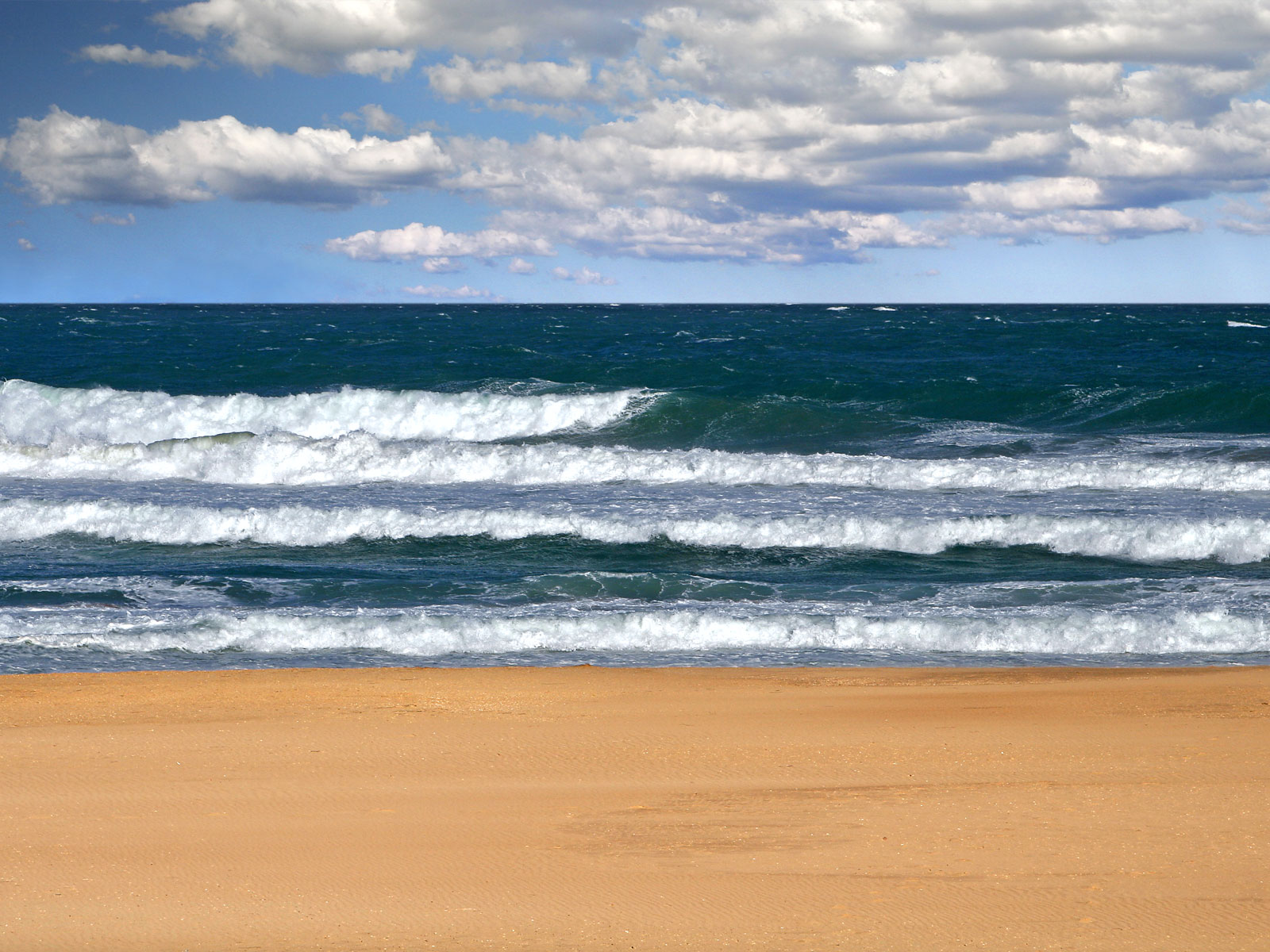
The term "biosphere" was coined in 1875 by geologist Eduard Suess, who defined it as the place on Earth's surface where life dwells.
While the concept has a geological origin, it is an indication of the effect of both Charles Darwin and Matthew F. Maury on the Earth sciences. The biosphere's ecological context comes from the 1920s (see Vladimir I. Vernadsky), preceding the 1935 introduction of the term "ecosystem" by Sir Arthur Tansley (see ecology history). Vernadsky defined ecology as the science of the biosphere. It is an interdisciplinary concept for integrating astronomy, geophysics, meteorology, biogeography, evolution, geology, geochemistry, hydrology and, generally speaking, all life and Earth sciences.
Narrow definition
Geochemists define the biosphere as being the total sum of living organisms (the "biomass" or "biota" as referred to by biologists and ecologists). In this sense, the biosphere is but one of four separate components of the geochemical model, the other three being geosphere, hydrosphere, and atmosphere. When these four component spheres are combined into one system, it is known as the ecosphere. This term was coined during the 1960s and encompasses both biological and physical components of the planet.
The Second International Conference on Closed Life Systems defined biospherics as the science and technology of analogs and models of Earth's biosphere; i.e., artificial Earth-like biospheres. Others may include the creation of artificial non-Earth biospheres—for example, human-centered biospheres or a native Martian biosphere—as part of the topic of biospherics.
Earth's biosphere
Overview
Currently, the total number of living cells on the Earth is estimated to be 1030; the total number since the beginning of Earth, as 1040, and the total number for the entire time of a habitable planet Earth as 1041. This is much larger than the total number of estimated stars (and Earth-like planets) in the observable universe as 1024, a number which is more than all the grains of beach sand on planet Earth; but less than the total number of atoms estimated in the observable universe as 1082; and the estimated total number of stars in an inflationary universe (observed and unobserved), as 10100.
Age

The earliest evidence for life on Earth includes biogenic graphite found in 3.7 billion-year-old metasedimentary rocks from Western Greenland and microbial mat fossils found in 3.48 billion-year-old sandstone from Western Australia. More recently, in 2015, "remains of biotic life" were found in 4.1 billion-year-old rocks in Western Australia. In 2017, putative fossilized microorganisms (or microfossils) were announced to have been discovered in hydrothermal vent precipitates in the Nuvvuagittuq Belt of Quebec, Canada that were as old as 4.28 billion years, the oldest record of life on earth, suggesting "an almost instantaneous emergence of life" after ocean formation 4.4 billion years ago, and not long after the formation of the Earth 4.54 billion years ago. According to biologist Stephen Blair Hedges, "If life arose relatively quickly on Earth ... then it could be common in the universe."
Extent


Every part of the planet, from the polar ice caps to the equator, features life of some kind. Recent advances in microbiology have demonstrated that microbes live deep beneath the Earth's terrestrial surface and that the total mass of microbial life in so-called "uninhabitable zones" may, in biomass, exceed all animal and plant life on the surface. The actual thickness of the biosphere on Earth is difficult to measure. Birds typically fly at altitudes as high as 1800 m and fish live as much as 8372 m underwater in the Puerto Rico Trench.
There are more extreme examples for life on the planet: Rüppell's vulture has been found at altitudes of 11300 m; bar-headed geese migrate at altitudes of at least 8300 m; yaks live at elevations as high as 5400 m above sea level; mountain goats live up to 3050 m. Herbivorous animals at these elevations depend on lichens, grasses, and herbs.
Life forms live in every part of the Earth's biosphere, including soil, hot springs, inside rocks at least 12 mi deep underground, and at least 40 mi high in the atmosphere. Marine life under many forms has been found in the deepest reaches of the world ocean while much of the deep sea remains to be explored.
Under certain test conditions, microorganisms have been observed to survive the vacuum of outer space. The total amount of soil and subsurface bacterial carbon is estimated as 5 × 10¹⁷ g. The mass of prokaryote microorganisms—which includes bacteria and archaea, but not the nucleated eukaryote microorganisms—may be as much as 0.8 trillion tons of carbon (of the total biosphere mass, estimated at between 1 and 4 trillion tons). Barophilic marine microbes have been found at more than a depth of 10000 m in the Mariana Trench, the deepest spot in the Earth's oceans. In fact, single-celled life forms have been found in the deepest part of the Mariana Trench, by the Challenger Deep, at depths of 11034 m. Other researchers reported related studies that microorganisms thrive inside rocks up to 580 m below the sea floor under 2590 m of ocean off the coast of the northwestern United States, as well as 2400 m beneath the seabed off Japan. Culturable thermophilic microbes have been extracted from cores drilled more than 5000 m into the Earth's crust in Sweden, from rocks between 65-75 °C. Temperature increases with increasing depth into the Earth's crust. The rate at which the temperature increases depends on many factors, including the type of crust (continental vs. oceanic), rock type, geographic location, etc. The greatest known temperature at which microbial life can exist is 122 °C (Methanopyrus kandleri Strain 116). It is likely that the limit of life in the "deep biosphere" is defined by temperature rather than absolute depth. On 20 August 2014, scientists confirmed the existence of microorganisms living 800 m below the ice of Antarctica.
Earth's biosphere is divided into several biomes, inhabited by fairly similar flora and fauna. On land, biomes are separated primarily by latitude. Terrestrial biomes lying within the Arctic and Antarctic Circles are relatively barren of plant and animal life. In contrast, most of the more populous biomes lie near the equator.
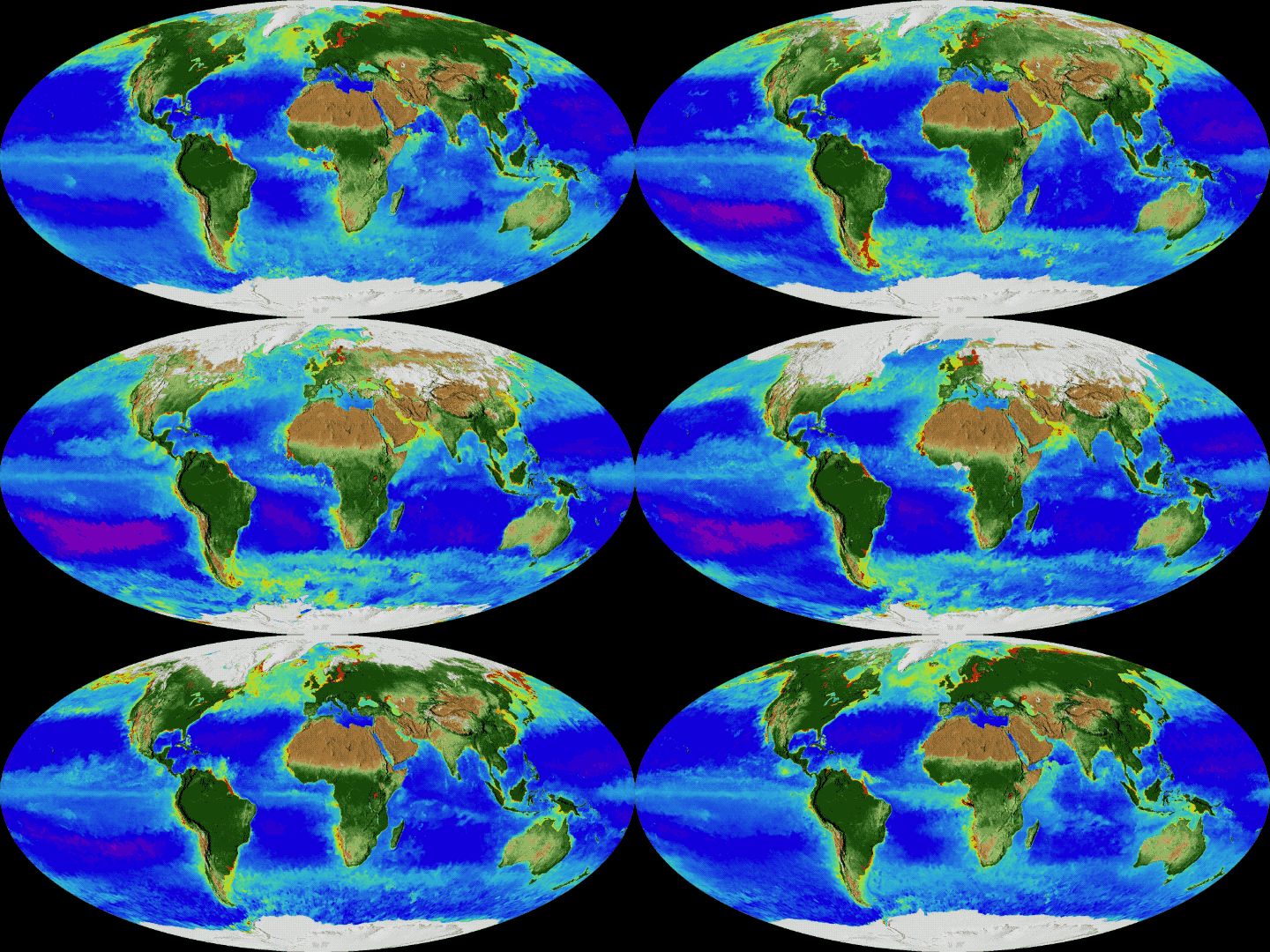
Annual variation
Artificial biospheres

Experimental biospheres, also called closed ecological systems, have been created to study ecosystems and the potential for supporting life outside the Earth. These include spacecraft and the following terrestrial laboratories:
- Biosphere 2 in Arizona, United States, 3.15 acres (13,000 m2).
- BIOS-1, BIOS-2 and BIOS-3 at the Institute of Biophysics in Krasnoyarsk, Siberia, in what was then the Soviet Union.
- Biosphere J (CEEF, Closed Ecology Experiment Facilities), an experiment in Japan.
- Micro-Ecological Life Support System Alternative (MELiSSA) at Autonomous University of Barcelona
Extraterrestrial biospheres
No biospheres have been detected beyond the Earth; therefore, the existence of extraterrestrial biospheres remains hypothetical. The rare Earth hypothesis suggests they should be very rare, save ones composed of microbial life only. On the other hand, Earth analogs may be quite numerous, at least in the Milky Way galaxy, given the large number of planets. Three of the planets discovered orbiting TRAPPIST-1 could possibly contain biospheres. Given limited understanding of abiogenesis, it is currently unknown what percentage of these planets actually develop biospheres.
Based on observations by the Kepler Space Telescope team, it has been calculated that provided the probability of abiogenesis is higher than 1 to 1000, the closest alien biosphere should be within 100 light-years from the Earth.
It is also possible that artificial biospheres will be created in the future, for example with the terraforming of Mars.
References
References
- [https://web.archive.org/web/20111027194858/http://www.questia.com/library/encyclopedia/biosphere.jsp "Biosphere"] in ''The Columbia Encyclopedia'', 6th ed. (2004) Columbia University Press.
- (1999). "Life: past, present and future". Philosophical Transactions of the Royal Society of London. Series B: Biological Sciences.
- Campbell, Neil A.. (2006). "Biology: Exploring Life". Pearson Prentice Hall.
- Zimmer, Carl. (3 October 2013). "Earth's Oxygen: A Mystery Easy to Take for Granted". The New York Times.
- "Meaning of biosphere". WebDictionary.co.uk.
- Suess, E. (1875) ''Die Entstehung Der Alpen'' [''The Origin of the Alps'']. Vienna: W. Braunmuller.
- Möller, Detlev. (December 2010). "Chemistry of the Climate System". De Gruyter.
- Bebarta, Kailash Chandra. (2011). "Dictionary of Forestry and Wildlife Science". Concept Publishing Company.
- (2009). "Environmental Biotechnology". Handbook of Environmental Engineering.
- Overbye, Dennis. (1 December 2023). "Exactly How Much Life Is on Earth? – According to a new study, living cells outnumber stars in the universe, highlighting the deep, underrated link between geophysics and biology.". The New York Times.
- Crockford, Peter W.. (6 November 2023). "The geologic history of primary productivity". [[Current Biology]].
- Staff. (2020). "How many stars are there in the Universe?". [[European Space Agency]].
- Mackie, Glen. (1 February 2002). "To see the Universe in a Grain of Taranaki Sand". [[Swinburne University of Technology]].
- Mack, Eric. (19 March 2015). "There may be more Earth-like planets than grains of sand on all our beaches – New research contends that the Milky Way alone is flush with billions of potentially habitable planets -- and that's just one sliver of the universe.". [[CNET]].
- (13 March 2015). "Using the inclinations of Kepler systems to prioritize new Titius–Bode-based exoplanet predictions". [[Monthly Notices of the Royal Astronomical Society]].
- Baker, Harry. (11 July 2021). "How many atoms are in the observable universe?". [[Live Science]].
- Totani, Tomonori. (3 February 2020). "Emergence of life in an inflationary universe". [[Scientific Reports]].
- (8 December 2013). "Evidence for biogenic graphite in early Archaean Isua metasedimentary rocks". [[Nature Geoscience]].
- Borenstein, Seth. (13 November 2013). "Oldest fossil found: Meet your microbial mom".
- (8 November 2013). "Microbially Induced Sedimentary Structures Recording an Ancient Ecosystem in the ca. 3.48 Billion-Year-Old Dresser Formation, Pilbara, Western Australia". [[Astrobiology (journal).
- Borenstein, Seth. (19 October 2015). "Hints of life on what was thought to be desolate early Earth". [[Mindspark Interactive Network]].
- (19 October 2015). "Potentially biogenic carbon preserved in a 4.1 billion-year-old zircon". Proc. Natl. Acad. Sci. U.S.A..
- Dodd, Matthew S.. (2 March 2017). "Evidence for early life in Earth's oldest hydrothermal vent precipitates". Nature.
- Zimmer, Carl. (1 March 2017). "Scientists Say Canadian Bacteria Fossils May Be Earth's Oldest". The New York Times.
- Ghosh, Pallab. (1 March 2017). "Earliest evidence of life on Earth 'found". BBC News.
- (1 March 2017). "Canadian bacteria-like fossils called oldest evidence of life". Reuters.
- (25 August 1998). "First-Ever Scientific Estimate of Total Bacteria on Earth Shows Far Greater Numbers Than Ever Known Before". University of Georgia.
- Hadhazy, Adam. (12 January 2015). "Life Might Thrive a Dozen Miles Beneath Earth's Surface". [[Astrobiology Magazine]].
- Fox-Skelly, Jasmin. (24 November 2015). "The Strange Beasts That Live in Solid Rock Deep Underground". [[BBC Online]].
- (2003). "Mare Incognitum? An overview". CIESM Workshop Monographs.
- (1995). "ERA-experiment "space biochemistry"". Advances in Space Research.
- (1995). "Biological responses to space: results of the experiment "Exobiological Unit" of ERA on EURECA I". Adv. Space Res..
- Staff. (2014). "The Biosphere". [[The Given Institute.
- (1997). "Microbial flora in the deepest sea mud of the Mariana Trench". FEMS Microbiology Letters.
- "National Geographic, 2005".
- Choi, Charles Q.. (17 March 2013). "Microbes Thrive in Deepest Spot on Earth". [[LiveScience]].
- (17 March 2013). "High rates of microbial carbon turnover in sediments in the deepest oceanic trench on Earth". [[Nature Geoscience]].
- Oskin, Becky. (14 March 2013). "Intraterrestrials: Life Thrives in Ocean Floor". [[LiveScience]].
- Morelle, Rebecca. (15 December 2014). "Microbes discovered by deepest marine drill analysed". BBC News.
- (1994). "Thermophilic, anaerobic bacteria isolated from a deep borehole in granite in Sweden". Proceedings of the National Academy of Sciences of the USA.
- Fox, Douglas. (20 August 2014). "Lakes under the ice: Antarctica's secret garden". [[Nature (journal).
- Mack, Eric. (20 August 2014). "Life Confirmed Under Antarctic Ice; Is Space Next?". [[Forbes]].
- Salisbury FB. (Oct 1997). "Bios-3: Siberian experiments in bioregenerative life support". BioScience.
- (1998). "Dynamic Simulation of Pressure Control System for the Closed Ecology Experiment Facility". Transactions of the Japan Society of Mechanical Engineers B.
- "Institute for Environmental Sciences". Ies.or.jp.
- (2004). "Rare earth: why complex life is uncommon in the universe". Copernicus.
- (21 March 2011). "New Estimate for Alien Earths: 2 Billion in Our Galaxy Alone". Space.com.
- (22 February 2017). "These new worlds are just the start. There are many more life-supporting planets out there waiting to be discovered". The Telegraph.
- Amri Wandel, [https://www.researchgate.net/publication/269116658_On_the_abundance_of_extraterrestrial_life_after_the_Kepler_mission On the abundance of extraterrestrial life after the Kepler mission] {{Webarchive. link. (2018-08-17)
- (2011). "The Case for Mars: The Plan to Settle the Red Planet and Why We Must". Simon & Schuster.
This article was imported from Wikipedia and is available under the Creative Commons Attribution-ShareAlike 4.0 License. Content has been adapted to SurfDoc format. Original contributors can be found on the article history page.
Ask Mako anything about Biosphere — get instant answers, deeper analysis, and related topics.
Research with MakoFree with your Surf account
Create a free account to save articles, ask Mako questions, and organize your research.
Sign up freeThis content may have been generated or modified by AI. CloudSurf Software LLC is not responsible for the accuracy, completeness, or reliability of AI-generated content. Always verify important information from primary sources.
Report