From Surf Wiki (app.surf) — the open knowledge base
Biomineralization
Process by which living organisms produce minerals
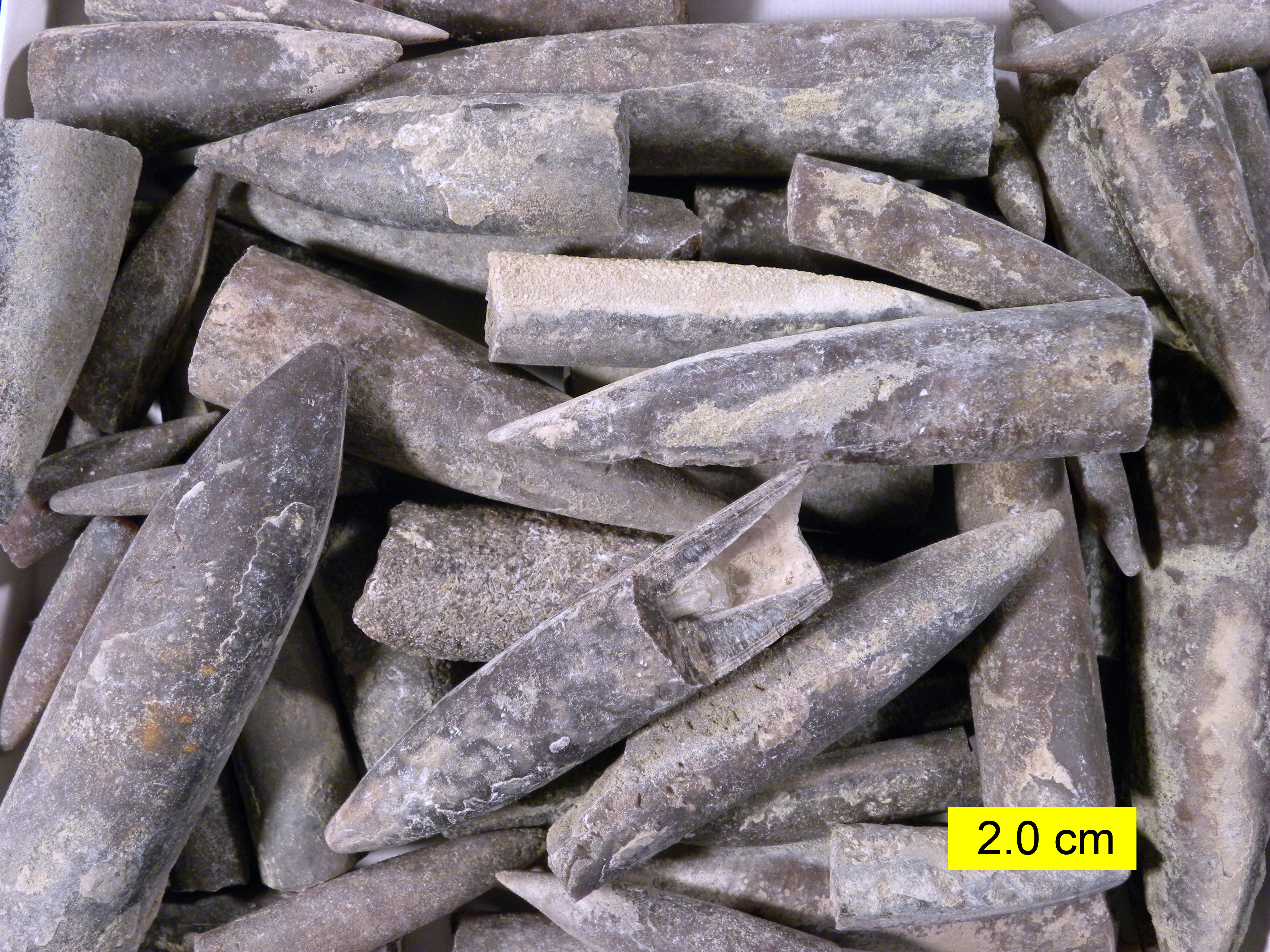
Process by which living organisms produce minerals
Biomineralization, also written biomineralisation, is the process by which living organisms produce minerals, often resulting in hardened or stiffened mineralized tissues. It is an extremely widespread phenomenon: all six taxonomic kingdoms contain members that can form minerals, and over 60 different minerals have been identified in organisms. Examples include silicates in algae and diatoms, carbonates in invertebrates, and calcium phosphates and carbonates in vertebrates. These minerals often form structural features such as sea shells and the bone in mammals and birds.
Organisms have been producing mineralized skeletons for the past 550 million years. Calcium carbonates and calcium phosphates are usually crystalline, but silica organisms (such as sponges and diatoms) are always non-crystalline minerals. Other examples include copper, iron, and gold deposits involving bacteria. Biologically formed minerals often have special uses such as magnetic sensors in magnetotactic bacteria (Fe3O4), gravity-sensing devices (CaCO3, CaSO4, BaSO4) and iron storage and mobilization (Fe2O3•H2O in the protein ferritin).
In terms of taxonomic distribution, the most common biominerals are the phosphate and carbonate salts of calcium that are used in conjunction with organic polymers such as collagen and chitin to give structural support to bones and shells. The structures of these biocomposite materials are highly controlled from the nanometer to the macroscopic level, resulting in complex architectures that provide multifunctional properties. Because this range of control over mineral growth is desirable for materials engineering applications, there is interest in understanding and elucidating the mechanisms of biologically-controlled biomineralization.
Types
Mineralization can be subdivided into different categories depending on the following: the organisms or processes that create chemical conditions necessary for mineral formation, the origin of the substrate at the site of mineral precipitation, and the degree of control that the substrate has on crystal morphology, composition, and growth. These subcategories include biomineralization, organomineralization, and inorganic mineralization, which can be subdivided further. However, the usage of these terms varies widely in the scientific literature because there are no standardized definitions. The following definitions are based largely on a paper written by Dupraz et al. (2009), which provided a framework for differentiating these terms.
Biomineralization
Biomineralization, biologically controlled mineralization, occurs when crystal morphology, growth, composition, and location are completely controlled by the cellular processes of a specific organism. Examples include the shells of invertebrates, such as molluscs and brachiopods. Additionally, the mineralization of collagen provides crucial compressive strength for the bones, cartilage, and teeth of vertebrates.
Organomineralization
This type of mineralization includes both biologically induced mineralization and biologically influenced mineralization.
- Biologically induced mineralization occurs when the metabolic activity of microbes (e.g. bacteria) produces chemical conditions favorable for mineral formation. The substrate for mineral growth is the organic matrix, secreted by the microbial community, and affects crystal morphology and composition. Examples of this type of mineralization include calcareous or siliceous stromatolites and other microbial mats. A more specific type of biologically induced mineralization, remote calcification or remote mineralization, takes place when calcifying microbes occupy a shell-secreting organism and alter the chemical environment surrounding the area of shell formation. The result is mineral formation not strongly controlled by the cellular processes of the animal host (i.e., remote mineralization); this may lead to unusual crystal morphologies.
- Biologically influenced mineralization takes place when chemical conditions surrounding the site of mineral formation are influenced by abiotic processes (e.g., evaporation or degassing). However, the organic matrix (secreted by microorganisms) is responsible for crystal morphology and composition. Examples include micro- to nanometer-scale crystals of various morphologies.
Biological mineralization can also take place as a result of fossilization. See also Calcification.
Biological roles
Among animals, biominerals composed of calcium carbonate, calcium phosphate, or silica perform a variety of roles such as support, defense, and feeding.
File:Braarudosphaera bigelowii.jpg|Many protists, like this coccolithophore, have protective mineralised shells. File:Foraminifères de Ngapali.jpg|Forams from a beach File:Lobster NSRW rotated.jpg|Many invertebrate animals have external exoskeletons or shells, which achieve rigidity by a variety of mineralisations. File:Elephant skeleton.jpg|Vertebrate animals have internal endoskeletons which achieve rigidity by binding calcium phosphate into hydroxylapatite.
If present on a supracellular scale, biominerals are usually deposited by a dedicated organ, which is often defined very early in embryological development. This organ will contain an organic matrix that facilitates and directs the deposition of crystals.
In molluscs
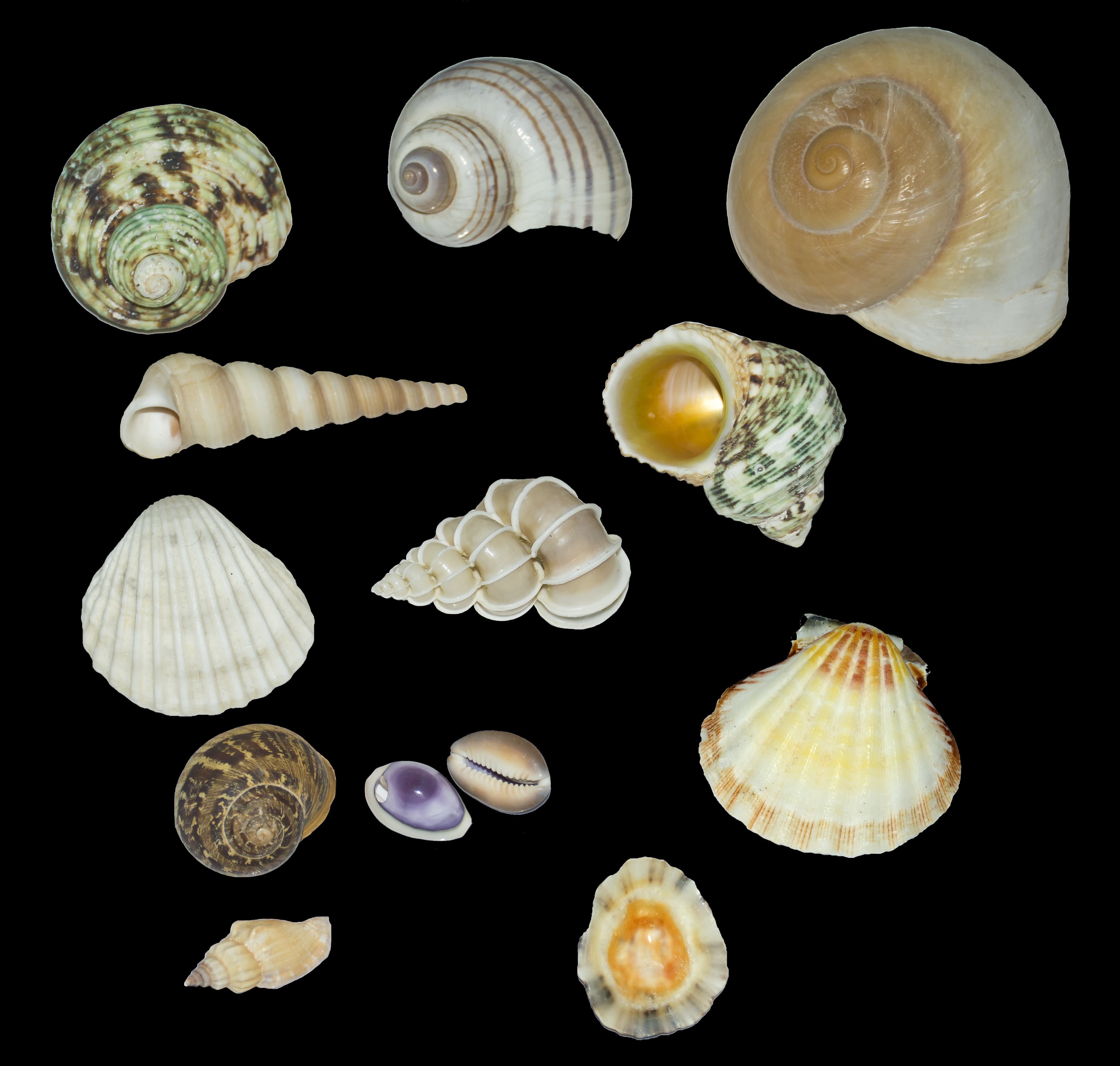
The mollusc shell is a biogenic composite material that has been the subject of much interest in materials science because of its unusual properties and its model character for biomineralization. Molluscan shells consist of 95–99% calcium carbonate by weight, while an organic component makes up the remaining 1–5%. The resulting composite has a fracture toughness ≈3000 times greater than that of the crystals themselves. In the biomineralization of the mollusc shell, specialized proteins are responsible for directing crystal nucleation, phase, morphology, and growths dynamics and ultimately give the shell its remarkable mechanical strength. The application of biomimetic principles elucidated from mollusc shell assembly and structure may help in fabricating new composite materials with enhanced optical, electronic, or structural properties.
The most described arrangement in mollusc shells is the nacre, known in large shells such as Pinna or the pearl oyster (Pinctada). Not only does the structure of the layers differ, but so do their mineralogy and chemical composition. Both contain organic components (proteins, sugars, and lipids), and the organic components are characteristic of the layer and of the species. The structures and arrangements of mollusc shells are diverse, but they share some features: the main part of the shell is crystalline calcium carbonate (aragonite, calcite), though some amorphous calcium carbonate occurs as well; and although they react as crystals, they never show angles and facets.
In fungi

Fungi are a diverse group of organisms that belong to the eukaryotic domain. Studies of their significant roles in geological processes, "geomycology", have shown that fungi are involved with biomineralization, biodegradation, and metal-fungal interactions.
In studying fungi's roles in biomineralization, it has been found that fungi deposit minerals with the help of an organic matrix, such as a protein, that provides a nucleation site for the growth of biominerals. Fungal growth may produce a copper-containing mineral precipitate, such as copper carbonate produced from a mixture of (NH4)2CO3 and CuCl2. The production of the copper carbonate is produced in the presence of proteins made and secreted by the fungi. These fungal proteins that are found extracellularly aid in the size and morphology of the carbonate minerals precipitated by the fungi.
In addition to precipitating carbonate minerals, fungi can also precipitate uranium-containing phosphate biominerals in the presence of organic phosphorus that acts as a substrate for the process. The fungi produce a hyphal matrix, also known as mycelium, that localizes and accumulates the uranium minerals that have been precipitated. Although uranium is often deemed toxic to living organisms, certain fungi such as Aspergillus niger and Paecilomyces javanicus can tolerate it.
Though minerals can be produced by fungi, they can also be degraded, mainly by oxalic acid–producing strains of fungi. Oxalic acid production is increased in the presence of glucose for three organic acid producing fungi: Aspergillus niger, Serpula himantioides, and Trametes versicolor. These fungi have been found to corrode apatite and galena minerals. Degradation of minerals by fungi is carried out through a process known as neogenesis. The order of most to least oxalic acid secreted by the fungi studied are Aspergillus niger, followed by Serpula himantioides, and finally Trametes versicolor.
In bacteria
It is less clear what purpose biominerals serve in bacteria. One hypothesis is that cells create them to avoid entombment by their own metabolic byproducts. Iron oxide particles may also enhance their metabolism.
Other roles
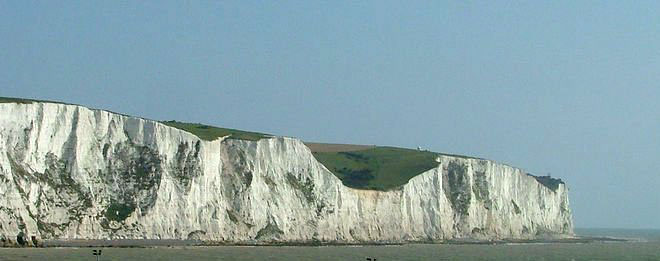
Biomineralization plays significant global roles terraforming the planet, as well as in biogeochemical cycles
Composition
Most biominerals can be grouped by chemical composition into one of three distinct mineral classes: silicates, carbonates, or phosphates.
Silicates

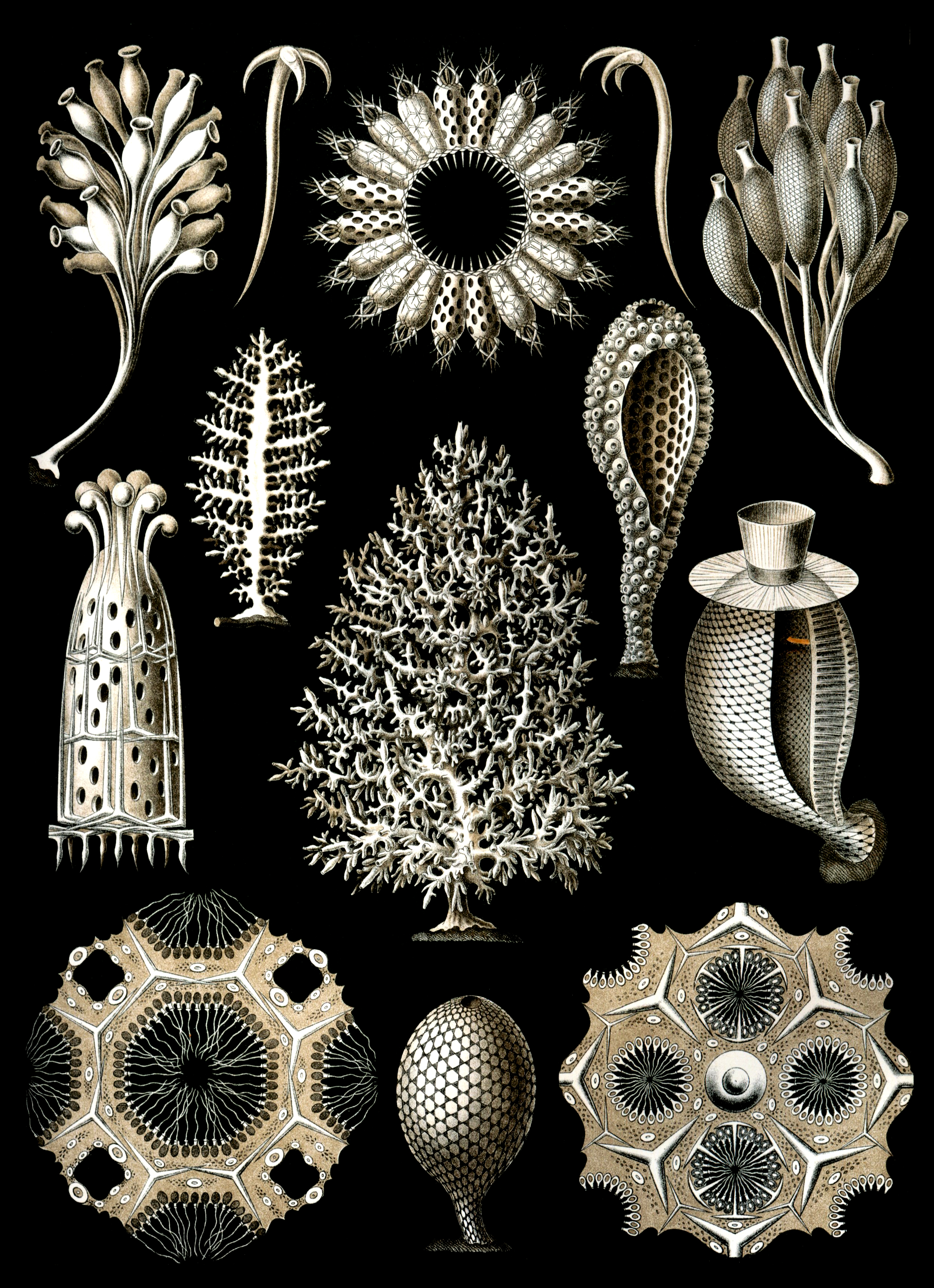
Silicates (glass) are common in marine biominerals, where diatoms form frustules and radiolaria form capsules from hydrated amorphous silica (opal).
Carbonates
The major carbonate in biominerals is CaCO3. The most common polymorphs in biomineralization are calcite (e.g. foraminifera, coccolithophores) and aragonite (e.g. corals), although metastable vaterite and amorphous calcium carbonate can also be important, either structurally or as intermediate phases in biomineralization. Some biominerals include a mixture of these phases in distinct, organised structural components (e.g. bivalve shells). Carbonates are particularly prevalent in marine environments, but also present in freshwater and terrestrial organisms.
Phosphates
The most common biogenic phosphate is hydroxyapatite (HA), a calcium phosphate (Ca10(PO4)6(OH)2) and a naturally occurring form of apatite. It is a primary constituent of bone, teeth, and fish scales. Bone is made primarily of HA crystals interspersed in a collagen matrix—65 to 70% of the mass of bone is HA. Similarly, HA is 70 to 80% of the mass of dentin and enamel in teeth. In enamel, the matrix for HA is formed by amelogenins and enamelins instead of collagen. Remineralisation of tooth enamel involves the reintroduction of mineral ions into demineralised enamel. Hydroxyapatite is the main mineral component of enamel in teeth. During demineralisation, calcium and phosphorus ions are drawn out from the hydroxyapatite. The mineral ions introduced during remineralisation restore the structure of the hydroxyapatite crystals.
The clubbing appendages of the peacock mantis shrimp are made of an extremely dense form of the mineral which has a higher specific strength; this has led to its investigation for potential synthesis and engineering use. Their dactyl appendages have excellent impact resistance due to the impact region being composed of mainly crystalline hydroxyapatite, which offers significant hardness. A periodic layer underneath the impact layer composed of hydroxyapatite with lower calcium and phosphorus content (thus resulting in a much lower modulus) inhibits crack growth by forcing new cracks to change directions. This periodic layer also reduces the energy transferred across both layers due to the large difference in modulus, even reflecting some of the incident energy.
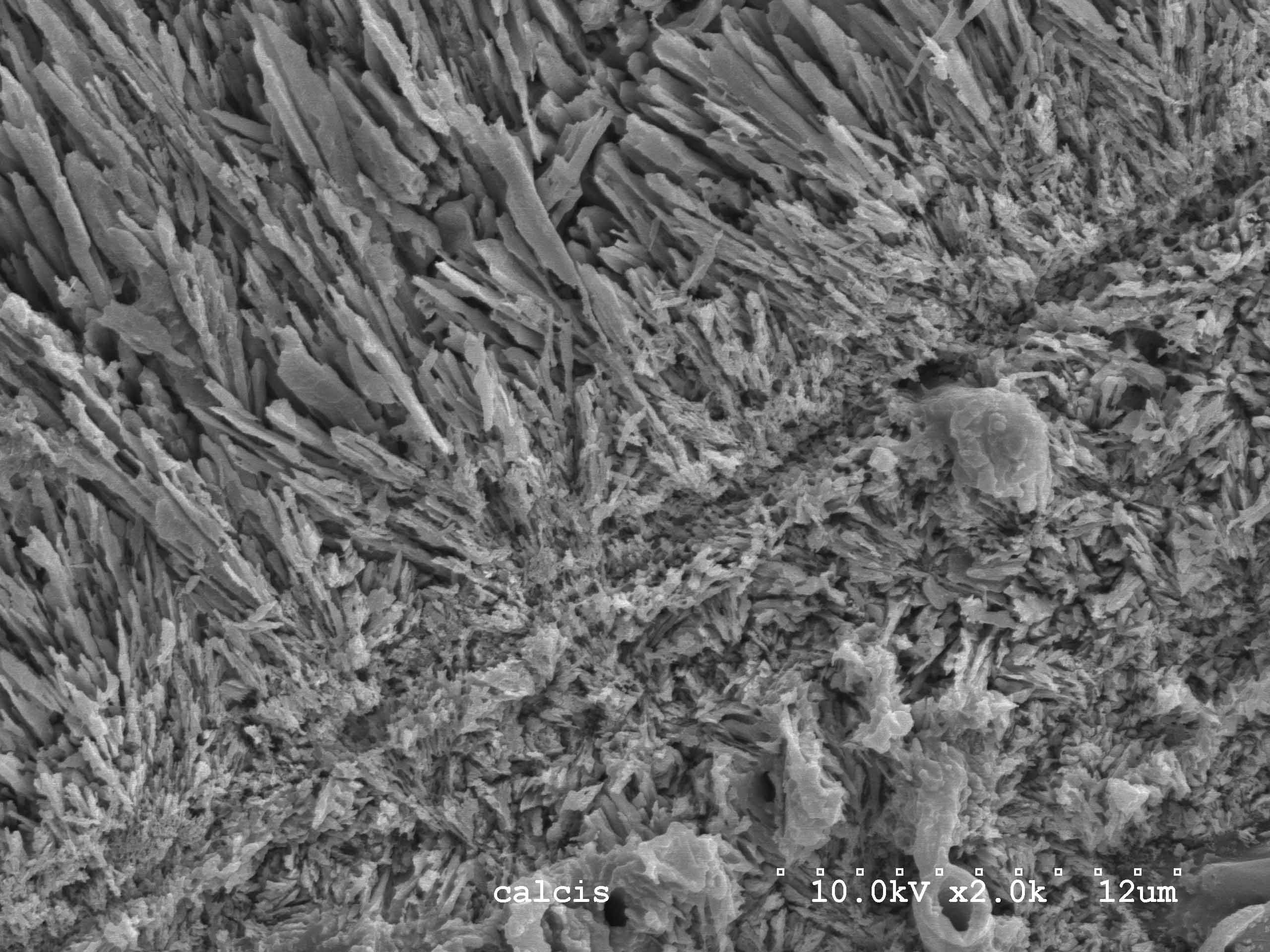
| Composition | Example organisms | |
|---|---|---|
| Calcium carbonate | ||
| (calcite or aragonite) | ||
| Silica | ||
| (silicate/glass/opal) | ||
| Apatite | ||
| (phosphate minerals) |
Other minerals
Beyond these main three categories, there are a number of less-common types of biominerals, usually resulting from a need for specific physical properties or the organism inhabiting an unusual environment. For example, teeth that are primarily used for scraping hard substrates may be reinforced with particularly tough minerals, such as the iron minerals magnetite in chitons or goethite in limpets. Gastropod molluscs living close to hydrothermal vents reinforce their carbonate shells with the iron-sulfur minerals pyrite and greigite. Magnetotactic bacteria also employ magnetic iron minerals magnetite and greigite to produce magnetosomes to aid orientation and distribution in the sediments.
File:Chitonidae - Chiton squamosus.JPG|Chitons have aragonite shells and aragonite-based eyes, as well as teeth coated with magnetite. File:Common limpets1.jpg|Limpets have carbonate shells and teeth reinforced with goethite.
File:Acantharia confocal micrograph 2.png|Acantharian radiolarians have celestine crystal shells. File:Celestine - Sakoany deposit, Katsepy, Mitsinjo, Boeny, Madagascar.jpg |Celestine crystals, the heaviest mineral in the oceans
Celestine, the heaviest mineral in the ocean, consists of strontium sulfate, SrSO4. The mineral is named for the delicate blue colour of its crystals.
Diversity
In nature, there is a wide array of biominerals, ranging from iron oxide to strontium sulfate, However, the most taxonomically widespread biomineral is silica (SiO2·nH2O), being present in all eukaryotic supergroups. Notwithstanding, the degree of silicification can vary even between closely related taxa, from being found in composite structures with other biominerals (e.g., limpet teeth; to forming minor structures (e.g., ciliate granules; or being a major structural constituent of the organism. The most extreme degree of silicification is evident in the diatoms, where almost all species have an obligate requirement for silicon to complete cell wall formation and cell division. Biogeochemically and ecologically, diatoms are the most important silicifiers in modern marine ecosystems, with radiolarians (polycystine and phaeodarian rhizarians), silicoflagellates (dictyochophyte and chrysophyte stramenopiles), and sponges with prominent roles as well. In contrast, the major silicifiers in terrestrial ecosystems are the land plants (embryophytes), with other silicifying groups (e.g., testate amoebae) having a minor role.
Broadly, biomineralized structures evolve and diversify when the energetic cost of biomineral production is less than the expense of producing an equivalent organic structure. The energetic costs of forming a silica structure from silicic acid are much less than forming the same volume from an organic structure (≈20-fold less than lignin or 10-fold less than polysaccharides like cellulose). Based on a structural model of biogenic silica, Lobel et al. (1996) identified by biochemical modeling a low-energy reaction pathway for nucleation and growth of silica. The combination of organic and inorganic components within biomineralized structures often results in enhanced properties compared to exclusively organic or inorganic materials. With respect to biogenic silica, this can result in the production of much stronger structures, such as siliceous diatom frustules having the highest strength per unit density of any known biological material, or sponge spicules being many times more flexible than an equivalent structure made of pure silica. As a result, biogenic silica structures are used for support, feeding, predation defense and environmental protection as a component of cyst walls. diatoms, sponges, and molluscs. There is also evidence that silicification is used as a detoxification response in snails and plants, biosilica has even been suggested to play a role as a pH buffer for the enzymatic activity of carbonic anhydrase, aiding the acquisition of inorganic carbon for photosynthesis.
File:Diversity of biomineralization across the eukaryotes.jpg | The phylogeny shown in this diagram is based on Adl et al. (2012), with major eukaryotic supergroups named in boxes. Letters next to taxon names denote the presence of biomineralization, with circled letters indicating the prominent and widespread use of that biomineral. S, silica; C, calcium carbonate; P, calcium phosphate; I, iron (magnetite/goethite); X, calcium oxalate; SO4, sulfates (calcium/barium/strontium), ? denotes uncertainty in the report.
There are questions which have yet to be resolved, such as why some organisms biomineralize while others do not, and why is there such a diversity of biominerals besides silicon when silicon is so abundant, comprising 28% of the Earth's crust. However, the vast diversity of organisms that thrive in a complex array of biotic and abiotic interactions in oceanic ecosystems are a challenge to such minimal models and experimental designs, whose parameterization and possible combinations, respectively, limit the interpretations that can be built on them.
Evolution
The first evidence of biomineralization dates to some , and sponge-grade organisms may have formed calcite skeletons . But in most lineages, biomineralization first occurred in the Cambrian or Ordovician periods. Organisms used whichever form of calcium carbonate was more stable in the water column at the point in time when they became biomineralized, (but see for a more detailed analysis). The stability is dependent on the Ca/Mg ratio of seawater, which is thought to be controlled primarily by the rate of sea floor spreading, although atmospheric levels may also play a role.
Biomineralization evolved multiple times, independently, and most animal lineages first expressed biomineralized components in the Cambrian period. Many of the same processes are used in unrelated lineages, which suggests that biomineralization machinery was assembled from pre-existing "off-the-shelf" components already used for other purposes in the organism. Although the biomachinery facilitating biomineralization is complex – involving signalling transmitters, inhibitors, and transcription factors – many elements of this 'toolkit' are shared between phyla as diverse as corals, molluscs, and vertebrates. The shared components tend to perform quite fundamental tasks, such as designating that cells will be used to create the minerals, whereas genes controlling more finely tuned aspects that occur later in the biomineralization process, such as the precise alignment and structure of the crystals produced, tend to be uniquely evolved in different lineages. This suggests that Precambrian organisms were employing the same elements, albeit for a different purpose – perhaps to avoid the inadvertent precipitation of calcium carbonate from the supersaturated Proterozoic oceans. Further, certain proteins that would originally have been involved in maintaining calcium concentrations within cells are homologous in all animals, and appear to have been co-opted into biomineralization after the divergence of the animal lineages. The galaxins are one probable example of a gene being co-opted from a different ancestral purpose into controlling biomineralization, in this case, being 'switched' to this purpose in the Triassic scleractinian corals; the role performed appears to be functionally identical to that of the unrelated pearlin gene in molluscs. Carbonic anhydrase serves a role in mineralization broadly in the animal kingdom, including in sponges, implying an ancestral role. Far from being a rare trait that evolved a few times and remained stagnant, biomineralization pathways in fact evolved many times and are still evolving rapidly today; even within a single genus, it is possible to detect great variation within a single gene family.
_2.jpg)
The homology of biomineralization pathways is underlined by a remarkable experiment whereby the nacreous layer of a molluscan shell was implanted into a human tooth, and rather than experiencing an immune response, the molluscan nacre was incorporated into the host bone matrix. This points to the exaptation of an original biomineralization pathway. The biomineralisation capacity of brachiopods and molluscs has also been demonstrated to be homologous, building on a conserved set of genes.
The most ancient example of biomineralization, dating back 2 billion years, is the deposition of magnetite, which is observed in some bacteria, as well as the teeth of chitons and the brains of vertebrates; it is possible that this pathway, which performed a magnetosensory role in the common ancestor of all bilaterians, was duplicated and modified in the Cambrian to form the basis for calcium-based biomineralization pathways. Iron is stored in close proximity to magnetite-coated chiton teeth, so that the teeth can be renewed as they wear. Not only is there a marked similarity between the magnetite deposition process and enamel deposition in vertebrates, but some vertebrates even have comparable iron storage facilities near their teeth.
Potential applications
Most traditional approaches to the synthesis of nanoscale materials are energy inefficient, requiring stringent conditions (e.g., high temperature, pressure, or pH), and often produce toxic byproducts. Furthermore, the quantities produced are small, and the resultant material is usually irreproducible because of the difficulties in controlling agglomeration. In contrast, materials produced by organisms have properties that usually surpass those of analogous synthetically manufactured materials with similar phase composition. Biological materials are assembled in aqueous environments under mild conditions by using macromolecules. Organic macromolecules collect and transport raw materials and assemble these substrates and into short- and long-range ordered composites with consistency and uniformity.
The aim of biomimetics is to mimic the natural way of producing minerals such as apatites. Many man-made crystals require elevated temperatures and strong chemical solutions, whereas the organisms have long been able to lay down elaborate mineral structures at ambient temperatures. Often, the mineral phases are not pure but are made as composites that entail an organic part, often protein, which takes part in and controls the biomineralization. These composites are often not only as hard as the pure mineral but also tougher, as the micro-environment controls biomineralization.
Architecture
File:SEM image of Bacillus megaterium.jpg|Bacillus megaterium File:Bacillus subtilis.jpg|Bacillus subtilis
One biological system that might be of key importance in the future development of architecture is bacterial biofilm. The term biofilm refers to complex heterogeneous structures comprising different populations of microorganisms that attach and form a community on inert (e.g. rocks, glass, plastic) or organic (e.g. skin, cuticle, mucosa) surfaces.
The properties of the surface, such as charge, hydrophobicity, and roughness, determine initial bacterial attachment. A common principle of all biofilms is the production of extracellular matrix (ECM) composed of different organic substances, such as extracellular proteins, exopolysaccharides, and nucleic acids. While the ability to generate ECM appears to be a common feature of multicellular bacterial communities, the means by which these matrices are constructed and function are diverse.
Biomineralization‐mediated scaffolding of bacterial biofilms.jpg | A directed growth of the calcium carbonate crystals allows mechanical support of the 3D structure. The bacterial extracellular matrix (brown) promotes the crystals' growth in specific directions.
Bacterially induced calcium carbonate precipitation can be used to produce "self-healing" concrete. Bacillus megaterium spores and suitable dried nutrients are mixed and applied to steel-reinforced concrete. When the concrete cracks, water ingress dissolves the nutrients and the bacteria germinate triggering calcium carbonate precipitation, resealing the crack and protecting the steel reinforcement from corrosion. This process can also be used to manufacture new hard materials, such as bio-cement.
However, the full potential of bacteria-driven biomineralization is yet to be realized, as it is currently used as a passive filling rather than as a smart designable material. A future challenge is to develop ways to control the timing and the location of mineral formation, as well as the physical properties of the mineral itself, by environmental input. Bacillus subtilis has already been shown to respond to its environment, by changing the production of its ECM. It uses the polymers produced by single cells during biofilm formation as a physical cue to coordinate ECM production by the bacterial community.
Uranium contaminants
Autunite-69257.jpg |
Biomineralization may be used to remediate groundwater contaminated with uranium. The biomineralization of uranium primarily involves the precipitation of uranium phosphate minerals associated with the release of phosphate by microorganisms. Negatively charged ligands at the surface of the cells attract the positively charged uranyl ion (UO22+). If the concentrations of phosphate and UO22+ are sufficiently high, minerals such as autunite (Ca(UO2)2(PO4)2•10-12H2O) or polycrystalline HUO2PO4 may form thus reducing the mobility of UO22+. Compared to the direct addition of inorganic phosphate to contaminated groundwater, biomineralization has the advantage that the ligands produced by microbes will target uranium compounds more specifically rather than react actively with all aqueous metals. Stimulating bacterial phosphatase activity to liberate phosphate under controlled conditions limits the rate of bacterial hydrolysis of organophosphate and the release of phosphate to the system, thus avoiding clogging of the injection location with metal phosphate minerals.
Biogenic mineral controversy
The geological definition of mineral normally excludes compounds that occur only in living beings. However, some minerals are often biogenic (such as calcite) or are organic compounds in the sense of chemistry (such as mellite). Moreover, living beings often synthesize inorganic minerals (such as hydroxylapatite) that also occur in rocks.
The International Mineralogical Association (IMA) is the generally recognized standard body for the definition and nomenclature of mineral species. , the IMA recognizes 5,650 official mineral species out of 5,862 proposed or traditional ones.
The IMA's decision to exclude biogenic crystalline substances is a topic of contention among geologists and mineralogists. For example, Lowenstam (1981) stated that "organisms are capable of forming a diverse array of minerals, some of which cannot be formed inorganically in the biosphere."
Skinner (2005) views all solids as potential minerals and includes biominerals in the mineral kingdom, which are created by organisms' metabolic activities. Skinner expanded the previous definition of a mineral to classify "element or compound, amorphous or crystalline, formed through *biogeochemical * processes," as a mineral.
Recent advances in high-resolution genetics and X-ray absorption spectroscopy are providing revelations on the biogeochemical relations between microorganisms and minerals that may shed new light on this question. For example, the IMA-commissioned "Working Group on Environmental Mineralogy and Geochemistry " deals with minerals in the hydrosphere, atmosphere, and biosphere. The group's scope includes mineral-forming microorganisms, which exist on nearly every rock, soil, and particle surface spanning the globe to depths of at least 1,600 metres below the sea floor and 70 kilometres into the stratosphere (possibly entering the mesosphere).
Biogeochemical cycles have contributed to the formation of minerals for billions of years. Microorganisms can precipitate metals from solution, contributing to the formation of ore deposits. They can also catalyze the dissolution of minerals.
Before the International Mineralogical Association's listing, over 60 biominerals had been discovered, named, and published. These minerals (a sub-set tabulated in Lowenstam (1981)) are considered minerals proper according to Skinner's (2005) definition. These biominerals are not listed in the International Mineral Association official list of mineral names, however, many of these biomineral representatives are distributed among the 78 mineral classes listed in the Dana classification scheme.
Skinner's (2005) definition of a mineral considers this matter by stating that a mineral can be crystalline or amorphous. Although biominerals are not the most common form of minerals, they help to define the limits of what constitutes a mineral properly. Nickel's (1995) formal definition explicitly mentioned crystallinity as a key to defining a substance as a mineral.
List of minerals
Examples of biogenic minerals include:
- Apatite in bones and teeth
- Aragonite, calcite, fluorite in vestibular systems (part of the inner ear) of vertebrates
- Aragonite and calcite in travertine and biogenic silica (siliceous sinter, opal) deposited through algal action
- Goethite found as filaments in limpet teeth
- Hydroxyapatite formed by mitochondria
- Magnetite and greigite formed by magnetotactic bacteria
- Oxalate and calcium carbonate raphides, silica bodies, strontium and barium sulfate in some plants
- Pyrite and marcasite in sedimentary rocks deposited by sulfate-reducing bacteria
- Quartz formed from bacterial action on fossil fuels (gas, oil, coal)
Astrobiology
Biominerals could be important indicators of extraterrestrial life and thus could play an essential role in the search for past or present life on Mars. Furthermore, organic components (biosignatures) that are often associated with biominerals are believed to play crucial roles in both pre-biotic and biotic reactions.
On 24 January 2014, NASA reported that current studies by the Curiosity and Opportunity rovers on the planet Mars will now be searching for evidence of ancient life, including a biosphere based on autotrophic, chemotrophic and chemolithoautotrophic microorganisms, as well as ancient water, including fluvio-lacustrine environments (plains related to ancient rivers or lakes) that may have been habitable. The search for evidence of habitability, taphonomy (related to fossils), and organic carbon on the planet Mars is now a primary NASA objective.
Notes
References
References
- (11 January 2012). "Terminology for biorelated polymers and applications (IUPAC Recommendations 2012)". Pure and Applied Chemistry.
- (2008). "Biomineralization: From Nature to Application". Wiley.
- (1989). "On biomineralization". Oxford University Press.
- (2011). "Biominerals and fossils through time". Cambridge.
- (2013). "Occurrence, formation and function of organic sheets in the mineral tube structures of Serpulidae (polychaeta, Annelida)". PLOS ONE.
- (1998). "Biomineralization: conflicts, challenges, and opportunities". Journal of Cellular Biochemistry.
- (December 1999). "Biomimetics: materials fabrication through biology". Proceedings of the National Academy of Sciences of the United States of America.
- (1 October 2009). "Processes of carbonate precipitation in modern microbial mats". Earth-Science Reviews.
- (December 2015). "The materials science of collagen". Journal of the Mechanical Behavior of Biomedical Materials.
- (27 September 2013). "The oyster enigma variations: a hypothesis of microbial calcification". Paleobiology.
- (2016-05-05). "Role of Fungi in the Biomineralization of Calcite". MDPI AG.
- (2020-11-30). "The diversity of molecular mechanisms of carbonate biomineralization by bacteria". Springer Science and Business Media LLC.
- (December 2006). "A genome-wide analysis of biomineralization-related proteins in the sea urchin Strongylocentrotus purpuratus". Developmental Biology.
- (January 2009). "Nacre and false nacre (foliated aragonite) in extant monoplacophorans (=Tryblidiida: Mollusca)". Die Naturwissenschaften.
- (December 1999). "The design of mineralised hard tissues for their mechanical functions". The Journal of Experimental Biology.
- (2003). "Les étapes de la découverte des rapports entre la terre et la vie: une introduction à la paléontologie". Éditions scientifiques GB.
- (November 2010). "Programming pluripotent precursor cells derived from Xenopus embryos to generate specific tissues and organs". MDPI AG.
- (January 2007). "Geomycology: biogeochemical transformations of rocks, minerals, metals and radionuclides by fungi, bioweathering and bioremediation". Mycological Research.
- (October 2017). "Biosynthesis of copper carbonate nanoparticles by ureolytic fungi". Applied Microbiology and Biotechnology.
- (June 2015). "Uranium phosphate biomineralization by fungi". Environmental Microbiology.
- (June 2005). "Fungal degradation of calcium-, lead- and silicon-bearing minerals". Biometals.
- (1 May 2000). "Weathering of rocks and neogenesis of minerals associated with lichen activity". Applied Clay Science.
- (March 2004). "Geochemistry. What biogenic minerals tell us". Science.
- (2019). "Sustainable Agriculture Reviews 37". Springer International Publishing.
- (October 2005). "Extreme impact and cavitation forces of a biological hammer: strike forces of the peacock mantis shrimp Odontodactylus scyllarus". The Journal of Experimental Biology.
- (2001). "Encyclopedia of Ocean Sciences".
- (13 October 2015). "Narrowly Distributed Crystal Orientation in Biomineral Vaterite". Chemistry of Materials.
- (July 2011). "Amorphous and crystalline calcium carbonate distribution in the tergite cuticle of moulting Porcellio scaber (Isopoda, Crustacea)". Journal of Structural Biology.
- (November 2017). "Planktic foraminifera form their shells via metastable carbonate phases". Nature Communications.
- (September 2017). "Amorphous calcium carbonate particles form coral skeletons". Proceedings of the National Academy of Sciences of the United States of America.
- (March 2009). "Biomineralization by photosynthetic organisms: evidence of coevolution of the organisms and their environment?". Geobiology.
- (October 1979). "Studies on fish scale formation and resorption. III. Fine structure and calcification of the fibrillary plates of the scales in Carassius auratus (Cypriniformes: Cyprinidae)". Cell and Tissue Research.
- (January 2018). "Stat Pearls".
- (2016). "Demineralization-remineralization dynamics in teeth and bone". International Journal of Nanomedicine.
- (July 2014). "Nano-hydroxyapatite and its applications in preventive, restorative and regenerative dentistry: a review of literature". Annali di Stomatologia.
- (June 2012). "The stomatopod dactyl club: a formidable damage-tolerant biological hammer". Science.
- (June 2012). "Materials science. Small but extremely tough". Science.
- (5 July 2016). "Iron Oxides". Wiley.
- (April 2015). "Extreme strength observed in limpet teeth". Journal of the Royal Society, Interface.
- (August 2015). "The 'scaly-foot gastropod': a new genus and species of hydrothermal vent-endemic gastropod (Neomphalina: Peltospiridae) from the Indian Ocean". Journal of Molluscan Studies.
- (2013). "Ecology, Diversity, and Evolution of Magnetotactic Bacteria". Microbiology and Molecular Biology Reviews.
- (2022-06-01). "Magnetotactic bacteria and magnetofossils: ecology, evolution and environmental implications". Springer Science and Business Media LLC.
- (November 2013). "Phylogenetic significance of composition and crystal morphology of magnetosome minerals". Frontiers in Microbiology.
- (19 November 2015). "Weird Sea Mollusk Sports Hundreds of Eyes Made of Armor".
- (2010). "Sedimentation of acantharian cysts in the Iceland Basin: Strontium as a ballast for deep ocean particle flux, and implications for acantharian reproductive strategies". Limnology and Oceanography.
- (2018). "Acantharian cysts: High flux occurrence in the bathypelagic zone of the Scotia Sea, Southern Ocean". Marine Biology.
- (2019). "Pathways of Organic Carbon Downward Transport by the Oceanic Biological Carbon Pump". Frontiers in Marine Science.
- (2003). "Biomineralization and Evolutionary History". Reviews in Mineralogy and Geochemistry.
- (2015). "Evolution of Lightweight Structures". Springer.
- (December 2016). "The Evolution of Silicon Transport in Eukaryotes". Molecular Biology and Evolution.
- (June 2007). "Biomineralization of limpet teeth: a cryo-TEM study of the organic matrix and the onset of mineral deposition". Journal of Structural Biology.
- (2009). "A cover of glass: first report of biomineralized silicon in a ciliate, Maryna umbrellata (Ciliophora: Colpodea)". The Journal of Eukaryotic Microbiology.
- (1994). "Siliceous structures and silicification in flagellated protists". Protoplasma.
- (December 1969). "Role of silicon in diatom metabolism. A silicon requirement for deoxyribonucleic acid synthesis in the diatom Cylindrotheca fusiformis Reimann and Lewin". Experimental Cell Research.
- (2000). "Silicon Metabolism in Diatoms: Implications for Growth". Journal of Phycology.
- (2001). "Biomineralization: Principles and Concepts in Bioinorganic Materials Chemistry". Oxford University Press.
- (2004). "The evolution of silicification in diatoms: Inescapable sinking and sinking as escape?". New Phytologist.
- (2010). "Silica Use Through Time: Macroevolutionary Change in the Morphology of the Diatom Fustule". Geomicrobiology Journal.
- (1983). "The Transport and Function of Silicon in Plants". Biological Reviews.
- (1973). "The amino acid and sugar composition of diatom cell-walls". Marine Biology.
- (1996). "Computational model for protein-mediated biomineralization of the diatom frustule". Marine Biology.
- (February 2003). "Architecture and material properties of diatom shells provide effective mechanical protection". Nature.
- (February 2016). "Microstructure provides insights into evolutionary design and resilience of Coscinodiscus sp. frustule". Proceedings of the National Academy of Sciences of the United States of America.
- (2008). "Nanostructural Organization of Naturally Occurring Composites—Part I: Silica-Collagen-Based Biocomposites". Journal of Nanomaterials.
- (September 2015). "Glassin, a histidine-rich protein from the siliceous skeletal system of the marine sponge Euplectella, directs silica polycondensation". Proceedings of the National Academy of Sciences of the United States of America.
- (April 2007). "Hierarchical assembly of the siliceous skeletal lattice of the hexactinellid sponge Euplectella aspergillum". Journal of Structural Biology.
- (December 2016). "Silicification of the medial tooth in the blue crab Callinectes sapidus". Journal of Morphology.
- (January 2007). "Grazing-induced changes in cell wall silicification in a marine diatom". Protist.
- (2013). "Size and biomechanic properties of diatom frustules influence food uptake by copepods". Marine Ecology Progress Series.
- (2016). "The ecology of herbivore-induced silicon defences in grasses". Functional Ecology.
- (June 2013). "UV-screening of grasses by plant silica layer?". Journal of Biosciences.
- (2004). "Diatoms as living photonic crystals". Applied Physics B.
- (2008). "Optical properties of diatom silica frustule with special reference to blue light". Journal of Applied Physics.
- (December 2015). "Wavelength and orientation dependent capture of light by diatom frustule nanostructures". Scientific Reports.
- (August 2003). "Fibre-optical features of a glass sponge". Nature.
- (September 2014). "A dynamic broadband reflector built from microscopic silica spheres in the 'disco' clam Ctenoides ales". Journal of the Royal Society, Interface.
- (March 2002). "Aluminum-dependent regulation of intracellular silicon in the aquatic invertebrate Lymnaea stagnalis". Proceedings of the National Academy of Sciences of the United States of America.
- (April 2001). "Silicon and heavy metal tolerance of higher plants". Phytochemistry.
- (September 2002). "A proton buffering role for silica in diatoms". Science.
- (2018). "Competition between Silicifiers and Non-silicifiers in the Past and Present Ocean and Its Evolutionary Impacts". Frontiers in Marine Science.
- (September 2012). "The revised classification of eukaryotes". The Journal of Eukaryotic Microbiology.
- (May 2016). "A first report of hydroxylated apatite as structural biomineral in Loasaceae - plants' teeth against herbivores". Scientific Reports.
- (August 2012). "Plant cystoliths: a complex functional biocomposite of four distinct silica and amorphous calcium carbonate phases". Chemistry: A European Journal.
- (2010). "Non-Skeletal Biomineralization by Eukaryotes: Matters of Moment and Gravity". Geomicrobiology Journal.
- (May 1989). "Phosphorus-31 NMR Studies of Cell Wall-Associated Calcium-Phosphates in Ulva lactuca". Plant Physiology.
- (1977). "Resource Competition between Plankton Algae: An Experimental and Theoretical Approach". Ecology.
- (1994). "The impact of light intensity and daylength on silicate and nitrate competition among marine phytoplankton". Limnology and Oceanography.
- (2011). "The rise of predators". Geology.
- (2011). "Phosphate biomineralization in mid-Neoproterozoic protists". Geology.
- (2010). "Possible animal-body fossils in pre-Marinoan limestones from South Australia". Nature Geoscience.
- (June 2002). "Proterozoic modular biomineralized metazoan from the Nama Group, Namibia". Science.
- (June 2007). "Seawater chemistry and early carbonate biomineralization". Science.
- (2010). "The earliest Cambrian record of animals and ocean geochemical change". Geological Society of America Bulletin.
- (2008). "Eve of biomineralization: Controls on skeletal mineralogy". Geology.
- (2011). "Evolutionary origins of animal skeletal biomineralization". Cells Tissues Organs.
- (2011). "Chronology of early Cambrian biomineralization". Geological Magazine.
- Knoll, A.H.. (2004). "Reviews in Mineralogy and Geochemistry".
- (April 1998). "A marriage of bone and nacre". Nature.
- (February 1996). "Skeletal matrices, muci, and the origin of invertebrate calcification". Proceedings of the National Academy of Sciences of the United States of America.
- (1980). "Evolutionary prerequisites for early Phanerozoic calcareous skeletons". Bio Systems.
- (1980). "Evolutionary prerequisites for early Phanerozoic calcareous skeletons". Bio Systems.
- (July 2009). "Differential expression of three galaxin-related genes during settlement and metamorphosis in the scleractinian coral Acropora millepora". BMC Evolutionary Biology.
- (June 2007). "Sponge paleogenomics reveals an ancient role for carbonic anhydrase in skeletogenesis". Science.
- (September 2022). "Brachiopod and mollusc biomineralisation is a conserved process that was lost in the phoronid-bryozoan stem lineage". EvoDevo.
- (2000). "The Biomineralisation of Nano- and Micro-Structures". [[Wiley-VCH]].
- (January 1967). "Ultrastructure and development of iron mineralization in the radular teeth of Cryptochiton stelleri (Mollusca)". Journal of Ultrastructure Research.
- (1993). "Nanophase and Nanocomposite Materials: Symposium Held December 1–3, 1992, Boston, Massachusetts, U.S.A. (Materials Research Society Symposium Proceedings)". Materials Research Society.
- (30 April 2008). "Biomineralization: From Nature to Application". John Wiley & Sons.
- (28 September 2015). "Biomineralization and Biomaterials: Fundamentals and Applications". Woodhead.
- (May 2006). "Microbial sciences: the superficial life of microbes". Nature.
- (September 2007). "Bacterial cell attachment, the beginning of a biofilm". Journal of Industrial Microbiology & Biotechnology.
- (January 2005). "Biofilms: the matrix revisited". Trends in Microbiology.
- (July 2015). "The Matrix Reloaded: Probing the Extracellular Matrix Synchronizes Bacterial Communities". Journal of Bacteriology.
- (April 2017). "The Peculiar Functions of the Bacterial Extracellular Matrix". Trends in Microbiology.
- (2016). "Spatio-temporal assembly of functional mineral scaffolds within microbial biofilms". npj Biofilms and Microbiomes.
- (September 2017). "Architects of nature: growing buildings with bacterial biofilms". Microbial Biotechnology.
- (2007). "Self Healing Materials: An Alternative Approach to 20 Centuries of Materials Science". Springer.
- "Methods for making construction material using enzyme producing bacteria".
- (October 2012). "Osmotic pressure can regulate matrix gene expression in Bacillus subtilis". Molecular Microbiology.
- (February 2014). "Defects in the flagellar motor increase synthesis of poly-γ-glutamate in Bacillus subtilis". Journal of Bacteriology.
- (2014). "The biogeochemistry and bioremediation of uranium and other priority radionuclides". Chemical Geology.
- (2000). "Environmental microbe-metal interactions: Bioremediation of radionuclide-containing wastewaters". ASM Press.
- (November 2020). "The New IMA List of Minerals A Work in Progress". [[International Mineralogical Association.
- "IMA Database of Mineral Properties/ RRUFF Project". Department of Geosciences, University of Arizona.
- (March 1981). "Minerals formed by organisms". Science.
- (1995). "The definition of a mineral". The Canadian Mineralogist.
- (2005). "Biominerals". Mineralogical Magazine.
- (3 August 2011). "Working Group on Environmental Mineralogy and Geochemistry". International Mineralogical Association.
- (2010). "Origins and Evolution of Life: An Astrobiological Perspective". Cambridge University Press.
- (May 2008). "Extending the sub-sea-floor biosphere". Science.
- (August 2009). "Microorganisms in the atmosphere over Antarctica". FEMS Microbiology Ecology.
- (May 2002). "Geomicrobiology: how molecular-scale interactions underpin biogeochemical systems". Science.
- (February 2003). "Geoscience. Microbial geoengineers". Science.
- (2010). "Bacterial biomineralization: new insights from Myxococcus-induced mineral precipitation". Geological Society, London, Special Publications.
- (1990). "Biomineralization. Cell Biology and Mineral Deposition. by Kenneth Simkiss; Karl M. Wilbur On Biomineralization. by Heinz A. Lowenstam; Stephen Weiner". Science.
- (March 2009). "Official IMA list of mineral names". uws.edu.au.
- (2010). "Earth Materials". Wiley-Blackwell.
- (2011). "Icosahedrite, Al63Cu24Fe13, the first natural quasicrystal". American Mineralogist.
- "Approved as new mineral". Commission on New Minerals and Mineral Names.
- (Nov–Dec 1989). "Biogenic Minerals". Science Frontiers.
- (2014-03-01). "Physiological and ecological significance of biomineralization in plants". Trends in Plant Science.
- (26 September 2006). "The Astrobiology Field Laboratory". [[Mars Exploration Program Analysis Group]] (MEPAG) - NASA.
- (January 2014). "Exploring martian habitability. Habitability, taphonomy, and the search for organic carbon on Mars. Introduction". Science.
- Various. (24 January 2014). "Special Issue - Table of Contents - Exploring Martian Habitability". [[Science (journal).
- Various. (24 January 2014). "Special Collection - Curiosity - Exploring Martian Habitability". [[Science (journal).
- (January 2014). "A habitable fluvio-lacustrine environment at Yellowknife Bay, Gale crater, Mars". Science.
This article was imported from Wikipedia and is available under the Creative Commons Attribution-ShareAlike 4.0 License. Content has been adapted to SurfDoc format. Original contributors can be found on the article history page.
Ask Mako anything about Biomineralization — get instant answers, deeper analysis, and related topics.
Research with MakoFree with your Surf account
Create a free account to save articles, ask Mako questions, and organize your research.
Sign up freeThis content may have been generated or modified by AI. CloudSurf Software LLC is not responsible for the accuracy, completeness, or reliability of AI-generated content. Always verify important information from primary sources.
Report