From Surf Wiki (app.surf) — the open knowledge base
Binding post
Electrical connector
Electrical connector
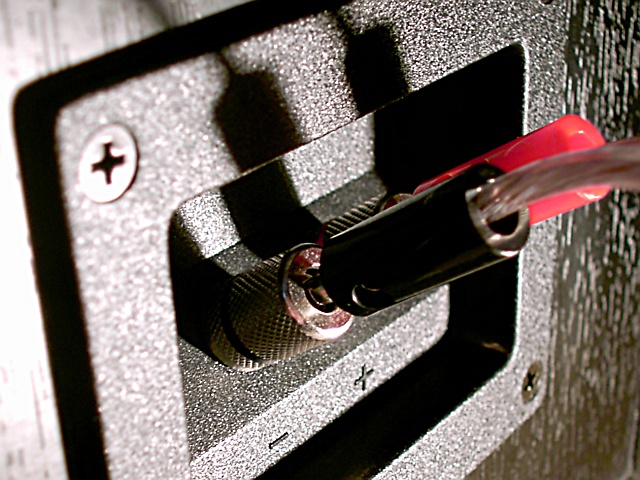

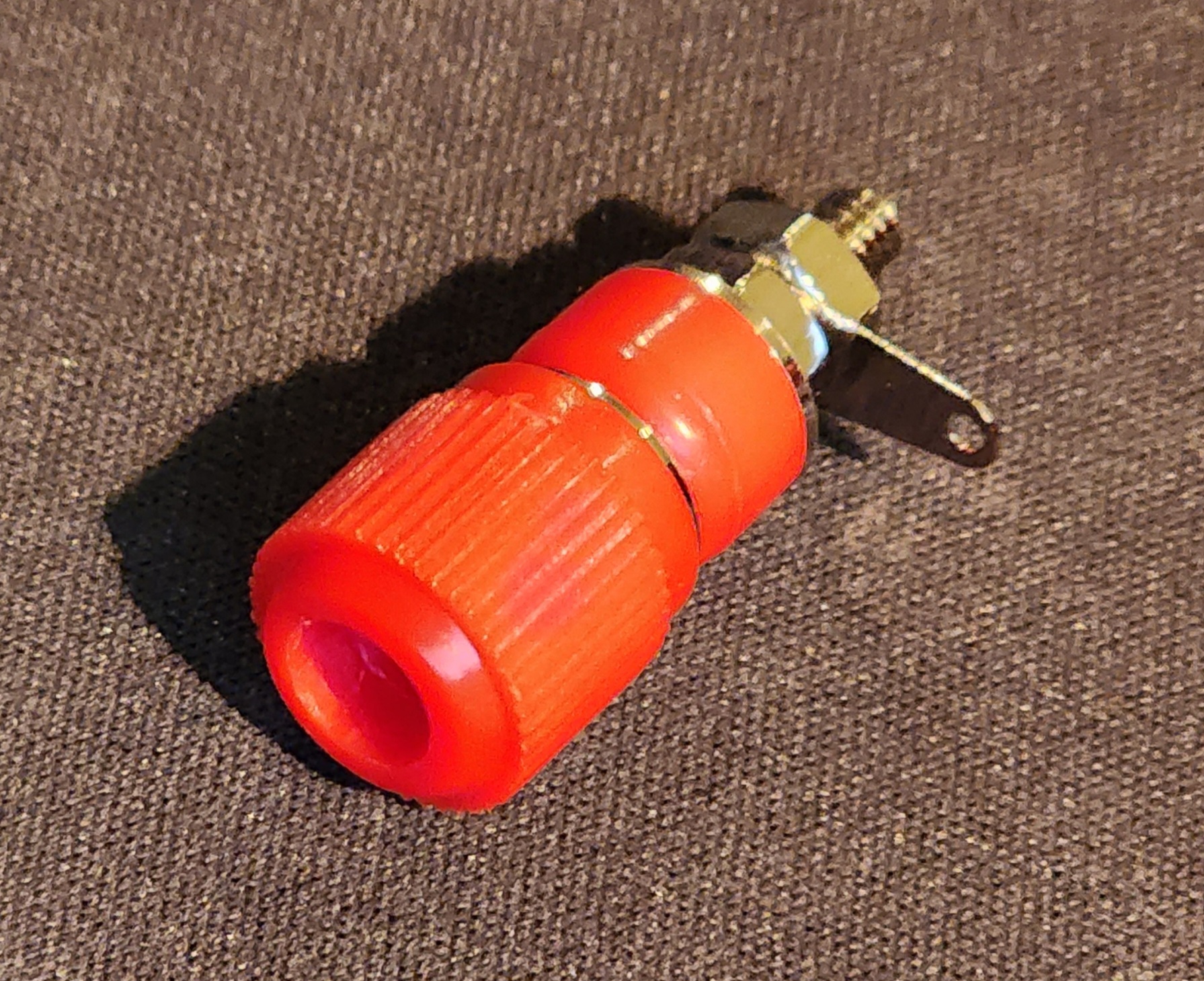
A binding post is a connector commonly used on electronic test equipment to terminate (attach) a single wire or test lead. They are also found on loudspeakers and audio amplifiers as well as other electrical equipment.
History
A binding post contains a central threaded metal rod and a cap that screws down on that rod. Binding posts slowly evolved from 19th century general purpose fasteners into 20th century electrical binding posts. Examples of binding posts used during the 19th century are telegraph key and blasting machine devices.
Caps are commonly insulated with plastic and color-coded: red commonly means an active or positive terminal; black indicates an inactive (reference or return) or negative terminal; and green indicates an earth (ground) terminal. Caps during the 19th century were typically bare metal until synthetic plastic, such as Bakelite, became available in the early 20th century.
During the late 1940s, General Radio created a new binding post that had a jack in a cap.
Today it is commonly known as a "five-way" or "universal" binding post, which allows many types of connection methods:
- Banana plugs - a banana plug is inserted into the top open end of the binding post.
- Alligator clip - a slender alligator clip is clipped onto the top open end of the binding post.
- Bare wire - wire is wrapped around the metal post, then top cap is screwed down on it.
- Spade connector - wire is inserted into spade connector (1/4" throat) then crimped to secure the wire, then spade inserted around the metal post, then top cap is screwed down on it.
- Bare wire - wire (up to 10 AWG) is inserted into hole in metal post, then top cap is screwed down on it.
- Pin connector (telephone tip) - wire is inserted into pin connector then crimped to secure the wire, then inserted into metal post, then top cap is screwed down on it.
Safety

In the past, it was common for multiple five-way binding posts to have their drilled holes lined up; this provided convenience in some applications as a bare wire could be strung from post to post to post. But this also impaired safety as two wires or pin connectors could be inserted from opposite sides of two binding posts and the tips of the wires or probes might inadvertently short together. Holes are now normally aligned in such a fashion that such shorts cannot occur.
Standard spacing
In order to permit the use of double banana plugs, the most common distance between the centers of the plugs should be 3/4 in, which originated on General Radio test equipment during the 1920s, however inch is not the only spacing.
References
References
- "1948 Catalog L". [[General Radio]].
- (June 1952). "Standardized Terminals and Connectors - Part 1". [[General Radio]].
- (July 1952). "Standardized Terminals and Connectors - Part 2". [[General Radio]].
This article was imported from Wikipedia and is available under the Creative Commons Attribution-ShareAlike 4.0 License. Content has been adapted to SurfDoc format. Original contributors can be found on the article history page.
Ask Mako anything about Binding post — get instant answers, deeper analysis, and related topics.
Research with MakoFree with your Surf account
Create a free account to save articles, ask Mako questions, and organize your research.
Sign up freeThis content may have been generated or modified by AI. CloudSurf Software LLC is not responsible for the accuracy, completeness, or reliability of AI-generated content. Always verify important information from primary sources.
Report