From Surf Wiki (app.surf) — the open knowledge base
Bill Woodcock
Internet infrastructure pioneer (born 1971)
Internet infrastructure pioneer (born 1971)
| Field | Value | |
|---|---|---|
| birth_name | William Edward Woodcock IV | |
| image | Bill Woodcock.jpg | |
| caption | Woodcock in 2001 | |
| birth_date | ||
| birth_place | San Francisco, California, US | |
| title | Executive Director, Packet Clearing House | |
| President, WoodyNet | ||
| Chairman, Quad9 | ||
| CEO, EcoTruc and EcoRace | ||
| alma_mater | University of California, Santa Cruz | |
| known_for | {{plain list | |
| parents | {{plain list | |
| module |
President, WoodyNet Chairman, Quad9 CEO, EcoTruc and EcoRace
- Development of anycast routing
- Establishment of IXPs
- Cyber-defense operations
- Internet governance
- William Edward Woodcock III
- Charlene Louise Mayne
William Edward Woodcock IV (born August 16, 1971 in San Francisco, California, US) is the Secretary General of Packet Clearing House, the international organization responsible for providing operational support and security to critical Internet infrastructure, including Internet exchange points and the core of the domain name system; the chairman of the Foundation Council of Quad9; the president of WoodyNet; and the CEO of EcoTruc and EcoRace, companies developing electric vehicle technology for work and motorsport. Bill founded one of the earliest Internet service providers, and is best known for his 1989 development of the anycast routing technique that is now ubiquitous in Internet content distribution networks and the domain name system.
Activities
Early electronic prepress
Woodcock entered the computer industry via the advent of desktop publishing. He was doing prepress work for the University of California Press when the Macintosh computer was released in 1984, and he switched to the then-nascent field of desktop publishing and electronic prepress. In 1985, he began working with AppleTalk networks, necessary to interconnect Macintosh computers running desktop publishing software with the digital imagesetters which produce the plates from which books are printed, and by 1986 he was speaking on the subject of desktop publishing and electronic prepress at conferences.
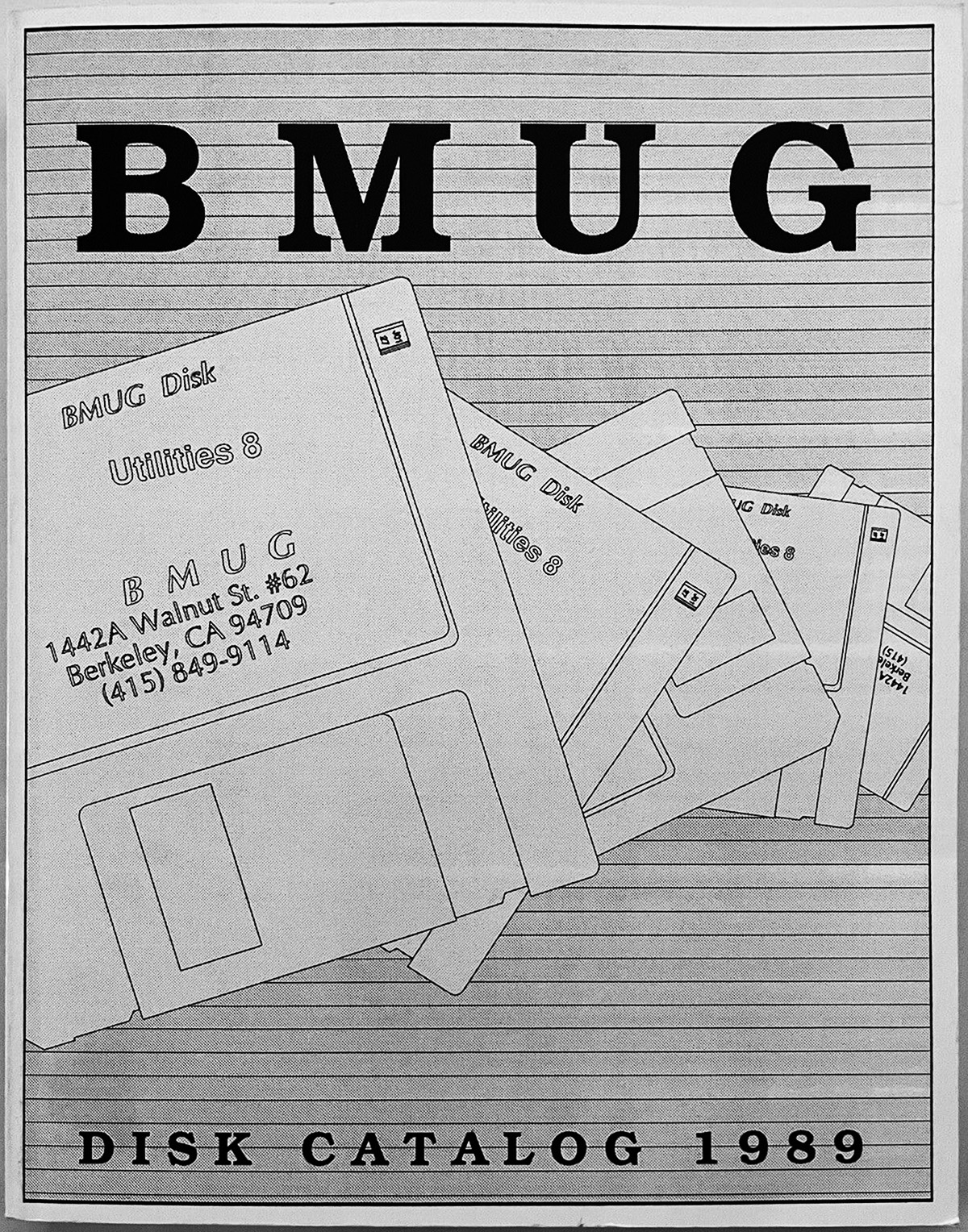
Beginning in 1985, Woodcock volunteered with the Berkeley Macintosh Users Group (BMUG), providing technical assistance to its members, working on the production of its biannual newsletters, and assisting Bernard Aboba with the administration of its FidoNet-node BBS and moderating the global MacNetAdmin echo. In 1989, he collaborated with BMUG Programming SIG chair Greg Dow to produce what may be the first instance of Database publishing: a catalog of BMUG's shareware archive, printed directly from a FileMaker database to negatives on a LinoTronic 300 PostScript imagesetter.
Woodcock continued his interest in publishing through college and beyond, studying Book Arts at the UC Santa Cruz Cowell Press under George Kane, doing the illustrations for his book Networking the Macintosh, and subsequently collaborating with his publisher parents to provide book designs and cover art for some of their books. Woodcock was one of the founders of Netsurfer Digest, the first online periodical about the World Wide Web, and served as its production manager from 1994 through 2005.
Early Internet engineering
In 1987, Woodcock began building the dot-com era Internet backbone network Zocalo, which had its origins in the toasternet he began constructing while working at Farallon Computing in the mid-1980s. When the network grew to encompass Santa Cruz as well as Berkeley in 1989, he began using anycast routing to distribute network traffic between the servers in the two locations. Throughout the 1990s, he continued to pioneer IP anycast IGP and EGP-based topological load-balancing techniques. Together with Mark Kosters he proposed at the 1996 Montreal IEPG that the root DNS servers be migrated to IP anycast, and this work has provided the basis upon which root DNS servers have been deployed since the late 1990s.
In the early 2000s, Woodcock was an early proponent of reputation-based routing security and encapsulated much of that work in the "Prefix-List Sanity Checker" toolset which was used by most of the largest Internet networks to validate proposed BGP routing announcements in the interregnum between the RPSL and RPKI eras.
In 2010 and 2011, with Rick Lamb, who had previously built the signing system that places DNSSEC cryptographic signatures on the DNS root zone, Woodcock built the first global-scale FIPS 140-2 Level 4 DNSSEC signing infrastructure, with locations in Singapore, Zurich, and San Jose. Woodcock has also done networking protocol development work, and has developed networking products for Cisco, Agilent, and Farallon.
Cybersecurity and critical infrastructure

In 2001, together with Sean Donelan and John Todd, Woodcock constructed the "Inter-Network Operations Center Dial-By-Autonomous-System-Number" (INOC-DBA) infrastructure protection hotline communications system. At its peak, it interconnected more than 2,800 NOCs and CERTs, and was notably the first inter-carrier SIP VoIP network, and the first telephone network of any kind to provide service on all seven continents.
Woodcock was one of the two international liaisons in Estonia assisting Hillar Aarelaid and the CERT-EE during Russia's 2007 cyberattacks on Estonia by coordinating the international effort to intercept and block inbound attack traffic before it reached the Estonian border.
When Russia conducted a subsequent cyber-attack against Georgia in 2008, in parallel with a conventional military attack, Woodcock was widely quoted in the press as an analyst of nation-state cyber warfare, stating that military cyber attacks would likely continue, because "you could fund an entire cyberwarfare campaign for the cost of replacing a tank tread," and that "any modern warfare will include a cyber-warfare component," but cautioning that precise attribution is difficult: "You'll never be able to establish who was sitting in front of a computer from which an attack originates."
In 2017, Woodcock was appointed to the Global Commission on the Stability of Cyberspace, and served on the commission until its successful conclusion in 2019, participating in the drafting of its eight norms related to non-aggression in cyberspace.
In the wake of the six major Caribbean hurricanes of 2017, which included two Category 5 hurricanes and destroyed critical communications infrastructure in ten Caribbean countries, Woodcock worked with Bernadette Lewis, Bevil Wooding and others to establish the Commission on Caribbean Communications Resilience, served as a commissioner for two years, and assisted in the drafting of its final recommendations.
Policy positions
Woodcock has become an outspoken advocate of regulation of the use of artificial intelligence in the public interest, taking positions against the use of AI to exploit human psychological weaknesses, against delegating "kill chain" decisions to military AI, and regarding AI and increasing socioeconomic inequities, saying, for example,
...and regarding the use of AI to intermediate human communication through "filter bubbles":
Woodcock advocates in favor of regulation in the public interest, particularly regulation of constrained resources like IPv4 addresses and public rights-of-way. At the same time, he has advocated for permissionless new market entry in cases like those of Internet service providers and Internet exchange points, where no constrained resources are inherently consumed and the value of innovation is high. He has advocated for a nuanced view of "Internet Balkanization" or fragmentation since at least 2013, as in this reference to Brazil's rapid construction of Internet infrastructure:
...and has argued in favor of less heated rhetoric regarding national Internet infrastructure initiatives and controls in China, Russia, Egypt, Iran, Georgia, and Estonia as well.

Advocacy
In 1997 and 1998, Woodcock and J. D. Falk worked with the California legislature to enact the world's first anti-spam legislation, Assembly Bill 1629, which was enacted as California Business and Professions Code 17538.45, and was subsequently used as the basis for the United States federal anti-spam law.
In the wake of the ITU's December 2012 World Conference on International Telecommunications, which he characterized as an attempted take-over of the institutions of Internet governance, Woodcock published a number of secret ITU budget documents and acted as point-person in an effort to redirect USD 11M in US government funds from ITU contributions to support of the multistakeholder model of Internet governance. This effort centered on a "We the People" petition and an explanatory web site, and, although ultimately unsuccessful, received much favorable attention in the press and Internet governance community.
In 2019 and 2020, Woodcock organized the successful opposition to the attempted $1.1bn sale of the .ORG top-level domain to private equity firm Ethos Capital, and serves on the board of directors of the Cooperative Corporation of dot-Org Registrants (CCOR).
In March, 2022, Woodcock was one of the lead authors, along with Bart Groothuis, Eva Kaili, Marina Kaljurand, Steve Crocker, Jeff Moss, Runa Sandvik, John Levine, Moez Chakchouk and some eighty other members of the Internet governance and cybersecurity community, of an open letter entitled Multistakeholder Imposition of Internet Sanctions. The letter outlines a set of principles governing the imposition of Internet-related sanctions and describes the mechanism being built to operationalize the sanction mechanism. The letter was occasioned by a request from the Ukrainian Ministry of Digital Transformation to ICANN and RIPE, requesting that Russia's top-level domains and IP addresses be revoked. The letter advocates more effective sanctions, more narrowly focused on military and propaganda targets, and avoiding collateral effects upon civilians and features a four-page annex evaluating different technical mechanisms by which Internet-related sanctions could be imposed.
Board memberships
Current
- Packet Clearing House, Director, 1994-2001; Secretary General, 2001–present
- Quad9 Foundation (CH), Chairman of the Foundation Council, 2021–present
- The Internet Sanctions Project, Oversight Board member, 2022–present
- Cooperative Corporation of .ORG Registrants, Director, 2019–present
- DHS CISA Cybersecurity Technical Advisory Council, 2022–present
- CleanerDNS (d.b.a. Quad9) (US), Chairman of the Board, 2016–present
- M3AA Foundation, Trustee, 2014–present
Past
- American Registry for Internet Numbers, Trustee, 2002-2017; Vice-Chair, 2017
- Global Commission on the Stability of Cyberspace, Commissioner, 2017-2019
- Commission on Caribbean Communications Resilience, Commissioner, 2017-2019
- Consolidated RIR IANA Stewardship Proposal Team North American representative and proposal editor, 2014-2016
- Grenada Ministry of ICT delegation to the ITU Plenipotentiary, Deputy Head of Delegation, 2014
- ICANN DNS Risk Management Framework Working Group, 2011-2013
- Internet Capacity Development Consortium, Director, 2005-2007
- .ORG Public Interest Registry, Advisory Board member, 2005-2007
- City of Berkeley Telecommunications Commission, Commissioner, 2000-2002
- NetProfessional Magazine, Editorial Advisory Board, 1998-unknown
- ISP/Consortium, Director, 1998-1999
Books and writings
Woodcock's published work includes many PCH white-papers, the 1993 McGraw-Hill book Networking the Macintosh, the report of the ANF AppleTalk Tunneling Architectures Working Group, which he chaired in 1993 and 1994, many articles in Network World, MacWorld, MacWEEK, Connections, and other networking journals and periodicals. In addition, he was principal author of the Multicast DNS and Operator Requirements of Infrastructure Management Methods IETF drafts, and contributed to the IP anycast RFC.
References
References
- . (2003). ["Packet Clearing House: Nonprofit Profile"](https://www.guidestar.org/profile/94-3380476). *Guidestar*.
- . ["Quad9 Foundation Council"](https://www.quad9.net/about/foundation-council).
- "ARIN : AS715 Registration Information".
- "Connected vehicles: net governance and autonomous transport".
- . (2018-03-20). ["Bill Woodcock, Packet Clearing House"](https://www.blackhat.com/asia-18/speakers/Bill-Woodcock.html). *black hat*.
- Perry, Tekla. (2005-02-01). "Bill Woodcock: On an Internet Odyssey". IEEE Spectrum.
- (25 August 1989). "Business Suits, Briefcases Invade Macintosh Mecca". Christian Science Monitor.
- (1 March 2021). "My homelab, c. 1993".
- (19 December 2009). "George R. Kane". Santa Cruz Sentinel.
- "William Woodcock III collection". PrimTech.
- (September 2010). "Classics Review: Village Ethnoarchaeology". Ethnoarchaeology.
- (2002). "Suburban Space: The Fabric of Dwelling". University of California Press.
- (3 June 1994). "Netsurfer Digest". Netsurfer Digest.
- (1996-12-27). "Full-Service Internet Connectivity for Business".
- (18 January 2013). "Netter's Dinner Declares Success, Shuts Down". TidBits.
- "Comparison of IPv6 and IPv4 Features". IETF.
- (23 June 1996). "June 1996 IEPG Meeting". Internet Engineering and Planning Group.
- (31 March 2012). "Warned of an Attack on the Internet, and Getting Ready". The New York Times.
- (6 February 2007). "Prefix-List Sanity-Checker:A Free Online Tool by and for Network Operators". North American Network Operators Group.
- "Prefix-List Sanity-Checker: A Free Online Tool by and for Network Operators". North American Network Operators Group.
- Markoff, John. (2011-06-24). "A Stronger Net Security System Is Deployed". The New York Times.
- "Internet Groups Inaugurate First of Three Cyber Security Facilities".
- "InsideIT".
- "IT news, careers, business technology, reviews".
- (August 2000). "Multicast Domain Name Service". [[IETF]].
- (November 30, 2001). "Operator Requirements of Infrastructure Management Methods". [[IETF]].
- (7 December 2001). "Method and system for determining autonomous system transit volumes". US Patent and Trademark Office.
- (28 October 2002). "INOC-DBA Hotline Phone System Announcement". North American Network Operators Group.
- (2009). "Inter-Network Operations Center Dial-by-ASN (INOC-DBA), a Resource for the Network Operator Community". IEEE Computer Society Press.
- (2007-05-29). "Digital Fears Emerge After Data Siege in Estonia". The New York Times.
- Davis, Joshua. (2007-08-21). "Hackers Take Down the Most Wired Country in Europe".
- Laasme, Häly. (2011-10-15). "Estonia: Cyber Window into the Future of NATO". National Defense University.
- (12 August 2008). "Before the Gunfire, Cyberattacks". New York Times.
- (6 August 2009). "Online Attack Silences Twitter for Much of Day". New York Times.
- (April 2015). "Cyber Attack". Twenty-First Century Books.
- (January 2009). "Cyber Attack Flares Up in Eastern Europe". Discover.
- "Terms of Reference". Commission on Caribbean Communications Resilience.
- "The Commissioners". Commission on Caribbean Communications Resilience.
- (10 December 2018). "Solutions to address AI's anticipated negative impacts". Pew Research Center.
- (16 June 2021). "Worries about developments in AI". Pew Research Center.
- (6 August 2014). "AI, Robotics, and the Future of Jobs". Pew Research Center.
- "Visions of the Internet in 2035". Pew Research Center.
- (17 May 2013). "Dispute over future IP address policy – stop managing scarcity?". Heise.
- (29 January 2013). "Internet Traffic Exchange: Market Developments and Policy Challenges". OECD Digital Economy Papers.
- (22 October 2012). "Internet traffic exchange: 2 billion users and it's done on a handshake". [[OECD]].
- (29 September 2009). "Trinidad IXP Symposium Brings Prospect of a Faster Internet Nearer". Sightline.
- (20 September 2013). "On Internet, Brazil is beating US at its own game". AlJazeera America.
- (18 February 2011). "Report: Egypt Shut Down Net With Big Switch, Not Phone Calls". Wired.
- (6 April 2015). "Tech investments show an Iran eager to end isolation". Washington Post.
- (22 October 2013). "WS242 Lessons from Cyber Conflict History". Internet Governance Forum.
- (23 October 2012). "Internet Traffic Exchange Market Developments and Policy Challenges". North American Network Operators Group.
- (29 January 2013). "Internet Traffic Exchange: Market Developments and Policy Challenges". OECD Digital Economy Papers.
- (May 2, 2011). "PCH Peering Survey 2011". [[Packet Clearing House]].
- (6 February 2017). "2016 Survey of Internet Carrier Interconnection Agreements". North American Network Operators Group.
- (6 February 2017). "PCH 2016 Survey of Interconnection Agreements". North American Network Operators Group.
- (14 December 1998). "Individual States offer a glimmer of hope in the fight against junk e-mail". InfoWorld.
- (4 May 2002). "Re: anybody else been spammed by "no-ip.com" yet?". North American Network Operators Group.
- "California Code, Business and Professions Code - BPC § 17538.45". State of California.
- (14 May 2000). "Federal lawmakers propose bill to end spam". San Jose Business Journal.
- Ackerman, Elise. "The U.N. Fought The Internet -- And The Internet Won; WCIT Summit In Dubai Ends".
- "De-fund the ITU!".
- Blue, Violet. "UN plans Internet governance amid outcry to defund ITU".
- Orenstein, Natalie. (2020-01-16). "A private equity firm wants to buy '.org' for $1 billion. A Berkeley-based cooperative says, 'not so fast'".
- Menn, Joseph. (2020-01-07). "Internet nonprofit leaders fight deal to sell control of .org domain".
- "CCOR: A Better Way for .ORG".
- (10 March 2022). "Multistakeholder Imposition of Internet Sanctions".
- (28 February 2022). "Correspondence to ICANN".
- (10 March 2022). "Experts: How to impose internet sanctions on Russia". The Associated Press.
- (10 March 2022). "Internet experts suggest ways to selectively block Russian military and propaganda sites". The Washington Post.
- (10 March 2022). "Ukraine invasion: We should consider internet sanctions, says ICANN ex-CEO". The Register.
- "Oversight Board".
- (2020-01-09). "Articles of Incorporation of the Cooperative Corporation of .ORG Registrants". California Secretary of State.
- Sammallahti, Leo. (2020-05-25). "The co-op that blocked the sale of the .org domain to private equity has a plan to democratise large parts of the internet". COOP Exchange.
- Lohr, Steve. (2020-01-07). "Inside the Billion-Dollar Battle Over .Org".
- L’Italien, KiKi. (2020-01-23). "The .ORG Divide: Associations and the Future of How We Use the Internet". Association Chat.
- Easterly, Jen. (11 March 2022). "Super psyched & grateful to announce that @dinodaizovi, @effffn, @kurtopsahl, @runasand, @Zardus, @RachelTobac, @dwizzzleMSFT, @woodyatpch, @bcrypt & Isiah Jones will be part of our @CISAgov Technical Advisory Council led by @thedarktangent.".
- . (2016). ["CleanerDNS, d.b.a. Quad9: Nonprofit Profile"](https://www.guidestar.org/profile/82-2694049). *Guidestar*.
- . (2016-12-24). ["CleanerDNS Articles of Incorporation"](https://businesssearch.sos.ca.gov/Document/RetrievePDF?Id=03972492-21667816). *California Secretary of State*.
- "Internal Revenue Service : M3AA Foundation 990 filing".
- . (2016-11-11). ["American Registry for Internet Numbers: Board of Trustees"](https://www.arin.net/about_us/bot.html). *American Registry for Internet Numbers*.
- . (2021-05-31). ["American Registry for Internet Numbers: Former Trustees"](https://www.arin.net/about/welcome/board/former/). *American Registry for Internet Numbers*.
- "Global Commission on the Stability of Cyberspace : Our Commissioners". GCSC.
- Best, Gerard. (2017-12-10). "New commission formed to improve Caribbean communications resilience". Dominica News Online.
- (16 January 2015). "Number Resource Organization : Response to the IANA Stewardship Transition Coordination Group Request for Proposals on the IANA from the Internet Number Community".
- . (2014-11-25). ["ITU Plenipotentiary Conference PP-14, Busan Korea, Final list of participants"](http://search.itu.int/history/HistoryDigitalCollectionDocLibrary/4.294.44.en.100.pdf). *International Telecommunication Union*.
- "DNS Risk Management Framework Working Group". ICANN.
- "ICANN Board Committees Past & Present". ICANN.
- [http://www.sanog.org/resources/sanog6/woodcock-icapdev.pdf The Internet Capacity Development Consortium: A Platform for Developing-Country Internet Technology Deployment] sanog.org
- "State of California Nonprofit Statement of Information". California Secretary of State.
- "Public Interest Registry Advisory Council".
- "Berkeley Telecommunications Task Force meeting minutes".
- (21 April 1998). "NetProfessional Selects Editorial Board". Xplain Corporation.
- . (2009). ["Bill Woodcock Biography"](https://www.ewh.ieee.org/r6/san_francisco/comsoc/bios/Woodcock.htm). *IEEE*.
- Woodcock, Bill. "Packet Clearing House: Papers".
- Woodcock, Bill. (1993). "Networking the Macintosh: a step-by-step guide to using AppleTalk in business environments". McGraw-Hill.
- "Munal".
- (23 October 2001). "IETF NM/Ops Update: Operator Requirements of Infrastructure Management Methods". North American Network Operators Group.
This article was imported from Wikipedia and is available under the Creative Commons Attribution-ShareAlike 4.0 License. Content has been adapted to SurfDoc format. Original contributors can be found on the article history page.
Ask Mako anything about Bill Woodcock — get instant answers, deeper analysis, and related topics.
Research with MakoFree with your Surf account
Create a free account to save articles, ask Mako questions, and organize your research.
Sign up freeThis content may have been generated or modified by AI. CloudSurf Software LLC is not responsible for the accuracy, completeness, or reliability of AI-generated content. Always verify important information from primary sources.
Report