From Surf Wiki (app.surf) — the open knowledge base
Bilberry
Species of shrub with edible berries
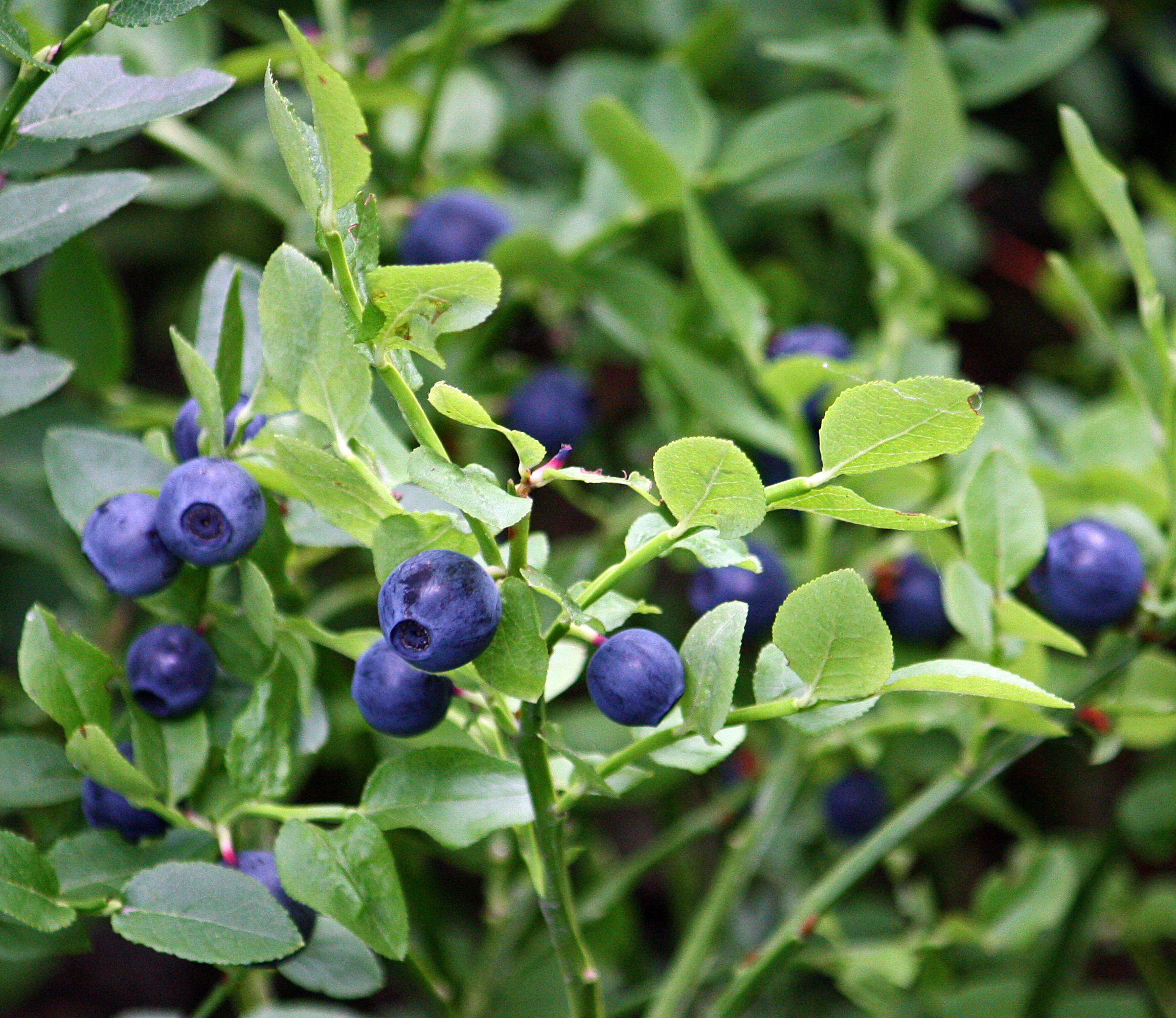
Species of shrub with edible berries
the wild "European" blueberry
Bilberry (), also known as European blueberry, is a Eurasian low-growing shrub in the genus Vaccinium of the flowering plant family Ericaceae native to northern Europe and North America. Vaccinium myrtillus L. is the species most commonly called bilberry, but other closely related Vaccinium species may also have this name.
The plant produces edible, dark blue berries, which resemble – but are distinct from – North American blueberries. The dark blue color of bilberries derives from the high content of anthocyanins.
Well known in folklore, bilberry extracts and dried powders are sold as dietary supplements promoted mainly for eye disorders, although there is no substantial clinical evidence that consuming bilberry fruit or its preparations provides any health benefits.
Etymology and regional names
The name "bilberry" appears to have a Scandinavian origin, possibly from as early as 1577, while the earliest known English use of the name "blueberry" dates back to 1594, appearing in the Acts of Parliament of Scotland. In Scandinavian languages, terms for bilberries have names with the meaning "blueberry", such as blåbär in Swedish and blåbær in Danish and Norwegian.
The bilberry (especially Vaccinium myrtillus) may be called blaeberry in Scottish and Northern English regional dialects, whortleberry in southern England,
Description


Bilberries, which are native to Europe, are different from North American blueberries, although the species are closely related and belong to the same genus, Vaccinium.
Bilberries are non-climacteric berries with a smooth, circular outline at the end opposite the stalk, whereas American blueberries retain persistent sepals there, leaving a rough, star-shaped pattern of five flaps. Bilberries grow singly or in pairs rather than in clusters, as American blueberries do, and American blueberries have more evergreen leaves. Bilberries are dark in color, and often appear near black with a slight shade of purple.
Phytochemicals
Bilberries contain diverse polyphenols, including tannins, organic acids, phenolic acids, and anthocyanins, specifically anthocyanidins as delphinidin and cyanidin glycosides. V. myrtillus bilberry pulp is red or purple, and V. uliginosum bog bilberry pulp is pale-colored. The high anthocyanin content of V. myrtillus may cause staining of the fingers, lips, and tongue. The anthocyanin content of bilberries and bilberry juice may exceed the levels seen in blueberries and blueberry juice.
Species
The term bilberries can describe several closely related species, which (except for V. uliginosum) are part of section Myrtillus:
- Vaccinium myrtillus L. (bilberry)
- Vaccinium uliginosum L. (bog bilberry, bog blueberry, bog whortleberry, bog huckleberry, northern bilberry, ground hurts)
- Vaccinium cespitosum Michx. (dwarf bilberry)
- Vaccinium deliciosum Piper (Cascade bilberry)
- Vaccinium membranaceum (mountain bilberry, black mountain huckleberry, black huckleberry, twin-leaved huckleberry)
- Vaccinium ovalifolium (oval-leafed blueberry, oval-leaved bilberry, mountain blueberry, high-bush blueberry).
Ecology
Bilberry plants can suffer from bilberry blight, caused by Phytophthora kernoviae. There have been severe outbreaks in Staffordshire, England.
Bilberry is used as a food plant by the larvae of some Lepidoptera species.
Harvesting
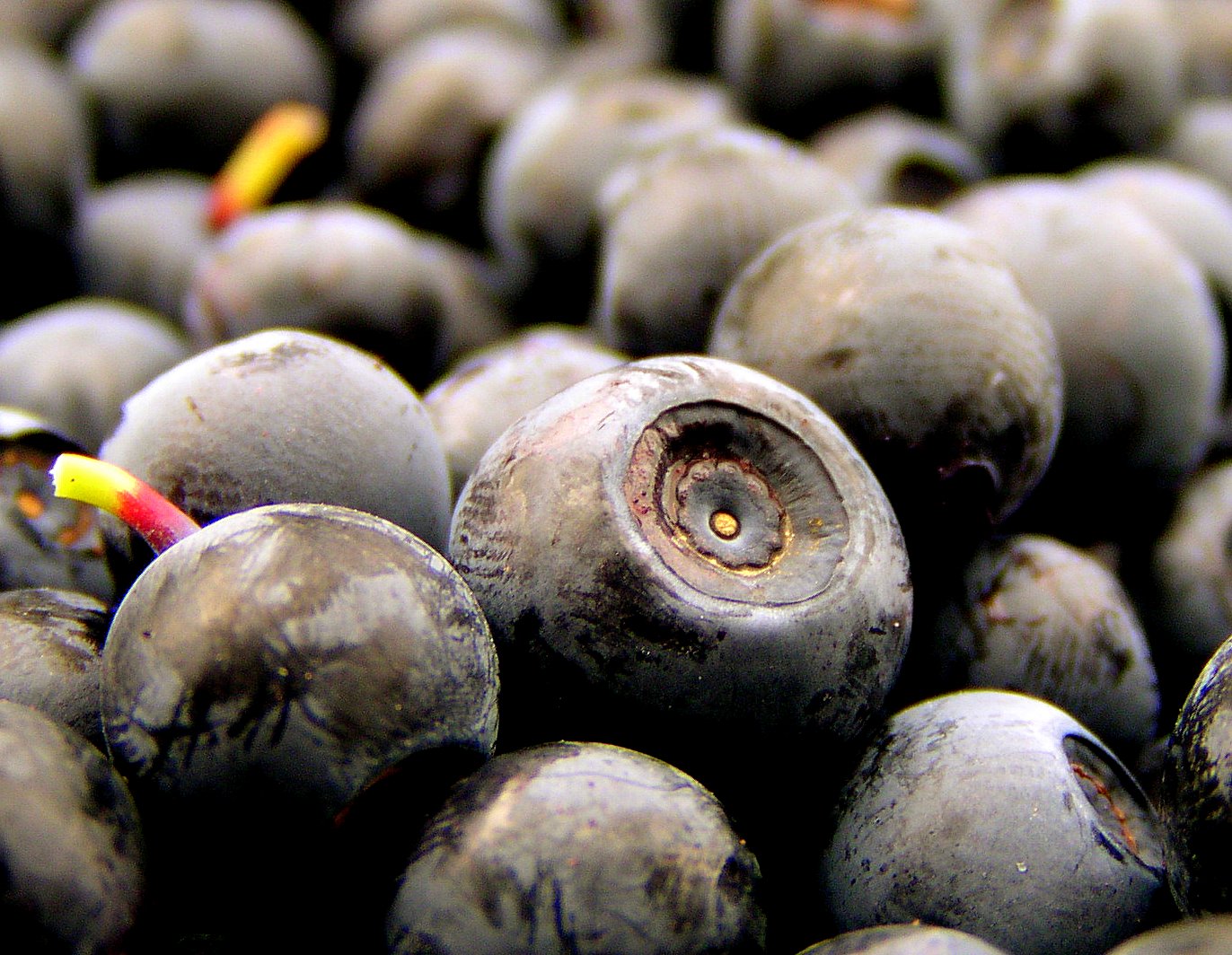
Bilberries are found in acidic, nutrient-poor soils throughout the temperate and subarctic regions of the world. where the berry is called blåbär (lit. "blueberry", which is a source of confusion with the North American blueberry). Bilberries can be picked by a berry-picking rake like lingonberries, but are more susceptible to damage.
In Iceland, bilberries (known as aðalbláber, or "prime blueberry") grow predominantly in Westfjords and the surrounding area. In most of the country, the subtype bog blueberry occupies the same habitat. Both species are commonly found growing with dwarf birch and crowberries. Wild growth is vast compared to the population of Iceland and wild harvesting is legal, and a common activity in August when the berry season peaks.
In Ireland, bilberries (known as fraochán) were traditionally gathered on the last Sunday in July, known as Bilberry Sunday, for the Celtic harvest festival of Lughnasadh, which marked the end of the hungry month of July.
Uses

The fruits are eaten fresh or made into jams, fools, juices, or pies. In France and Italy, they are used as a base for liqueurs and are a popular flavoring for sorbets and other desserts. In Brittany, they are often used as a flavoring for crêpes. In the Vosges and the Massif Central, bilberry tart (tarte aux myrtilles) is a traditional dessert. In Romania, they are used as a base for a liqueur called afinată – the name of the fruit in Romanian is afină. In Nordic countries, they are eaten fresh or made into jams and other dishes, including bilberry pie (Finnish mustikkapiirakka, Swedish blåbärspaj) and blåbärssoppa, a bilberry soup served hot or cold. In Iceland, they are eaten with skyr (a cultured dairy product similar to yoghurt). In Poland, they are eaten fresh (often mixed with sugar), as a filling in a sweet yeast-leavened bun known as jagodzianka, in jams, and with śmietana.
Research
Although bilberries have been used in traditional medicine, there are no proven health benefits or antidisease effects from consuming them.
References
References
- "Bilberry or European blueberry (''Vaccinium myrtillus'' L.)". NordGen, Nordic Genetic Resource Center.
- (November 2024). "Bilberry". National Center for Complementary and Integrative Health, US National Institutes of Health.
- (2002). "Phylogenetic relationships within the blueberry tribe (Vaccinieae, Ericaceae) based on sequence data from MATK and nuclear ribosomal ITS regions, with comments on the placement of ''Satyria''". American Journal of Botany.
- (15 January 2025). "Bilberry". Drugs.com.
- (2025). "Bilberry". Dictionary.com.
- (2025). "Bilberry". Merriam-Webster, Incorporated.
- (2003). "Wildflowers of Britain and Ireland: The Complete Guide to the British and Irish Flora.". A & C Black.
- (25 July 2025). "It's Bilberry Sunday this weekend but have you ever eaten one?".
- (28 July 2012). "Billberry Sunday".
- Voss, E.G.. (1996). "Michigan Flora Part III Dicots Concluded". Cranbrook Institute of Science.
- (2007). "Study of diversity of anthocyanin composition in bilberry (''Vaccinium myrtillus'' L.) fruits". Medicina (Kaunas).
- (April 2012). "High performance liquid chromatography analysis of anthocyanins in bilberries (''Vaccinium myrtillus'' L.), blueberries (''Vaccinium corymbosum'' L.), and corresponding juices". Journal of Food Science.
- "Phytophthora". [[Natural England]].
- "Disease of Bilberry (Phytophthora)". [[Staffordshire County Council]].
- [[:sv:Blåbär]]
- (2025). "Bilberry". Flora of Iceland, Natural History of Iceland.
- "Bilberry Sunday".
This article was imported from Wikipedia and is available under the Creative Commons Attribution-ShareAlike 4.0 License. Content has been adapted to SurfDoc format. Original contributors can be found on the article history page.
Ask Mako anything about Bilberry — get instant answers, deeper analysis, and related topics.
Research with MakoFree with your Surf account
Create a free account to save articles, ask Mako questions, and organize your research.
Sign up freeThis content may have been generated or modified by AI. CloudSurf Software LLC is not responsible for the accuracy, completeness, or reliability of AI-generated content. Always verify important information from primary sources.
Report