From Surf Wiki (app.surf) — the open knowledge base
Bijeljina
City and municipality in Bosnia and Herzegovina

City and municipality in Bosnia and Herzegovina
| Field | Value |
|---|---|
| name | Bijeljina |
| official_name | Grad Bijeljina |
| Град Бијељина | |
| City of Bijeljina | |
| native_name | sr-Cyrl |
| settlement_type | City |
| subdivision_type | Country |
| subdivision_name | Bosnia and Herzegovina |
| subdivision_type1 | Entity |
| subdivision_name1 | Republika Srpska |
| subdivision_type2 | Geographical region |
| subdivision_name2 | Semberija |
| established_title | City status |
| established_date | July 2012 |
| timezone | CET |
| utc_offset | +1 |
| timezone_DST | CEST |
| utc_offset_DST | +2 |
| unit_pref | Metric |
| map_caption | Location of Bijeljina within Republika Srpska |
| image_skyline | {{Photomontage |
| position | center |
| photo1a | Opština (22).jpg |
| photo2a | Grad Bijeljina (41).jpg |
| photo2b | Crkva Sv.Đorđa (13).jpg |
| photo3a | Crkva Sv.Đorđa.jpg |
| photo3b | Bijeljina - panoramio.jpg |
| photo3c | Atik Džamija.jpg |
| photo4a | Muzej Semberije (16).jpg |
| photo4b | Manastir Sv. Petke 08.jpg |
| size | 250 |
| spacing | 1 |
| color | #FFFFFF |
| border | 1 |
| image_caption | From top, left to right: The assembly building of Bijeljina, Pavlović bank, the inside of the Church of the Holy Great Martyr George, the outside of the Church of the Holy Great Martyr George, Residential buildings, the Atik mosque, Semberija Museum and the Five Lakes Monastery. |
| image_flag | Flag of Bijeljina, Bosnia and Herzegovina.svg |
| image_map | Bijeljina municipality.svg |
| pushpin_map | Bosnia and Herzegovina |
| area_total_km2 | 733.85 |
| population_footnotes | |
| population_as_of | 2013 census |
| population_density_km2 | auto |
| population_urban | 45291 |
| population_total | 107715 |
| parts_type | Settlements |
| coordinates | |
| elevation_m | 90 |
| area_code | +387 55 |
| postal_code_type | ZIP Code |
| postal_code | 76300 |
| leader_title | Mayor |
| leader_name | Ljubiša Petrović (SDS) |
| image_map1 | Bijeljina-naselja.PNG |
| website |
Град Бијељина City of Bijeljina
Bijeljina (Бијељина) is a city and municipality in Republika Srpska, Bosnia and Herzegovina. It is the provincial center of Semberija, a geographic region in the country's northeast. As of 2013, it has a population of 107,715 inhabitants, making it the sixth largest city in Bosnia and Herzegovina and the second largest in the Republika Srpska entity after Banja Luka.
Geography
Bijeljina is located in Bosnia and Herzegovina's northeast, bound by the Sava and Drina rivers, extending over the Majevica mountains and covering a land mass of 734 km2. It is a part of the entity of Republika Srpska and is the center of the Semberija region. Semberija is a flat region with a fertile land ideal for agriculture. Due to this, Bijeljina is a major place for food production and trade, particularly wheat and vegetables.
Climate
| Jan record high C = 20.3 | Feb record high C = 24.0 | Mar record high C = 27.7 | Apr record high C = 32.5 | May record high C = 35.0 | Jun record high C = 37.6 | Jul record high C = 43.0 | Aug record high C = 40.7 | Sep record high C = 38.8 | Oct record high C = 31.0 | Nov record high C = 26.4 | Dec record high C = 22.1 | year record high C = 43.0 | Jan record low C = -23.4 | Feb record low C = -26.6 | Mar record low C = -19.3 | Apr record low C = -6.8 | May record low C = 0.6 | Jun record low C = 0.0 | Jul record low C = 8.0 | Aug record low C = 4.5 | Sep record low C = 1.0 | Oct record low C = -7.5 | Nov record low C = -8.2 | Dec record low C = -18.7 | year record low C = -26.6
History
Prehistory and Antiquity
The earliest established evidence of human life in the area of today's Bijeljina date from the New Stone Age (5000–3000BC). Characteristics of pottery, tools and weapons confirm cultural connections of indigenous inhabitants of Semberija with the eneolithic and Bronze Age cultures – Vučedol, Kostolac and Baden culture.
Old Slavs and Middle Ages
The oldest archeological site of this period is located on both sides of the Bistrik channel, between the villages of Batković and Ostojićevo and it consists of four smaller sites which date from the period of the 7th to the 12th century. At Jazbina and Oraščić, remains were found of a settlement with half-buried huts, but the most significant discovery was a complex of metallurgical workshop at Čelopek where iron was melted in the 8th century and iron tools were manufactured. The oldest religious building, the Tavna Monastery, was built in the Middle Ages. The region was incorporated into the Bosnian banate during the reign of Stephen Kotromanić. At this time the village Bistrik was called Bistrica and it was the center of the parish, which covered the entire territory of present-day city of Bijeljina.
The first documented mention of the name Bijeljina occurred in 1446. The city fully fell to the Ottomans in 1530. Following the Great Turkish War, it was incorporated into Austrian possession. Upon the conclusion of the Treaty of Passarowitz in 1718, Bijeljina was to be transferred to the Habsburg monarchy. It was retaken by the Ottomans in 1739. Many of the settlements were decimated as a result of unsuccessful Serb rebellions against the occupation.
Austro-Hungarian rule in Bosnia and Herzegovina rule lasted from 1878 until 1918. The name Bijeljina was only used after 1918 and World War I. During Austro-Hungarian rule, the town had the name Bjelina and, before that, Belina or Bilina.
Modern history
In 1838, the first confessional elementary school was opened. A modern school building was built in 1902. In this school Jovan Dučić, famous Herzegovinian Serb poet, writer and diplomat, worked between 1893 and 1895.
In front of City Hall is a statue of King Peter I of Serbia, who ruled the Kingdom of Serbia between 1903 and 1918. During the Second World War, the Ustaša removed it. After World War II, the communist government refused to return the monument. The first non-communist local government returned the monument in the early 1990s.
Bosnian War
Main article: Bijeljina massacre
In September 1991, Bosnian Serbs proclaimed a Serbian Autonomous Oblast with Bijeljina as its capital. In March 1992, the Bosnian referendum on independence was passed with overwhelming support from Bosniaks and Bosnian Croats. Local Bosniak Patriotic League had been established in response to the Bosnian Serb proclamation and started the clashes. On 1–2 April, the SDG and the JNA overtook Bijeljina with little resistance; A massacre was carried out and involved the killing of at least 48 civilians by Serb paramilitary groups. The majority of those killed were Bosniaks (or Bosnian Muslims). The dead included members of other ethnicities, such as Serbs deemed unloyal by the local authorities.
The village of Batković in the municipality of Bijeljina was the site of the Batković camp, believed to be the first concentration camp in operation during the Bosnian War. It was run by Serbs from 1 April 1992 until late January 1996. The prisoners were predominantly ethnic Bosniaks, who were tortured, sexually assaulted, and killed. A "State Commission for the Free transfer of the Civilian Population" or "Commission for the Exchange of Population" was created and headed by Vojkan Đurković, a Major in the SDG.
Post-war period

The Serb Democratic Party (SDS) governed Bijeljina for 28 years since 1992. Following the 2018 Bosnian general election, in March 2020 mayor Mićo Mićić (governing the city since 2004) left the party to found the Party of Democratic Srpska of Semberija (SDSS) and signed a coalition agreement with Milorad Dodik's SNSD. In June 2020, SDSS and SNSD put SDS in minority in the local council. At the 2020 Bosnian municipal elections, SDS's Ljubiša Petrović became the new mayor, succeeding Mićić.
Demographics
Population
| Settlement | 1875 | 1885 | 1895 | 1910 | 1921 | 1931 | 1948 | 1953 | 1961 | 1971 | 1981 | 1991 | 2013 |
|---|---|---|---|---|---|---|---|---|---|---|---|---|---|
| Total | 34,479 | 38,455 | 47,468 | 58,002 | 58,142 | 78,602 | 63,877 | 86,826 | 78,890 | 86,826 | 92,808 | 96,988 | |
| 1 | Amajlije | 1,110 | |||||||||||
| 2 | Balatun | 1,305 | |||||||||||
| 3 | Banjica | 406 | |||||||||||
| 4 | Batar | 382 | |||||||||||
| 5 | Batković | 3,483 | |||||||||||
| 6 | Bijeljina | 12,660 | 14,303 | 17,340 | 24,761 | 31,124 | 36,414 | ||||||
| 7 | Bjeloševac | 639 | |||||||||||
| 8 | Brodac Donji | 735 | |||||||||||
| 9 | Brodac Gornji | 866 | |||||||||||
| 10 | Bukovica Donja | 794 | |||||||||||
| 11 | Bukovica Gornja | 574 | |||||||||||
| 12 | Čađavica Donja | 1,524 | |||||||||||
| 13 | Čađavica Gornja | 973 | |||||||||||
| 14 | Čađavica Srednja | 693 | |||||||||||
| 15 | Čardačine | 370 | |||||||||||
| 16 | Čengić | 1,284 | |||||||||||
| 17 | Ćipirovine | 274 | |||||||||||
| 18 | Crnjelovo Donje | 2,963 | |||||||||||
| 19 | Crnjelovo Gornje | 1,840 | |||||||||||
| 20 | Dazdarevo | 435 | |||||||||||
| 21 | Dijelovi | ||||||||||||
| 22 | Donji Zagoni | ||||||||||||
| 23 | Dragaljevac Donji | 463 | |||||||||||
| 24 | Dragaljevac Gornji | 603 | |||||||||||
| 25 | Dragaljevac Srednji | 1,041 | |||||||||||
| 26 | Dvorovi | 1,814 | |||||||||||
| 27 | Glavičice | 1,293 | |||||||||||
| 28 | Glogovac | 436 | |||||||||||
| 29 | Gojsovac | 475 | |||||||||||
| 30 | Golo Brdo | 198 | |||||||||||
| 31 | Gradac - Stupanj | ||||||||||||
| 32 | Hase | 341 | |||||||||||
| 33 | Janja | 10,458 | |||||||||||
| 34 | Johovac | 338 | |||||||||||
| 35 | Kacevac | 351 | |||||||||||
| 36 | Kojčinovac | ||||||||||||
| 37 | Kovačići | ||||||||||||
| 38 | Kovanluk | 158 | |||||||||||
| 39 | Kriva Bara | 255 | |||||||||||
| 40 | Ljeljenča | 967 | |||||||||||
| 41 | Ljeskovac | 483 | |||||||||||
| 42 | Magnojević Donji | 613 | |||||||||||
| 43 | Magnojević Gornji | 665 | |||||||||||
| 44 | Magnojević Srednji | 332 | |||||||||||
| 45 | Mala Obarska | ||||||||||||
| 46 | Međaši | 896 | |||||||||||
| 47 | Modran | 1,411 | |||||||||||
| 48 | Novo Naselje | 1,290 | |||||||||||
| 49 | Novo Selo | 122 | |||||||||||
| 50 | Ostojićevo | 595 | |||||||||||
| 51 | Patkovača | 646 | |||||||||||
| 52 | Popovi | 1,134 | |||||||||||
| 53 | Pučile | 769 | |||||||||||
| 54 | Ruhotina | 446 | |||||||||||
| 55 | Suho Polje | 1,503 | |||||||||||
| 56 | Triješnica | 290 | |||||||||||
| 57 | Trnjaci | 639 | |||||||||||
| 58 | Velika Obarska | 3,549 | |||||||||||
| 59 | Velino Selo | 451 | |||||||||||
| 60 | Vršani | 1,249 | |||||||||||
| 61 | Zagoni | 1,766 |
Ethnic composition
| 2013 | 1991 | 1981 | 1971 |
|---|---|---|---|
| Total | 42,278 (100,0%) | 36,414 (100,0%) | 31,124 (100,0%) |
| Serbs | 35,798 (84.67%) | 10,450 (28.70%) | 7,866 (25.27%) |
| Bosniaks | 4,469 (10.57%) | 19,024 (52.24%) | 15,015 (48.24%) |
| Others | 632 (1.495%) | 3,122 (8.574%) | 521 (1.674%) |
| Unaffiliated | 502 (1.187%) | ||
| Roma | 338 (0.799%) | 976 (3.136%) | |
| Croats | 315 (0.745%) | 366 (1.005%) | 409 (1.314%) |
| Yugoslavs | 127 (0.300%) | 3,452 (9.480%) | 6,028 (19.37%) |
| Unknown | 35 (0.083%) | ||
| Montenegrins | 29 (0.069%) | 60 (0.193%) | |
| Macedonians | 14 (0.033%) | 64 (0.206%) | |
| Slovenes | 11 (0.026%) | 17 (0.055%) | |
| Albanians | 8 (0.019%) | 144 (0.463%) | |
| Hungarians | 24 (0.077%) |
| 2013 | 1991 | 1981 | 1971 |
|---|---|---|---|
| Total | 107,715 (100.0%) | 96,988 (100.0%) | 92,808 (100.0%) |
| Serbs | 91,784 (85.21%) | 57,389 (59.17%) | 56,029 (60.37%) |
| Bosniaks | 13,090 (12.15%) | 30,229 (31.17%) | 24,282 (26.16%) |
| Others | 793 (0.736%) | 4,452 (4.590%) | 1,155 (1.245%) |
| Unaffiliated | 674 (0.626%) | ||
| Croats | 515 (0.478%) | 492 (0.507%) | 500 (0.539%) |
| Roma | 496 (0.460%) | 1,359 (1.464%) | |
| Yugoslavs | 151 (0.140%) | 4 426 (4.563%) | 9,090 (9.794%) |
| Unknown | 102 (0.095%) | ||
| Montenegrins | 36 (0.033%) | 80 (0.086%) | |
| Macedonians | 33 (0.031%) | 89 (0.096%) | |
| Slovenes | 22 (0.020%) | 25 (0.027%) | |
| Albanians | 17 (0.016%) | 164 (0.177%) | |
| Turks | 1 (0.001%) | ||
| Ukrainians | 1 (0,001%) | ||
| Hungarians | 35 (0,038%) |
Architecture
.jpg)

The Atik Mosque was built between 1520 and 1566, during the period of Sultan Suleiman the Magnificent. It was used as a defensive bastion in the Austro-Turkish War and converted to a Catholic church by the Austrians during 1718-1739. After the Treaty of Belgrade, it reverted back to a mosque, and went through several renovations in the 19th and early 20th centuries. The mosque was completely destroyed on 13 March 1993 and rebuilt where it stood before.
The Serbian Orthodox Church (Svetog Đorđa) of Saint George is located at the site of an older church, which was first mentioned in 1735. The current building dates back from the early 1870s and represents a mix of Russian and Byzantine style architecture, with a dome and a tall tower.
The Semberija Museum is located in a historic building and has four exhibition halls. The exhibitions span a vast historical period, ranging from the Neolithic, through the Roman era and the Middle Ages, all the way to the 20th century.
The Basil of Ostrog Monastery in the center of Bijeljina is a newly built monastery (2001) dedicated to St Basil of Ostrog. The bell tower with a clock of over 30 meters dominates the surroundings and is a symbol of the monastery. The monastery includes a museum, dining room, library, hermitages for monks. Inside, the temple is painted with magnificent frescoes. Particularly valuable is a copy of the Trojeručica miraculous icon, a gift from the Hilandar monastery. In Bijeljina are also located: the Holy Temple, the Church of St. Petka, and the old Catholic church.

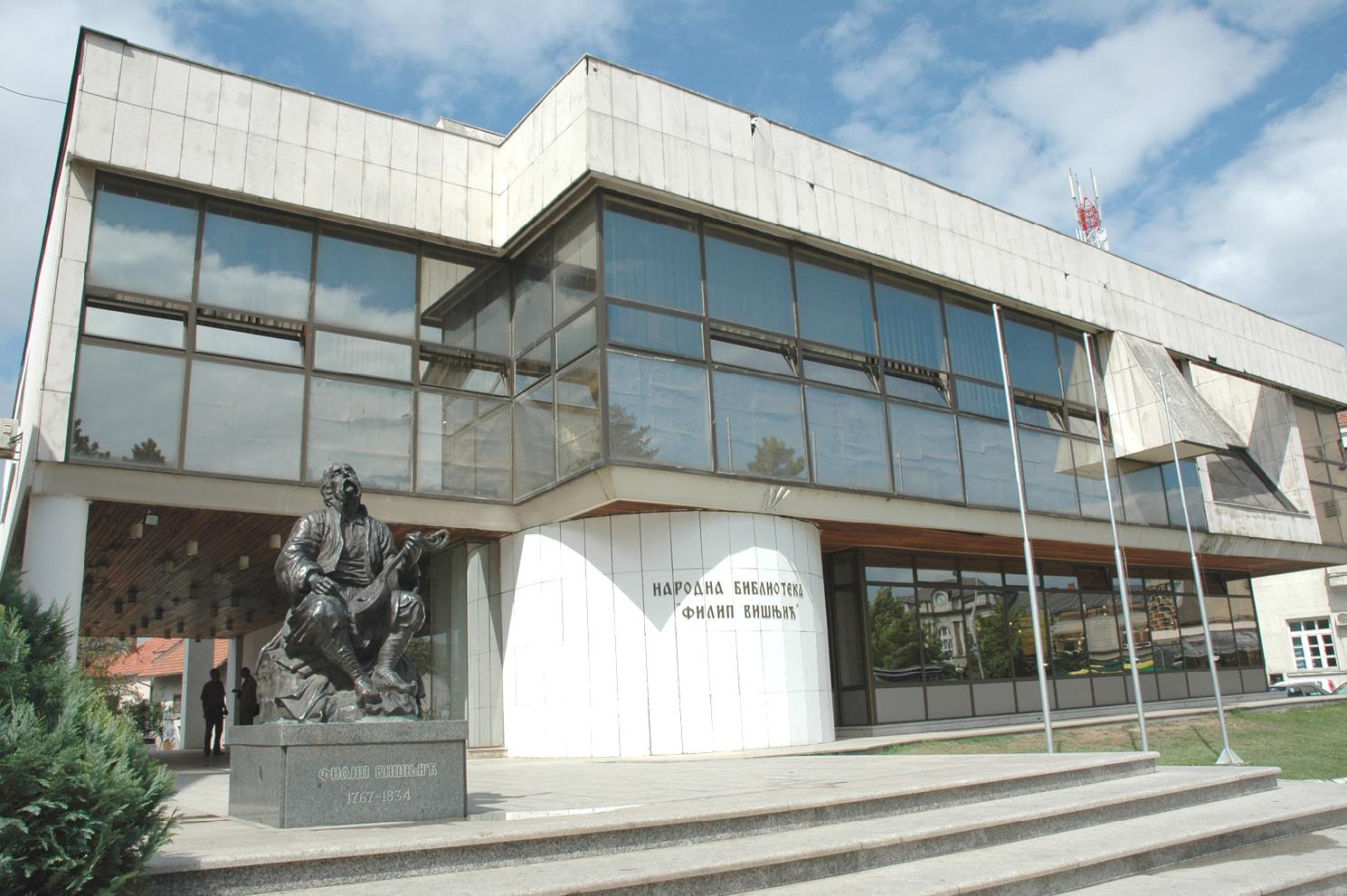
Filip Višnjić Library is the oldest cultural institution in Bijeljina - founded in 1932 thanks to prominent people including Dr Vojislav Kecmanović, Dr Joakim Perendija, and Professor Nikola Mačkić among others. It played a major role in raising the cultural level in Semberija and has over 120,000 books.
The Tavna Monastery is located in the southern part of the Bijeljina municipality. The date of foundation is hidden somewhere in the shadows of the far past. The chronicles of monasteries Tronoša and Peć say it was built by Stefan Dragutin's sons Vladislav and Uroš II Milutin. Stefan Dragutin was the King of Serbia from 1276 to 1282 and king of Srem from 1282 to 1316. The present church of monastery Tavna is built in the same place as the original one. The Tavna Monastery is older than the other monasteries in the region such as Ozrena, Liplja, Vozuce and Gostovica. Tavna was damaged in the first years of Turkish rule, but was restored by the people. This was not the only time the monastery was damaged. It was damaged many times during the Turkish period and the Second World War. Between 1941 and 1945, Tavna was bombed by the Ustaše. One of the gravestones says "Zdravko Jovanović - Killed 1943 by the Ustaša Blue Division protecting and defending the monastery". After World War II, the Tavna monastery was rebuilt.
Education
The first primary school in Bijeljina was opened in 1938. After World War II, changes were made to the school system, and in 1951 the first elementary school was opened. In 1956, a second elementary school was opened. The third and fourth elementary schools opened in 1959 and 1966, respectively.
Since 1953, a basic music school has been operating in the city.
Primary schools in Bijeljina include the following: OŠ Sveti Sava, OŠ Knez Ivo od Semberije, OŠ Vuk Karadžić, OŠ Jovan Dučić. There are several high schools operating in the city, such as Filip Višnjić Gymnasium, Stevan Stojanović Mokranjac Music School, an agricultural high school, a medicine highschool, an economic and a technical school. The University of Bijeljina has several faculties: Law, Economics, Business Economics and Education. The main private universities in the city are Slobomir P University and University Sinergija.
Economy

.jpg)
The following table gives a preview of total number of registered people employed in legal entities per their core activity (as of 2018):
| Activity | Total |
|---|---|
| Agriculture, forestry and fishing | 336 |
| Mining and quarrying | 25 |
| Manufacturing | 3,706 |
| Electricity, gas, steam and air conditioning supply | 454 |
| Water supply; sewerage, waste management and remediation activities | 450 |
| Construction | 1,129 |
| Wholesale and retail trade, repair of motor vehicles and motorcycles | 5,813 |
| Transportation and storage | 935 |
| Accommodation and food services | 1,096 |
| Information and communication | 551 |
| Financial and insurance activities | 514 |
| Real estate activities | 22 |
| Professional, scientific and technical activities | 809 |
| Administrative and support service activities | 312 |
| Public administration and defense; compulsory social security | 1,836 |
| Education | 1,774 |
| Human health and social work activities | 1,461 |
| Arts, entertainment and recreation | 330 |
| Other service activities | 482 |
| Total | 22,035 |
Transportation

The main bus station in Bijeljina is located in the central zone of the city and is owned by Semberija Transport.
The first railway line through Bijeljina was the narrow gauge Bosanska Rača–Ugljevik railway built in 1916-1918. In 1950, Bijeljina was linked to Šid in Serbia when the normal gauge railway was opened. The narrow gauge railway was abandoned in 1979, after which Bijeljina remained as a terminus. The Bijeljina–Šid railway was abandoned in 2005, and there has been no rail traffic in the city since then.
Tourism

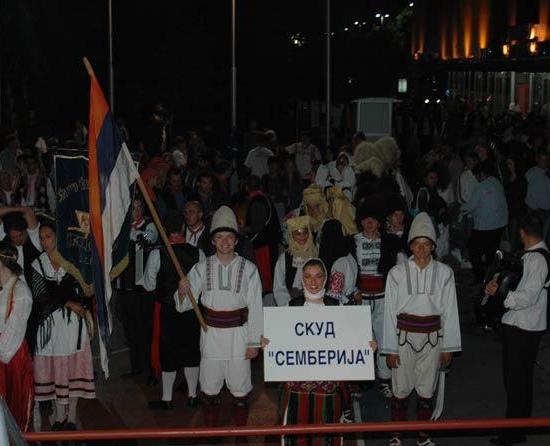
Bijeljina holds an international folklore festival known as the Semberija folk fest.
The Dvorovi Spa is one of the most famous spas in Republika Srpska. Dvorovi Spa was formed after the discovery of thermal water, while drilling for oil in 1956, near Dvorovi village in Semberija. The depth of the source is at 1350 meters, the water is oligomineral, and the water temperature is 75°C.
Sports
Bijeljina has one major stadium known as the Bijeljina City Stadium. The stadium is the home ground of FK Radnik Bijeljina, which competes in the Premier League of Bosnia and Herzegovina. Radnik won the Bosnian Cup in 2016. Their president is Predrag Perković, while their manager is Vlado Jagodić.
OFK Zenit Bijeljina is a young club from Bijeljina but their youth teams had earned a lot of medals in Bosnia and Herzegovina, Serbia, Slovenia, Romania, Austria, and Germany. Their home ground is "Zenit Arena" in Novo Selo, located 5 minutes away from the city center. OFK Zenit competes in the leagues of the Football Association of Republika Srpska (FSRS). They have a contract with Zvijezda 09 (team in the Premier League of BiH) to Zenit's youth teams play like Zvijezda 09's players.
Bijeljina was designated a European City of Sport in 2020.
Basketball clubs include:
- KK Budućnost Bijeljina;
- KK Radnik Bijeljina;
- KK Fenix Basket Bijeljina.
Volleyball clubs include:
- OK Radnik Bijeljina;
- OK Libero Bijeljina.
Handball clubs include:
- RK Bijeljina;
- ZRK Bijeljina.
Twin towns – sister cities
Bijeljina is twinned with:
- Azov, Russia
- Brașov, Romania
- Budva, Montenegro
- Goraždevac, Kosovo
- Kosjerić, Serbia
- Kruševac, Serbia
- Kumanovo, North Macedonia
- Langenhagen, Germany
- Leskovac, Serbia
- Ruse, Bulgaria
- Zrenjanin, Serbia
Notable people
- Admir Smajić, footballer, Olympic bronze medalist
- Ana Mirjana Račanović, Miss Bosnia and Herzegovina 2001
- Bego Ćatić, footballer
- Cvijetin Mijatović, Chairman of the Collective Presidency of Yugoslavia, Yugoslav People's Hero
- Darko Todorović, Bosnian footballer
- Duško Kondor, human rights activist, professor of sociology and philosophy
- Filip Višnjić, epic poet
- Frenkie, rapper
- Luka Jović, Serbian footballer
- Ljubiša Savić, Bosnian Serb paramilitary commander, politician, and former police chief of Bijeljina
- Mirko Ilić, Serbian graphic designer and comics artist
- Mirza Begić, Slovenian basketball player
- Nevenka Tadić, neuropsychiatrist and mother of former president of Serbia Boris Tadić
- Nihad Hrustanbegovic, composer, accordionist and pianist
- Miloš Bojanić, folk singer
- Rodoljub Čolaković, politician and writer
- Rodoljub Roki Vulović, Bosnian Serb singer, author, performer, former professor, and former school director
- Srđan Vuletić, filmmaker
- Cican Stankovic, Austrian footballer
- Savo Milošević, Serbian footballer, UEFA Euro 2000 Top scorer
- Svetozar Marković (footballer), Serbian footballer
Notes
References
Bibliography
References
- Prostorni plan Republike Srpske do 2015. Banja Luka, April 2008. p. 67 & 69
- "PRELIMINARY RESULTS of the 2013 Census of Population, Households and Dwellings in Bosnia and Herzegovina".
- "Bijeljina". Federation of Bosnia and Herzegovina.
- (2000). "Bosnia and Hercegovina: Unfinished Business : Return of Displaced Persons and Other Human Rights Issues in Bijeljina, Volume 12, Issue 7". Human Rights Watch.
- "Bijeljina Climate Normals 1991–2020". National Oceanic and Atmospheric Administration.
- Udruženje književnika BiH. (1985). "Information Bulletin of the Association of Writers of Bosnia and Herzegovina and the Yugoslav Author's Agency for Bosnia and Herzegovina, Issues 7-9".
- (1999). "The Balkans in Later Prehistory: Periodization, Chronology and Cultural Development in the Final Copper and Early Bronze Age (fourth and Third Millennia BC)". J. and E. Hedges.
- "History of the City of Bijeljina".
- {{harvnb. Pelidija. 1989; {{harvnb. Roksandić. 2007
- [http://www.oaza.rs/bijeljina/skolstvo-s.htm Bijeljina na Internetu - skolstvo] {{Webarchive. link. (11 March 2012 , Oaza.rs; accessed 9 July 2015.{{in lang). sr
- (2000). "Bosnia and Hercegovina: Unfinished Business : Return of Displaced Persons and Other Human Rights Issues in Bijeljina, Volume 12, Issue 7". Human Rights Watch.
- (27 September 2006). "Prosecutor v. Momčilo Krajišnik (Trial Judgment)". International Criminal Tribunal for the former Yugoslavia (ICTY).
- (1 April 2015). "Preživjeli logoraš iz Batkovića: I danas sanjam da mi neko ulazi u kuću i stavlja pušku na čelo". Oslobođenje.
- (3 April 2013). "FRIENDSHIPS FLOURISHED IN BATKOVIC PRISON CAMP". Sense Agency.
- James Gow. (2003). "The Serbian Project and Its Adversaries: A Strategy of War Crimes". McGill-Queen's University Press.
- "Atik Džamija {{!}} Turistička organizacija grada Bijeljine".
- "Info Bijeljina - Jedna od najstarijih bijeljinskih građevina: Hram Svetog Đorđa više od 130 godina bio jedina pravoslavna bogomolja u gradu".
- "Crkva Svetog Georgija {{!}} Turistička organizacija grada Bijeljine".
- "The semberija Museum".
- iqcentar.com. "МАНАСТИР СВЕТОГ ВАСИЛИЈА ОСТРОШКОГ".
- "Историјат библиотеке".
- "Info Bijeljina - Narodna biblioteka "Filip Višnjić": Knjižni fond sve bogatiji".
- [http://www.bijeljina.net/tavna/indexe.htm Tavna monastery infosite] {{Webarchive. link. (12 May 2008 , Bijeljina.net; accessed 9 July 2015.)
- (25 December 2019). "Cities and Municipalities of Republika Srpska". Republika Srspka Institute of Statistics.
- "Info Bijeljina - Vratiće se “Ćiro”…".
- (14 October 2019). "Srušena stara Željeznička stanica u Bijeljini! (Foto)".
- "Историјат".
- (September 2017). "European Cities of Sport".
- "Градови побратими". Bijeljina.
This article was imported from Wikipedia and is available under the Creative Commons Attribution-ShareAlike 4.0 License. Content has been adapted to SurfDoc format. Original contributors can be found on the article history page.
Ask Mako anything about Bijeljina — get instant answers, deeper analysis, and related topics.
Research with MakoFree with your Surf account
Create a free account to save articles, ask Mako questions, and organize your research.
Sign up freeThis content may have been generated or modified by AI. CloudSurf Software LLC is not responsible for the accuracy, completeness, or reliability of AI-generated content. Always verify important information from primary sources.
Report