From Surf Wiki (app.surf) — the open knowledge base
Big East men's basketball tournament
American collegiate basketball championship
American collegiate basketball championship
| Field | Value | |
|---|---|---|
| name | Big East Men's Basketball Tournament | |
| optional_subheader | Conference basketball championship | |
| image | [[File:2008BEMenstourneytrophy.jpg | 175px]] |
| caption | The 2008 Big East Men's Basketball Tournament trophy | |
| sport | College basketball | |
| conference | Big East Conference | |
| number_of_teams | 11 | |
| format | Single-elimination tournament | |
| current_stadium | Madison Square Garden | |
| current_location | New York City | |
| years | 1980–present | |
| most_recent | 2025 | |
| current_champion | St. John's Red Storm | |
| most_championships | UConn Huskies, Georgetown Hoyas (8) | |
| website | BigEast.org | |
| all_stadiums | Providence Civic Center (1980) | |
| Carrier Dome (1981) | ||
| Hartford Civic Center (1982) | ||
| Madison Square Garden (1983–present) | ||
| all_locations | Providence, Rhode Island (1980) | |
| Syracuse, New York (1981) | ||
| Hartford, Connecticut (1982) | ||
| New York City (1983–present) |
Carrier Dome (1981) Hartford Civic Center (1982) Madison Square Garden (1983–present) Syracuse, New York (1981) Hartford, Connecticut (1982) New York City (1983–present)
The Big East Men's Basketball Tournament is the championship tournament of the Big East Conference in men's basketball. The winner receives the conference's automatic bid to the NCAA tournament.
As part of the 2013 deal in which seven schools left the original Big East Conference of 1979–2013 to form a new Big East Conference and the original conference became the American Athletic Conference, the new Big East received the rights to the conference tournament.
Venue
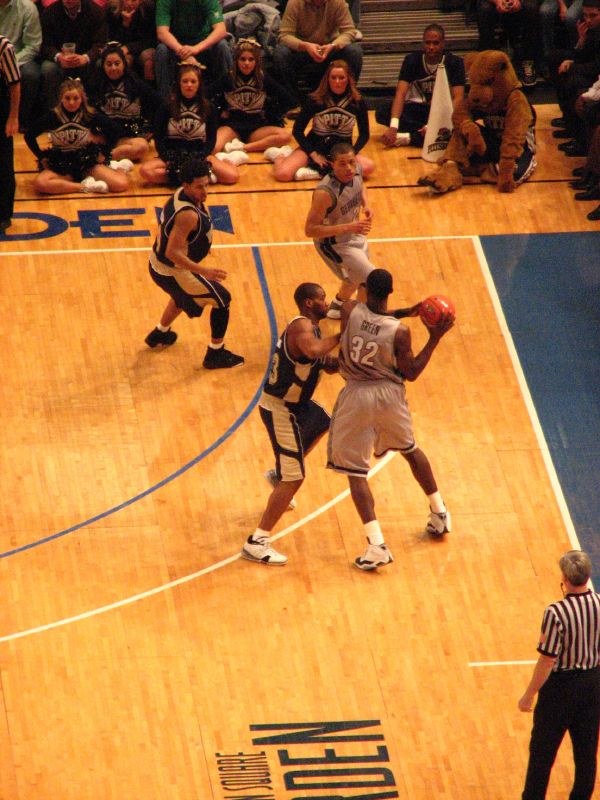
Since 1983, the tournament has been held in Madison Square Garden in New York City. As such, the tournament is the longest-running conference tournament at any one site in all of college basketball. Madison Square Garden has a contract with the Big East Conference to host the tournament through 2028.
Notable events
The 2009 tournament featured a six-overtime game in the quarterfinals between the Connecticut Huskies and the Syracuse Orange, in which Syracuse prevailed, 127–117. The game, the second-longest in NCAA history, started on the evening of March 12 and ended nearly four hours later in the early morning of March 13.
In 2011, Connecticut, led by Kemba Walker, became the first and only team in the Big East tournament ever to win five games in five consecutive days to win the championship.
On March 12, 2020, the 2020 tournament was cancelled during halftime of the first quarterfinal game due to the COVID-19 pandemic. The conference received an insurance payout of $10.5 million as a result of the tournament's cancellation.
In 2021, Georgetown won four games in four days as an underdog in each contest, to win its record eighth title. Georgetown became the first eighth-seeded team to win the championship, and Patrick Ewing became the first person to win the championship as both a player and a head coach.
In 2024, UConn won the championship for the eighth time, tying it with Georgetown for the most titles.
Only three players have achieved multiple Most Valuable Player honors: Georgetown's Patrick Ewing (1984–1985), Louisville's Peyton Siva (2012–2013), and Villanova's Josh Hart (2015, 2017).
Seeding
From 1980 through 2000, all Big East member schools qualified for the Big East tournament. The Big East limited participation to 12 schools from 2001 to 2008, but since 2009, all member schools again have qualified for the tournament. The conference has based tournament seeding strictly on conference record and tiebreakers except between 1996 and 1998 and between 2001 and 2003; during those years, the conference used a divisional structure which also affected seeding.
1980–1995
In 1980, with seven member schools, the #2 through #7 seeds played in an opening quarterfinal round and the #1 seed received a bye until the semifinal round. In 1981, the conference expanded to eight teams, and in 1981 and 1982, all eight teams began play in a quarterfinal round. After the conference expanded again, to nine teams, the #8 and #9 seeds played in a single first-round game and schools seeded #7 or higher received a bye into the quarterfinal round; adopted in 1983, this format persisted through the 1991 tournament. After the Big East expanded to 10 teams, the 1992 tournament had two first-round games for the #7 through #10 seeds, teams seeded #6 or higher getting a bye into the quarterfinal round. This format continued through the 1995 tournament.
1996–2000
For the 1995–96 Big East Conference men's basketball season, the Big East expanded to 13 teams and adopted a divisional structure, with teams divided between the Big East 6 Division and the Big East 7 Division. The expansion resulted in a new tournament format in which the #4 through #13 seeds played in the first round and only the #1 through #3 seeds received byes into the quarterfinals. This format lasted through the 2000 tournament.
During the existence of the Big East 6 and Big East 7 divisions, seeding criteria also changed, with the winners of each division receiving the #1 and #2 seeds regardless of record, the second-place team with the best record receiving the #3 seed, and the rest of the schools receiving the #4 through #13 seeds based on conference record and tiebreakers. After the 1998 tournament, the Big East scrapped the divisions and returned to a unitary conference structure, and tournament seeding again was based strictly on conference record and tiebreakers in 1999 and 2000.
2001–2003
From 2001 through 2003, when the Big East again was divided into two divisions — an East and a West Division, each of seven teams — teams were seeded #1 through #6 by division. The third- through sixth-place finishers in each division (a total of eight teams) received the #3 through #6 seeds in each division and played in the first round, with the #3 East seed playing the #6 West seed, the #4 East seed playing the #5 West seed, the #5 East seed playing the #4 West seed, and the #6 East seed playing the #3 West seed. The first- and second-place finishers in each division (a total of four teams) received the #1 and #2 divisional seeds and a bye into the quarterfinal round. Two teams — the seventh-place finishers in each division, after the application of any necessary tiebreaking criteria — did not qualify for the tournament.
2004–2008
In 2004, after the Big East again eliminated its division structure, its 14 schools again were seeded based on conference record and tiebreakers. The teams which finished below 12th place did not qualify for the tournament. The #5 through #12 seeds played in the first round, and the #1 through #4 seeds received byes into the quarterfinal round.
In 2005 the conference's membership dropped to 12 schools, and St. John's was ineligible for the tournament due to sanctions imposed on its program. The other 11 teams were seeded based on conference record and tiebreakers, and the #6 though #11 seeds played in the first round, while the #1 through #5 seeds received byes into the quarterfinal round.
The Big East's membership stood at 16 schools from 2006 through 2008. During these years, seeding returned to its 2004 format: Only the teams which finished 12th or higher in the conference after the application as necessary of tiebreaking criteria qualified for the tournament, the #5 through #12 seeds played in the first round, and the #1 through #4 seeds received byes into the quarterfinal round.
2009–2013
In 2009, the conference returned to a tournament format that included all member schools (16 from 2009 to 2012, and 14 in 2013). From 2009 through 2012, the teams seeded #9 through #16 played first-round games, teams seeded #5 through #8 received a bye to the second round, and the top four teams received a double-bye to the quarterfinals. The final Big East tournament held by the original Big East Conference, which took place in 2013, saw only 14 teams compete—West Virginia had left the Big East for the Big 12 Conference after the 2011–12 season, and Connecticut was barred from the tournament due to an NCAA postseason ban for academic reasons. In that tournament, the teams seeded #11 through #14 played in the first round, with byes remaining the same as in the 2009–2012 period.
Throughout the 2009–2013 period, all member schools participating in the tournament were seeded in the tournament based on their conference records. Ties were broken using a set of tiebreaker rules, with the first two tiebreakers being head-to-head record and common record against the next-best conference team.
2014–present
During the offseason in 2013, seven schools left the original Big East Conference of 1979–2013 and joined three other schools in forming a new Big East Conference, the old conference becoming the American Athletic Conference (marketed as "The American"). The new Big East Conference took over control of the Big East tournament at Madison Square Garden. From 2014 (the first tournament held after the formation of the new Big East) through 2019 all 10 member schools took part in the tournament, with tiebreakers similar to those used prior to the formation of the new conference employed as needed. The #7 through #10 seeds played in two first-round games, and all schools seeded #6 or higher received a bye into the quarterfinal round. The 2020 tournament would have followed the same format if it had not been canceled after the first round due to the covid-19 pandemic.
In 2021, after the Big East expanded to 11 teams with Connecticut's move to the Big East from the American Athletic Conference, the Big East tournament adopted an 11-team format in which the #6 through #11 seeds play in three first-round games and teams seeded #5 or higher receive a bye into the quarterfinal round.
Tournament results
| Big East Conference | border=1 | color=#ffffff}}" | Year | Big East Conference | border=1 | color=#ffffff}}" | Champion | Big East Conference | border=1 | color=#ffffff}}" | Score | Big East Conference | border=1 | color=#ffffff}}" | Runner-up | Big East Conference | border=1 | color=#ffffff}}" | Tournament MVP | Big East Conference | border=1 | color=#ffffff}}" | Location |
|---|---|---|---|---|---|---|---|---|---|---|---|---|---|---|---|---|---|---|---|---|---|---|---|
| 1980 | Georgetown | 87–81 | Syracuse | , Georgetown | Providence Civic Center (Providence, Rhode Island) | ||||||||||||||||||
| 1981 | Syracuse | 83–80 | Villanova | , Syracuse | Carrier Dome (Syracuse, New York) | ||||||||||||||||||
| 1982 | Georgetown | 72–54 | Villanova | , Georgetown | Hartford Civic Center (Hartford, Connecticut) | ||||||||||||||||||
| 1983 | St. John's | 85–77 | Boston College | , St. John's | Madison Square Garden (New York City) | ||||||||||||||||||
| 1984 | Georgetown | 82–71 | Syracuse | , Georgetown | |||||||||||||||||||
| 1985 | Georgetown | 92–80 | St. John's | , Georgetown | |||||||||||||||||||
| 1986 | St. John's | 70–69 | Syracuse | , Syracuse | |||||||||||||||||||
| 1987 | Georgetown | 69–59 | Syracuse | , Georgetown | |||||||||||||||||||
| 1988 | Syracuse | 85–68 | Villanova | , Syracuse | |||||||||||||||||||
| 1989 | Georgetown | 88–79 | Syracuse | , Georgetown | |||||||||||||||||||
| 1990 | Connecticut | 78–75 | Syracuse | , UConn | |||||||||||||||||||
| 1991 | Seton Hall | 74–62 | Georgetown | , Seton Hall | |||||||||||||||||||
| 1992 | Syracuse | 56–54 | Georgetown | , Georgetown | |||||||||||||||||||
| 1993 | Seton Hall | 103–70 | Syracuse | , Seton Hall | |||||||||||||||||||
| 1994 | Providence | 74–64 | Georgetown | , Providence | |||||||||||||||||||
| 1995 | Villanova | 94–78 | Connecticut | , Villanova | |||||||||||||||||||
| 1996 | Connecticut | 75–74 | Georgetown | , Georgetown | |||||||||||||||||||
| 1997 | Boston College | 70–58 | Villanova | , Boston College | |||||||||||||||||||
| 1998 | Connecticut | 69–64 | Syracuse | , UConn | |||||||||||||||||||
| 1999 | Connecticut | 82–63 | St. John's | , UConn | |||||||||||||||||||
| 2000 | St. John's | 80–70 | Connecticut | , St. John's | |||||||||||||||||||
| 2001 | Boston College | 79–57 | Pittsburgh | , Boston College | |||||||||||||||||||
| 2002 | Connecticut | 74–65* | Pittsburgh | , UConn | |||||||||||||||||||
| 2003 | Pittsburgh | 74–56 | Connecticut | , Pittsburgh | |||||||||||||||||||
| 2004 | Connecticut | 61–58 | Pittsburgh | , UConn | |||||||||||||||||||
| 2005 | Syracuse | 68–59 | West Virginia | , Syracuse | |||||||||||||||||||
| 2006 | Syracuse | 65–61 | Pittsburgh | , Syracuse | |||||||||||||||||||
| 2007 | Georgetown | 65–42 | Pittsburgh | , Georgetown | |||||||||||||||||||
| 2008 | Pittsburgh | 74–65 | Georgetown | , Pittsburgh | |||||||||||||||||||
| 2009 | Louisville | 76–66 | Syracuse | , Syracuse | |||||||||||||||||||
| 2010 | West Virginia | 60–58 | Georgetown | , West Virginia | |||||||||||||||||||
| 2011 | Connecticut | 69–66 | Louisville | , UConn | |||||||||||||||||||
| 2012 | Louisville | 50–44 | Cincinnati | , Louisville | |||||||||||||||||||
| 2013 | Louisville | 78–61 | Syracuse | , Louisville | |||||||||||||||||||
| 2014 | Providence | 65–58 | Creighton | , Providence | |||||||||||||||||||
| 2015 | Villanova | 69–52 | Xavier | , Villanova | |||||||||||||||||||
| 2016 | Seton Hall | 69–67 | Villanova | , Seton Hall | |||||||||||||||||||
| 2017 | Villanova | 74–60 | Creighton | , Villanova | |||||||||||||||||||
| 2018 | Villanova | 76–66* | Providence | , Villanova | |||||||||||||||||||
| 2019 | Villanova | 74–72 | Seton Hall | , Villanova | |||||||||||||||||||
| 2020 | Canceled after first round due to the COVID-19 pandemic | ||||||||||||||||||||||
| 2021 | Georgetown | 73–48 | Creighton | , Georgetown | |||||||||||||||||||
| 2022 | Villanova | 54–48 | Creighton | , Villanova | |||||||||||||||||||
| 2023 | Marquette | 65–51 | Xavier | , Marquette | |||||||||||||||||||
| 2024 | UConn | 73–57 | Marquette | , UConn | |||||||||||||||||||
| 2025 | St. John's | 82–66 | Creighton | , St. John's |
Championships by school
| Big East Conference | border=1 | color=#ffffff}}" | School | Big East Conference | border=1 | color=#ffffff}}" | Championships | Big East Conference | border=1 | color=#ffffff}}" | Championship Years |
|---|---|---|---|---|---|---|---|---|---|---|---|
| Georgetown | 1980, 1982, 1984, 1985, 1987, 1989, 2007, 2021 | ||||||||||
| UConn | 1990, 1996, 1998, 1999, 2002, 2004, 2011, 2024 | ||||||||||
| Villanova | 1995, 2015, 2017, 2018, 2019, 2022 | ||||||||||
| Syracuse | 1981, 1988, 1992, 2005, 2006 | ||||||||||
| St. John's | 1983, 1986, 2000, 2025 | ||||||||||
| Louisville | 2009, 2012, 2013 | ||||||||||
| Seton Hall | 1991, 1993, 2016 | ||||||||||
| Boston College | 1997, 2001 | ||||||||||
| Pittsburgh | 2003, 2008 | ||||||||||
| Providence | 1994, 2014 | ||||||||||
| West Virginia | 2010 | ||||||||||
| Marquette | 2023 | ||||||||||
| Butler | |||||||||||
| Cincinnati | |||||||||||
| Creighton | |||||||||||
| DePaul | |||||||||||
| Miami | |||||||||||
| Notre Dame | |||||||||||
| Rutgers | |||||||||||
| South Florida | |||||||||||
| Virginia Tech | |||||||||||
| Xavier |
NOTES: Italics indicate school is no longer a member of the Big East Conference.
UConn did not move to the new Big East Conference when it was founded in 2013. UConn remained behind in the old Big East Conference, which became the American Athletic Conference in 2013, and therefore participated in the American Athletic Conference men's basketball tournament from 2014 through 2020. UConn moved to the new Big East Conference in 2020 and resumed play in the Big East Tournament in 2021.
Current members Butler and DePaul have yet to make an appearance in the Big East Championship Game. Former members Miami, Notre Dame, Rutgers, South Florida, and Virginia Tech did not appear in the championship game during their respective conference tenures.
Performance by team
1980–2005 conference alignment
| 11 | Virginia Tech (0) | • | • | • | • | • | • | • | • | • | • | • | • | • | • | • | • | • | • | • | • | • | DNQ | DNQ | DNQ | QF | • |
|---|
NOTE: From 2001 through 2003, the teams which finished in last place in the East and West Divisions did not qualify for the tournament. In 2004, teams which finished below 12th place in the conference did not qualify for the tournament. In 2005, St. John's was ineligible for the tournament because of sanctions imposed on its program.
2006–2013 conference alignment
| 12 | DePaul (0) | DNQ | 1R | DNQ | 2R | 1R | 1R | 1R | 1R |
|---|
NOTE: From 2006 through 2008, teams which finished below 12th place in the conference did not qualify for the tournament. In 2013, Connecticut did not qualify for the tournament because of Academic Progress Rate violations
Since 2014 realignment
:through 2025 tournament
| 8 | DePaul (0) | QF | 1R | 1R | 1R | 1R | 1R | QFC | QF | 1R | QF | 1R | QF |
|---|
NOTE: The 2020 tournament was canceled during halftime of the first quarterfinal game due to the COVID-19 pandemic. Georgetown lost its first-round game to St. John's and Xavier lost its first-round game to DePaul; Creighton and St. John's did not complete their quarterfinal game, and none of the other teams played their quarterfinal games.
Key
| • | Not a conference member |
|---|
Television coverage
Before the new Big East Conference was founded during the offseason in 2013, the original Big East was the only conference to have every tournament game broadcast nationwide on the ESPN family of networks, with every game from the second round forward broadcast on ESPN itself. The first year the tournament was broadcast in 3D on ESPN 3D was in 2011.
In 2014 and 2015, FS1 broadcast the entire Big East tournament. From 2016 through 2023, Fox broadcast the championship game and FS1 aired the rest. In 2024, Fox broadcast one of the semifinal games and the championship game, and FS1 aired the rest. In 2025, Peacock televised the first five games (all three first-round games and the first two quarterfinals), FS1 aired the next two (the third and fourth quarterfinal games), and Fox broadcast the last three (both semifinal games and the championship game).
References
References
- "BIG EAST, MSG Extend Partnership to Host BIG EAST Tournament".
- Thamel, Pete. (March 13, 2009). "Syracuse Left Standing After Marathon Game". The New York Times.
- [https://web.archive.org/web/20200913031747/https://theathletic.com/college-basketball/boxscore/?id=29694 St. John's vs. Creighton Box Score — March 12, 2020 https://theathletic.com/ The Athletic Retrieved May 19, 2020]
- Caron, Emily. (December 2, 2020). "Big East recoups $10.5 million from men's basketball tournament insurance policy". [[Sportico]].
- (November 7, 2007). "Big East tournament expands to 16 teams". United Press International.
- "Archived copy".
- "Check out the complete college basketball on FOX, FOX Sports 1, FOX Sports 2 and FSN TV schedule - College Basketball News | FOX Sports on MSN".
This article was imported from Wikipedia and is available under the Creative Commons Attribution-ShareAlike 4.0 License. Content has been adapted to SurfDoc format. Original contributors can be found on the article history page.
Ask Mako anything about Big East men's basketball tournament — get instant answers, deeper analysis, and related topics.
Research with MakoFree with your Surf account
Create a free account to save articles, ask Mako questions, and organize your research.
Sign up freeThis content may have been generated or modified by AI. CloudSurf Software LLC is not responsible for the accuracy, completeness, or reliability of AI-generated content. Always verify important information from primary sources.
Report