From Surf Wiki (app.surf) — the open knowledge base
Bicycle drivetrain systems
Systems used to transmit power to bicycles and other human-powered vehicles
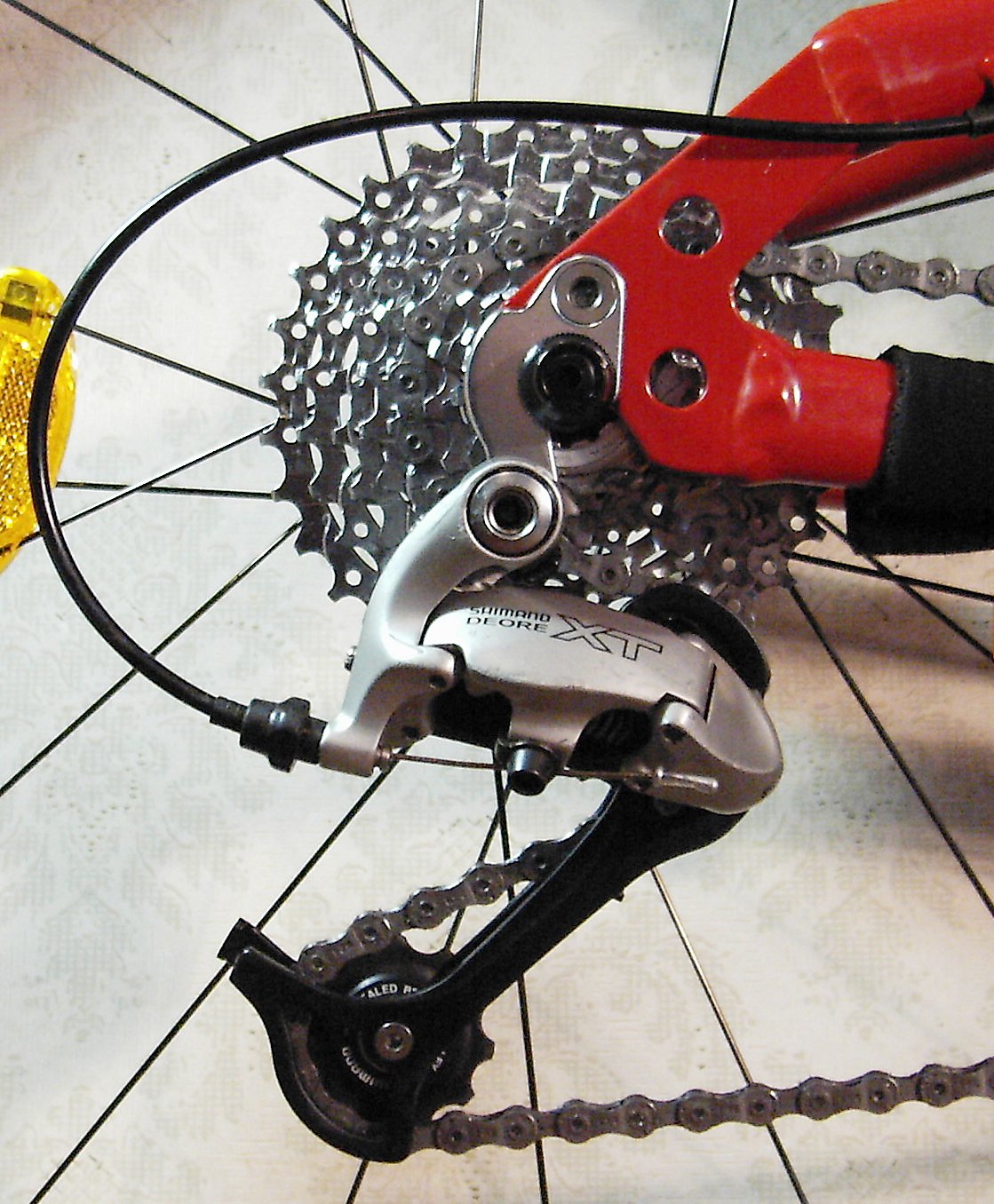
Systems used to transmit power to bicycles and other human-powered vehicles

Bicycle drivetrain systems are used to transmit power on bicycles, tricycles, quadracycles, unicycles, or other human-powered vehicles from the riders to the drive wheels. Most also include some type of a mechanism to convert speed and torque via gear ratios.
History

The history of bicycle drivetrain systems is closely linked to the history of the bicycle. Major changes in bicycle form have often been initiated or accompanied by advances in drivetrain systems. Several early drivetrains used straight-cut gears that meshed directly with each other outside of the hub. |orig-year=2000 |access-date=May 30, 2017 |orig-year=2000 |access-date=May 30, 2017
- Draisine
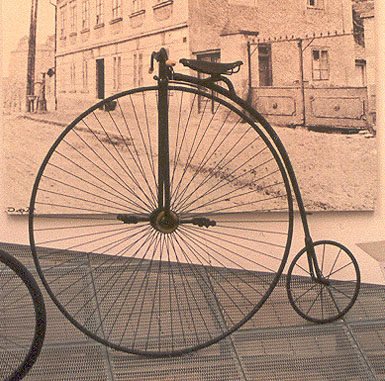
- Penny-farthing
- Safety bicycle
Power collection
Bicycle drivetrain systems have been developed to collect power from riders by a variety of methods.
From legs
- Crankset, groupset, and pedals
- Treadle bicycle
- Vertical foot motion that mimics that of a climbing exercise machine
- Elliptical foot motion that mimicks that of an elliptical trainer
- ElliptiGO
- Swingbike, a fun-bike where both the front and rear fork can swing, so that the rider can turn both with their hips and with the handlebars, and thereby partially create propulsion with their hips
- Risigo, a fun-bike where the seat moves up and down in coordination with the crank, so that the hip prevents (or contributes to) propulsion
File:Rowbike.jpg|A rowbike File:ElliptiGO Miller Hiwy jeh.jpg|ElliptiGOs
From arms
- Handcycle
From whole body
- Rowing
- Hand and foot
- Exycle: from legs and chest{{cite web | access-date = 2012-07-17}}
From multiple riders
- Tandem bicycle
- Sociable, tandem bicycle with side by side seating
- Conference bike, party bike or pedibus, a bike powered by the passengers, while steering and braking is controlled by a driver who does not provide pedaling power
Power transmission
Bicycle drivetrain systems have been developed to transmit power from riders to drive wheels by a variety of methods. Most bicycle drivetrain systems incorporate a freewheel to allow coasting, but direct-drive and fixed-gear systems do not. The latter are sometimes also described as bicycle brake systems. File:Belt-drive crankset.JPG|A belt-drive crankset File:Stringbike 01.jpg|A wire rope and pulley drive on a stringbike
Direct
Some human powered vehicles, both historical and modern, employ direct-drive. Examples include most Penny-farthings, unicycles, and children's tricycles.
Another interpretation of direct-drive is that the rider pushes directly against the ground with a foot, as employed in balance bicycles, kick scooters, and chukudus.
Rotating
- Chain
- Chainline
- Master link
- Micro drive
- Chainless
- Belt
- Shaft
- Wire rope as in the stringbike and rowbike
Non-rotating
- Hydraulic
- Electric, in which turning the cranks generates electricity that then drives an electric motor in the rear wheel.{{cite web | access-date = 2015-02-17 | archive-date = 2015-02-18 | archive-url = https://web.archive.org/web/20150218060717/http://www.bikeradar.com/us/commuting/news/article/the-incredible-mando-footloose-im-e-bike-42427/ | url-status = dead | access-date = 2015-02-17}}
Two-wheel drive
In 1991, a two-wheel drive bicycle was marketed under the Legacy name. It used a flexible shaft and two bevel gears to transmit torque from the rear wheel, driven by a conventional bicycle chain with derailleurs, to the front wheel.{{cite web | access-date = 2012-07-17}} In 1994, Steve Christini and Mike Dunn introduced a two-wheel drive option.{{cite web |access-date = 2012-07-17 |archive-url = https://web.archive.org/web/20070821020122/http://www.elan.cc/mountainbikes/christini/setup/christini.html |archive-date = 2007-08-21 |url-status = dead
Speed and torque conversion


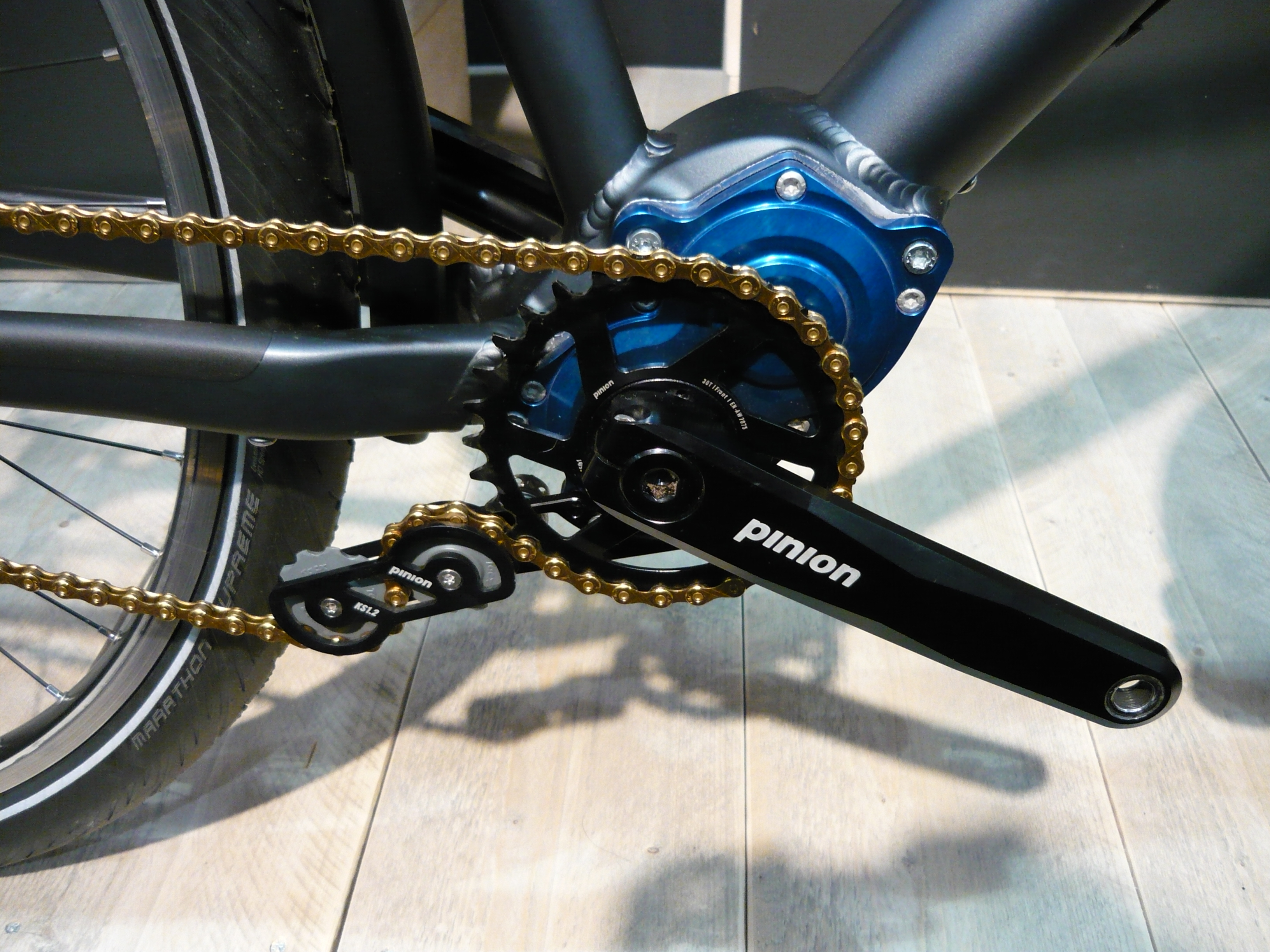
A cyclist's legs produce power optimally within a narrow pedalling speed range. Gearing is optimized to use this narrow range as best as possible. Bicycle drivetrain systems have been developed to convert speed and torque by a variety of methods.
Implementation
Several technologies have been developed to alter gear ratios. They can be used individually, as an external derailleur or an internal hub gear, or in combinations such as the SRAM Dual Drive, which uses a standard 8 or 9-speed cassette mounted on a three-speed internally geared hub, offering a similar gear range as a bicycle with a cassette and triple chainrings.
- Derailleur gears
- Cogset
- Crankset
- Hub gear
- Continuously variable
- Gearbox bicycle
- Retro-direct
- Lever and cam mechanism, as in the stringbike
Control
- Shifters
- Electronic gear-shifting system
- Autobike
Theory
- Bicycle gearing
- Gear ratio
- Gear inches
Single-speed
- Single-speed bicycle
- Fixed-gear bicycle
Integration
While several combinations of power collection, transmission, and conversion exist, not all combinations are feasible. For example, a shaft-drive is usually accompanied by a hub gear, and derailleurs are usually implemented with chain drive.
Gallery
File:ElliptiGO Miller Hiwy jeh.jpg|ElliptiGO uses motion similar to that of an elliptical trainer for motion on a modern treadle bicycle File:Rainbow h.jpg|Hand crank on a tricycle File:Hildick chainless.jpg|Hildick's chainless bicycle gear (1898) File:Snek roeifiets.JPG|Cable of a row bike
References
References
- (October 1, 2009). "3G Stepper Bike: A Fitness Monster that Beats Your Gym Membership". Popular Mechanics.
- "A Different Kind Of Bicycle". Gadgetopia.
- Wallack, Roy M.. (30 November 2009). "Going Beyond the Basic Bike". [[Los Angeles Times]].
- Richard Peace. (11 Jan 2010). "ElliptiGO seatless bike launched".
- "Weird Bikes II - More Weird Bike Stuff". Charlie Kelly.
This article was imported from Wikipedia and is available under the Creative Commons Attribution-ShareAlike 4.0 License. Content has been adapted to SurfDoc format. Original contributors can be found on the article history page.
Ask Mako anything about Bicycle drivetrain systems — get instant answers, deeper analysis, and related topics.
Research with MakoFree with your Surf account
Create a free account to save articles, ask Mako questions, and organize your research.
Sign up freeThis content may have been generated or modified by AI. CloudSurf Software LLC is not responsible for the accuracy, completeness, or reliability of AI-generated content. Always verify important information from primary sources.
Report