From Surf Wiki (app.surf) — the open knowledge base
Biblical archaeology
Archaeological sub-discipline

Archaeological sub-discipline
Biblical archaeology is an academic school and a subset of Biblical studies and Levantine archaeology. Biblical archaeology studies archaeological sites from the Ancient Near East and especially the Holy Land (also known as Land of Israel and Canaan), from biblical times.
The Hebrew Bible is the main source of information about the region of Palestine and mostly covers the Iron Age period. Therefore, archaeology can provide insights where biblical historiography is unable to. The comparative study of the biblical text and archaeological discoveries help understand Ancient Near Eastern people and cultures. Although both the Hebrew Bible and the New Testament are taken into account, the majority of the study centers around the former.
The term biblical archaeology is used by Israeli archaeologists for popular media or an English speaking audience, in reference to what is known in Hebrew as "Israeli archaeology", and to avoid using the term Palestinian archaeology.
History
The study of biblical archaeology started at the same time as general archaeology, the development of which relates to the discovery of highly important ancient artifacts.
Biblical archaeology emerged in the late 19th century, by British and American archaeologists, with the aim of confirming the historicity of the Bible. Between the 1920s, right after World War I, when Palestine came under British rule and the 1960s, biblical archaeology became the dominant American school of Levantine archaeology, led by figures such as William F. Albright and G. Ernest Wright. The work was mostly funded by churches and headed by theologians. From the late 1960s, biblical archaeology was influenced by processual archaeology ("New Archaeology") and faced issues that made it push aside the religious aspects of the research. This has led the American schools to shift away from biblical studies and focus on the archaeology of the region and its relation with the biblical text, rather than trying to prove or disprove the biblical account.
Biblical archaeology today
The model of "biblical archaeology" has collapsed. William G. Dever has correctly described the secularization of "biblical archaeology", but he abandoned the name "Syro-Palestinian archaeology". His papers from 1992 and 1993 were in many ways predictive of what was to come, but the name of the field he used did not stick. The development of biblical archaeology has been marked by different periods;
- Before the British Mandate in Palestine: The first archaeological explorations started in the 19th century initially by Europeans. There were many renowned archaeologists working at this time, one of the best known being Edward Robinson, who discovered a number of ancient cities. The Palestine Exploration Fund was created in 1865 with Queen Victoria as its patron. Large investigations were carried out around the Temple in Jerusalem in 1867 by Charles Warren and Charles William Wilson, after whom Jerusalem's "Wilson's Arch" is named. The American Palestine Exploration Society was founded in 1870. In the same year, a young French archaeologist, Charles Clermont-Ganneau, arrived in the Holy Land in order to study two notable inscriptions: the Mesha Stele in Jordan and inscriptions in the Temple of Jerusalem. Another personality entered the scene in 1890, Sir William Matthew Flinders Petrie, who has since become known as the "father of Palestine archaeology". In Tell-el-Hesi, Petrie laid down the basis for methodical exploration by giving a great importance to the analysis of ceramics as archaeological markers. In effect, the recovered objects or fragments serve to fix the chronology with a degree of precision, as pottery was made in different ways and with specific characteristics during each epoch throughout history. In 1889, the Dominican Order opened the French Biblical and Archaeological School of Jerusalem, which would become world-renowned in its field. Such authorities as M-J. Lagrange and L. H. Vincent stand out among the early archaeologists at the school. In 1898, the Deutsche Orient-Gesellschaft (German Oriental Society) was founded in Berlin, a number of its excavations were subsequently funded by Emperor William II of Germany. Many other similar organizations were founded at this time with the objective of furthering this nascent discipline, although the investigations of this epoch had the sole objective of proving the veracity of the biblical stories.
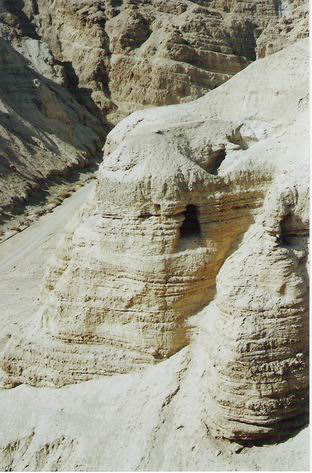
- During the British Mandate in Palestine (1922–1948): The investigation and exploration of the Holy Land increased considerably during this time and was dominated by the genius of William Foxwell Albright, C. S. Fischer, the Jesuits, the Dominicans and many others. This era of great advances and activity closed with a flourish: the discovery of the Dead Sea Scrolls at Qumran in 1947 and its subsequent excavation, which would in large part be directed by the Frenchman Roland de Vaux.
- After the British Mandate: 1948 marked the start of a new social and political era for the Holy Land, with the foundation of the State of Israel and the entrance on the scene of the Israeli archaeologists. Initially their excavations were limited to the territory of the state, but after the Six-Day War they extended into the occupied territories of the West Bank. An important figure in the archaeology of this period was Kathleen Kenyon, who directed the excavations of Jericho and the Ophel of Jerusalem. Crystal Bennett led the excavations at Petra and Amman's citadel, Jabal al-Qal'a. The archaeological museums of the Franciscans and the Dominicans in Jerusalem are particularly notable.-- Twenty-first century biblical archaeology is often conducted by international teams sponsored by universities and government institutions such as the Israel Antiquities Authority. Volunteers are recruited to participate in excavations conducted by a staff of professionals. Practitioners are making increasing efforts to relate the results of one excavation to others nearby in an attempt to create an ever-widening, increasingly detailed overview of the ancient history and culture of each region. Recent rapid advances in technology have facilitated more scientifically precise measurements in dozens of related fields, as well as more timely and more broadly disseminated reports. Many archaeological findings from Israel-Palestine are banned from publishing, for political reasons.
Schools of thought
Main article: Biblical archaeology school
Douglas A. Knight and Amy-Jill Levine (2011)
Lester L. Grabbe (2017)
Biblical archaeology is the subject of ongoing debate. One of the sources of greatest dispute is the period when kings ruled Israel, more generally the historicity of the Bible. It is possible to define two loose schools of thought regarding these areas: biblical minimalism and maximalism, depending on whether the Bible is considered to be a non-historical, religious document or not. The two schools are not separate units but form a continuum, making it difficult to define different camps and limits. However, it is possible to define points of difference, although these differences seem to be decreasing over time.
Summary of important archaeological sites and findings
Selected discoveries
Detailed lists of objects can be found at the following pages:
- List of inscriptions in biblical archaeology
- List of burial places of Abrahamic figures
- List of Hebrew Bible manuscripts, List of New Testament papyri and List of New Testament uncials
- List of biblical figures identified in extra-biblical sources --
Biblical archeological forgeries
Biblical archaeology has also been the target of several celebrated forgeries, which have been perpetrated for a variety of reasons. One of the most celebrated is that of the James Ossuary, when information came to light in 2002 regarding the discovery of an ossuary, with an inscription that translated to "Jacob, son of Joseph and brother of Jesus". In reality the artifact had been discovered twenty years before, after which it had exchanged hands a number of times and the inscription had been added. This was discovered because it did not correspond to the pattern of the epoch from which it dated.
The object came by way of the antiques dealer Oded Golan, who was accused by the Israel Antiquities Authority (IAA) of forgery, but after a 7-year trial he was acquitted on the grounds of reasonable doubt. Another item that came from the same dealer was the Jehoash Inscription, which describes repairs to the temple in Jerusalem. The authenticity of the inscription is debated.
Biblical archaeology and the Catholic Church
In 1943, Pope Pius XII recommended that interpretations of the scripture take archaeological findings into account in order to discern the literary genres used.
Since this time, archaeology has been considered to provide valuable assistance and as an indispensable tool of the biblical sciences.
Expert commentaries
Archaeologist William G. Dever contributed to the article on "Archaeology" in the Anchor Bible Dictionary. In the article, Dever reiterated his perceptions of the negative effects of the close relationship that has existed between Syro-Palestinian archaeology and biblical archaeology, which had caused the archaeologists working in the field, particularly the American archaeologists, to resist adoption of the new methods of processual archaeology. In addition, he considered that "underlying much scepticism in our own field [referring to the adaptation of the concepts and methods of a "new archaeology", one suspects the assumption (although unexpressed or even unconscious) that ancient Palestine, especially Israel during the biblical period, was unique, in some "superhistorical" way that was not governed by the normal principles of cultural evolution".
Dever found that Syro-Palestinian archaeology had been treated in American institutions as a sub-discipline of bible studies, where it was expected that American archaeologists would try to "provide valid historical evidence of episodes from the biblical tradition". According to Dever, "the most naïve [idea regarding Syro-Palestinian archaeology] is that the reason and purpose of "biblical archaeology" (and, by extrapolation, of Syro-Palestinian archaeology) is simply to elucidate facts regarding the Bible and the Holy Land".
Dever has also written that:
Dever also wrote:
Tel Aviv University archaeologist Ze'ev Herzog wrote the following in the Haaretz newspaper:
Other scholars have argued that Asherah may have been a symbol or icon in the context of Yahwism rather than a deity in her own right, and her association with Yahweh does not necessarily indicate a polytheistic belief system. However, Judahite/Israelite polytheism is a commonplace for mainstream historians. William Foxwell Albright, the leader of a past generation of biblical archaeologists, was not, however, a biblical literalist, Yahweh and the Gods of Canaan, for example, advocating the view that the religion of the Israelites evolved from an original polytheism to a monotheism that saw God acting in history—a view fully consistent with the main views of the last two centuries of biblical criticism before him.
Professor Israel Finkelstein told The Jerusalem Post that Jewish archaeologists have found no historical or archaeological evidence to back the biblical narrative on the Exodus, the Jews' wandering in Sinai or Joshua's conquest of Canaan. On the alleged Temple of Solomon, Finkelstein said that there is no archaeological evidence to prove it really existed. Professor Yoni Mizrahi, an independent archaeologist, agreed with Israel Finkelstein.
Regarding the Exodus of Israelites from Egypt, Egyptian archaeologist Zahi Hawass said:
Other scholars dispute these claims. Avraham Faust renders in 2023 the academic consensus about the number of people from The Exodus: "most scholars agree that it was in the range of a few thousands, or even perhaps only hundreds." Scholar Richard Elliott Friedman argues that while evidence of a large-scale Exodus is lacking, this does not preclude the departure of a smaller group from Egypt. He notes:
In his 2001 book The Old Testament Documents: Are They Reliable and Relevant? Evangelical Old Testament scholar Walter Kaiser, Jr. included a chapter entitled, "Does Archaeology Help the Case for Reliability?". Kaiser states:
Kaiser goes on to detail case after case in which the Bible, he says, "has aided in the identification of missing persons, missing peoples, missing customs and settings." He concludes: But since we have seen so many specific challenges over the years yield to such specific data in favor of the text, a presumption tends to build that we should go with the text until definite contrary information is available. This methodology that says that the text is innocent until proven guilty is not only recommended as a good procedure for American jurisprudence, but it is recommended in the area of examining the claims of the Scripture as well.|Walter Kaiser, Jr. (2001)}}
Collins comments upon a statement by Dever:
More recently, Lorenzo Nigro from the Italian-Palestinian Expedition to Tell es-Sultan has argued that there was some sort of settlement at the site during the 14th and 13th centuries BCE. He states that the expedition has detected Late Bronze II layers in several parts of the tell, although its top layers were heavily cut by levelling operations during the Iron Age, which explains the scarcity of 13th century materials. Nigro says that the idea that the Biblical account should have a literal archaeological correspondence is erroneous, and "any attempt to seriously identify something on the ground with biblical personages and their acts" is hazardous.
In 2023, Nigro confirmed that Jericho was occupied in the Late Bronze Age (1400–1200 BCE). During this period, the previous Middle Bronze city wall was refurbished by adding a mudbrick wall on top of its emerging crest.
Modern Bible scholarship/scholars (MBS) assumes that: [...]
• The Bible is a collection of books like any others: created and put together by normal (i.e. fallible) human beings; • The Bible is often inconsistent because it derives from sources (written and oral) that do not always agree; individual biblical books grow over time, are multilayered; • The Bible is to be interpreted in its context: ✦ Individual biblical books take shape in historical contexts; the Bible is a document of its time; ✦ Biblical verses are to be interpreted in context; ✦ The "original" or contextual meaning is to be prized above all others; • The Bible is an ideologically-driven text (collection of texts). It is not "objective" or neutral about any of the topics that it treats. Its historical books are not "historical" in our sense. ✦ "hermeneutics of suspicion"; --✦ Consequently MBS often reject the alleged "facts" of the Bible (e.g. was Abraham a real person? Did the Israelites leave Egypt in a mighty Exodus? Was Solomon the king of a mighty empire?); ✦ MBS do not assess its moral or theological truth claims, and if they do, they do so from a humanist perspective; ★ The Bible contains many ideas/laws that we moderns find offensive; • The authority of the Bible is for MBS a historical artifact; it does derive from any ontological status as the revealed word of God;--|Beardsley Ruml (2014)|Shaye J.D. Cohen's Lecture Notes: INTRO TO THE HEBREW BIBLE @ Harvard (BAS website) (78 pages)}}
Shaye J. D. Cohen (2014)
Christine Hayes (2006)
Peter Enns (2013)
Joshua Schachterle (2025) listed ten biblical claims which have been debunked by archaeology.
References
Sources
- .
References
- William G. Dever. (2011). "The Oxford Encyclopedia of Archaeology in the Near East". [[Oxford University Press]].
- Dever, William G.. (1993). "What Remains of the House That Albright Built?". The Biblical Archaeologist.
- Davies, Philip R.. (2016). "Biblical Interpretation Beyond Historicity: Changing Perspectives 7". Routledge.
- Anderson, Malcolm. (15 March 2024). "Dismantling the House that Albright Built: Dever's Rise and Decline Narrative in the Reorientation of American Biblical Archaeology". Buried History: The Journal of the Australian Institute of Archaeology.
- [http://digs.bib-arch.org/ "Find a dig: Biblical Archaeology Society"]. Cited April 18, 2016.
- R. Dennis Cole, "Recent Developments in Biblical Archaeology," ''The Theological Educator'', 49 (Spring 1994): 51–64. Cited April 18, 2016.
- Epshtein, Anna. (16 October 2019). "» Boycotting the Bible: Israeli Archaeologists Punished for Uncovering Biblical Sites".
- (2011). "The Meaning of the Bible". Harper Collins.
- Grabbe, Lester L.. (2017). "Ancient Israel: What Do We Know and How Do We Know It?: Revised Edition". Bloomsbury Publishing.
- Urquhart, Conal. (31 December 2004). "Forgers 'tried to rewrite biblical history'".
- Friedman, Matti. (14 March 2012). "Oded Golan is not guilty of forgery. So is the 'James ossuary' for real?".
- Pius XII. (30 September 1943). "Divino Afflante Spiritu Encyclical Of Pope Pius Xi On Promoting Biblical Studies".
- Boyle, Alan. (18 November 2008). "Bible gets a reality check".
- [https://web.archive.org/web/20081218105905/http://www.pbs.org/wgbh/nova/bible/dever.html The Bible's Buried Secrets], [[Nova (American TV series). PBS Nova]], 2008
- Dever, William G.. (March–April 2006). "The Western Cultural Tradition Is at Risk". Biblical Archaeology Review.
- Dever, William G.. (January 2003). "Contra Davies". The Bible and Interpretation.
- Knopp, Lisa. (2004). "The Nature of Home: A Lexicon and Essays". University of Nebraska Press.
- Herzog, Ze'ev. (29 October 1999). "Deconstructing the walls of Jericho". Ha'aretz.
- (29 October 1999). "Deconstructing the walls of Jericho". [[Ha'aretz]].
- Doedens, Jacob JT. (January 2013). "Ancient Israelite Polytheistic Inscriptions: Was Asherah Viewed as Yhwh's Wife". Sárospataki Füzetek.
- (21 December 2011). "BBC Two - Bible's Buried Secrets, Did God Have a Wife?". BBC.
- Lyons, William John. (1 July 2002). "A Study of History". Oxford University Press, H. Milford.
- Barton, John. (2012). "The Theology of the Book of Amos". Cambridge University Press.
- Winn Leith, Mary Joan. (2020). "The Oxford Handbook of the Historical Books of the Hebrew Bible". Oxford University Press.
- Edelman, Diana V.. (1995). "The Triumph of Elohim: From Yahwisms to Judaisms". Kok Pharos.
- Gnuse, Robert Karl. (2016). "Trajectories of Justice: What the Bible Says about Slaves, Women, and Homosexuality". Lutterworth Press.
- Carraway, George. (2013). "Christ is God Over All: Romans 9:5 in the context of Romans 9-11". Bloomsbury Publishing.
- Hayes, Christine. (3 July 2008). "Moses and the Beginning of Yahwism: (Genesis 37- Exodus 4), Christine Hayes, Open Yale Courses (Transcription), 2006.".
- Sanders, Seth. (31 December 2003). "Review of Mark S. Smith, The Early History of God: Yahweh and the Other Deities in Ancient Israel, Foreword by Patrick D. Miller". University of Alberta Libraries.
- (20 February 2014). "Senior Israeli archaeologist casts doubt on Jewish heritage of Jerusalem – Middle East Monitor".
- Slackman, Michael. (3 April 2007). "Did the Red Sea Part? No Evidence, Archaeologists Say".
- Friedman, Richard Elliott. (Spring 2013). "The Exodus Is Not Fiction".
- Collins, John J.. (2008). "Old Testament in a New Climate". Yale University.
- Nigro, Lorenzo. (2023). "Durch die Zeiten - Through the Ages: Festschrift für Dieter Vieweger / Essays in Honour of Dieter Vieweger". Gütersloher Verlagshaus.
- Nigro, Lorenzo. (2020b). "Scientific Report of the Italian-Palestinian Expedition to Tell es-Sultan (2020), Palestine: XVI Campaign".
- (2000). "Jesus' Resurrection: Fact Or Figment?: A Debate Between William Lane Craig & Gerd Ludemann". InterVarsity Press.
- Hoffman, Joel E. (8 May 2015). "Shaye J.D. Cohen's Lecture Notes: INTRO TO THE HEBREW BIBLE @ Harvard (BAS website) (78 pages)".
- {{Bulleted list. "Most Israelites were actually of Canaanite stock; their ancestors did not participate in an Exodus from Egypt; Israelites did not build the pyramids!!!". http://ruml.com/thehebrewbible/notes/09-Notes.pdf. https://courses.biblicalarchaeology.org/hebrewbible/notes/09-Notes.pdf
- Hamilton, Adam. (2020). "Words of Life: Jesus and the Promise of the Ten Commandments Today". Crown Publishing Group.
- Wylen, Stephen M.. (2014). "Settings of Silver: An Introduction to Judaism". Paulist Press.
- Siskinson, Chris. (2013). "Time Travel to the Old Testament". InterVarsity Press.
- Tugend, Tom. (26 April 2001). "Furor over L.A. rabbi's reading of Exodus".
- Watanabe, Teresa. (13 April 2001). "Doubting the Story of Exodus". Los Angeles Times.
- Killebrew, Ann E.. (2020). "The Oxford Handbook of the Historical Books of the Hebrew Bible". Oxford University Press.
- Faust, Avraham. (2023). "The Oxford History of the Holy Land". Oxford University Press.
- Hayes, Christine. (2006). "Biblical Narrative: The Stories of the Patriarchs (Genesis 12-36)".
- Enns, Peter. (10 January 2013). "3 Things I Would Like To See Evangelical Leaders Stop Saying About Biblical Scholarship".
- (2007). "Encyclopaedia Judaica". Macmillan Reference USA.
- (Spring 2001). "The Book of Joshua, Part I. Its Evaluation by Nonevidence". Andrews University Press.
- (2008). "Critical Issues in Early Israelite History". Pennsylvania State University Press.
- Velázquez II, Efraín. (July 2009). "The Persian Period and the Origins of Israel: Beyond the "Myths"".
- Lynch, Matthew J.. (2023). "Flood and Fury: Old Testament Violence and the Shalom of God". InterVarsity Press.
- Carr, David M.. (2021). "The Hebrew Bible: A Contemporary Introduction to the Christian Old Testament and the Jewish Tanakh". Wiley Blackwell.
- Fiensy, David A.. (2017). "Insights from Archaeology". Fortress Press.
- Schachterle, Joshua. (7 April 2025). "10 Times Archaeology Has Disagreed with the Biblical Narrative".
- Sperling, S. David. (2022). "Biblical Origins: The Political Intent of the Bible's Writers". Vidonia Publishing.
- (2010). "God and Sex. What the Bible Really Says". Twelve. Hachette Book Group.
This article was imported from Wikipedia and is available under the Creative Commons Attribution-ShareAlike 4.0 License. Content has been adapted to SurfDoc format. Original contributors can be found on the article history page.
Ask Mako anything about Biblical archaeology — get instant answers, deeper analysis, and related topics.
Research with MakoFree with your Surf account
Create a free account to save articles, ask Mako questions, and organize your research.
Sign up freeThis content may have been generated or modified by AI. CloudSurf Software LLC is not responsible for the accuracy, completeness, or reliability of AI-generated content. Always verify important information from primary sources.
Report