From Surf Wiki (app.surf) — the open knowledge base
Bias
Inclination for or against

Inclination for or against
Bias is a disproportionate weight in favor of or against an idea or thing, usually in a way that is inaccurate, closed-minded, prejudicial, or unfair. Biases can be innate or learned. People may develop biases for or against an individual, a group, or a belief. In science and engineering, a bias is a systematic error. Statistical bias results from an unfair sampling of a population, or from an estimation process that does not give accurate results on average.
Etymology
The word appears to derive from Old Provençal into Old French biais, "sideways, askance, against the grain". Whence comes French biais, "a slant, a slope, an oblique".
It seems to have entered English via the game of bowls, where it referred to balls made with a greater weight on one side. Then, it expanded to the figurative use, "a one-sided tendency of the mind", and, at first especially in law, "undue propensity or prejudice".
Types
Cognitive biases
Main article: Cognitive bias, List of cognitive biases
A cognitive bias is a repeating or basic misstep in thinking, assessing, recollecting, or other cognitive processes. That is, a pattern of deviation from standards in judgment, whereby inferences may be created unreasonably. People create their own "subjective social reality" from their own perceptions, their view of the world may dictate their behaviour. Thus, cognitive biases may sometimes lead to perceptual distortion, inaccurate judgment, illogical interpretation, or what is broadly called irrationality. However some cognitive biases are taken to be adaptive, and thus may lead to success in the appropriate situation. Furthermore, cognitive biases as an example through education may allow faster choice selection when speedier outcomes for a task are more valuable than precision. Other cognitive biases are a "by-product" of human processing limitations, coming about because of an absence of appropriate mental mechanisms, or just from human limitations in information processing.
Anchoring
Main article: Anchoring_(cognitive_bias)
Anchoring is a psychological heuristic that describes the propensity to rely on the first piece of information encountered when making decisions. According to this heuristic, individuals begin with an implicitly suggested reference point (the "anchor") and make adjustments to it to reach their estimate. For example, the initial price offered for a used car sets the standard for the rest of the negotiations, so that prices lower than the initial price seem more reasonable even if they are still higher than what the car is worth.
Apophenia
Main article: Apophenia, Pareidolia}}{{See also, Hindsight bias
Apophenia, also known as patternicity, or agenticity, is the human tendency to perceive meaningful patterns within random data. Apophenia is well documented as a rationalization for gambling. Gamblers may imagine that they see patterns in the numbers which appear in lotteries, card games, or roulette wheels. One manifestation of this is known as the "gambler's fallacy".
Pareidolia is the visual or auditory form of apophenia. It has been suggested that pareidolia combined with hierophany may have helped ancient societies organize chaos and make the world intelligible.
Attribution bias
Main article: Attribution bias
An attribution bias could happen when individuals assess or attempt to discover explanations behind their own and others' behaviors. People make attributions about the causes of their own and others' behaviors; but these attributions do not necessarily precisely reflect reality. Rather than operating as objective perceivers, individuals are inclined to perceptual slips that prompt biased understandings of their social world. When judging others we tend to assume their actions are the result of internal factors such as personality, whereas we tend to assume our own actions arise because of the necessity of external circumstances. There are a wide range of sorts of attribution biases, such as the ultimate attribution error, fundamental attribution error, actor-observer bias, and self-serving bias.
Examples of attribution bias:
Confirmation bias
Main article: Confirmation bias
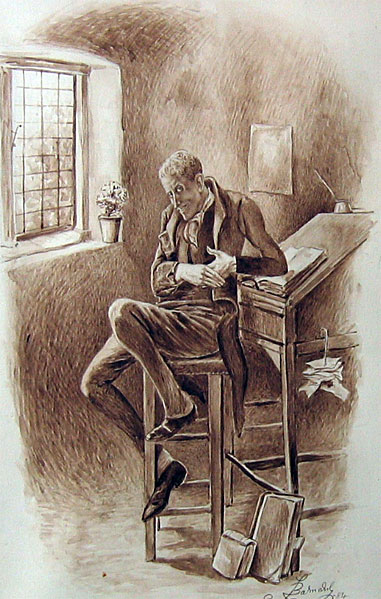
Confirmation bias is the tendency to search for, interpret, favor, and recall information in a way that confirms one's beliefs or hypotheses while giving disproportionately less attention to information that contradicts it. The effect is stronger for emotionally charged issues and for deeply entrenched beliefs. People also tend to interpret ambiguous evidence as supporting their existing position. Biased search, interpretation and memory have been invoked to explain attitude polarization (when a disagreement becomes more extreme even though the different parties are exposed to the same evidence), belief perseverance (when beliefs persist after the evidence for them is shown to be false), the irrational primacy effect (a greater reliance on information encountered early in a series) and illusory correlation (when people falsely perceive an association between two events or situations). Confirmation biases contribute to overconfidence in personal beliefs and can maintain or strengthen beliefs in the face of contrary evidence. Poor decisions due to these biases have been found in political and organizational contexts.
Framing
Cultural bias Framing involves the social construction of social phenomena by mass media sources, political or social movements, political leaders, and so on. It is an influence over how people organize, perceive, and communicate about reality. It can be positive or negative, depending on the audience and what kind of information is being presented. For political purposes, framing often presents facts in such a way that implicates a problem that is in need of a solution. Members of political parties attempt to frame issues in a way that makes a solution favoring their own political leaning appear as the most appropriate course of action for the situation at hand. As understood in social theory, framing is a schema of interpretation, a collection of anecdotes and stereotypes, that individuals rely on to understand and respond to events. People use filters to make sense of the world, the choices they then make are influenced by their creation of a frame.
Cultural bias is the related phenomenon of interpreting and judging phenomena by standards inherent to one's own culture. Numerous such biases exist, concerning cultural norms for color, location of body parts, mate selection, concepts of justice, linguistic and logical validity, acceptability of evidence, and taboos. Ordinary people may tend to imagine other people as basically the same, not significantly more or less valuable, probably attached emotionally to different groups and different land.
Halo effect and horn effect
Main article: Halo effect, Horn effect
The halo effect and the horn effect are when an observer's overall impression of a person, organization, brand, or product influences their feelings about specifics of that entity's character or properties.
The name halo effect is based on the concept of the saint's halo, and is a specific type of confirmation bias, wherein positive sentiments in one area cause questionable or unknown characteristics to be seen positively. If the observer likes one aspect of something, they will have a positive predisposition toward everything about it. A person's appearance has been found to produce a halo effect. The halo effect is also present in the field of brand marketing, affecting perception of companies and non-governmental organizations (NGOs).
The opposite of the halo is the horn effect, when "individuals believe (that negative) traits are inter-connected." The term horn effect refers to Devil's horns. It works in a negative direction: if the observer dislikes one aspect of something, they will have a negative predisposition towards other aspects.
Self-serving bias
Main article: Self-serving bias
Self-serving bias is the tendency for cognitive or perceptual processes to be distorted by the individual's need to maintain and enhance self-esteem. It is the propensity to credit accomplishment to our own capacities and endeavors, yet attribute failure to outside factors, to dismiss the legitimacy of negative criticism, concentrate on positive qualities and accomplishments yet disregard flaws and failures. Studies have demonstrated that this bias can affect behavior in the workplace, in interpersonal relationships, playing sports, and in consumer decisions.
Status quo bias
Main article: Status quo bias
Status quo bias is an emotional bias; a preference for the current state of affairs. The current baseline (or status quo) is taken as a reference point, and any change from that baseline is perceived as a loss. Status quo bias should be distinguished from a rational preference for the status quo ante, as when the current state of affairs is objectively superior to the available alternatives, or when imperfect information is a significant problem. A large body of evidence, however, shows that status quo bias frequently affects human decision-making.
Conflicts of interest
Main article: Conflict of interest
A conflict of interest is when a person or association has intersecting interests (financial, personal, etc.) which could potentially corrupt. The potential conflict is autonomous of actual improper actions, it can be found and intentionally defused before corruption, or the appearance of corruption, happens. "A conflict of interest is a set of circumstances that creates a risk that professional judgement or actions regarding a primary interest will be unduly influenced by a secondary interest." It exists if the circumstances are sensibly accepted to present a hazard that choices made may be unduly affected by auxiliary interests.
Corruption
A conflict of interest arises when a decision-maker participates in a corrupt act that seeks to influence the outcome in favor of a specific individual, organization, or entity in a decision-making process. For example, attempts to solicit a bribe or kickback in exchange for favoring a party creates a conflict of interest. A perceived conflict of interest may also arise in an individual who is offered such a payment, even if it is declined, particularly in situations where the attempt to bribe is not reported.
Laws restricting whether a monetary transaction is appropriate can differ between jurisdictions based upon their criminal laws. For example, some nations criminalize the receipt of political campaign contributions in the form of cash, while other nations permit cash donations provided that donors otherwise adhere to election law.
Favoritism
Main article: In-group favoritism
Favoritism, sometimes known as in-group favoritism, or in-group bias, refers to a pattern of favoring members of one's in-group over out-group members. This can be expressed in evaluation of others, in allocation of resources, and in many other ways. This has been researched by psychologists, especially social psychologists, and linked to group conflict and prejudice. Cronyism is favoritism of long-standing friends, especially by appointing them to positions of authority, regardless of their qualifications. Nepotism is favoritism granted to relatives.
Lobbying
Main article: Lobbying
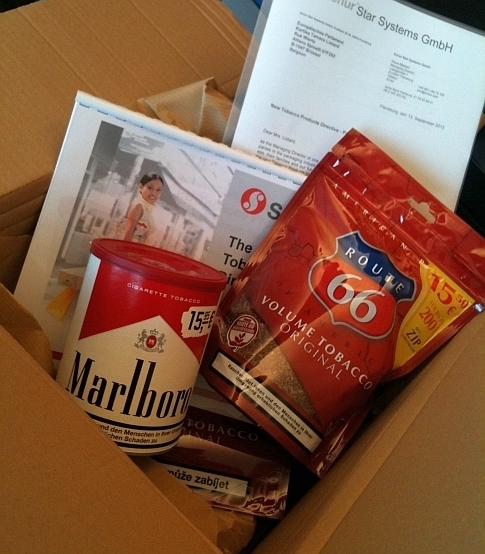
Lobbying is the attempt to influence choices made by administrators, frequently lawmakers or individuals from administrative agencies. Lobbyists may be among a legislator's constituencies, or not; they may engage in lobbying as a business, or not. Lobbying is often spoken of with contempt, the implication is that people with inordinate socioeconomic power are corrupting the law in order to serve their own interests. When people who have a duty to act on behalf of others, such as elected officials with a duty to serve their constituents' interests or more broadly the common good, stand to benefit by shaping the law to serve the interests of some private parties, there is a conflict of interest. This can lead to all sides in a debate looking to sway the issue by means of lobbyists.
Regulatory issues
Main article: Industry self-regulation, Regulatory capture
Self-regulation is the process whereby an organization monitors its own adherence to legal, ethical, or safety standards, rather than have an outside, independent agency such as a third party entity monitor and enforce those standards. Self-regulation of any group can create a conflict of interest. If any organization, such as a corporation or government bureaucracy, is asked to eliminate unethical behavior within their own group, it may be in their interest in the short run to eliminate the appearance of unethical behavior, rather than the behavior itself.
Regulatory capture is a form of political corruption that can occur when a regulatory agency, created to act in the public interest, instead advances the commercial or political concerns of special interest groups that dominate the industry or sector it is charged with regulating. Regulatory capture occurs because groups or individuals with a high-stakes interest in the outcome of policy or regulatory decisions can be expected to focus their resources and energies in attempting to gain the policy outcomes they prefer, while members of the public, each with only a tiny individual stake in the outcome, will ignore it altogether. Regulatory capture is a risk to which a regulatory agency is exposed by its very nature.
Shilling
Main article: Shill
Shilling is deliberately giving spectators the feeling that one is an energetic autonomous client of a vendor for whom one is working. The effectiveness of shilling relies on crowd psychology to encourage other onlookers or audience members to purchase the goods or services (or accept the ideas being marketed). Shilling is illegal in some places, but legal in others. An example of shilling is paid reviews that give the impression of being autonomous opinions.
Statistical biases
Main article: Bias (statistics)
Statistical bias is a systematic tendency in the process of data collection, which results in lopsided, misleading results. This can occur in any of a number of ways, in the way the sample is selected, or in the way data are collected. It is a property of a statistical technique or of its results whereby the expected value of the results differs from the true underlying quantitative parameter being estimated.
Forecast bias
Main article: Forecast bias
A forecast bias is when there are consistent differences between results and the forecasts of those quantities; that is: forecasts may have an overall tendency to be too high or too low.
Observer-expectancy effect
Main article: Observer-expectancy effect
The observer-expectancy effect is when a researcher's expectations cause them to subconsciously influence the people participating in an experiment. It is usually controlled using a double-blind system, and was an important reason for the development of double-blind experiments.
Reporting bias and social desirability bias
Main article: Reporting bias, Social desirability bias
In epidemiology and empirical research, reporting bias is defined as "selective revealing or suppression of information" of undesirable behavior by subjects or researchers. It refers to a tendency to under-report unexpected or undesirable experimental results, while being more trusting of expected or desirable results. This can propagate, as each instance reinforces the status quo, and later experimenters justify their own reporting bias by observing that previous experimenters reported different results.
Social desirability bias is a bias within social science research where survey respondents can tend to answer questions in a manner that will be viewed positively by others. It can take the form of over-reporting laudable behavior, or under-reporting undesirable behavior. This bias interferes with the interpretation of average tendencies as well as individual differences. The inclination represents a major issue with self-report questionnaires; of special concern are self-reports of abilities, personalities, sexual behavior, and drug use.
Selection bias
Main article: Selection bias

Selection bias is the conscious or unconscious bias introduced into a study by the way individuals, groups or data are selected for analysis, if such a way means that true randomization is not achieved, thereby ensuring that the sample obtained is not representative of the population intended to be analyzed. This results in a sample that may be significantly different from the overall population.
Prejudices
Main article: Bigotry, Prejudice, Cultural bias
Bias and prejudice are usually considered to be closely related. Prejudice is prejudgment, or forming an opinion before becoming aware of the relevant facts of a case. The word is often used to refer to preconceived, usually unfavorable, judgments toward people or a person because of gender, political opinion, social class, age, disability, religion, sexuality, race/ethnicity, language, nationality, or other personal characteristics. Prejudice can also refer to unfounded beliefs and may include "any unreasonable attitude that is unusually resistant to rational influence".
Ageism
Main article: Ageism
Ageism is the stereotyping and/or discrimination against individuals or groups on the basis of their age. It can be used in reference to prejudicial attitudes towards older people, or towards younger people.
Classism
Main article: Class discrimination
Classism is discrimination on the basis of social class. It includes attitudes that benefit the upper class at the expense of the lower class, or vice versa.
Lookism
Main article: Lookism
Lookism is stereotypes, prejudice, and discrimination on the basis of physical attractiveness, or more generally to people whose appearance matches cultural preferences. Many people make automatic judgments of others based on their physical appearance that influence how they respond to those people.
Racism
Main article: Racism
Racism consists of ideologies based on a desire to dominate or a belief in the inferiority of another race. It may also hold that members of different races should be treated differently.
Sexism
Contextual biases
Biases in academia
Academic bias
Main article: Academic bias
Academic bias is the bias or perceived bias of scholars allowing their beliefs to shape their research and the scientific community. Claims of bias are often linked to claims by conservatives of pervasive bias against political conservatives and religious Christians. Some have argued that these claims are based upon anecdotal evidence which would not reliably indicate systematic bias, and have suggested that this divide is due to self-selection of conservatives choosing not to pursue academic careers. There is some evidence that perception of classroom bias may be rooted in issues of sexuality, race, class and sex as much or more than in religion.
Experimenter bias
Main article: Experimenter's bias
In science research, experimenter bias occurs when experimenter expectancies regarding study results bias the research outcome. Examples of experimenter bias include conscious or unconscious influences on subject behavior including creation of demand characteristics that influence subjects, and altered or selective recording of experimental results themselves. It can also involve asking leading probes and not neutrally redirecting the subject back to the task when they ask for validation or questions.
Funding bias
Main article: Funding bias
Funding bias refers to the tendency of a scientific study to support the interests of the study's financial sponsor. This phenomenon is recognized sufficiently that researchers undertake studies to examine bias in past published studies. It can be caused by any or all of: a conscious or subconscious sense of obligation of researchers towards their employers, misconduct or malpractice, publication bias, or reporting bias.
Full text on net bias
Main article: FUTON bias
Full text on net (or FUTON) bias is a tendency of scholars to cite academic journals with open access—that is, journals that make their full text available on the internet without charge—in their own writing as compared with toll access publications. Scholars can more easily discover and access articles that have their full text on the internet, which increases authors' likelihood of reading, quoting, and citing these articles, this may increase the impact factor of open access journals relative to journals without open access.
The related bias, no abstract available bias (NAA bias) is scholars' tendency to cite journal articles that have an abstract available online more readily than articles that do not.
Publication bias
Main article: Publication bias
Publication bias is a type of bias with regard to what academic research is likely to be published because of a tendency among researchers and journal editors to prefer some outcomes rather than others (e.g., results showing a significant finding), which leads to a problematic bias in the published literature. This can propagate further as literature reviews of claims about support for a hypothesis will themselves be biased if the original literature is contaminated by publication bias. Studies with significant results often do not appear to be superior to studies with a null result with respect to quality of design. However, statistically significant results have been shown to be three times more likely to be published compared to papers with null results.
Biases in law enforcement
Driving while black
Main article: Driving while black
Driving while black refers to the racial profiling of African American drivers. The phrase implies that a motorist might be pulled over by a police officer, questioned, and searched, because of a racial bias.
Racial profiling
Main article: Racial profiling
Racial profiling, or ethnic profiling, is the act of suspecting or targeting a person of a certain race on the basis of racially observed characteristics or behavior, rather than on individual suspicion. Racial profiling is commonly referred to regarding its use by law enforcement, and its leading to discrimination against minorities.
Victim blaming
Main article: Victim blaming
Victim blaming occurs when the victim of a wrongful act is held at fault for the harm that befell them. The study of victimology seeks to mitigate the perception of victims as responsible.
Biases in media
Main article: Media bias, Media manipulation
Media bias Media bias is the bias or perceived bias of journalists and news producers within the mass media in the selection of events, the stories that are reported, and how they are covered. The term generally implies a pervasive or widespread bias violating the standards of journalism, rather than the perspective of an individual journalist or article. The level of media bias in different nations is debated. There are also watchdog groups that report on media bias.
Practical limitations to media neutrality include the inability of journalists to report all available stories and facts, the requirement that selected facts be linked into a coherent narrative, government influence including overt and covert censorship, the influence of the owners of the news source, concentration of media ownership, the selection of staff, the preferences of an intended audience, and pressure from advertisers.
Bias has been a feature of the mass media since its birth with the invention of the printing press. The expense of early printing equipment restricted media production to a limited number of people. Historians have found that publishers often served the interests of powerful social groups.
Agenda setting
Main article: Agenda-setting theory
Agenda setting describes the capacity of the media to focus on particular stories, if a news item is covered frequently and prominently, the audience will regard the issue as more important. That is, its salience will increase.
Gatekeeping
Main article: Gatekeeping (communication)
Gatekeeping is the way in which information and news are filtered to the public, by each person or corporation along the way. It is the "process of culling and crafting countless bits of information into the limited number of messages that reach people every day, and it is the center of the media's role in modern public life. [...] This process determines not only which information is selected, but also what the content and nature of the messages, such as news, will be."
Sensationalism
Main article: Sensationalism
Sensationalism is when events and topics in news stories and pieces are overhyped to present skewed impressions of events, which may cause a misrepresentation of the truth of a story. Sensationalism may involve reporting about insignificant matters and events, or the presentation of newsworthy topics in a trivial or tabloid manner contrary to the standards of professional journalism.
Other contexts
Educational bias
Main article: Bias in education
Bias in education refers to real or perceived bias in the educational system. The content of school textbooks is often the issue of debate, as their target audience is young people, and the term "whitewashing" is used to refer to selective removal of critical or damaging evidence or comment. Religious bias in textbooks is observed in countries where religion plays a dominant role. There can be many forms of educational bias. Some overlooked aspects, occurring especially with the pedagogical circles of public and private schools—sources that are unrelated to fiduciary or mercantile impoverishment which may be unduly magnified—include teacher bias as well as a general bias against women who are going into STEM research.
Inductive bias
Main article: Inductive bias
Inductive bias occurs within the field of machine learning. In machine learning one seeks to develop algorithms that are able to learn to anticipate a particular output. To accomplish this, the learning algorithm is given training cases that show the expected connection. Then the learner is tested with new examples. Without further assumptions, this problem cannot be solved exactly as unknown situations may not be predictable. The inductive bias of the learning algorithm is the set of assumptions that the learner uses to predict outputs given inputs that it has not encountered. It may bias the learner towards the correct solution, the incorrect, or be correct some of the time. A classical example of an inductive bias is Occam's Razor, which assumes that the simplest consistent hypothesis is the best.
Insider trading
Main article: Insider trading
Insider trading is the trading of a public company's stock or other securities (such as bonds or stock options) by individuals with access to non-public information about the company. In various countries, trading based on insider information is illegal because it is seen as unfair to other investors who do not have access to the information as the investor with insider information could potentially make far larger profits that a typical investor could make.
Match fixing
Main article: Match fixing, Spot-fixing
In organized sports, match fixing occurs when a match is played to a completely or partially pre-determined result, violating the rules of the game and often the law. There is a variety of reasons for this, but the most common is in exchange for a payoff from gamblers. Players might also intentionally perform poorly to get an advantage in the future (such as a better draft pick, or an easier opponent in a playoff), or to rig a handicap system. Match-fixing generally refers to fixing the final result of the game. Another form of match-fixing, known as spot-fixing, involves fixing small events within a match which can be gambled upon, but which are unlikely to prove decisive in determining the final result of the game.
Implicit bias
Implicit stereotypes are shaped by experience and based on learned associations between particular qualities and social categories, including race and/or gender. Individuals' perceptions and behaviors can be influenced by the implicit stereotypes they hold, even if they are unaware/unintentionally hold such stereotypes. Implicit bias is an aspect of implicit social cognition: the phenomenon that perceptions, attitudes, and stereotypes operate without conscious intention. For example, researchers may have implicit bias when designing survey questions and as a result, the questions do not produce accurate results or fail to encourage survey participation. The existence of implicit bias is supported by a variety of scientific articles in psychological literature. Implicit stereotype was first defined by psychologists Mahzarin Banaji and Anthony Greenwald in 1995.
References
References
- (1978). "Speciesism and the Idea of Equality". Philosophy.
- (2016). "What have we learned? Insights from a decade of bias research". The APPEA Journal.
- "Online Etymology Dictionary, ''Bias''".
- Westcott, Sir Abell. (1948). "The Shipwright's Trade". University Press.
- "Definition of Cognitive Bias". Chegg.
- Haselton, M. G.. (2005). "The evolution of cognitive bias.". Hoboken, NJ, US: John Wiley & Sons Inc.
- Bless, H.. (2004). "Social cognition: How individuals construct social reality.". Hove and New York: Psychology Press.
- Bless, H.. (2004). "Social cognition: How individuals construct social reality". Hove and New York: Psychology Press.
- (1972). "Subjective probability: A judgment of representativeness". Cognitive Psychology.
- Baron, J. (2007). ''Thinking and Deciding'' (4th ed.). New York, NY: Cambridge University Press.
- Ariely, D. (2008). ''[[Predictably Irrational]]: The Hidden Forces That Shape Our Decisions''. New York, NY: HarperCollins.
- (1996). "Reasoning the fast and frugal way: Models of bounded rationality". Psychological Review.
- Tversky, A.. (1974). "Judgement under uncertainty: Heuristics and biases". Science.
- Haselton, M. G.. (2005). "The evolution of cognitive bias". Hoboken, NJ, US: John Wiley & Sons Inc..
- Bless, H.. (2004). "Social cognition: How individuals construct social reality.". Hove and New York: Psychology Press..
- (2014). "Individual differences in anchoring: Traits and experience". Learning and Individual Differences.
- "Anchoring bias in decision-making".
- "Anchoring Definition". Investopedia.
- (1974). "Judgment under Uncertainty: Heuristics and Biases". Science.
- Edward Teach, "[http://www.cfo.com/article.cfm/3014027 Avoiding Decision Traps] {{webarchive. link. (2013-06-14 ", [[CFO (magazine)). ''CFO'']] (1 June 2004). Retrieved 29 May 2007.
- Shermer, Michael. (2008). "Patternicity: Finding Meaningful Patterns in Meaningless Noise". Scientific American.
- GrrlScientist. (29 September 2010). "Michael Shermer: The pattern behind self-deception". Guardian.
- (2011-08-19). "Why Do We Need a Belief in God with Michael Shermer".
- (2007-05-24). "Apophenia & Illusory Correlation « Paul Xavier Waterstone". Waterstone.wordpress.com.
- (2010). "The worship to the mountains: a study of the creation myths of the chinese culture".
- (2010). "Search for meanings: from pleistocene art to the worship of the mountains in early China. Methodological tools for Mimesis".
- Heider, F. (1958). "The psychology of interpersonal relations", New York: Wiley, 322 p.
- Kelley, H.H. (1967). Attribution theory in social psychology. In D. Levine (Ed.) ''Nebraska Symposium on Motivation'', Lincoln: University of Nebraska Press
- (1978). "Learned helplessness in humans: Critique and reformulation". Journal of Abnormal Psychology.
- (1987). "Errors and mistakes: Evaluating the accuracy of social judgment". Psychological Bulletin.
- Nisbett, R.E. & Ross, L. (1980). ''Human inference: Strategies and shortcomings of social judgment'', Englewood Cliffs, NJ: Prentice-Hall.
- "Rewind: Watch the Media Spend Two Years Hyping a Now-Debunked Story".
- Zweig, Jason. (November 19, 2009). "How to Ignore the Yes-Man in Your Head". Wall Street Journal.
- Plous, Scott. (1993). "The Psychology of Judgment and Decision Making". McGraw-Hill Education.
- Nickerson, Raymond S.. (June 1998). "Confirmation Bias: A Ubiquitous Phenomenon in Many Guises". Review of General Psychology.
- [[Barbara W. Tuchman. Tuchman, Barbara]] (1984). ''The March of Folly: From Troy to Vietnam''. New York: Knopf.
- (2001). "The Implications of Framing Effects for Citizen Competence". Political Behavior.
- van der Pas, D.. (2014). "Making Hay While the Sun Shines: Do Parties Only Respond to Media Attention When The Framing is Right?". Journal of Press/Politics.
- Goffman, E. (1974). ''Frame Analysis: An Essay on the Organization of Experience''. Cambridge, MA: Harvard University Press.
- Long-Crowell, Erin. "The Halo Effect: Definition, Advantages & Disadvantages". study.com.
- "Halo Effect". Investopedia.
- Thorndike, EL. (1920). "A constant error in psychological ratings". Journal of Applied Psychology.
- "Horns and halo effect".
- (1977). "The halo effect: Evidence for unconscious alteration of judgments". Journal of Personality and Social Psychology.
- Glennie, Jonathan. (3 May 2011). "Hugo Chávez's reverse-halo effect". The Guardian.
- (1975). "Beautiful but Dangerous: Effects of Offender Attractiveness and Nature of the Crime on Juridic Judgment". Journal of Personality and Social Psychology.
- (2003). "Weight Halo Effects: Individual Differences in Perceived Life Success as a Function of Women's Race and Weight". Sex Roles.
- (13 January 2005). "Apple shares surfs on big profits". BBC News.
- (2007). "The Biasing Health Halos of Fast-Food Restaurant Health Claims: Lower Calorie Estimate and Higher Side-Dish Consumption Intentions". Journal of Consumer Research.
- Jeffray, Nathan. (24 June 2010). "Interview: Gerald Steinberg". The Jewish Chronicle.
- Balanson, Naftali. (8 October 2008). "The 'halo effect' shields NGOs from media scrutiny". The Jerusalem Post.
- Jones, Nancy. "Corporate Donors". Ronald House Durham.
- (2006). "Unpacking the halo effect: reputation and crisis management". Journal of Communication Management.
- (2004). "Evaluations in a Product-Harm Crisis". International Journal of Research in Marketing.
- (12 November 2011). "Mental Model: Horns Effect and Halo Effect".
- (2010-05-01). "The Halo and Horns Effects [Rating Errors]".
- Myers, D.G. (2015). ''Exploring Social Psychology'', 7th Edition. New York: McGraw Hill Education.
- (1999). "Self-threat magnifies the self-serving bias: A meta-analytic integration". Review of General Psychology.
- Pal, G.C.. (2007). "Is there a universal self-serving attribution bias?". Psychological Studies.
- Campbell, W. Keith. (2000). "Among friends? An examination of friendship and the self-serving bias". British Journal of Social Psychology.
- De Michele, P.. (1998). "Success and failure attributions of wrestlers: Further Evidence of the Self-Serving Bias". Journal of Sport Behavior.
- Moon, Youngme. (2003). "Don't Blame the Computer: When Self-Disclosure Moderates the Self-Serving Bias". Journal of Consumer Psychology.
- (1988). "Status quo bias in decision making". Journal of Risk and Uncertainty.
- (2009). "Conflict of Interest in Medical Research, Education, and Practice". [[National Academies Press]].
- (2008). "Everyone's a Little Bit Biased (Even Physicians)". JAMA.
- (28 February 2014). "Corruption and conflicts of interests in the United Kingdom". Corruption and Conflicts of Interest.
- (June 2006). "'A Token of Gratitude'? A Morally Ambiguous Case of Bribery". Journal of Scandinavian Studies in Criminology and Crime Prevention.
- (2021). "SIB Guidance on Conflicts of Interest".
- Aronson, E., Wilson, T. D., & Akert, R. (2010). ''Social psychology''. 7th ed. Upper Saddle River: Prentice Hall.
- (April 1981). "Self-serving and group-serving bias in attribution". [[Journal of Social Psychology]].
- "Cronyism".
- "Nepotism".
- [http://dictionary.reference.com/browse/nepotism "Nepotism."] {{webarchive. link. (2016-01-25 Dictionary.com. Retrieved 20 June 2013.)
- "In Praise of Nepotism: A Natural History". [[Adam Bellow]] Booknotes interview transcript.
- "Article Nepotism". New Catholic Dictionary.
- "lobbying". Merriam-Webster Dictionary.Com.
- (1 October 2008). "lobbying". BBC News.
- (2006). "lobbyist". Random House Unabridged Dictionary.
- "Self-regulation dictionary definition".
- "Regulatory Capture Definition". Investopedia.
- (2014-10-06). "Regulatory Capture 101". [[The Wall Street Journal]].
- Timothy B. Lee, [https://www.nytimes.com/2006/08/03/opinion/03lee.html "Entangling the Web"] {{webarchive. link. (2011-05-11 ''The New York Times'' (August 3, 2006). Retrieved April 1, 2011)
- Gary Adams, Sharon Hayes, Stuart Weierter and John Boyd, [http://www.iceaustralia.com/apsacc2011/pdf/papers07/day1_24oct07/StreamA2/RegulatoryCaptureManagingTheRisks_JohnBoyd.pdf "Regulatory Capture: Managing the Risk"] {{webarchive. link. (2011-07-20 ICE Australia, International Conferences and Events (PDF) (October 24, 2007). Retrieved April 14, 2011)
- Hamilton, Alexander. "Small is beautiful, at least in high-income democracies: the distribution of policy-making responsibility, electoral accountability, and incentives for rent extraction".
- {{cite court. link. (2004)
- Rumsey, Deborah J.. "HOW TO IDENTIFY STATISTICAL BIAS". Dummies.com.
- (5 June 2008). "A Dictionary of Epidemiology". Oxford University Press.
- [http://www.cochrane.org/resources/handbook/ Green S, Higgins S, editors: Glossary. Cochrane Handbook for Systematic Reviews of Interventions 4.2.5.] {{webarchive. link. (2010-03-09)
- (2010). "Reporting bias in medical research - a narrative review". Trials.
- (13 November 2011). "Social Desirability Bias". psychologyconcepts.com.
- link. (2014-07-05 . Retrieved on September 23, 2009.)
- "bias ...; prejudice", The New Merriam–Webster Dictionary, {{ISBN. 0877799008
- [[William James]] wrote: "A great many people think they are thinking when they are merely rearranging their prejudices." [http://www.freemaninstitute.com/quotes.htm Quotable Quotes – Courtesy of The Freeman Institute] {{Webarchive. link. (2023-02-21)
- (March 1972). "Poultry and Prejudice". Psychologist Today.
- Kadi, Joanna. (1996). "Thinking Class". [[South End Press]].
- "Lookism".
- (2000). "Lookism". Bartleby.com.
- [[Farrell, Warren]] (2005). ''Why Men Earn More: The Startling Truth About the Pay Gap -- And What Women Can Do About It''. AMACOM, {{ISBN. 0814472109 p. 193
- (1991). "What is beautiful is good, but.". Psychological Bulletin.
- (2005). "Attractiveness and Sexual Behavior: Does Attractiveness Enhance Mating Success?". Evolution and Human Behavior.
- "Oxford English Dictionary, ''Racism''".
- (April 1996). "The Definition of Racism". Journal of Applied Philosophy.
- [http://oxforddictionaries.com/definition/english/racism Racism] {{webarchive. link. (2012-09-11 Oxford Dictionaries)
- "Racism" in R. Schefer. 2008 Encyclopedia of Race, Ethnicity and Society. SAGE. p. 1113
- Newman, D. M.. (2012). "Sociology : exploring the architecture of everyday life". SAGE.
- Hibbing, John D. (2014). "Differences in negativity bias underlie variations in political ideology". Behavioral and Brain Sciences.
- (2005). "Hide the Republicans, the Christians, and the Women: A Response to "Politics and Professional Advancement Among College Faculty"". The Forum.
- Lee, John. (November 2006). "The "Faculty Bias" Studies: Science or Propaganda". American Federation of Teachers.
- Giroux, Henry A.. (2006). "Academic Freedom Under Fire: The Case for Critical Pedagogy". College Literature.
- Gross, Neil. (9 April 2013). "Why Are Professors Liberal and Why Do Conservatives Care?". Harvard University Press.
- (2009). "Incidents Of Bias in College Classrooms: Instructor and Student Perceptions". Journal of Diversity in Higher Education.
- (1995). "Gender Bias in the College Classroom: A Critical Review of the Literature and Implications for Future Research". Journal of Research and Development in Education.
- Sackett, D. L.. (1979). "Bias in analytic research". Journal of Chronic Diseases.
- (2009). "Experimental Psychology". Cengage Learning.
- (2024). "Bias testing in market research: A framework to enable inclusive research design".
- (2012). "Do Financial Conflicts of Interest Bias Research? An Inquiry into the "Funding Effect" Hypothesis". Science, Technology, & Human Values.
- Cialdini, Robert B. (2008-08-08). "Influence: Science and Practice (5th ed)". Prentice Hall.
- David Michaels. (2008-07-15). "It's Not the Answers That Are Biased, It's the Questions". The Washington Post.
- Wilmshurst, Peter. (2007). "Dishonesty in Medical Research". The Medico-Legal Journal.
- (2003-05-31). "Pharmaceutical industry sponsorship and research outcome and quality: systematic review". BMJ.
- Anders Sandberg. (2007-01-14). "Supping with the Devil". OvercomingBias.
- (2009-06-19). "Types of Bias". Cochrane Bias Methods Group.
- (2004). "Impact of FUTON and NAA bias on visibility of research". Mayo Clinic Proceedings.
- (2003). "Online access to nephrology journals: The FUTON bias". Nephrology, Dialysis, Transplantation.
- (2006). "The effect of online status on the impact factors of general internal medicine journals". The Netherlands Journal of Medicine.
- (2008). "An exploratory analysis of PubMed's free full-text limit on citation retrieval for clinical questions". Journal of the Medical Library Association.
- Gilman, Isaac. (2009). "Opening up the Evidence: Evidence-Based Practice and Open Access". Faculty Scholarship (PUL).
- (2002). "Visibility of research: FUTON bias". The Lancet.
- (2010). "Dissemination and publication of research findings: An updated review of related biases". Health Technology Assessment.
- H. Rothstein, A. J. Sutton and M. Borenstein. (2005). ''Publication bias in meta-analysis: prevention, assessment and adjustments''. Wiley. Chichester, England; Hoboken, NJ.
- (1991). "Publication bias in clinical research". [[Lancet (journal).
- (1987). "Publication bias and clinical trials". [[Controlled Clinical Trials]].
- Harris, D.. (1999). "The stories, the statistics, and the law: Why 'Driving While Black' matters". 84 Minnesota Law Review.
- Gates, Henry L.. (1995-10-16). "Thirteen Ways of Looking at a Black Man".
- (9 August 2023). "Profiling".
- (2009). "The Environmental Context of Racial Profiling". The Annals of the American Academy of Political and Social Science.
- "Victim Blaming".
- (2011). "Is Knowledge Power? The Effects of a Victimology Course on Victim Blaming". [[Journal of Interpersonal Violence]].
- [https://umd.academia.edu/StefanoRivolta/Papers/1052068/Strategic_Maneuvering_and_Media_Bias_in_Political_News_Magazine_Opinion_Articles ''Strategic Maneuvering and Media Bias in Political News Magazine Opinion Articles''], Stefano Mario Rivolta, 7 June 2011
- [http://cpj.org/reports/2006/05/10-most-censored-countries.php "10 Most Censored Countries"] {{webarchive. link. (2015-10-16 , Committee to Protect Journalists, 2 May 2006)
- Ann Heinrichs, ''The Printing Press (Inventions That Shaped the World)'', p. 53, Franklin Watts, 2005, {{ISBN. 0-531-16722-4, {{ISBN. 978-0-531-16722-9
- McCombs, M. (2002). "News influence on our pictures of the world". Media Effects: Advances in Theory and Research.
- Shoemaker, Pamela J.. (2009). "Gatekeeping Theory". Routledge.
- [https://web.archive.org/web/20120205021104/http://www.fair.org/index.php?page=7&issue_area_id=49 "Issue Area: Sensationalism."] [[Fairness and Accuracy In Reporting]]. Accessed June 2011.
- Stephens, Mitchell. (2007). "A History of News". Oxford University Press.
- Thompson, John. (June 22, 1999). "The Media Reader: Continuity and Transformation". Sage Publications Ltd.
- Sadker, David. "Seven Forms of Bias in Instructional Materials".
- Strauss, Valerie. (12 September 2014). "Proposed Texas textbooks are inaccurate, biased and politicized, new report finds". [[The Washington Post]].
- Czitrom, Daniel. (22 March 2010). "Texas school board whitewashes history". CNN.
- "How to Get Your Ex Boyfriend Back – Tips to Win Back His Love and Get Him Back".
- "Crisis Counseling with Children," Van Ornum and Murdock, 1990, NY: Crossroad/Continuum.
- (1995). "Evaluation and Selection of Biases in Machine Learning". Machine Learning.
- Mitchell, T. M.. (1980). "The need for biases in learning generalizations". Rutgers University.
- "match-fixing". [[Oxford University Press.
- (1995). "Implicit social cognition: Attitudes, self-esteem, and stereotypes". Psychological Review.
This article was imported from Wikipedia and is available under the Creative Commons Attribution-ShareAlike 4.0 License. Content has been adapted to SurfDoc format. Original contributors can be found on the article history page.
Ask Mako anything about Bias — get instant answers, deeper analysis, and related topics.
Research with MakoFree with your Surf account
Create a free account to save articles, ask Mako questions, and organize your research.
Sign up freeThis content may have been generated or modified by AI. CloudSurf Software LLC is not responsible for the accuracy, completeness, or reliability of AI-generated content. Always verify important information from primary sources.
Report