From Surf Wiki (app.surf) — the open knowledge base
Bhuj
City in Gujarat, India

City in Gujarat, India
| Field | Value |
|---|---|
| name | Bhuj |
| settlement_type | City |
| image_skyline | {{multiple image |
| border | infobox |
| total_width | 280 |
| perrow | 1/2/1 |
| caption_align | center |
| image1 | Pragmahal Bhuj Kutch Gujarat.jpg Prag Mahal |
| caption1 | Prag Mahal |
| image2 | Damaged Ainamahal Bhuj Kutch Gujarat.jpg Aina Mahal |
| caption2 | Aina Mahal |
| image3 | Dungar of bhuj.jpg Bhujia Fort |
| caption3 | Bhujia Fort |
| image4 | Hamirsar.JPG Hamirsar Lake |
| caption4 | Hamirsar Lake |
| pushpin_map | India Gujarat#India |
| pushpin_label_position | right |
| pushpin_relief | yes |
| coordinates | |
| subdivision_type | Country |
| subdivision_name | India |
| subdivision_type1 | State |
| subdivision_type2 | District |
| subdivision_name1 | Gujarat |
| subdivision_name2 | Kutch |
| established_title | |
| established_date | 1549 |
| founder | Rao Hamirji Jadeja |
| government_type | Municipal Council |
| governing_body | Bhuj Municipal Council |
| leader_party | BJP |
| leader_title | Chairman |
| leader_name | Rashmi Solanki |
| unit_pref | Metric |
| area_total_km2 | 56 |
| elevation_m | 110 |
| population_total | 188,236 |
| population_as_of | 2011 |
| population_density_km2 | auto |
| demographics_type1 | Languages |
| demographics1_title1 | Official |
| demographics1_info1 | Gujarati |
| demographics1_title2 | Regional |
| demographics1_info2 | Kutchi |
| timezone1 | IST |
| utc_offset1 | +5:30 |
| postal_code_type | PIN |
| postal_code | 370001 |
| area_code | +912832xxxxxx |
| area_code_type | Telephone code |
| registration_plate | GJ-12 |
| blank1_name_sec1 | Sex ratio |
| blank1_info_sec1 | 0.97 ♀/♂ |
| website |
Bhuj () is a city and the headquarters of Kutch district in the Indian state of Gujarat. It was the capital of Cutch State, which was a princely state before it was merged into the Indian Union in 1947.
Etymology
According to legend, Kutch (Kachchh) was ruled by the Nāga chieftains in the past. Sagai, a queen of Sheshapattana, who was married to King Bheria Kumar, rose up against Bhujanga, the last chieftain of Naga. After the battle, Bheria was defeated and Queen Sagai committed sati. The hill where they lived later came to be known as Bhujia Hill and the town at the foothill as Bhuj. Bhujang was later worshiped by the people as snake god, Bhujanga, and a temple was constructed to revere him.
History
Main article: Cutch State
Bhuj City and Kutch Region were established by Maharaja of Parmar Rajputs, and deterred invasions for centuries. Bhuj City was occupied by Rao Hamir in 1510 and made the capital of Kutch (kachchh) by Rao Khengarji I in 1549. Its foundation stone as state capital was formally laid on Vikram Samvat 1604 Maagha 5th (approx. 25 January 1548). From 1590 onwards, when Rao was forced to acknowledge the Mughal supremacy, Bhuj came to be known as Suleiman Nagar amongst Muslims. The city's walls were built by Rao Godji I in 1723, and the Bhujia Fort by Devkaran Seth in Rao Deshalji I's time (1718 - 1741).
Bhuj has been attacked six times. In two instances, the defense was successful and in four other instances, the defense failed. In 1728, an attack by Sarbuland Khan, Mughal Viceroy of Gujarat, was repulsed by Rao Deshalji I, and, in 1765 Mian Ghulam Shah Kalhoro was, by a timely display of the strength of the fortifications, induced to withdraw. During the civil troubles of the reign of the Rao Rayadhan III, Bhuj was thrice taken, by Meghji Seth in 1786, by Hansraj in 1801, and by Fateh Muhammad in 1808. On 26 March 1819, the hill fort of Bhujia was captured by a British detachment under Sir William Keir.
In 1818, Bhuj had a population of 20,000 people. The earthquake on 16 June 1819 destroyed nearly 7000 houses with a loss of an estimated 1140 human lives. About one-third of the buildings that escaped ruin were heavily damaged, and the north face of the town wall was leveled with the ground.
The British garrison at Bhuj peaked in 1826 with nearly 1400 British troops (685 infantry, 543 dragoons, 90 foot artillery and 74 horse artillery) supported by over 5000 Indian soldiers. Amongst the highest profile British figures during this time was Alexander Burnes who was based here between 1826 and 1829.
In 1837, Bhuj is said to have had a population of 30,000, including 6,000 Muslims.
After independence of India in 1947, Kutch State acceded unto the dominion of India and was constituted an independent commissionaire, Kutch State. In 1956, Kutch State was merged with Bombay state, which in 1960 was divided into the new linguistic states of Gujarat and Maharashtra, with Kutch becoming part of Gujarat state as Kutch district. Bhuj is the district headquarters of Kutch District, the largest district in India.
On 21 July 1956 as well as on 26 January 2001, the city suffered great losses of life and property due to earthquakes. Many parts of Bhuj were demolished due to the extensive damage, whilst others were repaired. There has been great progress in rebuilding the City since the 2001 earthquake, with considerable improvements to roads, transportation, and infrastructure.
Bhuj is home to one of the first Swaminarayan Sampraday temples, built in 1822. Bhuj temple is one of the six original temples built during the earthly presence of the Lord Swaminarayan. The devotees living in Bhuj including Gangaram Mull, Sundarji Suthar and Hirji Suthar requested Lord to construct a temple at Bhuj. Lord instructed Vaishnavanand Swami to construct the temple, and Lord himself installed the murti of Lord NarNarayan Dev in Bhuj on VS 1879 on the 5th day of the bright half of the month of Vaishakh (Friday 15 May 1823 AD).
Geography
Bhuj has an average elevation of 110 m. On the eastern side of the city is a hill known as Bhujia Hill, on which there is a Bhujia Fort, that separates Bhuj city and Madhapar town (considered one of the richest villages in Asia). It has two lakes namely Hamirsar Lake and Deshadsar (દેેેશળસર).
Climate
Bhuj has a hot arid climate (Köppen BWh), a little too dry overall to qualify as a hot semi-arid climate (BSh). Although annual rainfall "averages" around 370 mm the variability is among the highest in the world with coefficient of variation of around sixty per cent – among the few comparably variable climates in the world being the Line Islands of Kiribati, the Pilbara coast of Western Australia, the sertão of Northeastern Brazil, and the Cape Verde islands. Typically half of each year's rainfall will occur in three hours, while during the median year rain actually falls for a total of fewer than fifteen hours. Recorded annual rainfall has been as low as 9.6 mm in 1987 and 21.9 mm in 1899. Contrariwise, in 1926 a total of 1177.1 mm fell and in 1959 rainfall reached 1311.4 mm. 730.6 mm fell during Bhuj's wettest month of July 1959, of which 467.9 mm was recorded on 15 July alone, with over 15 in during less than six hours on the night of 14–15 July.
Apart from the cool mornings of the "winter" season from December to February, temperatures are very warm to sweltering throughout the year, which further reduces the effectiveness of the erratic monsoonal rainfall. During the "hot" season from mid-March to mid-June, temperatures of 40 C are frequent, whilst during the monsoon season they exceed 34 C with high humidity except during rainy spells accompanied by cooler temperatures but oppressive humidity. |Jan record high C = 37.0 |Feb record high C = 40.3 |Mar record high C = 43.9 |Apr record high C = 45.8 |May record high C = 47.8 |Jun record high C = 47.0 |Jul record high C = 41.3 |Aug record high C = 41.2 |Sep record high C = 42.8 |Oct record high C = 44.0 |Nov record high C = 40.0 |Dec record high C = 36.3 |year record high C = 47.8 |Jan record low C = −0.2 |Feb record low C = 0.3 |Mar record low C = 5.5 |Apr record low C = 12.7 |May record low C = 16.6 |Jun record low C = 16.1 |Jul record low C = 19.4 |Aug record low C = 20.0 |Sep record low C = 17.8 |Oct record low C = 11.1 |Nov record low C = 6.0 |Dec record low C = 0.6 |year record low C = -0.2 | access-date = 8 April 2024 | archive-url = https://web.archive.org/web/20200205040301/http://imdpune.gov.in/library/public/1981-2010%20CLIM%20NORMALS%20%28STATWISE%29.pdf | archive-date = 5 February 2020 | access-date = 28 September 2020}} | archive-url = https://web.archive.org/web/20200205042509/http://imdpune.gov.in/library/public/EXTREMES%20OF%20TEMPERATURE%20and%20RAINFALL%20upto%202012.pdf | archive-date = 5 February 2020 | access-date = 28 September 2020}}{{cite web | access-date = 10 April 2015 | archive-url = https://web.archive.org/web/20150414113236/http://www.imd.gov.in/section/climate/extreme/bhuj2.htm | archive-date = 14 April 2015 | url-status = dead
Places of interest

- The Fort: The old city was surrounded by a fort wall with five major gates (Mahadev, Patvadi, Sarpat, Bhid and Vaniya Vad) and one small gate known as Chhathi Bari (sixth window). The fort wall is 35 feet high and four feet thick, and during its use was armed with fifty-one guns. Much of the fort wall has either fallen down or been demolished, due to the damage sustained in the 2001 earthquake and the city's redevelopment.
- Hamirsar Lake
- Kutch Museum
- Prag Mahal
- Aina Mahal
- Sharadbaug Palace
- Chhatardi
- Ramkund
- Mohammad Pannah Masjid
- Bharatiya Sanskriti Darshan Museum
- Swaminarayan temple
- Bhujia Fort and Smritivan on Bhujia Hill
- Regional Science Centre Bhuj: The Gujarat Council on Science and Technology (GUJCOST) was established in 1986 with the objective of "bringing science to people's doorsteps." GUJCOST has since developed a network of community science centres across the state through public–private partnerships, creating facilities that integrate scientific education with local culture. GUJCOST has established regional science centres across Gujarat through public-private partnerships and so far a total of 4 Regional Science Centres (RSC) have been established at Patan, Rajkot, Bhavnagar, and Bhuj.** India's largest public observatory** is in Bhuj Regional science centre and has attracted over 1,500 visitors in just 30 days after its inauguration on 25 December 2024.The observatory is equipped with a 24-inch telescope, allowing visitors to witness celestial phenomena such as nebulae, planets, and distant galaxies. Beyond the observatory, RSC Bhuj boasts six captivating science-themed galleries, including Marine Navigation, Energy Science, Fields Medal, Bonsai, Nanotechnology, and Space Science. The Regional Science Centre, is situated to the north of a hillock known locally as Bhujiyo Dungar. The north–south axis acts as a pedestrian path and connects with the east–west axis along which all the galleries are located. Designed by INI Design Studio the centre integrates traditional design principles with innovative strategies. The design reflects the immediate context of Smriti Van, a memorial to the devastating 2001 earthquake.Drawing from the region's vernacular architecture, the centre incorporates cultural heritage, addressing challenges such as rural access to science education. The use of cylindrical galleries, locally sourced materials, and interactive exhibits, emphasizes inclusivity and community engagement. Considering the climate and seismic conditions of the desert region, the traditional style of Bhunga houses of the Kutch region, characterized by mud-plastered, bamboo-framed cylindrical forms has been adapted into these structures, promoting easy airflow, diverting winds, and creating shaded spaces for public use.
- Hill Garden
- Trimandir
- Tapkeshwari Temple
- Vande Mataram Memorial at village Bhujodi near Bhuj
- Living and Learning Design Centre at Bhuj - Bhachau Hwy Opp. Anchor Company, Ajarakhpur, Bhuj
- Smritivan Earthquake Memorial and Museum
File:Prag Mahal Palace Bhuj.jpg|Prag Mahal File:Aina Mahal.jpg|Aina Mahal File:Sharad Baugh Palace Bhuj Kutch Gujarat.jpg|Sharadbaugh Palace File:Kutch Museum Bhuj Kutch Gujarat India.jpg|Kutch Museum File:Ramkund Bhuj Kutch Gujarat.jpg|Ramkund File:Shri Swaminarayan Mandir, Bhuj, Gujarat.jpg|Swaminarayan temple File:Chhatedi of Bhuj.jpg|Chhatedi of Bhuj File:Hamirsar.JPG|Hamirsar Lake File:Mahadev Gate.jpg|Mahadev Gate near Hamirsar Lake File:Darbargadh Fort.jpg|Darbargadh Fort File:Smritivan 2001 Gujarat earthquake memorial garden in Bhuj, Gujarat, India.jpg|Bhujia Fort and Smritivan on Bhujia Hill File:Tapakeshwari Devi Temple near Bhuj Kutch Gujarat Indua.jpg|Tapakeshwari Devi Temple near Bhuj File:Fairground near Bhuj - panoramio.jpg|Hill Garden File:Vandemataram Memorial.jpg|The Vande Mataram Memorial is located at Village - Bhujodi near Bhuj
Demographics
In 2011 the population of Bhuj was 213,514, which consisted of 111,146 males and 102,368 females.{{cite web | access-date = 2015-09-03
Language
According to the 2011 Census, Gujarati speakers are a majority in Bhuj, followed by Kachchhi, Hindi and others.
Culture
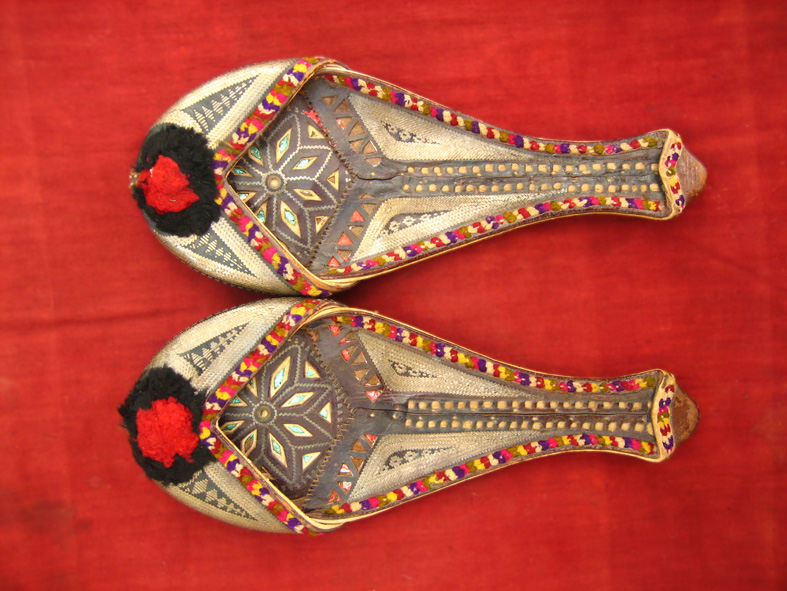
Bhuj is a famous destination within India for observing the historic craftsmanship of the Kutch region, including the textile crafts of bandhni (tie-dye), embroidery, Rogan art and leatherwork. Artists of nearby villages bring their artwork for sale in 'Bhuj Haat', which is situated near Jubilee Ground.
Media and communications
State-owned All India Radio has a local station in Bhuj which transmits various programmes. Local TV channels and newspapers are the most popular media.
Education


Alfred High School, the first high school of Kutch, established in 1870, is also an architectural heritage of the town.
Krantiguru Shyamji Krishna Verma Kachchh University is located in Bhuj. The university has 41 colleges affiliated, nineteen of which are in Bhuj. The university grants degrees in arts, science, commerce, law education, management, pharmacy, social welfare, medicine and engineering.
Little Steps Montessori School is the first Montessori School in Kutch established in the year 2000 by the royal family of Tera-Kutch.
Primary and secondary
Matruchhaya Kanya Vidyalay Little Steps Montessori School Bhuj
- St. Xavier's High School, Bhuj
- Alfred High School
- Army Public School
- Sheth V.D. High School
- Indira Bai Girls High School
- Hope Foundation School near Ashapura Nagar
- Shree Swaminarayan Vidhyalaya
- Shishukunj International School
- White House Public School
- Matrushree R.D. Varsani high school
- Kendriya Vidyalaya No.1, Airforce Station Bhuj
- Kendriya Vidyalaya No.2, Army Cantt. Bhuj
- Bhuj English School
- Kiddy's Campus Nursery and Playhouse.
- Shree Kutchi Leva Patel Kanya Vidhyamandir.
- Chanakya Academy
Higher education
[[Government Engineering College, Bhuj]]
- Government Polytechnic
- Shri R. R. Lalan College
- Sheth D. L. Law College
- Industrial Training Institute
- J B Thacker Commerce College
- MEWS College of Management & IT
- Sanskar Institute of Management & IT
Radio Station & Television
Bhuj has its own Radio Station with Studio. Prasar Bharati under Information and Broadcasting Ministry is operating Radio Studio. MW is available on 1314 kHz and FM is available on 103.7 MHz. There is also terrestrial DD channel available. DD National and DD Girnar available.
Transportation
Bhuj is connected to Ahmedabad, Vadodara, Surat Mumbai, Delhi, Kolkata, Pune, Gaziabad, Jaipur, Ajmer, Hapur, Moradabad, Bareilly, Kharagpur, Ujjain and other cities within India by railway. The city has a domestic airport, from which daily flights connect to Mumbai with flights operated by Air India. State Transport buses are available from the ST stand in the middle of the town to various places in Gujarat. Additionally, many private tour operators also run frequent buses to major cities within and outside of the state of Gujarat. Kandla Airport is 53 km from Bhuj. The city may be navigated by the city bus and auto rickshaw.
Trains
| Train no. | Train Name | Runs From | Destination | Departure Days | Arrival Days |
|---|---|---|---|---|---|
| 11091-11092 | Bhuj-Pune express | Bhuj | Pune | Wednesday | Tuesday |
| 14312-14311 via Ahmedabad & 14322-14321 via Bhildi | Ala Hazrat Express | Bhuj | Bareilly | Tuesday, Thursday & Sunday for 14312. Monday, Wednesday, Friday & Saturday for 14322 | Friday, Saturday, Monday for 14311. Tuesday, Wednesday, Thursday & Sunday for 14321 |
| 22829-22830 | Shalimar - Bhuj Weekly SF Express | Bhuj | Shalimar | Tuesday | Monday |
| 22904-22903 | Bandra Terminus Bhuj AC Superfast Express | Bhuj | Bandra | Monday, Thursday, Saturday | Thursday, Saturday, Monday |
| 12960-12959 | Bhuj Dadar Superfast Express | Bhuj | Dadar | Monday, Thursday | Wednesday, Saturday |
| 19132-19131 | Kutch Express | Bhuj | Bandra | Daily | Daily |
| 19116-19115 | Sayajinagari Express | Bhuj | Dadar | Daily | Daily |
References
- This article incorporates Public Domain text from
References
- Ward. (1 January 1998). "Gujarat–Daman–Diu: A Travel Guide". Orient Longman Limited.
- "History of Bhuj". Bhuj Online.
- (1880). "Gazetteer of the Bombay Presidency: Cutch, Palanpur, and Mahi Kantha". Printed at the Government Central Press.
- ''Sikunder Burnes'', by [[Craig Murray]], p36
- (24 July 1956). "Quake rocks Kutch". [[The Hindu]].
- "Swaminarayan.faith - Home of Shree Swaminarayan Bhagwan".
- Van Etten, Eddie J.B.. (2009). "Inter-annual Rainfall Variability of Arid Australia: greater than elsewhere?". [[Australian Geographer]].
- (1999). "Geographical patterning of interannual rainfall variability in the tropics and near tropics: An L-moments approach". [[Journal of Climate]].
- "The Fluid Mosaic: Water Governance in the Context of Variability, Uncertainty and Change – A Synthesis Paper". Nepal Water Conservation Foundation.
- (22 July 1959). "Fourteen Dead, 15,000 Rendered Homeless: Floods Convert Arid Kutch Into Vast Lake". The Times of India.
- . (15 February 2023). ["42634: Bhuj-Rudramata (India)"](https://www.ogimet.com/cgi-bin/gsynres?ind=42634&ano=2023&mes=2&day=16&hora=12&min=0&ndays=30). *OGIMET*.
- Hariyani, Bindu. (2024-02-23). "elliptical stone-clad galleries by ini design studio compose science center in india".
- Lomholt, Isabelle. (2024-12-01). "Regional Science Centre, Gujarat, India".
- Reporter, Building Material. "Discovering Gujarat's Regional Science Centre".
- "Table C-16 Population by Mother Tongue: Gujarat". [[Registrar General and Census Commissioner of India]].
- Kansara, Ashish. (2023-08-19). "Ancient intellectual Indian rogan art by Ashish Kansara".
- "ક્રાંતિગુરુ શ્યામજી કૃષ્ણ વર્મા કચ્છ યુનિવર્સિટી". Kskvku.digitaluniversity.ac.
This article was imported from Wikipedia and is available under the Creative Commons Attribution-ShareAlike 4.0 License. Content has been adapted to SurfDoc format. Original contributors can be found on the article history page.
Ask Mako anything about Bhuj — get instant answers, deeper analysis, and related topics.
Research with MakoFree with your Surf account
Create a free account to save articles, ask Mako questions, and organize your research.
Sign up freeThis content may have been generated or modified by AI. CloudSurf Software LLC is not responsible for the accuracy, completeness, or reliability of AI-generated content. Always verify important information from primary sources.
Report