From Surf Wiki (app.surf) — the open knowledge base
Bharatiya Jana Sangh
Former Indian political party
Former Indian political party
| Field | Value | ||
|---|---|---|---|
| country | India | ||
| name | Akhil Bharatiya Jana Sangh | ||
| colorcode | |||
| foundation | |||
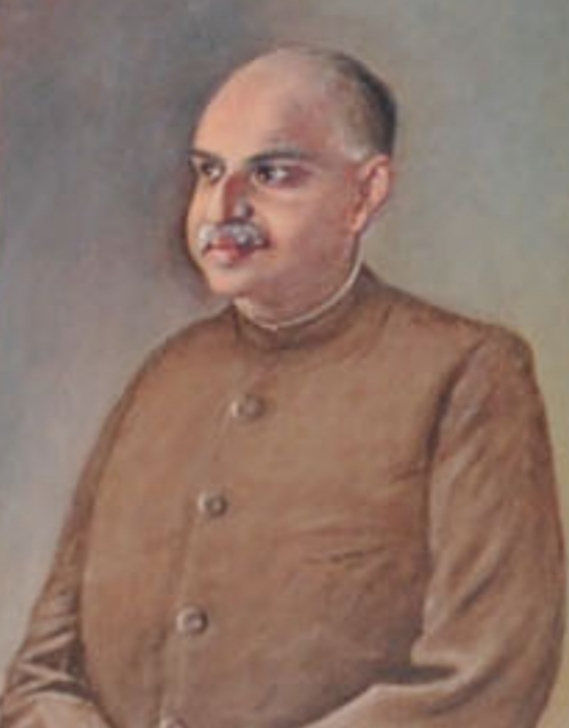
| founder | Shyama Prasad Mukherjee | ||
| merged | Janata Party (1977–1980) | ||
| split | Hindu Mahasabha | ||
| ideology | Hindutva | ||
| Hindu nationalism | |||
| Integral humanism | |||
| National conservatism | |||
| Economic nationalism | |||
| position | Right-wing to far-right | ||
| symbol | [[File:Oil lamp.svgclass=skin-invert | 120px | Diya, a traditional oil lamp, was the symbol of the party]] |
| successor | Bharatiya Janata Party (1980–present) | ||
| dissolved | |||
| colours | Saffron |
Hindu nationalism Integral humanism National conservatism Economic nationalism The Bharatiya Jana Sangh (abbreviated as BJS or JS, short name: Jan Sangh; ) was a Hindutva political party active in India. It was established on 21 October 1951 in Delhi by Shyama Prasad Mukherjee. Jan Sangh was the political arm of Rashtriya Swayamsevak Sangh (RSS), a right-wing Hindutva paramilitary organisation. In 1977, it merged with several other left, centre, and right parties opposed to the Indian National Congress and formed the Janata Party. In 1980, the members of the erstwhile Jan Sangh quit Janata Party after its defeat in the 1980 general election and formed the Bharatiya Janata Party, which is the direct political successor to the Jan Sangh. In Bihar, Ramdeo Mahto considered as founding leader of Bharatiya Janata Party – Bihar, because he brought BJP Into the power in Bihar, he elected as a candidate of Bhartiya Jana Sangh to Bihar Legislative Assembly in 1969 Assembly elections from Patna East Assembly constituency.
Origins
Many members of the RSS contemplated the formation of a political party during the days of the British Raj, in an attempt to take their ideology further. Around the same time, Shyama Prasad Mukherjee left the Hindu Mahasabha political party that he had once led because of a disagreement with that party over permitting non-Hindu membership.
There were two main reasons for the formation of Jan Sangh, those being the Liaquat–Nehru Pact and the ban on the RSS after the assassination of Mahatma Gandhi.
The state level units of the party were already established in Punjab, P.E.P.S.U. (Patiala and East Punjab States Union), Delhi, West Bengal, Rajasthan, Uttar Pradesh, Madhya Bharat before the party was formally founded at national level. The Bharatiya Jana Sangh was subsequently founded by Mukherjee on 21 October 1951 in Delhi under the RSS, as a "nationalistic alternative" to the Indian National Congress.
History
The first plenary session of Jan Sangh was held at Kanpur in December 1952.
After the death of Mukherjee in 1953, RSS activists in the BJS edged out the career politicians and made it a political arm of the RSS and an integral part of the RSS family of organisations (Sangh Parivar).
The strongest election performance of the BJS came in the 1967 Lok Sabha election in which it won 35 seats,
The party secured six out of seven parliamentary seats in Delhi and went on to wrest control of the Metropolitan Council and Municipal corporation.
Ideology
Main article: Hindutva
When BJS was formed, an 8-point programme was adopted.This formed the core of its ideology over the next years.
The BJS leadership fervently supported a strong policy against Pakistan and China, and were averse to communism and the Soviet Union. Many BJS leaders also initiated the drive to ban cow slaughter nationwide in the early 1960s. Establishment of full relations with Israel was also a demand in the party manifesto. Uniform Civil Code was mentioned in the 1967 manifesto which said that the party would enact UCC if it came to power.
List of presidents
| # | Portrait | Name | Term | |
|---|---|---|---|---|
| 1 | [[File:Dr. Syama Prasad Mookerjee.jpg | 96x96px]] | Shyama Prasad Mukherjee | 1951–52 |
| 2 | Mauli Chandra Sharma | 1954 | ||
| 3 | Prem Nath Dogra | 1955 | ||
| 4 | Debaprasad Ghosh | 1956–59 | ||
| 5 | Pitamber Das | 1960 | ||
| 6 | Avasarala Rama Rao | 1961 | ||
| (4) | Debaprasad Ghosh | 1962 | ||
| 7 | Raghu Vira | 1963 | ||
| (4) | Debaprasad Ghosh | 1964 | ||
| 8 | Bachhraj Vyas | 1965 | ||
| 9 | Balraj Madhok | 1966 | ||
| 10 | [[File:Deendayal Upadhyaya 2018 stamp of India.jpg | 101x101px]] | Deendayal Upadhyaya | 1967–68 |
| 11 | [[File:Atal Bihari Vajpayee tribute image (cropped).jpg | 91x91px]] | Atal Bihari Vajpayee | 1968–72 |
| 12 | [[File:Lkadvani.jpg | 100x100px]] | L. K. Advani | 1973–77 |
| See List of national presidents of the Bharatiya Janata Party |
In general elections
The Bharatiya Jana Sangh was created in 1951, and the first general election it contested was in 1951–52, in which it won only three Lok Sabha seats, in line with the four seats won by Hindu Mahasabha and three seats won by Ram Rajya Parishad. Shyama Prasad Mukherjee and Durga Charan Banerjee were elected from Calcutta South East constituency and Midnapore Jhargram constituency in West Bengal and Uma Shankar Trivedi from Chittor constituency in Rajasthan. All the like-minded parties formed a block in the Parliament, led by Shyama Prasad Mukherjee.
References
Sources
References
- "Founding of Jan Sangh".
- Thachil, Tariq. (2014). "Elite Parties, Poor Voters". Cambridge University Press.
- Graham, Bruce D.. "The Jana Sangh as a Nationalist Rally". Cambridge University Press.
- Kochanek, Stanley. (2007). "India: Government and Politics in a Developing Nation". Cengage Learning.
- Baxter, Craig. (1969). "The Jana Sangh: a biography of an Indian political party". University of Pennsylvania Press.
- Marty, Martin E.. (1996). "Fundamentalisms and the State". University of Chicago Press.
- Field, John Osgood. "Electoral Politics in the Indian States". Manohar Book Service.
- (11 March 2024). "Israeli Diplomats Forged Deep Ties With Hindu Right Wing From Early '60s, Documents Reveal".
- (1968). "Soundings in Modern South Asian History". University of California Press.
- "Bharatiya Jana Sangh". [[Treccani]].
- "Bharatiya Jana Sangh".
- F. N. Orlov. "БХАРАТИЯ ДЖАНА САНГХ".
- [[A. G. Noorani]]. (2000). "The RSS and the BJP: A Division of Labour". LeftWord Books.
- (23 June 2021). "Syama Prasad Mookerjee: Lesser-known facts about the Bharatiya Jana Sangh founder".
- Ahmad, Kabool. (7 April 2023). "BJP's 43 years: How it emerged from Jana Sangh and became world's largest party".
- (21 October 2021). "Jana Sangh was formed on this day 70 yrs ago. How its ideology is reflected in today's BJP".
- Sharad Gupta. (18 January 2000). "Revive Jan Sangh – BJP hardlines". [[The Indian Express]].
- Madhok, Madhuri. (20 October 2018). "Time to remember Jana Sangh's history".
- Kanungo, Pralaya. (November 2006). "Myth of the Monolith: The RSS Wrestles to Discipline Its Political Progeny". Social Scientist.
- "General Election of India 1967, 4th Lok Sabha". Election Commission of India.
- Vohra, Pankaj. (20 October 2018). "Jana Sangh-BJP saga started in Delhi".
- (21 October 2020). "On this day 69 years ago, 200 leaders formed Jana Sangh. It is now the BJP".
- (8 November 2016). "Anti-cow slaughter mob storms Parliament {{!}} From the Archives (dated 8 November 1966)". The Hindu.
- (8 February 2024). "Uniform Civil Code: A core agenda for BJP, UCC's political genesis dates back to Jana Sangh days". Financial Express.
This article was imported from Wikipedia and is available under the Creative Commons Attribution-ShareAlike 4.0 License. Content has been adapted to SurfDoc format. Original contributors can be found on the article history page.
Ask Mako anything about Bharatiya Jana Sangh — get instant answers, deeper analysis, and related topics.
Research with MakoFree with your Surf account
Create a free account to save articles, ask Mako questions, and organize your research.
Sign up freeThis content may have been generated or modified by AI. CloudSurf Software LLC is not responsible for the accuracy, completeness, or reliability of AI-generated content. Always verify important information from primary sources.
Report