From Surf Wiki (app.surf) — the open knowledge base
Berry (botany)
Botanical fruit with fleshy pericarp, containing one or many seeds

Botanical fruit with fleshy pericarp, containing one or many seeds
_1_Luc_Viatour.jpg)
In botany, a berry is a fleshy fruit produced from a single flower containing one ovary. Berries so defined include grapes, currants, and tomatoes, as well as cucumbers, eggplants (aubergines), persimmons and bananas, but exclude certain fruits that meet the culinary definition of berries, such as strawberries and raspberries. The berry is the most common type of fleshy fruit in which the entire outer layer of the ovary wall ripens into a potentially edible "pericarp". Berries may be formed from one or more carpels from the same flower (i.e. from a simple or a compound ovary). The seeds are usually embedded in the fleshy interior of the ovary, but there are some non-fleshy exceptions, such as Capsicum species, with air rather than pulp around their seeds.
Many berries are edible, but others, such as the fruits of the potato and the deadly nightshade, are poisonous to humans.
A plant that bears berries is said to be bacciferous or baccate (from Latin **).
In everyday English, a "berry" is any small edible fruit. Berries are usually juicy, round, brightly coloured, sweet or sour, and do not have a stone or pit, although many small seeds may be present.
Botanical berries


In botanical language, a berry is a simple fruit having seeds and fleshy pulp (the pericarp) produced from the ovary of a single flower. The ovary can be inferior or superior. It is indehiscent, i.e. it does not have a special "line of weakness" along which it splits to release the seeds when ripe. The pericarp is divided into three layers. The outer layer is called the "exocarp" or "epicarp"; the middle layer, the "mesocarp" or "sarcocarp"; the inner layer, the "endocarp". Botanists have not applied these terms consistently. Exocarp and endocarp may be restricted to more-or-less single-layered "skins", or may include tissues adjacent to them; thus on one view, the exocarp extends inwards to the layer of vascular bundles ("veins"). The inconsistency in usage has been described as "a source of confusion".
The nature of the endocarp distinguishes a berry from a drupe, which has a hardened or stony endocarp (see also below). The two kinds of fruit intergrade, depending on the state of the endocarp. Some sources have attempted to quantify the difference, e.g. requiring the endocarp to be less than 2 mm thick in a berry.
Examples of botanical berries include:
- Avocado contains a single large seed surrounded by an imperceptible endocarp. Avocados are, however, also sometimes classified as drupes.
- Banana
- Barberry (Berberis), Oregon-grape (Berberis aquifolium) and mayapple (Podophyllum spp.) (Berberidaceae)
- Strawberry tree (Arbutus unedo) (not to be confused with the strawberry (Fragaria), which is an accessory fruit), bearberry (Arctostaphylos spp.), bilberry, blueberry, cranberry, lingonberry/cowberry (Vaccinium vitis-idaea), crowberry (Empetrum spp.) (family Ericaceae)
- Coffee berries (Rubiaceae) (also described as drupes)
- Gooseberry and currant (Ribes spp.; Grossulariaceae), red, black, and white types
- Aubergine/Eggplant, tomato, goji berries (wolfberry) and other species of the family Solanaceae
- Elderberry (Sambucus niger; Adoxaceae)
- Indian gooseberry (Phyllanthus emblica) (Phyllanthaceae)
- Garcinia gummi-gutta, Garcinia mangostana (mangosteen) and Garcinia indica in the family Clusiaceae
- Sapodilla (Manilkara zapota), Sapotaceae
- Grape, Vitis vinifera in the family Vitaceae
- Honeysuckle: the berries of some species are edible and are called honeyberries, but others are poisonous (Lonicera spp.; Caprifoliaceae)
- Persimmon (Ebenaceae)
- Pumpkin, cucumber and watermelon in the family Cucurbitaceae File:Akebia quinata (fruits s13).jpg|Akebi File:Fuyu Persimmon (Diospyros Kaki).jpg|Persimmon File:Starr-140925-2018-Pouteria caimito-fruit-Pali o Waipio Huelo-Maui (24616024964).jpg|Abiu File:Cantaloupes.jpg|Cantaloupe File:Ackee 001.jpg|Ackee
Modified berries

"True berries", or "baccae", may also be required to have a thin outer skin, not self-supporting when removed from the berry. This distinguishes, for example, a Vaccinium or Solanum berry from an Adansonia (baobab) amphisarca, which has a dry, more rigid and self-supporting skin. The fruit of citrus, such as the orange, kumquat and lemon, is a berry with a thick rind and a very juicy interior divided into segments by septa, which is given the special name "hesperidium". A special term, pepo, is also used for fruits of the gourd family, Cucurbitaceae, which have a hard outer rind but are not internally divided by septa. The fruits of Passiflora (passion fruit) and Carica (papaya) are sometimes also considered pepos.
Berries that develop from an inferior ovary are sometimes termed epigynous berries or false berries, as opposed to true berries, which develop from a superior ovary. In epigynous berries, the berry includes tissue derived from parts of the flower other than the ovary. The floral tube, formed from the basal part of the sepals, petals, and stamens, can become fleshy at maturity and is united with the ovary to form the fruit. Common fruits that are sometimes classified as epigynous berries include bananas, coffee, members of the genus Vaccinium (e.g., cranberries and blueberries), and members of the family Cucurbitaceae (gourds, cucumbers, melons and squash).
Berry-like fruits
Berry-like Many fruits which are berries in the culinary definition are not berries in the botanic sense, but fall into one of the following categories:
Drupes
Main article: Drupe
Drupes are varyingly distinguished from botanical berries. Drupes are fleshy fruits produced from a (usually) single-seeded ovary with a hard woody layer (called the endocarp) surrounding the seed. Familiar examples include the stonefruits of the genus Prunus (peaches, plums and cherries), olives, coconut, dates, bayberry and Persea species. Some definitions make the mere presence of an internally differentiated endocarp the defining feature of a drupe; others qualify the nature of the endocarp required in a drupe, e.g. defining berries to have endocarp less than 2 mm thick. The term "drupaceous" is used to describe fruits that have the general structure and texture of a drupe, without necessarily meeting the full definition. Other drupe-like fruits with a single seed that lack the stony endocarp include sea-buckthorn (Hippophae rhamnoides, Elaeagnaceae), which is an achene, surrounded by a swollen hypanthium that provides the fleshy layer. Fruits of Coffea species are described as either drupes or berries.
Pomes
Main article: Pome
The pome fruits produced by plants in subtribe Pyrinae of family Rosaceae, such as apples and pears, have a structure (the core) in which tough tissue separates the seeds from the outer softer pericarp. Although pomes are not botanical berries, Amelanchier pomes become soft at maturity, resembling a blueberry, and are commonly called Juneberries, serviceberries or Saskatoon berries.
Aggregate fruits
Main article: Aggregate fruit
Aggregate or compound fruits contain seeds from different ovaries of a single flower, with the individual "fruitlets" joined at maturity to form the complete fruit. are not usually called "berries", although some sources do use this term.
Multiple fruits
Main article: Multiple fruit
Multiple fruits are not botanical berries. Multiple fruits are the fruits of two or more multiple flowers that are merged or packed closely together. The mulberry is a berry-like example of a multiple fruit; it develops from a cluster of tiny separate flowers that become compressed as they develop into fruit.
Accessory fruits
Main article: Accessory fruit
Accessory fruits are not botanical berries. In accessory fruits, the edible part is not generated by the ovary. Berry-like examples include:
- Strawberry – the non-fleshy aggregate of seed-like achenes on its exterior is actually the "fruit", derived from an aggregate of ovaries; the fleshy part develops instead from the receptacle.
- Mock strawberry (Duchesnea indica) – structured just like a strawberry.
- Sea grape (Coccoloba uvifera; Polygonaceae) – the fruit is a dry capsule surrounded by fleshy calyx.
Berry-like conifer seed cones

The female seed cones of some conifers have fleshy and merged scales, giving them a berry-like appearance. Juniper "berries" (family Cupressaceae), in particular those of Juniperus communis, are used to flavour gin. The seed cones of species in the families Podocarpaceae and Taxaceae have a bright colour when fully developed, increasing the resemblance to true berries. The "berries" of yews (Taxus species) consist of a female seed cone with which develops a fleshy red aril partially enclosing the poisonous seed.
History of terminology

The Latin word baca or bacca (plural baccae) was originally used for "any small round fruit". Andrea Caesalpinus (1519–1603) classified plants into trees and herbs, further dividing them by properties of their flowers and fruit. He did not make the modern distinction between "fruits" and "seeds", calling hard structures like nuts semina or seeds. A fleshy fruit was called a pericarpium. For Caesalpinus, a true bacca or berry was a pericarpium derived from a flower with a superior ovary; one derived from a flower with an inferior ovary was called a pomum.
In 1751, Carl Linnaeus wrote Philosophia Botanica, considered to be the first textbook of descriptive systematic botany. He used eight different terms for fruits, one of which was bacca or berry, distinguished from other types of fruit such as drupa (drupe) and pomum (pome). A bacca was defined as "pericarpium farctum evalve, semina ceteroquin nuda continens", meaning "unvalved solid pericarp, containing otherwise naked seeds". The adjective "farctus" here has the sense of "solid with tissue softer than the outside; stuffed". A berry or bacca was distinguished from a drupe and a pome, both of which also had an unvalved solid pericarp; a drupe also contained a nut (nux) and a pome a capsule (capsula), rather than the berry's naked seeds. Linnaeus' use of bacca and pomum was thus significantly different from that of Caesalpinus. Botanists continue to differ on how fruit should be classified.
Joseph Gaertner published a two-volume work, De Fructibus et Seminibus Plantarum (on the fruits and seeds of plants) between 1788 and 1792. In addition to Linnaeus' eight terms, he introduced seven more, including pepo for the berry-like fruits of cucurbits. A pepo was distinguished by being a fleshy berry with the seeds distant from the axis, and so nearer the fruit wall (i.e. by having "parietal placentation" in modern terminology). Nicaise Auguste Desvaux in 1813 used the terms hesperidium and amphisarca as further subdivisions of berries. A hesperidium, called by others bacca corticata (berry with a cortex), had separate internal compartments ("loges" in the original French) and a separable membraneous epicarp or skin. An amphisarca was described as woody on the outside and fleshy on the inside. "Hesperidium" remains in general use, but "amphisarca" is rarely used.
There remains no universally agreed system of classification for fruits, and there continues to be "confusion over classification of fruit types and the definitions given to fruit terms".
Evolution and phylogenetic significance

By definition, berries have a fleshy, indehiscent pericarp, as opposed to a dry, dehiscent pericarp. Fossils show that early flowering plants had dry fruits; fleshy fruits, such as berries or drupes, appeared only towards the end of the Cretaceous Period or the beginning of the Paleogene Period, about . The increasing importance of seed dispersal by fruit-eating vertebrates, both mammals and birds, may have driven the evolution of fleshy fruits. Alternatively, the causal direction may be the other way around. Large fleshy fruits are associated with moist habitats with closed tree canopies, where wind dispersal of dry fruits is less effective. Such habitats were increasingly common in the Paleogene and the associated change in fruit type may have led to the evolution of fruit-eating in mammals and birds.
Fruit type has been considered to be a useful character in classification and in understanding the phylogeny of plants. The evolution of fruits with a berry-like pericarp has been studied in various flowering plant families. Repeated transitions between fleshy and dry pericarps have been demonstrated regularly. One well-studied family is the Solanaceae, because of the commercial importance of fruit such as tomatoes, bell peppers, and eggplants or aubergines. Capsules, which are dry dehiscent fruits, appear to be the original form of the fruit in the earliest diverging members of the family. Berries have then evolved at least three times: in Cestrum, Duboisia, and in the subfamily Solanoideae. Detailed anatomical and developmental studies have shown that the berries of Cestrum and those of the Solanoideae are significantly different; for example, expansion of the fruit during development involves cell divisions in the mesocarp in Solanoideae berries, but not in Cestrum berries.
When fruits described as berries were studied in the family Melastomaceae, they were found to be highly variable in structure, some being soft with an endocarp that soon broke down, others having a hard, persistent endocarp, even woody in some species. Fruits classified as berries are thus not necessarily homologous, with the fleshy part being derived from different parts of the ovary, and with other structural and developmental differences. The presence or absence of berries is not a reliable guide to phylogeny. Indeed, fruit type in general has proved to be an unreliable guide to flowering plant relationships.
Uses
Culinary


Berries, defined loosely, have been valuable as a food source to humans since before the start of agriculture, and remain among the primary food sources of other primates. Botanically defined berries with culinary uses include:
- Berries in the strictest sense: including bananas and plantains, blueberries, cranberries, coffee berries, gooseberries, red-, black- and white currants, tomatoes, grapes and peppers (Capsicum fruits)
- Hesperidia: citrus fruits, including oranges, lemons and limes
- Pepos: cucurbits, including squashes, cucumbers, melons and watermelons
Some berries are brightly coloured, due to plant pigments such as anthocyanins and other flavonoids. These pigments are localized mainly in the outer surface and the seeds. Such pigments have antioxidant properties in vitro, but there is no reliable evidence that they have antioxidant or any other useful functions within the human body. Consequently, it is not permitted to claim that foods containing plant pigments have antioxidant health value on product labels in the United States or Europe.
Some spices are prepared from berries. Allspice is made from the dried berries of Pimenta dioica. The fruits (berries) of different cultivars of Capsicum annuum are used to make paprika (mildly hot), chili pepper (hot) and cayenne pepper (very hot).
Others
Pepos, characterized by a hard outer rind, have also been used as containers by removing the inner flesh and seeds and then drying the remaining exocarp. The English name of Lagenaria siceraria, "bottle gourd", reflects its use as a liquid container.
Some true berries have also been used as a source of dyes. In Hawaii, these included berries from a species of Dianella, used to produce blue, and berries from black nightshade (Solanum americanum), used to produce green.
History
Cucurbit berries or pepos, particularly from Cucurbita and Lagenaria, are the earliest plants known to be domesticated – before 9,000–10,000 BP in the Americas, and probably by 12,000–13,000 BP in Asia. Peppers were domesticated in Mesoamerica by 8,000 BP. Many other early cultivated plants were also berries by the strict botanical definition, including grapes, domesticated by 8,000 BP and known to have been used in wine production by 6,000 BP.
Bananas were first domesticated in Papua New Guinea and Southeast Asia. Archaeological and palaeoenvironmental evidence at Kuk Swamp in the Western Highlands Province of Papua New Guinea suggests that banana cultivation there goes back to at least 7,000 BP, and possibly to 10,000 BP.
The history of cultivated citrus fruit remains unclear, although some recent research suggests a possible origin in Papuasia rather than continental southeast Asia. Chinese documents show that mandarins and pomelos were established in cultivation there by around 4,200 BP.
Commercial production
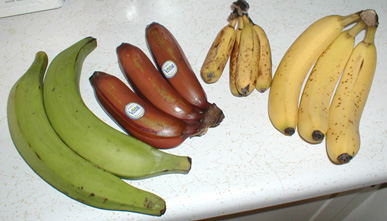

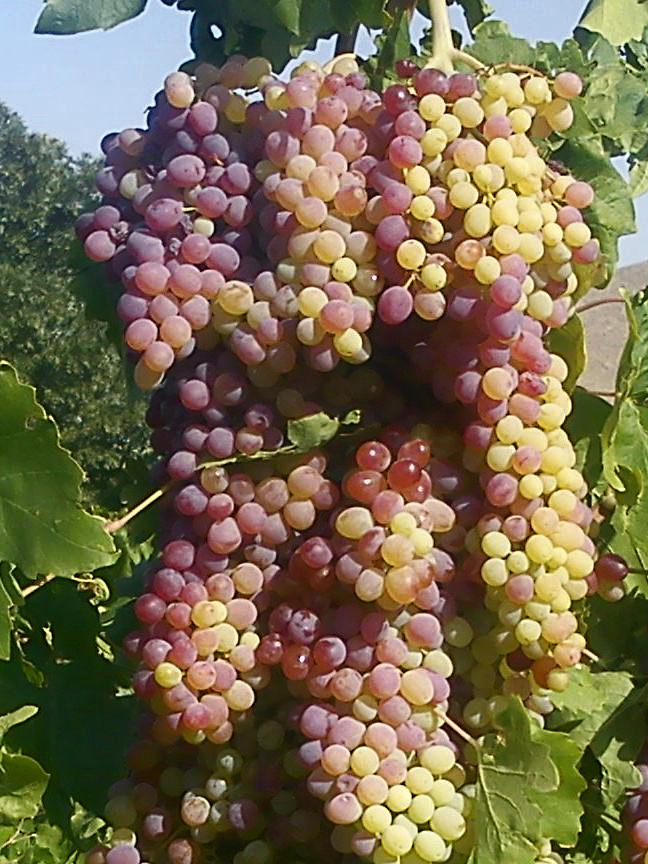
According to FAOSTAT data, in 2013 four of the five top fruit crops in terms of world production by weight were botanical berries. The other was a pome (apples).
| Name | Thousands of tonnes | Fruit type |
|---|---|---|
| Bananas & plantains | 144,592 | Berry |
| Citrus fruit† | 135,761 | Berry (hesperidium) |
| Watermelons | 109,279 | Berry (pepo) |
| Apples | 80,823 | Pome |
| Grapes | 77,181 | Berry |
†Citrus fruit includes but is not limited to, oranges, lemons, limes, grapefruit (including pomelos), tangerines, mandarins, clementines, and satsumas. Oranges make up 53% of the total.
According to FAOSTAT, in 2001, bananas (including plantains) and citrus comprised over 25% by value of the world's exported fruits and vegetables, citrus fruits being more valuable than bananas. Export quantities of fruit are not entirely comparable with production quantities, since slightly different categories are used. The top five fruit exports by weight in 2012 are shown in the table below. Bananas and citrus occupy the top two places.
| Name | Thousands of tonnes | Fruit type |
|---|---|---|
| Bananas & plantains | 19,725 | Berry |
| Citrus fruit† | 15,262 | Berry (hesperidium) |
| Apples | 8,271 | Pome |
| Prepared fruit‡ | 7,120 | – |
| Grapes | 4,051 | Berry |
‡Prepared fruit here is "fruit, nuts and peel, including frozen, prepared or preserved, jam, paste, marmalade, purée and cooked fruits, other than those listed separately".}}
Notes
References
References
- (2017). "Ultimate Visual Dictionary". Dorling Kindersley Publishing.
- (2023). "The origin and evolution of carpels and fruits from an evo-devo perspective". Journal of Integrative Plant Biology.
- Storey, W. B.. (1973). "What kind of fruit is the avocado?". California Avocado Society 1973–74 Yearbook.
- "Flora of North America ''(online)''". eFloras.org.
- (2006). "An annotated taxonomic conspectus of the genus ''Coffea'' (Rubiaceae)". Botanical Journal of the Linnean Society.
- (2007). "Flowering plant families of the world". Firefly Books.
- Mabberley, D.J.. (1978). "Flowering Plants of the World". Oxford University Press.
- "Annonaceae".
- "Definition and Classification of Commodities: 8 Fruits and derived products". Food and Agriculture Organization of the United Nations.
- (1 June 2009). "Genetic diversity and structure in semiwild and domesticated chilies (''Capsicum annuum''; Solanaceae) from Mexico". American Journal of Botany.
- American Heritage Dictionary. (2005). "The American Heritage Science Dictionary". Houghton Mifflin Harcourt.
- "Tracing antiquity of banana cultivation in Papua New Guinea". The Australia & Pacific Science Foundation.
- Armstrong, Wayne P.. "Identification Of Major Fruit Types". Wayne's Word: An On-Line Textbook of Natural History.
- (2010). "The Kew Plant Glossary: an Illustrated Dictionary of Plant Terms". Kew Publishing.
- (2000). "Correlations among fruit traits and evolution of different fruits within Melastomataceae". Botanical Journal of the Linnean Society.
- (2003). "Origins of Agriculture at Kuk Swamp in the Highlands of New Guinea". Science.
- Desvaux, N.A.. (1813). "Essai sur les différens genres de fruits des plantes phanérogames". Journal de Botanique, appliqué a l'Agriculture, a la Pharmacie, a la Médecine, et aux Arts.
- "Oldest Winery Unearthed in Armenian Cave".
- ((EFSA Panel on Dietetic Products, Nutrition and Allergies (NDA)2, 3)). (2010). "Scientific Opinion on the substantiation of health claims related to various food(s)/food constituent(s) and protection of cells from premature aging, antioxidant activity, antioxidant content, and antioxidant properties, and protection of DNA, proteins, and lipids from oxidative damage pursuant to Article 13(1) of Regulation (EC) No 1924/20061". European Food Safety Authority.
- (13 December 2005). "An Asian origin for a 10,000-year-old domesticated plant in the Americas". Proceedings of the National Academy of Sciences.
- "Overview of World Banana Production and Trade".
- (June 2008). "Guidance for Industry, Food Labeling; Nutrient Content Claims; Definition for "High Potency" and Definition for "Antioxidant" for Use in Nutrient Content Claims for Dietary Supplements and Conventional Foods". U.S. Department of Health and Human Services, Food and Drug Administration, Center for Food Safety and Applied Nutrition.
- "Flora of North America ''(online)''". eFloras.org.
- "Download data". Food and Agriculture Organization of the United Nations Statistics Division (FAOSTAT).
- "Flora of China ''(online)''". eFloras.org.
- Gaertner, Joseph. (1788–1792). "De Fructibus et Seminibus Plantarum".
- Gupta, P.K.. (2007). "Genetics Classical To Modern". Rastogi Publications.
- "International Citrus Congress Home Page".
- (2001). "Find term 'aggregate fruit'".
- (2001). "Find term 'berry'".
- (2001). "Find term 'drupaceous'".
- (2001). "Find term 'multiple fruit'".
- (2001). "Find term 'pome'".
- Knapp, Sandra. (2002). "Tobacco to tomatoes: a phylogenetic perspective on fruit diversity in the Solanaceae". Journal of Experimental Botany.
- (21 April 2014). "Multiple lines of evidence for the origin of domesticated chili pepper, ''Capsicum annuum'', in Mexico". Proceedings of the National Academy of Sciences.
- Krohn-Ching, V.. (1980). "Hawaii Dye Plants and Dye Recipes". University Press of Hawaii.
- Linnaeus, Carl. (1751). "Philosophia botanica". R. Kiesewetter, Z. Chatelain.
- (2009). "Anatomy and development of fruits of Lauraceae from the Middle Eocene Princeton Chert". American Journal of Botany.
- (2012). "History, Global Distribution, and Nutritional Importance of Citrus Fruits". Comprehensive Reviews in Food Science and Food Safety.
- Morton, Julia. "Banana". Hort.purdue.edu.
- (18 January 2011). "Genetic structure and domestication history of the grape". Proceedings of the National Academy of Sciences.
- (21 January 2024). "Berry". Merriam-Webster.
- (2011). "Comparative anatomical and developmental analysis of dry and fleshy fruits of Solanaceae". American Journal of Botany.
- "Classification of Fruit Types". The World Botanical Associates.
- "The Need for Standardized Meanings to Fruit Terms: An Historical Perspective". The World Botanical Associates.
- Stace, Clive. (2010). "New Flora of the British Isles". Cambridge University Press.
- Stearn, W.T.. (2004). "Botanical Latin". Timber Press.
- "Grapes domesticated 8,000 years ago".
- (1913). "Makers of British Botany". Cambridge University Press.
- "WBF: The World Banana Forum".
- Weiss, E.A.. (2002). "Spice Crops". CABI.
- Wrolstad, R.E.. (2001). "The Possible Health Benefits of Anthocyanin Pigments and Polyphenolics". Linus Pauling Institute, Oregon State University, Corvallis.
- (June 2004). "Lipophilic and hydrophilic antioxidant capacities of common foods in the United States". [[Journal of Agricultural and Food Chemistry]].
This article was imported from Wikipedia and is available under the Creative Commons Attribution-ShareAlike 4.0 License. Content has been adapted to SurfDoc format. Original contributors can be found on the article history page.
Ask Mako anything about Berry (botany) — get instant answers, deeper analysis, and related topics.
Research with MakoFree with your Surf account
Create a free account to save articles, ask Mako questions, and organize your research.
Sign up freeThis content may have been generated or modified by AI. CloudSurf Software LLC is not responsible for the accuracy, completeness, or reliability of AI-generated content. Always verify important information from primary sources.
Report