From Surf Wiki (app.surf) — the open knowledge base
Bentley 8 Litre

| Field | Value |
|---|---|
| name | Bentley 8 Litre chassis |
| manufacturer | Bentley Motors Limited |
| image | Bentley 8-Litre Weymann saloon by Mulliner 5577867444 (cropped).jpg |
| caption | Weymann saloon by Mulliner the second car made and |
| W. O. Bentley's personal transport | |
| production | |
| assembly | United Kingdom: Cricklewood, London |
| class | Ultra-luxury car |
| body_style | purchaser to arrange with own coachbuilder |
| layout | FR layout |
| transmission | |
| engine | SOHC 8 L I6 |
| wheelbase | |
| length | |
| width | 68.5 in |
| height | depending on coachwork |
| weight | 2.5 tonnes (5500 lb.) or more, depending on coachwork |
| related | Bentley 4-Litre (economy version) |
| designer | W. O. Bentley |
| sp | uk |
W. O. Bentley's personal transport
The Bentley 8 Litre was a large inline 6-cylinder luxury car made in various configurations by Bentley Motors Limited at Cricklewood, London. Announced 15 September 1930, it was also the last completely new model by Bentley before the company's financial collapse and forced sale to Rolls-Royce Limited.
A Bentley 4 Litre featuring a 4-litre, inline-6 engine in a shortened chassis was announced on 15 May 1931.
Introduced a year into the Great Depression, the 8-litre and its smaller 4-litre sibling were unable to turn the company's finances around. Less than nine months after the 8-litre's introduction, Bentley Motors was placed into receivership.
Design and specifications
Engine
The straight-six engine used a one-piece cast-iron block and non-detachable cylinder head with a crankcase made from Elektron, a magnesium alloy. It featured an overhead camshaft driven by a Bentley patented "three-throw drive" system of triple coupling rods with, like all earlier Bentleys, four valves per cylinder and twin-spark ignition (separate coil and magneto systems), which were state-of-the-art at the time. The engine had a bore of 110 mm and a stroke of 140 mm, giving a capacity of 7983 cc. Pistons were of an aluminium alloy.
Both engine and gearbox were mounted each at three points on rubber to isolate the chassis and body from vibration.
Transmission
An entirely new design of four-speed gearbox provided four speeds (constant mesh third) and reverse with a single-plate dry clutch which sent power through a hypoid bevel final drive to the rear axle and its 21" Rudge-Whitworth wire centre-lock wheels.
Chassis
The 8 Litre was built on Bentley's largest rolling chassis, a ladder frame with large tubular steel crossmembers downswept from the front and rear axles towards the centre to lower the centre of gravity.
Neither engine nor gearbox contributed to the bracing of the chassis.
Suspension by long semi-elliptic leaf springs was controlled by double-acting dampers, friction on the front and hydraulic on the rear axle, and all four wheels were fitted with Dewandre vacuum-servo-assisted 400 mm drum brakes, the forward brakes being of Bentley-Perrott design.
Steering was by worm and sector and castor action could be adjusted to suit individual taste.
There was centralised chassis lubrication including the gaitered springs but not for the front axle or the clutch withdrawal system.
The 8-Litre chassis was available with either a 144 in wheelbase or a longer 156 in wheelbase. Three were built with a 138 in wheelbase.
The manufacturer claimed a maximum speed of approximately 125 mi/h. A speed in excess of 104 mi/h was guaranteed by the manufacturer, even when specified with the heaviest saloon bodies.
Reception
Announced on 15 September 1930 and launched at the London Olympia Motor Show in October 1930, the 8 Litre Bentley was noted for its tractability and smoothness; it could be driven from walking pace to highway speeds in top gear without effort.
As a result of the worldwide Great Depression, the 8 Litre did not sell well enough to improve Bentley's financial situation. The chassis was priced at £1,850, roughly equivalent to £293,000 in 2010.
Only 100 of these cars were made, of which 35 were on the shorter wheelbase. Fewer than 25 were fitted with open bodies. It is suggested that the cost of the development of the car was a prime reason for Bentley Motors going bankrupt.
Bentley made one more attempt at financial recovery by installing modified Ricardo 4-litre engines in a shortened 8-Litre chassis and selling the result as the Bentley 4 Litre. Announced on 15 May 1931, only 50 were made before Bentley Motors Ltd. was placed into receivership.
When Rolls-Royce bought Bentley Motors from the receiver in November 1931, it discontinued production of the 8-Litre and disposed of all spare parts for it.
Legacy
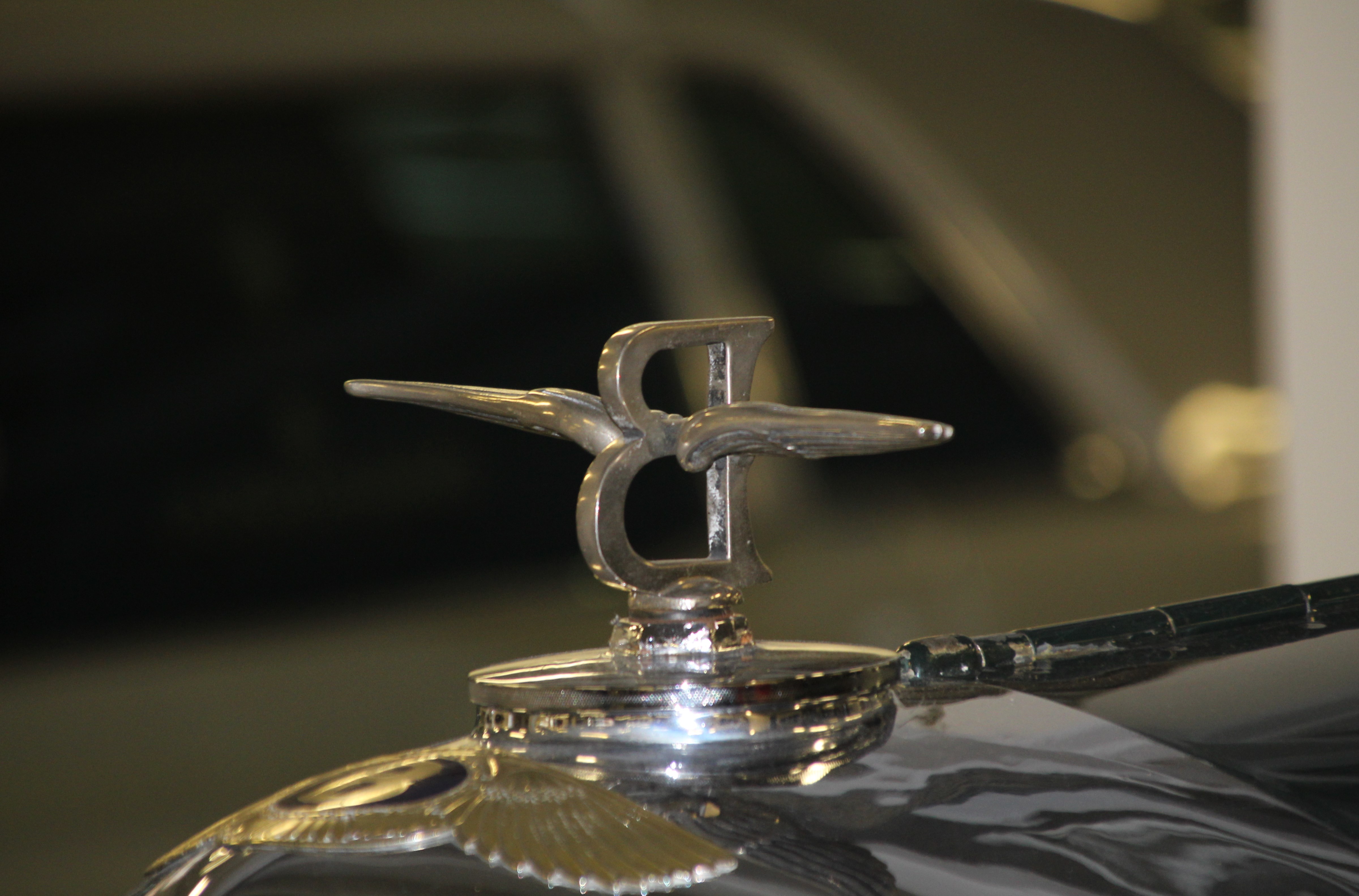
Seventy-eight Bentley 8 Litre cars were known to survive as at mid-2011. Many of these have had their original limousine or saloon bodies replaced by new replica tourer bodies. As a result, Bentley 8 Litres with original bodies are much sought after by collectors.
The only Bentley 8 Litre with an American body, which was also the first Bentley with an all-metal body, was built by the W.M. Murphy Company of Pasadena for a customer in Santa Barbara, California.
McKenzie's Garages, a specialist in Rolls-Royce and Bentley cars, modified four 8 Litres in the 1930s: YM5050 (given a shortened chassis, lowered radiator and bulkhead, and triple SU carburettors); YR5083 (with a higher-ratio rear axle and triple SU carburettors); YX5117 (with a lowered and shortened chassis and triple SU carburettors); and YX5121 (with a shortened and lowered chassis and a tuned engine)
File:1930 Bentley 8 Litre Weymann Saloon HCC25.jpg|1930 Bentley 8 Litre Weymann Saloon File:Bentley_8_Litre_saloon_by_Mulliner_1931_side.jpg|Bentley 8-litre saloon by H J Mulliner 1932 Chassis YM5039 File:Bentley_8_Litre_limousine_by_Mulliner_1930_f3q.jpg|Bentley 8-litre 4-light sports saloon Weymann fabric by H J Mulliner 1930 File:1931_Bentley_8_Litre_Tourer_Vanden_Plas.jpg|1931 Bentley 8 Litre Vanden Plas Tourer File:1931_Bentley_8_litre_Vanden_Plas_Tourer_3829418544.jpg|Bentley 8 litre Vanden Plas Tourer 1931 Chassis YX5115 File:1931_Bentley_8_Litre_LC23.jpg|1931 Bentley 8 Litre Folding Head Coupe SWB by Mulliner File:Bentley-8-litre-2-2.jpg|Saloon rebodied with a replica tourer body
Notes
References
References
- "A century of speed: Britain’s fastest cars".
- . ["1931 Bentley 8 Litre Chassis No. YF5001 Engine No. YF5001 Registration No. GK 672"](http://www.vintagebentleys.org/carpages/gk672.php#null). *Vintage Bentleys.org*.
- "Measuring Worth (Purchasing Power of British Pounds from 1270 to Present)".
- (2 March 2020). "1930→1932 Bentley 8 Litre".
- [[#VBO. History By Chassis – List of all W. O. Bentleys with original chassis nos. 8 Litre]] VintageBentleys.Org
- (15 September 1930). "Cars of 1931. (FROM OUR MOTORING CORRESPONDENT). The New Bentley, Silence and Vibration Studied.".
- (9 December 1930). "Cars of To-Day. (OUR MOTORING CORRESPONDENT). Eight-litre Bentley.".
- (15 May 1931). "Bentley Motors Limited. Display Advertising".
- (15 May 1931). "A New Bentley. (OUR MOTORING CORRESPONDENT).".
- . (25 January 1931). "A Great British Car the 8-lire Bentley.". *The Observer*.
- [[#YR5085. 1931 Bentley 8-Liter]], ''Conceptcarz''
- [[#Motorbase_Bitza. Lot 244: Bentley 4-Litre/8-Litre Le Mans-style Tourer]], ''Motorbase''
- [[#SportscarsTV. HISTORY OF MARQUES: BENTLEY – British]], ''Sportscars.TV''
- [[#VintageBentleyYX5121. 1931 Bentley 8 Litre Chassis No. YX5121 Engine No. YX5122 Registration no. GW 2926]], ''Vintage Bentleys .org''
This article was imported from Wikipedia and is available under the Creative Commons Attribution-ShareAlike 4.0 License. Content has been adapted to SurfDoc format. Original contributors can be found on the article history page.
Ask Mako anything about Bentley 8 Litre — get instant answers, deeper analysis, and related topics.
Research with MakoFree with your Surf account
Create a free account to save articles, ask Mako questions, and organize your research.
Sign up freeThis content may have been generated or modified by AI. CloudSurf Software LLC is not responsible for the accuracy, completeness, or reliability of AI-generated content. Always verify important information from primary sources.
Report