From Surf Wiki (app.surf) — the open knowledge base
Bell 206
Utility helicopter family by Bell

Utility helicopter family by Bell
| Field | Value |
|---|---|
| name | Bell 206 JetRanger/LongRanger |
| image | File:LAPD Bell 206 Jetranger.jpg |
| caption | An LAPD Bell 206 JetRanger |
| type | Multipurpose utility helicopter |
| national_origin | United States / Canada |
| manufacturer | Bell Helicopter |
| first_flight | December 8, 1962 (206) |
| January 10, 1966 (206A) | |
| introduction | 1967 |
| status | In service |
| primary_user | |
| more_users | |
| produced | 1962–2017 |
| number_built | 7,300 |
| developed_from | Bell YOH-4 |
| variants | Bell OH-58 Kiowa |
| Bell 407 | |
| developed_into | Bell 400 TwinRanger |
January 10, 1966 (206A) Bell 407
The Bell 206 is a family of two-bladed, single- and twin-engined helicopters, manufactured by Bell Helicopter at its Mirabel, Quebec, plant. Originally developed as the Bell YOH-4 for the United States Army's Light Observation Helicopter program, it was not selected by the Army. Bell redesigned the airframe and successfully marketed the aircraft commercially as the five-place Bell 206A JetRanger. The new design was eventually selected by the Army as the OH-58 Kiowa.
Bell also developed a seven-place LongRanger, which was later offered with a twin-engined option as the TwinRanger, while Tridair Helicopters offers a similar conversion of the LongRanger called the Gemini ST. The ICAO-assigned model designation "B06" is used on flight plans for the JetRanger and LongRanger, and the designation "B06T" is used for the twin-engined TwinRangers.
Development
Origins
On October 14, 1960, the United States Navy solicited responses from 25 aircraft manufacturers to a request for proposals (RFP) on behalf of the Army for the Light Observation Helicopter (LOH). Bell entered the competition along with 12 other manufacturers, including Hiller Aircraft and Hughes Tool Co., Aircraft Division. Bell submitted the D-250 design, which would be designated as the YHO-4. On May 19, 1961, Bell and Hiller were announced as winners of the design competition.
Bell developed the D-250 design into the Bell 206, redesignated as YOH-4A in 1962, and produced five prototype aircraft for the Army's test and evaluation phase. The first prototype flew on December 8, 1962. The YOH-4A also came to be known as "The Ugly Duckling" in comparison to the other contenders. Following a fly-off of the Bell, Hughes and Fairchild-Hiller prototypes, the Hughes OH-6 was selected in May 1965.
JetRanger
When the YOH-4A was eliminated by the Army, Bell went about marketing the aircraft. In addition to the image problem, the helicopter lacked cargo space and only provided cramped seating for three passengers. The solution was a redesigned fuselage, sleeker and aesthetically appealing, adding 16 ft3 of cargo space in the process. A Bell executive contributed to the redesign by drawing two lines on a sketch extending the fuselage to where it meets the tail. The redesign was designated Bell 206A, and Bell President Edwin J. Ducayet named it the JetRanger, denoting an evolution from the popular Model 47J Ranger.
Bell Helicopter ended production of the Bell 206B-3 version in 2010. Bell introduced the Bell 505 Jet Ranger X to replace the 206 five-seat versions from around 2015 and compete with the Robinson R66.
LongRanger
.jpg)
The 206L LongRanger is a stretched variant with seating for seven. The fuselage, stretched a total of 30 in, adds two rear-facing seats between the front and rear seats. Since 1975, Bell has produced more than 1,700 LongRangers across all variants. In 1981, a military version, the 206L TexasRanger was released. The original 206L used an Allison 250-C20R engine, and a series of model upgrades replaced this engine with more powerful versions; the 206L-1 used a 250-C28, and the 206L-3 and 206L-4 used the 250-C30P.
In both applications, the 250-C30P is derated from 650 hp for takeoff and 501 hp continuous. The 206L-3 is transmission-limited to 435 hp for take-off, and the 206L-4 is transmission-limited to 495 hp. The derating of the C30P produces an advantage in hot-day and high-altitude operations as it can produce the rated horsepower at higher altitudes and temperatures where applications that use the maximum rating of the engine at sea level suffer accelerated performance deterioration with increases in temperature and altitude. The 206L-3 and L-4 have not been offered in a twin configuration under those model designations.
In 2007, Bell announced an upgrade program for the 206L-1 and 206L-3 designed to modify the aircraft to the 206L-4 configuration; modified aircraft are designated 206L-1+ and 206L-3+. Modifications include strengthened structural components (including a new tailboom), improved transmission, upgraded engine for the L-1, all of which result in a maximum gross weight increase of 300 pounds and increased performance.
Production of the 206L-4 ended in June 2017 with over 3,800 LongRangers built.
Gemini ST and TwinRanger
The TwinRanger name dates from the mid-1980s when Bell developed the Bell 400 TwinRanger, but it never entered production.
In 1989, Tridair Helicopters began developing a twin-engine conversion of the LongRanger, the Gemini ST. The prototype's first flight was on January 16, 1991, while full FAA certification was awarded in November. Certification covers the conversion of LongRanger 206L-1s, L-3s and L-4s to Gemini ST configuration. In mid-1994 the Gemini ST was certificated as the first Single/Twin aircraft, allowing it to operate either as a single or twin engine aircraft throughout all phases of flight.
The Bell 206LT TwinRanger was a new-build production model equivalent to Tridair's Gemini ST, and was based on the 206L-4. Thirteen 206LTs were built, the first delivered in January 1994, and the last in 1997. The TwinRanger was replaced in Bell's lineup by the mostly-new Bell 427.
Operational history
.jpg)
The first Bell 206A flew on January 10, 1966, and the aircraft was revealed later that month at the Helicopter Association of America (HAA) convention. On October 20, 1966, the JetRanger received FAA certification. Delivery of the JetRanger to customers began on January 13, 1967, with the first aircraft being purchased by Harry Holly, CEO of the Hollymatic Corporation and previous owner of a Bell Ranger. In 1968, the United States Navy selected the 206A as its primary trainer, the TH-57 Sea Ranger. The Army also eventually selected the 206A for a light observation helicopter as the OH-58 Kiowa.
The basic shape and design of the JetRanger remained unchanged since 1967, but Bell introduced the 206B JetRanger II in 1971. In 1977, the 206B-3 JetRanger III was introduced with its modified tail rotor and more powerful engine. The JetRanger is popular with news media for traffic and news reporting. The LongRanger is commonly used as an air ambulance and as a corporate transport. On September 1, 1982, pilots H. Ross Perot, Jr. and Jay Coburn departed Dallas, Texas in the "Spirit of Texas", a Bell 206L-1 (N3911Z). They returned on 30 September, 29 days and 3 hours later, completing the first around-the-world helicopter flight.
The Bell 206B was first introduced to the Canadian market shortly after its certification in 1967. Its early adoption was driven by the booming resource industries of the time, particularly in oil and gas exploration, mining, and forestry. Its light weight, combined with the ability to land in rugged, remote locations, made it an ideal tool for transporting geologists, surveyors, and equipment to otherwise inaccessible areas of Canada's vast wilderness.
In the 1970s and 1980s, the JetRanger became a critical part of exploration in northern Canada, including the Yukon, Northwest Territories, and Arctic regions, where harsh weather conditions and rough terrain demanded a helicopter that could perform in all environments. The Bell 206B's durability and low operating cost also made it a favorite for these long, sometimes dangerous missions.
In 1983, Australian businessman Dick Smith became the first helicopter pilot to complete a solo trip around the world in 260 flight hours. During the trip, he landed his 206B-3 (S/N 3653; VH-DIK) on prepositioned container ships to refuel between Japan and the Aleutian Islands.
In 1993, the U.S. Army chose the Bell 206B-3 as the winner of the New Training Helicopter competition, to serve as its primary training helicopter, the TH-67 Creek. The number of TH-67s being divested by the Army is too small to impact civilian markets.
On July 22, 1994, Ron Bower landed his 206B-3 (N206AJ) at Hurst, Texas, setting a new record for around-the-world flight by a helicopter. Bower had departed on June 24 and returned 24 days, 4 hours, 36 minutes and 24 seconds later, averaging 35.62 kn. Bower had added a 91 USgal auxiliary fuel tank, which doubled the JetRanger III's range.
Variants
Civilian

;Bell 206: Five YOH-4A prototypes, for flight evaluation in the Army's LOH program (1963). ;Bell 206A: Initial production version, powered by an Allison 250-C18 turboshaft engine. FAA-certified in 1966. Selected as the OH-58A Kiowa in 1968. ;Agusta-Bell 206A: License-built in Italy. ;Bell 206A-1: OH-58A aircraft that are modified for FAA civil certification. ;Agusta-Bell 206A-1: License-built in Italy. ;Bell 206B: Upgraded Allison 250-C20 engine. ;Agusta-Bell 206B: License-built in Italy. ;Bell 206B-2: Bell 206B models upgraded with Bell 206B-3 improvements.
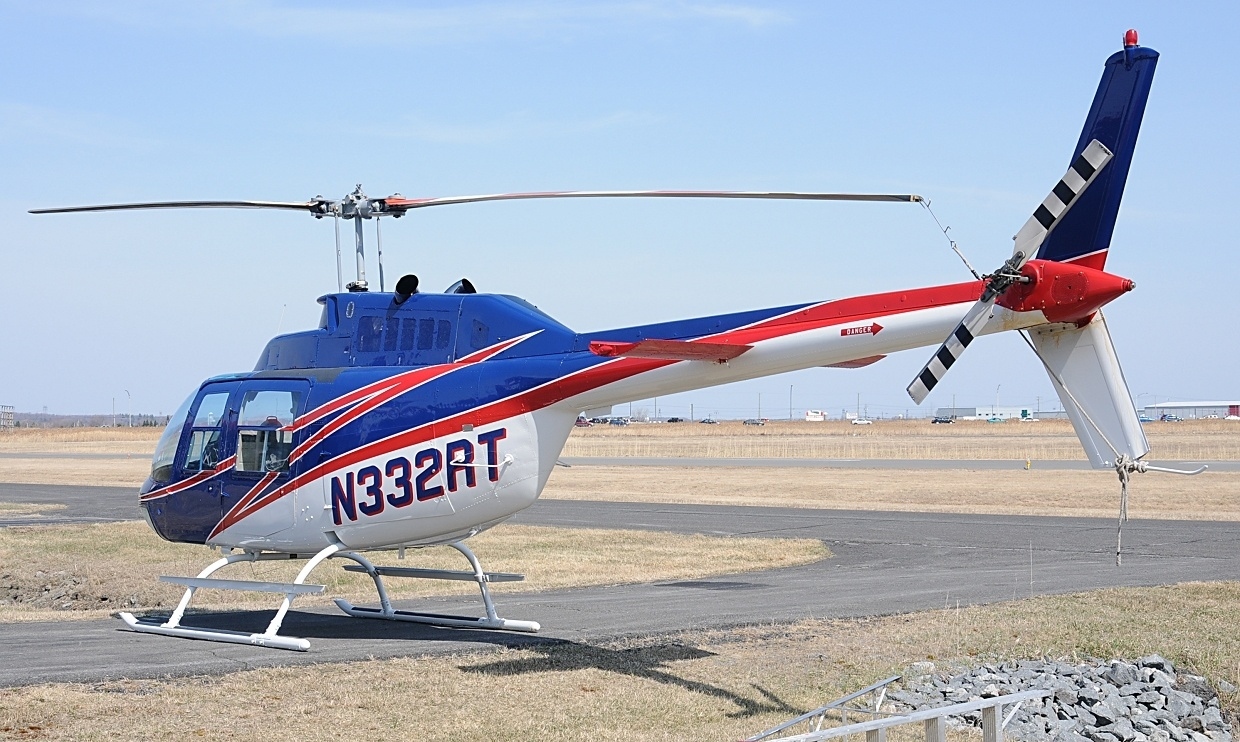
;Bell 206B-3: Upgraded Allison 250-C20J engine and added 2 in to tail rotor diameter for yaw control. ;Bell 206L LongRanger: Stretched, seven-seat configuration, powered by an Allison 250-C20B turboshaft engine. ;Bell 206L-1 LongRanger II: Higher-powered version, powered by an Allison 250-C28 turboshaft engine. ;Bell 206L-1+ LongRanger: Bell modifications, including 250-C30P engine, to upgrade aircraft to 206L-4 configuration. ;Bell 206L-3 LongRanger III: Powered by an Allison 250-C30P turboshaft engine. ;Bell 206L-3+ LongRanger: Bell modifications to upgrade aircraft to 206L-4 configuration. ;Bell 206L-4 LongRanger IV: Improved version, 250-C30P engine and transmission upgrade. ;Bell 206LT TwinRanger: Twin-engined conversions and new-builds of the 206L; replaced by the Bell 427.
.jpg)
;Bell 407: based on the 206L with four-blade rotor system. ;Bell 417: upgraded 407 with larger engine; project canceled. ;Cardoen Cb 206L-III: Chilean modified LongRanger III with narrow forward fuselage and flat-plate cockpit windows. At least two converted, with first flight in 1989. ;HESA Shahed 278: An Iranian re-hash of Bell 206 components. ;Aurora Flight Sciences Tactical Autonomous Aerial Logistics System test platform
Military
;Bell 206AS: Export version for the Chilean Navy.

;Bell CH-139 JetRanger: Canadian military designation for the Bell 206B-3. ;Hkp 6A: Swedish Army designation for the Agusta-Bell 206A. 21 units manufactured in Italy, used as training, liaison, light transport, scout and anti-tank helicopters armed with ATGMs. ;Hkp 6B: Swedish Navy designation for the Agusta-Bell 206A. 10 units manufactured in Italy, used as anti-submarine helicopters, armed with depth charges. This variant was equipped with emergency inflatable floats. ;Hkp 6C: Sweden operated 32 Agusta-built 206A JetRangers as the Hkp 6A (Army) and Hkp 6B (Navy). One additional JetRanger was supplied to Sweden as the Hkp 6C (serial 06593). This was a Bell 206B-2 JetRanger III, belonging to the Försökscentralen (Trial Establishment). Like the others, the Hkp 6C was fitted with a 400 shp Allison 250-C20B turboshaft engine, designated the TAM 4B in Sweden, but had a different engine control system. It later went into civilian use as SE-HON. ;OH-58 Kiowa: Light observation helicopter that replaced the OH-6A Cayuse. ;TH-57A Sea Ranger: 40 commercial Bell 206A aircraft purchased as the primary U.S. Navy helicopter trainer in January 1968 for training prospective U.S. Navy, U.S. Marine Corps, U.S. Coast Guard and select NATO/Allied helicopter pilots.
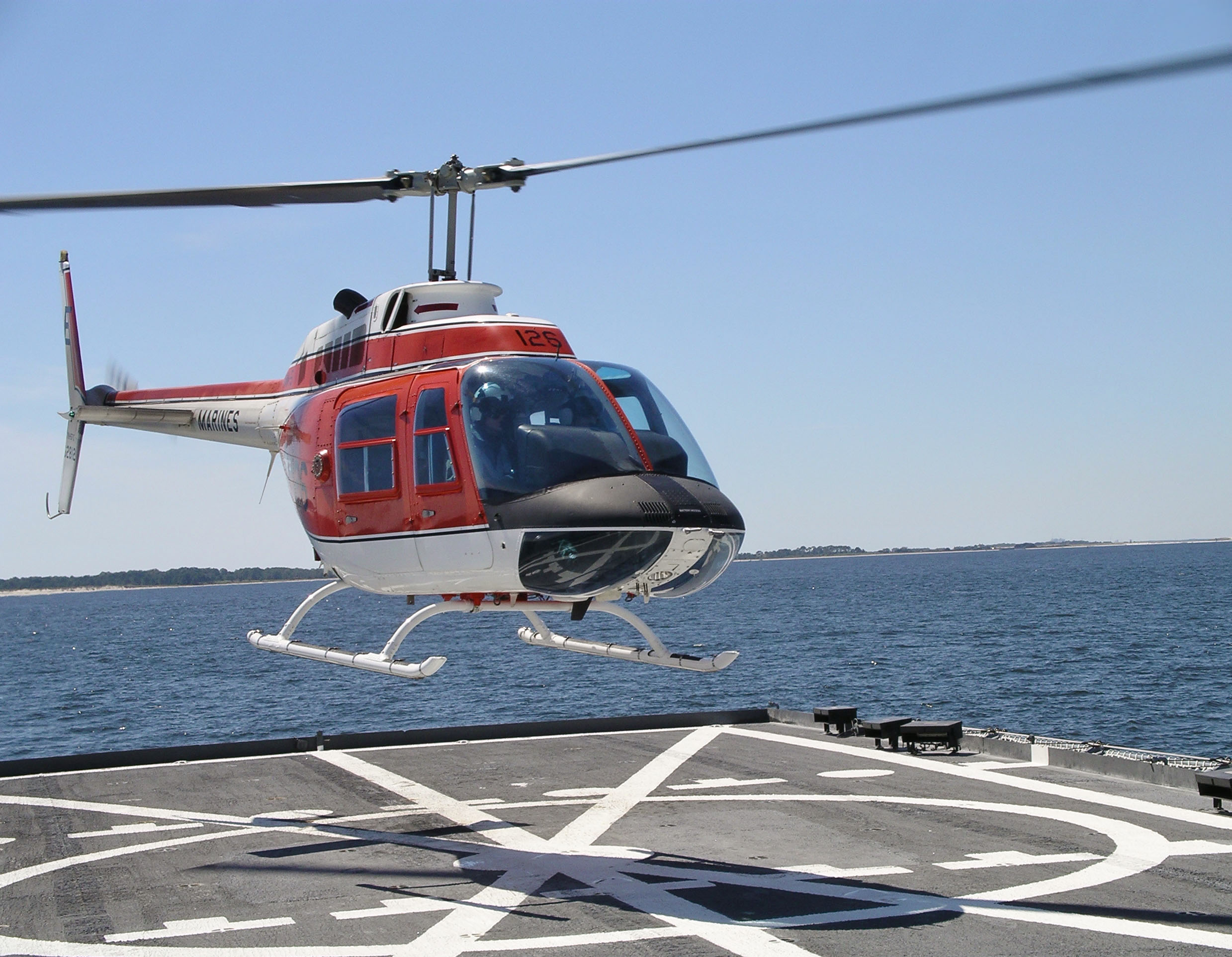
;206L TexasRanger: proposed export military version. One demonstrator was built (1981). ;TH-57B: 45 commercial Bell 206B-3 helicopters purchased by the US Navy in 1989 as replacements for the TH-57A for primary training under visual flight rules. ;TH-57C Sea Ranger: 71 commercial Bell 206B-3 helicopters purchased by the US Navy beginning prior to 1985 with cockpits configured for advanced training under instrument flight rules. ;TH-57D: Planned upgrade program to convert 128 US Navy TH-57B and TH-57C aircraft to a single standard digital cockpit. Ultimately, only two Sea Rangers were upgraded to the TH-57D configuration before the program was cancelled in 2012. Both TH-57Ds were placed in storage at Davis-Monthan Air Force Base (AFB), Arizona, in mid-2013. ;TH-67 Creek: 137 commercial Bell 206B-3s purchased in 1993 as the primary and instrument helicopter trainer for the US Army at Fort Novosel, Alabama. 35 in VFR configuration and 102 in IFR configuration. The US Army currently has 181 units, of which 121 are in VFR configuration and 60 are in IFR configuration. All TH-67s display US registrations ("N" numbers) and are operated as public use aircraft. ;OH-4: Brazilian Air Force designation for an observation variant of the Model 206B-3. Originally designated LH-4. ;VH-4: Brazilian Air Force designation for a VIP transport variant of the Model 206B-3. ;HU-6: Brazilian Navy designation for a utility variant of the Model 206B-3. ;IH-6/IH-6A/IH-6B: Brazilian Navy designations for trainer variants of the Model 206B-3. The IH-6 and IH-6A were originally designated HI-6 and HI-6A, respectively. ;H.8 :() Royal Thai Armed Forces designation for the Model 206B-3. ;H.PhT.1 :() Royal Thai Armed Forces designation for the Model 206B-2 used for aerial survey.
Operators
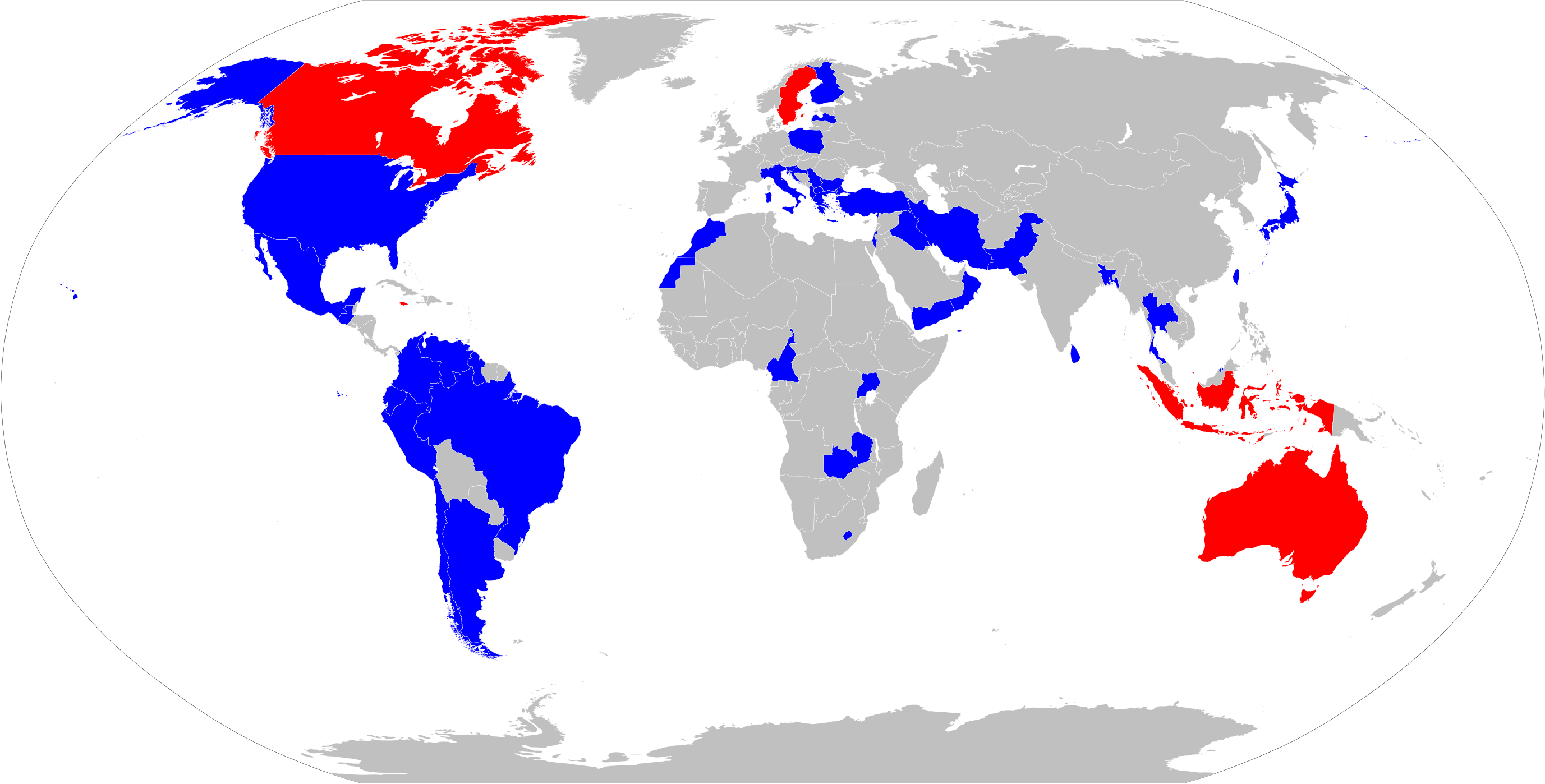
The Bell 206 has been popular for all types of uses both commercial and private.
Military and government
.jpg)
;
- Albanian Air Force ;
- Argentine Army Aviation ;
- Bangladesh Air Force
- Bangladesh Army ;
- Brazilian Air Force
- Brazilian Navy
_(cropped).jpg)
;
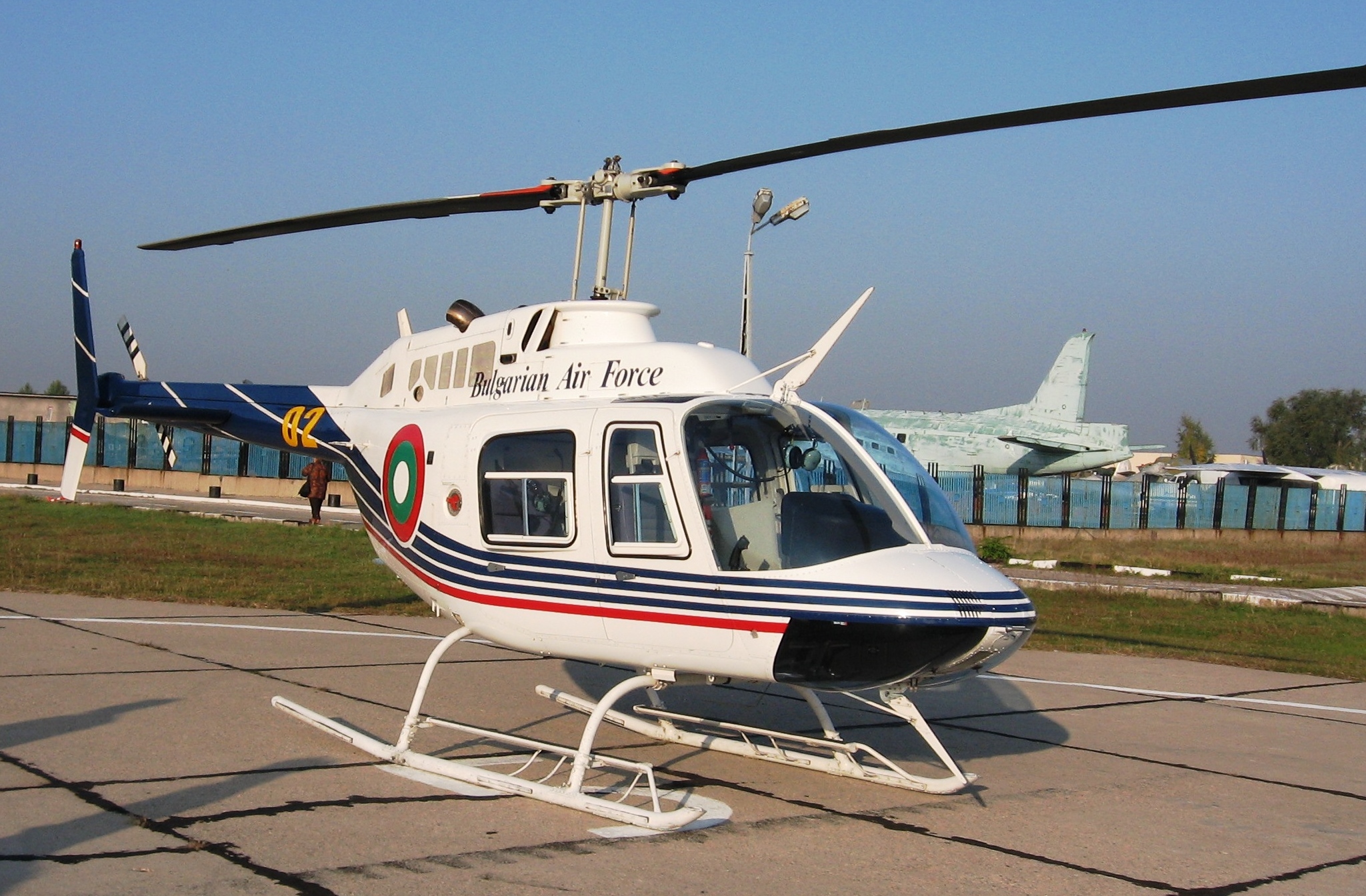
- Bulgarian Air Force ;
- Royal Brunei Air Force ;
- Cameroon Air Force
.jpg)
;
- Chilean Air Force
- Chilean Navy ;
- Colombian Aerospace Force
- National Police of Colombia ;
- Air Force of the Democratic Republic of the Congo ;
- Croatian Air Force
- Croatian Police Cyprus
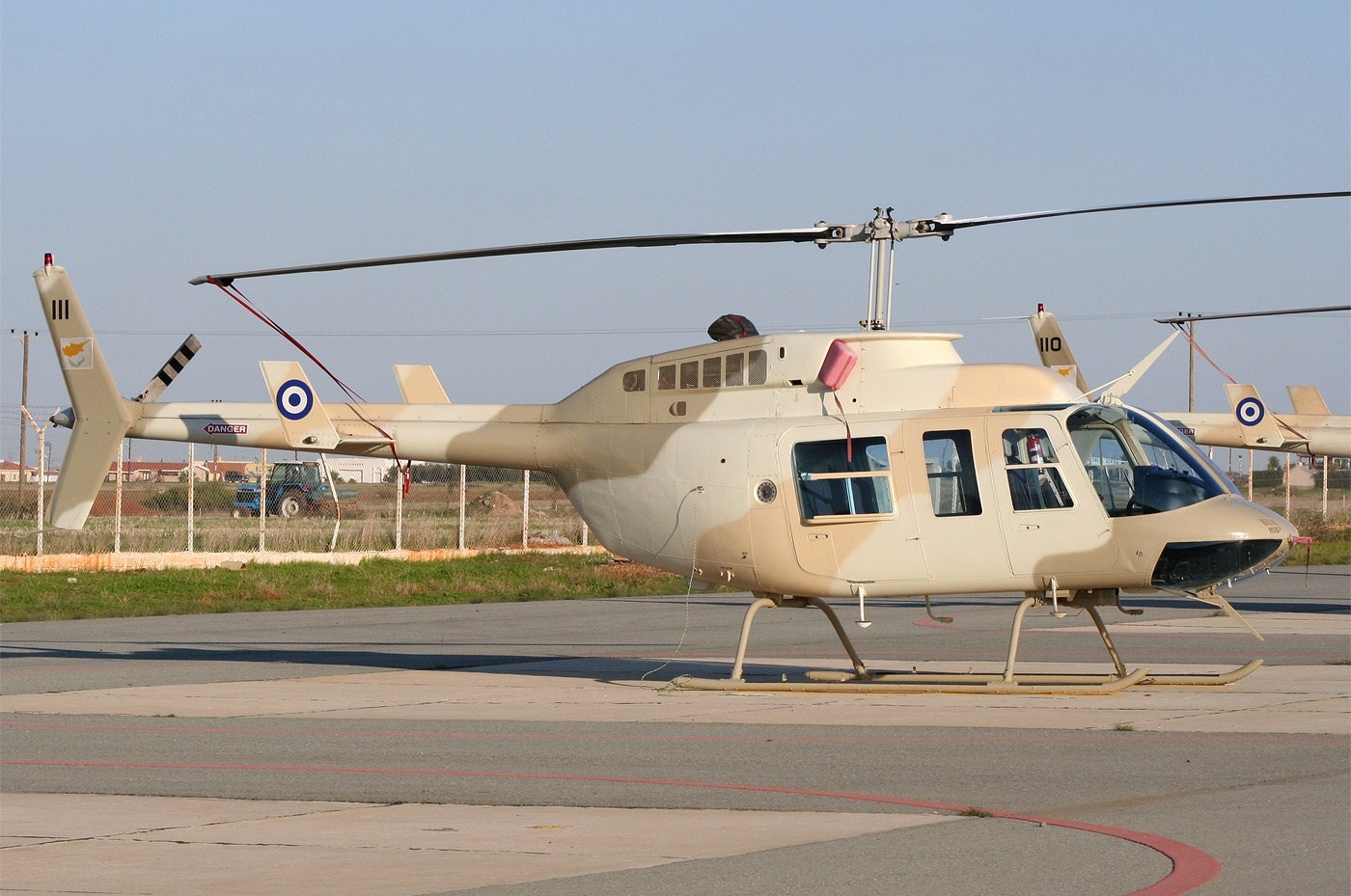
- Cyprus Air Command ;
- Dominican Republic Air Force ;
- Ecuadorian Air Force
- Ecuadorian Navy ;
- Finnish Border Guard ;
- Greek Army ;
- Guatemalan Air Force ;
- Guyana Defence Force ;

- Islamic Republic of Iran Air Force
- Islamic Republic of Iran Army ;
- Iraqi Air Force ;
- Israeli Air Force ;
- Italian Army
- Polizia di Stato
- Vigili del Fuoco ;
- Jamaica Defence Force ;
- Japan Coast Guard ;
- Latvian State Border Guard ;
- Lesotho Defence Force ;
- North Macedonia Air Brigade ;
- Mexican Air Force ;
- Royal Moroccan Air Force ;
- Royal Air Force of Oman ;
- Pakistan Army ;
- Peruvian Navy ;
- Polish Police

;
- Slovenian Air Force and Air Defence
- Slovenian national police force ;
- Sri Lanka Air Force ;
- Republic of China Army ;
- Royal Thai Army
- Royal Thai Police ;
- Turkish Army

;Uganda
- Ugandan Air Force

;
- Chicago Police Department
- San Juan County Sheriff Dept.
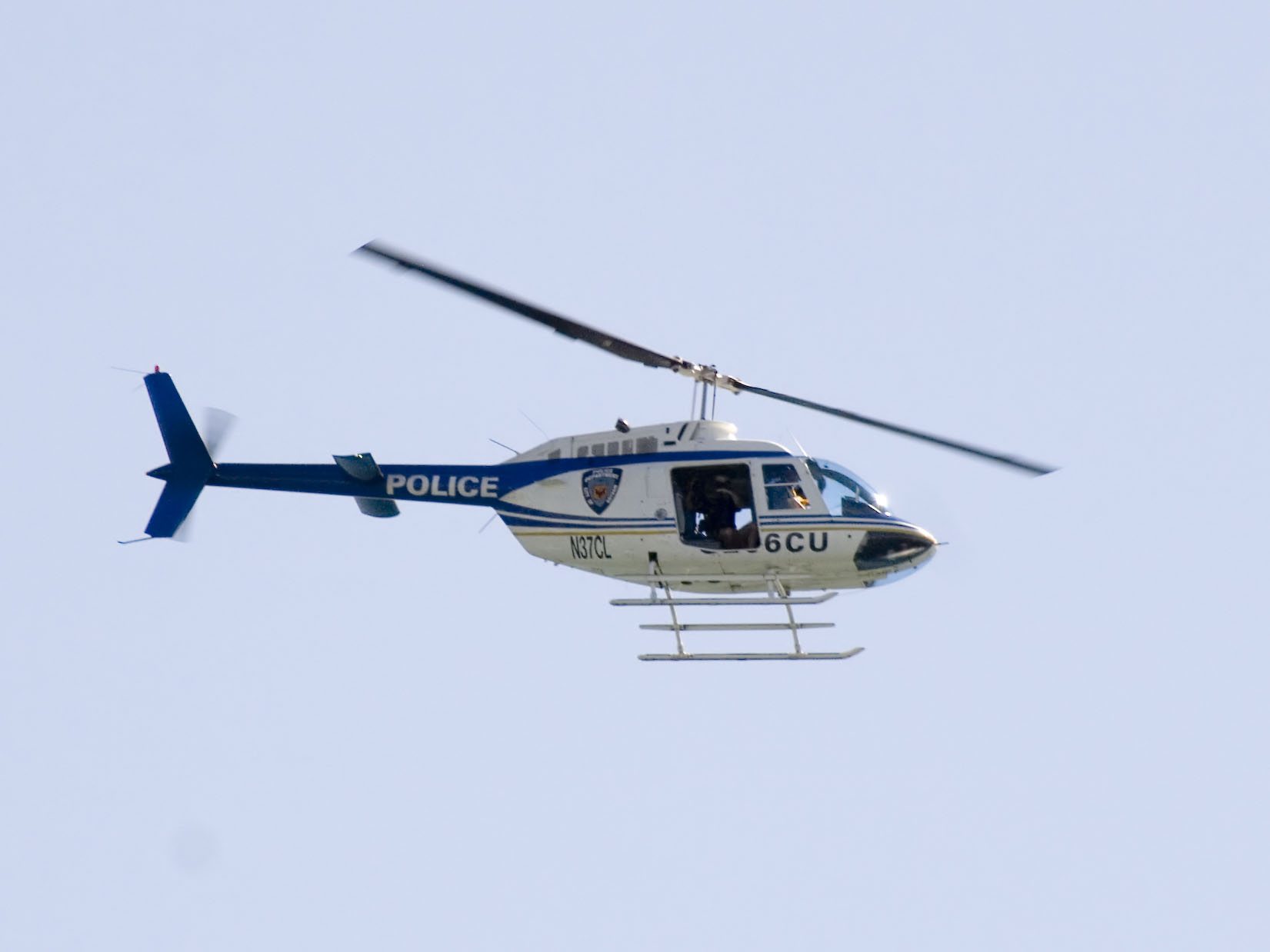
- Los Angeles Police Department
- Memphis Police Department
- Omaha Police Department
- King County Sheriff's Office
- New Jersey State Trooper
- Missouri State Highway Patrol
- United States Army
- United States Navy
- United States Department of the Interior ;
- Venezuelan Army
- Venezuelan Navy ;
- Yemeni Air Force
Former operators
_06054_54_(SE-HGX)_(8353213254).jpg)
;
- Australian Army
- Royal Australian Navy ;
- Austrian Air Force ;
- Canadian Forces
- Canadian Coast Guard ;
- Chilean Army ;
- Indonesian Army Aviation Center
- Indonesian National Police – Retired in 2007 ;
- Jamaica Defence Force ;Macedonia
- Macedonia Air Brigade ;
- Armed Forces of Malta ;Pahlavi Iran
- Imperial Iranian Air Force ;
- Serbian Police ;
- Swedish Air Force
- Swedish Navy ;
- Zambian Air Force
Notable accidents and incidents
On August 1, 1977, famous U-2 spy plane pilot Francis Gary Powers was piloting a helicopter for KNBC Channel 4 over West Los Angeles, California, when the aircraft crashed, killing him and cameraman George Spears. They were video recording bush fires in Santa Barbara County in the station's helicopter and were leaving the area.
On August 27, 1990, musician Stevie Ray Vaughan, pilot Jeff Brown, and three members of Eric Clapton's crew, Bobby Brooks, Nigel Browne, and Colin Smythe, were killed in a Bell 206B crash.
On October 25, 1991, a Bell 206 carrying rock music concert promoter Bill Graham, his girlfriend Melissa Gold, and pilot Steve Kahn crashed into a transmission tower west of Vallejo, California, killing everyone on board. The cause of the accident was determined to be the pilot's intentional flight into known adverse weather conditions.
On January 12, 1994, an Agusta-Bell 206A-1 crashed while attempting to land at the helipad of the Central Command headquarters in Neve Yaakov, Israel, killing all four occupants on board, including IDF Major General Nehemiah Tamari.
On March 9, 2009, Bangladesh Army aviation unit Bell 206L flown by pilot Lt Col MD Shahidul Islam and co-pilot Major Saif crashed at Rouha in Kalihati sub-district. The helicopter was carrying General Officer Commanding of 55 Infantry Division and Jessore Area Commander Maj Gen Rafiqul Islam. Maj Gen Islam and pilot Lt Col Islam died in the crash while co-pilot Major Saif sustained serious injuries.
On August 15, 2010, a Bell 206B of the Missouri State Highway Patrol crashed after it ran out of fuel, killing pilot Sergeant Joseph George Schuengel.
On August 20, 2014, Guatemala's Chief of the General Staff of the Armed Forces Rudy Ortiz was killed when his Bell 206 crashed.
On February 11, 2019, Brazilian journalist Ricardo Boechat and the pilot were killed when Bell 206B, PT-HPG, crashed into a truck while attempting an emergency landing on a highway.
On April 10, 2025, a sightseeing Bell 206 LongRanger IV (L-4) crashed into the Hudson River off Newport, Jersey City, killing all six occupants. Witnesses described the helicopter as coming apart in mid-air, with the rotor still spinning, detached from the body. There was criticism that, while vehicles used as licensed taxis must be replaced after five to eight years, there are no such rules for helicopters that may be 30 or 40 years old; the 2025 crash was of a 21-year-old aircraft. There were recommendations that all New York helicopter use should be restricted to services that needed them—police, military, government, news—rather than tourism.
Specifications (206B Jetranger II)

|prime units?=kts
-
Fuselage length: 31 ft
-
Interior dimensions: 7 ft length, by 4 ft width, by 4 ft height, plus 16 ft3 baggage compartment |max takeoff weight lb=3,200 |max takeoff weight note= --
-
Blade section: – NACA 0012 mod (11.3%) --
-
Maximum speed at 5,000 ft: 116 kn at MTOW |never exceed speed kts= |never exceed speed note= |disk loading lb/sqft=4 |fuel consumption lb/mi= |power/mass=0.09 hp/lb
Notable appearances in media
Main article: Aircraft in fiction#Bell 206
References
Citations
Bibliography
References
- Donald, David, ed. "Bell 206". ''The Complete Encyclopedia of World Aircraft''. Barnes & Nobel Books, 1997. {{ISBN. 0-7607-0592-5
- [http://www.globalsecurity.org/military/systems/aircraft/b206.htm Bell 206 JetRanger] {{Webarchive. link. (February 12, 2005 . GlobalSecurity.org, July 9, 2005. Retrieved: December 2009)
- "Collect Air".
- "US Army Aircraft Acquisition Programs".
- ''See [[Light Observation Helicopter]]''. The Navy, who was assisting the Army in the selection phase, recommended the Hiller Model 1100, while the Army team preferred the Bell D-250, and then the 1100. The Selection Board selected both aircraft. Afterwards, the acting Army Chief of Staff directed the Selection Board to include the Hughes 369 in the fly-off competition.
- Spangenberg, George A.. "George A. Spangenberg Oral History".
- Visschedijk, lJohan. {{usurped
- Spenser, Jay P. "Bell Helicopter". ''Whirlybirds, A History of the US Helicopter Pioneers'', p. 263. University of Washington Press, 1998. {{ISBN. 0-295-98058-3
- Aastad, Andy. [http://rotormagazine.org/Portals/24/pdf/winter2006_7/32.pdf "The Introduction to the JetRanger"] {{webarchive. link. (September 10, 2008 . ''Rotor Magazine''. Helicopter Association International. Winter 2006–2007. Accessed on 29 April 2008)
- link. (March 21, 2010 "Farewell to an Icon: the Bell JetRanger 206". Aviation Week blog, January 25, 2008)
- {{usurped
- "Bell 206A JetRanger for Sale".
- Maher, Guy. "[http://www.verticalmag.com/news/article/Bellgives505JetRangerXupdate Bell gives 505 JetRanger update]". ''Vertical'', 21 July 2014. Accessed: 21 July 2014. {{usurped
- Kocurek, Mark. [http://www.bellhelicopter.textron.com/en/support/pdf/rb/rb_jul07.pdf "206L Upgrade Program"]{{dead link. (July 2017)
- [https://www.ainonline.com/aviation-news/business-aviation/2017-07-10/last-bell-longranger-rolls-production-line?amp Last Bell LongRanger Rolls Off Production Line]. AIN online, July 10, 2017.
- Frawley, Gerard: ''The International Directory of Civil Aircraft, 2003–2004'', p. 43. Aerospace Publications Pty Ltd, 2003. {{ISBN. 1-875671-58-7
- "List of records established by the '206L-2 Long Ranger'".
- "Bell 206B Jet Ranger".
- Host, Pat. (April 2015). "Army's aviation restructuring not to affect civil helicopter market". Rotor & Wing.
- https://web.archive.org/web/20011018054626/http://records.fai.org/rotorcraft/aircraft.asp?id=606 "List of records established by the '206B-3 Jet Ranger III'". Fédération Aéronautique Internationale. Accessed on October 19, 2008
- Kocks, Kathleen. {{usurped
- (27 June 2006). "TYPE CERTIFICATE DATA SHEET NO. H2SW, Revision 42". Federal Aviation Administration (faa.gov).
- Ron and Shannon Bower. (1 May 2003). "Bell 206: Still Ringing True". Aviation Today (aviationtoday.com).
- Lambert 1991, p. 30.
- "TH-57". U.S. Navy History.
- [http://www.vtol.org/news/issues107.html#us "US Navy Plans Digital TH-57 Fleet"] {{webarchive. link. (April 22, 2007 VTOL News, January 2007.)
- "Brazilian Military Aircraft Designations".
- "Thai Military Aircraft Designations".
- (2014). "WAF 2014". Flightglobal Insight.
- (25 January 2018). "Argentina receives first five AB 206 helicopters".
- "World Air Forces 2011–12". flightglobal.com.
- (January 23, 2013). "Bangladesh Army Aviation Accepts Two Dauphin Helicopters". malaysiaflyingherald.wordpress.com.
- (4 December 2020). "World Air Forces 2021". FlightGlobal.
- (January 23, 2016). "BELL 206 – Aviación Policial de la Policía Nacional". [[National Police of Colombia]].
- (2022). "World Air Forces 2022". Flightglobal.
- "Policija Fleet".
- (March 2017). "Current Aircraft Inventory Cyprus Air Command – Aeroflight".
- Hoyle, Craig. (2023). "World Air Forces 2024". [[FlightGlobal]].
- Petrova, Alla. (27 November 2012). "The government today ordered the Finance Ministry to allocate the State Border Guard LVL 0.84 million from the budget's emergency funds for the procurement of two helicopters". The Baltic Course.
- "Iraqi air force opens pilot training school". flightglobal.com.
- Hoyle ''Flight International'' 9–15 December 2014, p. 42
- "Elbit extends military pilot training deals with Israel". flightglobal.com.
- J-HangarSpace. "Japan Coast Guard: Aircraft Data File".
- "Helicopters from Finland accepted into service in Latvia". baltic-course.com.
- "Lotnictwo w Policji – Główny Sztab Policji – Policja.pl".
- "Bell Textron Canada TH-67A Creek". taiwanairpower.org.
- http://www.tpad.police.go.th/news1.php {{Webarchive. link. (April 17, 2015 Royal Thai Police)
- "Chicago Police Department / Cook County Sheriff's Police Task Force".
- "Aviation – San Juan County Sheriff's Office".
- "LAPD Equipment". lapdonline.org.
- "Aircraft Inquiry".
- "Aircraft Inquiry".
- "Special Operations".
- "OPD Helicopter (@OPDABLE1) – Twitter".
- "Air support (helicopter) unit".
- "Special Operations Section {{!}} New Jersey State Police".
- "N33PP (1983 BELL 206L-3 owned by UNITED STATES DEPARTMENT OF INTERIOR) Aircraft Registration".
- . (December 2014). "World Air forces p. 55". *flightglobal*.
- "Aircraft Histories RAN". Navy.gov.au.
- "Chronologie der österreichischen Luftstreitkräfte".
- "Bell CH-139 JET RANGER". canadianwings.com.
- "Bell 206 in Canadian Coast Guard".
- "A 40 años del Comando de Aviación de Ejército".
- (1999). "Aerospace Encyclopedia of World Air Forces". Aerospace Publishing Ltd.
- "P-3001 Bell 206B-2 JetRanger C/N 1868".
- "JDF "Rotary wing" previous fleet". jdfmil.org.
- "Air Wing, Armed Forces of Malta". aeroflight.co.uk.
- "Serbian Interior Ministry Air Wing". aeroflight.co.uk.
- "HKP 6 – Agusta Bell 206A JetRanger (1968–2004)".
- Hoyle, Craig. (2025). "World Air Forces 2026". [[FlightGlobal]].
- "Capt. Francis Gary Powers". Smithsonian Institution.
- "The Death of Stevie Ray".
- NTSB. (April 27, 1993). "NTSB Identification: LAX92LA029". NTSB.
- Bruce Lambert. (November 27, 1991). "Bill Graham, Rock Impresario, Dies at 60 in Crash".
- Check Six. (December 22, 2022). "Bill Graham's Stairway to Heaven".
- (1994-01-13). "Israeli General Killed in Copter Crash".
- "Accident Agusta-Bell 206A-1 Sayfan, Wednesday 12 January 1994".
- "Jessore GOC killed in chopper crash".
- "Sergeant Joseph George Schuengel".
- PanAm Post Staff. (August 22, 2014). "Helicopter Crash Kills Guatemala's Army Chief of Staff". PanAm Post.
- (February 11, 2019). "Ricardo Boechat, jornalista, morre aos 66 anos em queda de helicóptero em SP".
- Zanger, Jesse. (10 April 2025). "Helicopter crash in Hudson River kills all 6 aboard". CBS New York.
- Luscombe, Richard. (11 April 2025). "New York helicopter crash was 'entirely predictable', say campaigners". The Guardian.
- (1977). "Jane's All The World's Aircraft". Jane's Information Services.
- "The Incomplete Guide to Airfoil Usage".
This article was imported from Wikipedia and is available under the Creative Commons Attribution-ShareAlike 4.0 License. Content has been adapted to SurfDoc format. Original contributors can be found on the article history page.
Ask Mako anything about Bell 206 — get instant answers, deeper analysis, and related topics.
Research with MakoFree with your Surf account
Create a free account to save articles, ask Mako questions, and organize your research.
Sign up freeThis content may have been generated or modified by AI. CloudSurf Software LLC is not responsible for the accuracy, completeness, or reliability of AI-generated content. Always verify important information from primary sources.
Report