From Surf Wiki (app.surf) — the open knowledge base
Bekal Fort

| Field | Value |
|---|---|
| name | Bekal Fort |
| official_name | Bekal Fort |
| image_skyline | Bakel Fort Beach Kasaragod7.jpg |
| image_caption | Bekal Fort in Kasargod, Kerala |
| pushpin_map | India Kerala#India |
| coordinates | |
| subdivision_type | Country |
| subdivision_name | India |
| subdivision_type1 | State |
| subdivision_type2 | District |
| subdivision_type3 | Region |
| subdivision_type4 | Taluk |
| subdivision_name1 | Kerala |
| subdivision_name2 | Kasargod District |
| subdivision_name3 | North Malabar (Kolathnadu) |
| subdivision_name4 | Hosdurg |
| subdivision_type5 | Language |
| subdivision_name5 | Malayalam, Kannada, Tulu |
| subdivision_type6 | Nearest cities |
| subdivision_name6 | Kanhangad, Kasargod, Kannur, Mangalore |
| timezone1 | IST |
| utc_offset1 | +5:30 |
Bekal Fort is a medieval fort built by Shivappa Nayaka of Keladi in 1650 AD, at Bekal. It is the largest fort in Kerala, spreading over 40 acre.


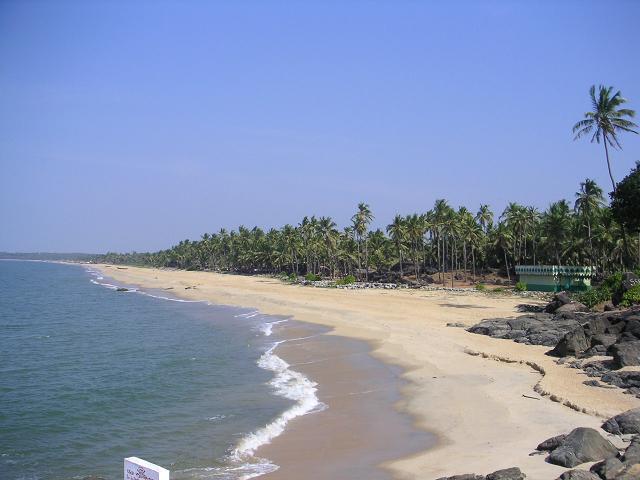
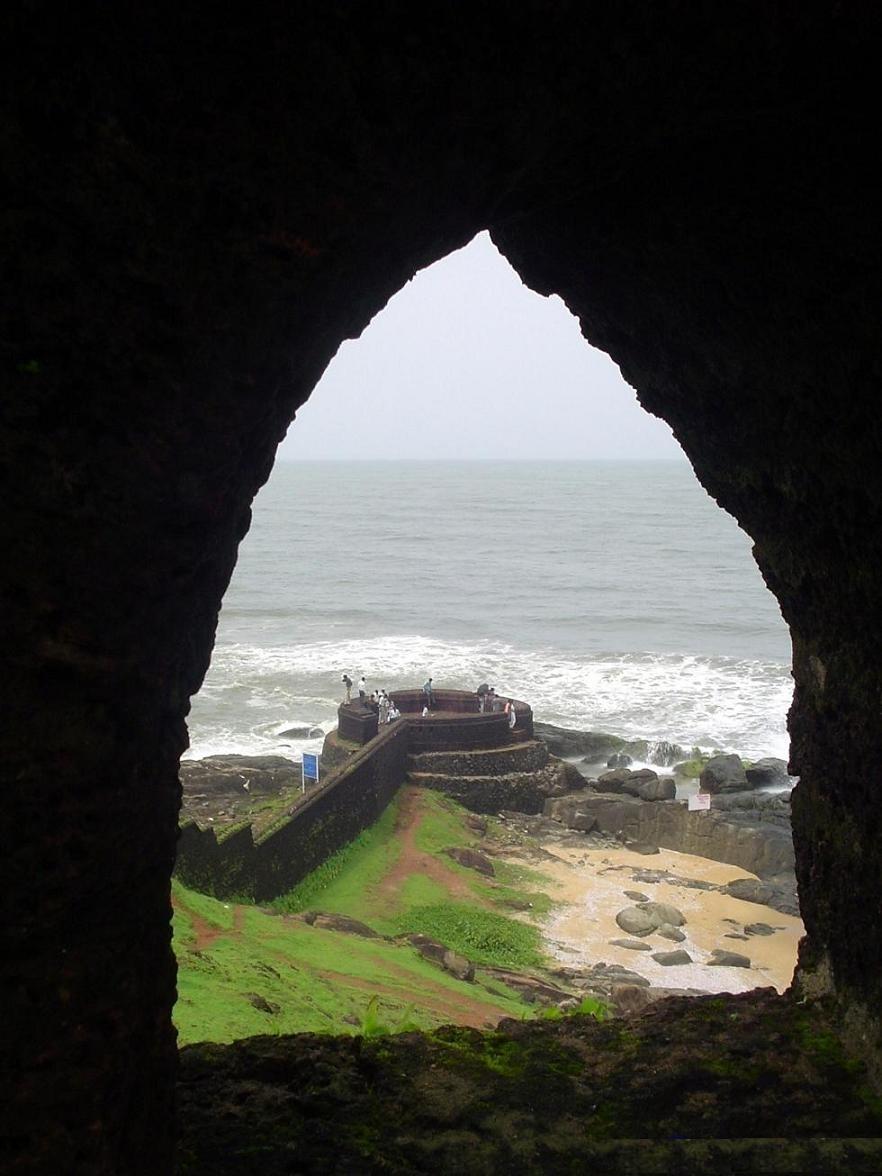

Structure
The fort appears to emerge from the sea. Almost three-quarters of its exterior is in contact with water. Bekal fort was not an administrative centre and does not include any palaces or mansions.
An important feature is the water-tank, magazine and the flight of steps leading to an observation tower built by Tipu Sultan. Standing at the centre of the fort, this offers views of the coastline and the towns of Kanhangad, Pallikkara, Bekal, Mavval, Kottikkulam, and Uduma.
The fort's zigzag entrance and surrounding trenches reveal its defensive strategy. Holes on the outer walls are designed to defend the fort effectively from naval attacks. The upper holes are for aiming at the furthest targets. The lower holes are for striking a closer enemy. The lowest holes are for attacking enemies that are closest to the fort.
Its solid construction resembles the Thalassery Fort and the St. Angelo Fort at Kannur built by the Dutch.
History
During the Perumal Age, Bekal was part of Mahodayapuram. Following the decline of Mahodayapuram Perumals, Bekal came under the sovereignty of the Mushika or Kolathiri or Chirakkal Royal Family in the 12th century. The maritime importance of Bekal increased under the Kolathiris and Malabar became an essential port town.
After the Battle of Talikota in 1565, feudatory chieftains including the Keladi Nayakas (Ikkeri Nayaks) became powerful in the region. Bekal served as a hub to first dominate, then later defend Malabar. The economic importance of this port town prompted the Nayakas to fortify Bekal subsequently. Hiriya Venkatappa Nayaka initiated the construction of the fort and it was completed in 1650 AD by Shivappa Nayaka. Chandragiri fort near Kasargod was also built during this time.
The struggles between the Kolathiries and nayaks to hold this area ended when Hyder Ali conquered the Nayakas and Bekal fell into the hands of Mysore kings.
It was an important military station for Tipu Sultan when he led a military expedition to capture Malabar. The coins and artefacts found in archaeological excavations at Bekal fort indicate the strong presence of Mysore Sultans. Tipu Sultan's death during the Fourth Anglo-Mysore War ended Mysorean control in 1799. The fort came under the British East India Company's control and became the headquarters of the Bekal Taluk of South Canara District in Bombay presidency. The political and economic importance of Bekal and its port declined.
Tourism
India declared Bekal Fort a special tourism area in 1992 and formed the Bekal Tourism Development Corporation three years later to promote it. The fort has been featured in the song 'Uyire' (Tamil) from the movie Bombay and the song ‘Dwadashiyil’ from the Malayalam movie Madhuranombarakattu.
Transportation
Local roads connect to Mangalore in the north and Calicut in the south. The nearest railway station is Bekal Fort Railway Station, Kanhangad Railway Station and Kotikulam Railway Station on Mangalore-Palakkad line.
The nearest airports are Mangalore International Airport, 71 km, Kannur International Airport, 101 km, and Calicut International Airport, 195 km.
File:Bekal fort kasaragod 01.jpg|A view of Bekalfort watch tower File:Bekal fort kasaragod 15.jpg|A view of sea shore from Bekal fort File:Bekal fort kasaragod 21.jpg|A view of sea shore from Bekal fort File:Bekal fort kasaragod 25.jpg|A view of sea shore from Bekal fort File:Bekal fort kasaragod 26.jpg|Cannonballs kept at Bekal fort File:Bekal fort kasaragod 16.jpg|A view of sea shore from Bekal fort File:Bekal fort kasaragod 11.jpg|A view of Bekal fort from its watch tower File:Bekal Fort watch tower view.jpg|A view of sea from watch tower
In popular culture
The song 'Uyire Uyire' from the film Bombay was shot in Bekal Fort.
References
- {{cite book
- {{cite book
- {{cite news |archive-url= https://web.archive.org/web/20080108153021/http://www.hindu.com/mp/2005/10/22/stories/2005102202980100.htm |url-status= dead |archive-date= 2008-01-08
- {{cite news
References
- "Bekal Beach in Kasaragod".
- [[#FbtS. The Hindu, 22 Oct 2005]]
- [[#KHaS. Kasargod: History & Society]]
- [[#HotT. Madras District Manual]]
- (29 July 2014). "Bastions of valour and victory". Deccan Herald.
- "BEKAL".
- Bari, Prachi. (3 July 2010). "Indian locations provide stunning backdrops for film shoots". The Hindu.
This article was imported from Wikipedia and is available under the Creative Commons Attribution-ShareAlike 4.0 License. Content has been adapted to SurfDoc format. Original contributors can be found on the article history page.
Ask Mako anything about Bekal Fort — get instant answers, deeper analysis, and related topics.
Research with MakoFree with your Surf account
Create a free account to save articles, ask Mako questions, and organize your research.
Sign up freeThis content may have been generated or modified by AI. CloudSurf Software LLC is not responsible for the accuracy, completeness, or reliability of AI-generated content. Always verify important information from primary sources.
Report