From Surf Wiki (app.surf) — the open knowledge base
Begging the question
Logic founded on unproven premises
Logic founded on unproven premises
In classical rhetoric and logic, begging the question or assuming the conclusion (Latin: petītiō principiī) is an informal fallacy that occurs when an argument's premises assume the truth of the conclusion. Historically, begging the question refers to a fault in a dialectical argument in which the speaker assumes some premise that has not been demonstrated to be true. In modern usage, it has come to refer to an argument in which the premises assume the conclusion without supporting it. This makes it an example of circular reasoning.
Some examples are:
- “Wool sweaters are better than nylon jackets as fall attire because wool sweaters have higher wool content".
- The claim here is that wool sweaters are better than nylon jackets as fall attire. But the claim's justification begs the question, because it presupposes that wool is better than nylon. An essentialist analysis of this claim observes that anything made of wool intrinsically has more "wool content" than anything not made of wool, giving the claim weak explanatory power for wool's superiority to nylon.
- "Drugs are illegal, so they must be bad for you. Therefore, we ought not legalize drugs, because they are bad for you."
The phrase "beg the question" is often used to mean "strongly prompt the question", a usage distinct from that in logic. This usage is criticized for diluting the original logical meaning of the phrase.
History
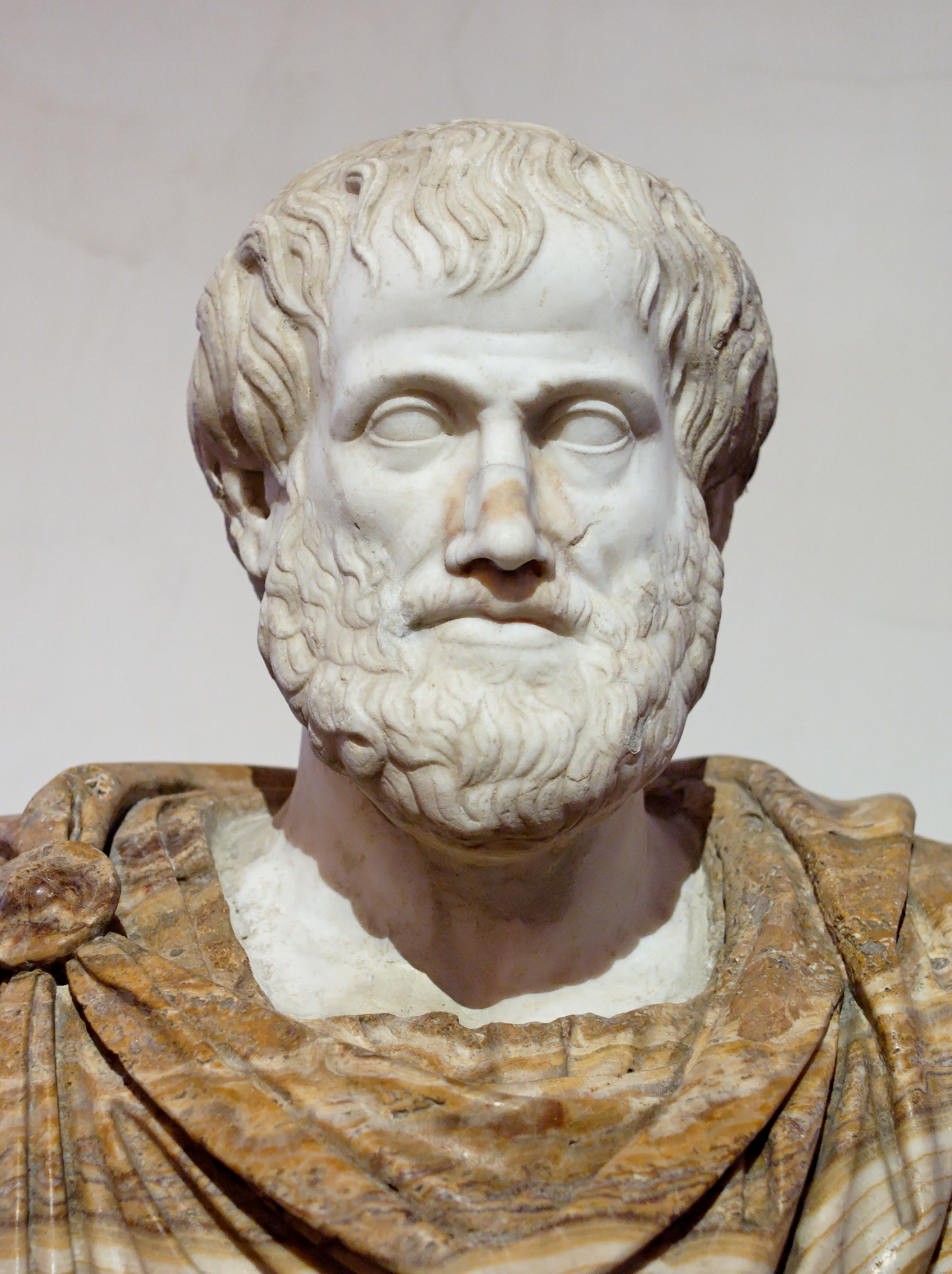
The original phrase used by Aristotle from which begging the question descends is τὸ ἐξ ἀρχῆς αἰτεῖν, or sometimes ἐν ἀρχῇ αἰτεῖν, . Aristotle's intended meaning is closely tied to the type of dialectical argument he discusses in his Topics, book VIII: a formalized debate in which the defending party asserts a thesis that the attacking party must attempt to refute by asking yes-or-no questions and deducing some inconsistency between the responses and the original thesis.
In this stylized form of debate, the proposition that the answerer undertakes to defend is called () and one of the rules of the debate is that the questioner cannot simply ask (beg) for it (that would be trivial and uninteresting). Aristotle discusses this in Sophistical Refutations and in Prior Analytics book II, (64b, 34–65a 9, for circular reasoning see 57b, 18–59b, 1).
The stylized dialectical exchanges Aristotle discusses in the Topics included rules for scoring the debate, and one important issue was precisely the matter of asking for the initial thing—which included not just making the actual thesis adopted by the answerer into a question, but also making a question out of a sentence that was too close to that thesis (for example, PA II 16).
The term was translated into English from Latin in the 16th century. The Latin version, petitio principii , can be interpreted in different ways. Petitio (from peto), in the post-classical context in which the phrase arose, means or , but in the older classical sense means , or . Principii, genitive of principium, means , or (of an argument). Literally petitio principii means or .
The Latin phrase comes from the Greek τὸ ἐν ἀρχῇ αἰτεῖσθαι (tò en archêi aiteîsthai ) in Aristotle's Prior Analytics II xvi 64b28–65a26:
Aristotle's distinction between apodictic science and other forms of nondemonstrative knowledge rests on an epistemology and metaphysics wherein appropriate first principles become apparent to the trained dialectician:
Thomas Fowler believed that petitio principii would be more properly called petitio quæsiti, which is literally .
Definition
To (also called petitio principii) is to attempt to support a claim with a premise that itself restates or presupposes the claim. It is an attempt to prove a proposition while simultaneously taking the proposition for granted.
When the fallacy involves only a single variable, it is sometimes called a hysteron proteron (Greek for ), a rhetorical device, as in the statement:
Reading this sentence, the only thing one can learn is a new word (soporific) that refers to a more common action (inducing sleep); it does not explain why opium causes that effect. A sentence that explains why opium often induces sleep (or the same, why opium has soporific quality) is
where the specific physiological processes are omitted for simplicity. A less obvious example from Fallacies and Pitfalls of Language: The Language Trap by S. Morris Engel:
This form of the fallacy may not be immediately obvious. Linguistic variations in syntax, sentence structure, and the literary device may conceal it, as may other factors involved in an argument's delivery. It may take the form of an unstated premise which is essential but not identical to the conclusion, or is "controversial or questionable for the same reasons that typically might lead someone to question the conclusion":
For example, one can obscure the fallacy by first making a statement in concrete terms, then attempting to pass off an identical statement, delivered in abstract terms, as evidence for the original. One could also "bring forth a proposition expressed in words of Saxon origin, and give as a reason for it the very same proposition stated in words of Norman origin", as here:
When the fallacy of begging the question is committed in more than one step, some authors dub it circulus in probando , or more commonly, circular reasoning.
Begging the question is usually not considered a formal fallacy (an argument that is defective because it uses an incorrect deductive step). Rather, it is usually a type of informal fallacy that is logically valid but unpersuasive, in that it fails to prove anything other than what is already assumed. There are some exceptions wherein it may be considered a formal fallacy, such as in non-reflexive logics.
Vernacular
In vernacular English, begging the question (or equivalent rephrasing thereof) is sometimes used in place of "raises the question", "invites the question", "suggests the question", "leaves unanswered the question" etc. Such preface is then followed with the question, as in:
- "[...]personal letter delivery is at an all-time low... Which begs the question: are open letters the only kind the future will know?"
- "Hopewell's success begs the question: why aren't more companies doing the same?"
- "Spending the summer traveling around India is a great idea, but it does beg the question of how we can afford it."
Sometimes it is further confused with "dodging the question", an attempt to avoid it, or perhaps more often begging the question is simply used to mean leaving the question unanswered.
Notes
References
- Cohen, Morris Raphael, Ernest Nagel, and John Corcoran. An Introduction to Logic. Hackett Publishing, 1993. .
- Davies, Arthur Ernest. A Text-book of Logic. R.G. Adams and Company, 1915.
- Follett, Wilson. Modern American Usage: A Guide. Macmillan, 1966. .
- Gibson, William Ralph Boyce, and Augusta Klein. The Problem of Logic. A. and C. Black, 1908.
- Herrick, Paul. The Many Worlds of Logic. Oxford University Press, 2000.
- Kahane, Howard, and Nancy Cavender. Logic and contemporary rhetoric: the use of reason in everyday life. Cengage Learning, 2005. .
- Kilpatrick, James. "Begging Question Assumes Proof of an Unproved Proposition". Rocky Mountain News (CO) 6 April 1997. Accessed through Access World News on 3 June 2009.
- Martin, Robert M. There Are Two Errors in the Title of This Book: A sourcebook of philosophical puzzles, paradoxes, and problems. Broadview Press, 2002. .
- Mercier, Charles Arthur. A New Logic. Open Court Publishing Company, 1912.
- Mill, John Stuart. A system of logic, ratiocinative and inductive: being a connected view of the principles of evidence, and the methods of scientific investigation. J.W. Parker, 1851.
- Safire, William. "On Language: Take my question please!". The New York Times 26 July 1998. Accessed 3 June 2009.
- Schiller, Ferdinand Canning Scott. Formal logic, a scientific and social problem. London: Macmillan, 1912.
- Welton, James. "Fallacies incident to the method". A Manual of Logic, Vol. 2. London: W.B. Clive University Tutorial Press, 1905.
References
- Dowden, Bradley. (27 March 2003). "Fallacies". Internet Encyclopedia of Philosophy.
- Herrick (2000) 248.
- "beg the question". Cornell Law School.
- (2008). "Informal Logic: A Pragmatic Approach". Cambridge University Press.
- (2022). "beg the question". HarperCollins.
- (2024). "beg the question". Merriam-Webster, Inc.
- (2024). "beg the question". Oxford University Press.
- (2024). "beg the question". Cambridge University Press.
- (24 May 2010). "Begging the question".
- (February 27, 2023). "Begging the Question: How to Use It Correctly". Active Interest Media.
- (March 18, 2021). "How to Use It: Begs the Question". Principia College.
- Liberman, Mark. (29 April 2010). "'Begging the question': we have answers". Language Log.
- (1988). "Logic and the Philosophy of Language". Cambridge University Press.
- Schreiber, S.G.. (2003). "Aristotle on False Reasoning: Language and the World in the Sophistical Refutations". State University of New York Press.
- Fowler, Thomas (1887). [https://books.google.com/books?id=WdtLAAAAYAAJ&pg=PA145 ''The Elements of Deductive Logic, Ninth Edition''] (p. 145). Oxford, England: Clarendon Press.
- Welton (1905), 279., "{{lang. la. Petitio principii is, therefore, committed when a proposition which requires proof is assumed without proof."
- Davies (1915), 572.
- Welton (1905), 280–282.
- In [[Molière]]'s ''[[The Imaginary Invalid. Le Malade imaginaire]]'', a quack "answers" the question of "Why does [[opium]] cause sleep?" with "Because of its [[Hypnotic. soporific]] power." In the original: {{lang. fr. Mihi a docto doctore / Demandatur causam et rationem quare / Opium facit dormire. / A quoi respondeo, / Quia est in eo / Vertus dormitiva, / Cujus est natura / Sensus assoupire. [http://fr.wikisource.org/wiki/Le_Malade_imaginaire_-_3%C3%A8me_interm%C3%A8de ''Le Malade imaginaire'' in French Wikisource]
- Welton (1905), 281.
- Engel, S. Morris. (1994). "Fallacies and pitfalls of language : the language trap". Dover Publications.
- Kahane and Cavender (2005), 60.
- Gibson (1908), 291.
- [[Richard Whately]], ''Elements of Logic'' (1826) quoted in Gibson (1908), 291.
- Bradley Dowden, [http://www.iep.utm.edu/fallacy/#BeggingtheQuestion "Fallacies"] in ''Internet Encyclopedia of Philosophy''.
- "Fallacy".
- Walton, Douglas. (1992). "Plausible argument in everyday conversation". SUNY Press.
- The reason {{lang. la. petitio principii is considered a fallacy is not that the [[inference]] is invalid (because any statement is indeed equivalent to itself), but that the argument can be deceptive. A statement cannot prove itself. A premiss{{sic must have a different source of reason, ground or evidence for its truth from that of the conclusion: Lander University, [http://philosophy.lander.edu/logic/circular.html "Petitio Principii"].
- Dowden, Bradley. (27 March 2003). "Fallacies".
- (1998). "Schaum's Outline of Theory and Problems of Logic". McGraw-Hill Professional.
- Meyer, M.. (1988). "Questions and Questioning". W. de Gruyter.
- Walton, D.N.. (1989). "Informal Logic: A Handbook for Critical Argument". Cambridge University Press.
- H.W. Fowler, ''[[A Dictionary of Modern English Usage]]''. Entry for {{lang. la. ignoratio elenchi.
- Garner, B.A.. (1995). "Dictionary of Modern Legal Usage". Oxford University Press.
- Houghton Mifflin Company. (2005). "The American Heritage Guide to Contemporary Usage and Style". Houghton Mifflin Harcourt.
- Brians, Common Errors in English Usage: Online Edition (full text of book: 2nd Edition, November 2008, William, James & Company) [http://public.wsu.edu/~brians/errors/begs.html] (accessed 1 July 2011)
- Follett (1966), 228; Kilpatrick (1997); Martin (2002), 71; Safire (1998).
- Corbett, Philip B.. (25 September 2008). "Begging the Question, Again". New York Times.
- "Beg the Question".
- "[https://www.collinsdictionary.com/dictionary/english/beg-the-question beg the question]". ''Collins Cobuild Advanced English Dictionary'' online, accessed on 2019-05-13
- "[https://dictionary.cambridge.org/us/dictionary/english/beg-the-question beg the question]" ''Cambridge Advanced Learner's Dictionary & Thesaurus'' online, accessed on 2019-05-13
This article was imported from Wikipedia and is available under the Creative Commons Attribution-ShareAlike 4.0 License. Content has been adapted to SurfDoc format. Original contributors can be found on the article history page.
Ask Mako anything about Begging the question — get instant answers, deeper analysis, and related topics.
Research with MakoFree with your Surf account
Create a free account to save articles, ask Mako questions, and organize your research.
Sign up freeThis content may have been generated or modified by AI. CloudSurf Software LLC is not responsible for the accuracy, completeness, or reliability of AI-generated content. Always verify important information from primary sources.
Report