From Surf Wiki (app.surf) — the open knowledge base
Battle of Panium
Battle between Seleucid and Ptolemaic forces as part of the Fifth Syrian War
Battle between Seleucid and Ptolemaic forces as part of the Fifth Syrian War
| Field | Value | |
|---|---|---|
| conflict | Battle of Panium | |
| image | Banias Spring Cliff Pan's Cave.JPG | |
| image_size | 300 | |
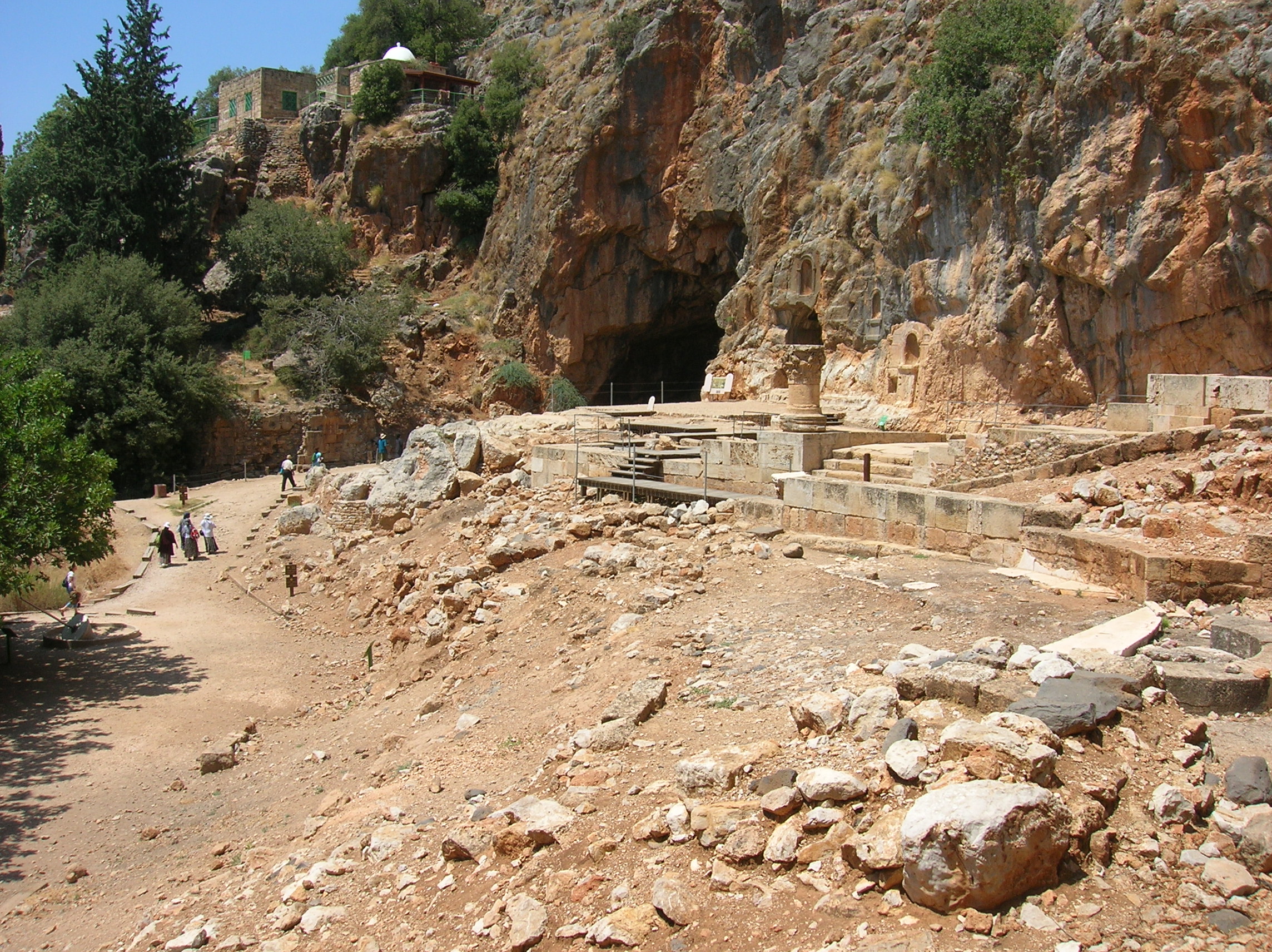
| caption | The spring of Banias with the Cave of Pan in background | |
| partof | the Fifth Syrian War | |
| date | Summer 200 BC | |
| place | Near Banias | |
| result | Seleucid victory | |
| territory | Seleucid conquest of Coele-Syria | |
| combatant1 | Seleucid Empire | |
| combatant2 | Ptolemaic Egypt | |
| commander1 | Antiochus III the Great | |
| Antiochus the Younger | ||
| commander2 | Scopas of Aetolia | |
| strength1 | 70,000 men | |
| Unknown war elephants | ||
| strength2 | 46,500–53,000 men | |
| ----25,000–32,000 phalangites | ||
| 6,000 Aetolian infantry | ||
| 500 Aetolian cavalry | ||
| 14,500–15,000 other troops | ||
| casualties1 | Unknown | |
| casualties2 | 17,500–20,825 phalangites killed or captured |
Antiochus the Younger Unknown war elephants ----25,000–32,000 phalangites 6,000 Aetolian infantry 500 Aetolian cavalry 14,500–15,000 other troops
The Battle of Panium (also known as Paneion, , or Paneas, Πανειάς) was fought in 200 BC near Paneas (Caesarea Philippi) between Seleucid and Ptolemaic forces as part of the Fifth Syrian War. The Seleucids were led by Antiochus III the Great, while the Ptolemaic army was led by Scopas of Aetolia. The Seleucids achieved a complete victory, annihilating the Ptolemaic army and conquering the province of Coele-Syria. The Ptolemaic Kingdom never recovered from its defeat at Panium and ceased to be an independent great power. Antiochus secured his southern flank and began to concentrate on the looming conflict with the Roman Republic.
Background
In 202 BC, Ptolemy son of Thraseas, the Ptolemaic governor of Coele-Syria, defected to the side of Antiochus III the Great, the ruler of the Seleucid Empire. Antiochus invaded and occupied most of the province, including the city of Gaza, by the autumn of 201 BC, when he returned to winter quarters in Syria. The Ptolemaic commander Scopas of Aetolia reconquered parts of the province that winter. Antiochus gathered his army at Damascus and in the summer of 200 BC, he confronted the Ptolemaic army at the stream of Panium near Mount Hermon.
Prelude
Ptolemaic dispositions
The Ptolemaic front line was four kilometers wide. The left wing was deployed on the plain below the Panium plateau. It consisted of the 25,000–32,000 strong Macedonian settler phalanx under the command of Ptolemy son of Aeropus, a Macedonian settler himself. These were the Kingdom's best troops. The supreme command was held by the Aetolian mercenary general Scopas of Aetolia, who brought with him 6,500 Aetolian mercenaries; 6,000 infantry and 500 cavalry.
Seleucid dispositions
Antiochus probably had around 70,000 soldiers, more than the 68,000 he had at the Battle of Raphia in 217 BC. Having re-conquered the Upper Satrapies in the previous years, he could draw upon a larger resource base than before. Polybius identifies the presence of cataphracts, the elite cavalry agema, Tarentines and more cavalry, phalangites, hypaspists, war elephants, unidentified infantry and light skirmishers in the ranks of the Seleucid army at Panium.
Battle
Antiochus the Younger, the firstborn son of Antiochus III, commanded the elite cataphracts of the Seleucid army and seized Tel Hamra, a foothill of Mount Hermon, in the night. The cataphracts opened the battle by attacking and quickly routing the hapless Ptolemaic cavalry under Ptolemy.
In the center, the Ptolemaic phalanx forced back their Seleucid counterparts. The Seleucid elephants neutralized this Ptolemaic success by charging through the gaps in the Seleucid phalanx and halting their advance. The cataphracts under Antiochus the Younger ended their pursuit of the enemy cavalry and charged the rear of the Ptolemaic phalanx. Pressed from two sides by war elephants, phalangites, and cataphracts, the relatively immobile Ptolemaic phalanx was almost annihilated where they stood. Scopas, situated on the right wing, fled the field, taking 10,000 troops with him.
Aftermath
Scopas led 10,000 men to seek refuge at Sidon; other Ptolemaic contingents fled to Jerusalem, Phoenicia, Samaria and Decapolis. All of them were forced to surrender by the end of 198 BC. Coele-Syria came under Seleucid control and the Ptolemies were compelled to sign a peace treaty with Antiochus in 195 BC. As one of the battle's results, the Ptolemaic state was forced to scale down the role of the Macedonian settler phalanx in the years that followed.
Some biblical commentators see this battle as being the one referred to in Daniel 11:15, where it says, "Then the king of the North will come and build up siege ramps and will capture a fortified city."
Casualties
Based on the loss rates of the phalanxes at the battles of Magnesia in 190 BC and Pydna in 167 BC, the 25,000 Ptolemaic phalangites may have sustained 17,500–20,825 losses, killed or captured.
Citations
Bibliography
Belenkiy, Ari (2015). “The Encounter of Simon the Just and Antiochus the Great: from Zeno of Rhodes to Josephus Flavius and the Talmud.” Scientific Culture 1 (2), 1-21. https://sci-cult.com/the-encounter-of-simon-the-just-with-antiochus-the-great-from-zenon-of-rhodes-to-josephus-flavius-and-the-talmud/
References
- [https://www.perseus.tufts.edu/hopper/text?doc=Perseus%3Atext%3A1999.01.0234%3Abook%3D16%3Achapter%3D18 Plb.16.18.]
- Jordan, James B.. (2007). "The Handwriting on the Wall: A Commentary on the Book of Daniel". [[American Vision]].
This article was imported from Wikipedia and is available under the Creative Commons Attribution-ShareAlike 4.0 License. Content has been adapted to SurfDoc format. Original contributors can be found on the article history page.
Ask Mako anything about Battle of Panium — get instant answers, deeper analysis, and related topics.
Research with MakoFree with your Surf account
Create a free account to save articles, ask Mako questions, and organize your research.
Sign up freeThis content may have been generated or modified by AI. CloudSurf Software LLC is not responsible for the accuracy, completeness, or reliability of AI-generated content. Always verify important information from primary sources.
Report